Freelancers using Notion in New South Wales
Sign Up
Post a job
Sign Up
Log In
Filters
2
Projects
People
Dilan Omer
pro
Sydney NSW 2000, Australia
UX & Product Designer | Framer Developer
$10k+
Earned
1x
Hired
6
Followers
expert
Follow
Message
UX & Product Designer | Framer Developer
0
Redesigning Food Logging for Vively
0
10
0
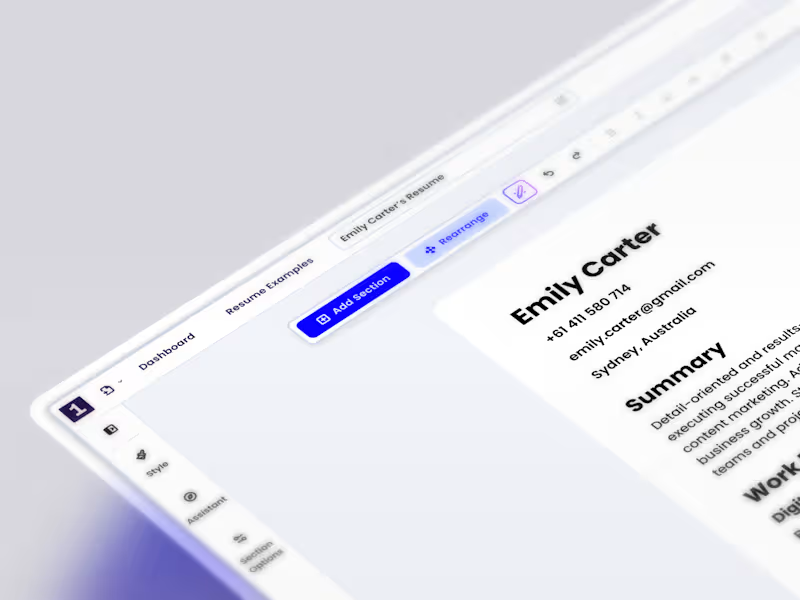
Designing the WYSIWYG Editor for 1Template
0
13
0
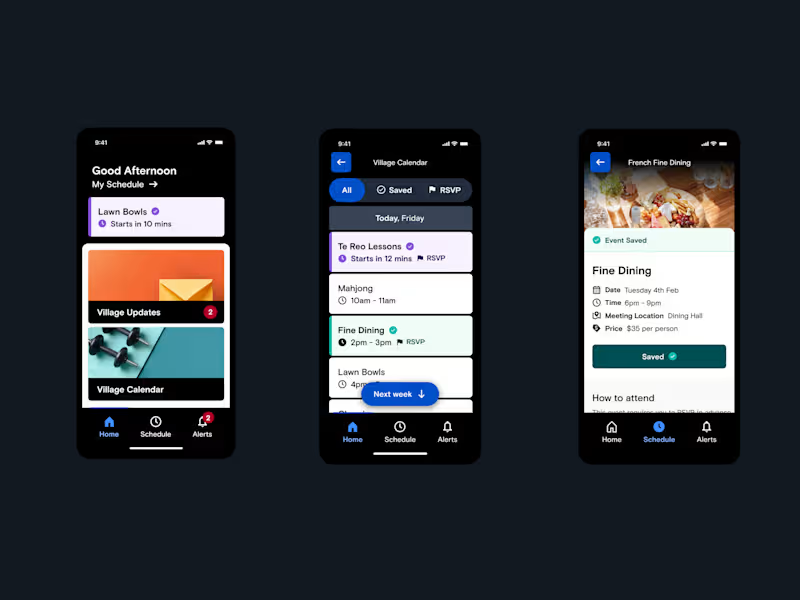
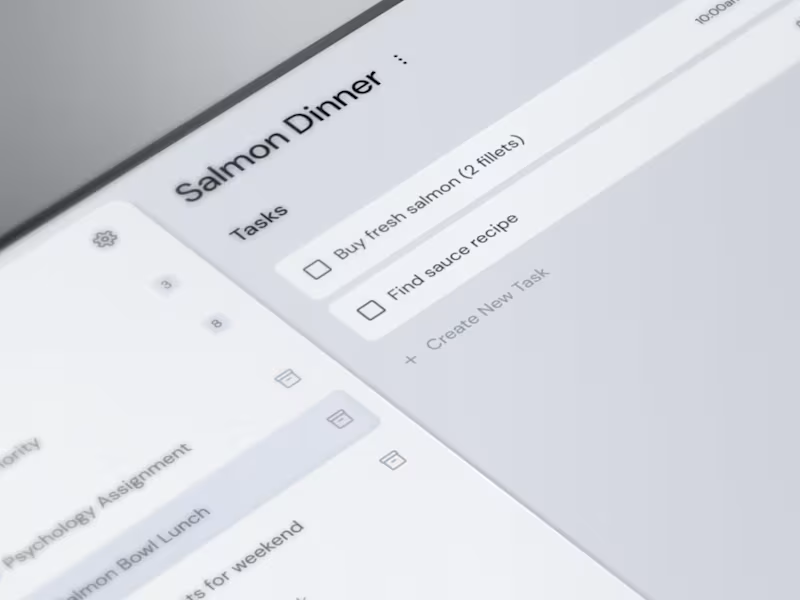
Treating task paralysis by removing traditional to-do lists
0
1
3
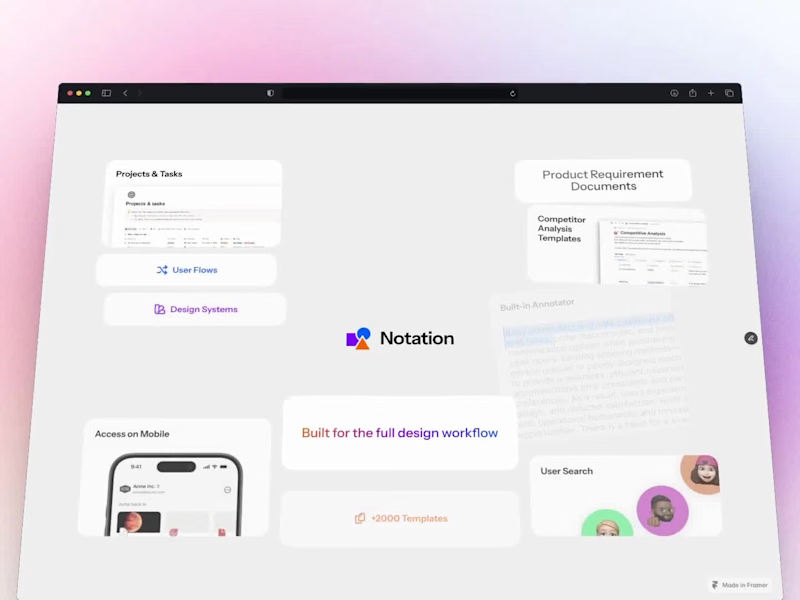
Duplicating Apple's Bento style marketing assets into a Framer website, making it performative, responsiveness and importantly, functional. Anyone seen similar designs online they could share?
3
167
Notion
(2)
Follow
Message
Victor T Tam Yan
pro
Sydney NSW 2000, Australia
Ghostwriter for Business & LinkedIn Copywriter for Founders
New to Contra
Follow
Message
Ghostwriter for Business & LinkedIn Copywriter for Founders

1
SellerâSide Due Diligence: What a Good Accountant Must Do Before a Business Sale in Australia Selling a business in Australia is one of the most significant financial events a smallâtoâmedium business owner will ever experience. Itâs not just a transaction â itâs the culmination of years (sometimes decades) of work, risk, sacrifice, and personal investment. As an accountant acting for the seller, my role is to ensure the business is presented with clarity, accuracy, and defensible financial logic. That means preparing the business for scrutiny before the buyer even begins theirs. This process is known as sellerâside due diligence, and when done properly, it protects the seller, strengthens valuation, reduces negotiation friction, and increases the likelihood of a clean, successful sale. With 15 years in Australian tax, business services, and forensic accounting, Iâve learned that sellerâside due diligence is not just about numbers â itâs about narrative, transparency, and anticipating the questions a sophisticated buyer (or their accountant) will ask. Below is the framework I use when preparing a business for sale. 1. Understanding the Entity Structure â The Foundation of Everything Before touching a spreadsheet, I need to understand how the business is structured, because the entity type determines: how goodwill is treated whether CGT concessions apply how assets are transferred what liabilities follow the sale whether the ownerâs personal assets are exposed how the sale price is allocated In Australia, small businesses are commonly structured as: Sole traders Partnerships Discretionary or unit trusts Pty Ltd companies Each structure has different tax consequences. For example, a sole trader selling a business theyâve operated for over 15 years may be eligible for the Small Business 15âYear CGT Exemption, which can eliminate capital gains tax entirely if conditions are met. A company, however, may need to consider the 50% active asset reduction, retirement exemption, or rollover provisions instead. Understanding the structure early allows me to shape the sale strategy, the valuation narrative, and the tax planning opportunities available. 2. Preparing the Financial Core â The Documents No Buyer Will Proceed Without A buyerâs accountant will always ask for the same foundational documents. If the seller cannot provide them quickly and cleanly, confidence drops and valuation suffers. The essential documents include: Profit & Loss Statements (3â4 years minimum) Balance Sheets for the same period Tax Returns (entity and individual, where relevant) BAS statements General ledger extracts Depreciation schedules Asset registers Loan agreements and finance schedules Employee entitlement summaries Superannuation compliance records Tax returns are particularly important because they show actual tax depreciation, not just accounting depreciation. Buyers look for consistency between accounting profit and taxable income â discrepancies must be explained. If the financials are unaudited, I perform a forensic-style review to ensure accuracy, identify anomalies, and prepare explanations before the buyer asks. 3. Normalising Earnings â The Heart of Valuation Most small businesses have discretionary expenses, owner wages, or oneâoff costs that distort true profitability. As the sellerâs accountant, I prepare a normalised earnings statement that adjusts for: ownerâs salary (if above or below market) personal expenses run through the business oneâoff legal or repair costs nonârecurring revenue relatedâparty transactions abnormal stock adjustments private vehicle or travel expenses This is where forensic accounting skills matter. Buyers want to see sustainable, repeatable earnings, not inflated numbers. My job is to present a fair, defensible picture that supports the sellerâs valuation without crossing into exaggeration. 4. Trend Analysis â Showing the Story Behind the Numbers A single yearâs profit means nothing without context. I analyse: revenue growth or decline margin stability customer concentration seasonality cost trends cashflow patterns debtor and creditor movements A business with stable margins and predictable cashflow commands a higher valuation. A business with volatile revenue needs explanation. Trend analysis also helps identify risks before the buyer does. If revenue dipped in one year, I prepare the explanation upfront â new competitor, owner illness, supply chain issue, etc. Transparency builds trust. 5. Reviewing Contracts, Leases, and Operational Dependencies Financials tell one story; contracts tell another. I review: customer contracts (especially if one client represents >20% of revenue) supplier agreements equipment leases property leases insurance policies licences and permits intellectual property documentation Buyers want to know: what obligations theyâre inheriting whether key relationships are secure whether the business can operate without the current owner If the business relies heavily on the ownerâs personal relationships, I highlight this early and help the seller prepare a transition plan. 6. Employee Entitlements and ATO Compliance Employee liabilities are a major dueâdiligence focus. I verify: annual leave long service leave superannuation payments payroll tax workers compensation award compliance Superannuation compliance is critical. Any unpaid super is a red flag that can derail a sale. I also check for ATO payment plans, outstanding BAS, or historical issues. Buyers will find them â better that I prepare the explanation first. 7. Valuation Scenarios â Presenting a Range, Not a Guess A good accountant never presents a single valuation number. Instead, I prepare valuation scenarios, such as: valuation based on normalised EBITDA valuation based on net tangible assets valuation based on discounted future cashflow valuation after applying CGT concessions valuation after adjusting for working capital This gives the seller a realistic range and prepares them for negotiation. 8. Capital Gains Tax Planning â The 15âYear Concession and Other Small Business Reliefs For many small business owners, CGT is the biggest financial event of their life. Australiaâs Small Business CGT Concessions can dramatically reduce or eliminate tax on the sale. Key concessions include: 15âYear Exemption â if the business has been owned for 15+ years and the owner is over 55 and retiring, the entire capital gain may be taxâfree. 50% Active Asset Reduction â reduces the capital gain by half. Retirement Exemption â up to $500,000 can be contributed to super taxâfree. Small Business Rollover â defers CGT if proceeds are reinvested in another active asset. My role is to determine eligibility early, model the tax outcomes, and structure the sale to maximise concessions. 9. Preparing the Business Overview â The Document Buyers Actually Read Once the financial and operational due diligence is complete, I prepare a business overview that includes: business history revenue breakdown customer profile operational structure financial highlights normalised earnings valuation summary risk factors transition plan This is the document the buyer reads before deciding whether to proceed to formal due diligence. A clear, honest overview builds trust and positions the seller as organised and credible. 10. Anticipating Buyer Questions â The Forensic Mindset Finally, I prepare the seller for the questions buyers will ask, such as: Why are you selling? What would happen if you stepped away tomorrow? Are there any disputes, liabilities, or compliance issues? How dependent is the business on key staff or customers? What risks should we be aware of? A seller who answers confidently and transparently is far more likely to secure a strong offer. Closing Thoughts Sellerâside due diligence is not about making the business look perfect â itâs about presenting it honestly, clearly, and professionally. When the financials are clean, the narrative is coherent, and the risks are acknowledged upfront, buyers feel safer, negotiations run smoother, and valuations hold firm. As an accountant with experience in business sales, forensic analysis, and Australian tax law, my goal is simple: protect the seller, strengthen their position, and ensure the business is presented with the clarity it deserves. __________________________________________________________________ Written by Victor Tyan MIntBus, BComm
1
239
1
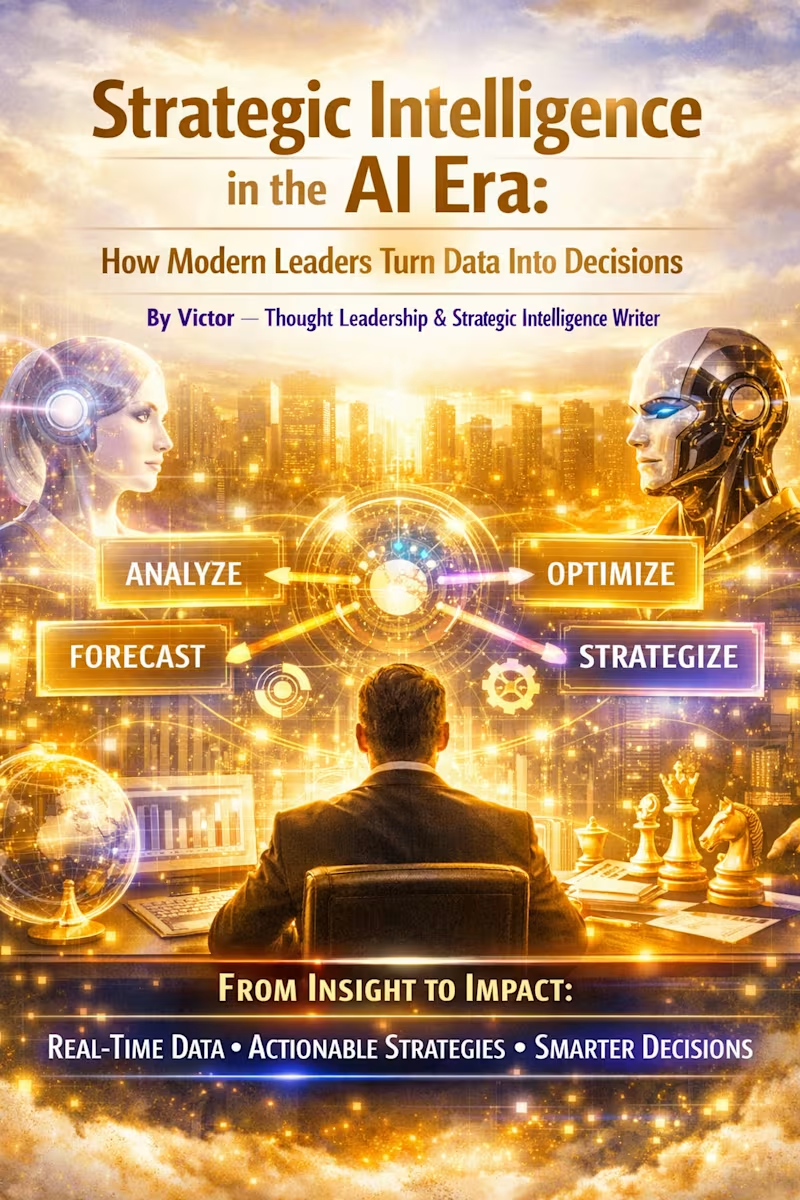
Strategic Intelligence in the AI Era: How Modern Leaders Turn Data Into Decisions By Victor â Thought Leadership & Strategic Intelligence Writer In the last decade, artificial intelligence has moved from a futuristic concept to a practical, everyday tool embedded in the workflows of thousands of businesses. But while most organisations now understand the value of automation, predictive analytics, and machine learning, a new frontier is emerging â one that goes beyond data processing and into the realm of strategic clarity. This frontier is AIâdriven decision intelligence, a discipline that blends data science, behavioural psychology, and business strategy to help leaders make faster, smarter, and more consistent decisions. For founders, executives, and operational teams navigating increasingly complex markets, decision intelligence is becoming a defining competitive advantage. Why DecisionâMaking Is the Last Untouched Bottleneck Most companies have already optimised their operations. Theyâve automated repetitive tasks, digitised workflows, and adopted cloudâbased tools. Yet despite all this progress, one area remains stubbornly human, slow, and inconsistent: decisionâmaking. Leaders still rely on: gut instinct incomplete data siloed information biased interpretations outdated reporting cycles This creates bottlenecks that ripple across the entire organisation. A delayed decision can stall a product launch. A misinformed decision can derail a marketing campaign. A biased decision can distort hiring, budgeting, or resource allocation. Decision intelligence aims to solve this by giving leaders realâtime clarity, contextual insights, and predictive foresight â without replacing human judgment. What Decision Intelligence Actually Does At its core, decision intelligence uses AI to: analyse vast datasets identify patterns humans miss simulate outcomes recommend optimal actions reduce uncertainty highlight risks quantify tradeâoffs But the real power lies in how it integrates with human thinking. Instead of replacing decisionâmakers, it augments them. A CEO can see how different pricing strategies affect revenue. A marketing director can test campaign variations before spending a dollar. A supplyâchain manager can predict disruptions weeks in advance. A founder can model growth scenarios with remarkable accuracy. Decision intelligence becomes a strategic partner â one that never sleeps, never gets overwhelmed, and never loses track of the data. RealâWorld Use Cases Across Industries Decision intelligence is already reshaping industries in ways that feel subtle but transformative. Retail AI models forecast demand, optimise inventory, and personalise customer experiences. Retailers reduce waste, increase margins, and respond faster to market shifts. Finance Banks use decision intelligence to assess risk, detect fraud, and guide investment strategies. It enhances compliance while improving customer trust. Healthcare Hospitals use predictive models to allocate staff, manage patient flow, and anticipate equipment needs. The result is better care and reduced operational strain. Professional Services Consulting firms use decision intelligence to deliver sharper insights, faster analysis, and more accurate strategic recommendations. Startups Founders use AIâdriven simulations to test business models, forecast cash flow, and refine their goâtoâmarket strategies. Across all sectors, the pattern is the same: better decisions â better outcomes. The HumanâAI Partnership One of the biggest misconceptions about AI is that it removes human agency. In reality, decision intelligence strengthens it. Humans excel at: creativity empathy ethical judgment longâterm vision AI excels at: pattern recognition data processing scenario modelling probability analysis Together, they form a hybrid decisionâmaking model that is more accurate, more consistent, and more resilient than either could achieve alone. The Cultural Shift Behind Better Decisions One of the most overlooked aspects of decision intelligence is the cultural transformation it triggers inside an organisation. When leaders begin relying on AIâsupported insights, the entire decisionâmaking environment becomes more transparent, more accountable, and more dataâdriven. Teams stop making choices based on hierarchy or habit, and start grounding their actions in evidence, probability, and strategic alignment. This shift reduces internal friction. Instead of debating opinions, teams evaluate scenarios. Instead of defending assumptions, they explore models. Instead of reacting to problems, they anticipate them. Decision intelligence doesnât just improve outcomes â it improves the quality of conversations happening inside a business. It also empowers midâlevel managers and operational staff. When insights are accessible, visual, and easy to interpret, decisionâmaking becomes decentralised. People closest to the work can act faster, with more confidence, and with a clearer understanding of how their choices affect the broader organisation. This creates a more agile, resilient, and responsive business culture. Barriers to Adoption â and How Companies Overcome Them Despite its benefits, many organisations hesitate to adopt decision intelligence because they fear complexity, cost, or disruption. But the reality is that modern AI platforms are becoming increasingly accessible. Cloudâbased tools, noâcode interfaces, and modular analytics systems allow businesses to start small and scale gradually. The biggest barrier is not technology â itâs mindset. Companies that succeed with decision intelligence treat it as a longâterm capability, not a quick fix. They invest in training, encourage experimentation, and integrate AI insights into their existing workflows rather than forcing a complete overhaul. Over time, the organisation becomes more comfortable with dataâdriven thinking, and the benefits compound. The Strategic Payoff Businesses that embrace decision intelligence early often discover unexpected advantages. They identify new revenue opportunities faster. They respond to market changes with greater precision. They reduce operational waste and improve customer satisfaction. Most importantly, they build a decisionâmaking framework that scales â one that grows stronger as more data flows through the system. In a competitive landscape where speed and clarity determine survival, decision intelligence becomes more than a tool. It becomes a philosophy â a way of running a business that blends human judgment with machineâdriven insight to create a smarter, more adaptive organisation. Why Businesses Should Adopt Decision Intelligence Now The companies that adopt decision intelligence early will gain: faster strategic execution reduced operational risk improved forecasting accuracy stronger competitive positioning better resource allocation higher profitability In a world where markets shift overnight, the ability to make highâquality decisions at speed is no longer optional â itâs existential. The Future of DecisionâMaking As AI continues to evolve, decision intelligence will become a standard part of every organisationâs toolkit. Leaders wonât ask, âShould we use AI for decisionâmaking?â Theyâll ask, âHow did we ever operate without it?â The future belongs to businesses that combine human intuition with machineâdriven clarity â and the transformation has already begun. Victor Tyan,MIB,BCom
1
178
1
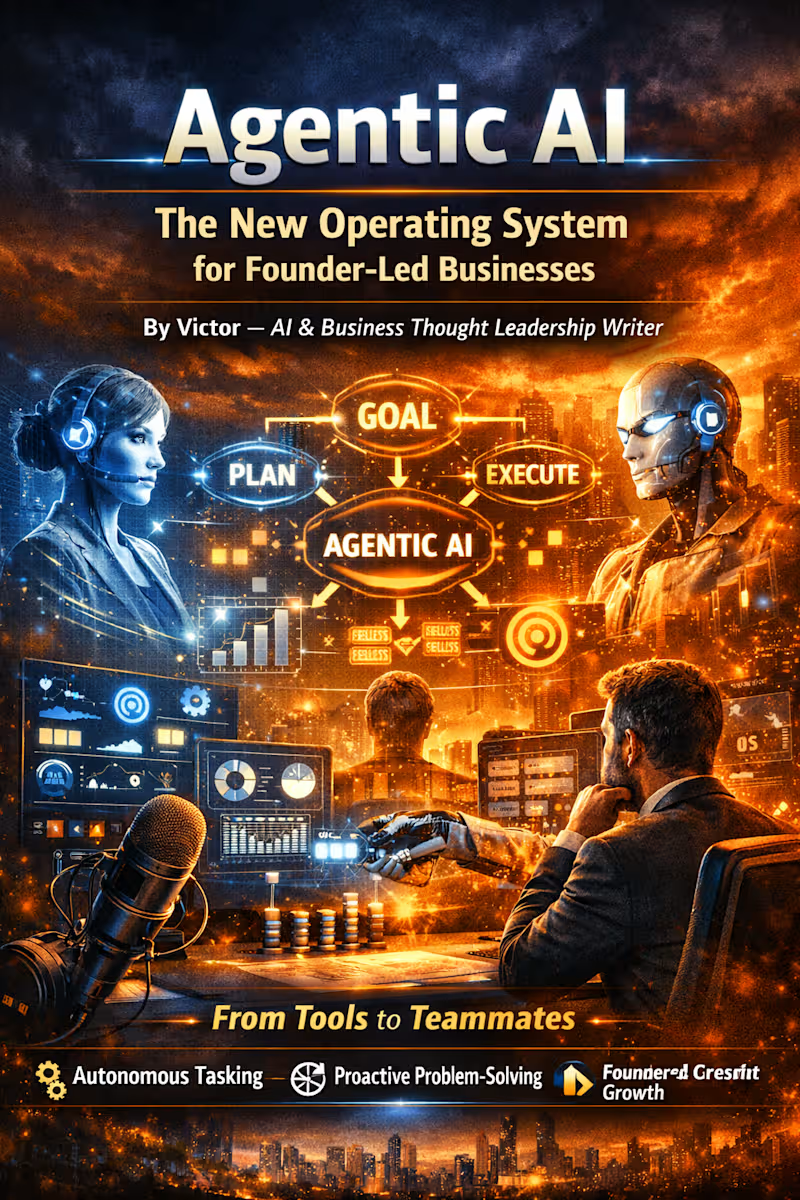
Agentic AI: The New Operating System for FounderâLed Businesses By Victor â AI & Business Thought Leadership Writer For years, artificial intelligence has been framed as a tool â something businesses âuseâ to automate tasks, streamline workflows, or analyse data. But a new paradigm is emerging, one that shifts AI from a passive assistant into an active, autonomous partner. This evolution is known as Agentic AI, and it represents one of the most significant transformations in how founders build, operate, and scale their companies. Agentic AI is not just about automation. Itâs about delegation. Instead of telling software what to do, founders assign goals â and the AI figures out the steps, executes them, adapts to obstacles, and reports back with results. Itâs a shift from taskâbased thinking to outcomeâbased thinking, and itâs reshaping the psychology of entrepreneurship. From Tools to Teammates Traditional AI tools require constant prompting. You ask, they answer. You instruct, they perform. But Agentic AI introduces a new dynamic: systems that can plan, reason, and act with a degree of autonomy. These agents can: manage communication qualify leads draft reports monitor operations analyse performance coordinate workflows escalate issues only when needed Instead of being a tool you âuse,â they become a teammate you âwork with.â For founders juggling product, marketing, sales, operations, and strategy, this shift is profound. It reduces cognitive load, increases execution speed, and creates space for higherâlevel thinking. Why Founders Are Adopting Agentic AI First Startups and founderâled businesses are uniquely positioned to benefit from Agentic AI because they operate in environments defined by: limited resources rapid decision cycles constant context switching unpredictable workloads high emotional and cognitive demands Agentic AI acts as a stabilising force. It absorbs operational chaos and transforms it into structured, predictable output. A founder who once spent hours responding to emails, drafting proposals, or managing followâups can now delegate those tasks to an AI agent that works 24/7, never burns out, and never loses context. RealâWorld Use Cases That Are Already Transforming Workflows Agentic AI is not theoretical â itâs already reshaping how modern businesses operate. 1. Lead Qualification & Client Intake AI agents can handle the first 80% of client communication, gathering details, asking clarifying questions, and preparing summaries for the founder. 2. Operational Monitoring Agents can track KPIs, flag anomalies, and generate daily or weekly performance briefs. 3. Content & Communication From drafting emails to preparing reports, agents maintain consistency and speed across all written communication. 4. Customer Support AI agents can resolve common issues, escalate complex ones, and maintain a unified tone across all channels. 5. Internal Workflow Automation Agents can coordinate tasks between tools, update systems, and ensure nothing falls through the cracks. These use cases demonstrate a simple truth: Agentic AI is not replacing founders â itâs amplifying them The Hidden Advantage: Consistency at Scale One of the most underrated benefits of Agentic AI is its ability to deliver consistent execution, regardless of workload, stress, or shifting priorities. Human teams fluctuate â energy levels change, focus drifts, and performance varies depending on the day. But agentic systems operate with the same precision at 2 p.m. as they do at 2 a.m. They donât forget tasks, lose context, or overlook details. This reliability becomes a structural advantage for founders who need stability in the middle of chaos. Consistency also builds trust. When clients receive timely responses, accurate information, and polished communication every single time, the business feels bigger, more organised, and more professional than it actually is. For earlyâstage founders, this perception can be the difference between closing a deal and losing one. Why Agentic AI Levels the Playing Field Historically, only large companies could afford the kind of operational support that Agentic AI now provides. Executive assistants, operations managers, analysts, and coordinators were luxuries reserved for wellâfunded teams. But agentic systems democratise this capability. A solo founder can now operate with the efficiency of a 10âperson backâoffice team, without the overhead, training, or management burden. This levelling effect is reshaping competitive dynamics. Small businesses can move faster, respond quicker, and deliver higherâquality output than ever before. In many cases, they outperform larger competitors simply because their agentic systems allow them to execute with speed and clarity that traditional teams canât match. The Psychological Shift: Letting Go of the Small Stuff One of the most interesting aspects of Agentic AI is the psychological adjustment founders experience. Many entrepreneurs are used to doing everything themselves. They carry the weight of the business on their shoulders, often at the expense of clarity, creativity, and longâterm thinking. Agentic AI forces a new mindset: âI donât have to do everything â I just need to direct the system.â This shift unlocks: more strategic thinking more emotional bandwidth more creative energy more consistent execution Founders stop reacting and start orchestrating. The Future: Businesses Built on Synthetic Teams As Agentic AI matures, weâll see businesses built not around human teams, but around hybrid teams â a blend of human leadership and synthetic execution. Founders will design workflows the way architects design buildings. Theyâll assign goals, define constraints, and let the agentic system handle the rest. The companies that embrace this shift early will operate with: lower costs faster execution higher adaptability stronger decisionâmaking reduced operational friction Agentic AI is not just a new tool â itâs a new operating system for modern entrepreneurship.
1
162
1
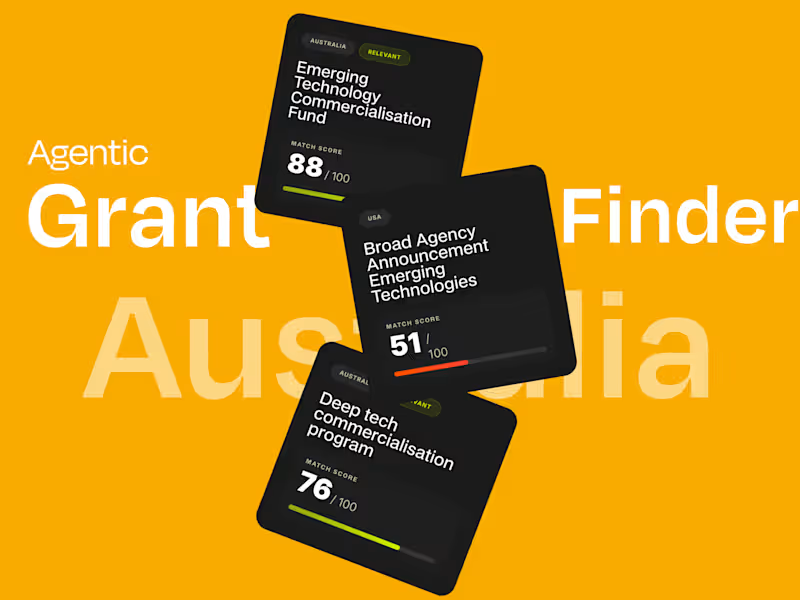
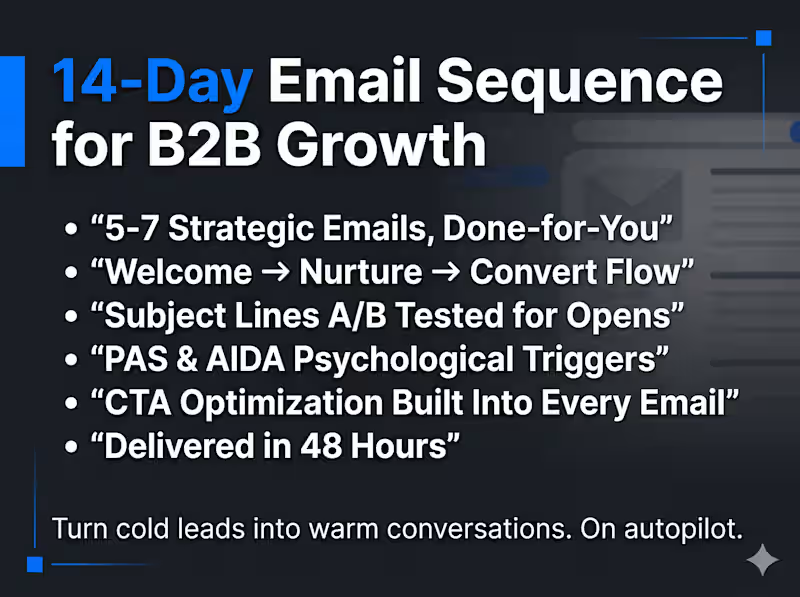
WHY MOST AI WORKFLOWS COLLAPSE â AND HOW TO BUILD ONES THAT LAST AI workflows are everywhere â funnels, automations, agents, âhandsâfreeâ systems. But most collapse within days. Not because the tools are bad, but because the structure behind them is missing. This flyer breaks down the real reasons AI workflows fail, and the framework that makes them durable, scalable, and agentic. 1. Most Workflows Are Built Backwards Most people start with: a tool they saw online a prompt they copied a vague idea of the outcome Then they try to connect everything together. Durable workflows start with logic, not tools. They require: a clear input a defined process a predictable output a feedback loop a failâsafe Without these, youâre stacking tools and hoping they behave. 2. Reactive Systems Arenât Workflows Most AI setups wait for instructions. They donât: make decisions follow logic adapt to outcomes operate independently Thatâs not a workflow â thatâs supervision. Agentic design creates autonomous logic chains that: run without babysitting handle edge cases produce consistent results This is the foundation of Synthetic Intelligence. 3. The Guru Method Creates Fragile Systems The internet teaches: âUse this toolâ âPaste this promptâ âFollow this hackâ But it never teaches: error handling logic structure resilience outcome testing So when something breaks â and it will â the entire workflow collapses. Real builders rely on systems, not hacks. 4. The FiveâLayer Workflow Model A durable AI workflow follows a simple, universal structure: Layer 1 â Input Clarity  What exactly enters the system? Layer 2 â Process Logic  What steps occur, in what order, under what conditions? Layer 3 â Decision Rules  How does the system choose between options? Layer 4 â Output Format  What does the result look like, and where does it go? Layer 5 â Feedback Loop  How does the system learn, retry, or adapt? This model works across marketing, accounting, content creation, customer service, and operational flows. Itâs not toolâdependent â itâs logicâdependent. 5. The AntiâGuru Truth You donât need: 10 tools 100 prompts a $997 course You need: clarity structure logic resilience agentic design Thatâs what makes AI workflows actually work â and what separates collapsing automations from systems that run reliably.
1
114
Notion
(9)
Follow
Message
Sammara Woolrich
Sydney NSW, Australia
Brand & Graphic Designer
Follow
Message
Brand & Graphic Designer
0
Trust Brokers - Rebranding, Social Media, Digital, Print
0
16
0
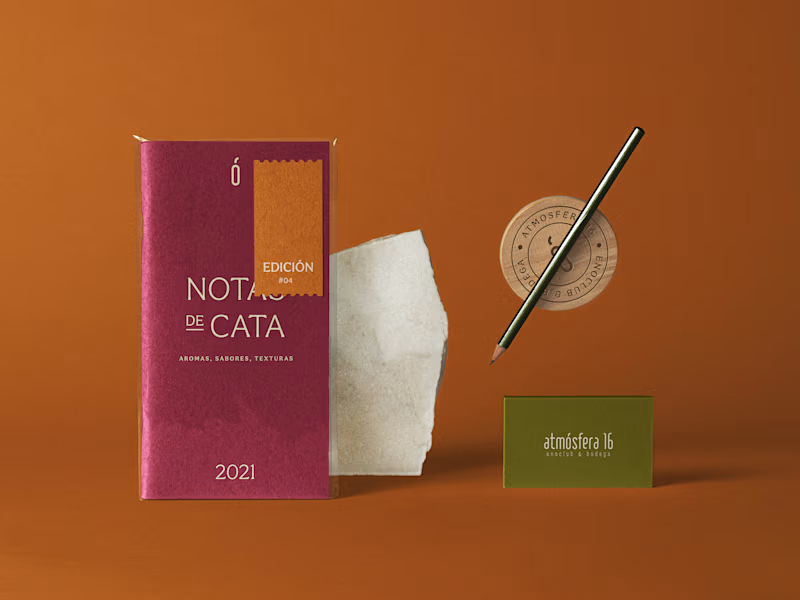
Atmosfera 16 - Rebranding, Social Media, Print, Digital
0
5
0
Beso de Oro - Brand Identity, Social Media, Digital
0
6
View more â
Notion
(3)
Follow
Message
Luke Niccol
Sydney NSW, Australia
Brand & Web design that makes your product unforgettable
Follow
Message
Brand & Web design that makes your product unforgettable
18
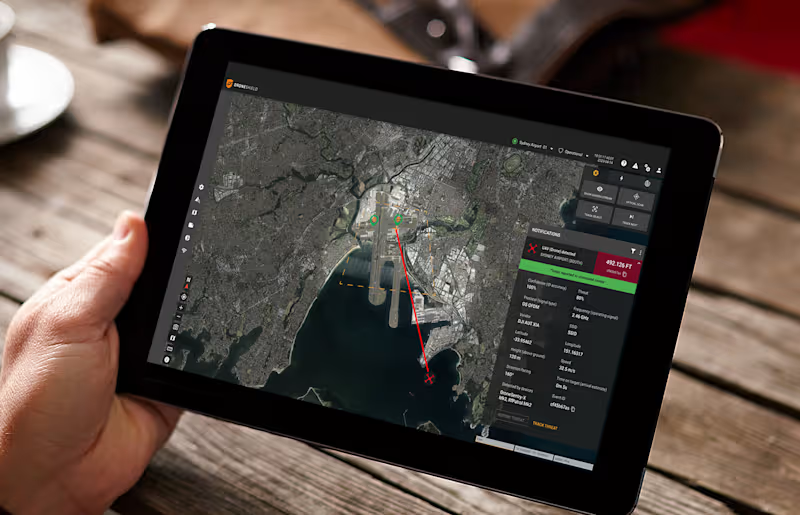
Exploring interface design for a command-and-control (C2) system used in drone detection and defense operations. I worked on improving how tactical operators identify and act on threats by rethinking the detection card system â focusing on clarity, hierarchy, and speed of interpretation. The process included: ⢠Mapping the operatorâs workflow and environment (outdoor, tablet-based use) ⢠Establishing a UX flow that supports quick threat assessment ⢠Building a mini design system for consistent components, colors, and typography under high-contrast conditions ⢠Producing high-fidelity screens for real-time monitoring and response This project pushed me to balance data density with operational clarity â making complex defense data more actionable in the field.
18
186
0
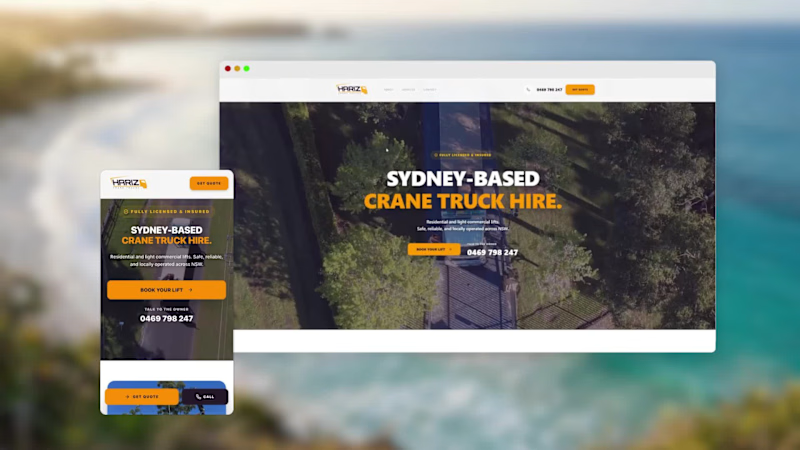
Recent Web design and branding work for a client with a crane truck business. I was lucky enough to be a part of the strategy process and have seen this business grow massively over the last 6 months. To be a part of the growth and having contributed parts of the brand like the logo and website has been a really rewarding experience and I look forward to doing similar projects in the future! https://hariz-crane-trucks.vercel.app/
0
25
0
Architecture Portfolio Design
0
2
0
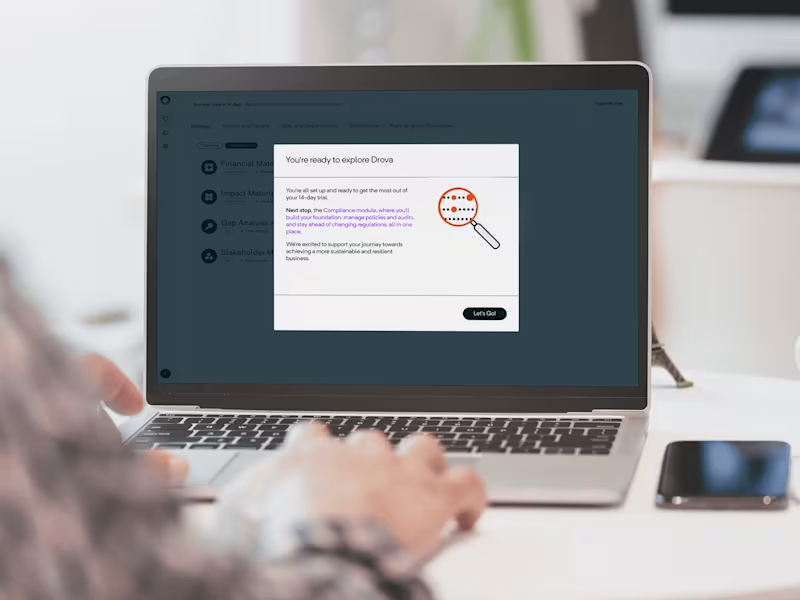
Redesigning Drova's Signup Flow for Product-Led Growth
0
2
Notion
(1)
Follow
Message
George Ghobrialđ
Sydney NSW 2000, Australia
đ Scaling businesses with creative web design solutions.
Follow
Message
đ Scaling businesses with creative web design solutions.
1
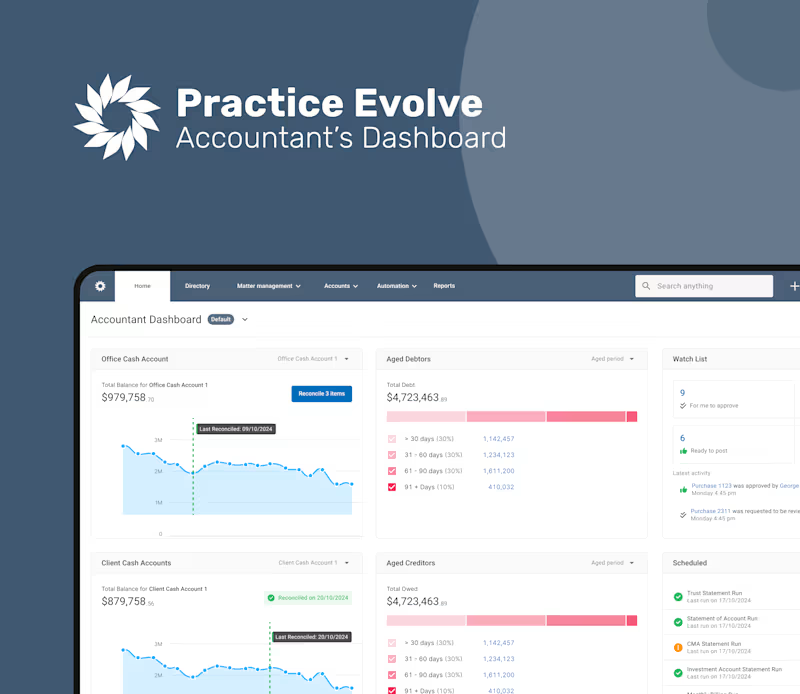
From Chaos to Clarity: Dashboard Redesign
1
13
1
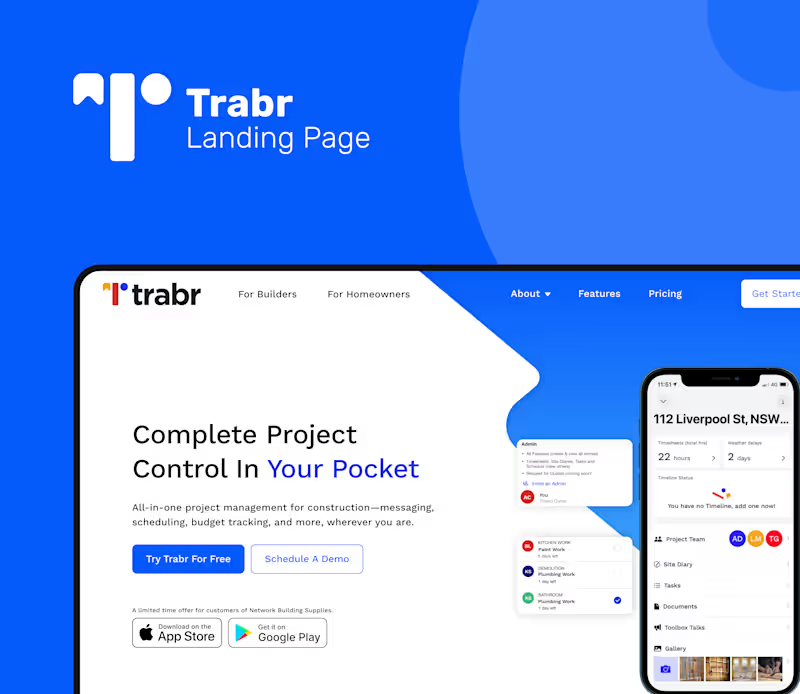
Trabr Landing Page Redesign
1
5
1
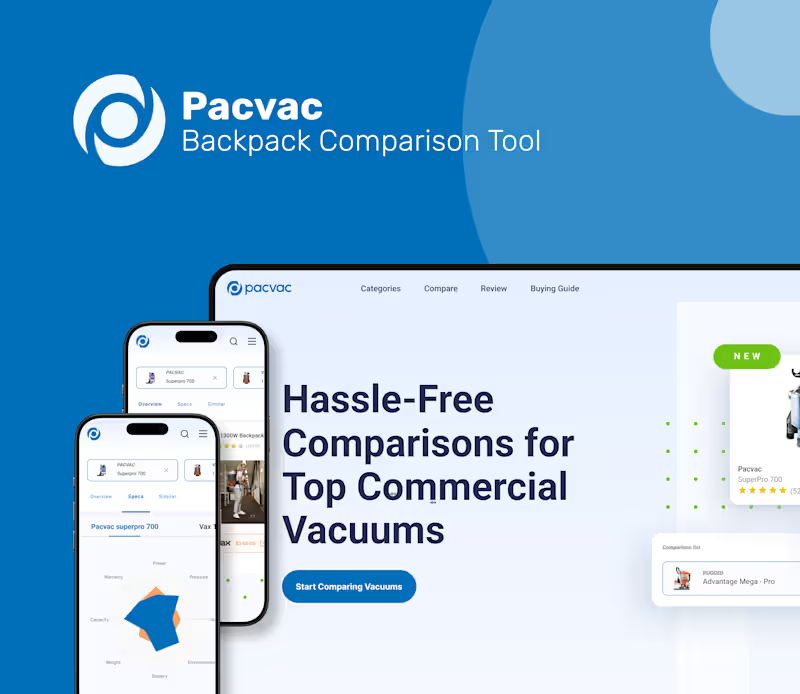
Smarter Vacuum Decisions Tool for Businesses
1
1
View more â
Notion
(1)
Follow
Message
Nate Black
Sydney NSW 2000, Australia
Creative Event Producer & Digital Marketing Expert

Follow
Message
Creative Event Producer & Digital Marketing Expert

0
Harry Potter: A Yule Ball Celebration
0
1
0
Tasty X Castello: Dining In The Dark Experience
0
3
0
The Immersive Holocaust Museum, Brisbane
0
2
View more â
Notion
(2)
Follow
Message
Izzy Jek
Sydney NSW, Australia
Social Media Virtual Assistant & Content Creator
Follow
Message
Social Media Virtual Assistant & Content Creator
0
@foodfoxsydney IG
0
12
0
@silviarajekinteriors IG
0
13
0
@izzy.jek IG
0
8
View more â
Notion
(1)
Follow
Message
Jackson Brown
Sydney NSW, Australia
Attain Impact, Influence and Income.
Follow
Message
Attain Impact, Influence and Income.
0
Crafting YouTube Scripts for Unparalleled Engagement
0
16
0
Transforming Personal Brands into Thriving Online Ecosystems
0
7
0
Gorgeous Web Development with Optimized Design and Copywriting
0
5
View more â
Notion
(1)
Follow
Message
Explore people