Treating task paralysis by removing traditional to-do lists

Dilan Omer


Treating task paralysis by removing traditional to-do lists
Most productivity apps require active thinking about where tasks should exist - An open-ended system that becomes its own source of stress. To counteract this, I designed a minimal rethink of how tasks should realistically be captured and organised, prioritising active goal setting and progression.
Conventional to-do apps place the full burden of organisation on the user, similar to your computers folder system does. Every task requires a number of decisions: which list does it belong to? Is this list still relevant? Where does this fit relative to other tasks? This might not feel overwhelming at first, but it's common to feel that yours lists grow faster than they shrink and this friction prevents any meaningful work from really being done.
Ontrack introduces a two-tier structure: Tracks and Tasks. The hierarchy is made to flow and make both the capturing and organisation of tasks feel intuitive. Here, organisation at it's core is driven by goals, and any task is an action that needs to take place either on its own as a larger goal, or a smaller part within another goal. Now, every 'list' it's a goal itself, which makes the user experiences tangible progression and can actually achieve a sense of completion.
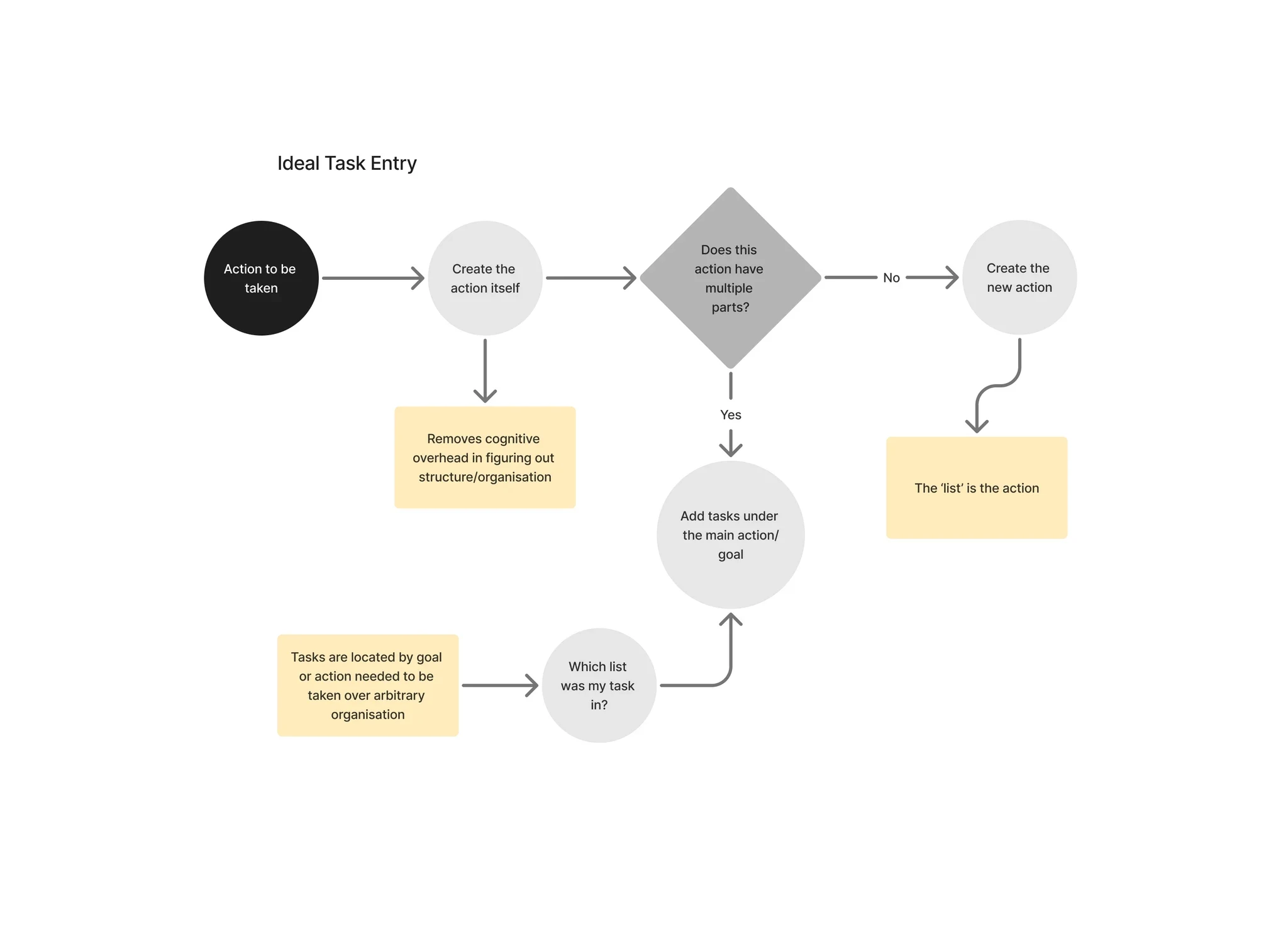
Several small decisions compound to create a low friction experience, particularly for users who find that friction early in the flow is enough to make them abandon the tool entirely, or avoid using it overtime. For anyone approaching a new task management tool, they experience the overhead of needing to figure out how tasks are to be organised and management for the unforeseeable future - A very, cognitively demanding task.
The core principal of the design is that a task manager should feel like relief, not administration. By embedding structure into the model through the bounding of Tracks, visual priority separation, and setting the core user loop to be focused on goal and completion over micromanaging, the app reduces the cognitive overhead of productivity to its minimum viable form thus adjusting for potential task paralysis.
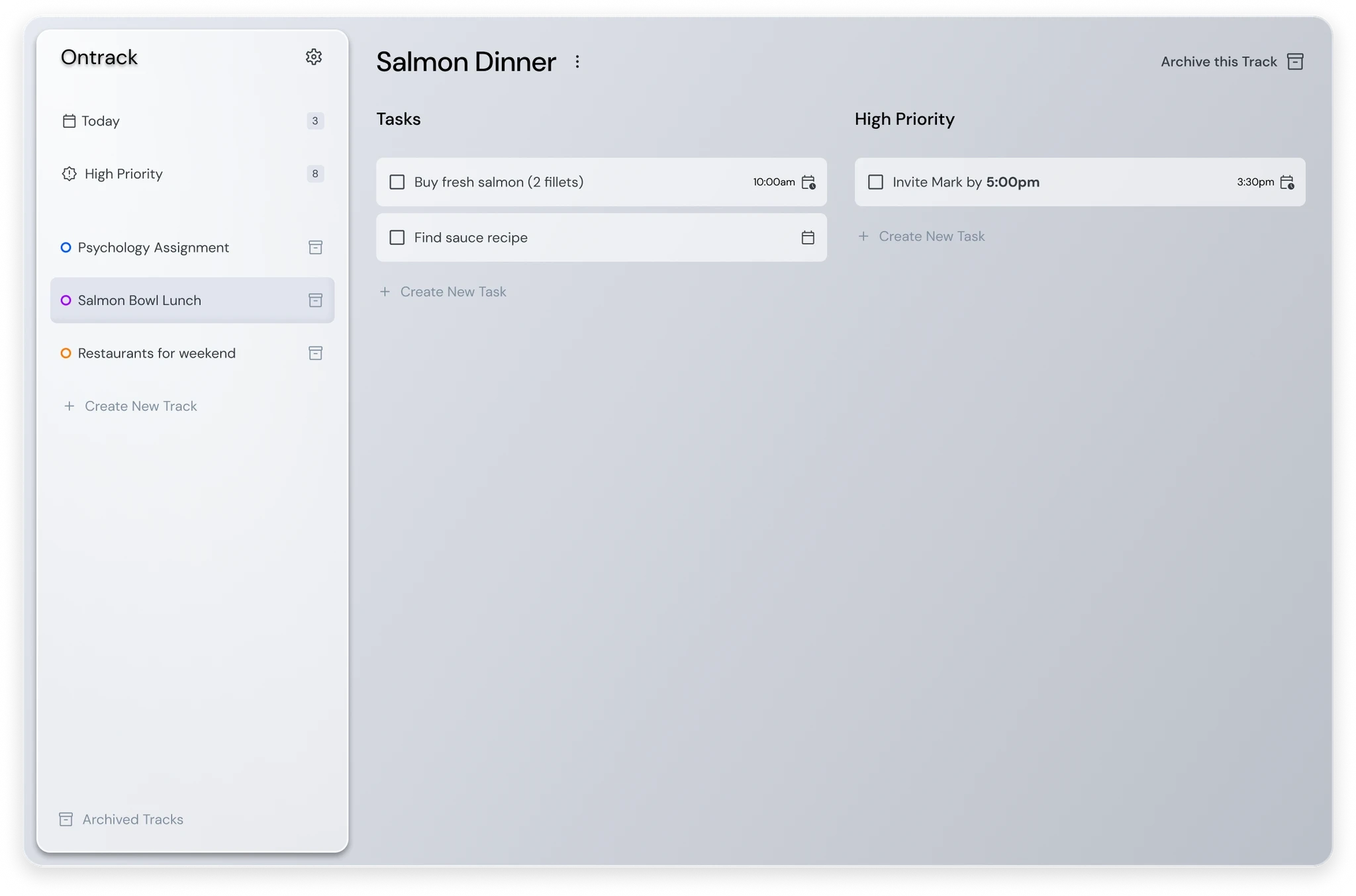
As this was a prototype 1 version of the product, there were some key areas of improvement that could've furthered the core task loop we intended based off the problems discovered.
You can read the full case study in the link below:
Like this project
Posted May 26, 2026
Most productivity apps require active thinking about where tasks should exist - An open-ended system that becomes its own source of stress.