Accessibility-First Mobile App Design for Ryman Healthcare

Rod Acevedo


Ryman Healthcare
A A$2.3 billion aged care operator, an audience with an average age of 80, and accessibility as the first constraint instead of the last slide.
Most digital products quietly assume a young, confident user who forgives friction. Ryman's residents are the opposite of that assumption: an average age of 80, with the full range of vision, dexterity, memory and confidence that comes with it. Many were using a smartphone or tablet in earnest for the first time. For this audience, friction doesn't mean a frustrating session. It means giving up.
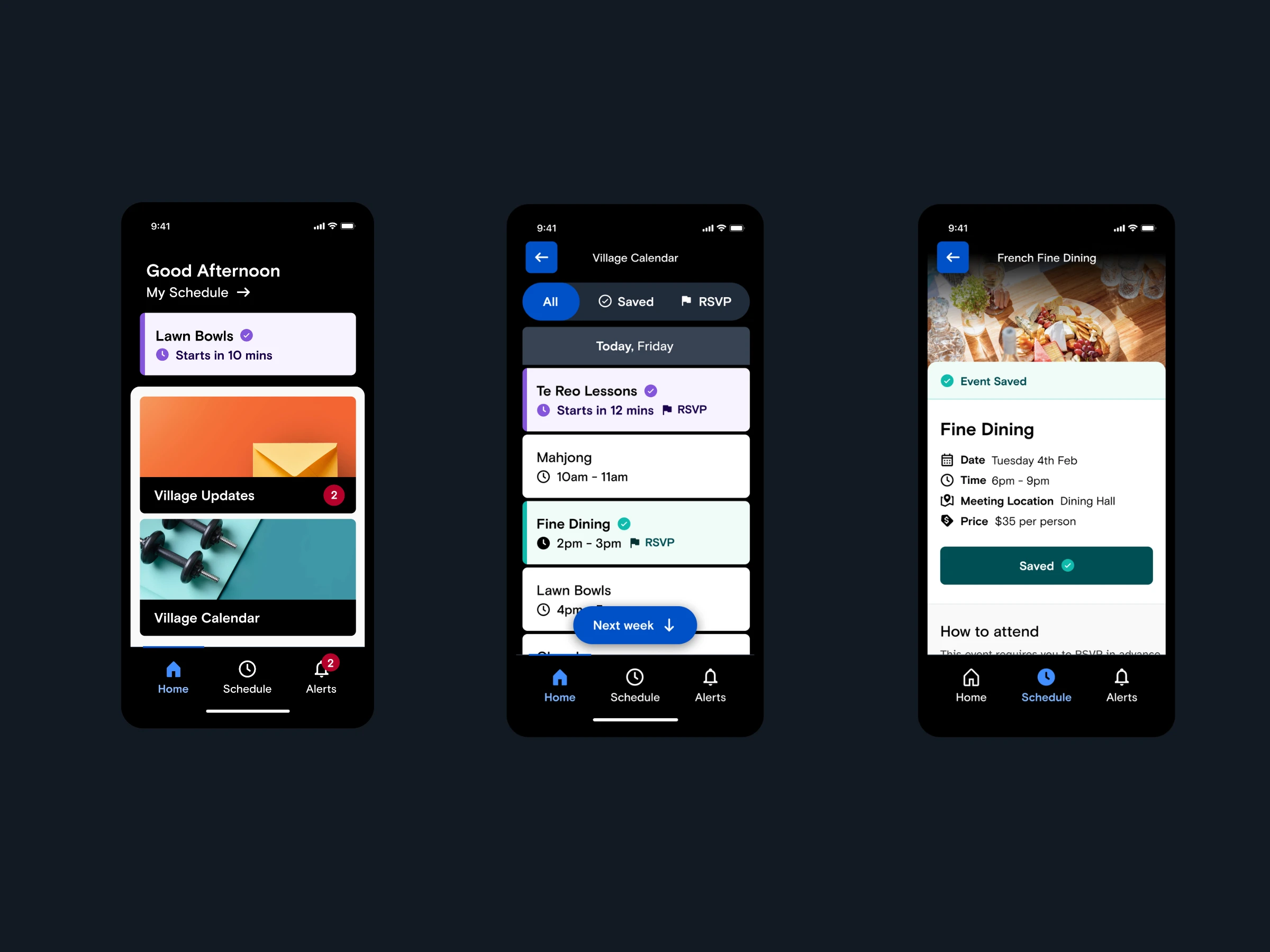
The app is how residents stay connected to village life: today's schedule, the village calendar, RSVPs, dining, community updates and the notifications that genuinely matter. Getting it wrong wouldn't cost Ryman a metric. It would cost residents their connection to the place they live.
Impact
208% increase in engagement · 76% household retention · 74% resident satisfaction · average user age 80
Designing for the edges (the oldest users, the least technical confidence, the highest accessibility needs) created a better product for everyone. The engagement lift held across Australia and New Zealand, and three in four households kept using the app once they had it. When lockdowns hit, the same system carried critical announcements and virtual events. That's exactly the moment a communication channel built for older residents proves its worth.
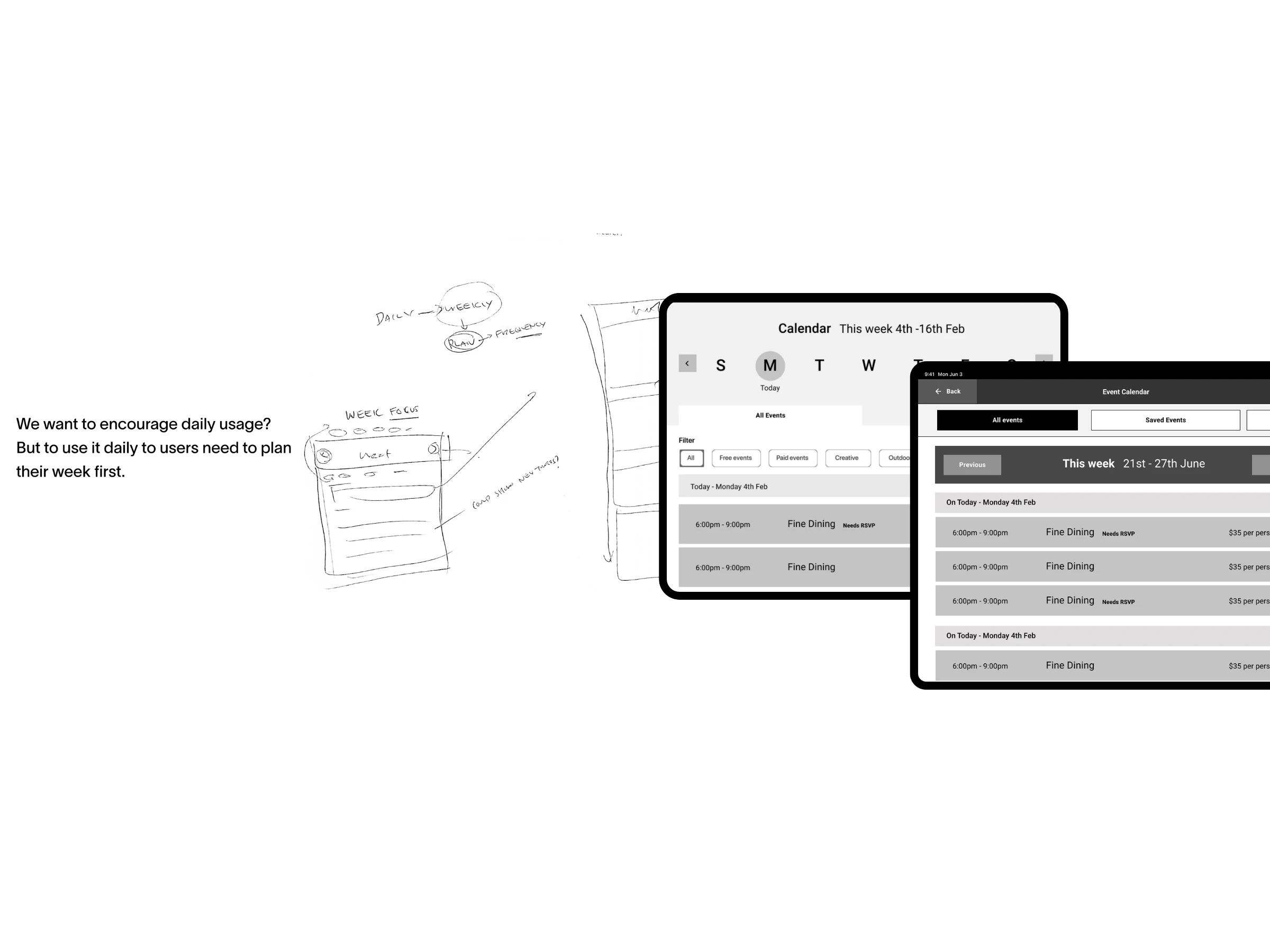
My role as Design Lead
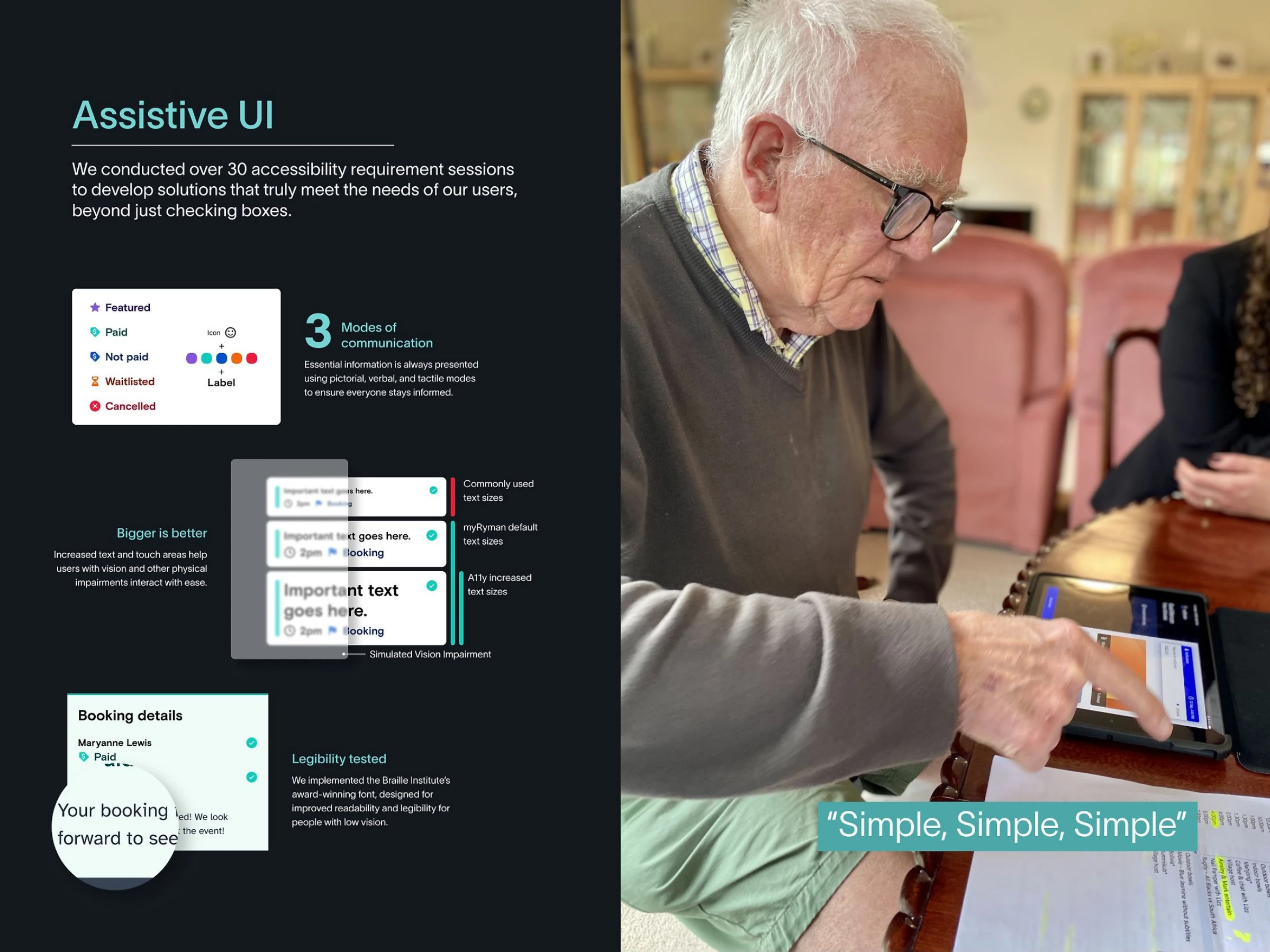
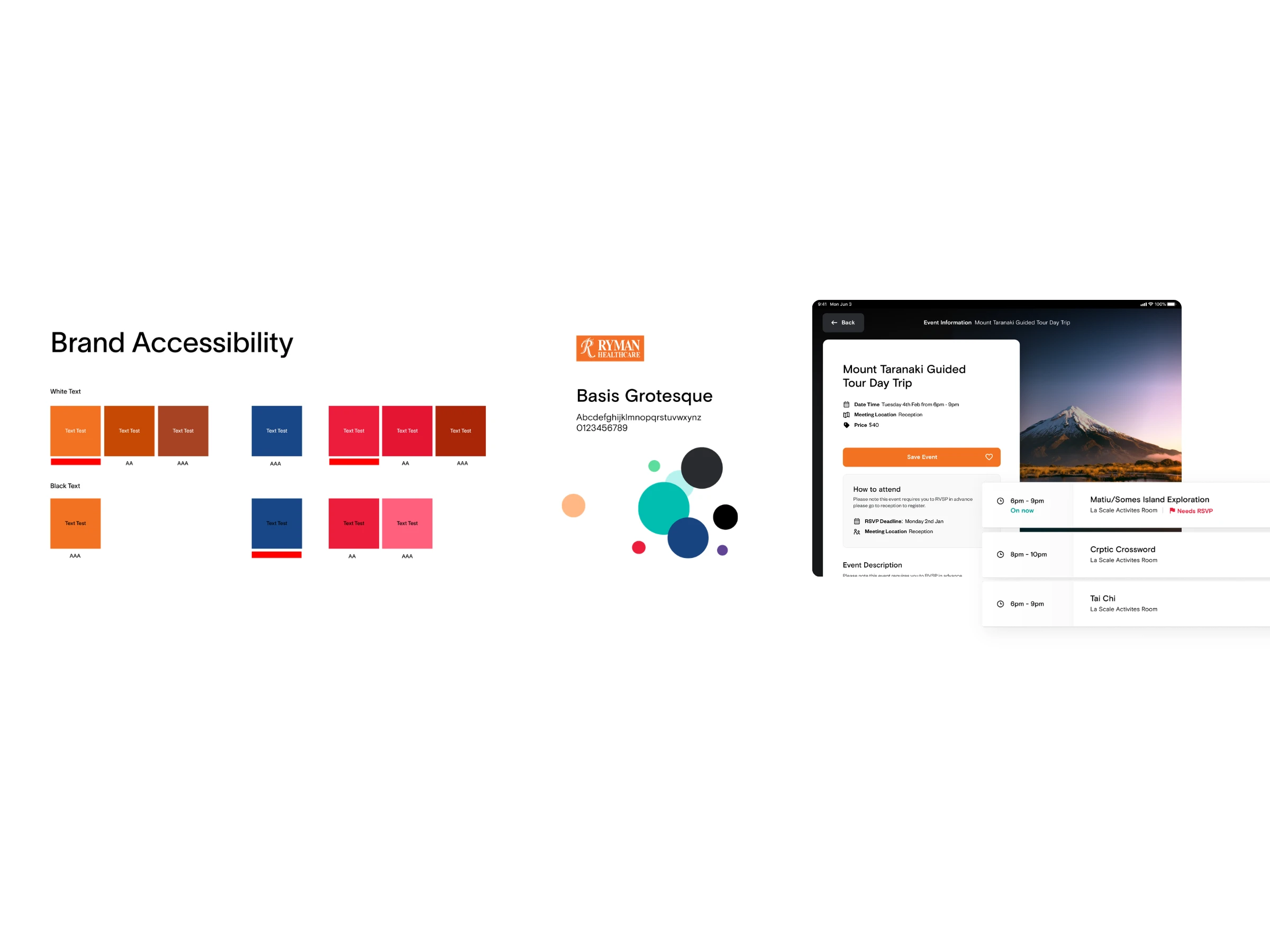
I led the design, building a custom component system with WCAG 2.1 AA as the floor rather than the finish line. Touch targets sized for hands with reduced dexterity. Contrast ratios chosen for ageing eyes. A typography scale that stays legible without shouting. Layouts that keep cognitive load down: one clear action per screen, consistent placement, and an obvious way back and way home from anywhere.
None of it looks clinical. Aged care software tends to look like it was designed for the institution rather than the person. This looks warm and inviting, because accessible design doesn't have to mean boring design.
What the testing taught me
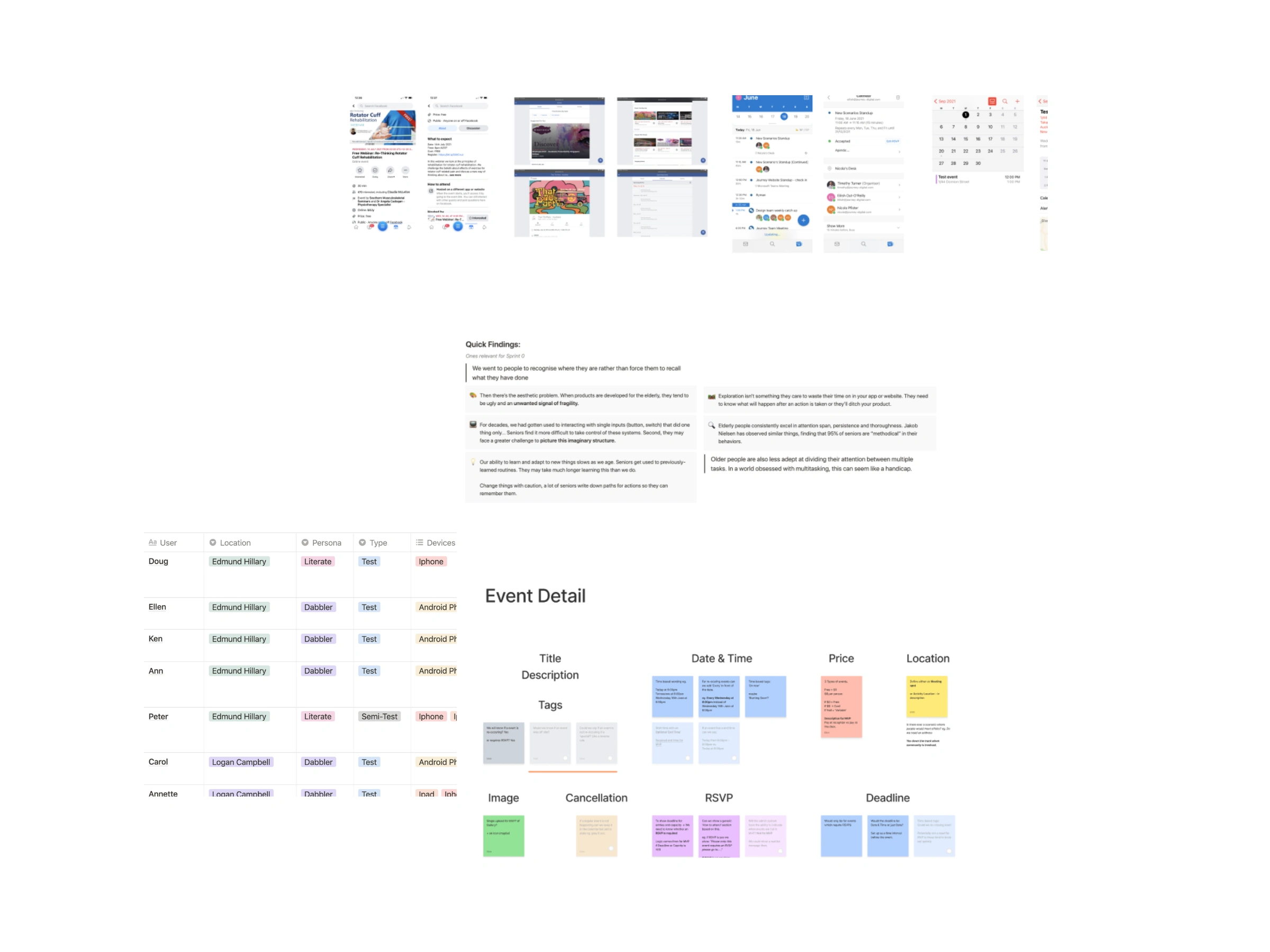
Every feature was tested with real residents. I refined interaction patterns by watching how 80 year olds actually hold tablets and phones, how they move between screens, and above all how they recover from mistakes. The platform now runs across Ryman's Australia and New Zealand operations, localised for each village, native on iOS and Android.
Every feature was tested with real residents. I refined interaction patterns by watching how 80 year olds actually hold tablets and phones, how they move between screens, and above all how they recover from mistakes. The platform now runs across Ryman's Australia and New Zealand operations, localised for each village, native on iOS and Android.
Interested in the story behind this project?
Let's have a chat!
Like this project
Posted Jun 10, 2026
Accessibility-first design for users with an average age of 80. A mobile app connecting residents to village life across Australia and New Zealand.
Likes
1
Views
12
Timeline
Jan 30, 2020 - Apr 30, 2023