Results that are similar to your search
Similar results

The only person you need to strategize your marketing
- $•••••
- Earned
- 10x
- Hired
- 5.0
- Rating
- 54
- Followers
The only person you need to strategize your marketing
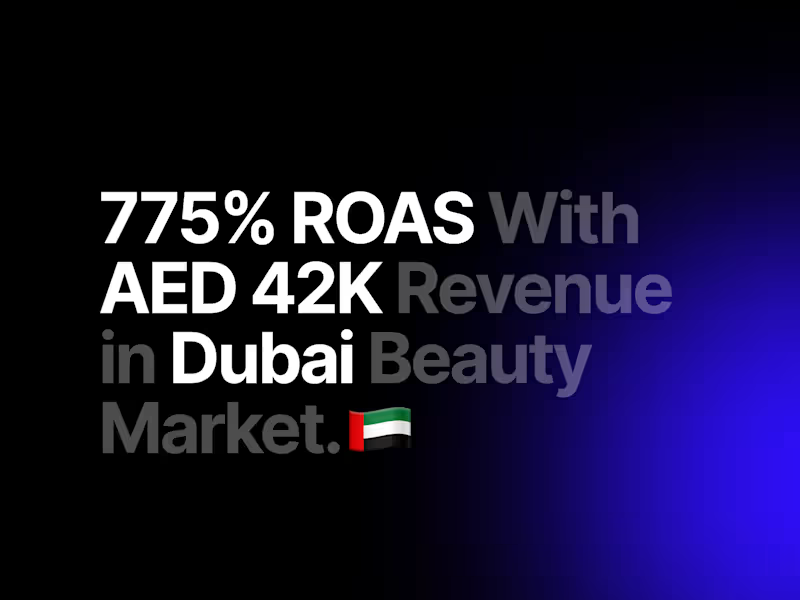
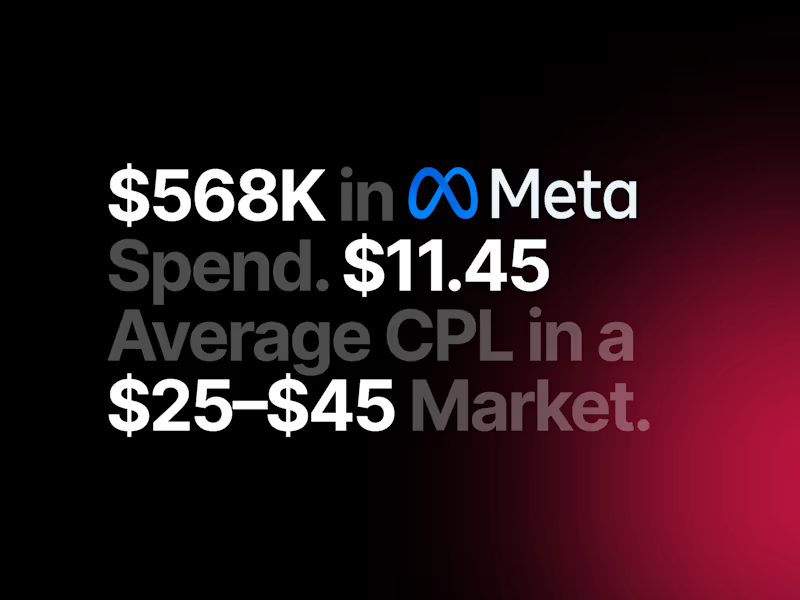
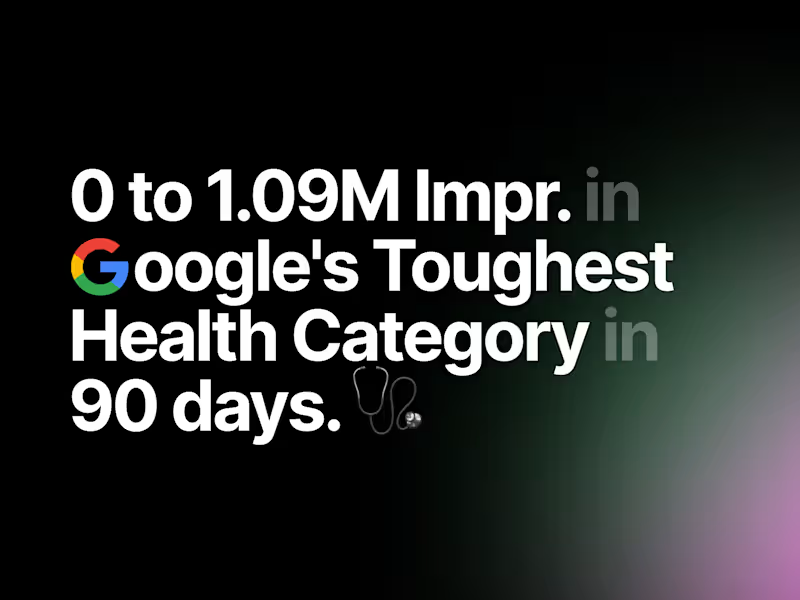
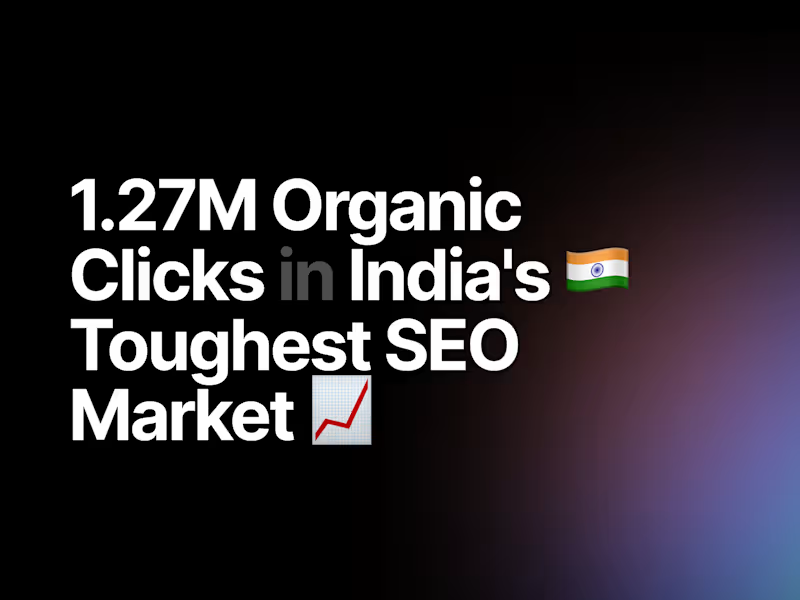


Ad Creatives Designer and CAPI specialist


Ad Creatives Designer and CAPI specialist




Paid Ads Specialist | Creative Strategy | Klaviyo Expert
- $25k+
- Earned
- 3x
- Hired
- 10
- Followers
Paid Ads Specialist | Creative Strategy | Klaviyo Expert



Google & Meta (Facebook/Instagra) Ads Expert | AI Automation
- 1x
- Hired
- 5.0
- Rating
- 17
- Followers
Google & Meta (Facebook/Instagra) Ads Expert | AI Automation
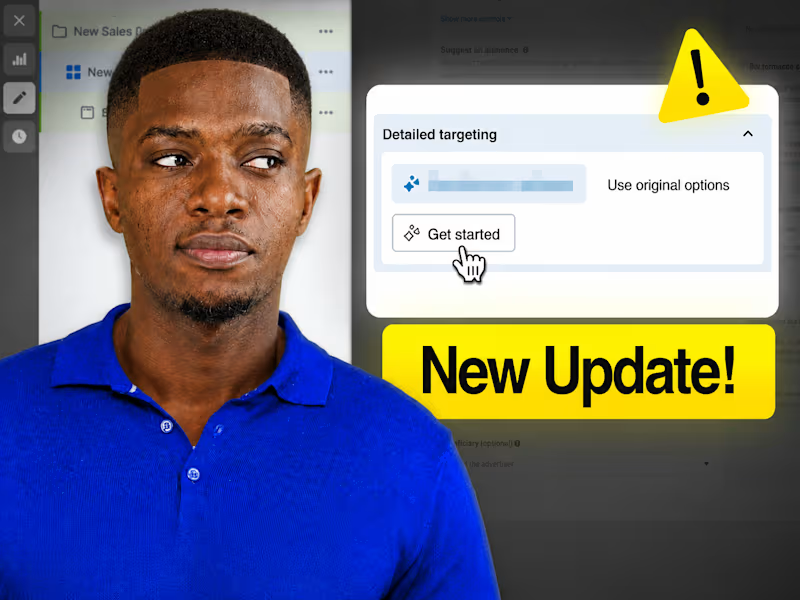
Facebook Ads Targeting Just Changed! Here's What It Means…
Meta just quietly rolled out a new AI targeting feature, and I think it's more interesting for where it's heading than what it actually does right now. Let me break it down.
Inside Ads Manager, at the ad set level under detailed targeting, some accounts now have a new option: "Describe your audience." Instead of manually scrolling through interest categories trying to guess the right ones, you literally write a description, up to 2,000 characters, of who your ideal customer is, and Meta's AI generates relevant detailed targeting suggestions based on that.
For example: "small to medium business owners currently running their own Meta ads" or "in-house performance marketers running ads for large corporations." You paste that in, hit generate, and it spits out targeting categories that match. Full disclosure, when I tested this live, it was buggy and didn't generate anything. Worth flagging because new Meta features often roll out rough before they're stable. But I'd tested it earlier and it worked fine, and honestly the suggestions were solid, it even surfaced targeting options I didn't know existed, despite having run ads on my own business for years.
Here's the honest take on where this stands right now: in its current form, it's mostly just a time-saver. It helps you find relevant categories faster and might unearth options you'd missed. But detailed targeting itself has become far less influential in how Meta actually decides who sees your ads compared to a few years ago, everything you select is treated more as a "suggestion" than a hard rule these days.
But here's why I think this feature actually matters long-term:
I'm confident this evolves into something bigger. Right now, your description gets translated into pre-existing categories. Eventually, I'd expect Meta to skip that translation step entirely and target directly off your description , letting you get incredibly specific instead of being boxed into broad existing categories.
Think about the difference between "people interested in marketing" (a huge, vague category) versus "in-house performance marketers running Meta ads for large corporations" (a tiny, precise group that's exactly who you want). If Meta can eventually target that specifically, you could reach far fewer people, spend less overall, and get equal or better results, because you're not paying to reach anyone outside your actual audience.
This would likely mean higher cost per impression for that hyper-specific audience (great for Meta's revenue), but potentially much stronger ROI for advertisers who know exactly who they're trying to reach.
Worth keeping an eye on. If your account has this feature, it costs nothing to test it and see what it surfaces, even in its current limited form, it might reveal targeting options you've been missing.
Follow along, I'll keep you updated as this rolls out further. 👀
0
311
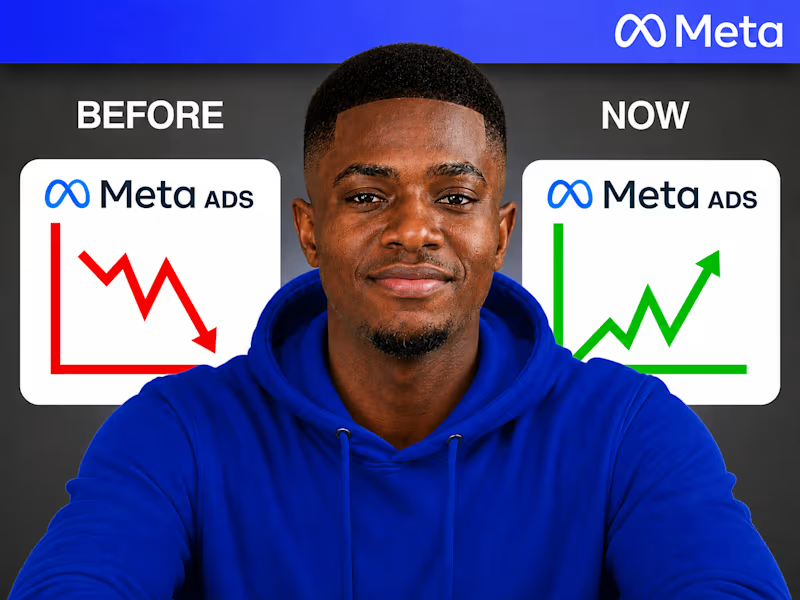
Running Meta Ads is EASY Once You Understand This
With everyone's feed getting flooded with obvious AI-generated content, there's one strategy that's actually working better than ever right now, and it's the exact opposite of AI slop: using real creators in your ads.
Here's why this matters. Nobody's favorite creator is AI-generated. People trust real humans they already follow, not generic content. So instead of fighting that, you lean into it, you partner with creators who already have your audience's attention and trust, and you use that in your ads.
The ad format for this is called Partnership Ads. It's when a creator's profile and your business's profile are both tied to the ad, so you're tapping directly into their audience, the people who are already primed to pay attention because it's coming from someone they follow.
And the data backs this up hard: partnership ads see a 13% higher click-through rate and a 71% higher brand lift compared to regular ads. That's not a small bump, that's a meaningfully different result.
Here's how to actually find the right creator and make this work:
1. Know your audience first, then match the creator to them
Don't just pick whoever has the biggest following. Pick someone your specific target audience already follows and trusts for that topic. A creator can have millions of followers and still be the wrong fit if their audience doesn't overlap with your buyers. Relevance beats reach every time here.
2. Use the Creator Marketplace to shortcut the search
It analyzes your business account and suggests relevant creators automatically. Start with the ones already actively doing partnership ads with other brands, they're more likely to respond, and if brands are already spending budget with them, there's a good chance it's working.
3. Send outreach through the platform, not cold DMs
Generic "we'd love to work with you" messages get ignored, especially by bigger creators drowning in inbound. Messaging through the Creator Marketplace routes into a separate inbox that creators actually check for business inquiries, way better response rate.
4. Get usage rights, not just a post
This is the part people skip. A creator posting once to their own audience gets you a short burst of visibility, most of the value disappears within 24 hours. But if you negotiate permission to run their content as paid ads, you can keep leveraging their trust and face for months, sometimes years. Often costs little to nothing extra to add this in.
5. Work with a few creators, not just one
Results can vary creator to creator. Start with 2-4 rather than betting everything on a single partnership. Increases your odds that at least one significantly outperforms your standard ads.
6. Be specific about some things, flexible on others
Be crystal clear on the call-to-action and the hook structure (ask for multiple different openings/hooks so you get more usable creative variations). But let the creator write their own script and delivery, they know how to talk to their own audience better than you do. Don't over-direct the creative itself.
One more thing worth checking before you partner with anyone do your due diligence. Have they talked about your product category before? Was it positive? Any past controversy that could reflect on your brand? Worth a quick check before committing.
Bottom line: in a feed full of obviously-AI content, a real trusted face recommending your product is one of the strongest scroll-stoppers left. Worth testing even with a modest budget.
Follow along, more of these breakdowns coming. 👀
1
487
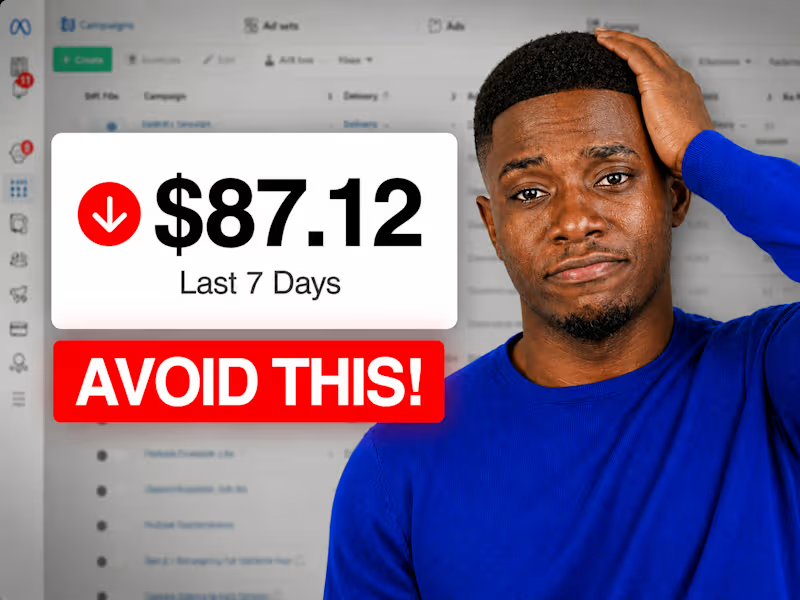
This is not about a targeting fix or a bidding hack, it's about something a lot of advertisers refuse to consider. Let me tell you about a client I took on.
This business had ads that used to work really well. Solid return on ad spend, consistent sales, all built around one product, a bestseller that was great for bringing in new customers. Then slowly, over time, results just... died. Not overnight. Just a steady decline until they were unprofitable across the board.
The obvious answer would be "ad fatigue, right? Just refresh the creative." Except they'd already done that. New ads, new angles, tested regularly. Still declining. So something else was going on.
Here's what I found when I actually dug in: the reviews for that hero product weren't great. Not terrible, just... "fine." "A bit disappointing." "There are better alternatives." And they had direct competitors selling something very similar, with better reviews. That gap was quietly killing their ability to acquire customers, no matter how good the ad creative was.
So here's the uncomfortable truth in this: your ads don't operate in a vacuum. People don't just click and buy blindly anymore. They check reviews, they ask a friend, increasingly they'll even ask ChatGPT "is this actually good, or is there something better?" And your ad is only as strong as what happens when someone goes looking for a second opinion.
There's also a compounding effect most people don't think about, negative word of mouth spreads faster and harder than positive word of mouth. One bad experience gets told to friends, who tell their friends. It snowballs quietly in the background while you're staring at your ad account trying to figure out why performance dropped.
The real question isn't "is my product good?" It's "is my product better than the alternative someone can find in 30 seconds of searching?" That's the actual bar.
So what do you actually do if this is happening to you?
→ Go straight to your reviews; the bad ones AND the good ones. Bad reviews tell you exactly what to fix. Good reviews tell you what to lean into and emphasize more.
→ Don't scale spend on a product with mediocre feedback. It just accelerates the negative word of mouth. Fix the product experience first, then pour fuel on it.
→ If one part of your range has strong reviews and another doesn't, consider shifting your ad budget toward what's actually earning trust, rather than what's just good at grabbing initial attention.
In this case, the fix wasn't a new campaign structure or a smarter bid strategy. It was telling the client to stop aggressively pushing the one product with weak reviews and shift toward products people were actually raving about. Painful short-term call. Completely turned the account around.
Sometimes the biggest lever in your ad account isn't in your ad account at all.
Follow along, more real breakdowns like this coming. 👀
1
583

I keep seeing the same Facebook Ads myths repeated over and over, and they're genuinely costing people money. So let's clear these up, one by one.
Myth 1: Targeting is the most important thing to get right;
It's really not, not anymore. Meta is genuinely good at finding the right people now. If your campaign isn't working, it's rarely a targeting problem (unless you've made it way too restrictive). The real levers are your offer, is it actually better than what your competitors offer, and your creative. Most advertisers obsess over targeting and barely touch their creative. That's backwards.
Myth 2: Testing is the only way to learn;
Testing matters, but it's slow. The faster way to learn is modeling, looking at ads that are already proven to work and using them as your starting point instead of reinventing everything from scratch.
Myth 3: You need a big budget for Facebook Ads to work;
False. Start small, learn what works, then scale. In fact, your best ROAS numbers often come from smaller budgets, because Meta puts your ads in front of the best-fit people first, and the bigger you scale, the more you dilute into a slightly-less-perfect audience. Bigger budgets don't cause better results, they just tend to belong to bigger brands with stronger offers already.
Myth 4: You can't sell directly with Facebook Ads;
Also false. Most successful campaigns are direct-to-offer. The nuance is price point, cheaper products (under ~$100) almost have to go direct, while higher-ticket offers need more warming up first. But "direct selling doesn't work" isn't the real issue, usually it's the offer or the creative that's weak.
Myth 5: Facebook Ads only work for cheap products;
This one genuinely bugs me. The businesses getting insane ROAS (like 50x, 70x) are almost always the ones with high customer lifetime value, not low prices. High-ticket just requires a different strategy, more touchpoints, testimonials, multiple calls to action, not a "this platform doesn't work for me" conclusion.
Myth 6: You can only scale budgets 10% at a time;
Outdated advice. Depending on your budget size, you can often scale by 50-100%+ without tanking your results. Smaller budgets can jump bigger percentages; larger budgets need smaller, more careful increments.
Myth 7: Avoid the learning phase at all costs;
The learning phase isn't the enemy, it's Meta figuring out how to get you the best results. It typically only lasts 24-48 hours, and avoiding all changes to dodge it actually holds your account back more than it helps.
Myth 8: Retargeting is pointless now;
Meta automates a lot of retargeting these days, sure. But if you want different messaging or offers for warm audiences vs. cold ones, you still need dedicated retargeting campaigns. It's not dead, it's just more selective now.
Myth 9: Followers don't matter;
Trying to build an audience organically to skip ads entirely? Doesn't really work anymore. But having a credible follower count still matters, when a cold audience clicks through to check you out, a dead or tiny profile can quietly kill conversions.
Myth 10: New ad accounts can't run sales/lead campaigns;
Huge one. People think they need to "warm up" a new account with traffic campaigns first. That's similar to training for a marathon by swimming. Run the actual campaign type you want results from, conversions, leads, sales, even if it's rough at first. That's literally how the account learns and improves.
Myth 11: Video always outperforms images;
Not true. It depends heavily on your product, audience, and industry. Test both, don't default to video just because it's trendy.
Honestly, the common thread through almost every one of these? People find the wrong explanation for why their campaign underperformed, and then "fix" the wrong thing. Offer and creative fix way more problems than people give them credit for.
Follow for more of these breakdowns, trust me, there's more where this came from. 👀
1
416

Digital marketing consultant
- $25k+
- Earned
- 23x
- Hired
- 4.8
- Rating
- 78
- Followers
Digital marketing consultant


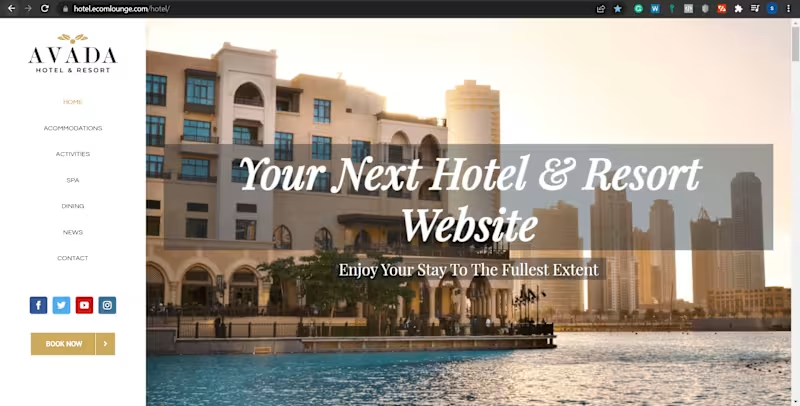

Performance Marketing - PPC & Paid Media Expert
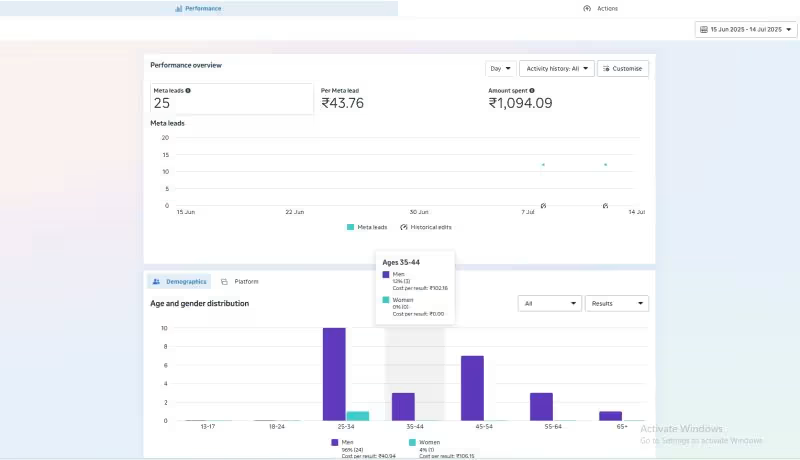
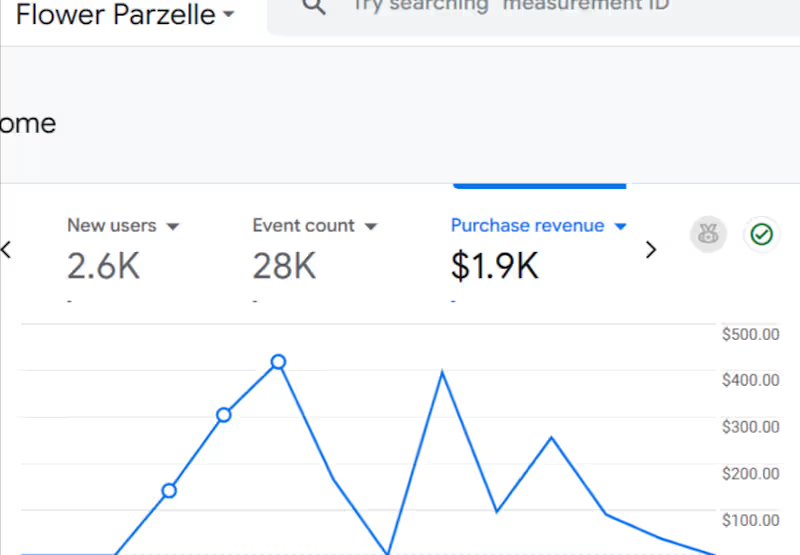
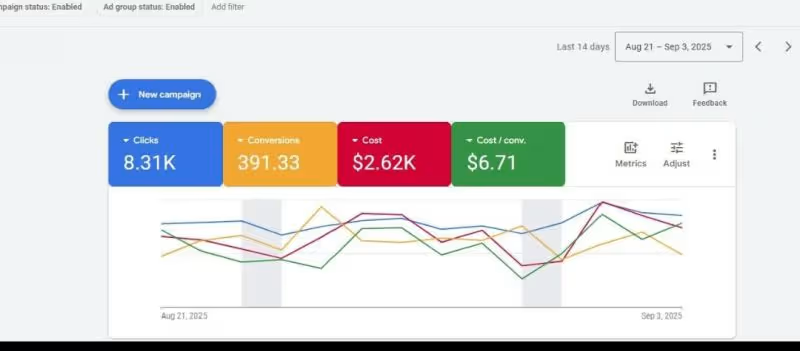
Google Ads Campaign Results — Last 14 Days (Aug 21 – Sep 3, 2025)
Here’s another campaign performance snapshot that shows how consistent optimization can lead to cost-effective conversions:
✅ 8.31K Clicks
✅ 391 Conversions
✅ $2.62K Total Spend
✅ $6.71 Cost per Conversion
By refining keywords, improving ad relevance, and optimizing bidding strategies, I was able to drive high-quality leads at a very efficient cost.
This campaign is a great example of how data-driven adjustments and continuous testing help achieve strong ROI, even with a moderate budget.
1
232

Online ad agency looking for contractors


View more →

Boosting ROI with Expert Paid Ads Services & Emails