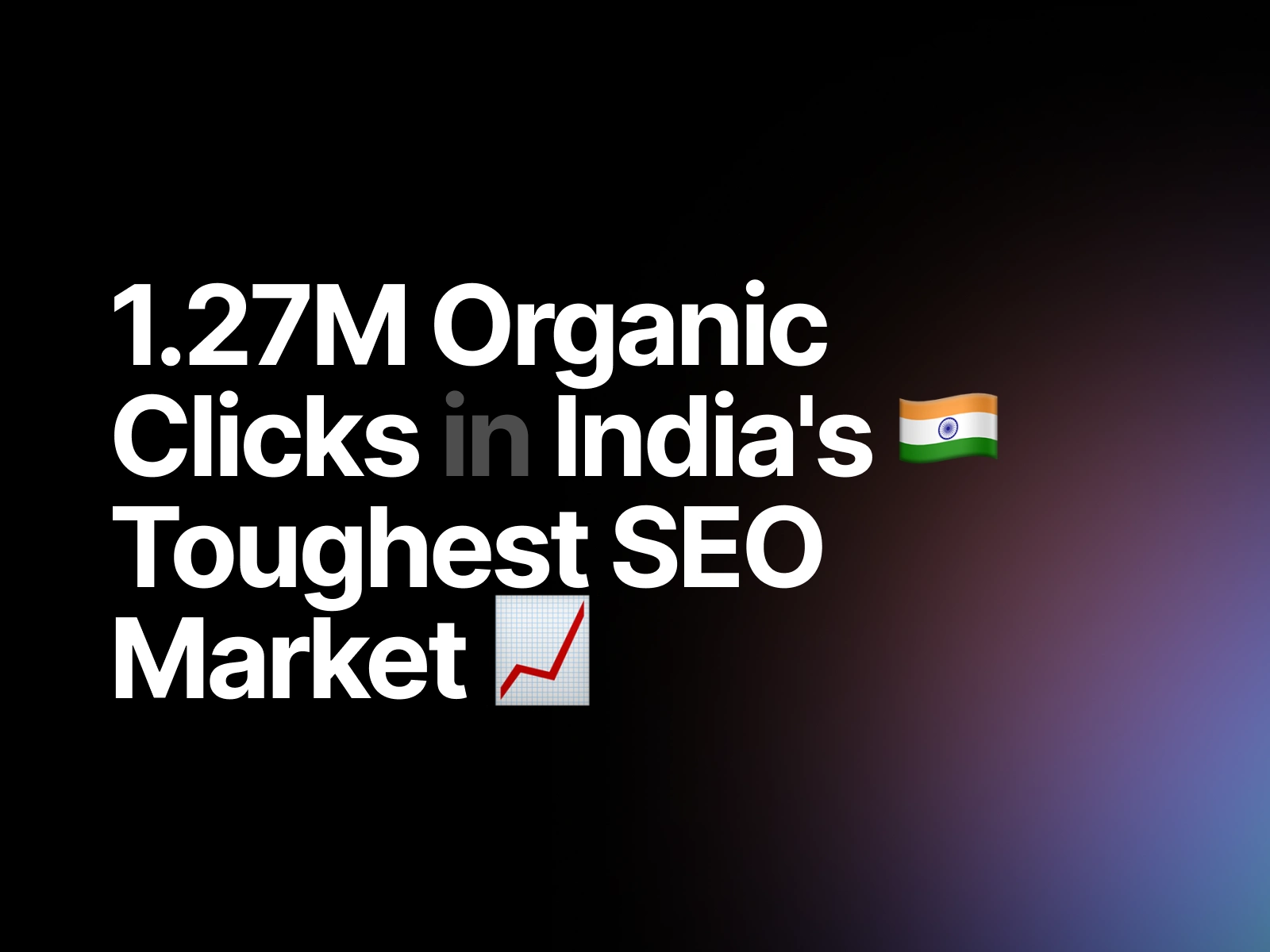
12.4M Impressions. 1.27M Clicks. Zero Ad Spend. From Absolute 0.

Rohit Shihora
Verified


Performance Benchmarks
Search & Traffic Performance (12-Month Window)
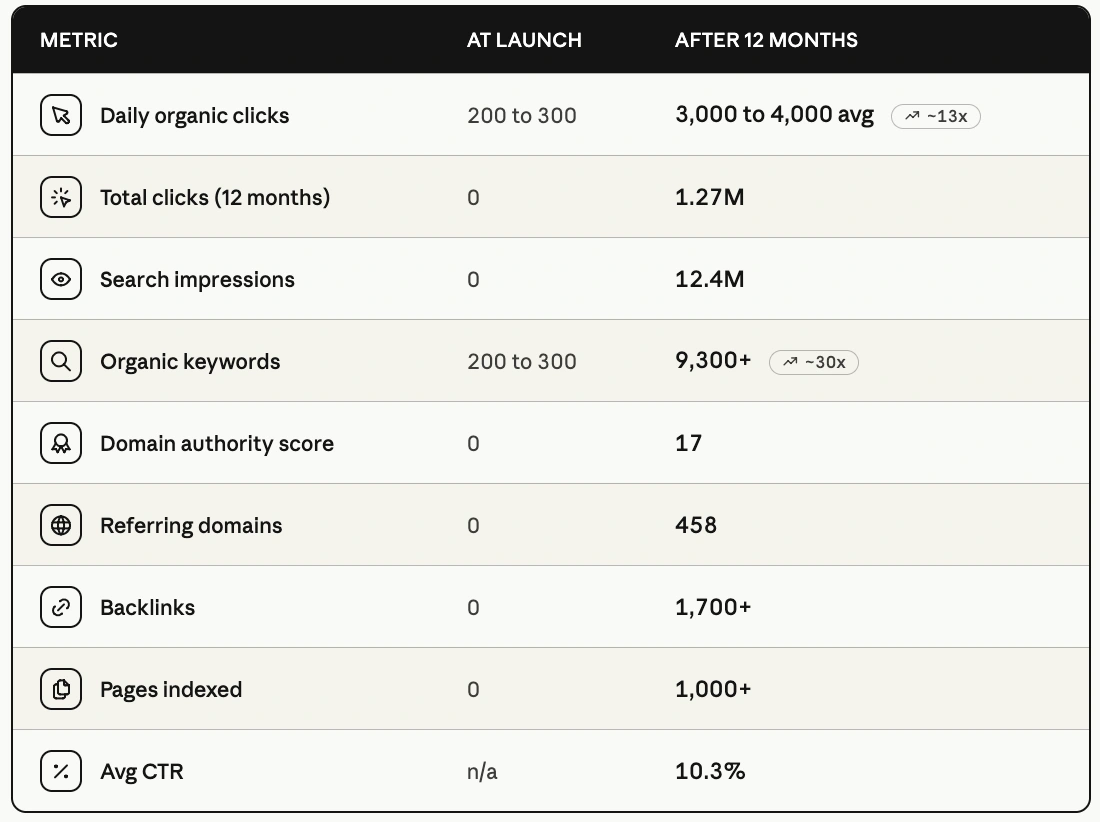
Total Organic Clicks: 1.27M
Total Search Impressions: 12.4M
Average Click-Through Rate: 10.3% (well above industry average)
Average Search Position: 9.6
Daily Traffic Growth: From 200 to 300 clicks per day at launch, to 3,000 to 4,000 clicks per day after month 6, with peaks of 10,000 plus during exam season
Domain Authority & Keyword Growth
Domain Authority Score: 0 to 17 (built entirely from scratch)
Organic Keywords Ranking: 200 to 300 at launch, grew to 9,300 plus
Referring Domains: 458
Total Backlinks: 1,700+ (earned organically)
Pages Indexed: 1,000+ across multiple boards, classes, and subjects
Real Student Impact
Peak Concurrent Users (Exam Season): 1,100+ active users in a 30-minute window
Geographic Reach: Strong organic traffic across Bihar, Uttar Pradesh, Maharashtra, Tamil Nadu, Delhi, Gujarat, and other Indian states
Revenue Model: 100% AdSense-driven, zero paid acquisition, zero subscriptions
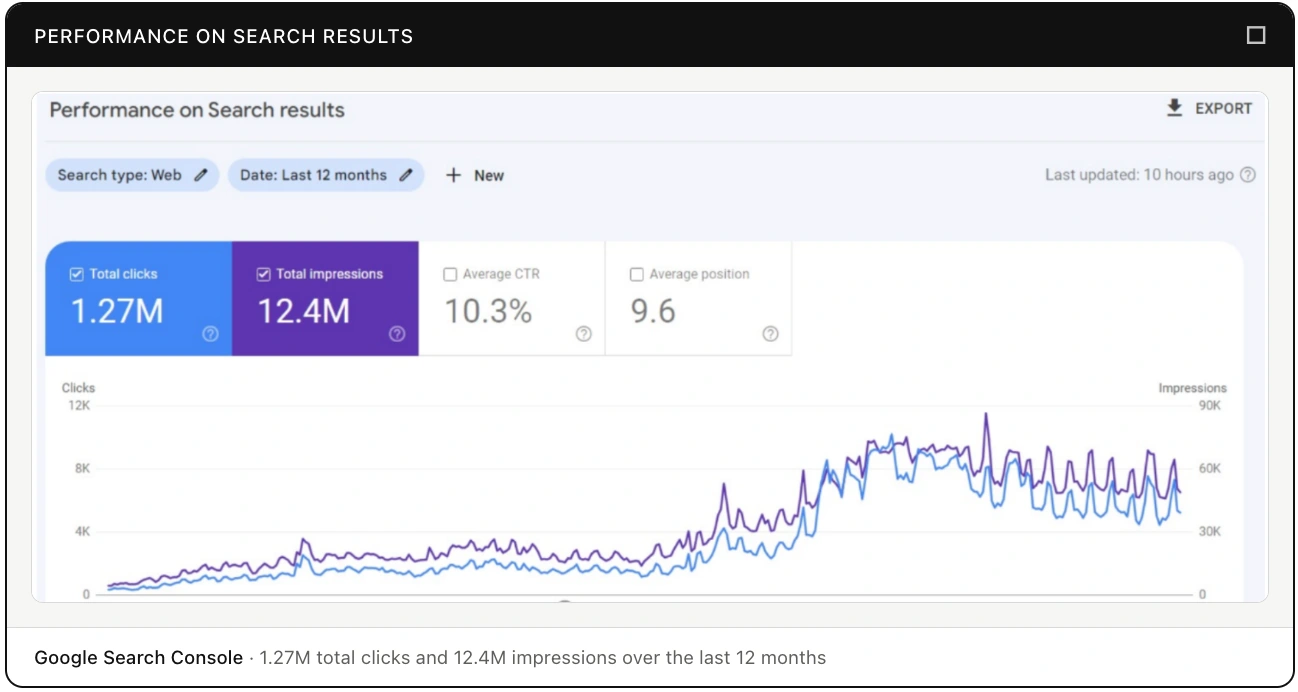
Google Search Console
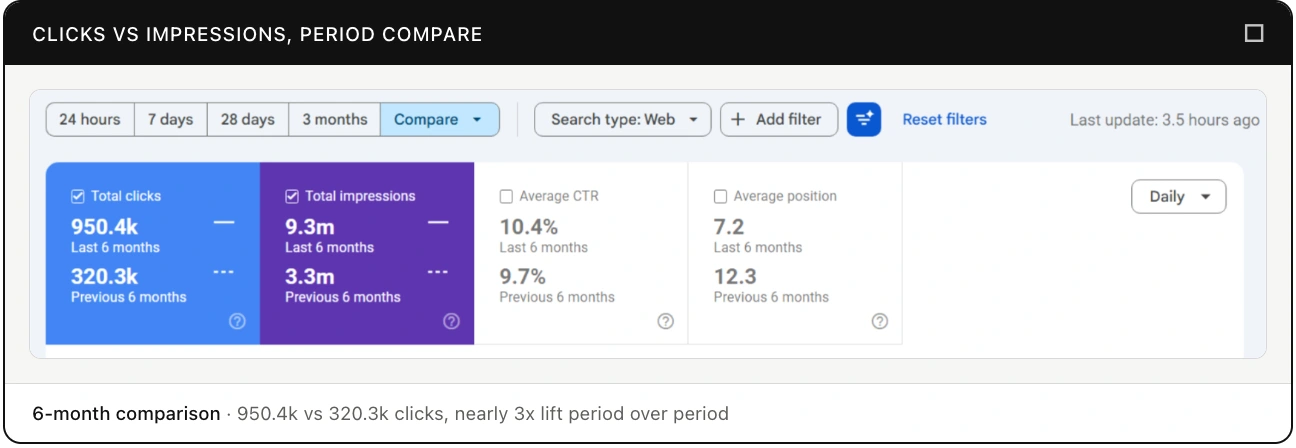
Comparision
The Project: An Indian Education Portal
This case study covers a 12-month SEO and content strategy executed on a brand-new education portal in the Indian academic resources niche. The site serves students across state boards including Bihar Board (BSEB), UP Board, GSEB, Tamil Nadu Board, RBSE, and PSEB, along with NCERT solutions, textbook solutions (TS Grewal, RS Aggarwal, HC Verma, ML Aggarwal), and study materials for classes 6 through 12.
The objective was not to chase vanity traffic but to build a genuine, student-first academic resource that could compete with established players in one of the most crowded digital education markets in the world.
The Challenge
The Indian online education space is dominated by well-funded platforms such as Vedantu, BYJU'S, and Selfstudys. While these players had captured the top of Google's search results for most academic queries, they had also created a poor experience for the actual end user, the student looking for a quick answer.
Core Problems in the Existing Market
Paywalls Everywhere: Solutions and study material hidden behind subscriptions and course funnels
Heavy Ad-Spam: Pages flooded with ads, popups, and pushy course promotions that drowned out the actual content
Outdated Answers: Solutions that did not match the current syllabus, especially for state boards like Bihar and UP
Login and Registration Walls: Students forced to sign up just to see a Class 8 math solution
Generic Content: Copy-pasted answers that did not actually help students understand the concept
State board students, especially those preparing for Bihar Board and UP Board exams, were the most underserved. Their syllabus is region-specific, the user base is largely mobile-first, and most existing platforms treat this audience as an afterthought compared to CBSE.
The Strategic Roadmap
The campaign was built around one core idea: respect the student's time. No subscriptions, no popups, no login walls, no upsells. Just clean, accurate answers from real teachers, in a fast and simple interface.
Phase 1: The Foundation (Months 0 to 2)
Since this was a greenfield site with no prior history, the focus was on building a strong technical foundation from day one.
Technical SEO Setup
Lightweight Stack: WordPress paired with the GeneratePress theme to ensure fast load times and minimal bloat
Clean URL Structure: Hierarchical URLs reflecting board, class, subject, and chapter
Basic, Stable Schema: Standard website schema without aggressive over-layering
Mobile-First Design: Given that the majority of Indian students access content on budget Android devices
Ongoing Audits Every 15 Days: Recurring Semrush audits to catch and fix canonical issues, thin content, and any technical drift early
Phase 2: Content Architecture (Months 1 to 6)
Instead of publishing scattered blog posts, the entire site was structured as an academic ecosystem. Each piece of content sat inside a logical hierarchy that mirrored how a student actually navigates their syllabus.
The Content Hierarchy
Main Board Page (for example, Bihar Board Solutions)
Class Page (Class 6, Class 7, Class 8, all the way through Class 12)
Subject Page (Maths, Science, Hindi, English, Sanskrit, History, Civics, Geography)
Chapter Page (full question-and-answer solutions for every chapter)
Every page was internally linked across the hierarchy. A student landing on a Class 10 chapter page could find their full subject, switch to another chapter, jump to a different class, or move to another board without ever feeling lost.
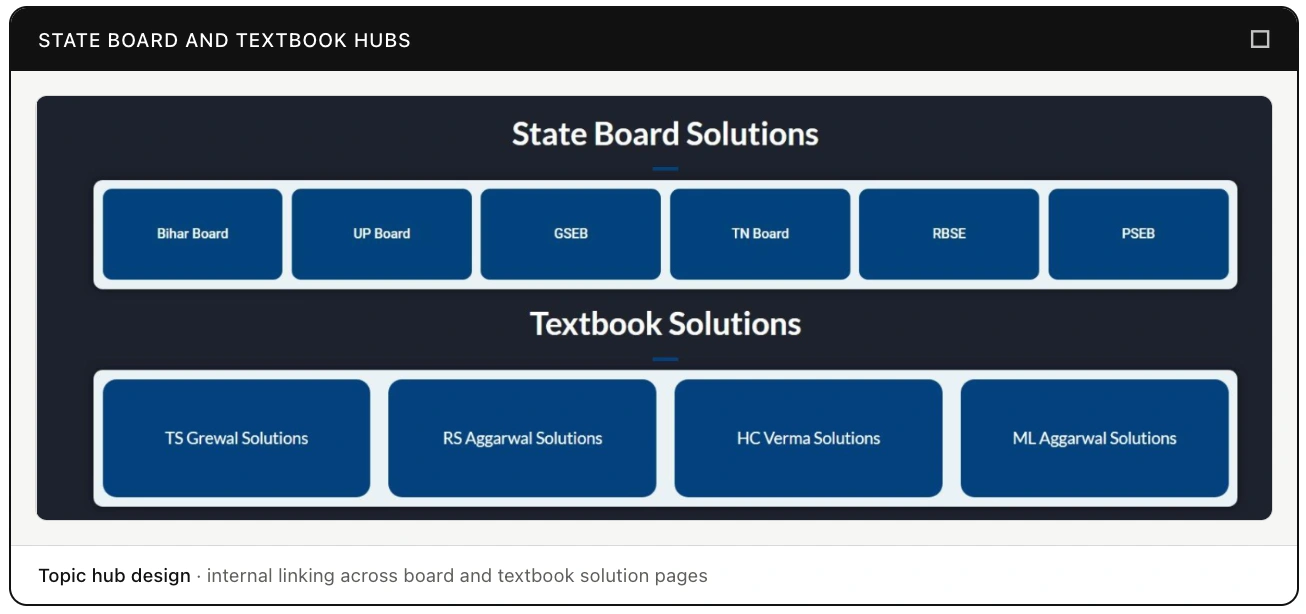
Multi-board coverage: State boards and textbook solutions presented in a clean, scannable layout
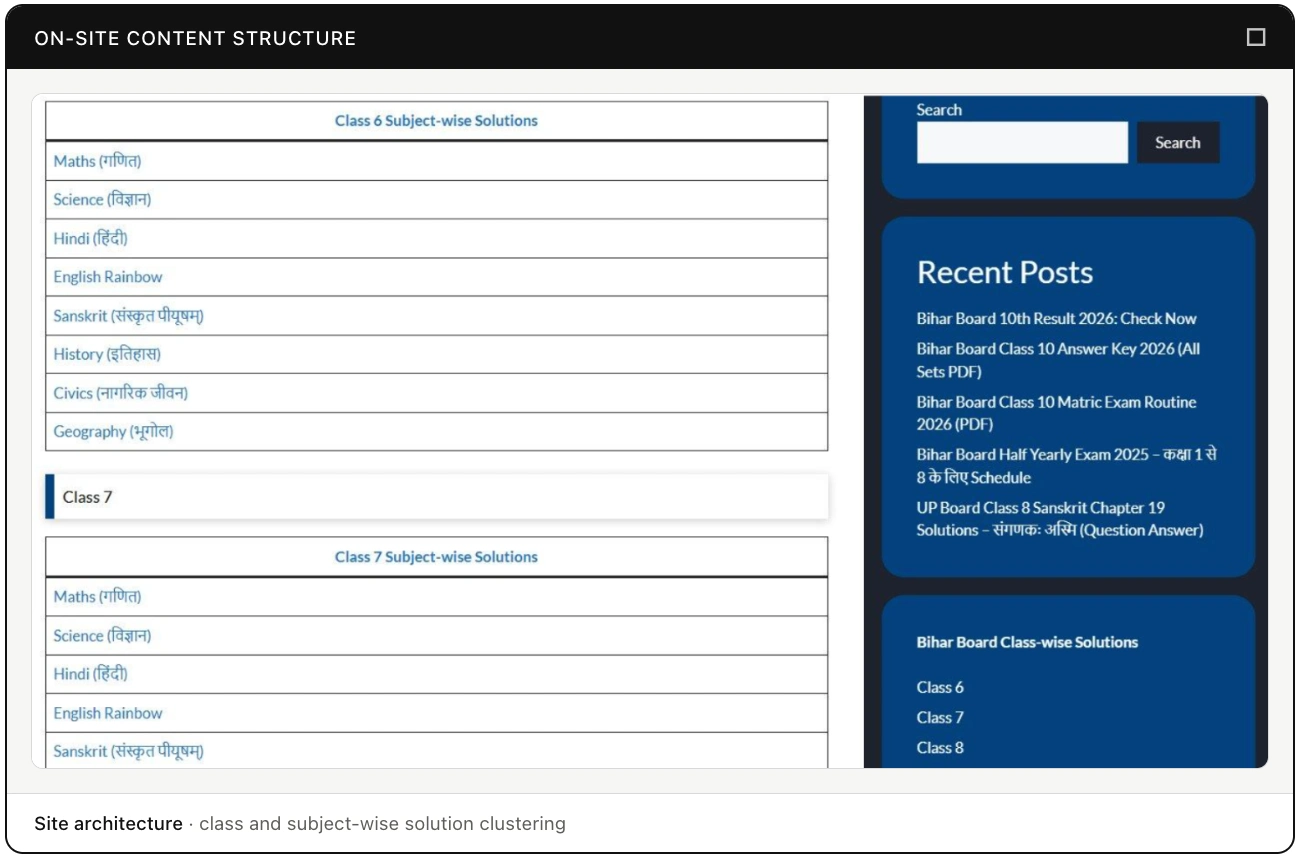
Class-wise subject linking with bilingual labels (Hindi and English) to match how Indian students actually search
Phase 3: Content Quality (Ongoing)
This was the most important differentiator. Most education sites in the niche rely on cheap freelance writers or copy-pasted solutions. We took a different approach.
Subject Expert Driven Content
Hired Actual Teachers: Solutions were written by qualified subject teachers who could explain a concept the way a confused student needed to hear it
Doubt-First Writing: Every solution was structured to anticipate where a student would get stuck, not just list the correct answer
Direct, Clean Answers: Questions opened with a clear, direct answer at the top, followed by step-by-step explanation
Aligned With Current Syllabus: Content reviewed and updated to match the latest exam patterns from each board
This direct-answer structure had an unintended but powerful side effect: it positioned the content perfectly for AI Overviews, featured snippets, and zero-click search environments that were just starting to grow during this period.
Phase 4: User Experience as a Growth Lever
The UX strategy was defined more by what we removed than what we added. The principle was simple: a student looking for a Class 9 Hindi answer should be one click away from it.
What We Removed
No subscription prompts
No course upsells
No pay-to-unlock content
No login or registration walls
No interrupting popups
Minimal, non-intrusive ads (AdSense only)
What We Kept
Fast page loads on low-end mobile devices
Clean reading layout with proper spacing
Bilingual content labels (Hindi and English) where it mattered
Strong internal navigation between related solutions
Free access to every page, no exceptions
Results? (Compounding Organic Growth)
The first three to four months were quiet. Daily clicks hovered between 200 and 300 as Google indexed the site and started understanding the topical depth. Then around month six, the inflection happened.
Before vs After
Before vs After
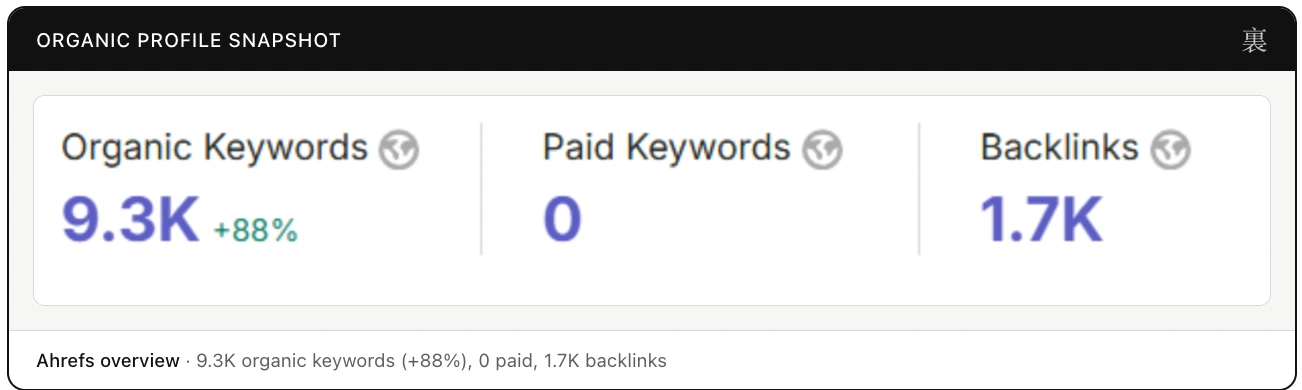
Semrush snapshot: 9.3K organic keywords with +88% growth & 1.7K backlinks
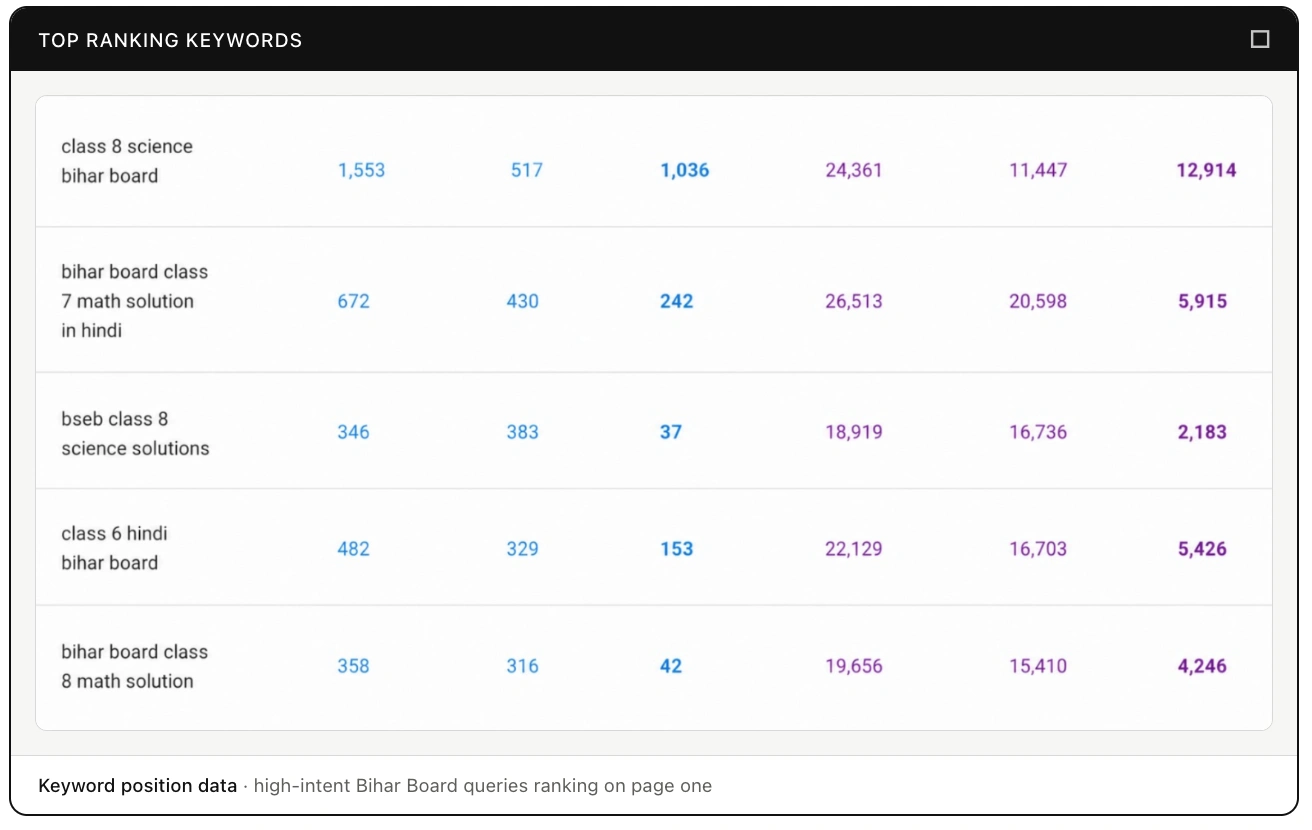
Keyword Rankings
Real Student Engagement at Peak Moments
One of the strongest indicators of product-market fit came from the realtime data during board exam season. On exam days, the site saw genuine spikes of concurrent active users from across India.
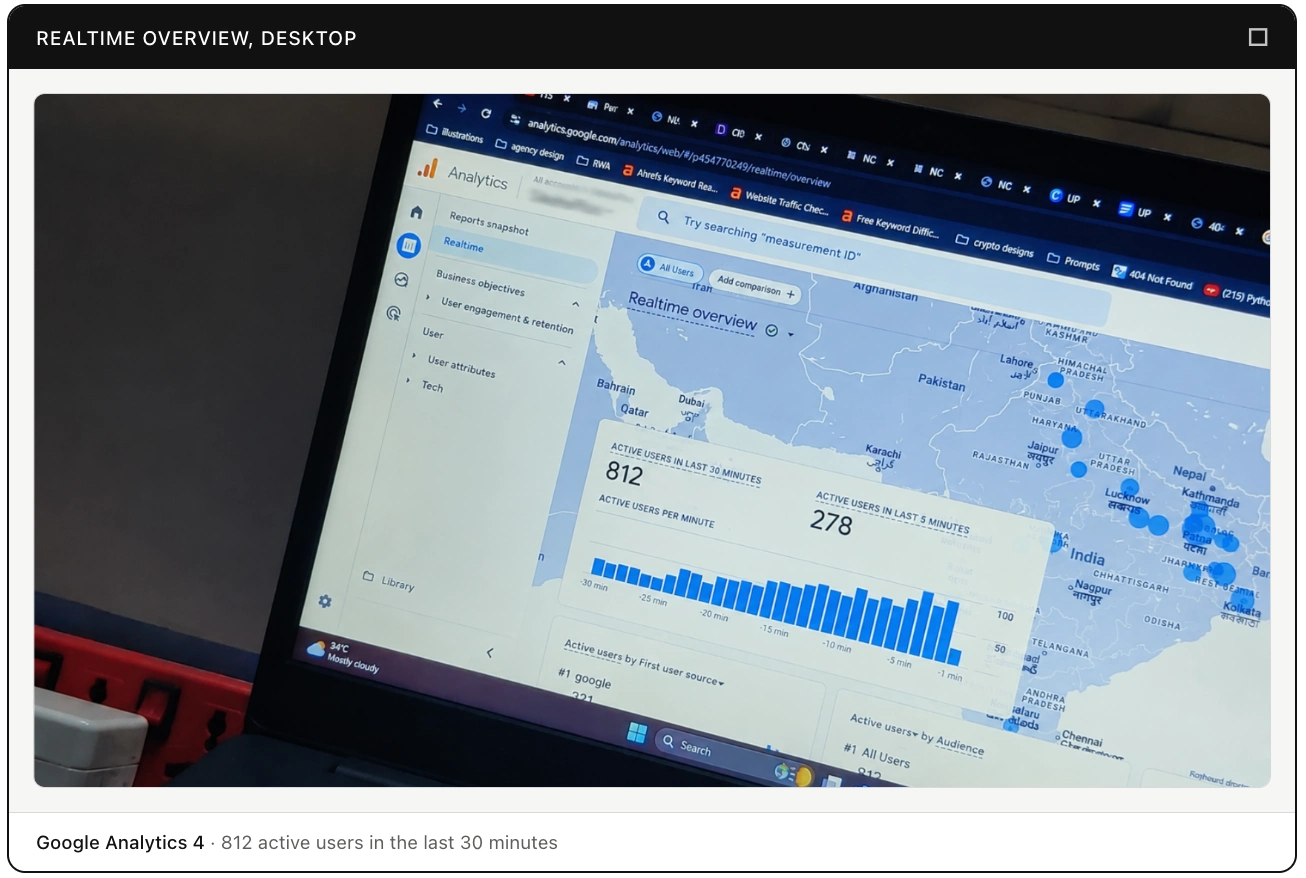
GA4 Realtime: 812 active users in 30 minutes, with 278 in the last 5 minutes
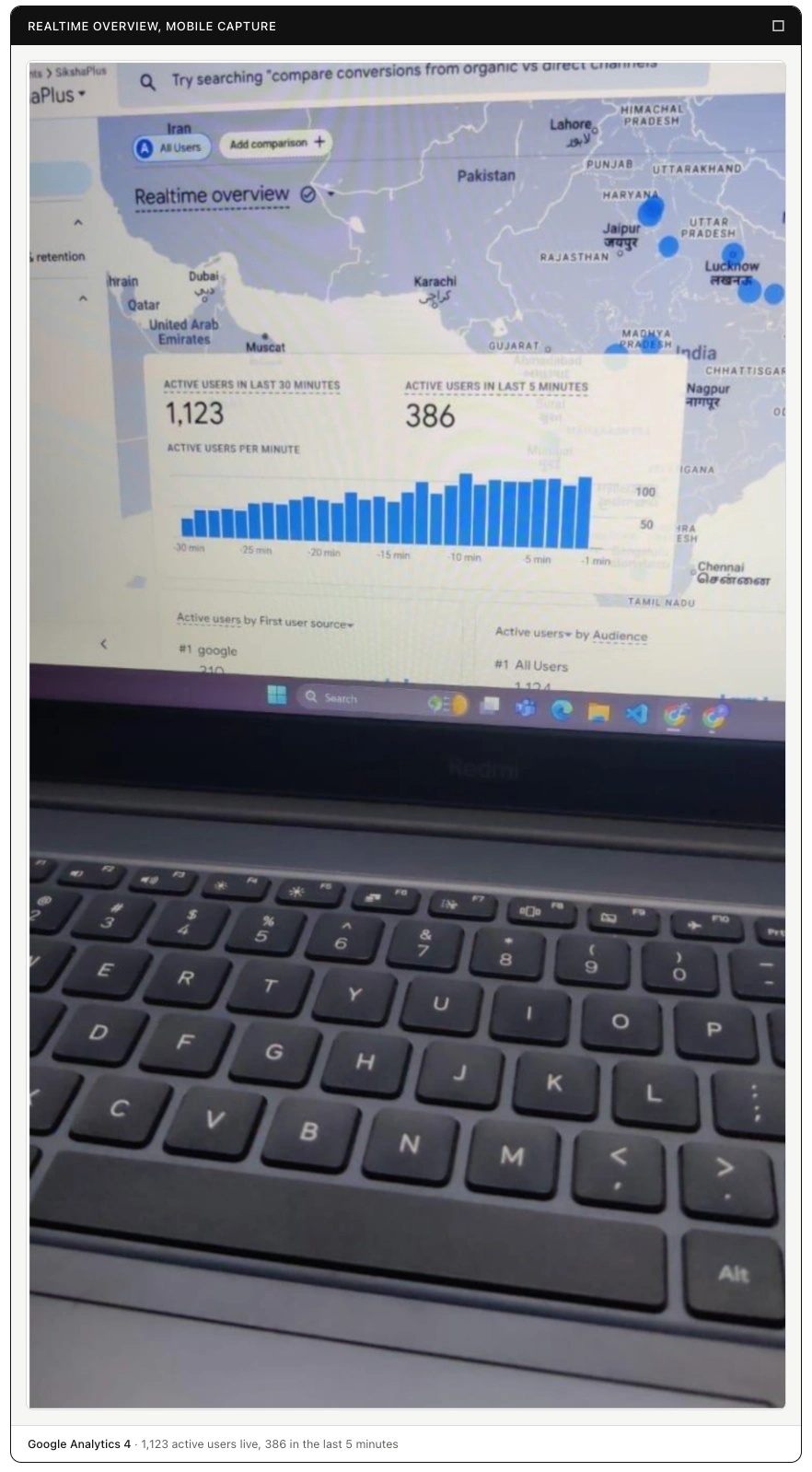
GA4 Realtime peak: 1,123 active users in 30 minutes, 386 in the last 5 minutes, concentrated across Bihar, UP, Maharashtra, Tamil Nadu, and Delhi
These were not vanity metrics. These were real students opening the site moments before, or right after their board exams to verify answers, check syllabus, and review specific chapters. The geographic concentration in Bihar, UP, and other state board regions confirmed that the targeting strategy worked.
Why This Strategy Worked
Several factors compounded over twelve months to produce these results.
1. Topical Authority Through Depth, Not Breadth
Instead of spraying content across unrelated topics, every page reinforced the site's authority on Indian academic content. Google recognized the depth of coverage and started ranking pages faster as the cluster matured.
2. Direct Answers That Match Search Intent
Students searching for a chapter solution want the solution, not a 2,000-word essay about why math is important. The direct-answer format matched intent perfectly, which is also why CTR reached 10.3%, well above industry averages.
3. The Anti-Friction UX Won the Long Game
In a niche where every competitor was building walls (subscriptions, logins, paywalls), being the only site with zero friction created word-of-mouth growth. Students bookmarked the site, shared links in WhatsApp groups, and returned repeatedly.
4. Consistent Technical Hygiene
Running Semrush audits every 15 days meant small issues never compounded into ranking problems. Canonical errors, thin pages, and minor UI bugs were caught before they affected performance.
5. Real Teachers, Real Content
Hiring actual subject teachers cost more upfront but paid off in two ways: content was genuinely useful (driving return visits) and search engines could detect the quality difference through engagement signals like time on page and low bounce rates.
Like this project
Posted Jun 18, 2026
Built topical authority in one of India's most competitive education markets through technical SEO, teacher-led content, and a zero-friction user experience.
Likes
1
Views
38
Timeline
Feb 23, 2026 - Ongoing
Clients
Siksha