


Support Expert

Web Developer-Shopify, Webflow & Custom Builds That Converts
- $100k+
- Earned
- 23x
- Hired
- 5.0
- Rating
- 138
- Followers
Web Developer-Shopify, Webflow & Custom Builds That Converts

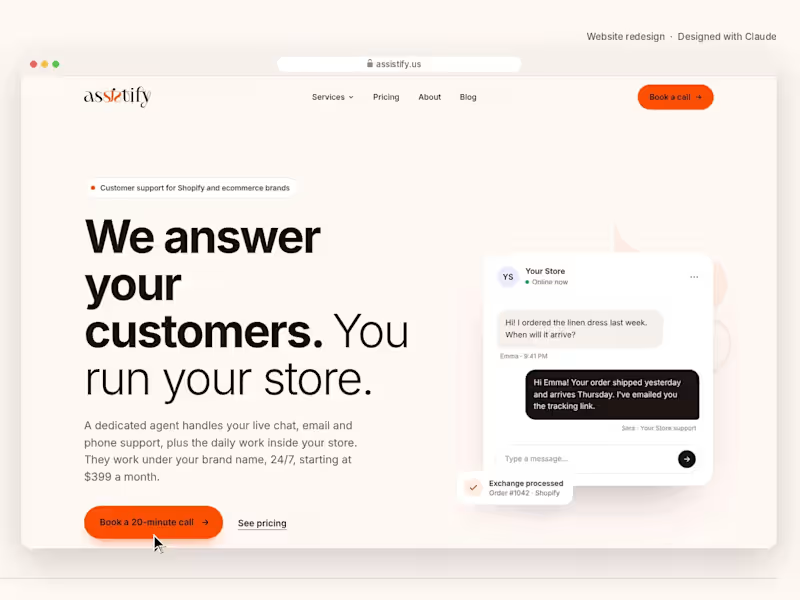
Assistify — Website Redesign
Wow. I tried designing with Claude for the first time, and I'm honestly in awe.
I redesigned the website for Assistify, my customer support and store management company for Shopify brands. In one evening, I went from "everything is wrong with this site" to 8 finished pages: a homepage, four service pages, About, Contact and Blog.
What I love about it:
• Clean, minimal layout with lots of white space, built on our own brand colors
• Subtle animations: a live chat demo, an inbox that clears itself, a phone call that connects
• Interactive sections, like a coverage-hours picker and a booking card
• Plain, honest copy that actually explains what we do
• Fully responsive on mobile
It also gave me a developer-ready package with clean HTML, CSS and JavaScript, so the build can start right away.
As someone who makes websites for clients, this changes how I'll start every project.
Web design · UI/UX · Website redesign · Shopify customer support.
1
2
175

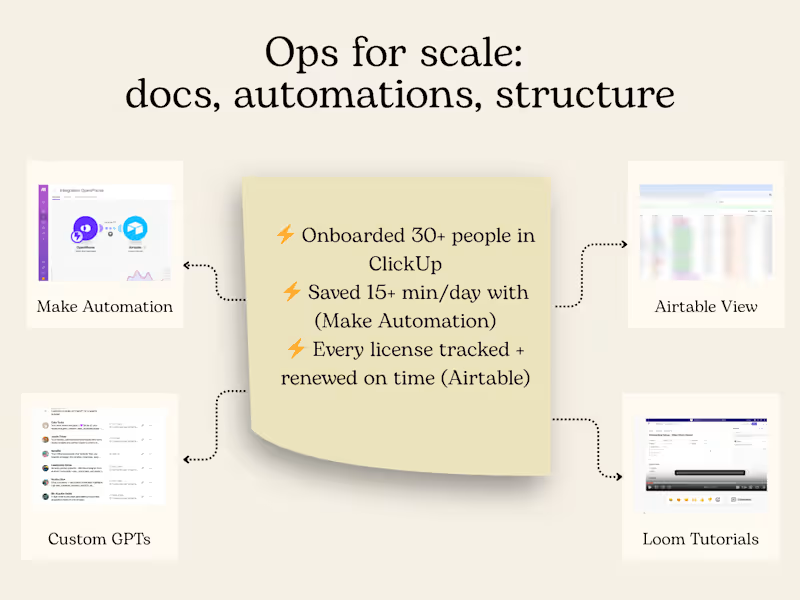
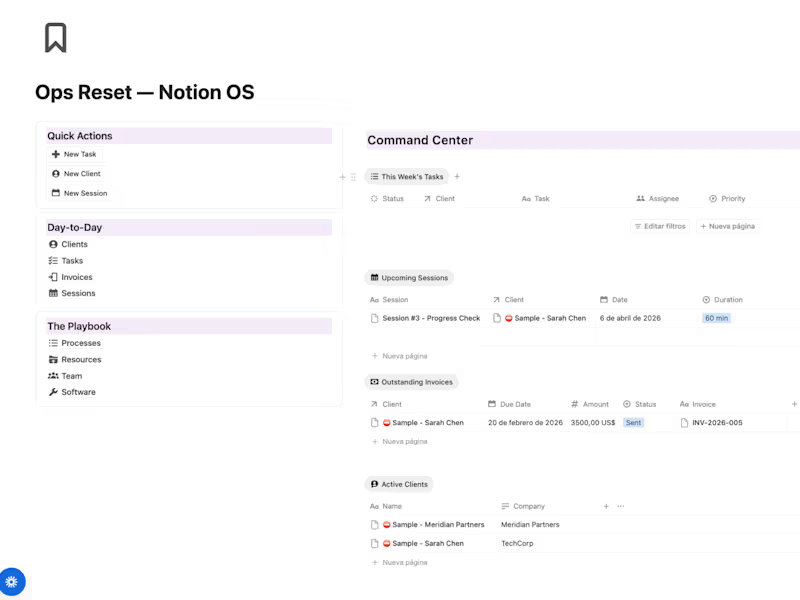
Operations & systems partner for founder-led teams

Sr Project Manager
- $25k+
- Earned
- 1x
- Hired
- 5.0
- Rating
- 44
- Followers
Sr Project Manager

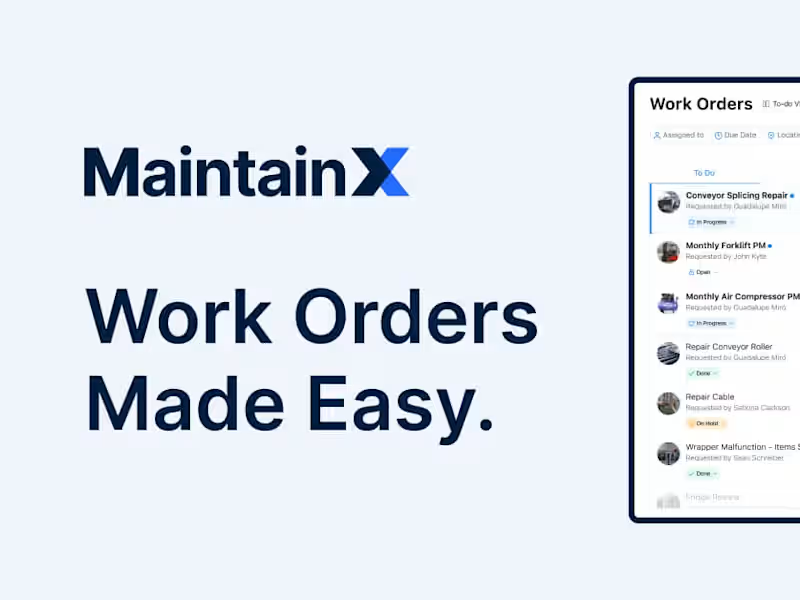
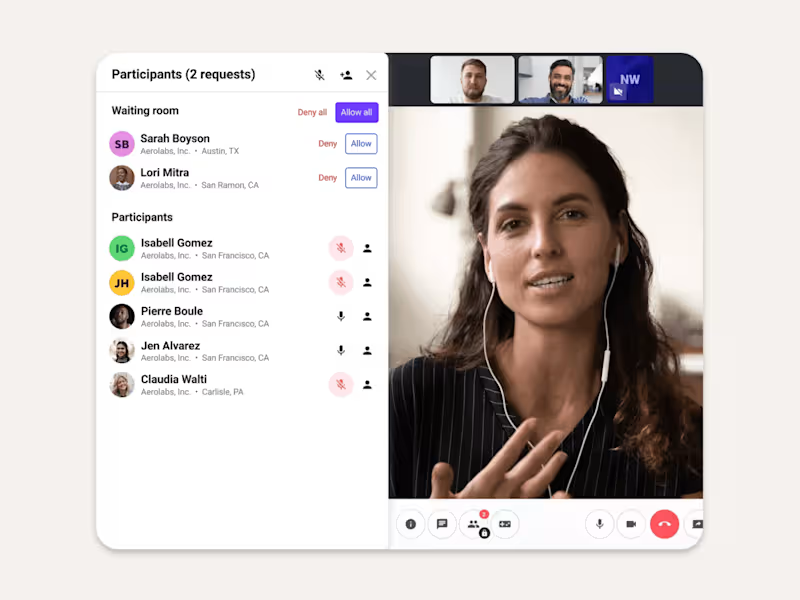


Let's systemize and automate your business.
Let's systemize and automate your business.



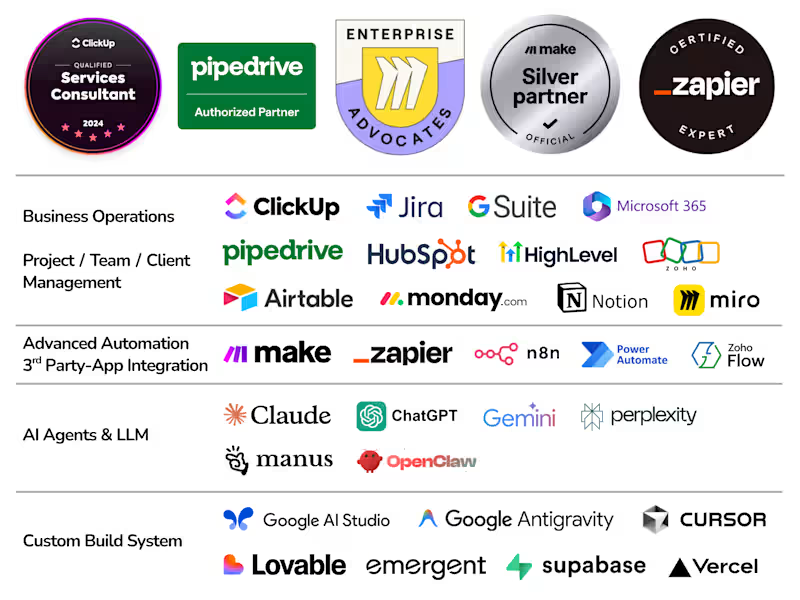


Operation Support




View more →

Building your community with purposeful content & operations
- $•••••
- Earned
- 1x
- Hired
- 5.0
- Rating
- 7
- Followers
Building your community with purposeful content & operations


Small-Business Website Builder | RVW Systems
- 1x
- Hired
- 5.0
- Rating
- 15
- Followers
Small-Business Website Builder | RVW Systems
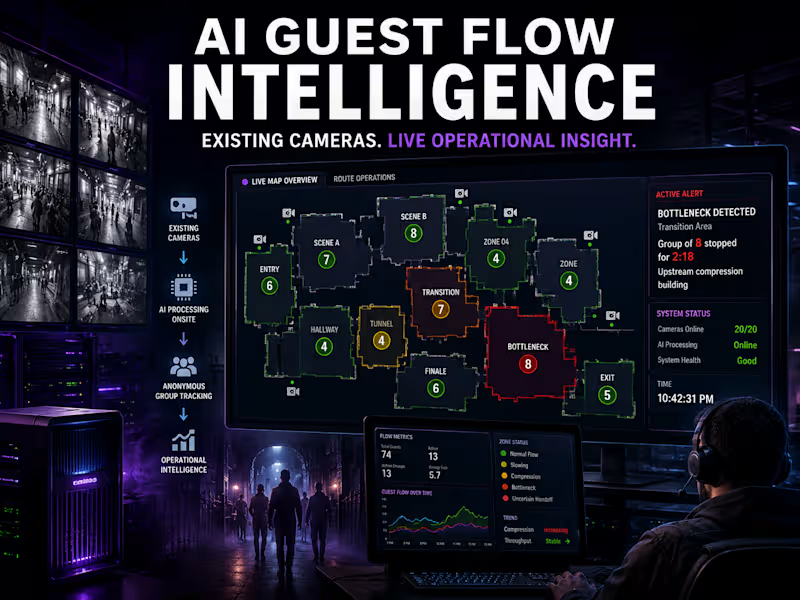
Business Automation Specialist
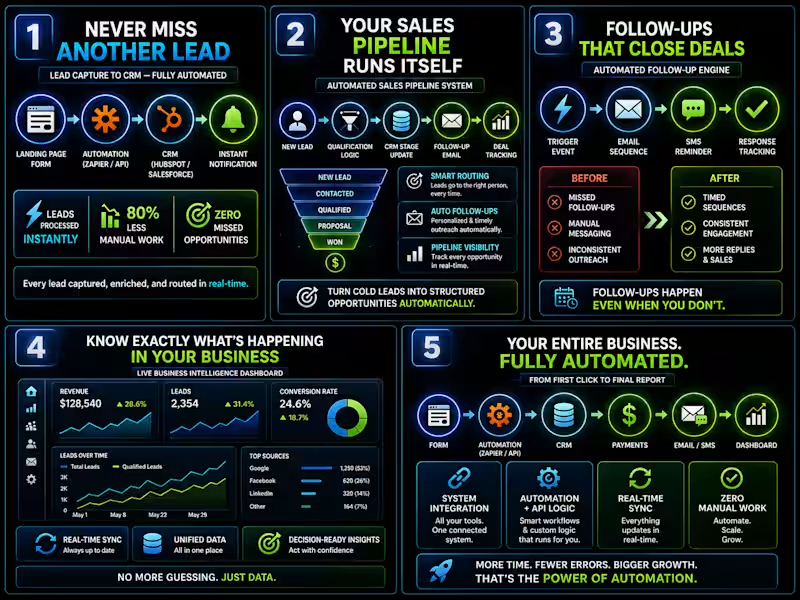
I design and build fully automated business systems that eliminate manual work, reduce errors, and help companies scale faster without increasing overhead.
From lead capture to final reporting, I connect your tools into one seamless workflow using automation platforms, APIs, and custom logic.
What I Do
I turn scattered processes into clean, reliable systems:
Capture and route leads instantly
Automate follow-ups via email and SMS
Build and manage CRM pipelines
Sync data across platforms in real-time
Create dashboards for clear, actionable insights
Systems I Build
Lead Capture → CRM → Notifications
Sales Pipelines with automated stage progression
Follow-up engines that engage prospects automatically
End-to-end workflows from first click to closed deal
Real-time reporting dashboards
The Result
No more manual data entry
No more missed leads
No more inconsistent follow-ups
Faster response times
Scalable, reliable operations
My Approach
Every system I build is designed to be:
Simple – easy to use and maintain
Reliable – runs without constant oversight
Scalable – grows with your business
Bottom Line
I don’t just automate tasks…
I build systems that run your business for you.
1
129
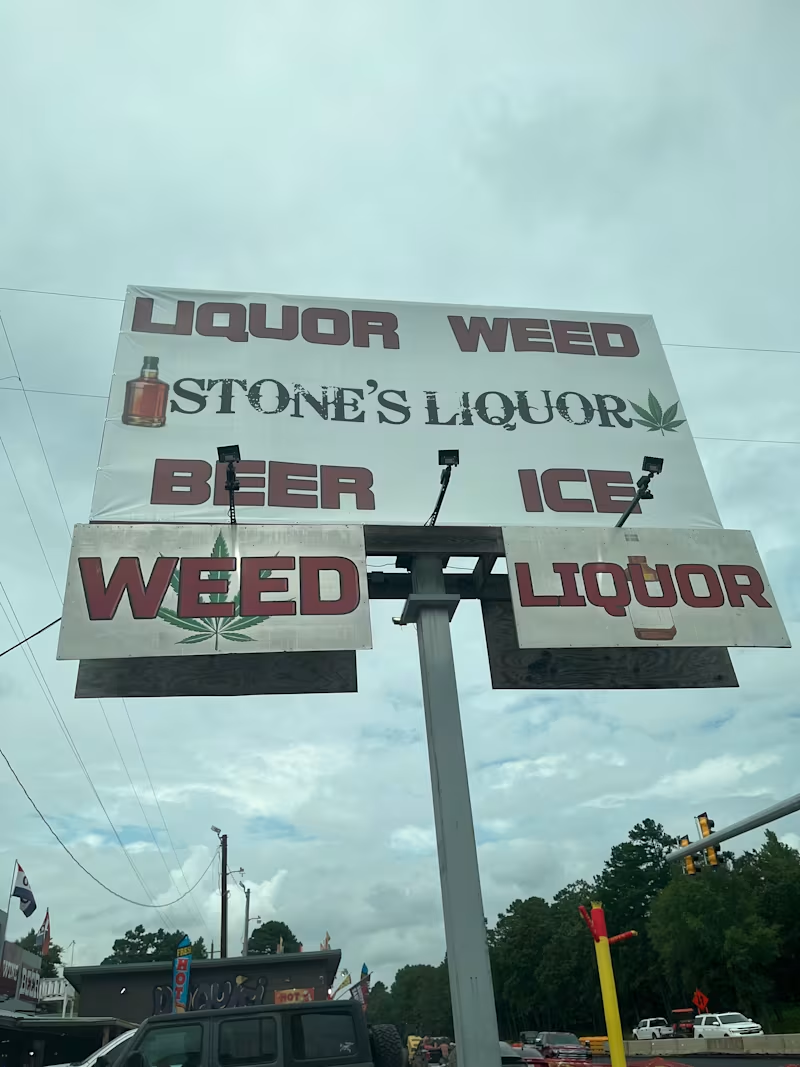
Sometimes your entire marketing strategy can fit on one sign.
LIQUOR.
WEED.
BEER.
ICE.
😂 Message received.
I passed this billboard and had to take a picture because, as ridiculous as it looks, there’s actually a pretty good business lesson hiding in it.
This business probably doesn’t need a 14-step nurture sequence explaining what they sell.
They don’t need an AI chatbot educating customers about their value proposition.
They may not need an elaborate content strategy or a beautifully engineered sales funnel.
They need people driving by to know:
“Yep. We have that.”
And apparently they decided subtlety was optional.
But here’s the important part:
That strategy works for their business.
It probably wouldn’t work for yours.
A local convenience-driven retailer, a roofing company, a consultant, a SaaS company, an e-commerce brand, and a $20,000 B2B service should not have the same marketing system.
Yet businesses constantly get sold the same formula:
“Post more content.”
“Run Facebook ads.”
“Build a funnel.”
“Add AI.”
“Automate everything.”
Maybe.
Or maybe you just need a giant sign that says WEED.
The point is that good marketing starts by understanding how your customer actually buys.
Where do they discover you?
What makes them stop?
What information do they need before they trust you?
How long does the decision take?
And what friction exists between “I’m interested” and “take my money”?
Build the system around those answers—not around whatever marketing tactic happens to be trending this month.
Sometimes the right solution is a sophisticated combination of websites, CRM, automation, AI, content, lead nurturing, and analytics.
Sometimes it’s four words on a billboard.
Knowing the difference is the strategy.
And whoever designed this one?
They definitely understood the assignment. 😂
What’s the simplest marketing strategy you’ve ever seen that actually worked?
1
2
183
I'm currently designing an AI-assisted guest-flow intelligence system for a confidential large-scale immersive entertainment venue.
The venue already has an extensive hardwired camera network. The goal is not to replace it. It's to turn selected camera feeds into a new operational intelligence layer.
System Architecture
The proposed system uses a dedicated onsite NVIDIA-powered AI server to:
Detect guests anonymously without facial recognition
Associate guests into temporary operational groups
Display numbered group markers on a live floor map
Measure dwell time, occupancy, pacing, and group gaps
Identify developing slowdowns, compression, and bottlenecks
Monitor participating camera feeds
Generate end-of-shift operational reports
Two Complementary Interfaces
Live Map Overview
A command-center display showing where anonymous guest groups are located, how many people each marker represents, and where congestion is developing.
Route Operations Dashboard
A simplified dashboard built for fast decisions, tablets, and mobile viewing. It shows the active problem, its severity, and the recommended response.
The Hard Engineering Problem
The system is designed around the venue's existing cameras and DVRs, using controlled read-only video streams and local processing. All operational video analysis and event data remain onsite.
The hardest part is not creating a beautiful dashboard. It is engineering reliable tracking through darkness, fog, strobes, costumes, occlusion, and non-overlapping camera views while honestly displaying uncertainty when a handoff cannot be confirmed.
Current Work
Technical architecture
Computer-vision validation planning
Onsite server design (custom NVIDIA build)
Camera and zone mapping
Route-aware group handoff logic
Event database design
Live dashboard prototyping
Acceptance testing and deployment planning
The Approach
This is the kind of project I enjoy most: taking infrastructure a business already owns and transforming it into a system that helps the operation see more, respond faster, and make better decisions.
Existing surveillance becomes operational intelligence.
0
188