
Russell Williamson
Small-Business Website Builder | RVW Systems
- 1x
- Hired
- 5.00
- Rating
- 12
- Followers


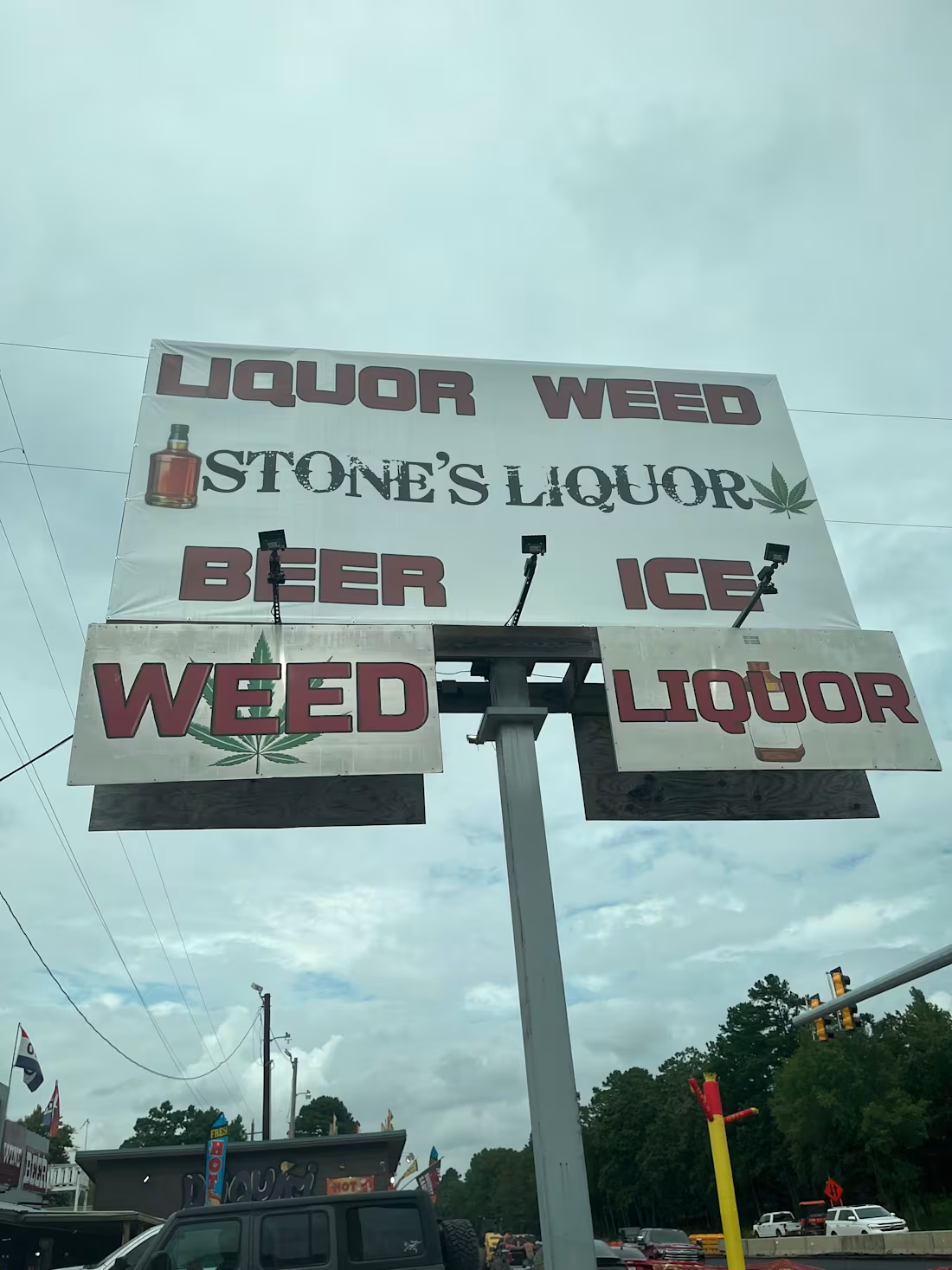
Sometimes your entire marketing strategy can fit on one sign.
LIQUOR.
WEED.
BEER.
ICE.
😂 Message received.
I passed this billboard and had to take a picture because, as ridiculous as it looks, there’s actually a pretty good business lesson hiding in it.
This business probably doesn’t need a 14-step nurture sequence explaining what they sell.
They don’t need an AI chatbot educating customers about their value proposition.
They may not need an elaborate content strategy or a beautifully engineered sales funnel.
They need people driving by to know:
“Yep. We have that.”
And apparently they decided subtlety was optional.
But here’s the important part:
That strategy works for their business.
It probably wouldn’t work for yours.
A local convenience-driven retailer, a roofing company, a consultant, a SaaS company, an e-commerce brand, and a $20,000 B2B service should not have the same marketing system.
Yet businesses constantly get sold the same formula:
“Post more content.”
“Run Facebook ads.”
“Build a funnel.”
“Add AI.”
“Automate everything.”
Maybe.
Or maybe you just need a giant sign that says WEED.
The point is that good marketing starts by understanding how your customer actually buys.
Where do they discover you?
What makes them stop?
What information do they need before they trust you?
How long does the decision take?
And what friction exists between “I’m interested” and “take my money”?
Build the system around those answers—not around whatever marketing tactic happens to be trending this month.
Sometimes the right solution is a sophisticated combination of websites, CRM, automation, AI, content, lead nurturing, and analytics.
Sometimes it’s four words on a billboard.
Knowing the difference is the strategy.
And whoever designed this one?
They definitely understood the assignment. 😂
What’s the simplest marketing strategy you’ve ever seen that actually worked?
1
2
136
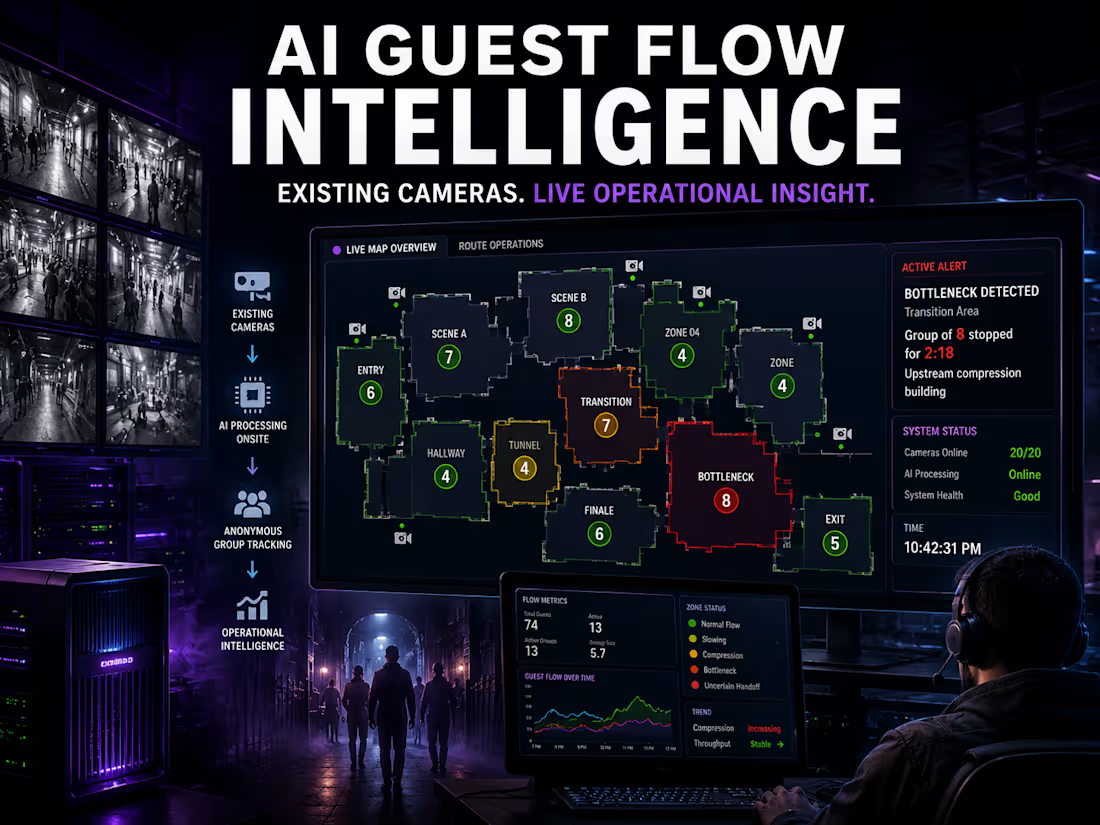
I'm currently designing an AI-assisted guest-flow intelligence system for a confidential large-scale immersive entertainment venue.
The venue already has an extensive hardwired camera network. The goal is not to replace it. It's to turn selected camera feeds into a new operational intelligence layer.
System Architecture
The proposed system uses a dedicated onsite NVIDIA-powered AI server to:
Detect guests anonymously without facial recognition
Associate guests into temporary operational groups
Display numbered group markers on a live floor map
Measure dwell time, occupancy, pacing, and group gaps
Identify developing slowdowns, compression, and bottlenecks
Monitor participating camera feeds
Generate end-of-shift operational reports
Two Complementary Interfaces
Live Map Overview
A command-center display showing where anonymous guest groups are located, how many people each marker represents, and where congestion is developing.
Route Operations Dashboard
A simplified dashboard built for fast decisions, tablets, and mobile viewing. It shows the active problem, its severity, and the recommended response.
The Hard Engineering Problem
The system is designed around the venue's existing cameras and DVRs, using controlled read-only video streams and local processing. All operational video analysis and event data remain onsite.
The hardest part is not creating a beautiful dashboard. It is engineering reliable tracking through darkness, fog, strobes, costumes, occlusion, and non-overlapping camera views while honestly displaying uncertainty when a handoff cannot be confirmed.
Current Work
Technical architecture
Computer-vision validation planning
Onsite server design (custom NVIDIA build)
Camera and zone mapping
Route-aware group handoff logic
Event database design
Live dashboard prototyping
Acceptance testing and deployment planning
The Approach
This is the kind of project I enjoy most: taking infrastructure a business already owns and transforming it into a system that helps the operation see more, respond faster, and make better decisions.
Existing surveillance becomes operational intelligence.
0
121
AI Guest-Flow Intelligence System Design
0
17
You don’t have a marketing problem. You have a 3-second problem.
The first 3 seconds decide everything.
People don't read your pitch or landing page first.
They stop because of a hook, a stunning visual, a bold statement, or a pattern interrupt.
If you fail there, the rest of your funnel might as well not exist.
In business, we obsess over:
Open rates.
Click-through rates.
Conversion rates.
But the real conversion starts with attention.
That's why high-performing brands focus on:
✅ A strong first line.
✅ A curiosity gap.
✅ A relatable pain point.
✅ A surprising insight.
✅ A visual that makes people pause (like this video 🐶).
Think of it like this:
Bad hook: "We offer professional digital marketing services."
Better hook: "90% of your content dies before the third second."
Same topic. Completely different outcome.
Attention is the new distribution.
And the brands that master the first 3 seconds will outperform competitors with 10x the budget.
So before you launch your next campaign, ask yourself:
Would you stop scrolling for this?
Need more inbound leads, brand visibility, and seamless marketing workflows that actually convert?
I help founders and businesses build automated marketing engines and digital strategies that attract paying clients, not just views.
📩 Check out my portfolio here to see how RVW Systems can help you build a marketing pipeline that sells while you sleep. Send me a message and let's get to work!
0
111