Freelancers using Framer in Vienna
Freelancers using Framer in Vienna
Sign Up
Post a job
Sign Up
Log In
Filters
2
Projects
People
Message
0
Studio Ilker
Golding Education Branding & Website Design
0
59
Message
0
Paul Jochum
Maier
0
27
Message
0
Ivan Boroja
pro
Conversatum Website Redesign
0
18
Message
3
Rafael Rabl
Officially a Framer Expert ✨ Now taking on a small number of new Framer projects per quarter. Brand identity and websites for fintech, health, and consulting companies where trust is the product. DM open.
1
3
157
Message
1
Elizaveta Fomicheva
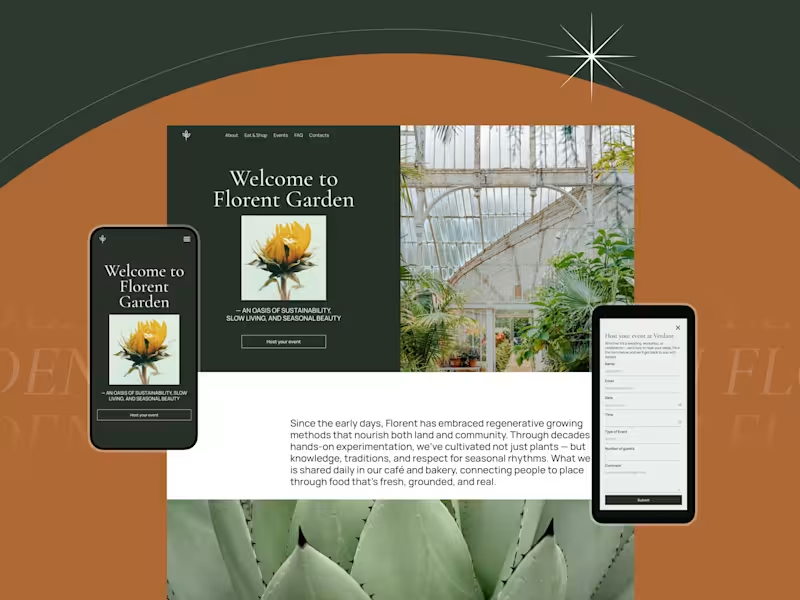
Florent — Framer Website Template for Natural Spaces
1
14
Message
0
Christian Hoffmann
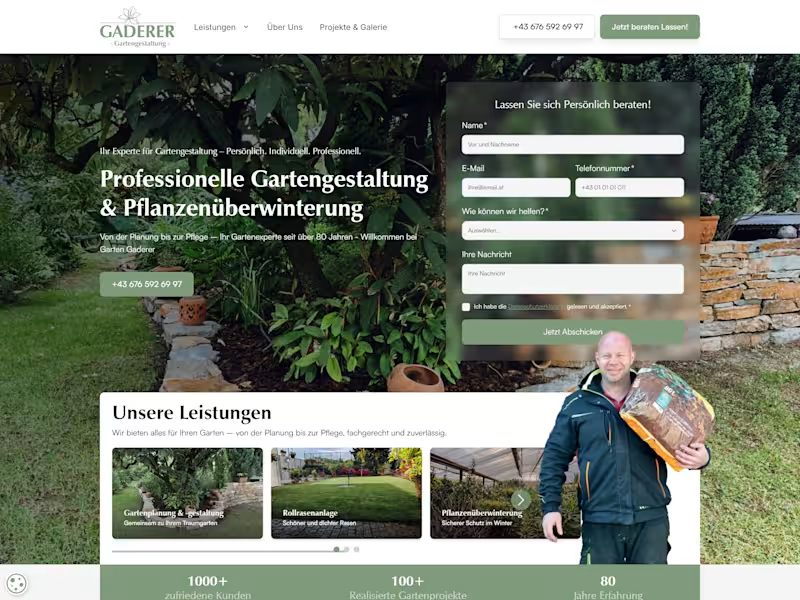
Website Design and Development for Local Gardening
0
6
Message
0
Beniamin Gherman
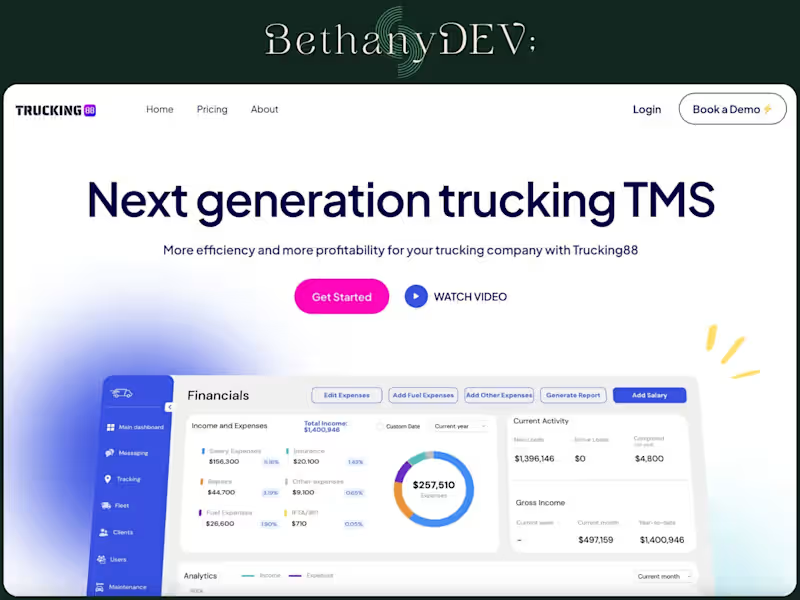
App presentation website for USA-based business
0
9
Message
1
Caro di Lello
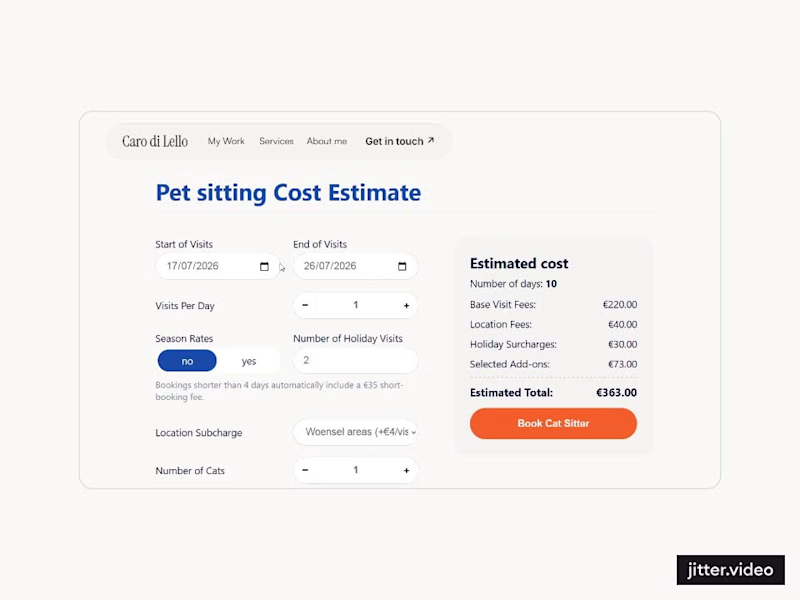
My new client runs a top-tier pet services business in Eindhoven. Her personalized care means highly complex pricing—fees shift based on daily visits, peak seasons, pet count, location, and add-ons. She desperately needed an upfront interactive calculator to filter out window-shoppers and automate quoting. The Challenge: Existing Framer pricing plugins couldn't handle her multi-layered conditional logic or required expensive monthly subscriptions that didn't make sense for an independent business. The Solution: Instead of settling for a restrictive template, I built a custom solution. As a designer (not a developer), I used Gemini to engineer the custom React code for her exact mathematical logic. I deployed it as a native Framer code component and used Framer's AI Agent to style it perfectly to match her brand. We are just getting started, but this custom workflow sets a massive foundation for the rest of the site! Try it out here (https://www.carodilello.com/calculator) Have you used AI to build a custom code component when a no-code tool hit a wall? Let me know!
1
168
Message
2
Antariksh "Ryan" Borgohain
pro
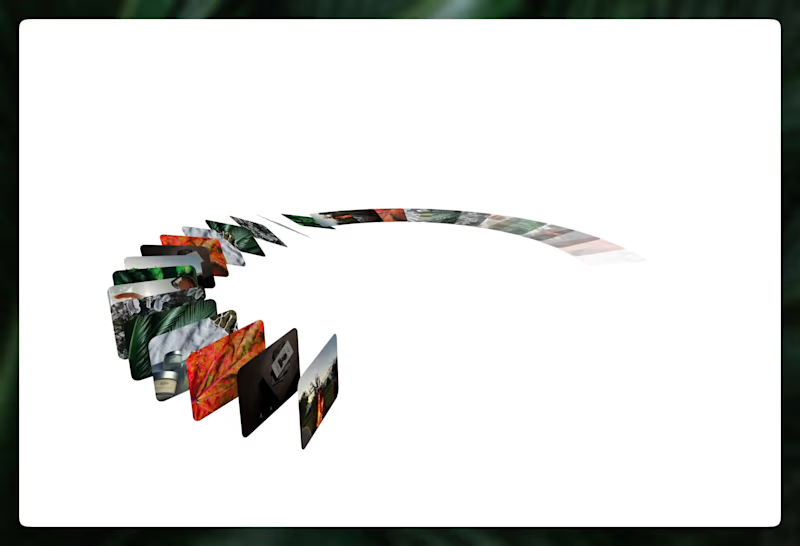
RING — Rotational Image Navigation Gallery Overview RING is a CSS 3D Framer component that arranges images into a continuously rotating ring viewed in perspective. Built over two days, it was inspired by a concept shared by @thebuggeddev and built as a statement about the underrated role of visual spectacle in web design. The kind of component that stops people mid-scroll and keeps them on the page longer than anything a conversion copywriter could write. The Challenge The challenge was building a smooth, performant 3D ring that could handle up to 96 cards, run a polished intro animation, and stay lightweight enough to live inside a Framer landing page without competing with the rest of the layout. Every card needed to sit correctly on the ring geometry, face outward, and move at a consistent speed regardless of frame rate. The Approach Unlike the other components in this suite, RING uses no WebGL or Three.js. The entire 3D environment is built on CSS perspective and transform-style: preserve-3d. Each card is positioned by rotating it around the Y axis by its index angle, then translating it outward along Z by the ring radius, then rotating it 90 degrees to face outward. The math is simple but the result reads as genuinely spatial. Images are provided as a source set of up to 12 items and repeated programmatically to fill the full card count. This keeps the property controls clean while allowing rings of 40, 60, or 96 cards without requiring the user to upload dozens of images. The Build Rotation runs through a requestAnimationFrame loop that uses delta time for frame-rate independent movement, so the ring spins at the same perceived speed on 60Hz and 120Hz displays. The intro animation runs in two overlapping phases controlled by React state. In the first phase, cards fade in with a staggered delay applied in reverse index order, so the ring appears to assemble itself outward from a single point. In the second phase, which starts at 30% into the fade sequence, the individual card tilt and the overall ring tilt animate to their resting positions simultaneously using a spring-like cubic-bezier curve. The overlap timing creates a single fluid motion rather than two separate steps. Framer's useIsStaticRenderer hook bypasses all animation logic during static export, so thumbnails and previews render instantly without getting caught in transition states. On Visual Candy RING sits in a category of components that are sometimes dismissed as decorative. The counter-argument is simple: time on page is one of the most reliable signals for content relevance, and nothing increases time on page like something that is genuinely pleasurable to look at. A rotating image gallery in a hero section does not replace good copy or a clear offer. But it earns the attention that makes those things possible. Used with intention, visual spectacle is a retention tool, not a distraction. The Result RING is currently pending Framer marketplace approval. The build reinforced that CSS 3D transforms, used carefully, can produce spatial experiences that feel comparable to WebGL at a fraction of the complexity and bundle cost.
2
141
Message
0
Bernd B
A Responsive Framer Template for Stunning Portfolios
0
9
Message
0
Maximilian Bauer
Barc*
0
78
Message
0
Jörg Schirlbauer
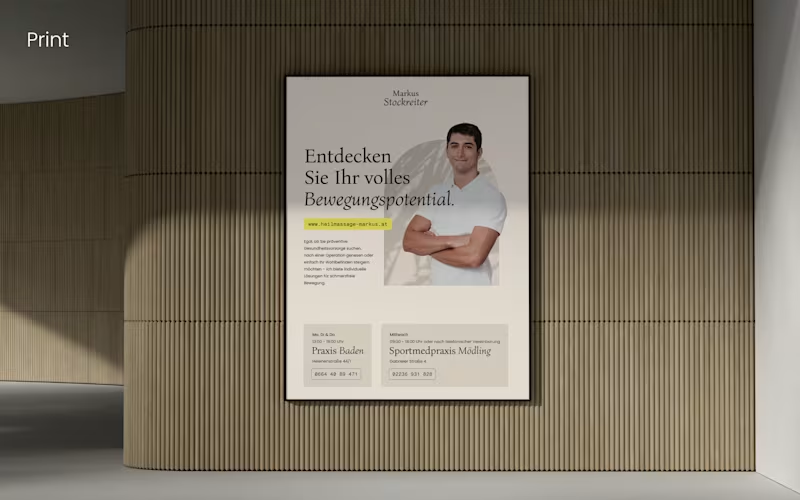
Markus Stockreiter - Branding, Webdesign, Framer Development
0
18
Message
0
Diana Khitrik
Website Redesign for Syntra Fund
0
8
Message
26
Studio Ilker
Oscar Pecher - Director and Designer
26
268
Message
0
Paul Jochum
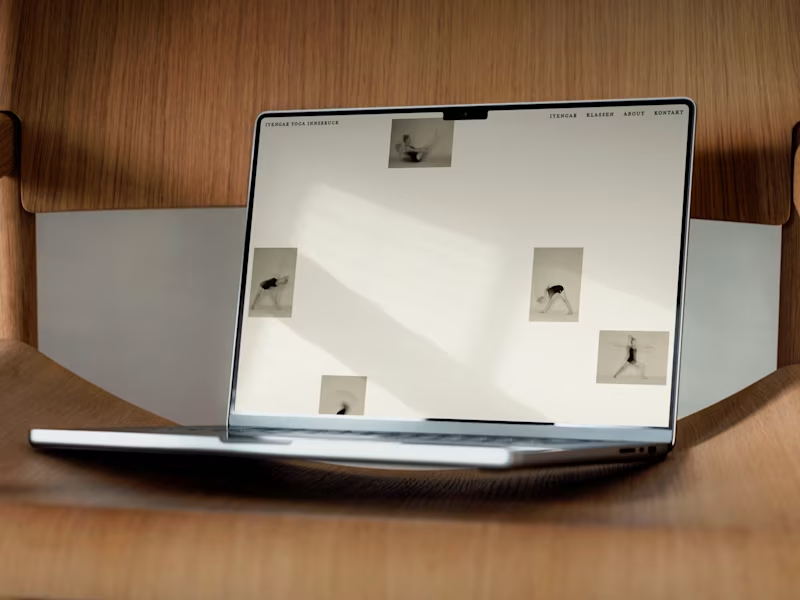
Iyengar Yoga Innsbruck
0
16
Message
0
Rafael Rabl
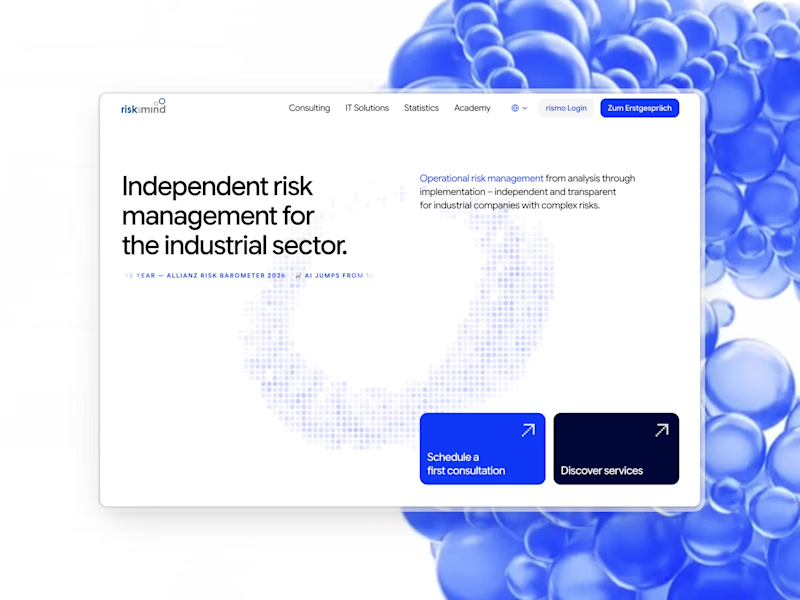
riskonmind.eu (http://riskonmind.eu) — a website for an independent risk management consultancy serving the industrial sector. The brief: make a deeply technical service feel approachable without losing authority. Risk management lives or dies on trust, and the web is usually where it's lost first… dense paragraphs, stock photography + generic blue. We went the other way. Confident type, generous space, a single hero animation that visualizes "complex risk made legible." Bilingual (DE/EN), built in Framer.
0
166
Explore projects