Freelancers using Python in Noida
Sign Up
Post a job
Sign Up
Log In
Filters
2
Projects
People
Raj Pathak
pro
Gurugram, India
Founding AI Engineer, Agents, Automation, Cloud, Full-Stack
$1k+
Earned
8x
Hired
4.7
Rating
53
Followers
Follow
Message
Founding AI Engineer, Agents, Automation, Cloud, Full-Stack
0
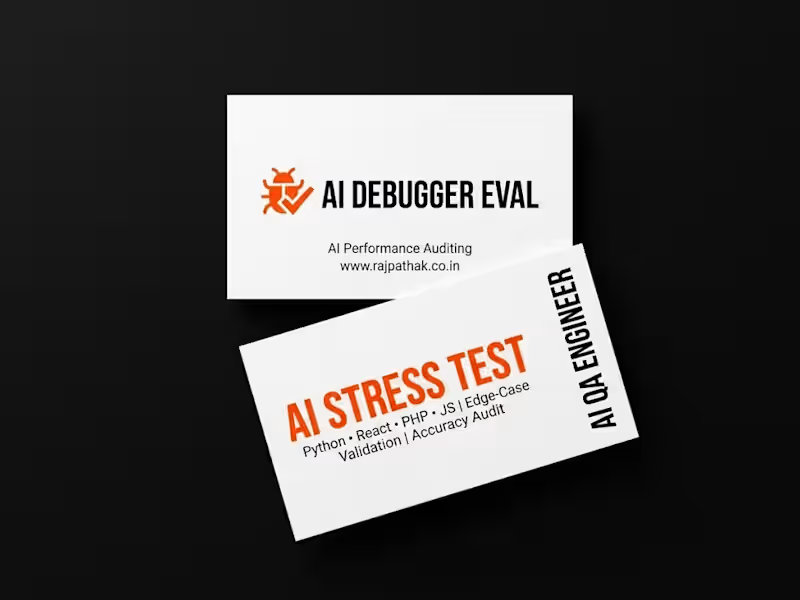
AI Debugging Tool Evaluation
0
9
0
Custom Integration Workflow Using Make.com
0
16
0
Shopify Order Fulfillment Automation with Python
0
11
0
Smart Customer Support Chatbot – Built with Python & NLP
0
41
Python
(5)
Follow
Message
Chhavi Verma
Delhi, India
Data Science and Visualization Expert
1x
Hired
5.0
Rating
10
Followers
Follow
Message
Data Science and Visualization Expert

1
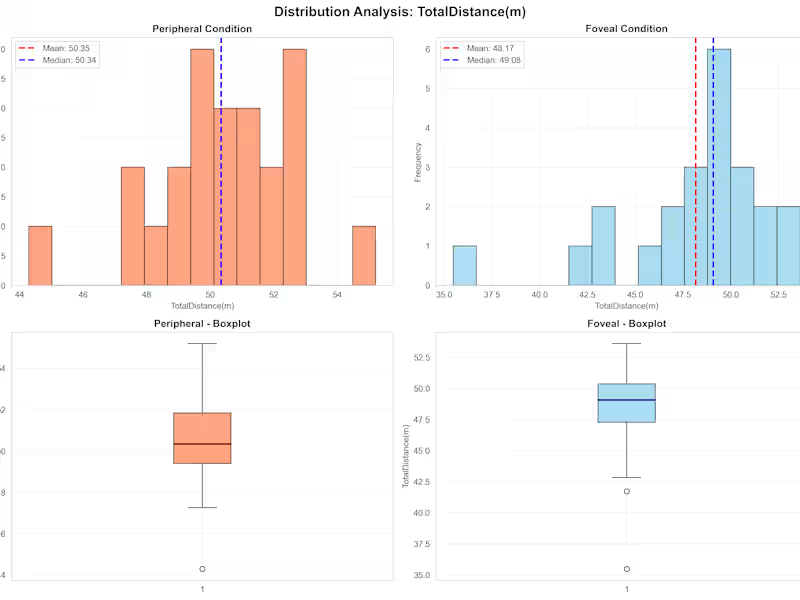
Hi Contra community! Just wrapped a rewarding project for Nauvyashree—delivered deep-dive EDA, custom visualizations, and rich survey sentiment analysis across four datasets. Each milestone included well-designed PDFs packed with clear charts and approachable explanations—making insights accessible for all audiences. I went the extra mile with collaborative Google Meet sessions to walk the client through every analysis, helping connect the findings to big-picture goals. Feedback was fantastic, and milestone-based payments made the process smooth and transparent. This project really strengthened my ability to turn complex results into stories that empower client decision-making. If you want visually engaging, client-focused analytics—or need easy-to-follow reports and hands-on walkthroughs for your next project—let’s connect!
1
94
1
Books Data Analysis
1
10
1
Books Data Analysis
1
15
1
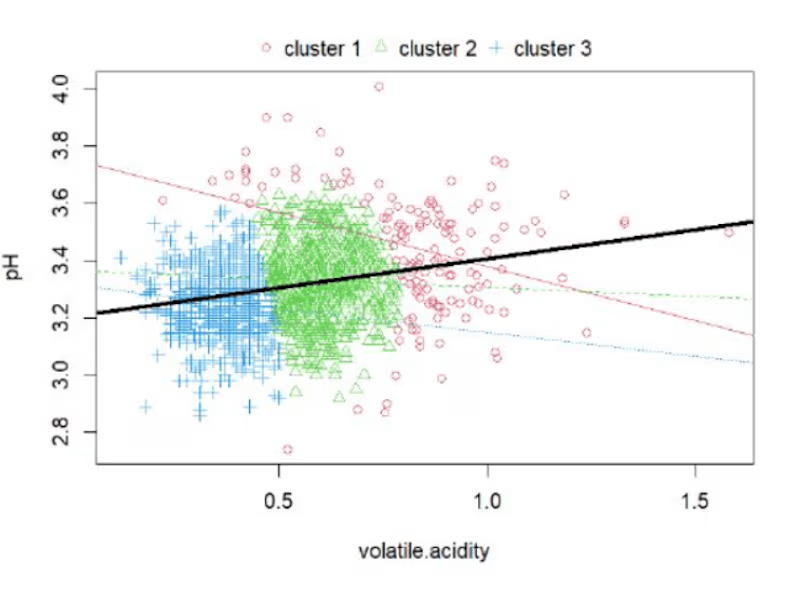
Red Wine Analysis
1
13
Python
(5)
Follow
Message
Suyash Dubey
Delhi, India
I build production AI agents that automate real workflows
Follow
Message
I build production AI agents that automate real workflows
2
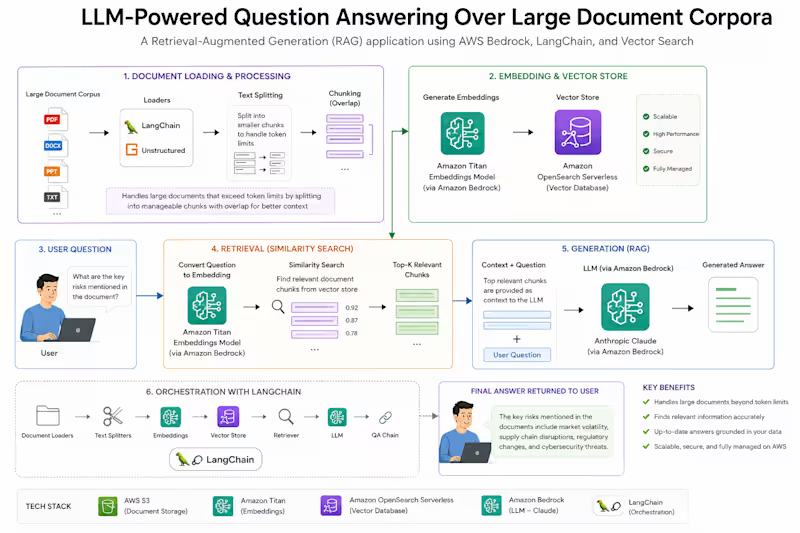
My submission for replitbuildathon. Features an AI agent that answers inbound leads in seconds, qualifies them against your rules, and books the appointment — rebrandable for a new client in about a minute. Most small businesses lose leads to silence. Someone lands on the site at 9pm, fills nothing in, and leaves. Frontdesk is the agent that catches them. It greets the visitor, works through the qualifying questions you defined, scores what it hears out of 100, books the appointment, and hands the team a lead with the transcript and a follow-up email already drafted. The reason it's a template and not a product: it's built to be rebranded. Set a logo and two colours in Brand Studio and the entire app, the chat widget, and the design system documentation retint together, because they all read the same tokens. Agencies fork it once per client. Applying a preset doesn't recolour the same install: it opens a different one, with its own agency name, business name and greeting. Checkout the app here: https://frontdeskzip--SuyashDubey3.replit.app
2
76
1
Built an LLM-powered question-answering application that lets users ask natural-language questions over large document corpora and get accurate, grounded answers, instead of manually searching through documents for the right section. Designed and built the full RAG pipeline independently, from document ingestion through to answer generation, as a technical demonstration of production-grade retrieval-augmented generation using AWS-native tooling. Key Challenges: Documents exceeding token limits: Large source documents couldn't be fed directly into the LLM's context window, so they had to be broken down without losing meaning or context across chunks. Finding the right context: With a large corpus, the system needed to reliably surface the specific chunks relevant to a given question, not just the most textually similar ones. Grounded, accurate answers: Answers had to be based on the actual retrieved content, not the model's general knowledge, to avoid confidently wrong responses. Working within a managed AWS ecosystem: Embeddings, storage, and generation all needed to work together cleanly using Bedrock-native models rather than a patchwork of external services. Approach: Document loading and chunking Processed large documents into manageable chunks sized to stay within model token limits while preserving enough context for coherent retrieval. Vector embeddings with Amazon Titan Generated vector embeddings for each document chunk using Amazon Titan, capturing semantic meaning rather than just keyword overlap. Vector storage and retrieval Stored the embeddings in a vector database, enabling fast similarity search to pull the most relevant chunks for any given question. RAG-based answer generation with Claude on Bedrock When a question comes in, the system retrieves the relevant chunks and passes them as context to Anthropic Claude via Amazon Bedrock, which generates an answer grounded in the retrieved content rather than relying on parametric memory alone. Results & Impact: Accurate, source-grounded answers over document corpora too large to fit in a single context window. A scalable retrieval architecture that separates document processing, embedding, and generation, so any of the three can be swapped or scaled independently. A fully AWS-native RAG pipeline, demonstrating fluency with Bedrock's embedding and generation models working together in production patterns. Tech Stack Python · LangChain · AWS Bedrock · Amazon Titan · Anthropic Claude · FAISS DB
1
75
1
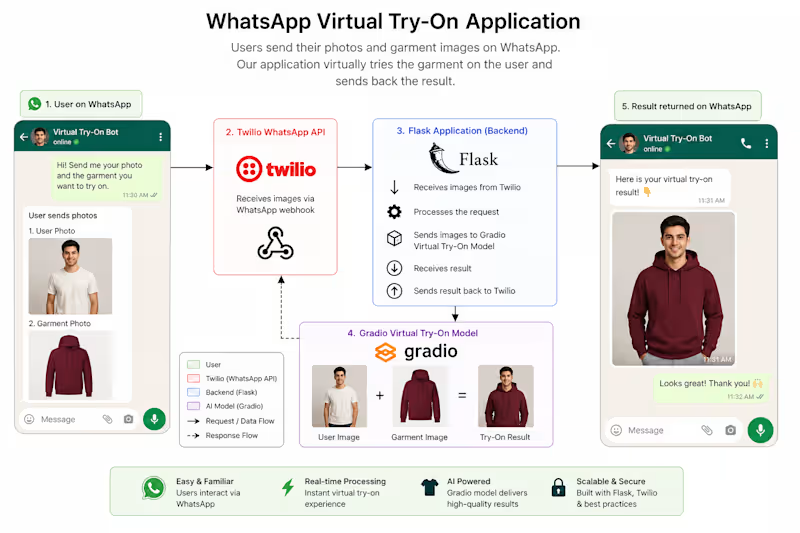
Built a virtual try-on application that lets users try on garments over WhatsApp. A user sends a photo through WhatsApp, and the app returns a realistic image of them wearing the selected garment, no app download or website visit required. Designed and built the system end-to-end, from the WhatsApp messaging integration through to the try-on generation pipeline, as a self-contained product demonstrating conversational commerce for fashion/retail use cases. Key Challenges: - Frictionless UX over a messaging app: WhatsApp isn't built for structured app interactions, so the flow had to feel natural through simple image and text messages, not clunky commands. - Reliable image handling: Incoming photos vary wildly in quality, lighting, and pose, and had to be received, processed, and matched with garment images reliably. - Fast turnaround: Users expect a near-instant reply on a messaging app, so the backend had to handle image processing and model inference without long delays. - Stitching third-party services together: Twilio's WhatsApp API and Gradio's try-on model weren't built to talk to each other, so the app had to bridge them cleanly. Approach: WhatsApp integration via Twilio -Set up Twilio's WhatsApp API to receive incoming user images and send outgoing try-on results, handling the messaging layer end-to-end. Flask backend as the orchestration layer -Built a Flask application to receive Twilio webhooks, manage the request flow, and coordinate between incoming user images and the try-on model. Virtual try-on generation with Gradio - Integrated Gradio's virtual try-on model to generate the final garment-on-user image, returning a realistic composite result. End-to-end flow design - Connected the pieces so a user's WhatsApp message triggers the full pipeline automatically: receive image → process → generate try-on → send result back, all within a single conversation. Results & Impact - A working conversational shopping experience built entirely on a messaging app users already have open every day. - Zero-download, zero-signup try-on flow — removes the biggest friction point in getting users to try a new AI-powered feature. - A reusable integration pattern connecting Twilio, Flask, and a generative vision model, applicable to other WhatsApp-based commerce or personalization tools. Provided Services & Solutions 📌 Conversational App Development 📌 WhatsApp API Integration (Twilio) 📌 Backend Development (Flask) 📌 Generative AI Integration (Gradio virtual try-on model) 📌 Third-Party API Orchestration Tech Stack: Python · Flask · Twilio WhatsApp API · Gradio If you want an AI-powered experience built directly into a channel your customers already use, like WhatsApp, let's talk.
1
43
2
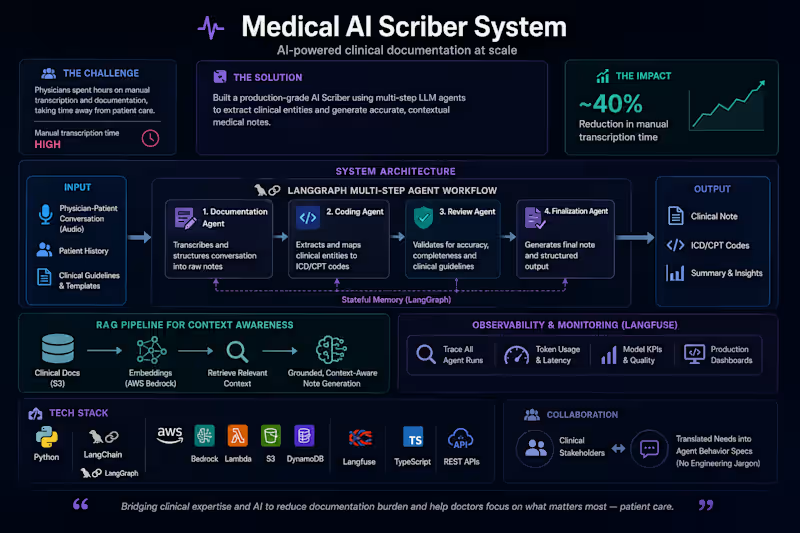
Built and maintained a HIPAA compliant production medical AI scribe system that uses multi-step LLM agents to extract clinical entities directly from physician-patient conversations and turn them into structured medical notes, cutting down the manual transcription work clinicians used to do after every visit. Multi-stage clinical workflow: Documentation, coding, and review each have different logic and conditional paths, and the system needed to branch correctly between them without losing context. Clinical accuracy: Generated notes had to be grounded in real patient history and clinical guidelines, not just plausible-sounding text. Production reliability: As a live system handling real conversations, every agent run needed to be observable, debuggable, and monitored for cost and latency in real time. Non-technical requirements gathering: Clinical needs had to be captured accurately from stakeholders without a technical background and translated into precise agent logic. Approach: Stateful agent orchestration with LangGraph Designed LangGraph-based agent workflows with conditional branching, allowing the system to move correctly across documentation, coding, and review stages based on conversation content. Context-grounded note generation with RAG Built a RAG pipeline on AWS Bedrock with embeddings, so every generated note is grounded in the patient's actual history and relevant clinical guidelines rather than generic output. Full production observability Integrated Langfuse across all agent runs to track token usage, latency, and model KPIs, giving the team visibility into system health and cost in production, not just at build time. Clinical stakeholder collaboration Ran requirements sessions directly with clinical staff, converting their documentation needs into concrete agent behavior specs and validation criteria. Results & Impact: ~40% reduction in manual transcription time for clinicians using the system. Clinically grounded output, with notes tied to real patient history and guidelines instead of unsupported generation. Full production observability, with token usage, latency, and model performance tracked continuously. A workflow clinicians could trust, built through direct collaboration rather than a black-box handoff. Provided Services & Solutions: 📌 AI Agent Development (LangGraph) 📌 RAG Pipeline Development (AWS Bedrock) 📌 LLM Observability (Langfuse) 📌 Cloud Infrastructure (AWS Lambda, S3, DynamoDB) 📌 Stakeholder Requirements Translation 📌 Production ML Systems Tech Stack Python · LangChain · LangGraph · AWS (Bedrock, Lambda, S3, DynamoDB) · Langfuse · TypeScript · REST APIs
2
72
Python
(5)
Follow
Message
Trashu Vashisth
Delhi, India
Building Production-Grade AI Agents & RAG Systems
14
Followers
Follow
Message
Building Production-Grade AI Agents & RAG Systems
0
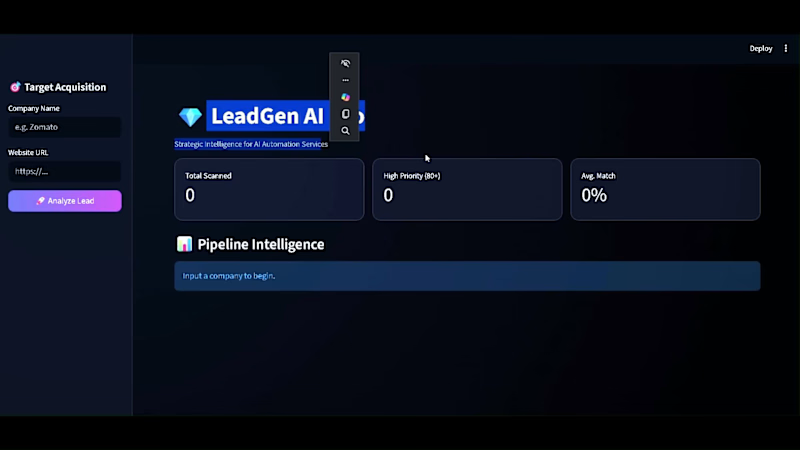
The Problem: Sales teams waste 60% of their time researching leads instead of closing them. The Solution: I built a custom Agentic AI Pipeline that automates deep-dive business intelligence and lead scoring. Key Technical Highlights: Multi-Agent Architecture: Built using CrewAI, featuring a 'Business Intelligence Specialist' (for real-time research) and a 'Senior Sales Director' (for strategic scoring). High-Speed Intelligence: Powered by Llama 3.3-70B for near-instant reasoning and decision-making. Real-time Web Scoping: Integrated Tavily AI to fetch live revenue data, employee counts, and market positioning. Enterprise Storage: A robust SQLite backend to manage lead pipelines with a sleek Streamlit dashboard. Smart Throttling: Engineered custom rate-limiting and token-trimming logic to ensure 99.9% uptime even under heavy API constraints. How it works: Simply enter a company name and URL. The AI agents scour the web, analyze the company's "AI potential," calculate a priority score (0-100), and even write a personalized sales pitch—all in under 30 seconds.
0
85
0
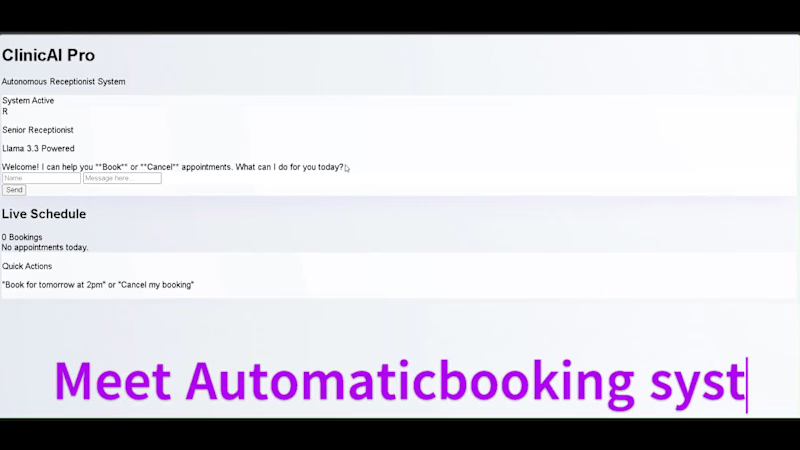
I built a professional, end-to-end AI Receptionist system designed to automate clinic appointment management. This isn't just a chatbot; it's an AI Agent that can reason, use tools, and manage a live database autonomously. Key Contributions: Agentic Reasoning: Integrated CrewAI with Llama 3.3 (Groq) to enable the agent to understand complex user intents (Booking vs. Cancellation) and relative time (e.g., "next Tuesday at 3pm"). Autonomous Tool Use: Developed custom Python tools that allow the agent to verify real-time availability in a SQLite database and execute atomic transactions without human intervention. High-Performance Backend: Built a robust API using FastAPI to handle asynchronous requests between the AI agent and the database. Premium Dashboard: Designed a modern, Glassmorphic UI using Tailwind CSS that provides a real-time sync of the clinic’s schedule. The Result: A seamless, hands-free system that reduces administrative overhead by 100%, allowing clinic staff to focus on patients while the AI handles the entire scheduling lifecycle. Tech Stack: Python, CrewAI, Groq API, FastAPI, SQLite, Tailwind CSS
0
101
1
Developed a production-grade Retrieval-Augmented Generation (RAG) system specifically designed to automate the analysis of complex Environmental, Social, and Governance (ESG) reports. This tool bridges the gap between static LLMs and the dynamic, data-heavy requirements of legal and sustainability compliance. [1 (https://www.youtube.com/watch?v=wkYPcMtwlN8)] Key Features & Capabilities Intelligent Document Processing: Automatically handles large, unstructured PDF/Word ESG reports, extracting critical clauses and metrics in seconds. Fact-Grounded Q&A: Uses a RAG architecture to ensure all answers are strictly based on the uploaded documents, virtually eliminating AI hallucinations. Compliance Mapping: Cross-references internal company data with global frameworks like CSRD, GRI, and TCFD to identify gaps or inconsistencies. Audit-Ready Traceability: Every insight generated includes direct citations and excerpts from the source files, providing a clear "paper trail" for legal teams. Automated Drafting: Capability to draft legal summaries, notices, or internal policy updates based on analyzed ESG risks Note: The 'Slaughter and May' branding in the sidebar is for UI/UX demonstration purposes only, showcasing how the tool integrates into a top-tier law firm's environment. #AI #RAG #LegalTech #ESG #Python #LangChain
1
168
1
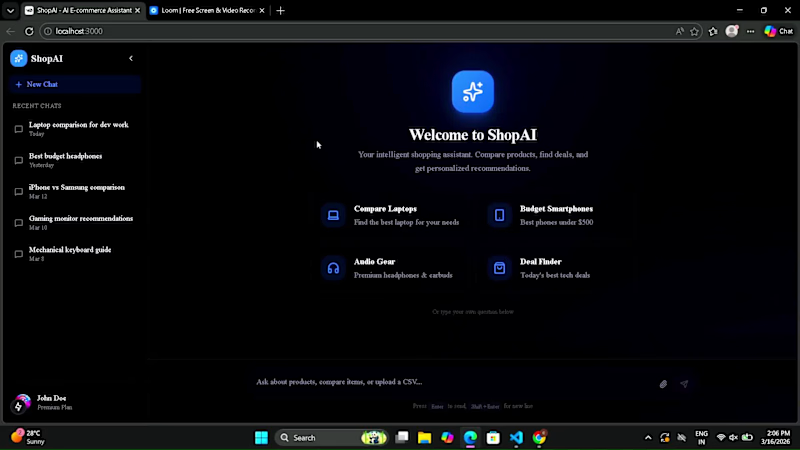
Developed a full-stack RAG-based E- Commerce AI chatbot using React.js and Tailwind CSS that suggests the perfect laptop from a live catalog. Integrated ChromaDB with BGE Embedding models to provide highly accurate, context-aware product recommendations and instant technical support." Key Highlights: Smart Laptop Recommendations: Uses Semantic Search to match user needs (gaming, coding, etc.) with real-time specs. Advanced Tech Stack: Powered by LangChain for orchestration and BGE models for superior data retrieval. Modern UI/UX: Built a responsive, clean interface using React.js and Tailwind CSS. Zero Hallucination: Ensures all suggestions are strictly grounded in the available product inventory.
2
1
254
Python
(7)
Follow
Message
Ritik Goyal
Delhi, India
Python & Django developer for web apps and APIs
New to Contra
Follow
Message
Python & Django developer for web apps and APIs
0
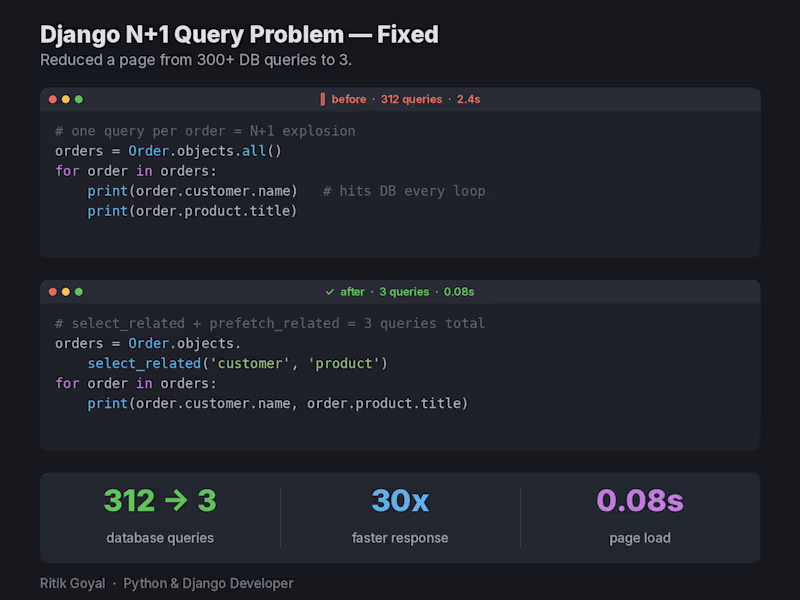
Spent an afternoon this week chasing down why a client's order dashboard took around 2.5s to load. Turned out the page was firing 300+ database queries. Classic N+1 problem. Every order in the loop was making its own separate trip to the DB just to grab the customer and product. One line fixed it. select_related() tells Django to pull the related rows in a single JOIN instead of querying them one at a time. 312 queries down to 3. Page load went from 2.4s to 0.08s. The annoying part is this never shows up on small datasets in dev. It only bites you in production once the table grows. So now I always check the query count in Django Debug Toolbar before shipping any list view. What's the worst N+1 you've run into?
0
87
0
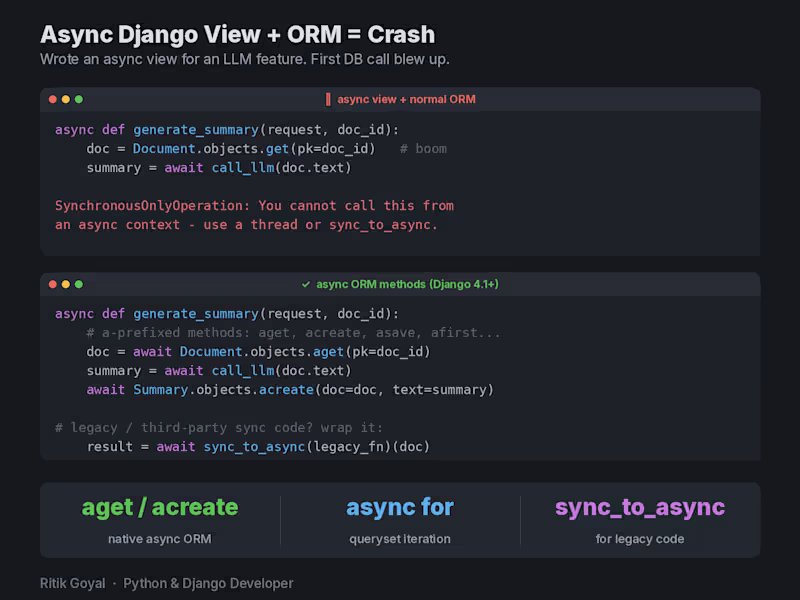
Hit a classic Django trap this week and figured it's worth sharing since so many people are running into it now. I was adding an LLM feature to a Django app. The AI call takes a few seconds, so naturally I made the view async so it doesn't block a worker while waiting. Wrote the async view, called the ORM like I always do, and boom: SynchronousOnlyOperation: You cannot call this from an async context. Turns out Django's ORM can't just be called normally inside async code. The classic sync API isn't safe in an event loop, so Django protects it and throws this error instead. The fix is simpler than most people think. Since Django 4.1 the ORM has async versions of everything, same names with an "a" prefix. So objects.get() becomes await objects.aget(), create() becomes acreate(), save() becomes asave(). For loops over querysets, async for works directly. And for old sync code or third party libraries you can't change, wrap them with sync_to_async(). Why this matters right now: everyone is bolting AI features onto Django apps, and LLM calls are exactly the slow I/O that async is made for. Which means a lot of devs who never touched async Django are suddenly hitting this error for the first time. One honest caveat: transactions still don't fully work in async mode, so if you need atomic blocks, keep that path sync and wrap it. Anyone else made the jump to async views yet, or still happily on WSGI?
0
85
0
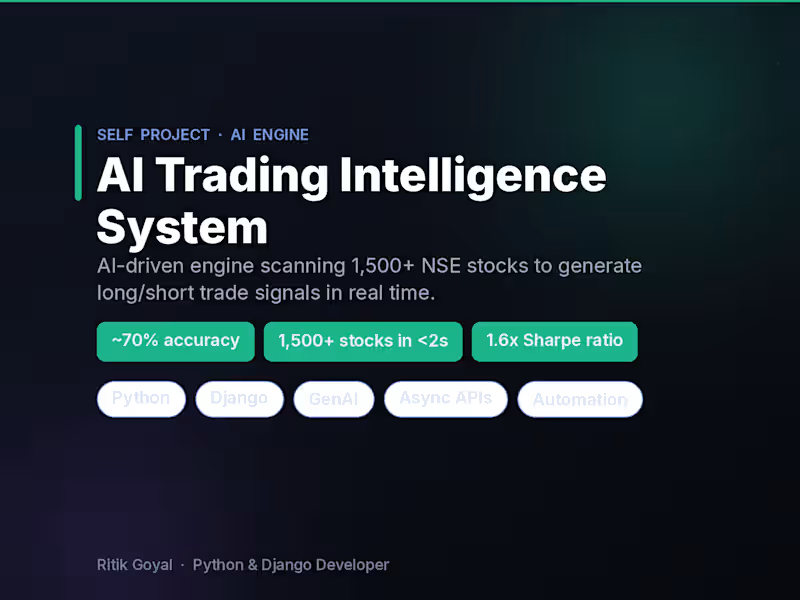
An AI-driven trading engine that analyzes 200-DMA breakouts and real-time market sentiment to generate long/short recommendations. It scans 1,500+ NSE stocks in under 2 seconds and uses generative AI to build option strategies, delivering event-driven trade signals end-to-end. I built the full Django backend, async APIs, and the signal-generation logic. Accomplishments and responsibilities: Built an AI-driven trading engine analyzing 200-DMA breakouts and market sentiment, generating long/short signals with ~70% directional accuracy — outperforming baseline strategies by 35%; Integrated generative-AI insights for automated option-strategy creation (spreads, straddles, condors), improving Sharpe ratio by 1.6× and cutting manual analysis time by 60%; Developed a Django backend with async APIs scanning 1,500+ NSE stocks in under 2 seconds, achieving 40% lower latency with event-driven alerts.
0
75
0
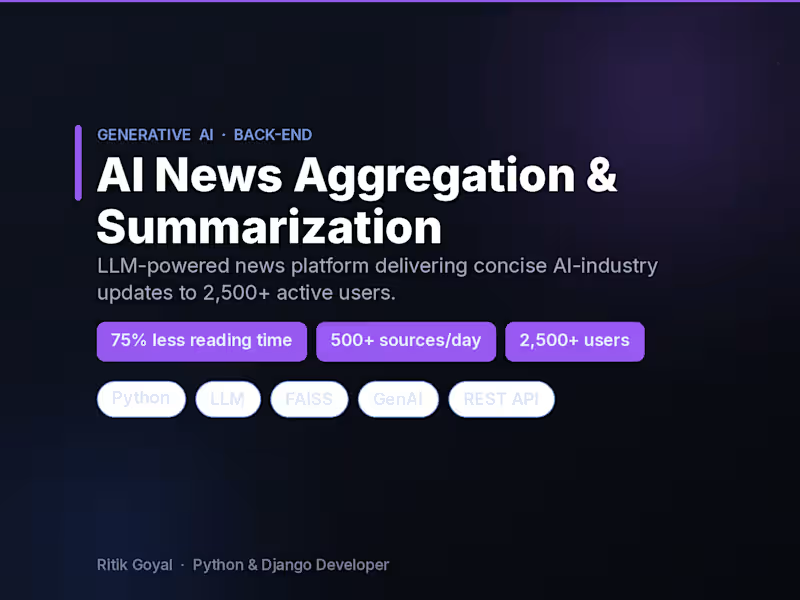
An AI-powered news platform that delivers concise, real-time AI-industry updates to 2,500+ active users. It scrapes and aggregates 500+ sources daily, removes duplicates, and uses generative-AI summarization to cut reading time significantly while surfacing the most relevant stories. I built the backend responsible for scraping, deduplication, and the LLM summarization pipeline.
0
78
Python
(5)
Follow
Message
Vaibhav Kumar
Delhi, India
Building AI, ML & data-driven solutions with Python.
New to Contra
Follow
Message
Building AI, ML & data-driven solutions with Python.
0
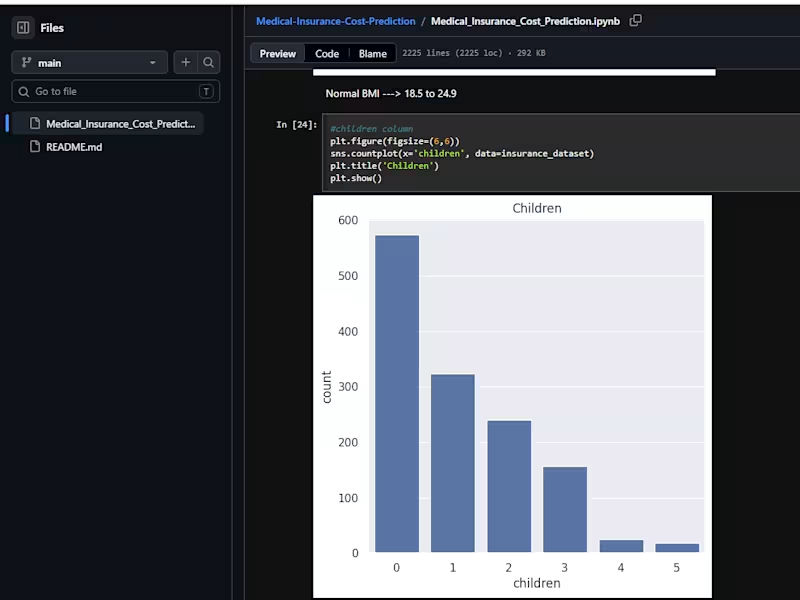
Medical Insurance Cost Prediction
0
1
0
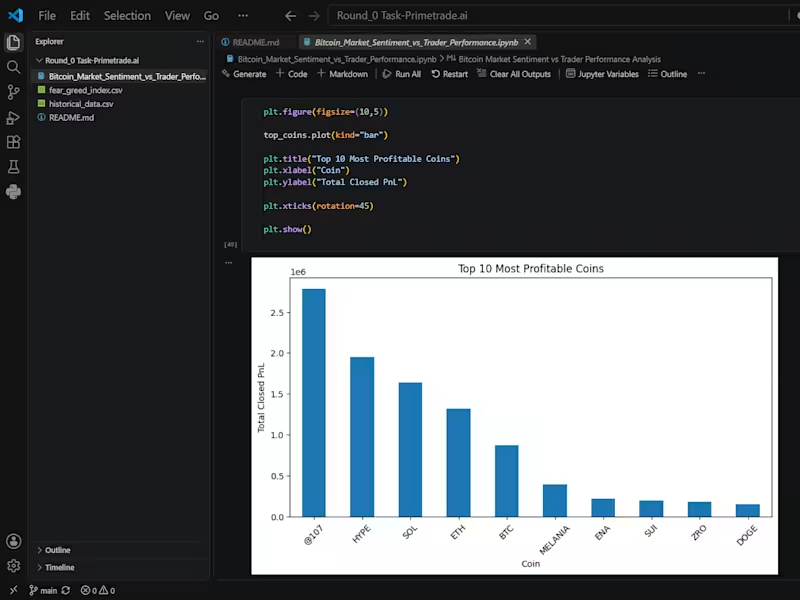
Bitcoin Market Sentiment and Trader Performance Analysis
0
2
0
AI-Powered QMS for Complaint Management
0
1
0
AI vs Human Text Classification Using BERT
0
1
Python
(4)
Follow
Message
Urvi Walia
Delhi, India
Transforming data into insights that drive growth with AI
New to Contra
Follow
Message
Transforming data into insights that drive growth with AI
0
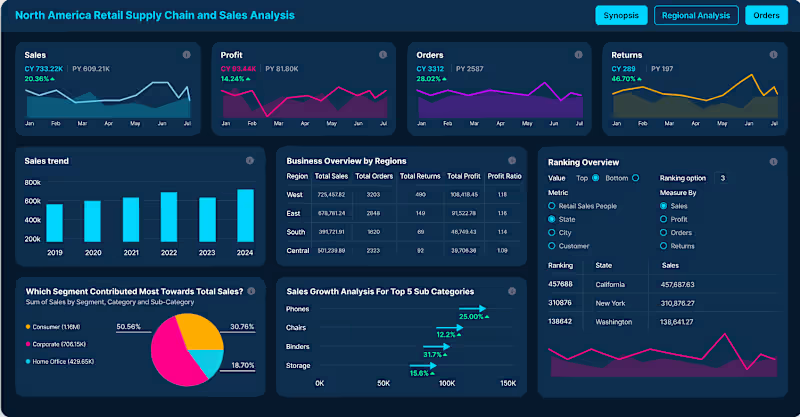
Sales Analysis Dashboard Project Built an interactive Sales Analysis dashboard to track revenue, sales trends, product performance, and customer purchasing behavior. Analyzed sales data to identify growth opportunities and support data-driven business decisions. Key Insights: Identified top-performing products and sales regions Analyzed monthly sales trends and customer buying patterns Tracked KPIs to improve sales performance and forecasting Skills Used: Data Analysis • KPI Reporting • Data Visualization • Dashboard Development • Business Intelligence Tools: Power BI • Excel • SQL • Python
0
18
0
Tesla Sales & Market Analysis Project Conducted a data-driven analysis of Tesla’s sales performance, market trends, and customer demand patterns using real-world datasets. Cleaned and analyzed large datasets to identify revenue trends, regional performance, and key business insights that could support strategic decision-making. Key Business Insights & Decisions: Identified top-performing sales regions and revenue-driving markets Analyzed customer demand trends to understand purchasing behavior Detected seasonal sales patterns to support forecasting strategies Helped highlight opportunities for improving sales performance and market targeting Built interactive dashboards for easy tracking of KPIs and business metrics Skills Used: Data Cleaning & Preprocessing Exploratory Data Analysis (EDA) Sales Trend Analysis Data Visualization Dashboard Development Business Intelligence Reporting KPI Analysis Business Insight Generation Tools & Technologies: Excel • Python • SQL • Power BI • Pandas • Matplotlib
0
29
0
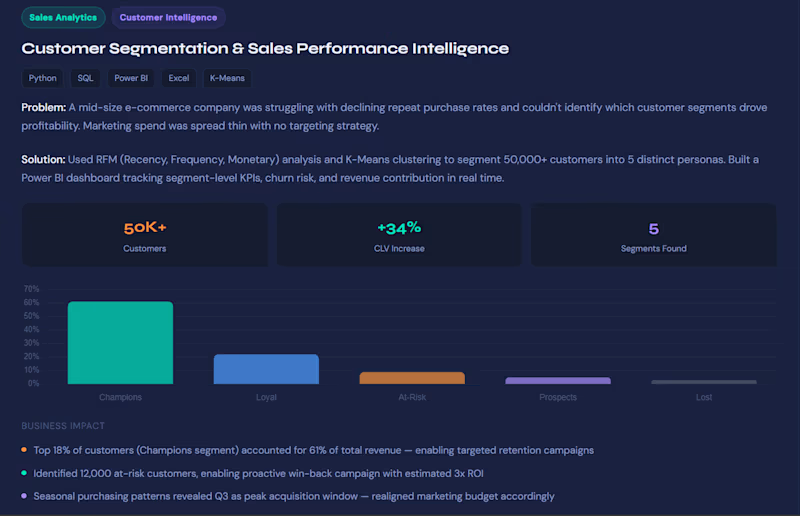
Customer Segmentation Case Study Analyzed customer purchasing behavior using data analysis techniques to identify high-value customer segments and buying patterns. Cleaned and processed raw customer data using Excel and Python, then created interactive dashboards in Power BI to visualize customer demographics, spending habits, and retention trends. Key Business Improvements & Decisions: Identified the most profitable customer groups for targeted marketing Helped optimize marketing campaigns based on customer behavior Suggested personalized offers for high-value customers to improve retention Reduced unnecessary marketing spend by focusing on the right audience segments Improved decision-making through clear KPI dashboards and customer insights Tools Used: Excel • Python • SQL • Power BI
0
31
0
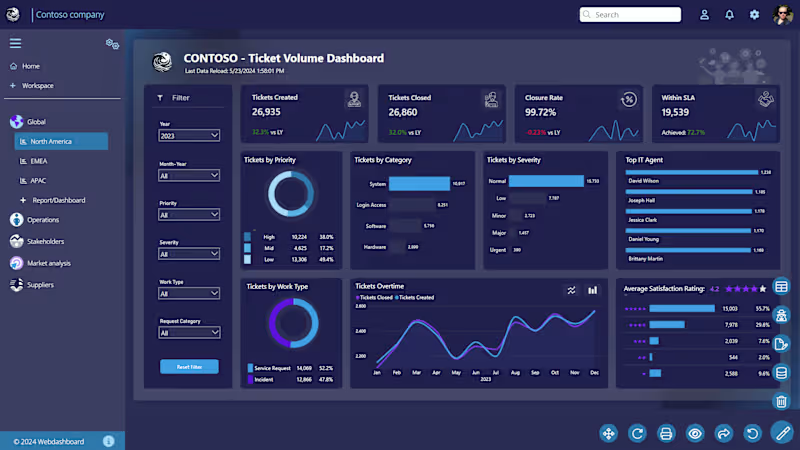
IT Service Management Dashboard Project Developed an interactive IT Service Management dashboard to monitor ticket volume, incident trends, SLA performance, and support team efficiency. Analyzed operational support data to identify service bottlenecks, improve response times, and support data-driven operational decisions. Key Business Insights & Decisions: Monitored ticket creation and closure trends to improve operational efficiency Identified high-priority and high-severity incidents requiring immediate attention Tracked SLA compliance rates to reduce delayed ticket resolutions Analyzed support categories and work types to optimize resource allocation Evaluated top-performing IT agents based on ticket resolution performance Improved service quality monitoring through customer satisfaction analysis Dashboard Highlights: Ticket Volume & Closure Tracking SLA Performance Monitoring Ticket Priority & Severity Analysis Support Category Breakdown IT Agent Performance Analysis Customer Satisfaction Metrics Interactive Filters for Dynamic Reporting Skills Used: Data Cleaning & Transformation Exploratory Data Analysis (EDA) KPI Monitoring & Reporting Operational Data Analysis Data Visualization Dashboard Development Business Intelligence Reporting Insight-Driven Decision Making Tools & Technologies: Power BI • Excel • SQL • Python • DAX • Data Visualization
0
22
Python
(3)
Follow
Message
Saurabh Singh
New Delhi, India
8+ years experience across Products, SaaS and AI
Follow
Message
8+ years experience across Products, SaaS and AI
0
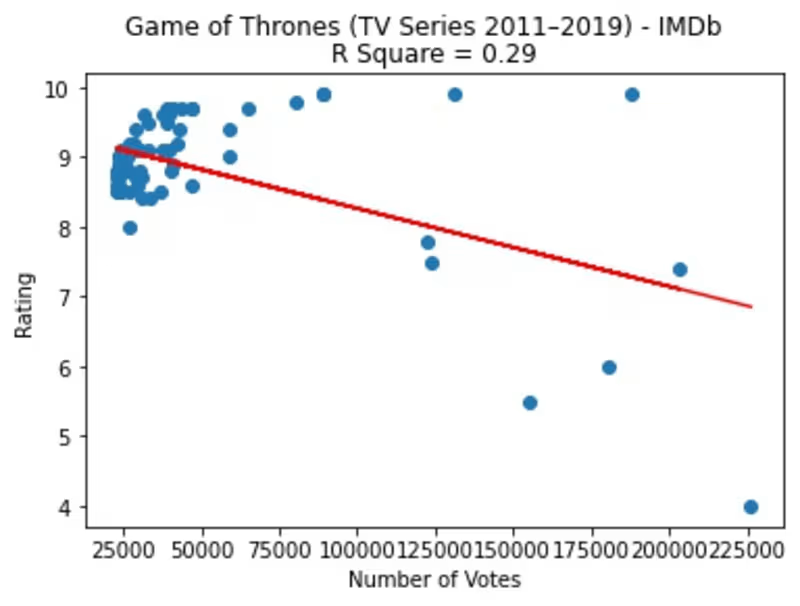
Python Program: IMDB Rating Analysis for TV Shows
0
18
0
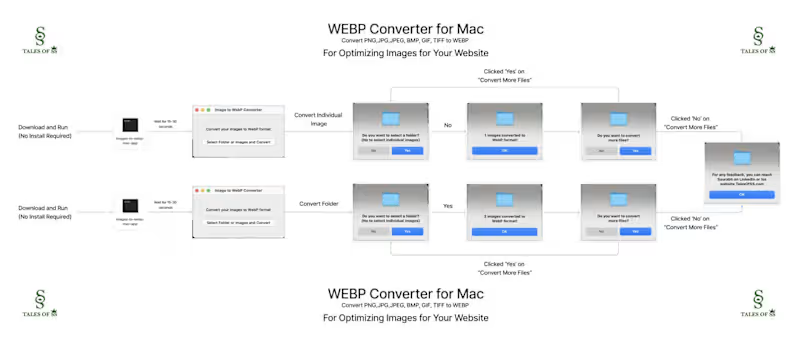
WEBP Converter for Mac App – Offline – Free Download
0
12
0
Predicting the Top 5 Football Leagues Match Results – Part 1/2
0
12
0
NO CODE: Start a Tech Business without Coding!
0
11
Python
(3)
Follow
Message
Explore people