
Suyash Dubey
I build production AI agents that automate real workflows
Ready for work
Suyash is ready for their next project!

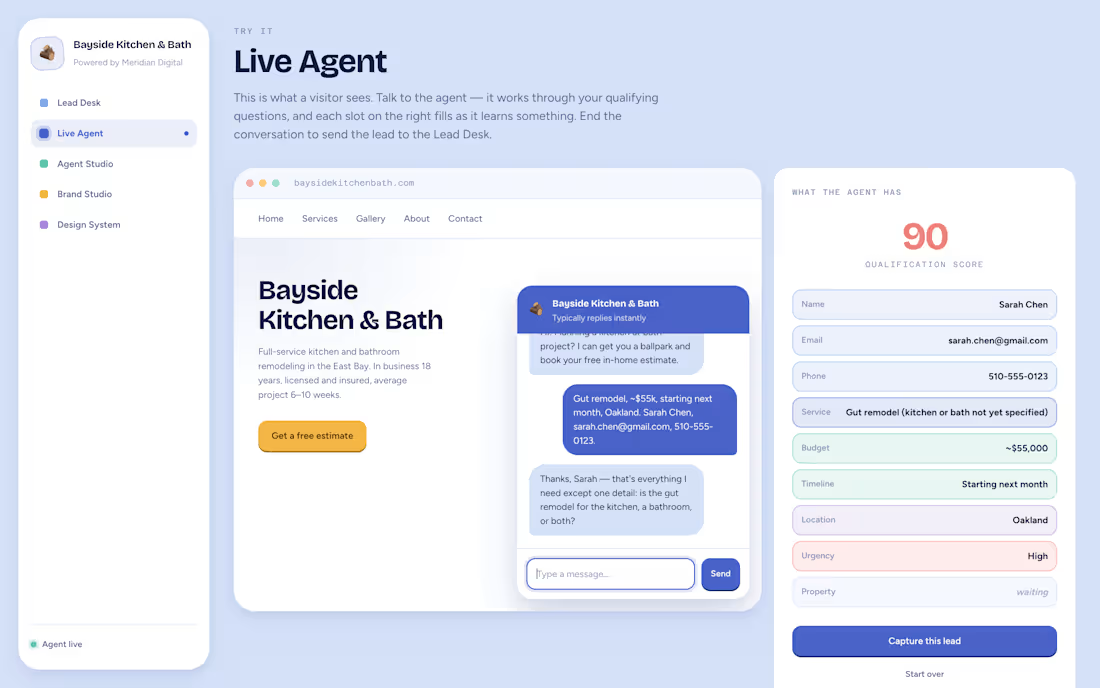
My submission for replitbuildathon. Features an AI agent that answers inbound leads in seconds, qualifies them against your rules, and books the appointment — rebrandable for a new client in about a minute. Most small businesses lose leads to silence. Someone lands on the site at 9pm, fills nothing in, and leaves. Frontdesk is the agent that catches them. It greets the visitor, works through the qualifying questions you defined, scores what it hears out of 100, books the appointment, and hands the team a lead with the transcript and a follow-up email already drafted. The reason it's a template and not a product: it's built to be rebranded.
Set a logo and two colours in Brand Studio and the entire app, the chat widget, and the design system documentation retint together, because they all read the same tokens. Agencies fork it once per client. Applying a preset doesn't recolour the same install: it opens a different one, with its own agency name, business name and greeting. Checkout the app here: https://frontdeskzip--SuyashDubey3.replit.app
2
100
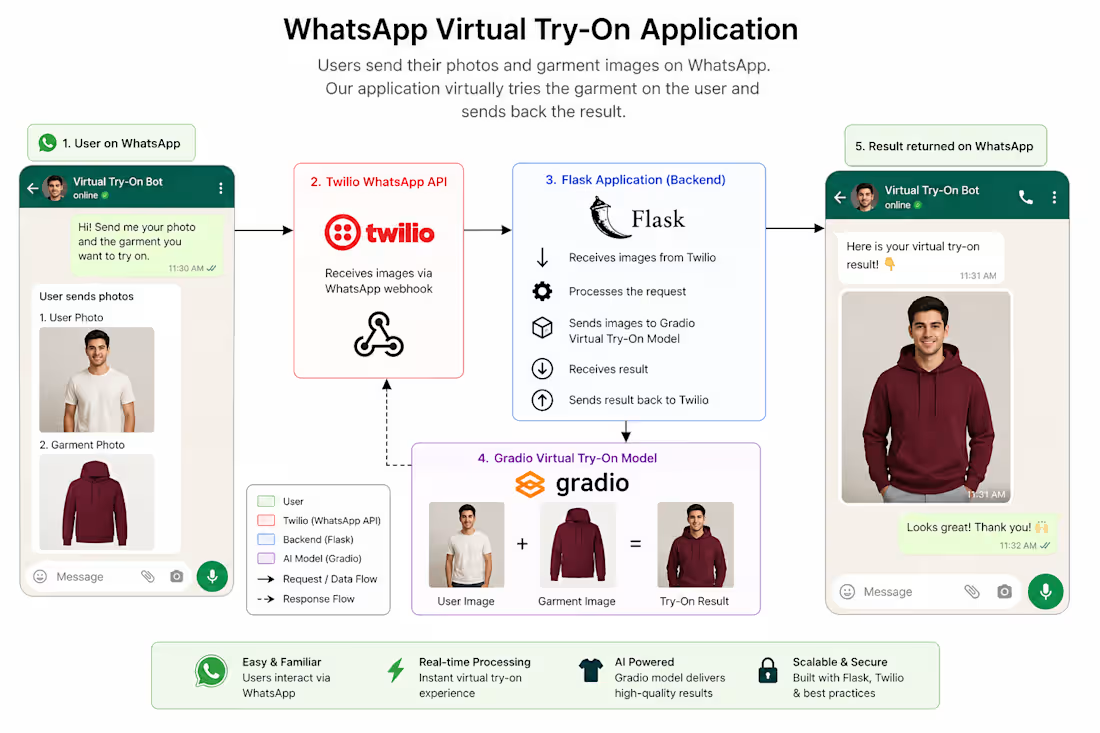
Built a virtual try-on application that lets users try on garments over WhatsApp. A user sends a photo through WhatsApp, and the app returns a realistic image of them wearing the selected garment, no app download or website visit required.
Designed and built the system end-to-end, from the WhatsApp messaging integration through to the try-on generation pipeline, as a self-contained product demonstrating conversational commerce for fashion/retail use cases.
Key Challenges:
- Frictionless UX over a messaging app: WhatsApp isn't built for structured app interactions, so the flow had to feel natural through simple image and text messages, not clunky commands.
- Reliable image handling: Incoming photos vary wildly in quality, lighting, and pose, and had to be received, processed, and matched with garment images reliably.
- Fast turnaround: Users expect a near-instant reply on a messaging app, so the backend had to handle image processing and model inference without long delays.
- Stitching third-party services together: Twilio's WhatsApp API and Gradio's try-on model weren't built to talk to each other, so the app had to bridge them cleanly.
Approach:
WhatsApp integration via Twilio
-Set up Twilio's WhatsApp API to receive incoming user images and send outgoing try-on results, handling the messaging layer end-to-end.
Flask backend as the orchestration layer
-Built a Flask application to receive Twilio webhooks, manage the request flow, and coordinate between incoming user images and the try-on model.
Virtual try-on generation with Gradio
- Integrated Gradio's virtual try-on model to generate the final garment-on-user image, returning a realistic composite result.
End-to-end flow design
- Connected the pieces so a user's WhatsApp message triggers the full pipeline automatically: receive image → process → generate try-on → send result back, all within a single conversation.
Results & Impact
- A working conversational shopping experience built entirely on a messaging app users already have open every day.
- Zero-download, zero-signup try-on flow — removes the biggest friction point in getting users to try a new AI-powered feature.
- A reusable integration pattern connecting Twilio, Flask, and a generative vision model, applicable to other WhatsApp-based commerce or personalization tools.
Provided Services & Solutions
📌 Conversational App Development
📌 WhatsApp API Integration (Twilio)
📌 Backend Development (Flask)
📌 Generative AI Integration (Gradio virtual try-on model)
📌 Third-Party API Orchestration
Tech Stack: Python · Flask · Twilio WhatsApp API · Gradio
If you want an AI-powered experience built directly into a channel your customers already use, like WhatsApp, let's talk.
1
58
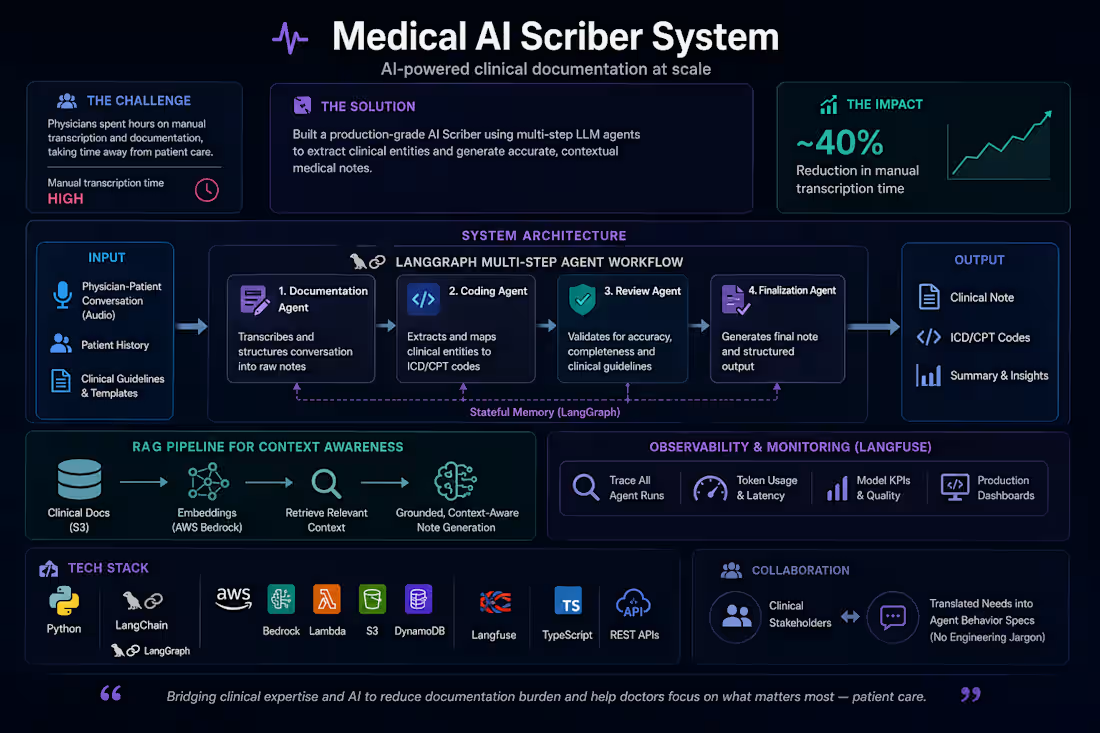
Built and maintained a HIPAA compliant production medical AI scribe system that uses multi-step LLM agents to extract clinical entities directly from physician-patient conversations and turn them into structured medical notes, cutting down the manual transcription work clinicians used to do after every visit.
Multi-stage clinical workflow: Documentation, coding, and review each have different logic and conditional paths, and the system needed to branch correctly between them without losing context.
Clinical accuracy: Generated notes had to be grounded in real patient history and clinical guidelines, not just plausible-sounding text.
Production reliability: As a live system handling real conversations, every agent run needed to be observable, debuggable, and monitored for cost and latency in real time.
Non-technical requirements gathering: Clinical needs had to be captured accurately from stakeholders without a technical background and translated into precise agent logic.
Approach:
Stateful agent orchestration with LangGraph
Designed LangGraph-based agent workflows with conditional branching, allowing the system to move correctly across documentation, coding, and review stages based on conversation content.
Context-grounded note generation with RAG
Built a RAG pipeline on AWS Bedrock with embeddings, so every generated note is grounded in the patient's actual history and relevant clinical guidelines rather than generic output.
Full production observability
Integrated Langfuse across all agent runs to track token usage, latency, and model KPIs, giving the team visibility into system health and cost in production, not just at build time.
Clinical stakeholder collaboration
Ran requirements sessions directly with clinical staff, converting their documentation needs into concrete agent behavior specs and validation criteria.
Results & Impact:
~40% reduction in manual transcription time for clinicians using the system.
Clinically grounded output, with notes tied to real patient history and guidelines instead of unsupported generation.
Full production observability, with token usage, latency, and model performance tracked continuously.
A workflow clinicians could trust, built through direct collaboration rather than a black-box handoff.
Provided Services & Solutions:
📌 AI Agent Development (LangGraph)
📌 RAG Pipeline Development (AWS Bedrock)
📌 LLM Observability (Langfuse)
📌 Cloud Infrastructure (AWS Lambda, S3, DynamoDB)
📌 Stakeholder Requirements Translation
📌 Production ML Systems
Tech Stack
Python · LangChain · LangGraph · AWS (Bedrock, Lambda, S3, DynamoDB) · Langfuse · TypeScript · REST APIs
2
88
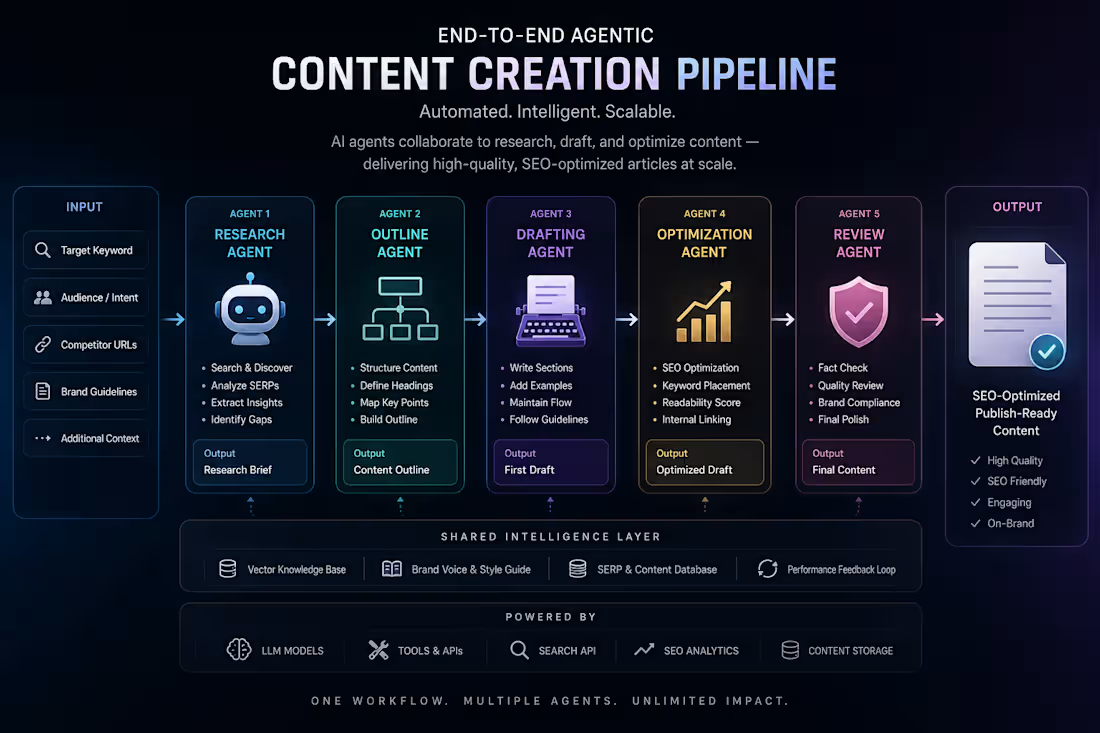
Overview 📖
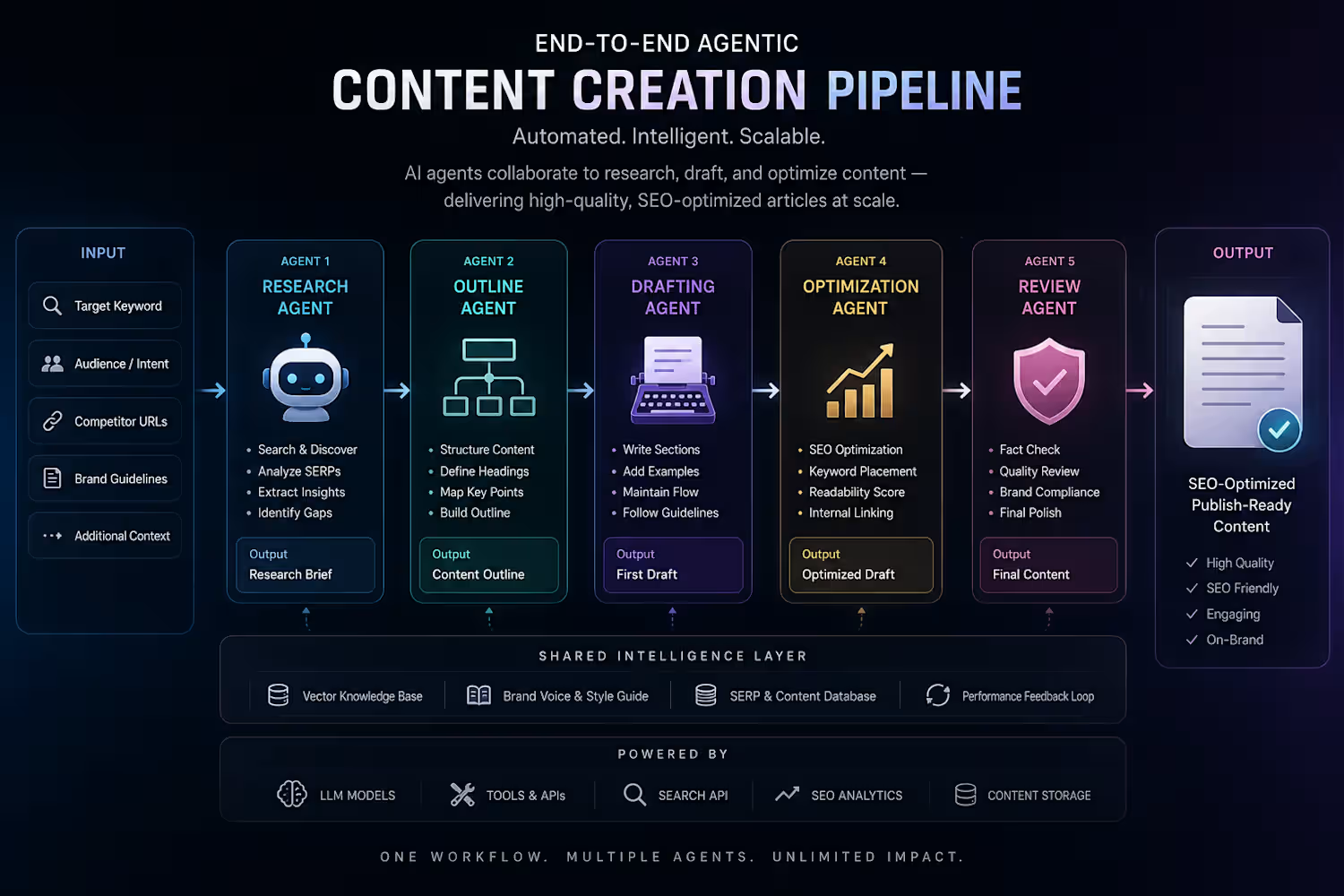
Built an end-to-end agentic content creation pipeline for a fast-growing AI-powered SEO platform. The system chains multiple LLM agents together to research, draft, and optimize content automatically, replacing what used to be a manual, multi-step editorial process with a single automated workflow.
Collaboration 🤝
Partnered directly with the platform's engineering team to design and ship the automation layer that now sits at the core of their content operations, turning a bottlenecked manual process into a scalable, always-on pipeline.
Key Challenges 🤔
Multi-step content logic: Research, drafting, and optimization each require different context and tone, but had to feel like one coherent pipeline, not three disconnected tools.
Consistency at scale: Every piece of generated content had to match brand voice and pass compliance checks, without a human reviewing each one manually.
Orchestration complexity: Content jobs needed to trigger reliably from webhooks and third-party APIs, run through multiple agents in sequence, and fail gracefully without stalling the whole pipeline.
Performance under load: The backend had to stay fast and stable as content throughput scaled up.
Approach 🔍
Agentic content pipeline design
Designed a multi-step LangChain agent chain with tool-calling, where each agent (research, drafting, optimization) has a clearly scoped role and hands off structured output to the next.
Workflow orchestration with n8n
Built n8n automation workflows to handle webhook triggers, third-party API integrations, and job routing, removing the need for manual intervention at almost every stage.
Brand voice & compliance enforcement
Layered in structured prompting and validation steps so generated content stays on-brand and passes compliance checks automatically, at scale.
Backend performance tuning
Optimized FastAPI endpoints and managed Azure-hosted PostgreSQL databases to keep latency low under high content-throughput conditions.
Results & Impact ✨
~60% reduction in manual intervention across the content pipeline, freeing the team to focus on strategy instead of babysitting workflows.
Consistent brand voice at scale, with compliance checks running automatically instead of manually.
Reliable, low-latency infrastructure validated under real content-throughput loads.
A reusable agentic architecture the platform can extend to new content types without rebuilding the pipeline.
Provided Services & Solutions ✅
📌 AI Agent Development (LangChain)
📌 Workflow Automation (n8n)
📌 LLM Integration (GPT-4, Claude)
📌 API Development (FastAPI)
📌 Cloud Database Management (Azure, PostgreSQL)
📌 Architecture Design & Consulting
Tech Stack
Python · FastAPI · LangChain · n8n · GPT-4 · Claude · Azure · PostgreSQL
2
90