Freelancers using Notion in LahoreFreelancers using Notion in Lahore
Top Rated Plus Freelancer & Top 1% Talent
$5k+
Earned
2x
Hired
5.0
Rating
17
Followers
Top Rated Plus Freelancer & Top 1% Talent
Product Designer for SaaS • UX, UI & Design Systems
Senior Product Designer · B2B SaaS, Fintech & Complex System
New to Contra
Senior Product Designer · B2B SaaS, Fintech & Complex System
Scaling B2B revenue via advanced agentic automation.
New to Contra
Scaling B2B revenue via advanced agentic automation.
Cover image for Enterprise AI Outbound Engine: Programmatic
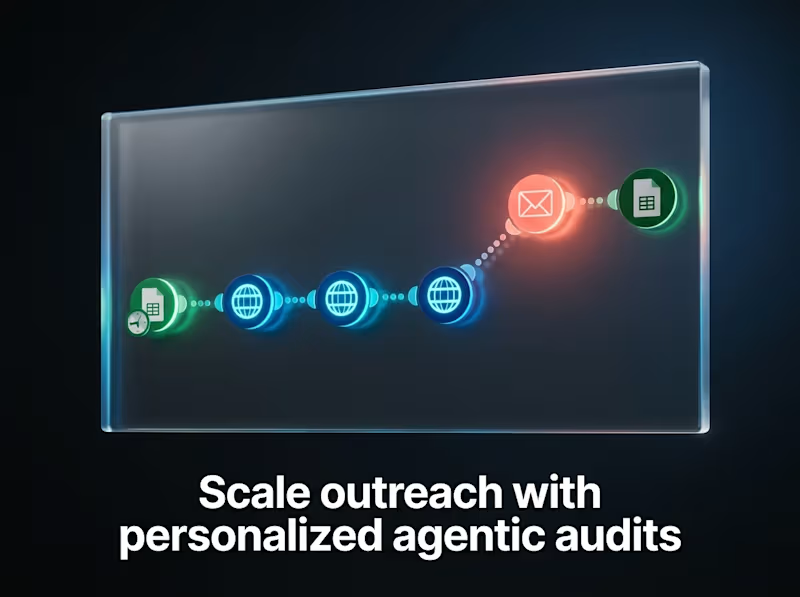
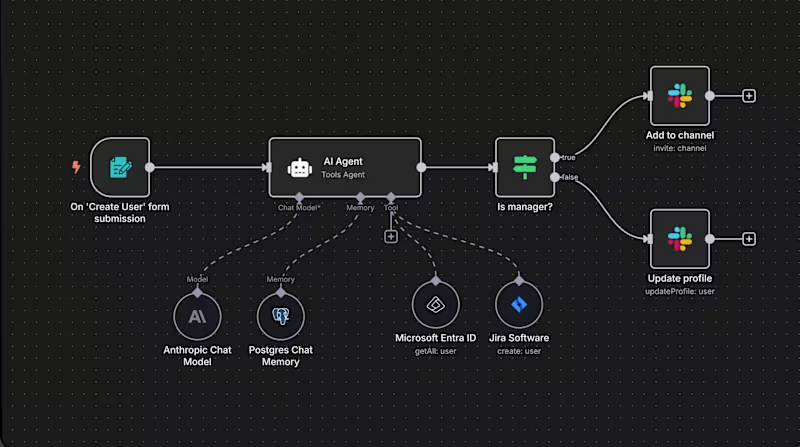
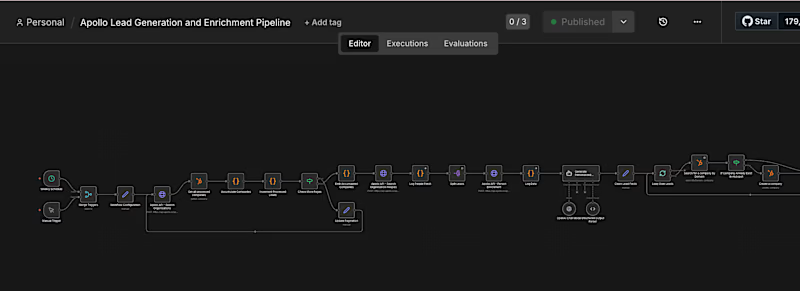
Enterprise AI Outbound Engine: Programmatic Domain Auditing & Hyper-Personalized Lead Acquisition The Objective To eliminate the extremely low conversion rates associated with generic, high-volume cold email strategies. This asset was engineered to build an automated, zero-latency outbound prospecting infrastructure that conducts programmatic technical audits on target company websites in real time. By delivering immediate, hyper-personalized value to a prospect’s inbox, the system dramatically increases cold response rates and shortens sales pipeline velocity. System Architecture & Workflow Breakdown The underlying logic is built as an asynchronous, multi-stage agentic data pipeline that seamlessly processes targets from raw data cells to a finalized outbound delivery: Stage 1: Automated Data Ingestion & Polling: The system monitors a centralized data core (Google Sheets) via automated webhooks, continuously scanning for newly appended prospect leads and tracking operational states to prevent duplicate processing. Stage 2: Programmatic Web Scraping: The workflow executes custom HTTP GET requests to isolate, scrape, and ingest live front-end code, metadata, and structural configurations directly from the target company's domain. Stage 3: Multi-Layered LLM Synthesis: The raw web payload is dynamically passed through dual-stage Large Language Model (LLM) API completion nodes. The first node isolates optimization bottlenecks on the prospect's site. The second node acts as a context-aware copywriter, translating those raw gaps into a polished, bespoke audit tailored specifically to the business owner. Stage 4: Automated SMTP Deployment: The finalized custom audit and strategic pitch are formatted into an email payload and routed through an automated mail-server node to deliver the value statement directly to the decision-maker. Stage 5: Closed-Loop State Sync: Upon successful delivery, a final write-back module updates the primary database row with full timestamp logs and execution states, establishing a clean audit trail. Core Capabilities & Tech Highlights Context-Driven Hyper-Personalization: Completely bypasses basic name-merge fields by extracting live, domain-specific text to generate authentic, high-impact value statements unique to every recipient. Token-Optimized Payload Ingestion: Employs advanced parsing to strip out irrelevant source code before sending data to the LLM core, preserving maximum contextual relevance while drastically lowering API computational costs. Scale-Ready Asynchronous Architecture: Engineered to execute complex web audits and custom draft writing sequentially across hundreds of target leads simultaneously without causing operational bottlenecks or memory overloads. Inbound Funnel Multiplier: Directly interfaces with modern outbound deliverability systems, protecting domain authority by replacing blind spam with highly targeted, consultative tech audits.
0
42
Cover image for Autonomous Google Reputation Engine: Agentic
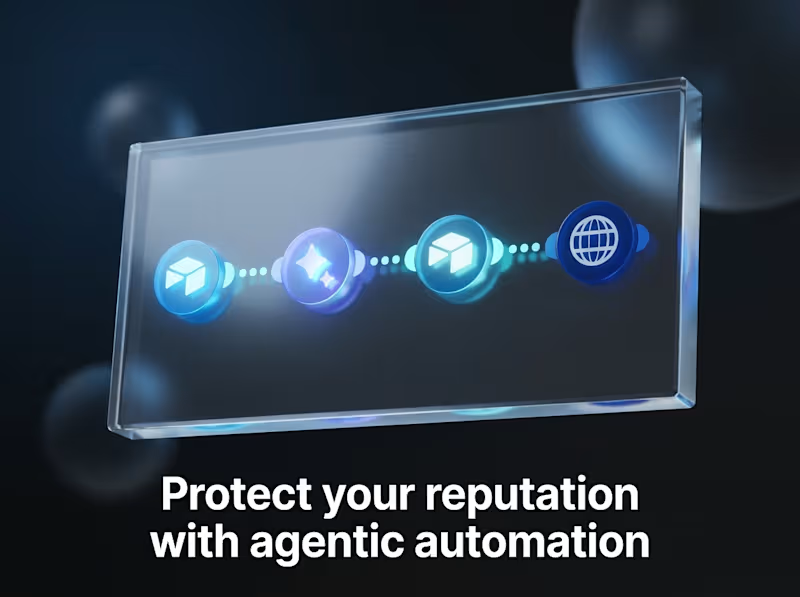
Autonomous Google Reputation Engine: Agentic Review Filtering & Human-in-the-Loop Approval The Objective: To protect brand equity and automate reputation management by instantly intercepting, analyzing, and resolving negative Google reviews through a highly controlled AI triage system. The Solution: Architected a sophisticated, multi-stage agentic workflow that continuously monitors a Google Business Profile. When a negative review is detected, the system triggers an intelligent processing chain. Instead of blindly publishing an automated response, the system utilizes a custom Google Gemini AI node to analyze the sentiment and draft a highly contextualized, empathetic reply. It then pauses the workflow and routes an immediate approval request directly to the business owner via messaging integration (e.g., Slack or SMS). Once the owner reviews and approves the drafted message with a single click, the system dynamically pushes the final response back to Google to resolve the dispute. Core Capabilities & Tech Highlights: Negative Review Interception: Autonomous detection of sub-4-star or critical feedback to immediately trigger reputation-safeguard protocols without manual monitoring. Human-in-the-Loop (HITL) Automation: Implements an enterprise-grade approval loop, ensuring the business owner maintains absolute control before any external communication is finalized. Context-Aware LLM Response Generation: Utilizes Google Gemini API architectures to evaluate customer sentiment and generate professional, brand-aligned de-escalation responses. Dynamic Notification Webhooks: Leverages secure data backends (like Airtable) and custom HTTP POST requests to sync review status, push interactive approval messages to the owner, and execute the final deployment. The Impact: Replaced stressful, manual public relations tasks with a 24/7 automated brand safeguard that protects local search rankings while maintaining complete executive control over customer communications.
0
38
"Crafting seamless digital experiences, one click
Cover image for Problem
Many SaaS businesses struggle with
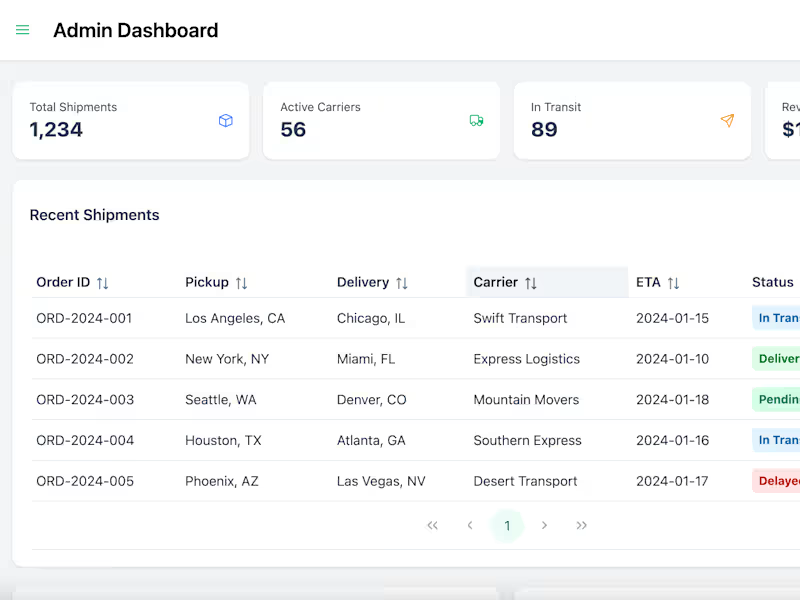
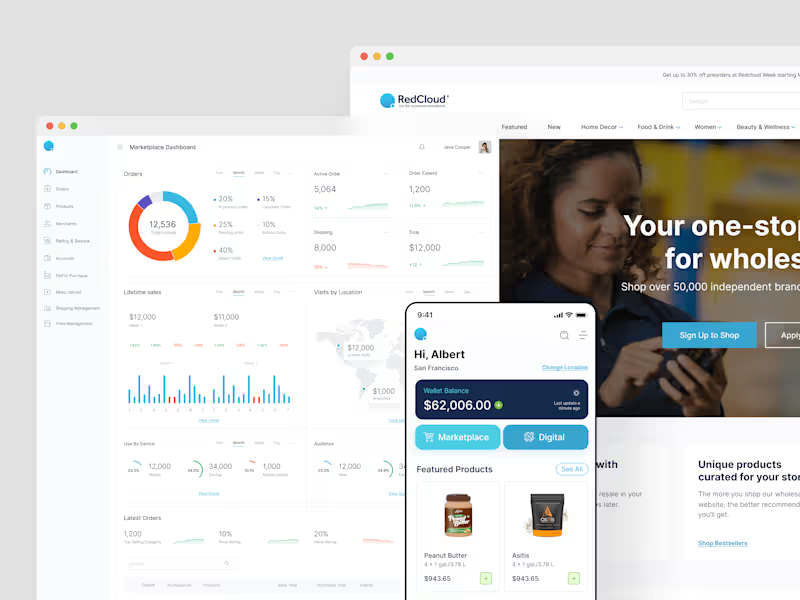
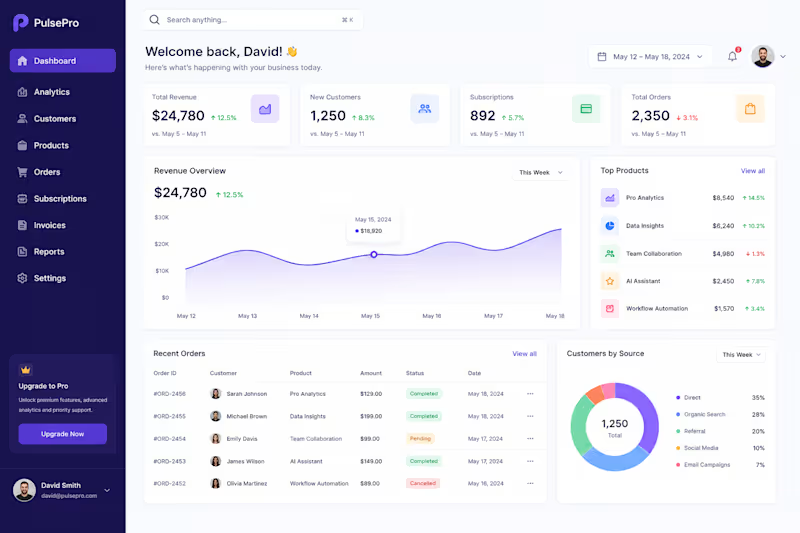
Problem Many SaaS businesses struggle with dashboards that are cluttered, difficult to navigate, and overwhelming for users. Important business metrics are often buried under excessive data, causing decision-makers to spend more time searching for insights rather than acting on them. The existing experience lacked visual hierarchy, clear navigation, and efficient data presentation, resulting in higher cognitive load and reduced productivity. Solution I designed a modern SaaS dashboard focused on simplicity, usability, and data-driven decision-making. The design features: Clear visual hierarchy to highlight key business metrics. Intuitive sidebar navigation for quick access to core sections. KPI cards displaying revenue, customers, subscriptions, and orders at a glance. Interactive charts and data visualizations for better trend analysis. Clean typography, consistent spacing, and modern UI components. Responsive design principles to ensure scalability across devices. Strategic use of whitespace to reduce cognitive load and improve readability. The overall design follows user-centered design principles, enabling users to quickly understand business performance and take action with confidence. Result The redesigned dashboard delivers a more efficient and engaging user experience by: Reducing information overload through structured content organization. Improving data discoverability and decision-making speed. Enhancing user satisfaction with a clean and professional interface. Increasing dashboard usability through intuitive navigation patterns. Creating a scalable design system that supports future product growth. The final solution balances aesthetics and functionality, helping SaaS businesses monitor performance, track growth, and manage operations more effectively.
0
10
Cover image for 1. The Problem

Traditional therapy can
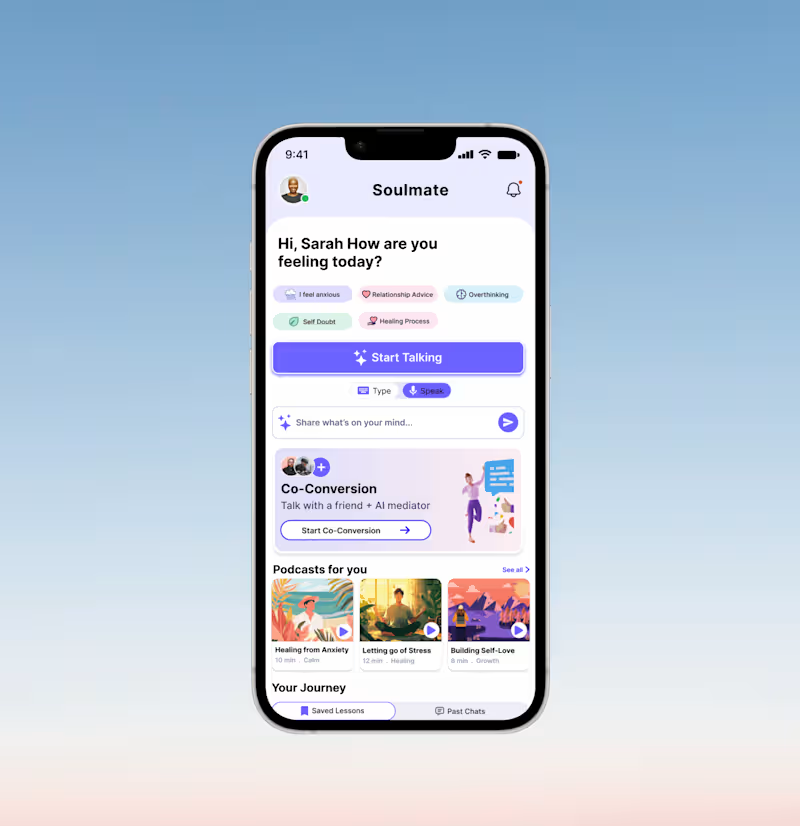
1. The Problem Traditional therapy can be expensive, intimidating, or difficult to schedule. Many people experiencing "everyday" stress, anxiety, or relationship friction lack a safe, immediate space to process their emotions. There is a gap between "doing nothing" and "booking a clinical session" where users need structured, therapeutic guidance without the friction of a long-term commitment. 2. The Goal To design a mobile sanctuary that provides instant, AI-driven emotional support. The primary objective was to create a "zero-friction" homepage that allows users to start a conversation within seconds, while organizing deep-learning features like moderated "Co-Conversations" and personalized audio content. 3. User Research & Personas Through user discovery, we identified three primary needs: The Overwhelmed Professional: Needs quick check-ins to manage work-induced anxiety. The Partner in Conflict: Needs an objective "third party" to help navigate difficult conversations. The Self-Improver: Looking for bite-sized lessons and podcasts to build long-term resilience. 4. The Design Solution (Feature Breakdown) A. Guided Entry Points (Prompts) Instead of a blank chat screen, we implemented Mood Tags (e.g., "I feel anxious," "Self Doubt"). Why: Lowering the cognitive load. It’s easier to click a feeling than to type it from scratch. B. Modal Versatility (Type vs. Speak) The UI features a prominent toggle for Type & Speak modes. Why: Mental health needs are contextual. A user might want to speak privately in their room but type while on a commute. C. The "Co-Conversion" Hub A unique card design for AI-moderated group sessions. Why: This positions the AI not just as a diary, but as a mediator, solving the "he-said-she-said" deadlock in interpersonal relationships. D. Personalized Learning (Podcasts & Journey) Horizontal scrolling cards for "Podcasts for you" and a "Your Journey" section for reflection. Why: To ensure the app provides value even when the user isn't in a crisis, fostering a habit of proactive wellness. 5. Visual Identity & UI Choices Color Palette: Soft lavenders, mint greens, and pale blues. These colors are scientifically associated with calmness and trust. Typography: We used a bold, friendly Sans-Serif for headings to feel modern and accessible. Micro-Interactions: The "Start Talking" button uses a subtle gradient and "sparkle" icon to signify the "magic" of AI insights. 6. Reflection & Future Iterations While the current homepage effectively addresses the "immediate need," the next steps for this project would include: Dark Mode: Essential for users dealing with late-night anxiety or insomnia. Gamification: Adding "Streaks" or "Growth Milestones" to encourage daily check-ins. Haptic Feedback: Using gentle vibrations during "Speak" mode to create a more grounded, sensory experience.
1
51
Expert UX/UI Design for Intuitive, Effective Solutions
AI Automation Expert for Solar, Recruitment, Medicine