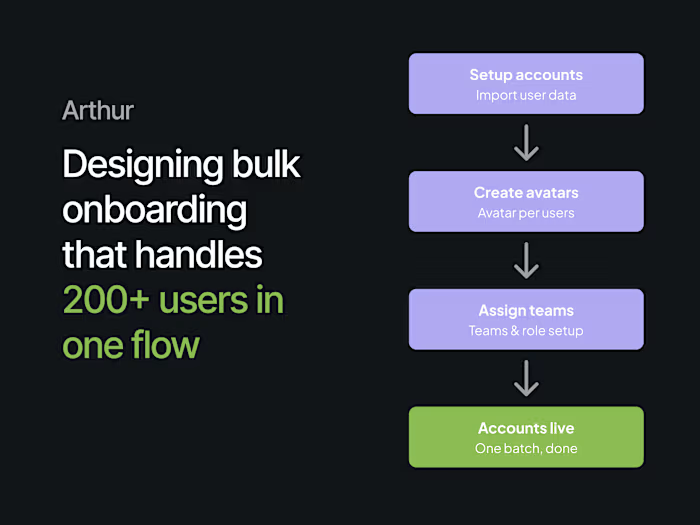
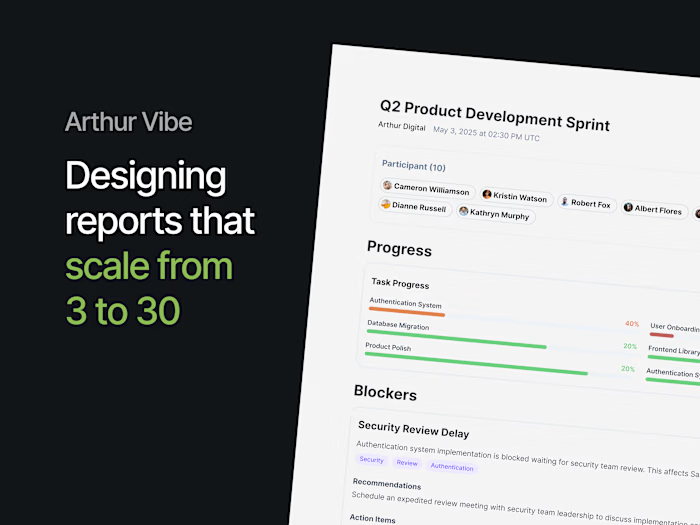
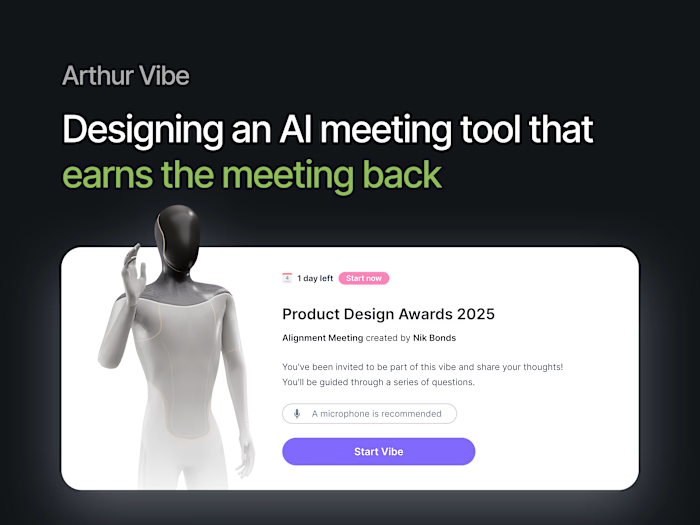
Avatar Experience Redesign for Arthur

Hamza Waqas

Rebuilding the Avatar at Arthur
Designing how people show up in a virtual room. I owned Arthur's avatar experience across two versions, working with the portal and Unity teams.
More than an appearance
In Arthur you meet inside a 3D room, in VR or from a browser. Your avatar is the version of you everyone else sees. Get it wrong and people feel like they are hiding behind a stranger. So this was never cosmetic work. It was about whether people felt comfortable being in the room at all.
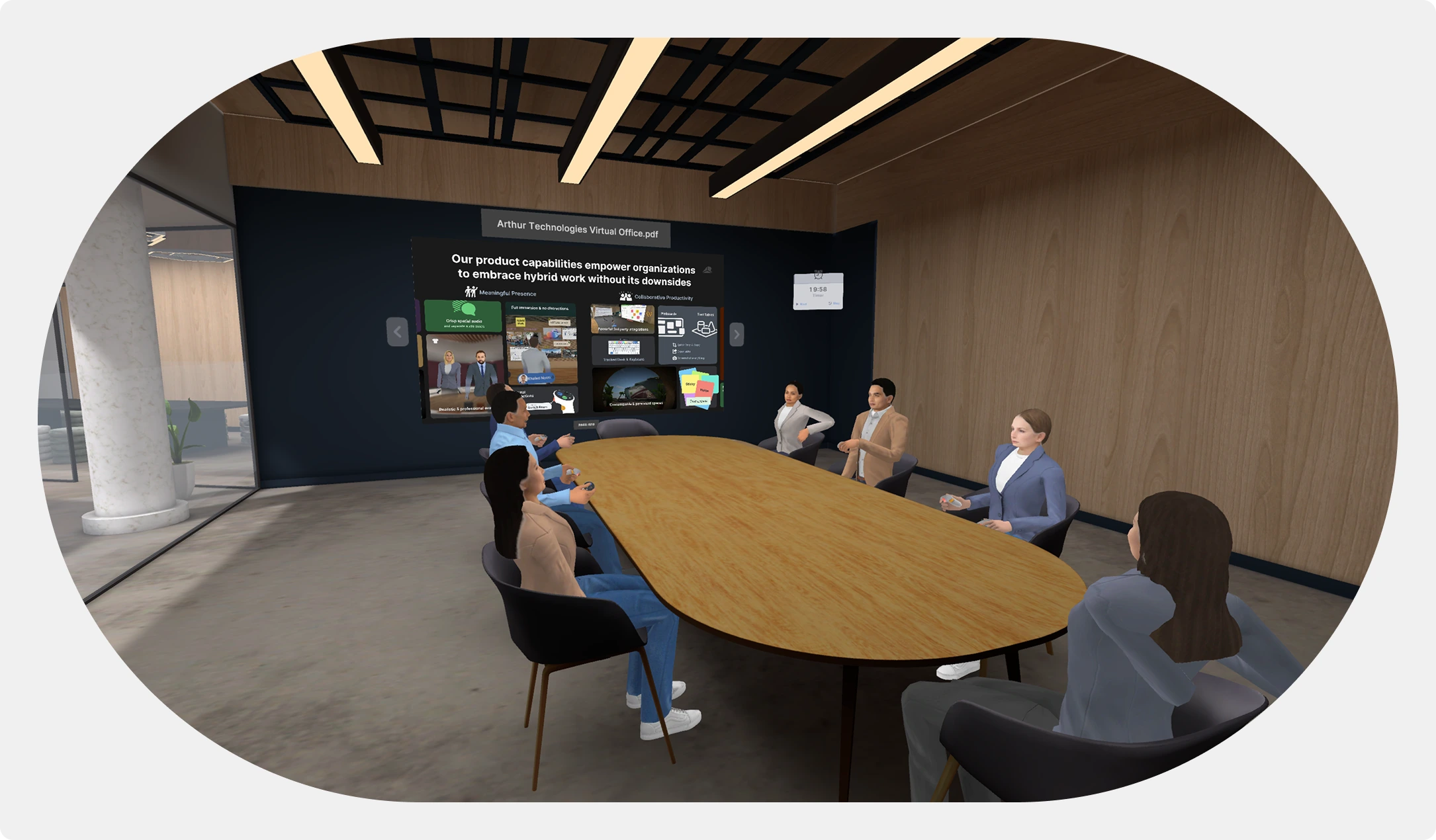
Six people in the same room, none of them in the same city
v1: Fix the foundation
The original avatar was a dead end. Pick a body type, pick a color dot, generate. No preview of how the outfit would look, no idea what you were building until it appeared.
But it had its own limitation: one avatar, one outfit. Changing your look meant regenerating everything. So people picked once and lived with it, even when it did not fit the meeting. The problem was not the options. It was the cost of changing them.
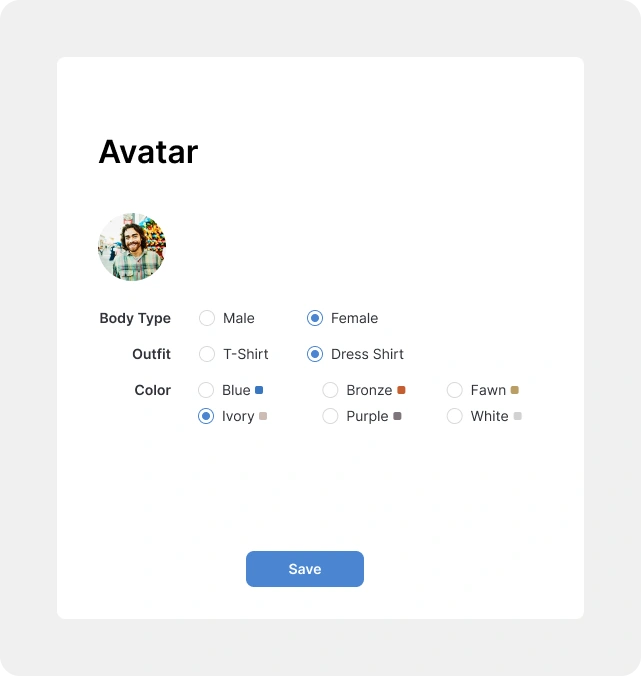
Old: Guess and generate
v1 fixed setup. You could see the outfit before committing, set your height, retry if generation failed.
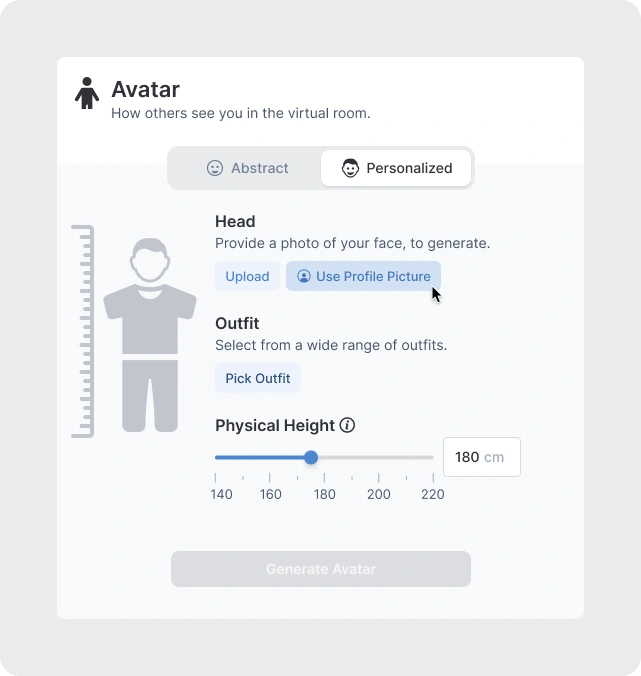
New: See it before you commit
v2: Split the head from the outfit
Generating a realistic head is the expensive step. Picking an outfit is cheap. v1 bundled them, so every outfit change paid the full cost of the head.
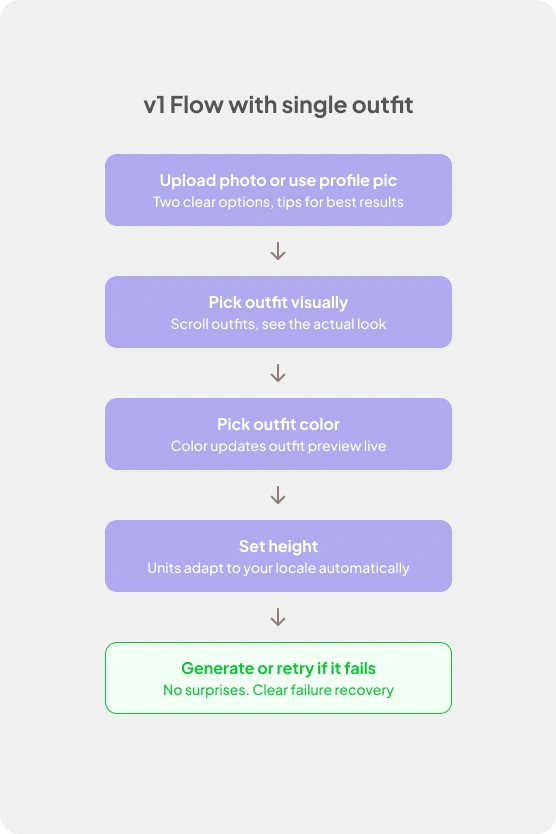
v1 flow with initial fixes
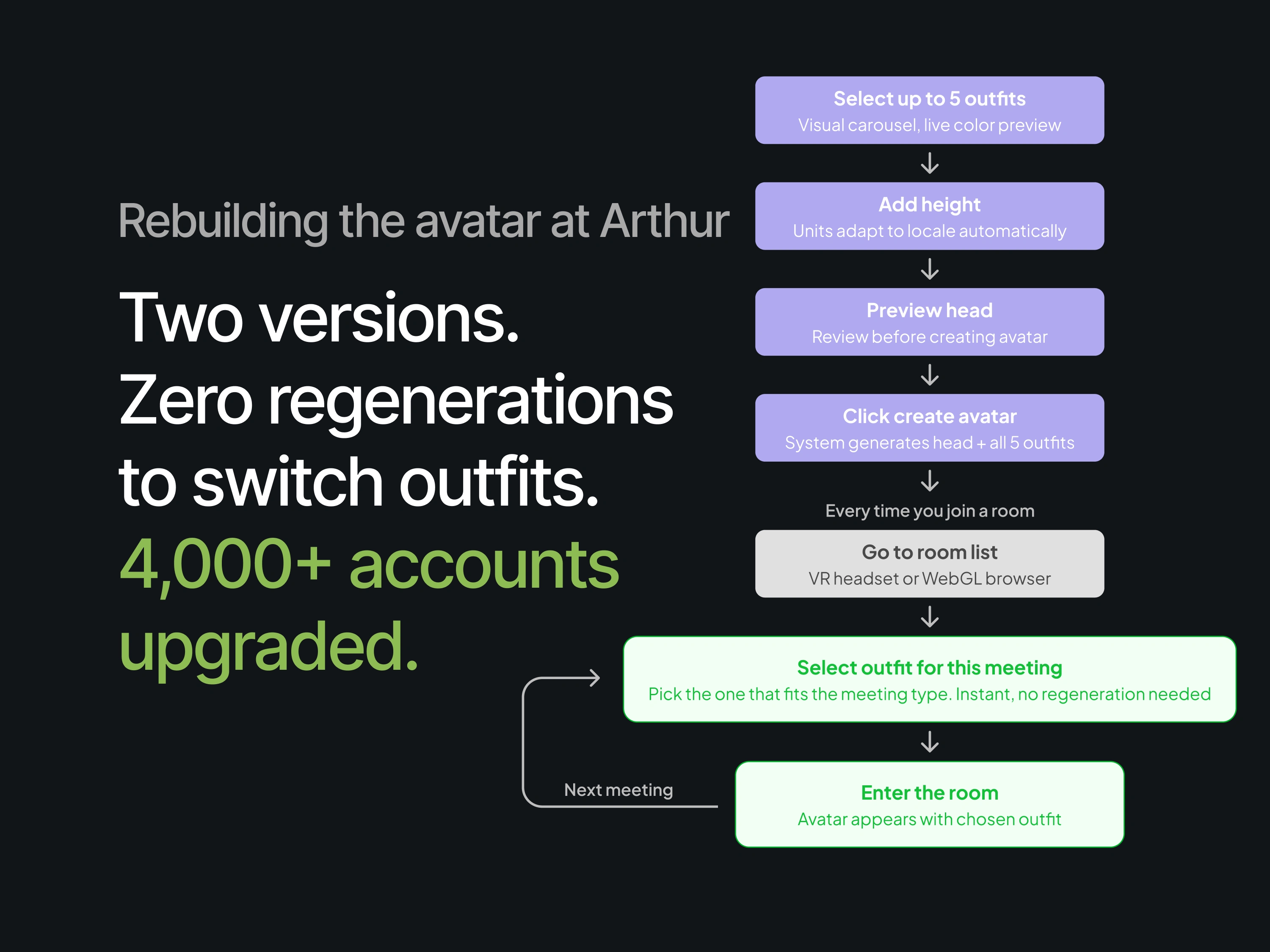
v2 split them apart. Generate your head once, keep up to five outfits ready, switch before any meeting with no regeneration. This became possible when the avatar provider's SDK was updated to treat head and outfit as independent layers. I owned the design and drove it across portal and Unity, since the head lived in their pipeline and the selection lived in mine.
The tradeoff was more steps upfront. I took that, because the cost now lands once at setup instead of every time someone wants to change.
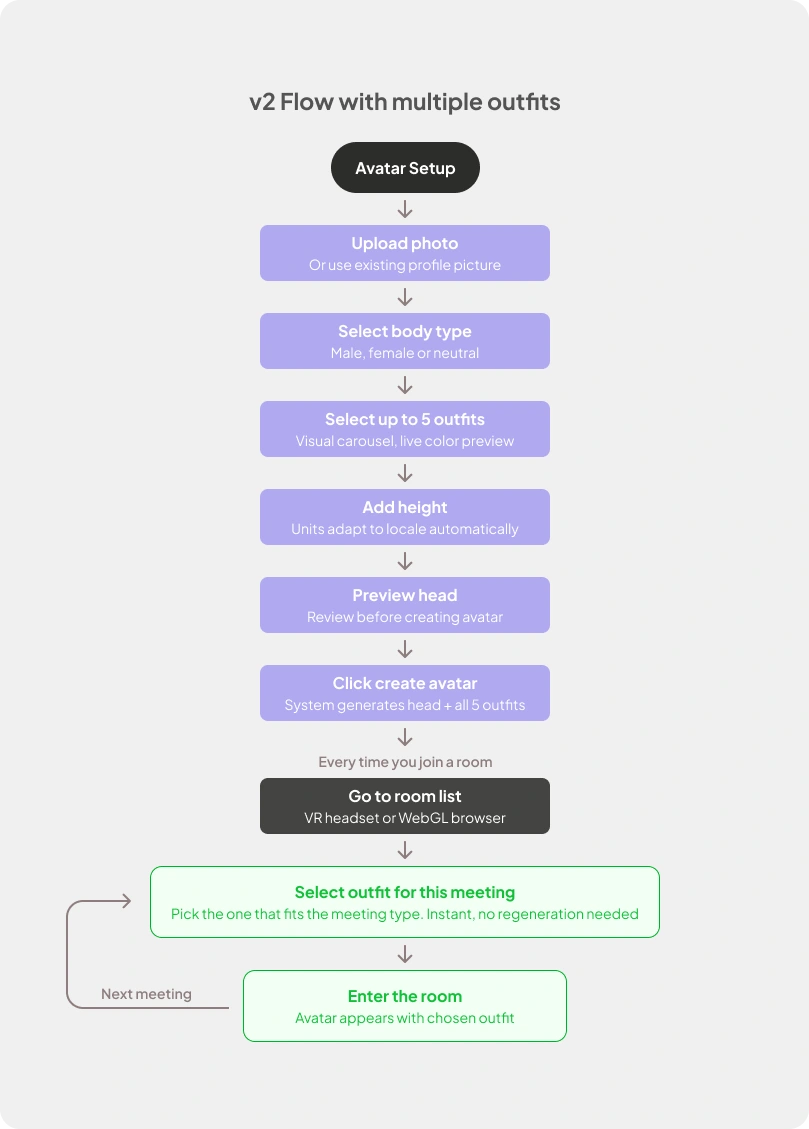
v2 flow with multiple outfit options
Designing for the hard cases
The happy path was easy to draw. The decisions that mattered were the small moments where users could get lost.
You always know what's left
Setup has three parts: head, outfit, height. Each shows its completion state inline. The icon turns blue when that part is done. No wizard, no progress bar, no hidden steps.
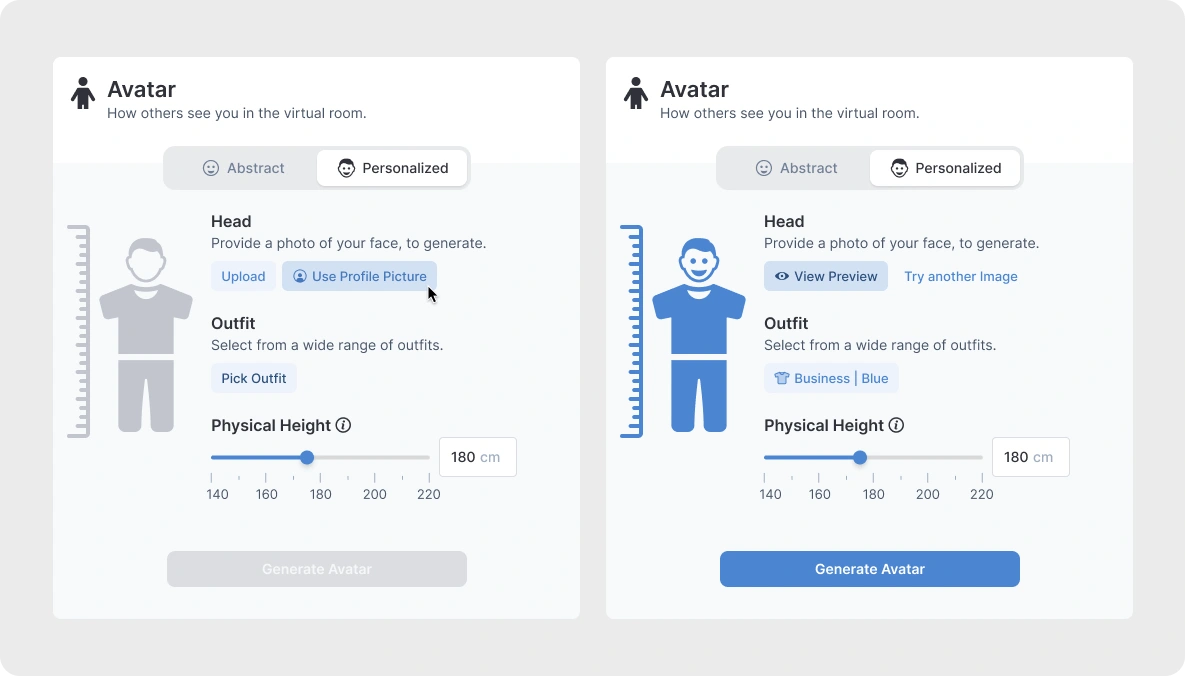
Not started, each section waiting. All three done, Generate Avatar unlocked.
Why we ask for height
Height affects how your avatar scales relative to others. A tooltip explains why before we ask, and confirms the value is never shown to others. The unit adapts to locale. Feet and inches in the US, centimeters elsewhere.
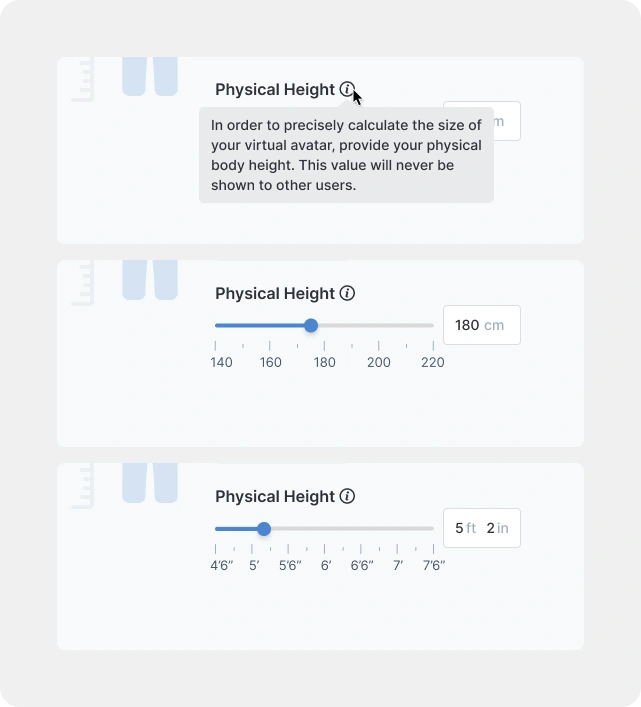
Tooltip explains why before we ask. Units adapt to locale automatically.
A picker that never lies
v2 replaced the color dot with a dedicated outfit modal. Browse by category, full body previews, live color updates. Five slots at the top, empty ones visible. The control never implies options that are not there.
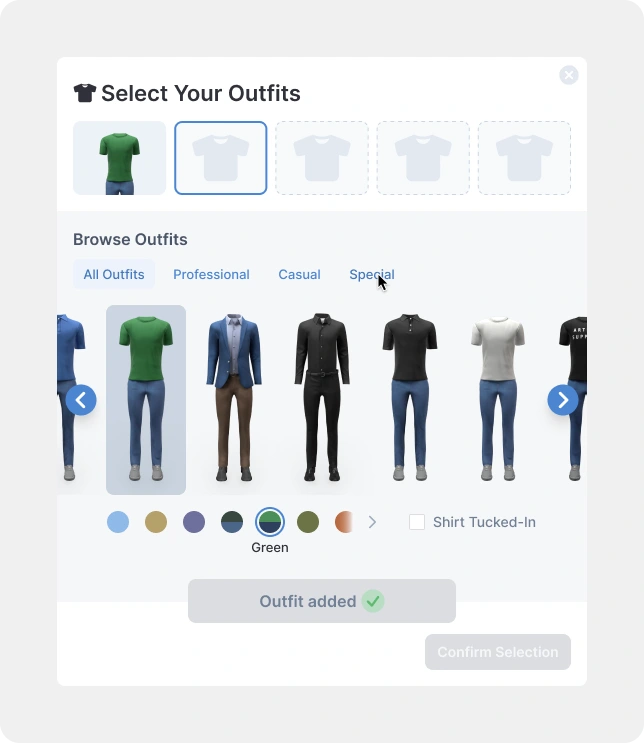
Five slots at the top. Always know what's saved.
A preview that tells the truth
v1 previewed only the head. People judge the whole avatar, so a good head on the wrong body still felt off. v2 replaced it with a full 3D body preview. Your face, your outfit, your proportions, rotatable.
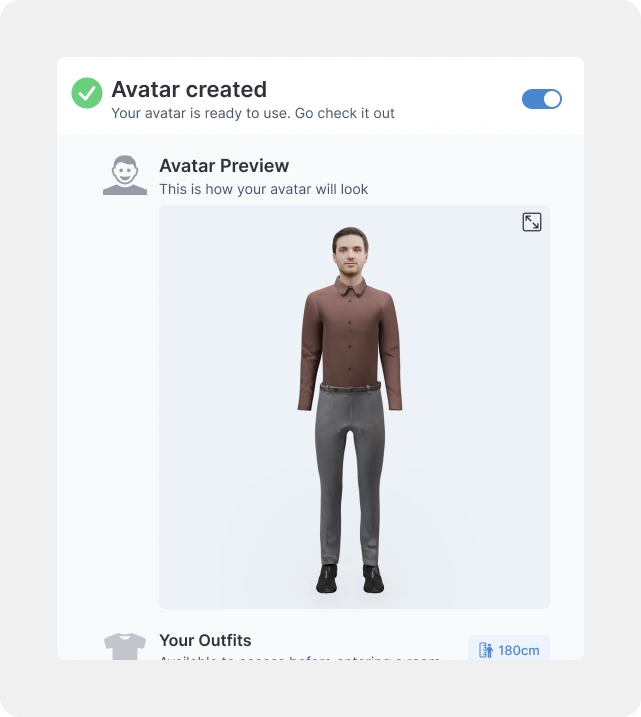
Your face, your outfit, your height. All in one preview.
Helping people find it
A feature nobody sees is a feature nobody uses. The rollout was part of the design. Existing users were upgraded automatically and nudged to add more outfits. Announcements met people in the room, on the tablet, and in VR, not hidden in settings.
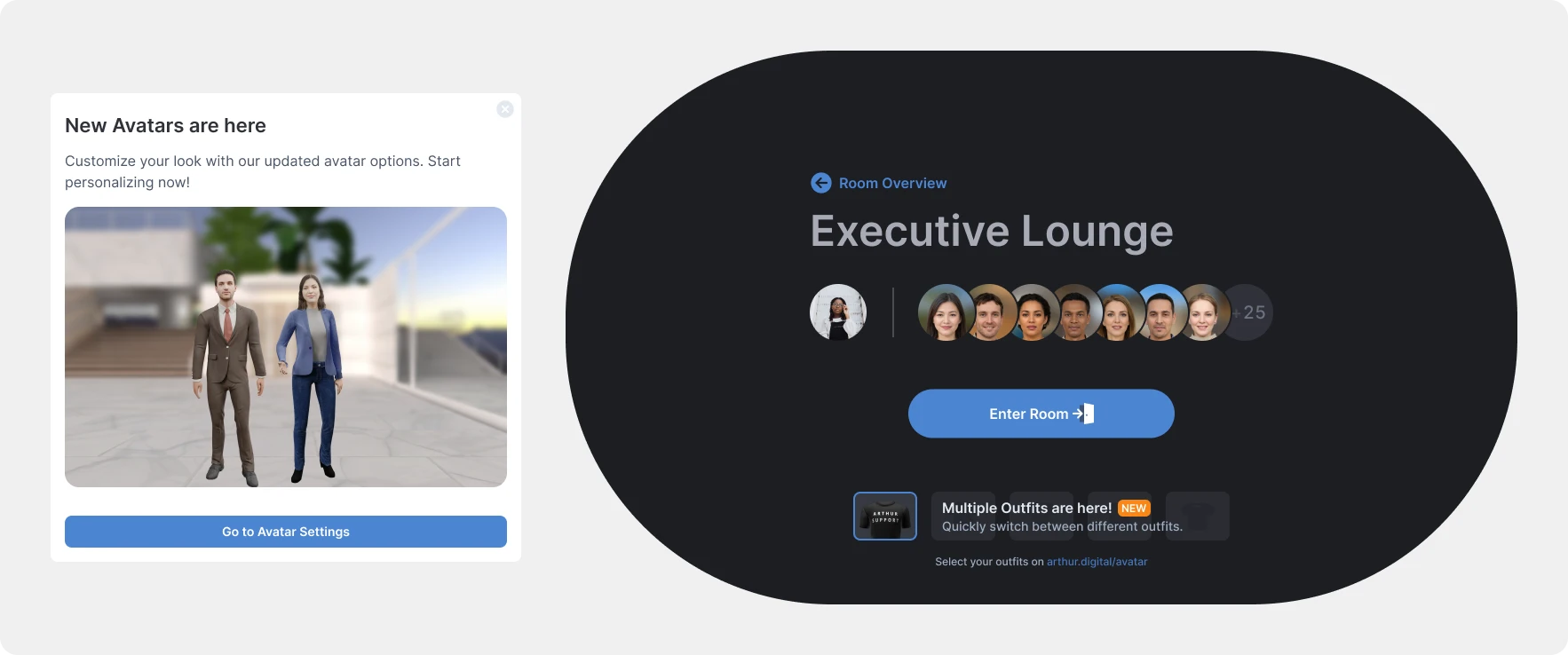
The announcement met people where they already were, in the room and in VR.
4,000 accounts, zero regenerations
More than 4,000 accounts were upgraded at rollout. Usage analytics never made it into scope, so the rest is what the architecture guarantees: outfit changes cost nothing, five looks stay ready behind one generated head, and the same avatar walks into VR and browser rooms.
4,000+ accounts upgraded
0 regenerations to switch outfits
5 outfits per avatar, one generated head
Same avatar across VR and browser
Two versions, one lesson
v2 only became possible the day the provider's SDK changed. Stay close enough to the engineering constraints that you know the moment they shift. The best design opportunities in a technical product often arrive as SDK updates, not briefs.
Like this project
Posted Jun 22, 2026
Redesigned Arthur's avatar system across two versions to enhance user experience in VR and browser.
Likes
1
Views
7