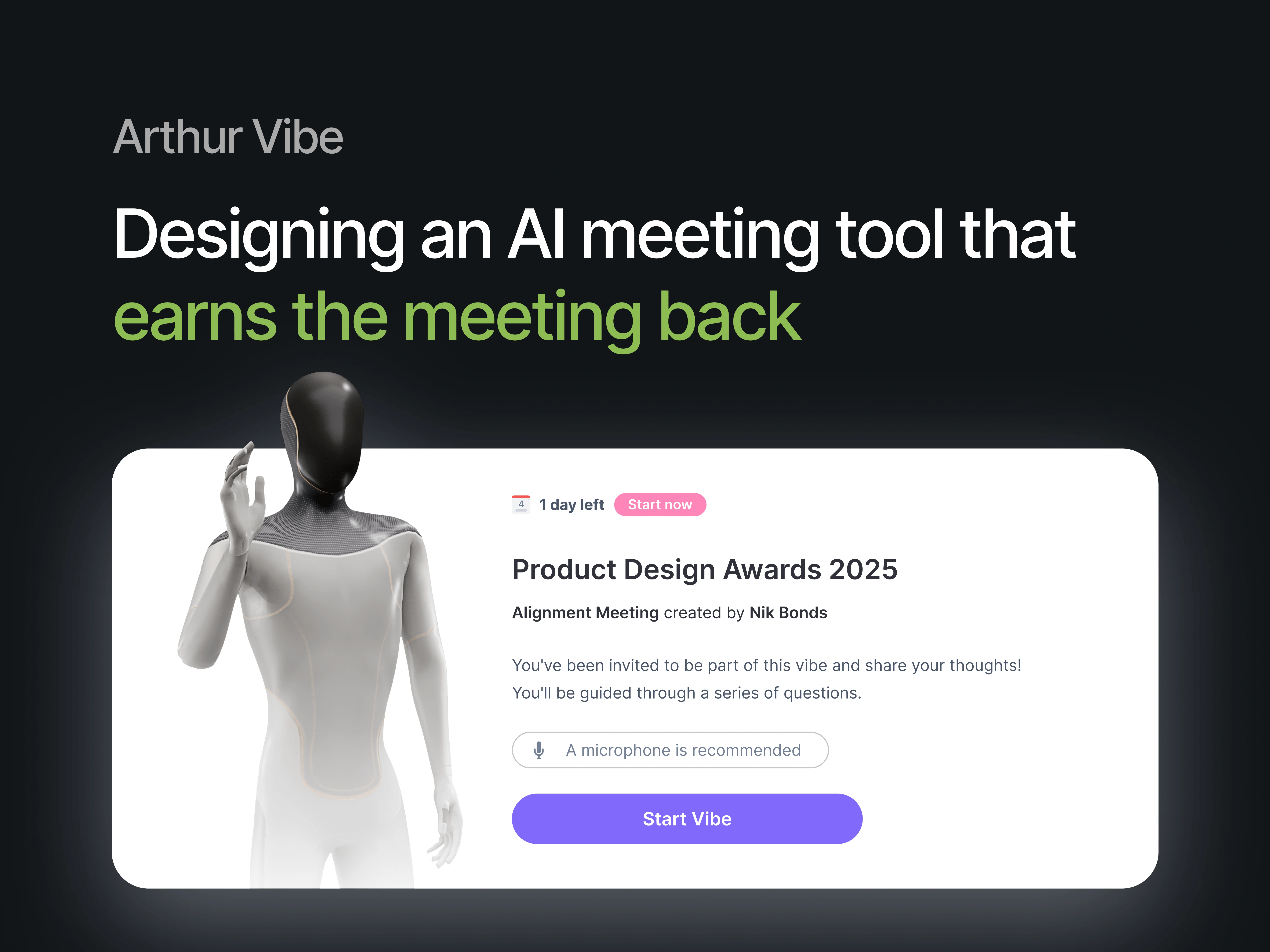
Designing an AI meeting tool that earns the meeting back

Hamza Waqas


Overview
About Arthur Vibe
An AI-led async alignment tool inside Arthur's enterprise workspace. Set up a Vibe, invite participants, an AI bot interviews each person, a report is generated.
Used by enterprise clients including PwC, Mondelez, and Bayer.
Project goal
Move recurring meetings out of the calendar and into a structured async interview.
The challenge was not the interview. It was making the output trustworthy enough that managers would actually skip the meeting.
I worked on the product with another designer, splitting screens across the flow.
The trust problem
Most async meeting tools fail for the same reason. The output does not earn the manager's confidence. Summaries get skimmed once and ignored.
For Vibe to work, the report had to feel like a decision-quality artifact. Every design decision downstream traced back to this.
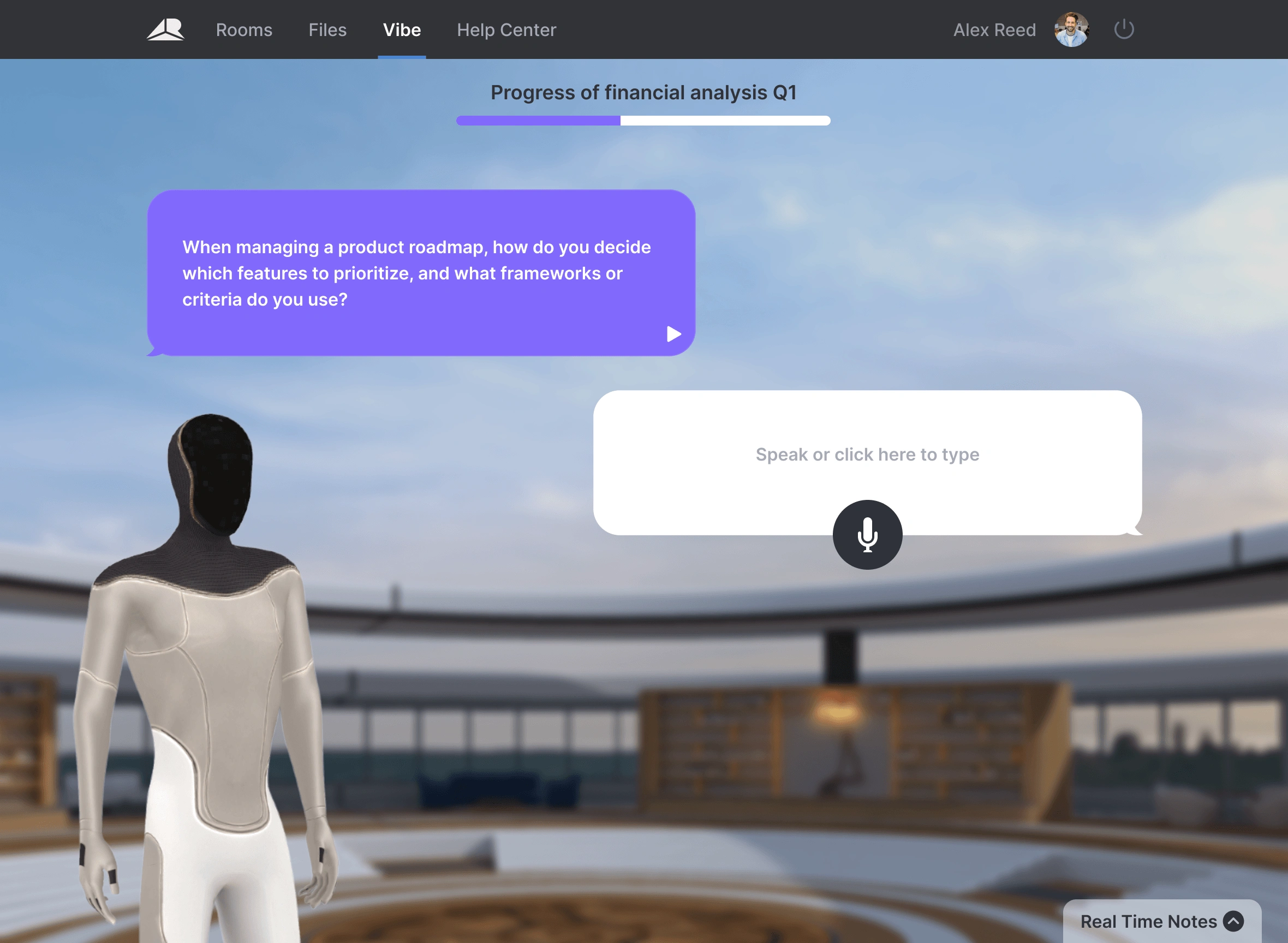
An AI interview instead of a live meeting. Answer at your own pace, in text or voice.
The participant experience
The interview had to feel low-friction, natural, and honest. Small moments where trust could break got the most attention.
Welcome without friction
One line to set expectations: who invited them, what the Vibe is about, how long it takes. No signup, no dashboard.
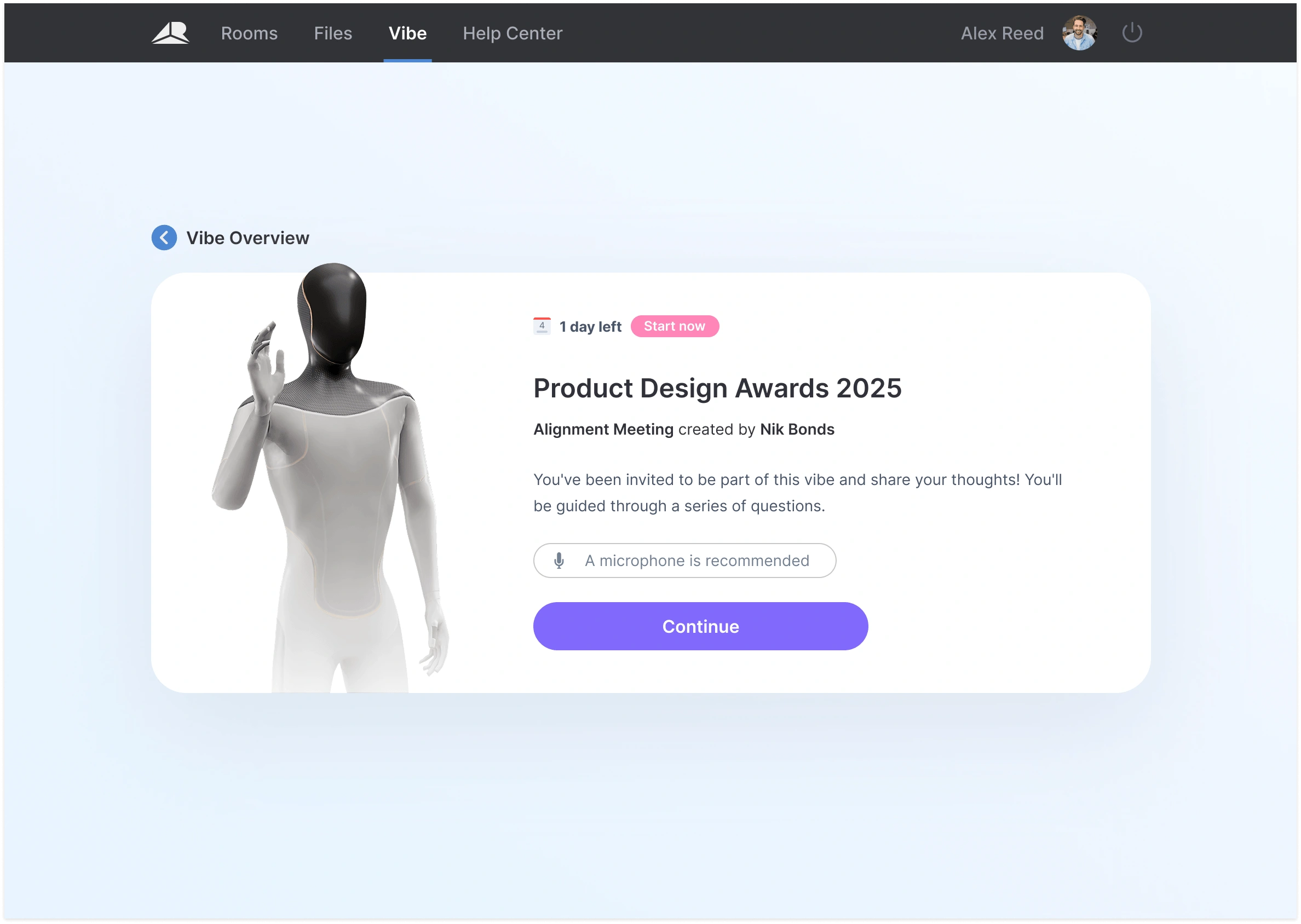
Set expectations in one line, then start.
Change your mind before submitting
Every answer is editable in the review step. Once submitted, responses lock and the report generates.
Editable until you submit. After that, it locks.
Getting people to actually answer
Async lives and dies on completion. So the email system was designed as its own product.
Every Vibe triggers conditional emails based on participant behavior. Did not open, did not finish, deadline approaching. Each state gets its own message.
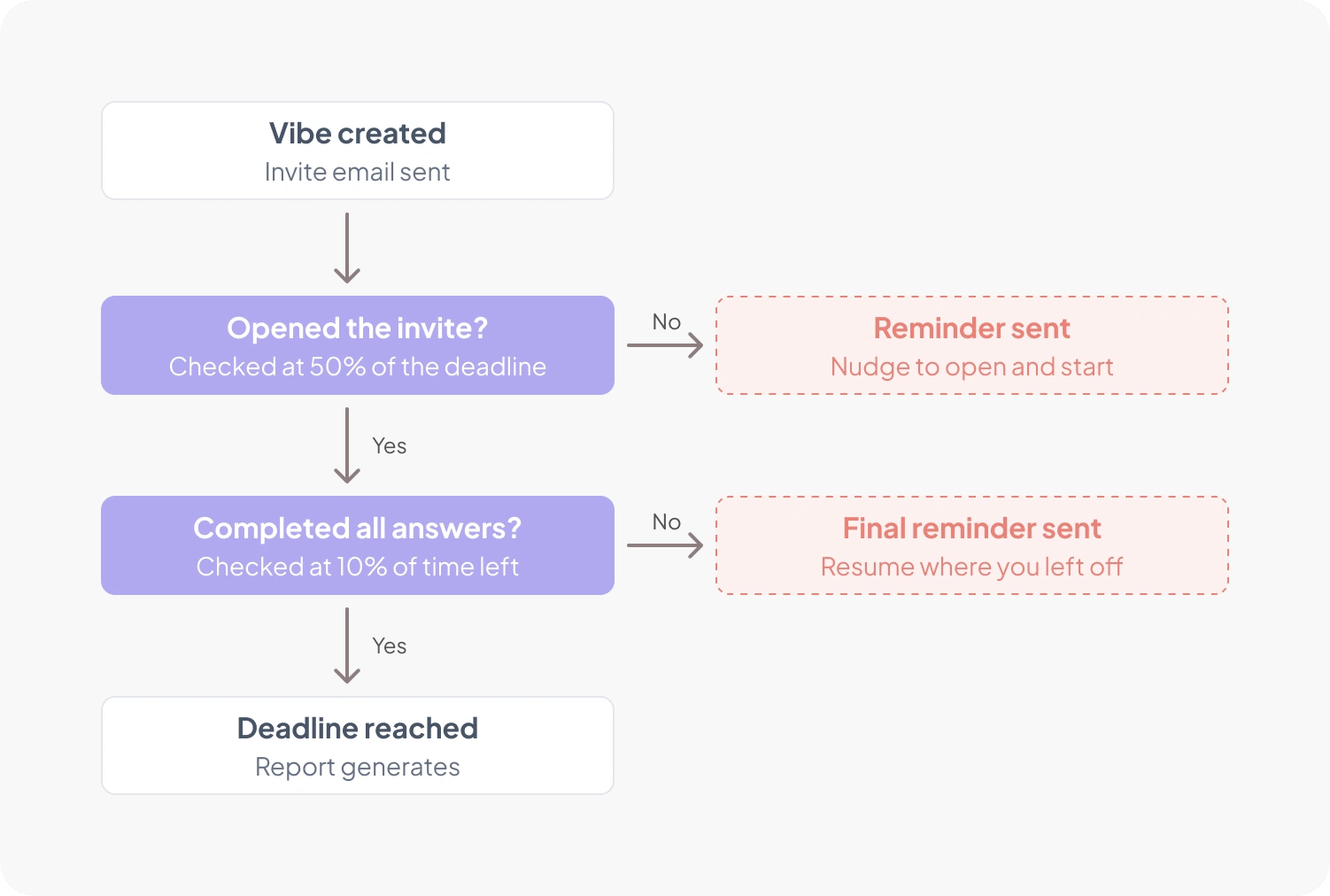
Two time-gated checks decide what email goes out next. Miss one, get a nudge. Answer, move forward.
Non-Arthur users
Enterprise Vibes often include people outside the client's account. Making them create an account for three questions would kill completion.
A shareable Vibe URL lets anyone with the link answer. Optional email confirmation for identity. The tradeoff (weaker verification, not fully SOC2 compliant) was documented in the design file and surfaced to the team before shipping.
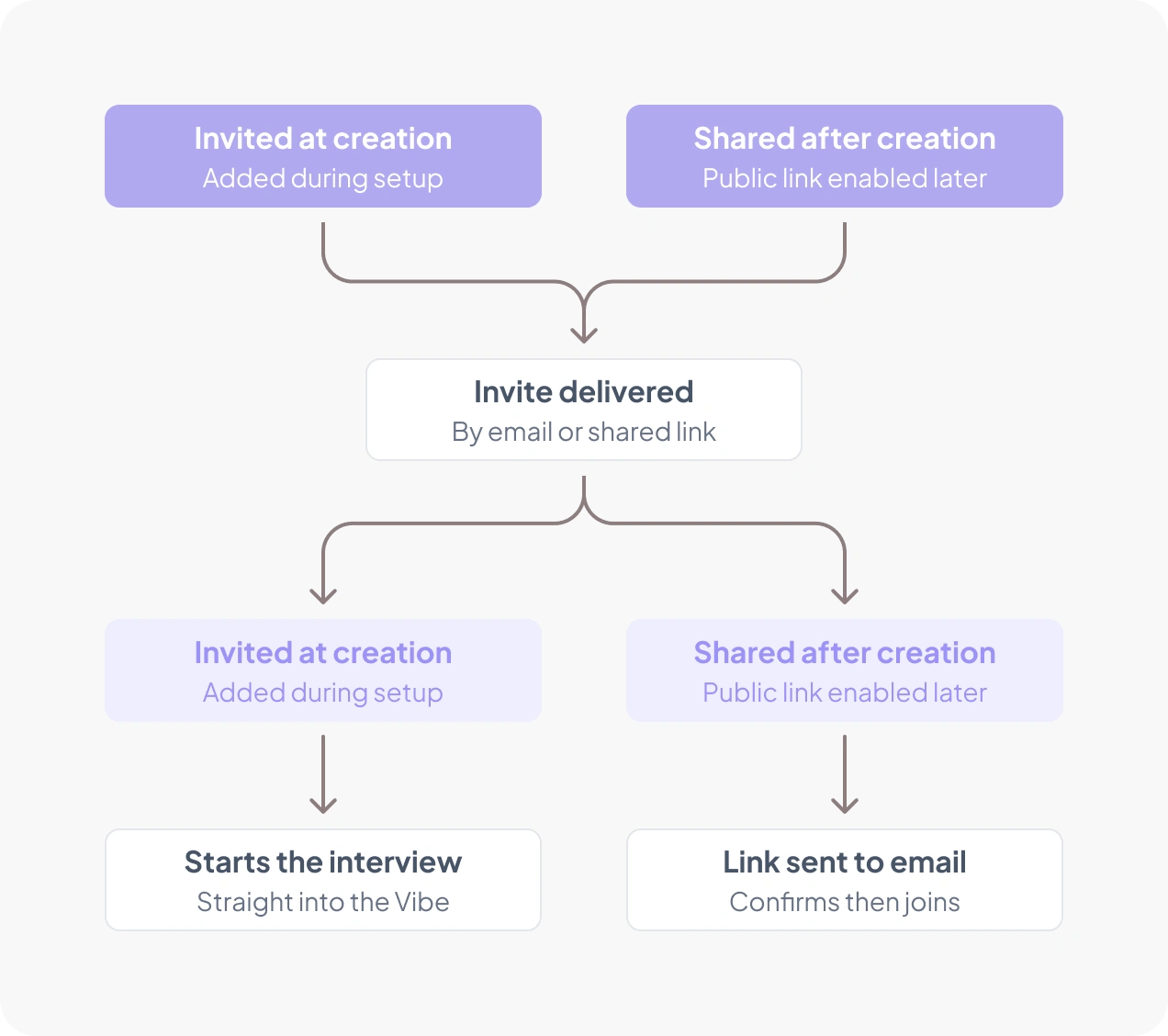
Email opens straight in. Any other platform confirms identity first before sending the join link.
Outcome
Vibe launched as a new tab inside Arthur's portal, running today for teams already using the platform.
Analytics were not in scope. What the design guarantees: async interviews across multiple meeting types, a participant flow that works across desktop and browser, an email system that adapts to behavior, and access controls that meet enterprise expectations.
What I carry forward
Every decision, from the welcome screen to email triggers to access controls, was the same decision at a different scale. Does this make the output worth trusting when a manager has to act on it in five minutes?
The hardest part of designing AI products is not the AI. It is designing the surface around it so the output earns its place in the workflow.
Like this project
Posted Jul 16, 2026
Designed the full product experience for Arthur Vibe, an AI-led async alignment tool used by enterprise teams inside Arthur's portal.
Likes
0
Views
3