Freelancers using Python in DadriFreelancers using Python in Dadri
I build production AI agents that automate real workflows
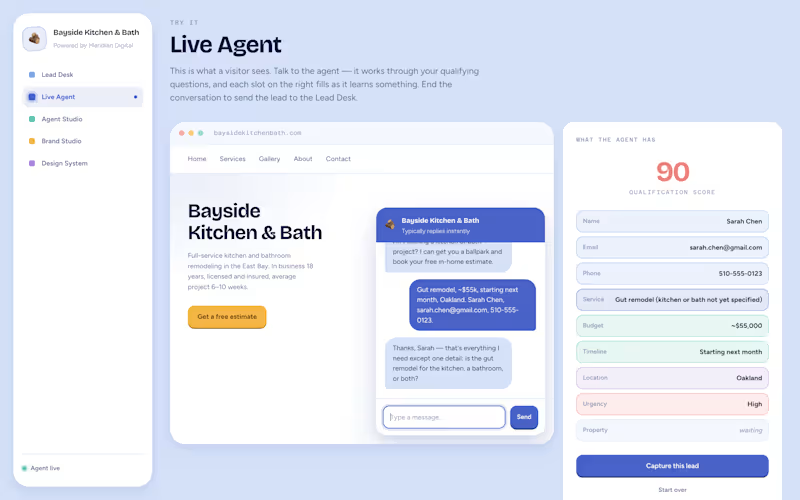
Cover image for Built an LLM-powered question-answering application
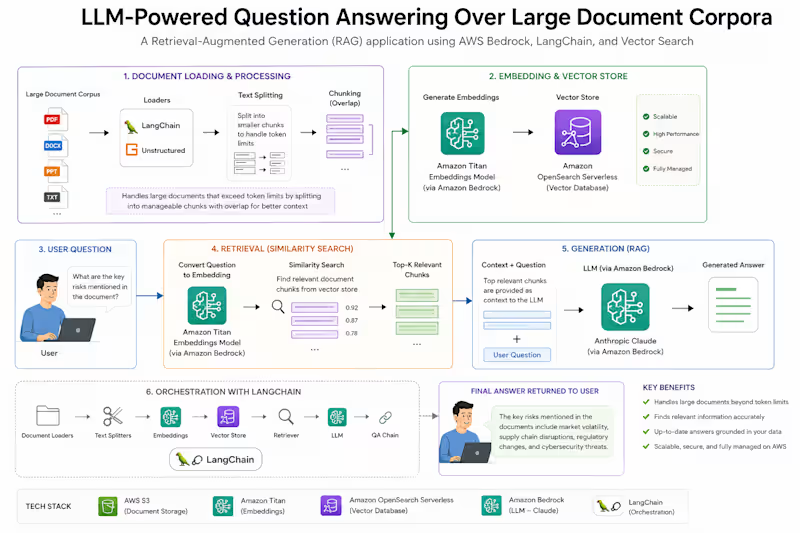
Built an LLM-powered question-answering application that lets users ask natural-language questions over large document corpora and get accurate, grounded answers, instead of manually searching through documents for the right section. Designed and built the full RAG pipeline independently, from document ingestion through to answer generation, as a technical demonstration of production-grade retrieval-augmented generation using AWS-native tooling. Key Challenges: Documents exceeding token limits: Large source documents couldn't be fed directly into the LLM's context window, so they had to be broken down without losing meaning or context across chunks. Finding the right context: With a large corpus, the system needed to reliably surface the specific chunks relevant to a given question, not just the most textually similar ones. Grounded, accurate answers: Answers had to be based on the actual retrieved content, not the model's general knowledge, to avoid confidently wrong responses. Working within a managed AWS ecosystem: Embeddings, storage, and generation all needed to work together cleanly using Bedrock-native models rather than a patchwork of external services. Approach: Document loading and chunking Processed large documents into manageable chunks sized to stay within model token limits while preserving enough context for coherent retrieval. Vector embeddings with Amazon Titan Generated vector embeddings for each document chunk using Amazon Titan, capturing semantic meaning rather than just keyword overlap. Vector storage and retrieval Stored the embeddings in a vector database, enabling fast similarity search to pull the most relevant chunks for any given question. RAG-based answer generation with Claude on Bedrock When a question comes in, the system retrieves the relevant chunks and passes them as context to Anthropic Claude via Amazon Bedrock, which generates an answer grounded in the retrieved content rather than relying on parametric memory alone. Results & Impact: Accurate, source-grounded answers over document corpora too large to fit in a single context window. A scalable retrieval architecture that separates document processing, embedding, and generation, so any of the three can be swapped or scaled independently. A fully AWS-native RAG pipeline, demonstrating fluency with Bedrock's embedding and generation models working together in production patterns. Tech Stack Python · LangChain · AWS Bedrock · Amazon Titan · Anthropic Claude · FAISS DB
1
75
Cover image for Built a virtual try-on application
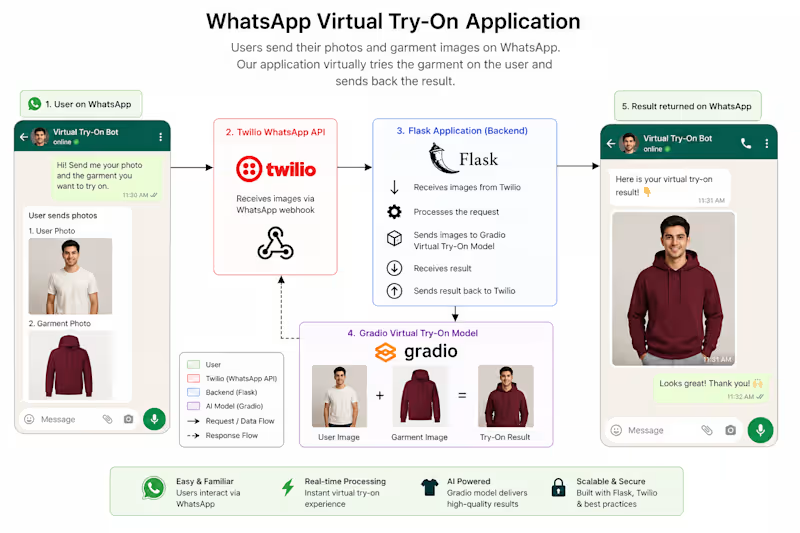
Built a virtual try-on application that lets users try on garments over WhatsApp. A user sends a photo through WhatsApp, and the app returns a realistic image of them wearing the selected garment, no app download or website visit required. Designed and built the system end-to-end, from the WhatsApp messaging integration through to the try-on generation pipeline, as a self-contained product demonstrating conversational commerce for fashion/retail use cases. Key Challenges: - Frictionless UX over a messaging app: WhatsApp isn't built for structured app interactions, so the flow had to feel natural through simple image and text messages, not clunky commands. - Reliable image handling: Incoming photos vary wildly in quality, lighting, and pose, and had to be received, processed, and matched with garment images reliably. - Fast turnaround: Users expect a near-instant reply on a messaging app, so the backend had to handle image processing and model inference without long delays. - Stitching third-party services together: Twilio's WhatsApp API and Gradio's try-on model weren't built to talk to each other, so the app had to bridge them cleanly. Approach: WhatsApp integration via Twilio -Set up Twilio's WhatsApp API to receive incoming user images and send outgoing try-on results, handling the messaging layer end-to-end. Flask backend as the orchestration layer -Built a Flask application to receive Twilio webhooks, manage the request flow, and coordinate between incoming user images and the try-on model. Virtual try-on generation with Gradio - Integrated Gradio's virtual try-on model to generate the final garment-on-user image, returning a realistic composite result. End-to-end flow design - Connected the pieces so a user's WhatsApp message triggers the full pipeline automatically: receive image → process → generate try-on → send result back, all within a single conversation. Results & Impact - A working conversational shopping experience built entirely on a messaging app users already have open every day. - Zero-download, zero-signup try-on flow — removes the biggest friction point in getting users to try a new AI-powered feature. - A reusable integration pattern connecting Twilio, Flask, and a generative vision model, applicable to other WhatsApp-based commerce or personalization tools. Provided Services & Solutions 📌 Conversational App Development 📌 WhatsApp API Integration (Twilio) 📌 Backend Development (Flask) 📌 Generative AI Integration (Gradio virtual try-on model) 📌 Third-Party API Orchestration Tech Stack: Python · Flask · Twilio WhatsApp API · Gradio If you want an AI-powered experience built directly into a channel your customers already use, like WhatsApp, let's talk.
1
43
Cover image for Built and maintained a HIPAA
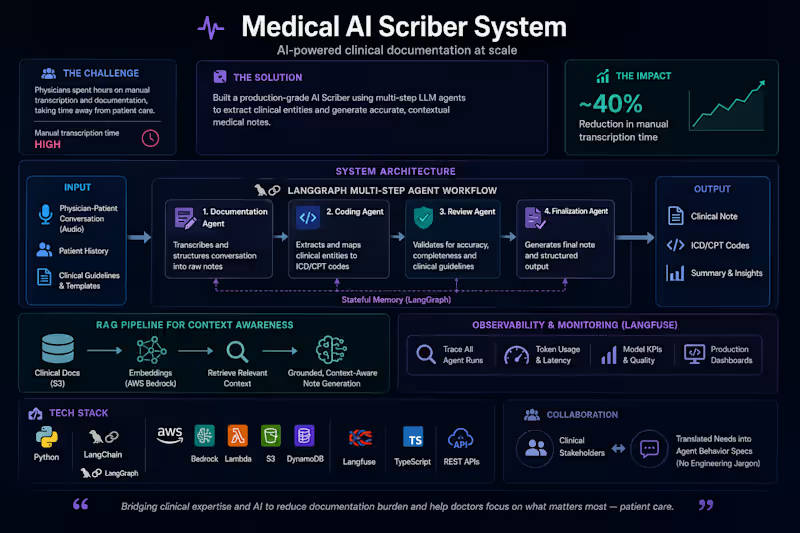
Built and maintained a HIPAA compliant production medical AI scribe system that uses multi-step LLM agents to extract clinical entities directly from physician-patient conversations and turn them into structured medical notes, cutting down the manual transcription work clinicians used to do after every visit. Multi-stage clinical workflow: Documentation, coding, and review each have different logic and conditional paths, and the system needed to branch correctly between them without losing context. Clinical accuracy: Generated notes had to be grounded in real patient history and clinical guidelines, not just plausible-sounding text. Production reliability: As a live system handling real conversations, every agent run needed to be observable, debuggable, and monitored for cost and latency in real time. Non-technical requirements gathering: Clinical needs had to be captured accurately from stakeholders without a technical background and translated into precise agent logic. Approach: Stateful agent orchestration with LangGraph Designed LangGraph-based agent workflows with conditional branching, allowing the system to move correctly across documentation, coding, and review stages based on conversation content. Context-grounded note generation with RAG Built a RAG pipeline on AWS Bedrock with embeddings, so every generated note is grounded in the patient's actual history and relevant clinical guidelines rather than generic output. Full production observability Integrated Langfuse across all agent runs to track token usage, latency, and model KPIs, giving the team visibility into system health and cost in production, not just at build time. Clinical stakeholder collaboration Ran requirements sessions directly with clinical staff, converting their documentation needs into concrete agent behavior specs and validation criteria. Results & Impact: ~40% reduction in manual transcription time for clinicians using the system. Clinically grounded output, with notes tied to real patient history and guidelines instead of unsupported generation. Full production observability, with token usage, latency, and model performance tracked continuously. A workflow clinicians could trust, built through direct collaboration rather than a black-box handoff. Provided Services & Solutions: 📌 AI Agent Development (LangGraph) 📌 RAG Pipeline Development (AWS Bedrock) 📌 LLM Observability (Langfuse) 📌 Cloud Infrastructure (AWS Lambda, S3, DynamoDB) 📌 Stakeholder Requirements Translation 📌 Production ML Systems Tech Stack Python · LangChain · LangGraph · AWS (Bedrock, Lambda, S3, DynamoDB) · Langfuse · TypeScript · REST APIs
2
72
Building Production-Grade AI Agents & RAG Systems
14
Followers
Building Production-Grade AI Agents & RAG Systems
Python & Django developer for web apps and APIs
New to Contra
Python & Django developer for web apps and APIs
Building AI, ML & data-driven solutions with Python.
New to Contra
Building AI, ML & data-driven solutions with Python.
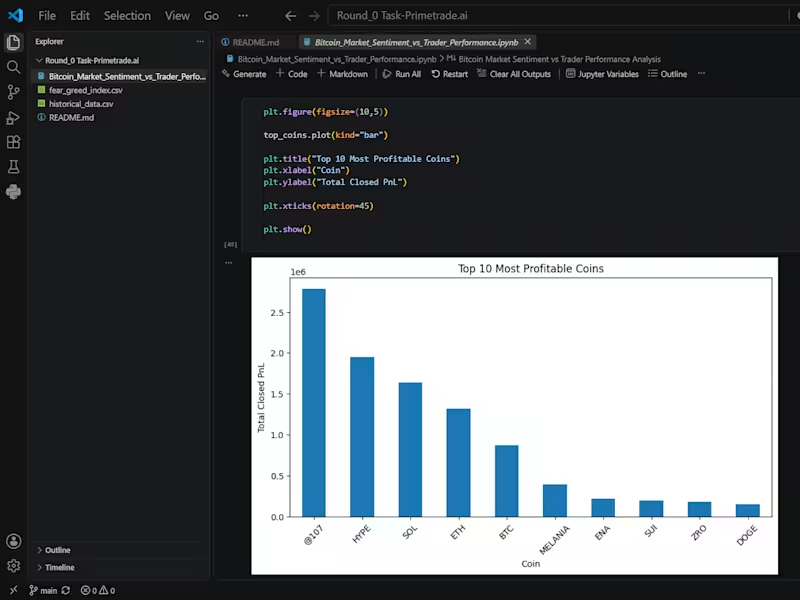
Transforming data into insights that drive growth with AI
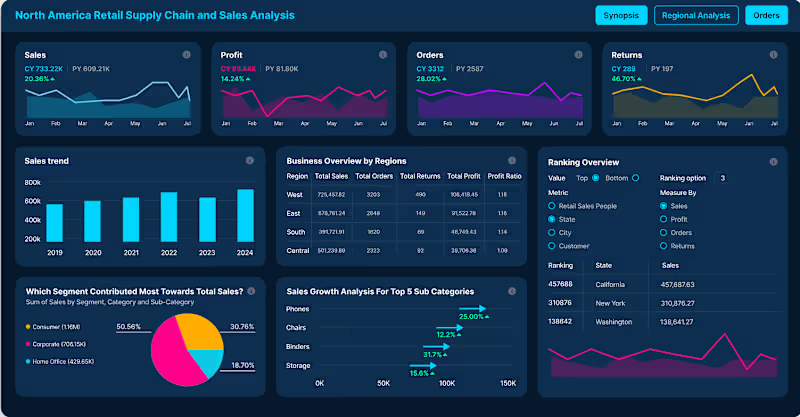
New to Contra
Transforming data into insights that drive growth with AI
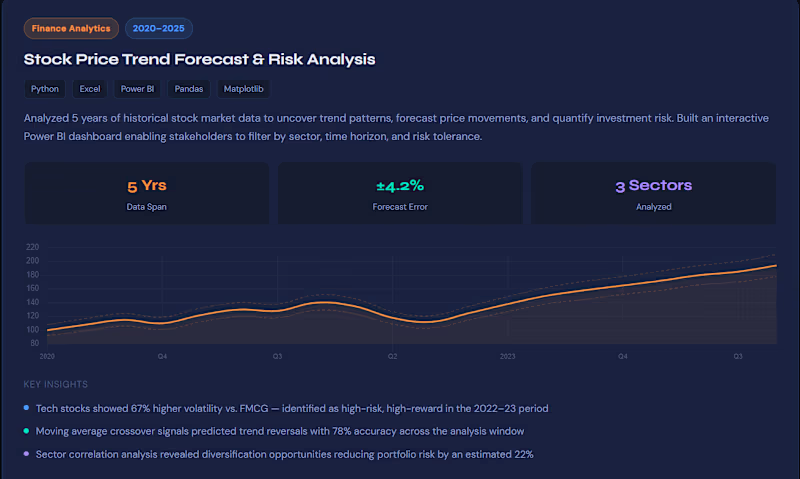
developer
New to Contra
developer