Freelance DevOps Engineers in Lahore
Sign Up
Post a job
Sign Up
Log In
Filters
2
Projects
People
Haris M.
pro
Lahore, Pakistan
Full Stack Web & Mobile Dev | Next Js | AI Agent | React

2x
Hired
5.0
Rating
36
Followers
Follow
Message
Full Stack Web & Mobile Dev | Next Js | AI Agent | React
2
Northward Capital Investment Platform Development
2
21
2
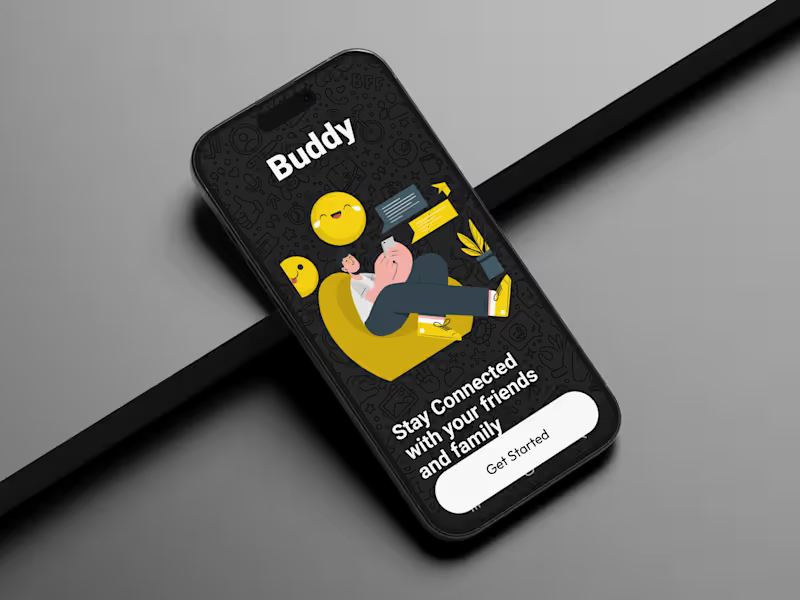
Chat Buddy – Real-Time Mobile Chat Application Development
2
17
1
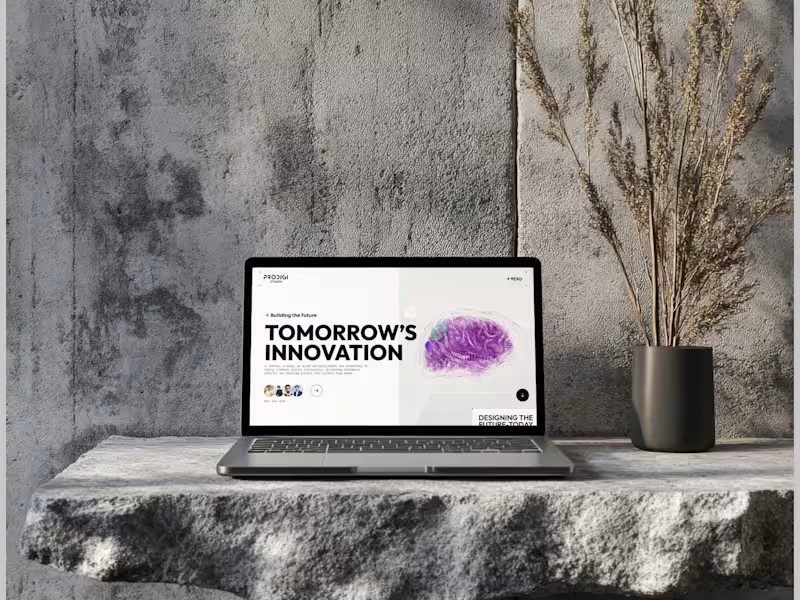
Prodigi Studios
1
13
1
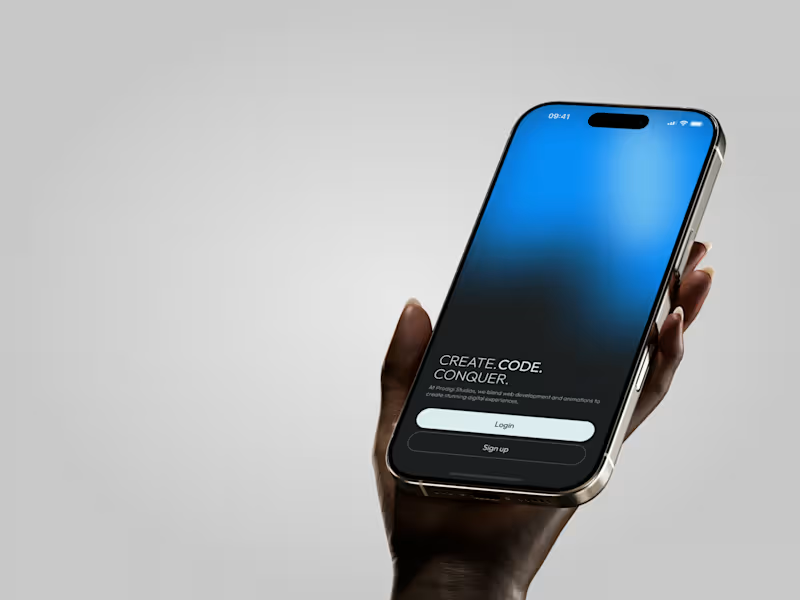
Prodigi Studios: Mobile App Development
1
13
DevOps Engineer
(1)
Follow
Message
Saraj Menghwar
Lahore, Pakistan
DevSecOps Engineer & Linux Administrator | AWS | Docker
5.0
Rating
3
Followers
Follow
Message
DevSecOps Engineer & Linux Administrator | AWS | Docker
0
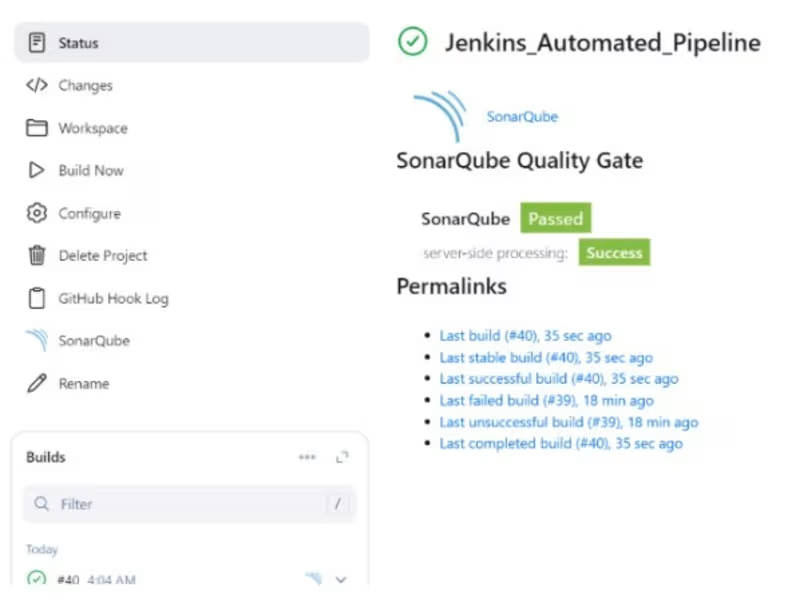
Designed and implemented a CI/CD pipeline to automate the build, testing, and deployment process of a web application. Integrated GitHub with Jenkins to trigger automated builds on code commits. Containerized the application using Docker and deployed it to AWS EC2. This reduced manual deployment efforts and improved release consistency and reliability.
0
62
0
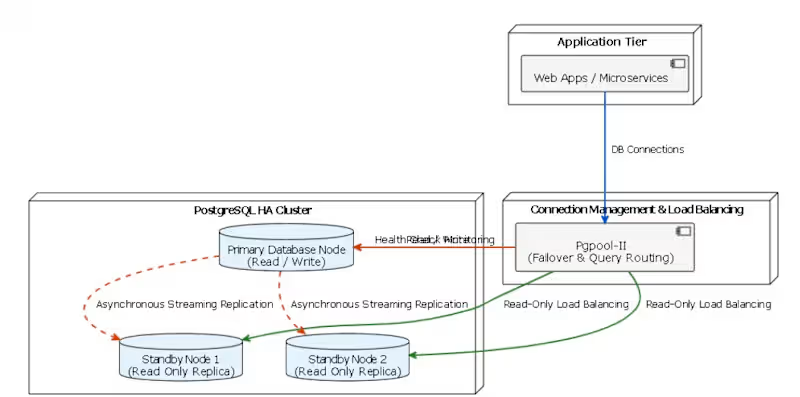
The Objective: Design and deploy a fault-tolerant database architecture to eliminate single points of failure, ensure zero-downtime failover, and optimize performance for mission-critical applications. The Execution: Architected a secure 3-node PostgreSQL cluster on Linux. Configured Pgpool-II for intelligent connection pooling and read/write query routing, drastically reducing primary server load. Implemented automated health checks and failover mechanisms to ensure instant, zero-intervention replica promotion if the primary node goes down.
0
62
0
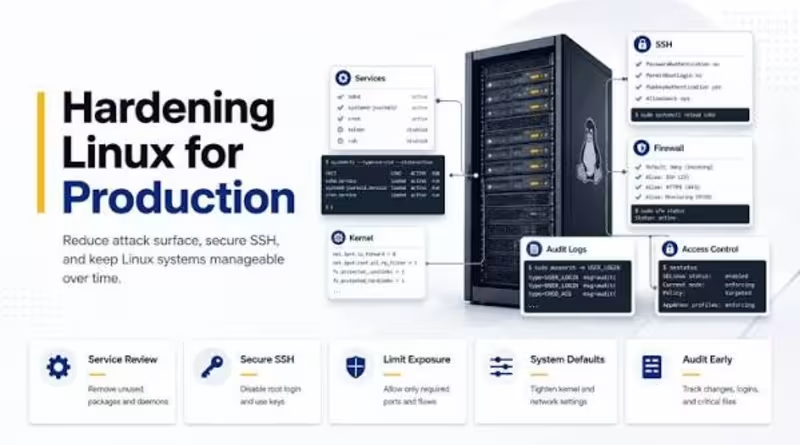
A high-traffic SaaS client required a comprehensive security overhaul of their production infrastructure. The goal was to systematically reduce the attack surface, mitigate vulnerabilities, and enforce strict access controls without disrupting live system performance. This project involved a top-to-bottom audit and the implementation of robust hardening techniques across the network, OS, and application layers to ensure resilience against zero-day exploits and unauthorized access
0
60
0
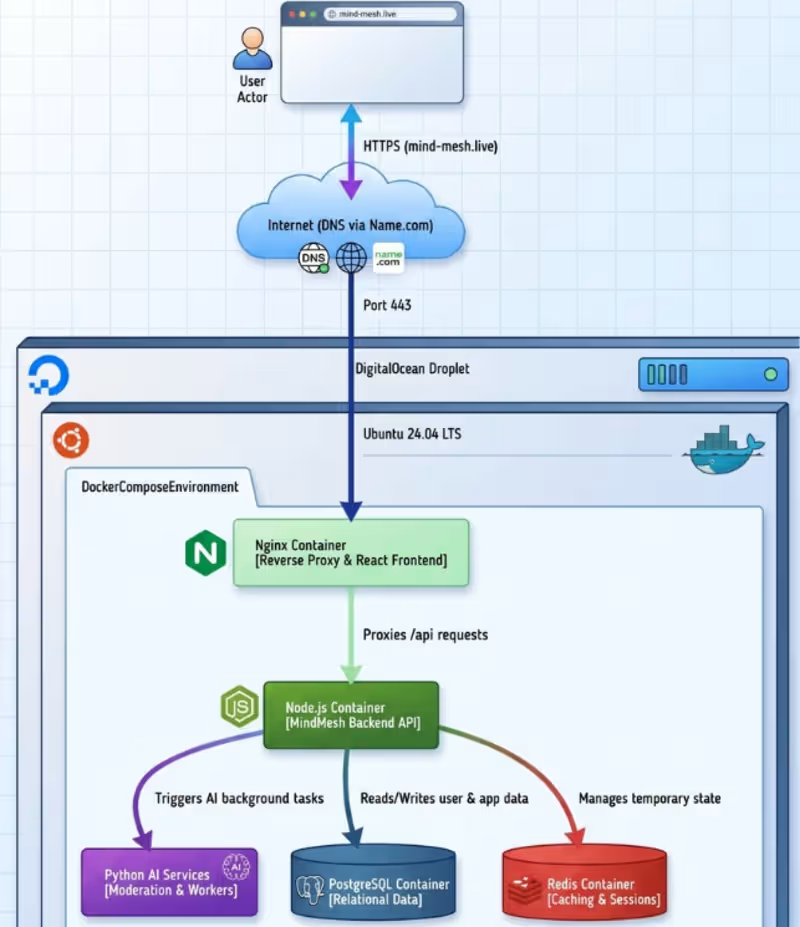
Deployed the MindMesh full-stack app to a production-ready environment. I provisioned a secure Ubuntu 24.04 LTS server on DigitalOcean and used Docker to containerize the Node.js backend, React frontend, and PostgreSQL database. For routing, I configured an Nginx reverse proxy and managed DNS via Name.com (http://Name.com) to connect the custom domain. Finally, I implemented email authentication (DKIM, DMARC) for reliable delivery. This showcases my DevOps expertise in transforming local code into a highly secure, scalable, and live architecture.
0
65
DevOps Engineer
(4)
Follow
Message
Waleed yaseen
pro
Lahore, Pakistan
Full-Stack Developer | AI & Web3
New to Contra
Follow
Message
Full-Stack Developer | AI & Web3
1
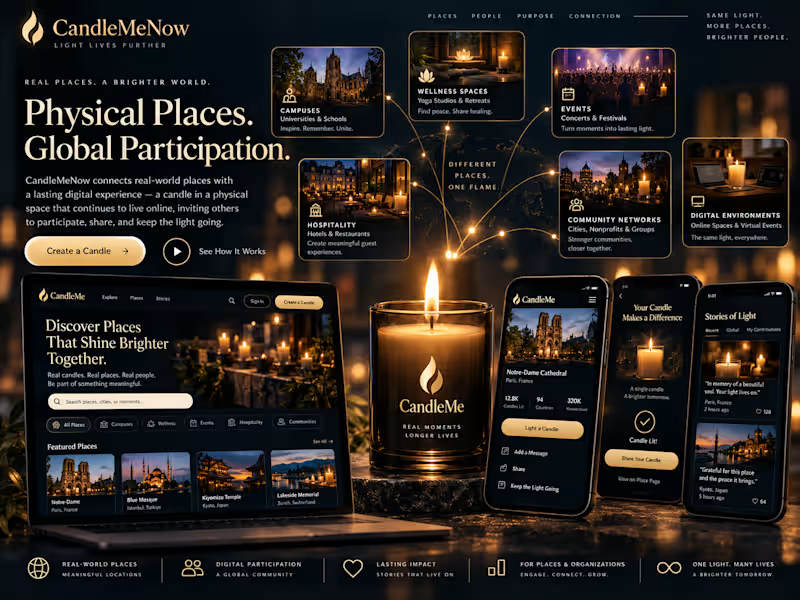
CandleMe — Interactive Digital Participation & Engagement Platform CandleMe is a large-scale interactive digital platform designed to connect physical experiences, digital participation, organizations, communities, and persistent user journeys through a unified web experience. I contributed to the product as a full-stack engineer, working across an established production codebase and handling functionality that extended far beyond traditional web application development. My work included complex frontend interactions, application-state integration, backend-connected user flows, organization configuration, QR/direct-link experiences, and performance-sensitive real-time graphics using Three.js and PixiJS. One of the defining parts of CandleMe is its interactive candle experience. Rather than functioning as a conventional website, the platform combines application logic with rich visual rendering to create dynamic experiences that respond to real product state and user interaction. The candle and flame systems were built as functional parts of the application—not simply decorative animations. They had to integrate correctly with surrounding UI, application state, configuration, navigation, and the broader product journey while maintaining smooth performance across different browsers and devices. Core Product & Engineering Areas Interactive Candle Experience The product includes highly interactive visual experiences powered by Three.js and PixiJS, with custom flame effects and graphical behavior integrated directly into real application workflows. This required balancing visual quality with browser performance, device compatibility, responsive behavior, and application-state synchronization. Production Graphics & Performance Optimization Real-time graphics introduce a completely different set of engineering challenges compared with standard frontend development. I worked on optimizing the rendering experience across devices, including testing flame effects at approximately 45–60 FPS on a Galaxy A24 and a stable 60 FPS on an iPhone 15, while also validating compatibility with Apple/Metal-based rendering environments. This involved careful attention to rendering behavior, visual consistency, performance, and differences between local and deployed environments. QR & Direct-Link Entry CandleMe supports experiences that can begin through a QR scan or direct link, creating a bridge between physical locations and the digital application. Users can enter the relevant CandleMe experience without navigating through a traditional application onboarding flow, making the system suitable for physical venues, activations, events, and distributed experiences. Persistent Candle Experiences A candle can represent more than a single interaction. The product is structured around persistent digital experiences that users can revisit, interact with, and share. This required product flows that maintain the relationship between the candle, its configuration, its destination, and the environment in which it is being used. Configurable Destinations & “Doors” The platform supports configurable destinations or Doors, allowing CandleMe experiences to direct users into different journeys depending on the organization, location, campaign, or use case. This adds an important configuration layer to the product because different deployments can use the same underlying platform while presenting different experiences to users. Organization Ownership & Management CandleMe includes organization-level functionality that allows experiences to be created and controlled within a larger operational structure. The system needed to support ownership, organization configuration, locations, plans, activations, and the relationships between these entities rather than treating every candle as an isolated object. Locations & Physical Environments The product is designed to operate across real-world environments. Candle experiences can be associated with physical locations and organizational contexts, allowing the digital platform to extend into venues, events, communities, hospitality environments, campuses, wellness spaces, and other physical settings. Activations Organizations can configure and manage activations around specific CandleMe experiences. This introduces another layer of application state and business logic involving where an experience is deployed, how users enter it, what configuration is active, and which organization owns or manages it. Responsive Cross-Device Experience The product needed to work effectively across desktop and mobile environments because many users enter the experience directly from their phones after scanning a QR code. The visual rendering layer, UI components, and application interactions therefore had to remain responsive and usable across very different viewport sizes and hardware capabilities. Integration With an Existing Production Application A major part of the engineering challenge was working within a large existing PHP-based frontend/backend application rather than building an isolated prototype. New interactive functionality needed to integrate with existing business logic, state management, navigation, backend-driven configuration, and production user flows without disrupting established behavior. That required understanding the existing architecture first and then introducing new functionality in a way that remained maintainable and compatible with the rest of the system. Technical Complexity CandleMe demonstrates a combination of several engineering disciplines: Full-stack product engineering for the wider web application and business workflows. Creative frontend engineering for highly customized interactive experiences. Three.js / WebGL-style rendering for browser-based visual effects. PixiJS integration for performant interactive graphics. Backend integration with a mature PHP application. Performance engineering across mobile and desktop hardware. Responsive application development for QR-first mobile user journeys. Configuration-driven architecture supporting organizations, locations, activations, destinations, and reusable experiences. The project required thinking beyond individual pages or API endpoints. Features had to work together as part of a larger production ecosystem where the visual experience, backend configuration, organization structure, and user journey were tightly connected. Result The result is a production platform that combines interactive web graphics, physical-to-digital experiences, organization management, configurable user journeys, responsive UX, and full-stack application engineering within a single product. For me, CandleMe represents the type of engineering work where frontend, backend, architecture, performance, and product thinking overlap—requiring both the ability to build technically complex functionality and the judgment to integrate it safely into an existing production system.
1
181
1
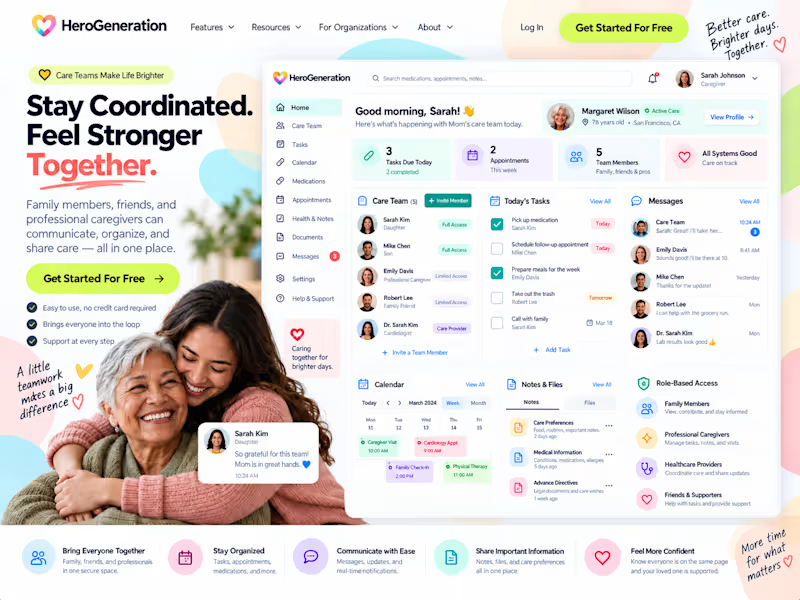
HeroGeneration — Caregiver Management Platform HeroGeneration is a full-stack caregiver management platform designed to help families organize, coordinate, and manage the day-to-day responsibilities involved in caring for a loved one. I worked on the product as a full-stack engineer, contributing to the application experience across caregiver workflows, structured care information, responsive web interfaces, collaborative features, and AI-assisted support. The goal was to turn information that is normally fragmented across messages, calendars, documents, medication lists, and family members into one centralized and easy-to-use platform. At the center of the product is a Loved One profile, which acts as the single source of truth for the person receiving care. Caregivers can manage important health information, medications, appointments, documents, notes, contacts, daily responsibilities, and care-team activity without switching between multiple applications. Core Product Features Loved One Management — Create and maintain centralized care profiles containing important personal and caregiving information. Medication Management — Track medications, dosages, schedules, refill information, and daily medication responsibilities. Appointments & Calendar — Organize medical appointments, follow-ups, caregiver visits, and other important care-related events. Daily Care Tasks — Create, assign, track, and complete recurring or one-time caregiving responsibilities. Health Notes & Tracking — Maintain notes around symptoms, health observations, mood, blood pressure, and other relevant care updates. Care Team Collaboration — Bring family members, friends, healthcare professionals, and professional caregivers into one coordinated care environment. Role-Based Access — Different participants can be given appropriate levels of access depending on their responsibilities within the care team. Shared Responsibilities — Assign tasks and responsibilities to individual care-team members so everyone understands what needs to be done and who is responsible. Messaging & Communication — Keep care-related conversations and updates connected to the wider caregiving workflow rather than scattered across external messaging platforms. Documents & Important Information — Organize insurance information, medical records, advance directives, emergency information, care preferences, and other important documents. Emergency & Healthcare Contacts — Maintain quick access to doctors, specialists, family members, healthcare facilities, and other important contacts. Responsive Web & Mobile Experience — Care information remains accessible across desktop and mobile interfaces, allowing caregivers to manage responsibilities wherever they are. Personalized Weekly Guidance — The platform can surface relevant caregiving guidance, tasks, reminders, and recommendations based on the caregiver's current situation. Andrea — AI Caregiving Assistant — An AI-assisted experience helps caregivers navigate common questions, prepare for appointments, understand next steps, discover relevant resources, and get contextual guidance within the product. Caregiver Resource Hub — Educational resources, guides, checklists, local support services, financial information, legal resources, and caregiver-support material are organized into a searchable experience. Notifications & Reminders — Important medications, appointments, tasks, and care responsibilities can be surfaced at the right time to reduce missed actions. Product & Engineering Approach The main engineering challenge was not simply creating individual CRUD screens. The system needed to model the relationships between care recipients, caregivers, medications, appointments, tasks, healthcare professionals, documents, permissions, and shared responsibilities while still keeping the experience simple for non-technical users. The application was therefore structured around a centralized care profile with interconnected modules, allowing information entered in one part of the system to remain useful throughout the broader caregiving workflow. The user experience was also designed around the reality that caregivers often operate under time pressure. Important actions—checking medications, reviewing today's tasks, preparing for an appointment, contacting a care-team member, or finding an important document—need to be accessible quickly without navigating through complicated enterprise-style interfaces. The result is a product that combines full-stack SaaS development, collaborative workflows, structured healthcare-related information, responsive interfaces, role-based access, and AI-assisted guidance into one cohesive caregiver-management experience. My contribution: Full-stack development • SaaS application architecture • Frontend implementation • Backend/API development • Care-management workflows • Responsive UI • Collaborative features • Role-based access • Data modeling • AI-assisted caregiver workflows • Production feature development
1
156
0
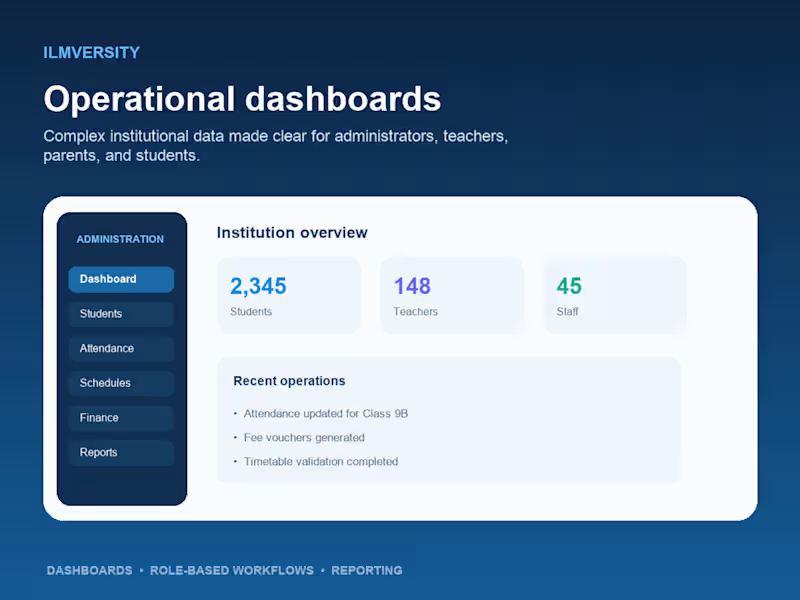
Ilmversity: Unified Education Operations Platform
0
2
0
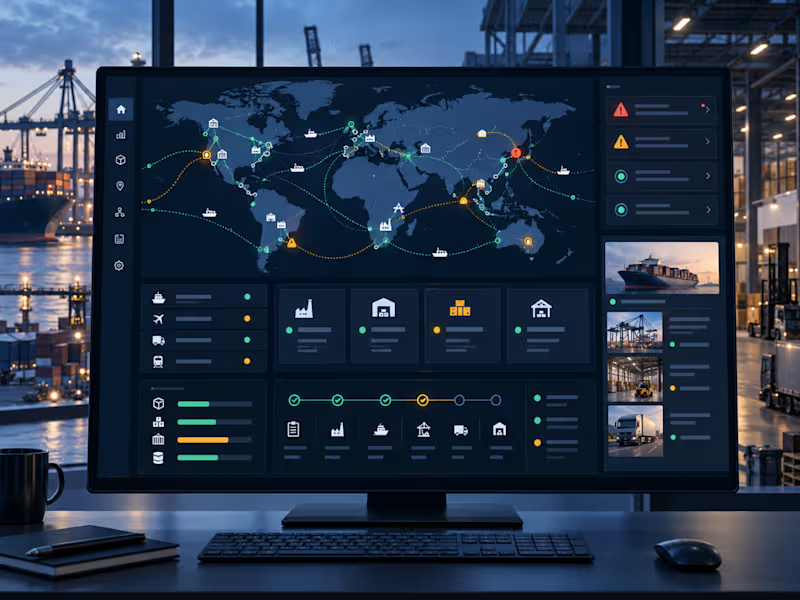
TraceGrid: Global Supply-Chain Control Tower Concept
0
3
DevOps Engineer
(2)
Follow
Message
Adil Shahzad
pro
Lahore, Pakistan
Senior DevOps & DevSecOps Engineer · Cloud Security
Follow
Message
Senior DevOps & DevSecOps Engineer · Cloud Security
0
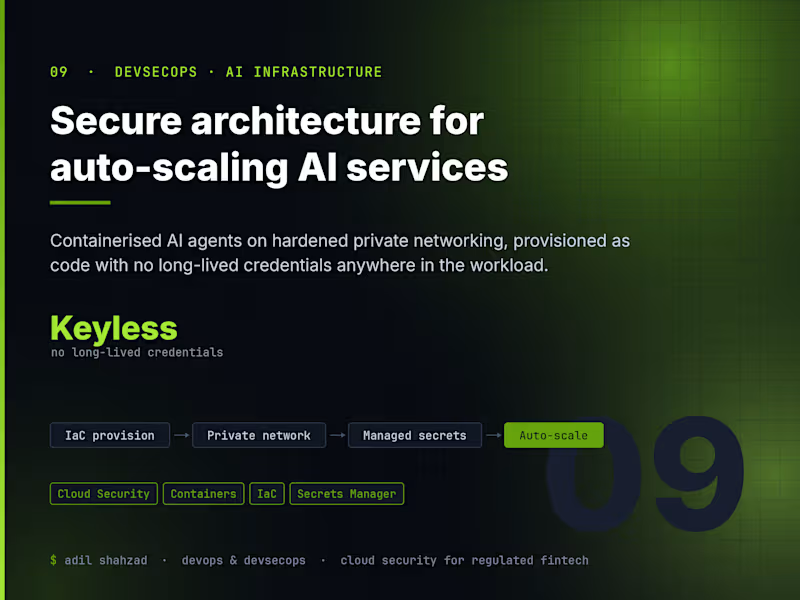
Secure architecture for auto-scaling AI services Containerised AI agents on hardened private networking, provisioned as code with no long-lived credentials. Who it was for: An AI SaaS platform running inference workloads behind a public product. The problem. AI workloads scale unpredictably and tend to accumulate credentials — API keys in environment variables, secrets pasted into config, services talking over paths nobody documented. What I did. Provisioned the whole environment as code. Ran the agents in managed containers with auto-scaling, put load balancing in front with a controlled frontend-to-backend path, and moved every credential into managed secrets so nothing long-lived sits in the workload. The result. A platform that scales with demand and holds no long-lived credentials, with the architecture reproducible from source rather than remembered.
0
16
0
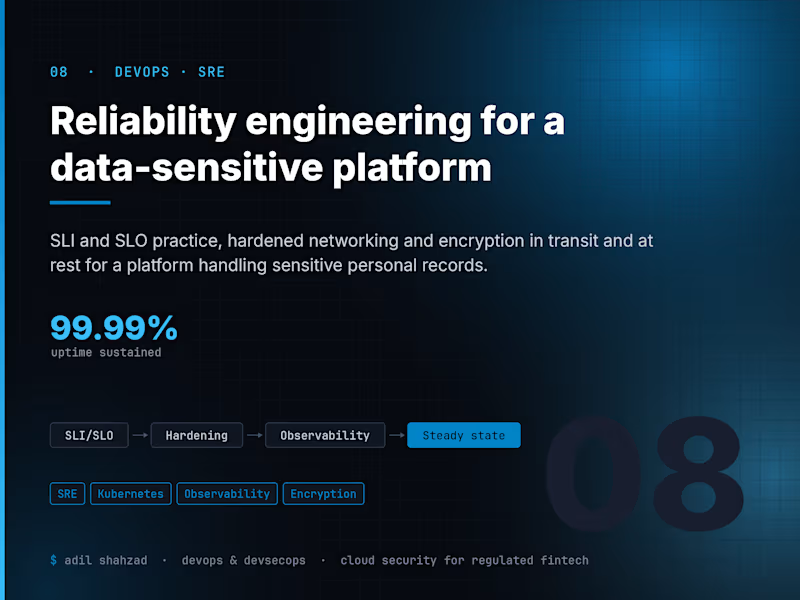
Reliability engineering for a data-sensitive platform SLI/SLO practice and hardening that held 99.99% uptime on a platform handling sensitive personal records. Who it was for: A healthcare SaaS platform handling sensitive personal data. The problem. A platform holding health records can't treat availability and confidentiality as separate problems — an outage and a leak are both incidents, and both are reportable. What I did. Defined SLIs and SLOs so reliability had a number attached rather than a feeling. Hardened networking and access, and enforced encryption in transit and at rest across the platform. Ran vulnerability scanning continuously rather than at release checkpoints. The result. 99.99% uptime sustained, with protective controls around personal data documented and testable.
0
21
0
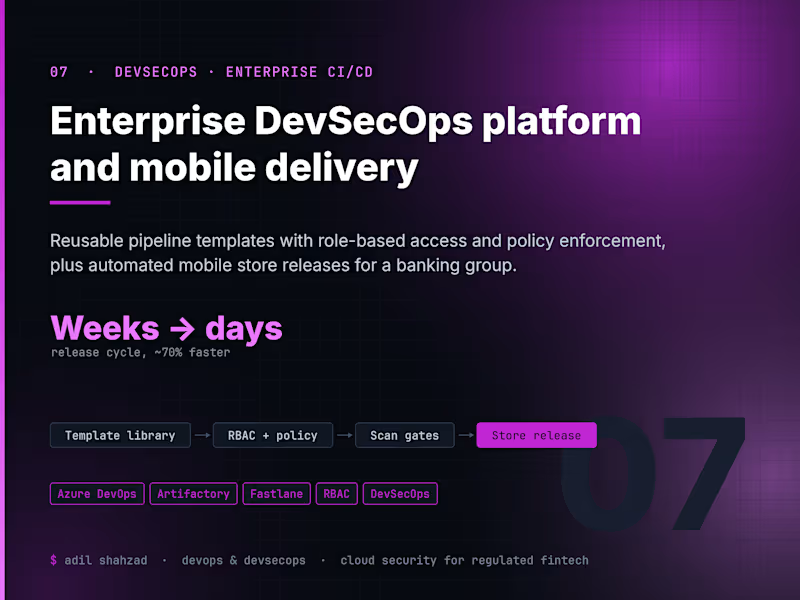
Enterprise DevSecOps platform and mobile delivery Reusable governed pipelines and automated store releases that cut a banking release cycle from weeks to days. Who it was for: A banking group with multiple product teams and a manual release process. The problem. Every team had built its own pipeline, releases were manual, and mobile submissions were a person following a checklist. Slow, and impossible to prove consistent to an auditor. What I did. Stood up the platform — enterprise CI/CD, artifact management and mobile security scanning — then built reusable pipeline templates with role-based access and policy enforcement so every team inherited the same controls. Automated mobile releases to both stores. Trained the engineering teams on the new path so it stuck after I left. The result. Release cycles moved from weeks to days, roughly 70% faster, with the same governance applied across every team by default.
0
23
0
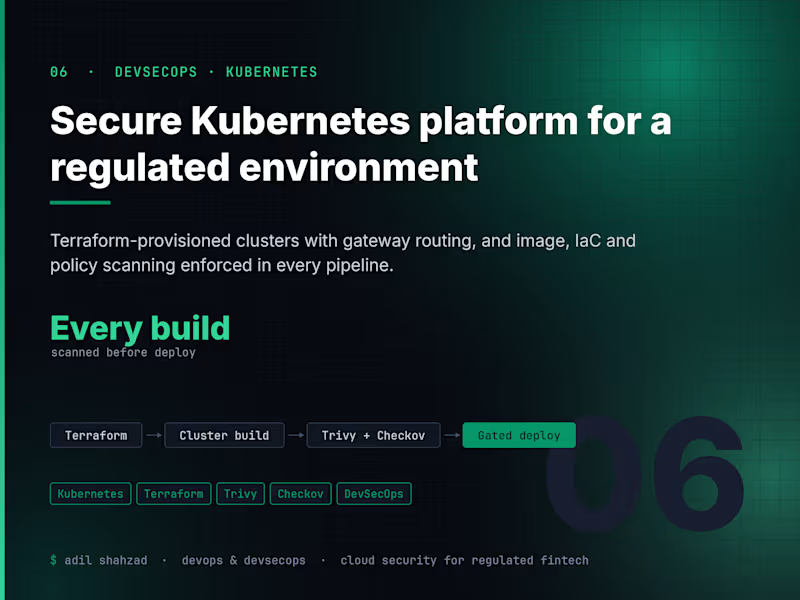
Secure Kubernetes platform for a regulated environment Production Kubernetes for regulated finance, with scanning enforced in every pipeline before anything deploys. Who it was for: A regulated financial services environment. The problem. Production Kubernetes in regulated finance has to satisfy two audiences at once: engineers who need to ship, and auditors who need to see that nothing ships unchecked. What I did. Provisioned clusters and supporting networking with Terraform so the platform is reproducible and reviewable. Designed the routing layer through a gateway and ingress controllers. Built reusable pipeline workflows with image, IaC and policy scanning embedded, so the security step isn't something a team can skip under deadline — it is the path to production. The result. Every build is scanned before deploy, and control evidence is a by-product of the pipeline rather than a separate exercise.
0
32
DevOps Engineer
(9)
Follow
Message
Ammar Haider
Lahore, Pakistan
Web(Full Stack) I Blockchain I DevOps
Follow
Message
Web(Full Stack) I Blockchain I DevOps
0
Guarda Wallet
0
10
0
Trust Wallet
0
6
0
NFT Auto Minter / Auto Generator
0
5
0
Thorfi Staking Platform
0
6
DevOps Engineer
(5)
Follow
Message
Safoor Safdar
Lahore, Pakistan
Cloud Solution Architect & DevOps Engineer / SRE
Follow
Message
Cloud Solution Architect & DevOps Engineer / SRE
0
Enhancing AWS & Magento 2 Efficiency – Kent.ca
0
18
0
Advanced observability for Zand.ae (Logicera)
0
23
0
AI-Based Identity Verification - Trust but verify | IDWise
0
19
View more →
DevOps Engineer
(3)
Follow
Message
Ahmad Raza
Lahore, Pakistan
DevOps & Cloud Engineer
Follow
Message
DevOps & Cloud Engineer
0
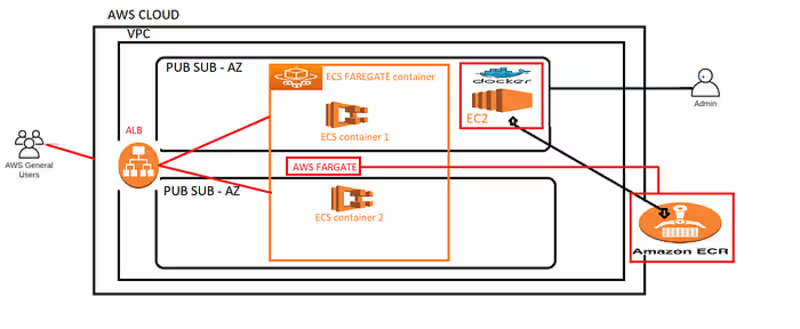
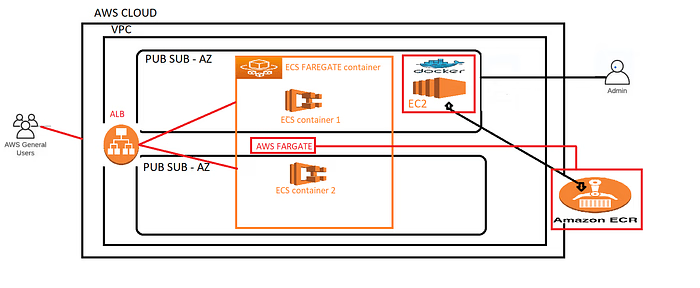
Building a Containerized Web Application using Amazon ECS
0
12
0
Kubernetes Service Mesh with Istio
0
3
0
Leveraging Internal Load Balancing on AWS ECS
0
17
View more →
DevOps Engineer
(3)
Follow
Message
Sayyid Ali Sajjad Rizavi
Lahore, Pakistan
Retool Partner, Radsoft.org
$10k+
Earned
6x
Hired
5.0
Rating
21
Followers
Agency Partner
Follow
Message
Retool Partner, Radsoft.org
0
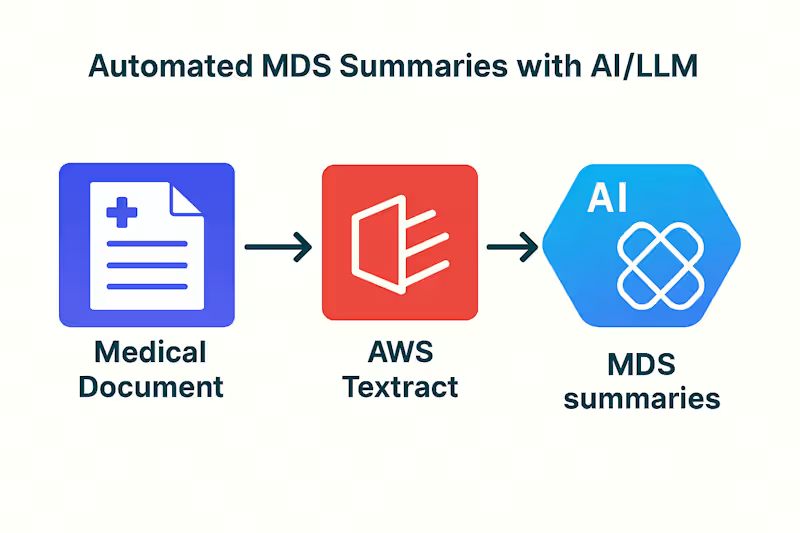
Healthcare Document Management App Development
0
20
0
From Fax to Brightree: Patient Intake for Healthcare Teams
0
13
0
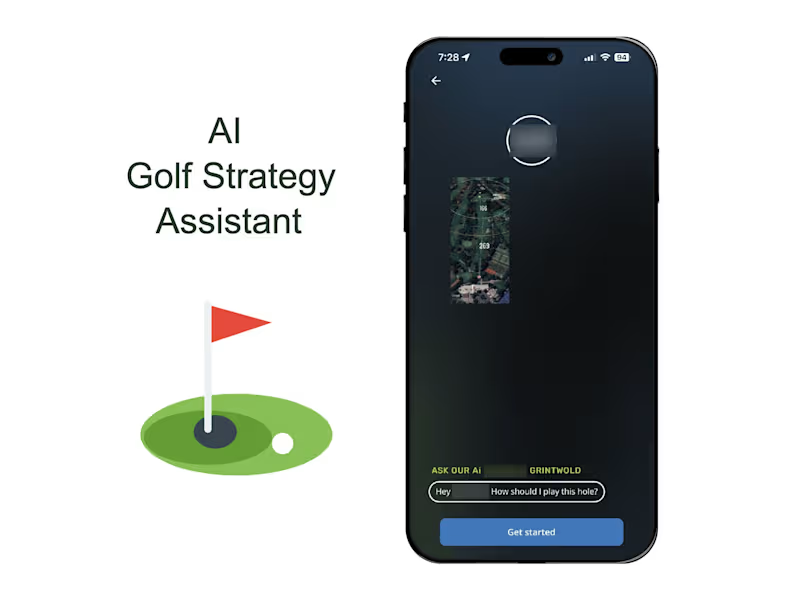
AI Golf Strategy Chat Assistant Development using Bubble.io
0
15
0
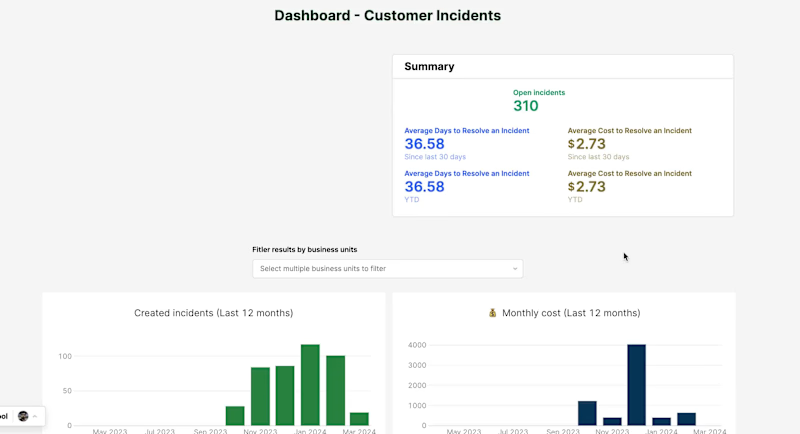
Retool Dashboard: Customer Incidents
0
24
DevOps Engineer
(1)
Follow
Message
Explore people