Da1TimeTable: AI Academic Scheduling Product Design

Waleed yaseen


Da1TimeTable — AI Academic Scheduling Product Design
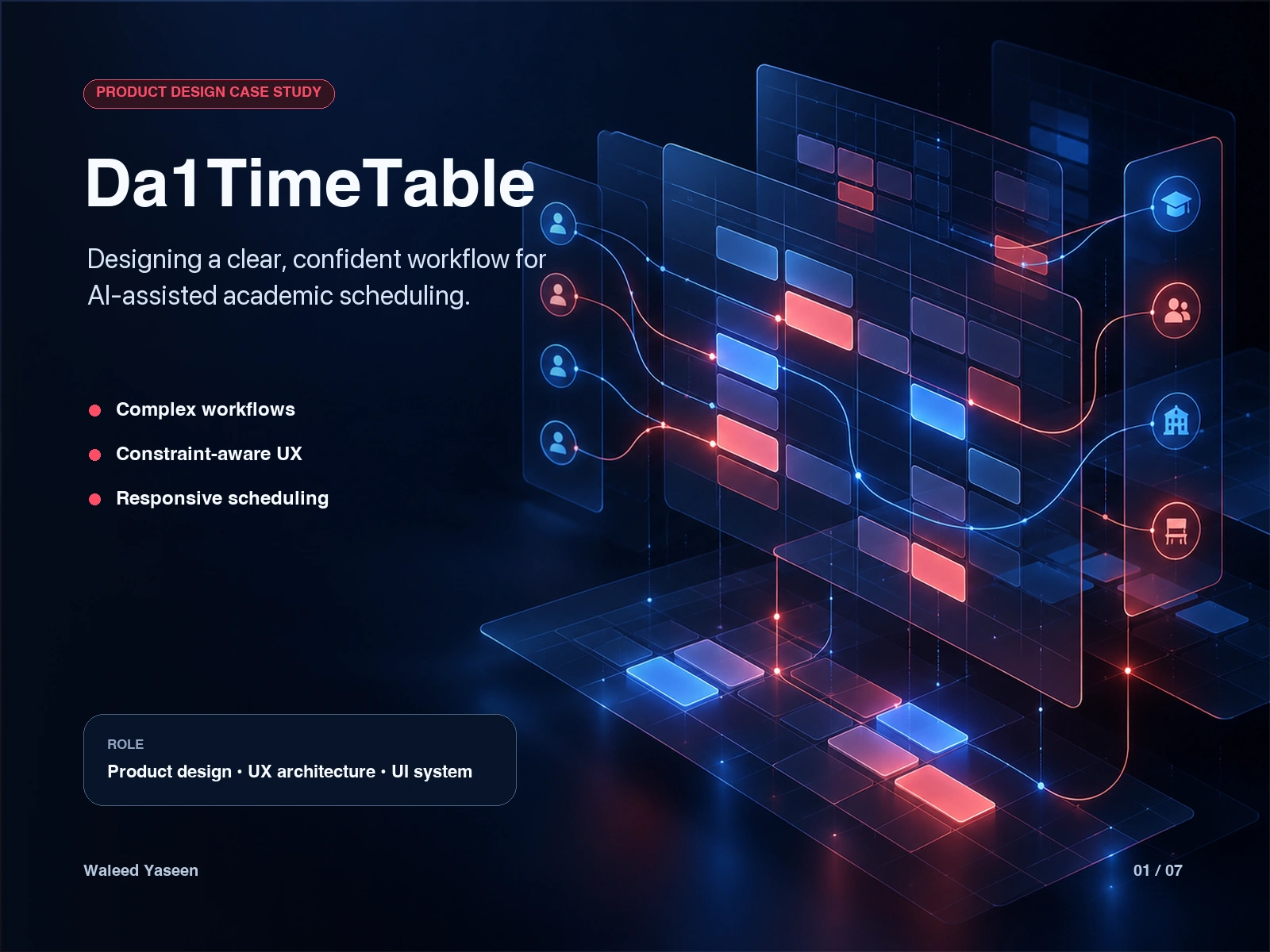
Da1TimeTable turns a difficult operational problem into a guided, understandable workflow. Schools must coordinate teachers, subjects, rooms, availability, workloads, and institutional rules while preserving a schedule people can actually use.
The challenge
Academic scheduling is a constraint problem with many dependent decisions. A valid timetable must avoid teacher and room collisions, respect availability, balance workloads, and remain safe to adjust when requirements change. The interface therefore needs to expose complexity without making administrators feel as if they are operating the scheduling engine directly.
My contribution
My work on the product covered full-stack engineering, SaaS architecture, backend APIs, dashboard and administrative UX, scheduling-workflow integration, payment flows, and production implementation. This refreshed case study focuses specifically on the product-design decisions that make those technical capabilities understandable to users.
Product approach
The experience is structured around five clear stages: prepare institutional data, define rules, generate a timetable, resolve conflicts, and publish or export the approved result. Readiness indicators show what is complete before generation begins, while guided and quick modes support both first-time and experienced administrators.
Design decisions
Readiness before generation. The overview surfaces incomplete resources, priority rules, and the next best action.
Constraints in operational language. Teacher availability, room compatibility, daily load, and subject spacing appear as recognizable decisions with clear status.
Conflict resolution in context. Issues stay attached to affected timetable cells, explain the collision, and preview a safe alternative.
Role-appropriate views. Administrators receive dense operational control; teachers and students receive a clear responsive schedule.
A reusable system. Consistent spacing, status colors, components, alerts, and validation patterns support future institutional workflows.
Outcome
The resulting direction presents sophisticated scheduling logic as a controlled sequence of understandable decisions. Administrators can see whether the system is ready, understand why a conflict exists, and make changes with confidence instead of returning to fragile spreadsheets.
Live product: da1timetable.ai
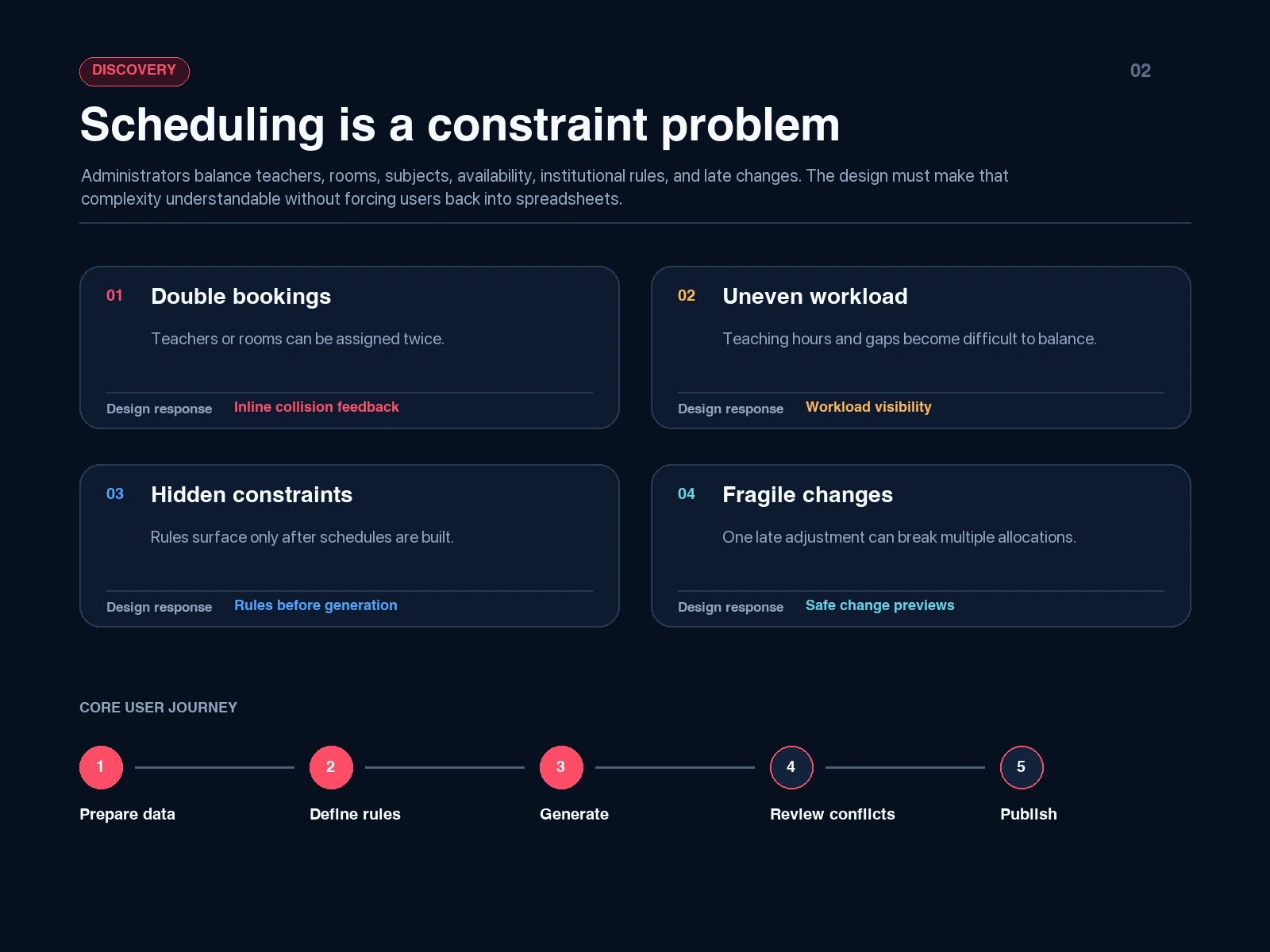
The scheduling problem and the five-stage administrator journey
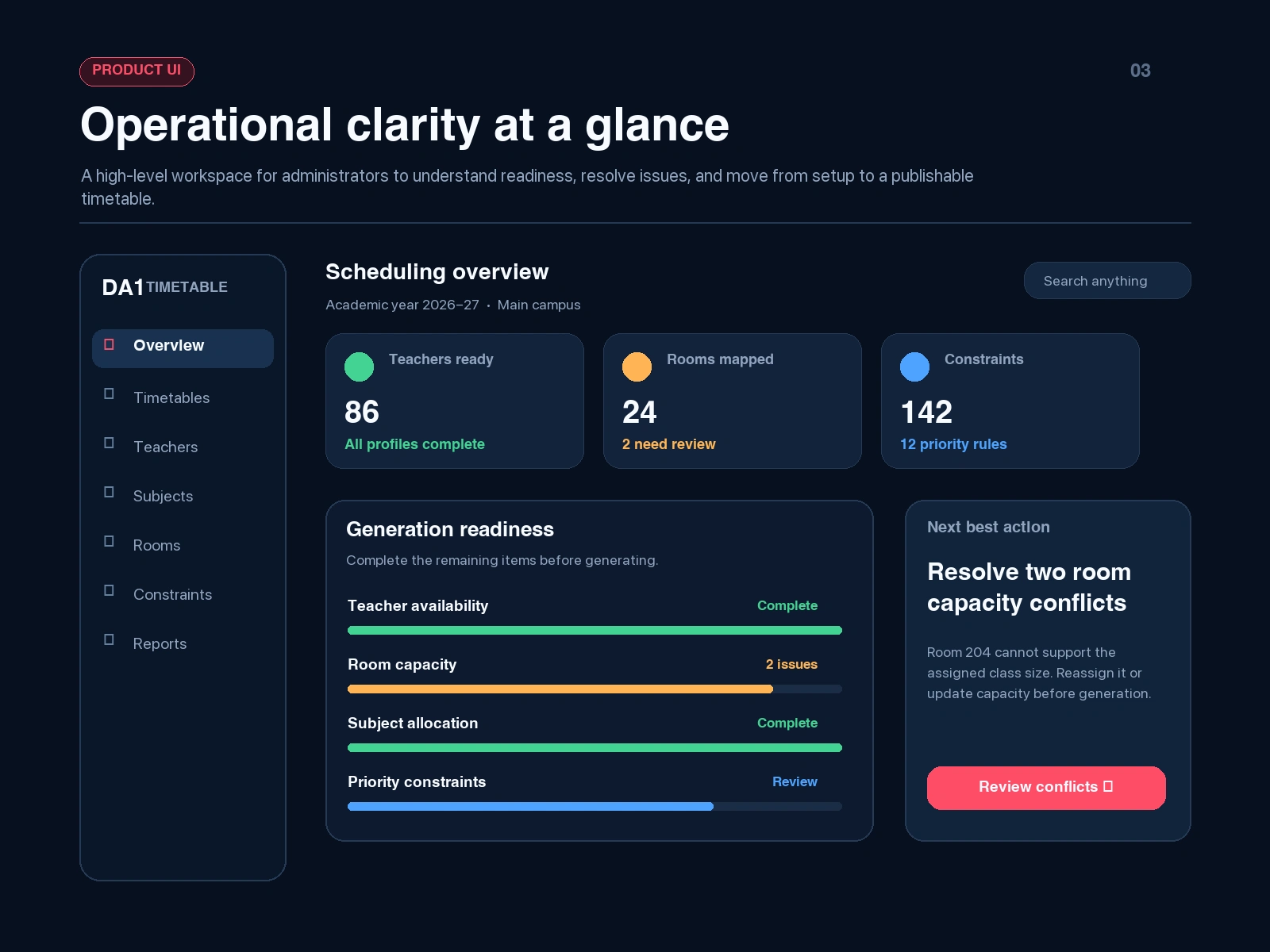
Operational overview: readiness, resource status, and the next best action
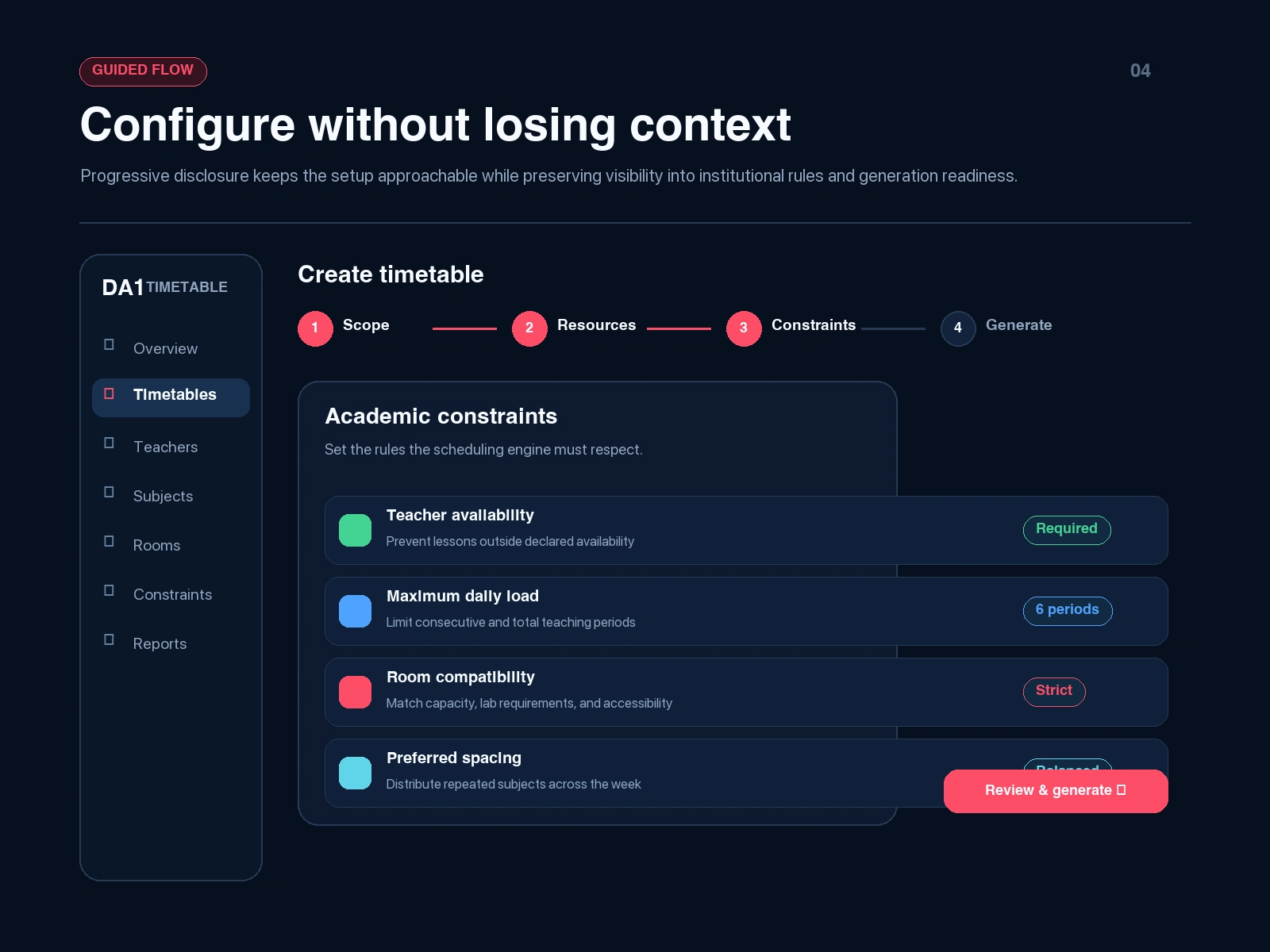
Guided setup makes complex academic constraints understandable
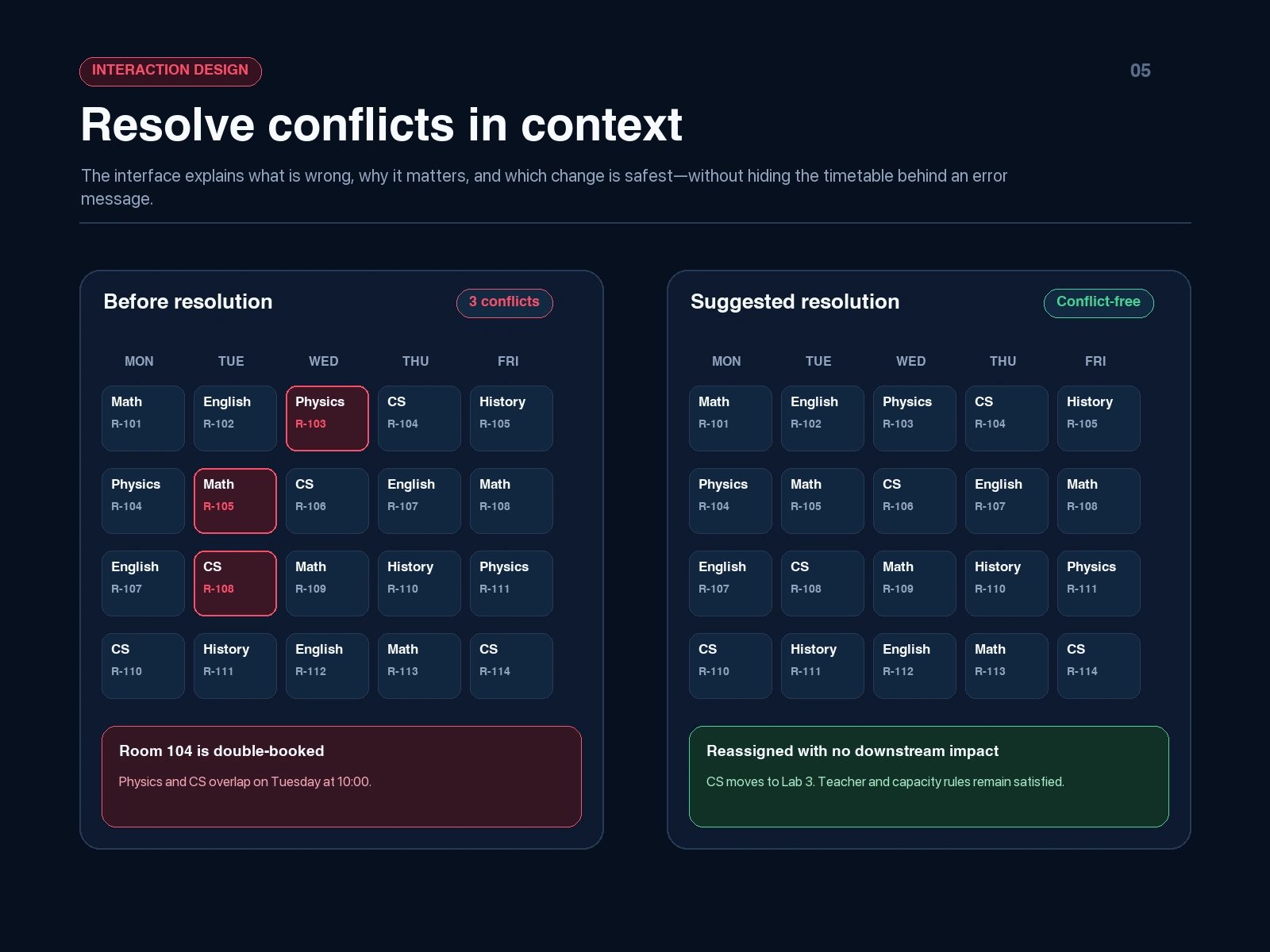
Conflict resolution stays attached to the affected timetable cells
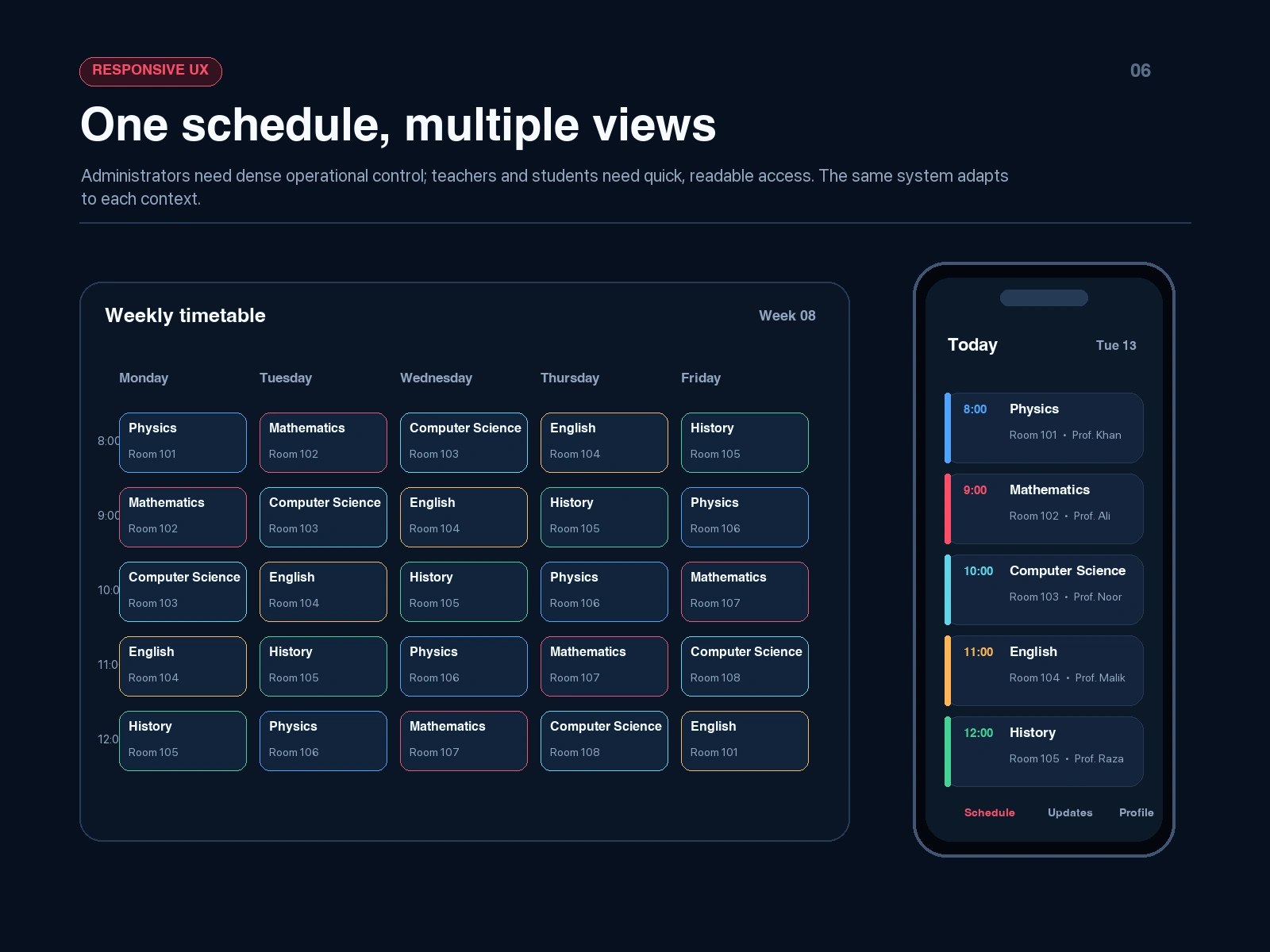
Responsive views adapt the same schedule for administrators, teachers, and students
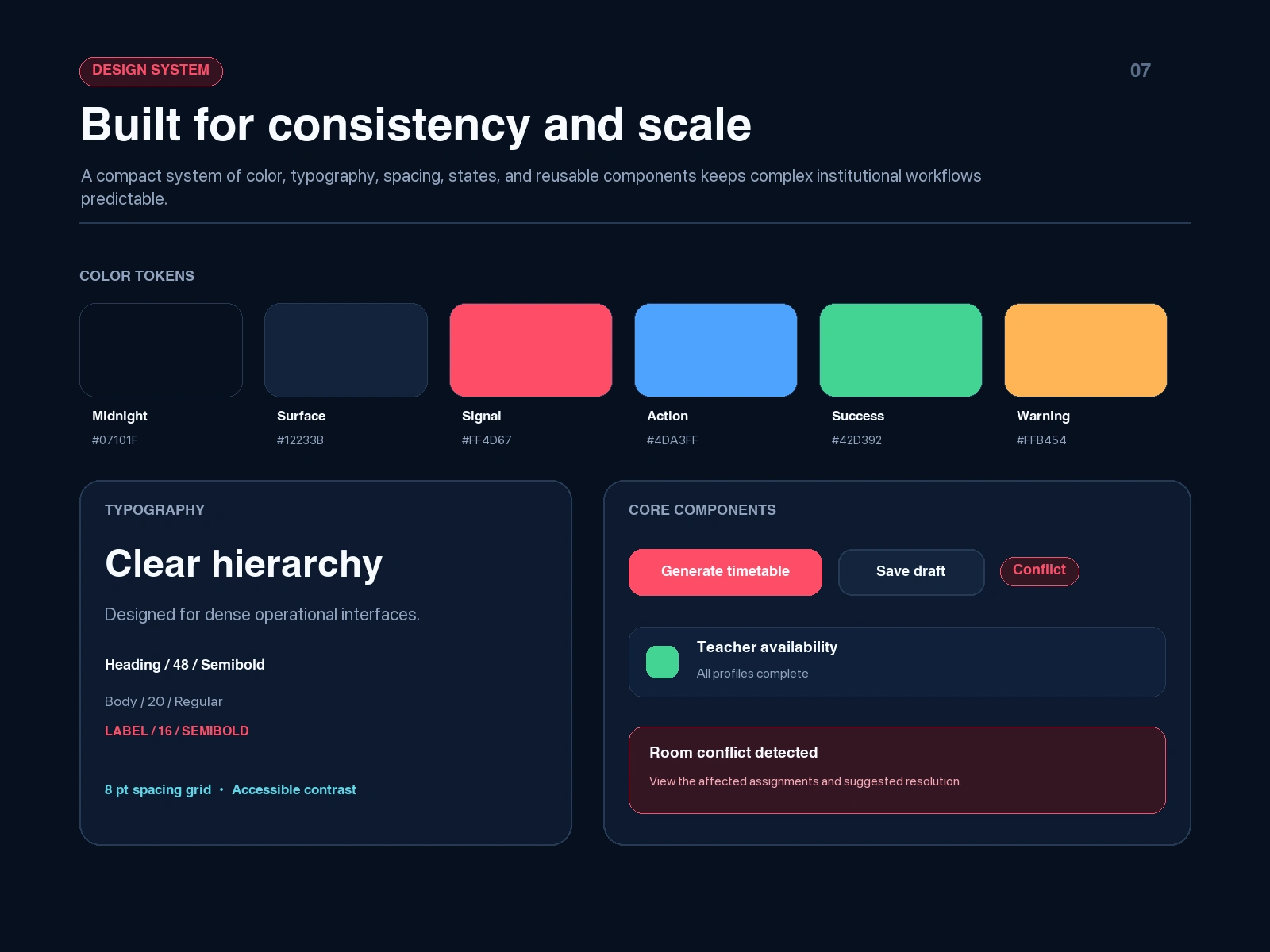
Reusable colors, type, validation states, and product components
A concise walkthrough of the complete product-design direction
Like this project
Posted Oct 16, 2026
Designed a clearer product experience for AI timetable generation, constraint setup, conflict resolution, and responsive academic schedules.
Likes
0
Views
0