Freelancers using Node.js in KarachiFreelancers using Node.js in Karachi
Full-Stack & AI Developer | Next.js, AI Agents
$50k+
Earned
12x
Hired
5.0
Rating
243
Followers
Full-Stack & AI Developer | Next.js, AI Agents
$25k+
Earned
7x
Hired
5.0
Rating
54
Followers
Full-Stack & AI Developer | Next.js, AI Agents
Product Design, Growth and Developer | E-Books and Software
5.0
Rating
11
Followers
Product Design, Growth and Developer | E-Books and Software
Cover image for Signal: AI-Powered Sales Development and
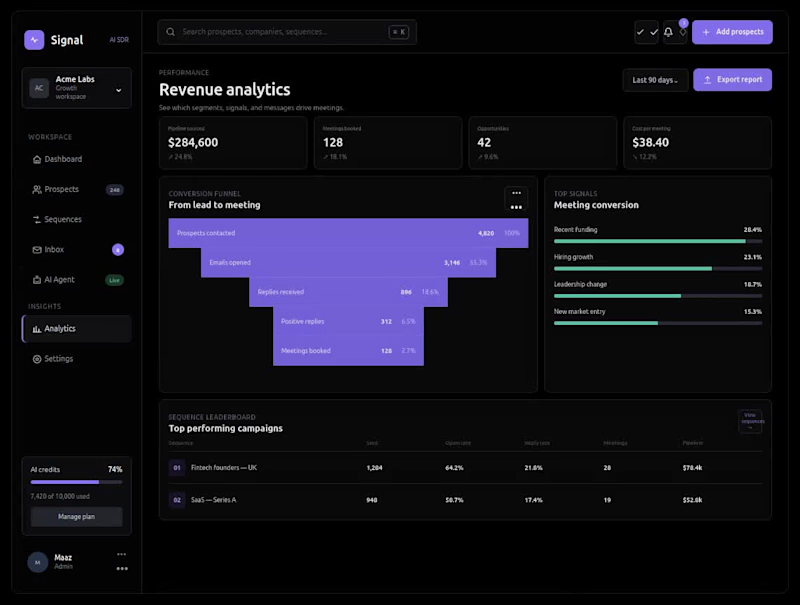
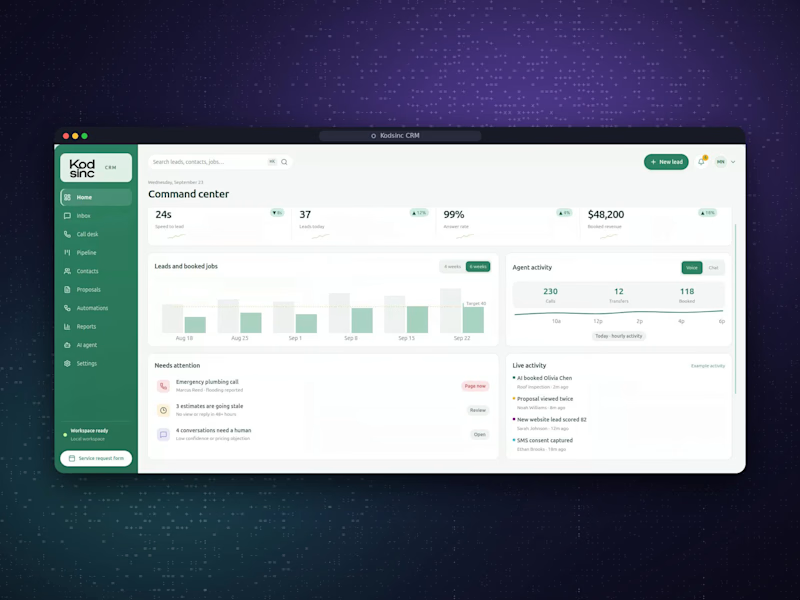
Signal: AI-Powered Sales Development and Outreach Platform I designed Signal as a full-stack AI sales development platform that helps teams discover prospects, manage outreach sequences, prioritize conversations, and convert engagement into qualified meetings. Instead of spreading sales activities across disconnected tools, Signal brings prospect research, communication, automation, and performance reporting into one focused workspace. The visual identity uses a pitch-black interface with subtle violet, teal, green, and amber accents. Flat panels, restrained borders, professional outline icons, and generous spacing give the product a confident, human-designed appearance. Color is used functionally to distinguish active sequences, positive responses, scheduled meetings, prospect scores, and automation statuses without overwhelming the interface. The main dashboard provides an immediate overview of active prospects, emails sent, reply rates, and meetings booked. Outreach performance is displayed through clean charts, while campaign tables highlight prospect volumes, delivery activity, and response rates. A dedicated research queue shows the work currently being completed by the sales agent without relying on distracting animations or exaggerated AI visuals. The Prospects screen operates as the central lead database. Users can search and filter contacts, review company information, examine buying signals, compare qualification scores, and track each prospect’s latest activity. Qualified prospects can be moved directly into outreach sequences, creating a connected workflow from discovery to engagement. The Sequences workspace enables teams to build and monitor structured, multi-step campaigns across email and LinkedIn. Every sequence presents its delivery schedule, prospect volume, open rate, reply rate, meetings generated, and current operating status. The connected Inbox brings replies into one place, prioritizes high-intent conversations, and provides context-aware response suggestions that users can review, edit, or send. The AI Agent workspace gives users control over automated prospecting. Teams can define their ideal customer profile using industry, company size, geography, seniority, department, and buying-signal criteria. Guardrails and written instructions determine how prospects are researched, qualified, enriched, and prepared for outreach, while a live activity log keeps every automated action visible and accountable. The Analytics screen connects outreach activity to commercial outcomes. It tracks pipeline sourced, meetings booked, opportunities created, cost per meeting, funnel conversion, top-performing buying signals, and sequence-level performance. This allows sales leaders to understand not only how much activity is taking place, but which audiences, signals, and messages are producing meaningful results. The backend architecture is designed around a secure REST or GraphQL API layer built with Node.js and TypeScript. PostgreSQL stores users, workspaces, prospects, companies, sequences, messages, tasks, campaign events, and analytics records. Redis supports caching, background queues, rate limiting, and scheduled outreach, while asynchronous workers handle enrichment, qualification, message generation, email delivery, follow-ups, and CRM synchronization. AI capabilities are managed through a controlled orchestration layer that combines company data, prospect history, buying signals, sequence context, and user-defined instructions. Retrieval-based context can be used to ground generated messages in approved company information, while approval workflows, audit logs, prompt controls, and configurable sending limits provide operational oversight. Authentication uses secure session or token-based access with role-based permissions for administrators, managers, and sales representatives. External integrations can connect Signal with email providers, LinkedIn-compatible workflows, calendars, enrichment services, and CRM platforms such as HubSpot or Salesforce. Webhooks capture delivery, open, reply, bounce, booking, and opportunity events in near real time. Across the complete product, I prioritized clarity, practical automation, transparent AI assistance, and connected navigation between Dashboard, Prospects, Sequences, Inbox, AI Agent, Analytics, and Settings. The result is a modern sales development platform that feels focused, professional, scalable, and genuinely useful to the people responsible for building pipeline.
0
146
Cover image for Northstar CRM: Full-Stack Customer Relationship
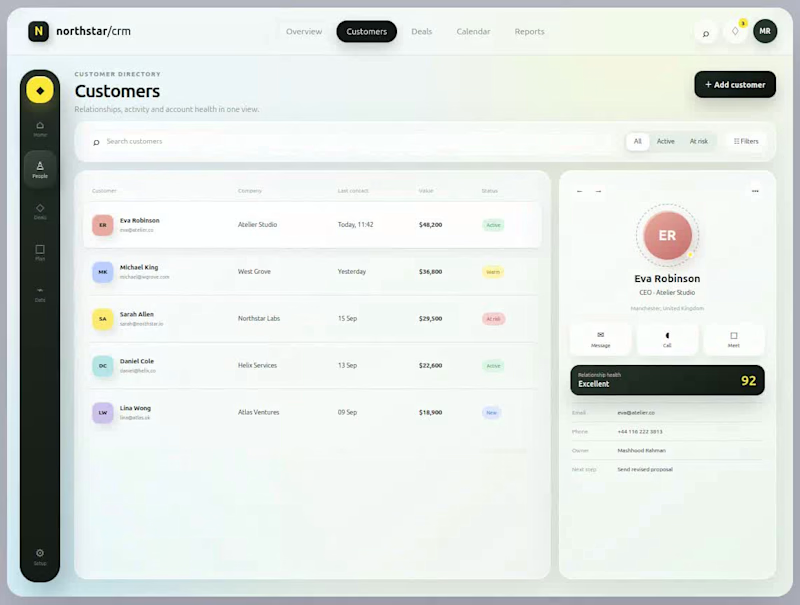
Northstar CRM: Full-Stack Customer Relationship and Sales Management Platform I designed and developed Northstar CRM to transform customer relationship management into a focused, visually intuitive, and connected workspace. Instead of overwhelming sales teams with dense tables and fragmented tools, I structured the platform around clear customer insights, actionable sales data, and streamlined daily workflows. The visual identity combines a soft atmospheric background with glass-inspired surfaces, dimensional cards, and vibrant blue, teal, yellow, and charcoal accents. Carefully layered shadows, subtle gradients, and elevated components create a refined 3D appearance while maintaining clarity and professional usability. The entire interface follows a consistent 4:3 presentation ratio, making every screen suitable for portfolio displays and high-quality screenshots. The overview dashboard gives users an immediate picture of business performance. Key metrics—including total revenue, pipeline value, completed tasks, priority deals, recent activities, and upcoming meetings—are presented through scannable cards, progress indicators, compact charts, and contextual status colours. This allows teams to identify important changes and required actions without navigating through multiple reports. The customer management screen provides a searchable directory with company information, recent interactions, account value, relationship status, and assigned ownership. Selecting a customer dynamically updates the detailed profile panel, where users can review contact information, relationship health, next actions, and communication options such as messaging, calling, or scheduling a meeting. The deal pipeline organizes opportunities into clear stages, including Discovery, Proposal, Negotiation, and Closing. Each opportunity card displays its customer, estimated value, expected closing date, owner, and current stage. The Kanban-style structure gives sales teams a visual understanding of pipeline movement while supporting faster prioritization and opportunity management. The calendar and reporting screens connect operational planning with performance analysis. The calendar provides monthly scheduling, customer meetings, deadlines, focus time, and team commitments. The reporting workspace combines revenue trends, conversion rates, customer retention, pipeline sources, account health, and period-based performance comparisons through interactive charts and summary cards. On the backend, I implemented a modular Node.js and Express REST API connected to a PostgreSQL database. The data model supports users, customers, companies, contacts, deals, pipeline stages, activities, tasks, meetings, notes, and reporting records. Structured relationships and indexed queries ensure that customer histories, pipeline summaries, and dashboard analytics remain fast and consistent as the dataset grows. Authentication is handled through secure token-based sessions, password hashing, protected API routes, and role-based access control. Different permissions can be assigned to administrators, sales managers, and sales representatives, ensuring users only access or modify information relevant to their responsibilities. Input validation, centralized error handling, audit logging, and rate limiting strengthen reliability and application security. Real-time updates allow changes to deals, tasks, customer activity, and meeting schedules to appear across connected screens without requiring a manual refresh. Background processes handle reminders, notifications, scheduled follow-ups, and reporting calculations, while caching improves the performance of frequently requested dashboard metrics. Across the complete full-stack platform, I prioritized reusable frontend components, responsive layouts, secure API design, reliable data relationships, and consistent interaction patterns. The result is a modern CRM experience that feels premium and approachable while providing the technical foundation required for scalable customer management, sales execution, and business intelligence.
4
6
1.1K
Custom AI & Full-Stack Solutions for Startups and Businesses

Senior Full-Stack Engineer for SaaS & AI Products | 10+ Year

New to Contra
Senior Full-Stack Engineer for SaaS & AI Products | 10+ Year