The network for creativity
Join 1.25M professional creatives like you
Connect with clients, get discovered, and run your business 100% commission-free
Creatives on Contra have earned over $150M and we are just getting started
Back to feedPost
Signal: AI-Powered Sales Development and Outreach Platform
I designed Signal as a full-stack AI sales development platform that helps teams discover prospects, manage outreach sequences, prioritize conversations, and convert engagement into qualified meetings. Instead of spreading sales activities across disconnected tools, Signal brings prospect research, communication, automation, and performance reporting into one focused workspace.
The visual identity uses a pitch-black interface with subtle violet, teal, green, and amber accents. Flat panels, restrained borders, professional outline icons, and generous spacing give the product a confident, human-designed appearance. Color is used functionally to distinguish active sequences, positive responses, scheduled meetings, prospect scores, and automation statuses without overwhelming the interface.
The main dashboard provides an immediate overview of active prospects, emails sent, reply rates, and meetings booked. Outreach performance is displayed through clean charts, while campaign tables highlight prospect volumes, delivery activity, and response rates. A dedicated research queue shows the work currently being completed by the sales agent without relying on distracting animations or exaggerated AI visuals.
The Prospects screen operates as the central lead database. Users can search and filter contacts, review company information, examine buying signals, compare qualification scores, and track each prospect’s latest activity. Qualified prospects can be moved directly into outreach sequences, creating a connected workflow from discovery to engagement.
The Sequences workspace enables teams to build and monitor structured, multi-step campaigns across email and LinkedIn. Every sequence presents its delivery schedule, prospect volume, open rate, reply rate, meetings generated, and current operating status. The connected Inbox brings replies into one place, prioritizes high-intent conversations, and provides context-aware response suggestions that users can review, edit, or send.
The AI Agent workspace gives users control over automated prospecting. Teams can define their ideal customer profile using industry, company size, geography, seniority, department, and buying-signal criteria. Guardrails and written instructions determine how prospects are researched, qualified, enriched, and prepared for outreach, while a live activity log keeps every automated action visible and accountable.
The Analytics screen connects outreach activity to commercial outcomes. It tracks pipeline sourced, meetings booked, opportunities created, cost per meeting, funnel conversion, top-performing buying signals, and sequence-level performance. This allows sales leaders to understand not only how much activity is taking place, but which audiences, signals, and messages are producing meaningful results.
The backend architecture is designed around a secure REST or GraphQL API layer built with Node.js and TypeScript. PostgreSQL stores users, workspaces, prospects, companies, sequences, messages, tasks, campaign events, and analytics records. Redis supports caching, background queues, rate limiting, and scheduled outreach, while asynchronous workers handle enrichment, qualification, message generation, email delivery, follow-ups, and CRM synchronization.
AI capabilities are managed through a controlled orchestration layer that combines company data, prospect history, buying signals, sequence context, and user-defined instructions. Retrieval-based context can be used to ground generated messages in approved company information, while approval workflows, audit logs, prompt controls, and configurable sending limits provide operational oversight.
Authentication uses secure session or token-based access with role-based permissions for administrators, managers, and sales representatives. External integrations can connect Signal with email providers, LinkedIn-compatible workflows, calendars, enrichment services, and CRM platforms such as HubSpot or Salesforce. Webhooks capture delivery, open, reply, bounce, booking, and opportunity events in near real time.
Across the complete product, I prioritized clarity, practical automation, transparent AI assistance, and connected navigation between Dashboard, Prospects, Sequences, Inbox, AI Agent, Analytics, and Settings. The result is a modern sales development platform that feels focused, professional, scalable, and genuinely useful to the people responsible for building pipeline.


The network for creativity
Join 1.25M professional creatives like you
Connect with clients, get discovered, and run your business 100% commission-free
Creatives on Contra have earned over $150M and we are just getting started







Related posts

This is such a clever way to turn familiar client feedback into a visual language. The concept and typography make the message really memorable. 👏

Are clients always right? 😀
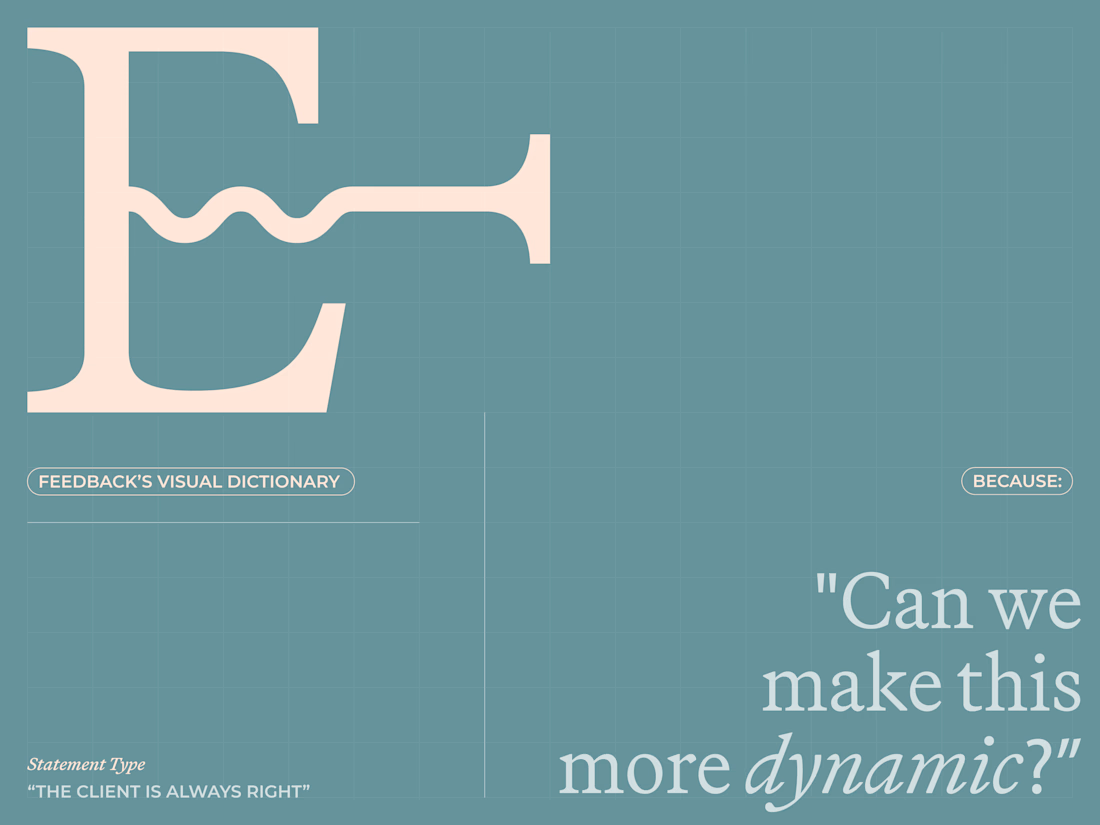
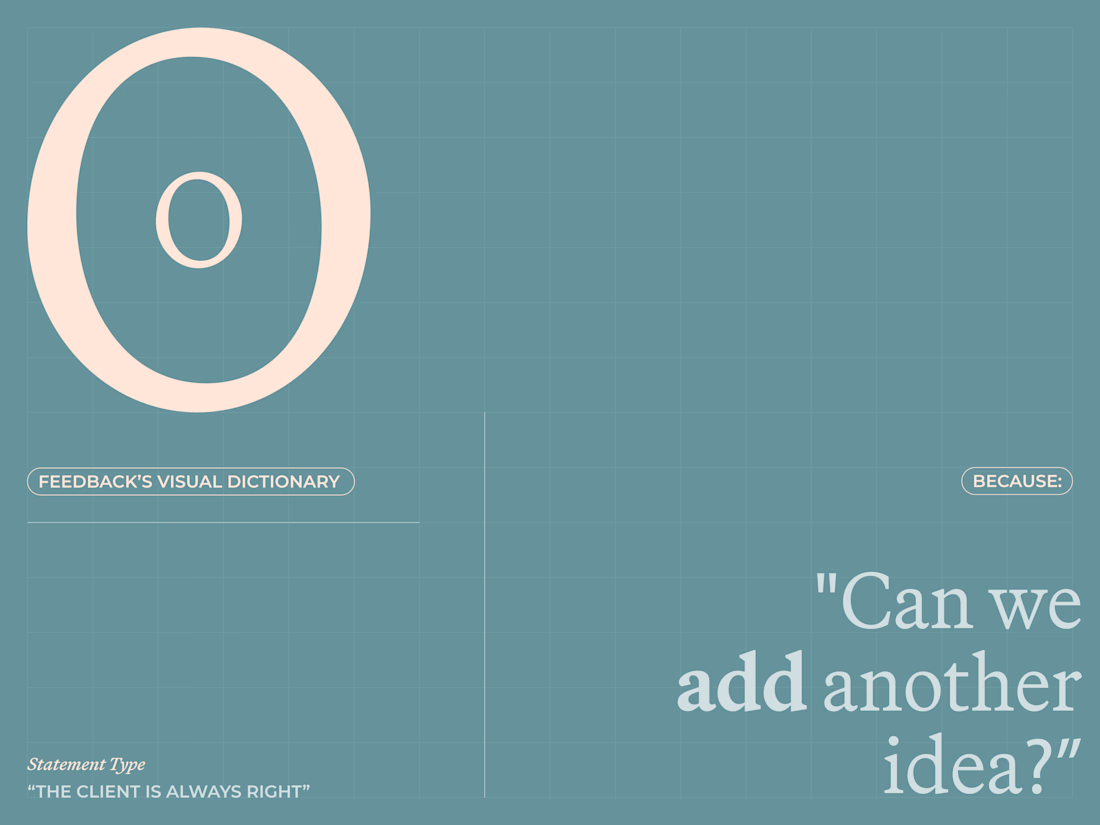
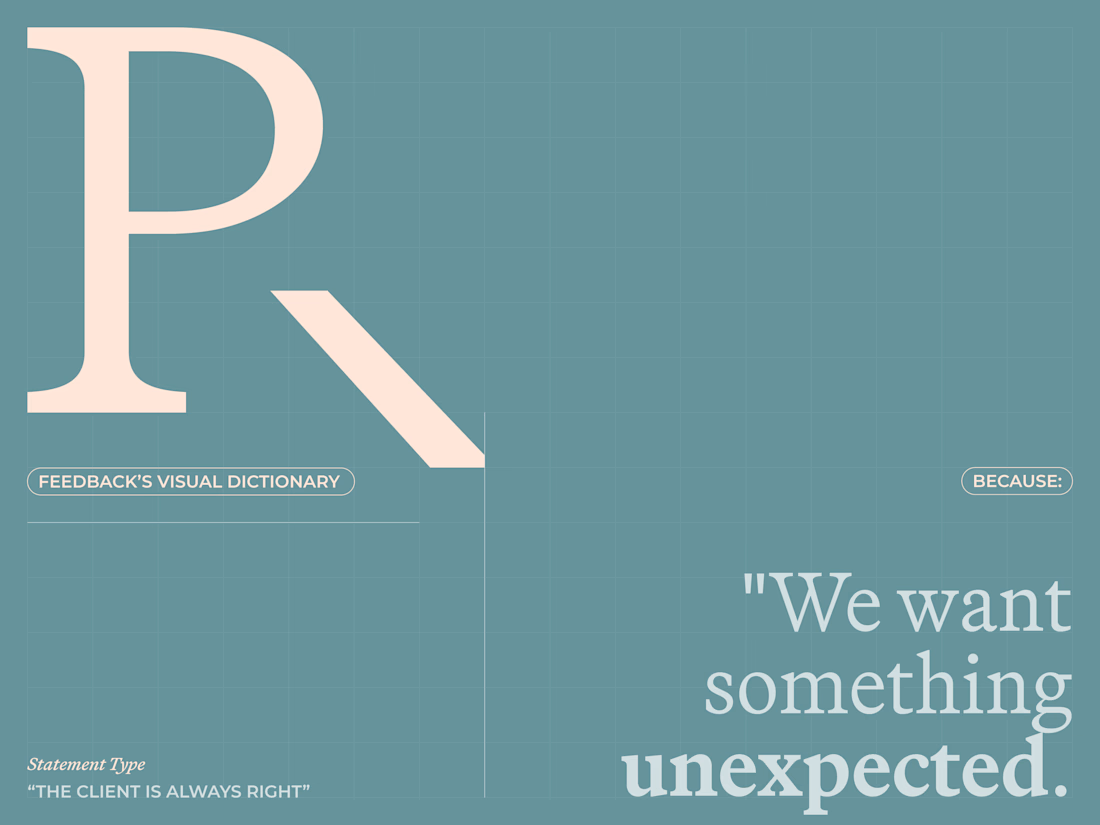
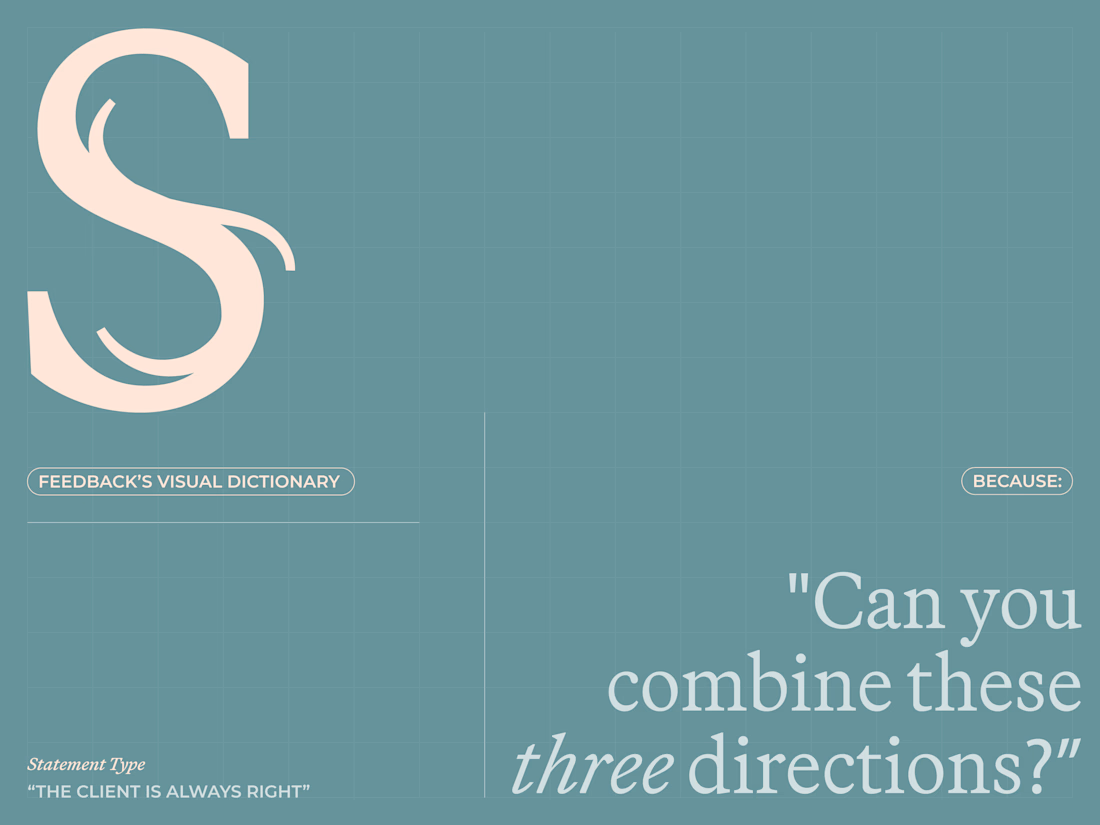
I created a lettering system where every letterform represents one of the things designers routinely hear from clients.
The typeface becomes a visual dictionary of bad creative feedback, that proves the statement wrong.
Give me your worst client...
Huge milestone! 🚀 Consistency really does compound. Congrats on reaching the Top 5% on Contra, and wishing you even more growth ahead! 👏🔥


Top 5% on Contra in my first month!! 🙌 Cool to see the consistency paying off soon enough. Congrats to everyone else who leveled up their badge! 🚀
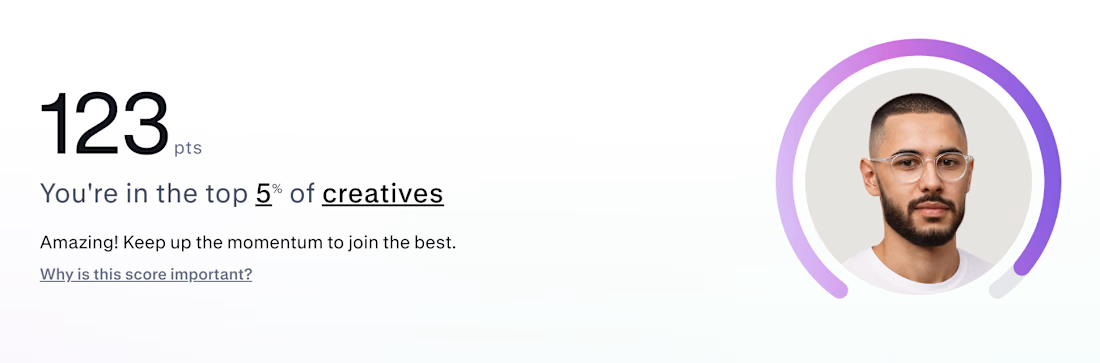

Wooohooo congrats!!


I designed AutomateLine to sell AI automation to everyday service businesses such as dental clinics, HVAC companies, plumbers and cleaners. These owners are busy and sceptical of tech buzzwords, so the site had to feel calm, practical and trustworthy, not like another AI startup.
The headline, "Your best employee, always on.", frames AI as a reliable team member rather than a complex technology. I set it in a bold, tightly spaced typeface with a hand-drawn lime highlight under "always on." The palette is warm off-white, deep forest green and one bright lime accent, which keeps the page clean and confident.
Instead of describing the product, I let visitors try it. The hero card is a live AI receptionist. Six agents, each set up for a different industry, can be switched with arrows or dots, and each card shows a real scenario, from incoming call to resolved booking. Visitors can call the agent or type to it directly on the page.
The rest of the page follows the same idea: show, don't tell. A scrolling lime band repeats the outcomes owners care about. An "Ask the operating system" assistant answers setup questions with suggested prompts. A device carousel shows the voice calls, chat widget, SMS text-back, CRM pipeline, calendar and workflows. For the six core systems, I designed an interactive rotary dial, so choosing a service feels tactile and memorable.
The contact form is written as a sentence, "Hi, I'm ___ from ___…", so getting in touch feels like a conversation rather than paperwork.

