AutoFix Car Repair System | Garage Management

Zaid Ali



AutoFix
The Situation
A busy auto repair shop was running on whiteboards, phone calls, and memory. Customers called to book, mechanics scribbled job notes on paper, and the owner had no reliable way to track revenue, workload, or customer history. When a repeat customer came in, nobody could quickly pull up what was done last time.
They needed a system that brought order to the chaos: online booking for customers, digital job tracking for mechanics, and a management dashboard for the owner. All in one place.
Getting Under the Hood
I spent the first month in the client's world. I learned how a repair job flows from initial customer contact through diagnosis, parts ordering, repair, quality check, and handoff. I mapped out who needs what information at each stage and where the current process breaks down.
The key insight: a garage isn't just a service business. It's a relationship business. Customers come back for years. The system needed to remember every vehicle, every repair, every preference. That long-term customer context became the backbone of the platform.
I built 3 wireframed concepts. The client chose the one that put the daily job queue front and center, because that's what the mechanics and front desk look at 50 times a day.
Inside the Platform
Service Booking
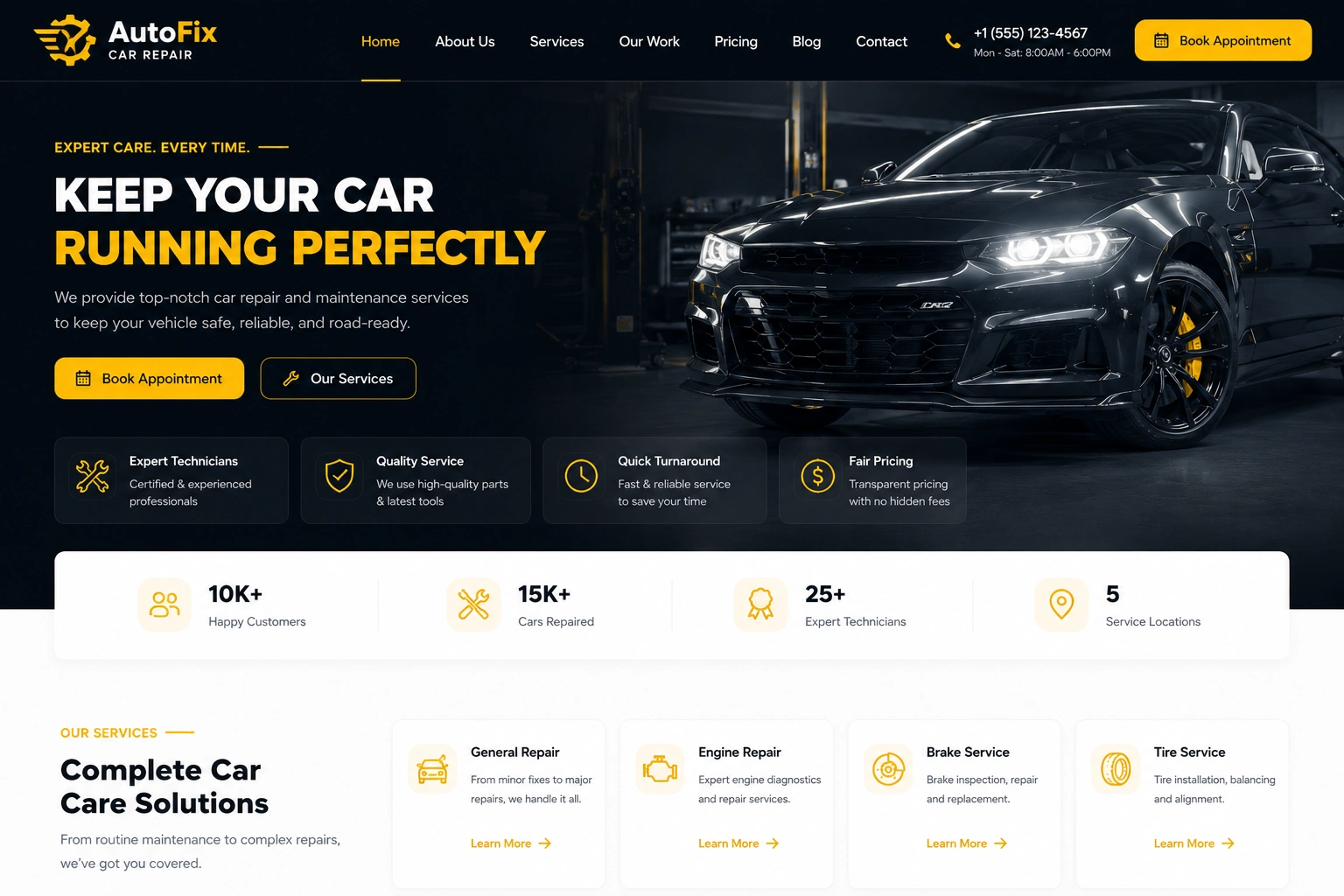
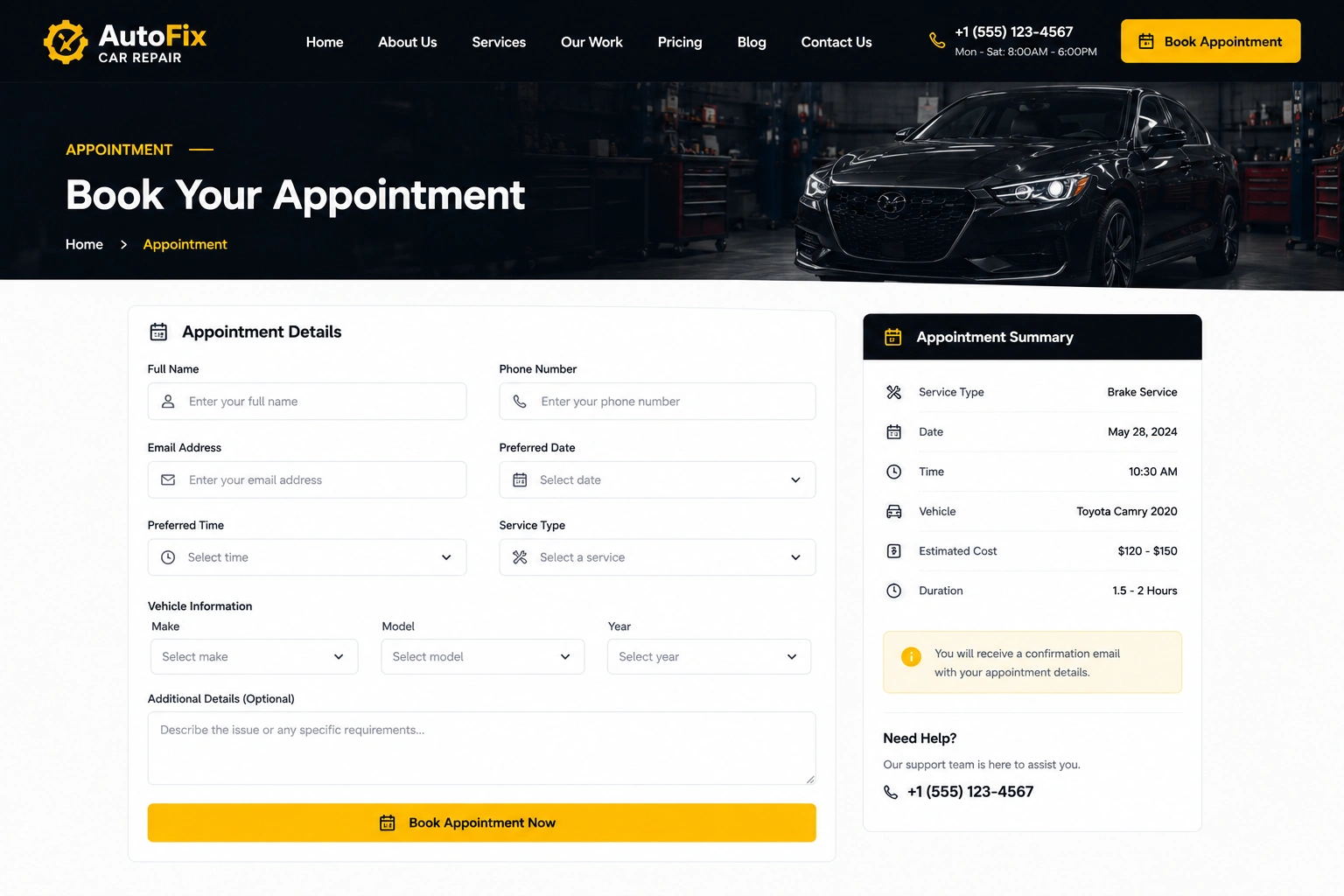
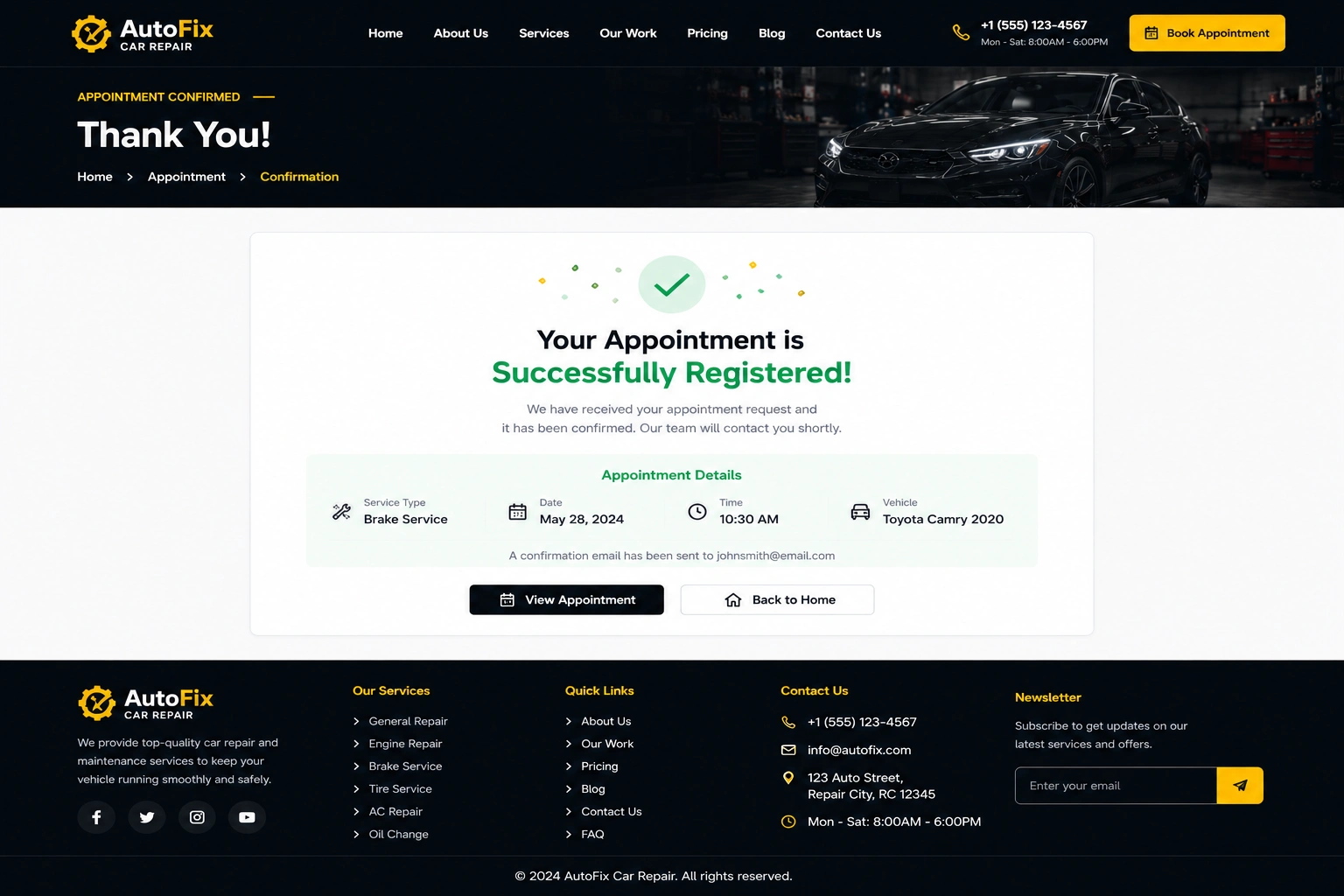
The booking system lets customers schedule service appointments online, 24/7. They select their vehicle (or add a new one), choose a service type, pick an available time slot, and add notes about the issue. The garage's calendar updates in real time, and staff get notified of new bookings instantly. No more phone tag.

Vehicle Management
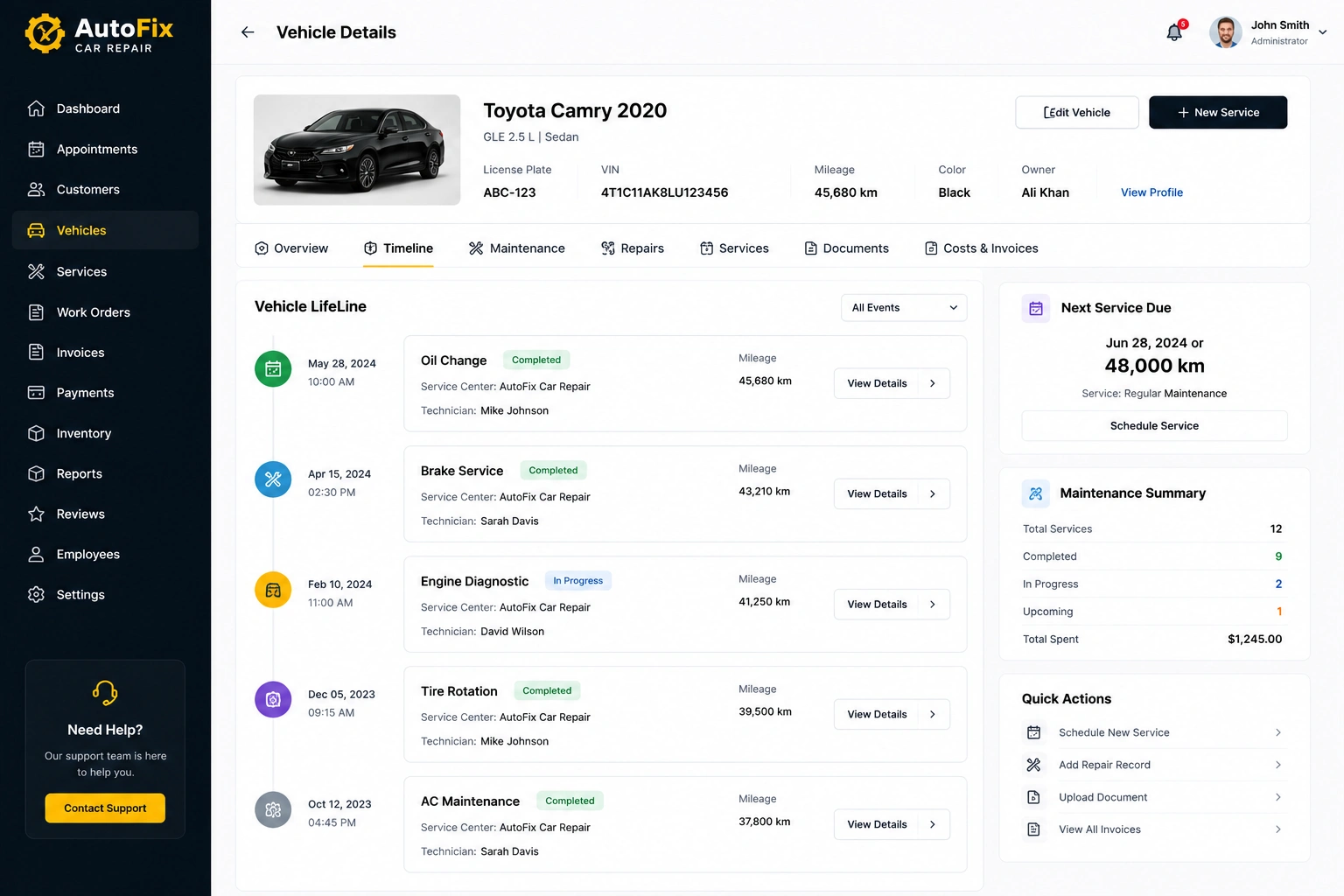
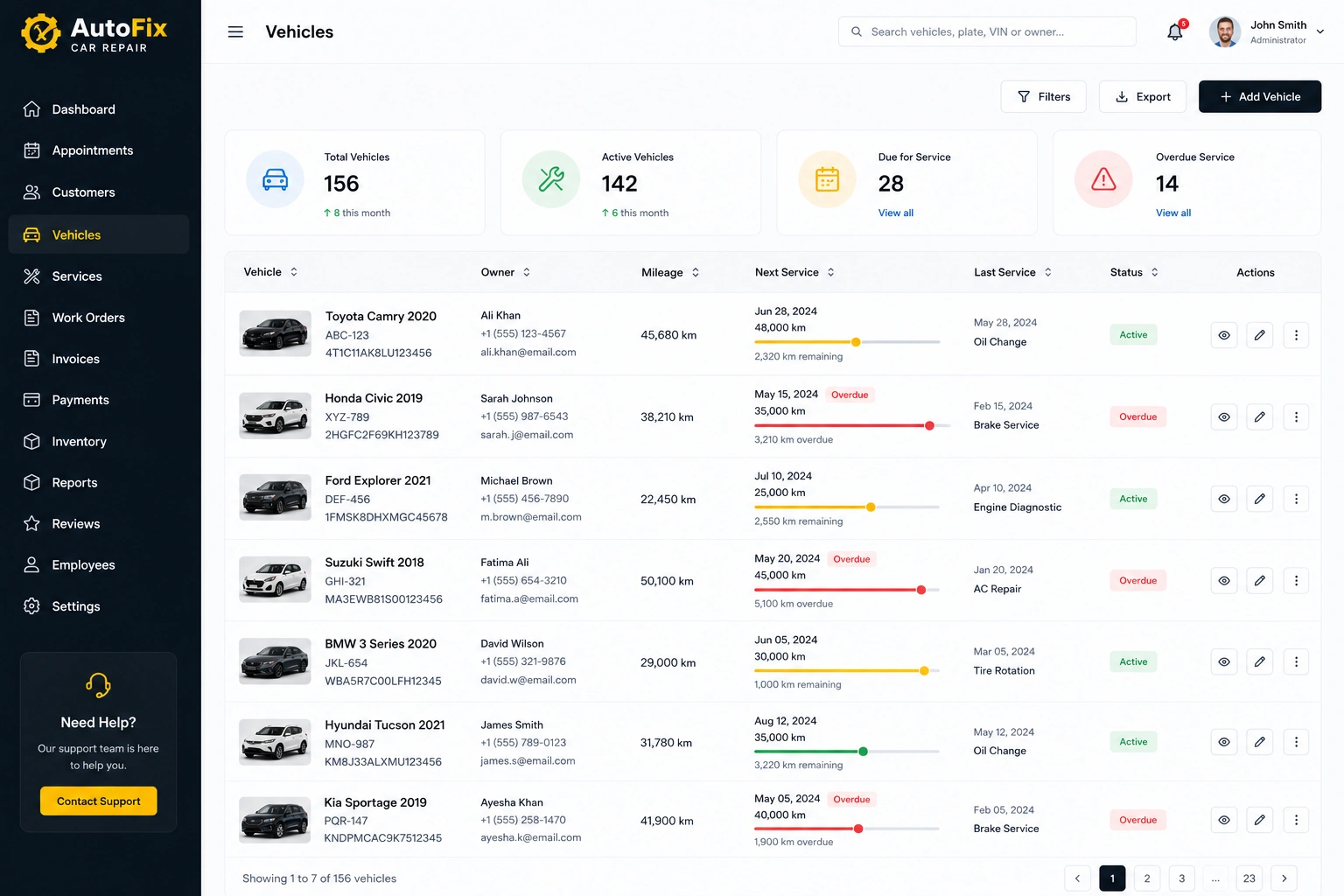
Every vehicle in the system has a complete service biography. Make, model, year, mileage, VIN, and a full history of every repair and service performed. When a car comes in, the mechanic can see what was done 6 months ago, what parts were used, and what was flagged for future attention. It's the institutional memory the shop never had.
Customer Records
Customer profiles tie people to their vehicles, their visit history, and their billing. Contact preferences, communication history, and outstanding balances are all in one view. The front desk can greet a returning customer by name and already know what they're likely coming in for.
Repair Tracking
Repair tracking turns the whiteboard into a real-time digital job board. Each job shows its current stage (received, diagnosing, waiting for parts, in progress, quality check, ready for pickup), the assigned mechanic, time estimates, and any notes. Customers can check their repair status online instead of calling to ask "is it done yet?"
Admin Dashboard
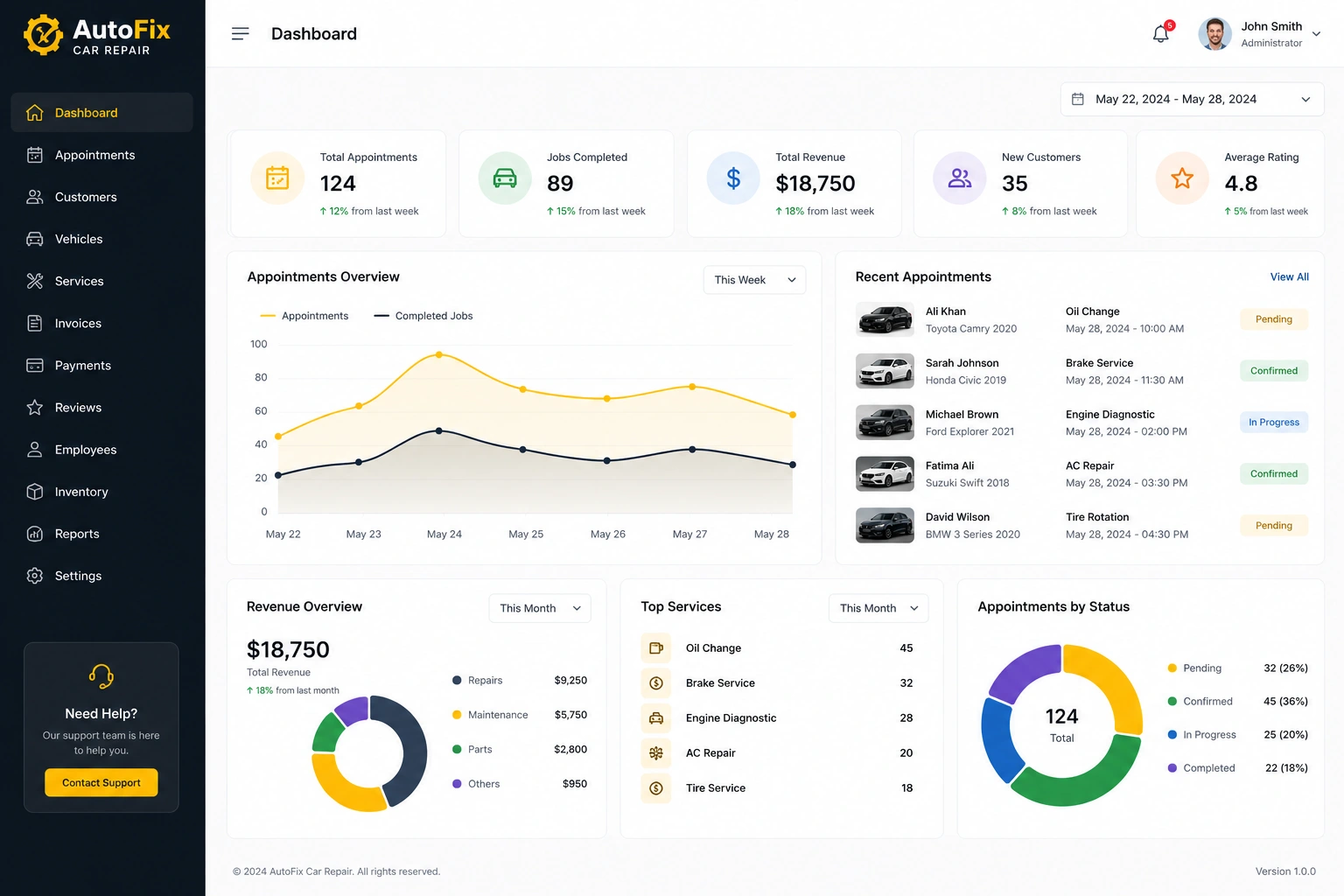
The owner's dashboard answers the questions that used to require digging through receipts. Today's jobs, weekly revenue, mechanic utilization, average repair time, and customer satisfaction trends are all on one screen. It's the view that turns a garage into a data-informed business.
Reports and Analytics
The reporting module goes deeper than the dashboard. Revenue by service type, busiest days of the week, most common repairs, parts cost trends, and customer retention rates are all trackable. The owner can spot patterns (like brake jobs spiking every spring) and plan staffing and inventory accordingly.
Staff Management
Staff accounts are set up by role. Mechanics see their assigned jobs and can update status and add notes. The front desk manages bookings and customer communication. The owner sees everything, including staff performance metrics. Permissions keep sensitive financial data visible only to those who need it.
Invoice Generation
Invoices are generated directly from completed repair jobs. Parts, labor hours, and service fees are pulled automatically from the job record. The system calculates totals, applies any discounts, and produces a clean, professional invoice that can be emailed or printed. No more handwritten receipts.
Settings Panel
The settings panel lets the garage owner configure the system to match how they run their shop. Business hours, service types and pricing, tax rates, notification preferences, and branding are all adjustable. The platform adapts to the business, not the other way around.
Technical Details
Frontend: React with responsive layouts
Backend: Node.js with Express
Database: MongoDB
Timeline: ~2 months from research to launch
Status: Live and in active use
Like this project
Posted Jul 18, 2026
Built a complete auto repair and garage management platform for a client, covering service booking, vehicle records, repair tracking, and admin dashboard. MERN stack, 2 months from research to launch, currently live.