Gaming Genres Challenge - Drag & Drop Game by Aishwarya KGaming Genres Challenge - Drag & Drop Game by Aishwarya K

Gaming Genres Challenge - Drag & Drop Game

Aishwarya K


Aishwarya K

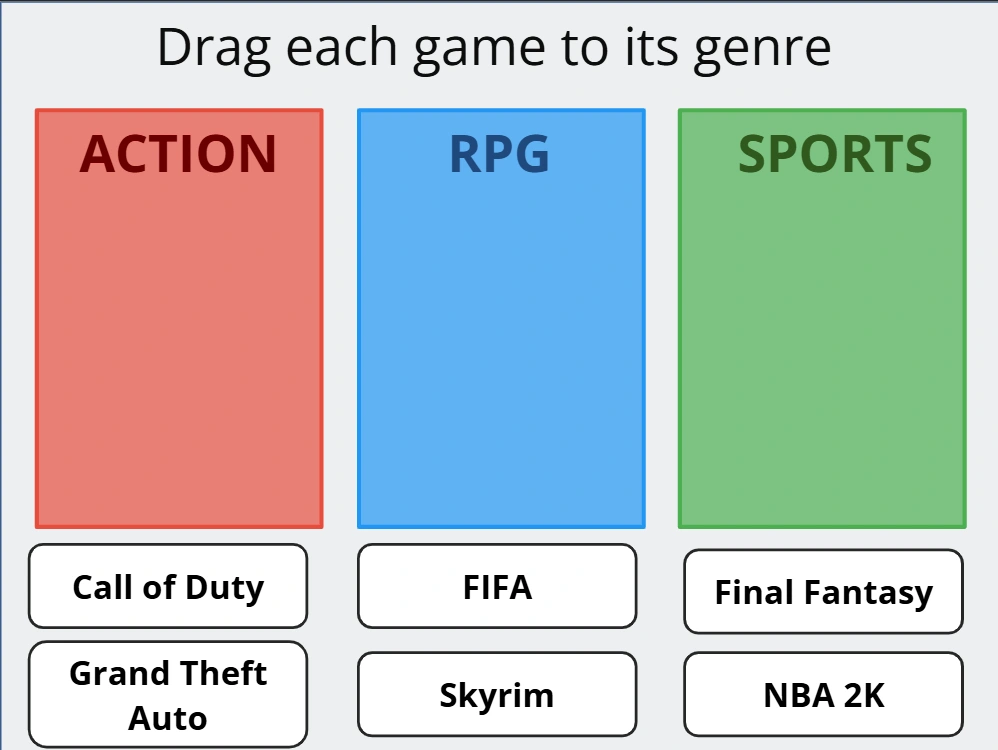
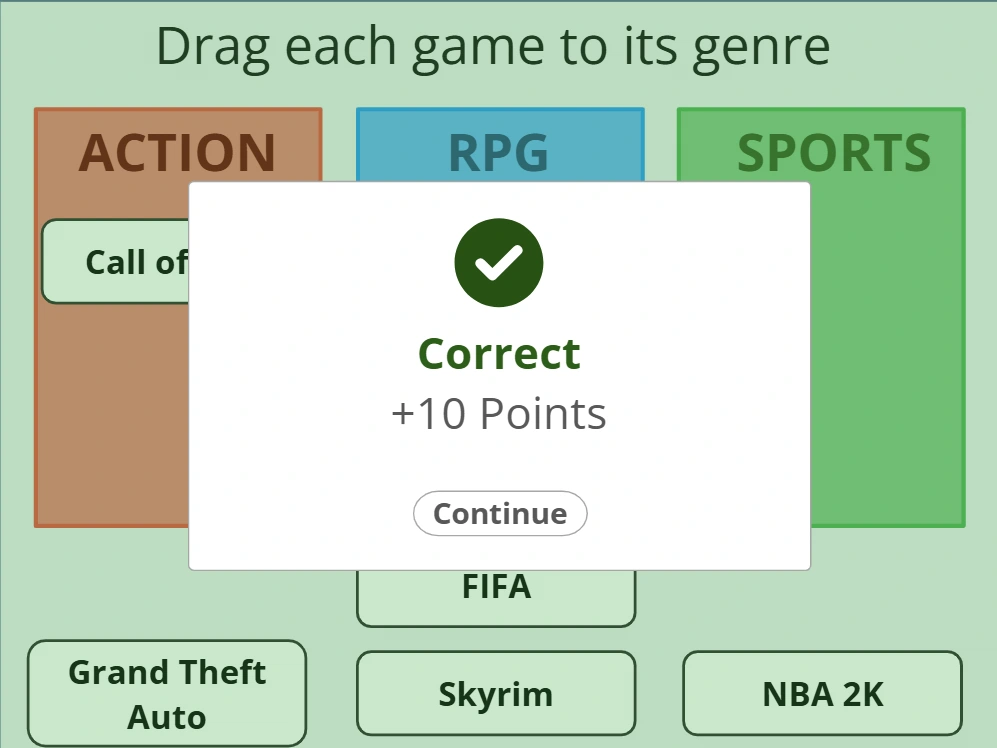
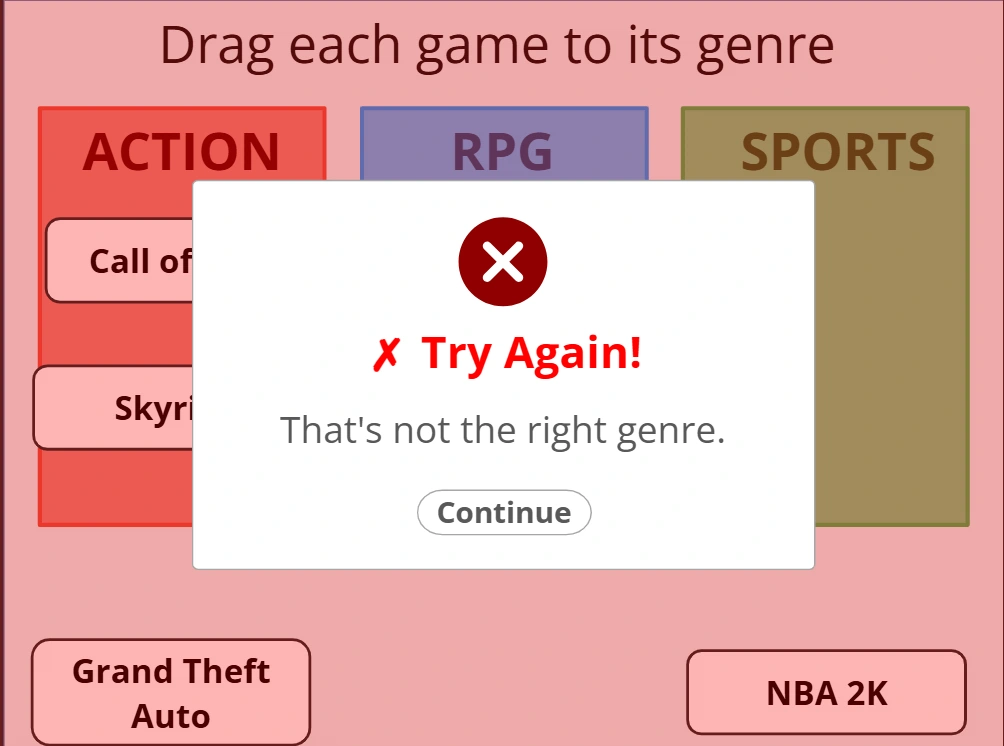
Drag-and-drop interaction created using drop targets and feedback layers.
Clicking the icon reveals additional information using layer-based triggers.
Tool: Articulate Storyline 360 
Type: Gamified Drag & Drop Interaction 
Audience: Gaming retail employees, game design students, parents selecting age-appropriate games, gaming enthusiasts 
The Problem
Learners can read about gaming genres and still struggle to apply that knowledge when categorizing actual game titles. Passive learning doesn't build the pattern recognition needed for real-world application. This project transforms dry categorization into an engaging sorting challenge with immediate, specific feedback that reinforces correct associations and corrects misconceptions in real time.
Learning Objectives
• Classify popular game titles into correct genre categories - Action, RPG, and Sports
• Distinguish between genre-defining characteristics through pattern recognition
• Apply genre knowledge through physical drag-and-drop interaction
• Self-assess accuracy through score tracking and immediate feedback
My Design Decisions
• Why drag-and-drop over multiple choice? 
Physical dragging creates kinesthetic learning - movement reinforces memory in a way clicking a radio button simply doesn't. Sorting game titles into genre boxes also mirrors real-world tasks like organizing game libraries or categorizing products.
• Why immediate feedback per item rather than at the end? 
End-of-quiz feedback allows incorrect learning to solidify across multiple questions. Per-item feedback corrects misconceptions the moment they happen, before they become habits.
• Why color-code the drop targets? 
Red for Action, Blue for RPG, Green for Sports - color distinction reduces cognitive load and makes the visual layout instantly readable without needing to read labels first.
• Why accept the minor overlap issue and ship anyway? 
Not every flaw needs fixing before launch. Real instructional design work operates under deadlines - knowing when a project is functionally complete and professionally acceptable is a crucial professional judgment.
Technical Highlights
• Freeform Drag-and-Drop configured through Form View for precise drop target validation
• Score variable accumulating +10 per correct placement with real-time display
• Return to start setting on incorrect drops - retry without penalty
• Multi-object trigger method applying one trigger across all drag items simultaneously
• Independent fix: identified and deleted an unwanted timeline auto-advance trigger from slide properties that was breaking the interaction
What I Learned
This project taught me that default Storyline slide behaviors can quietly break custom interactions - always check slide properties for unwanted triggers. It also reinforced a professional mindset I carry into every project: perfect is the enemy of done. A functional, engaging module that ships is more valuable than a flawless one that never gets finished.
Like this project

Posted Oct 18, 2026

Gaming Genres Challenge is an interactive drag-and-drop e-learning game that allows learners to categorize popular video game titles into their correct genres. Users sort six game titles into three categories — Action, RPG, and Sports — using drag-and-drop mechanics with immediate visual feedback for correct and incorrect responses. The module promotes active participation through gamified learning, enabling users to apply knowledge in an engaging and interactive format. FEATURES: -Drag-and-drop game interaction -3 categorized drop target zones -Correct/incorrect feedback layers -Score tracking system -Replay functionality GAMES INCLUDED: Action: Call of Duty, Grand Theft Auto RPG: Final Fantasy, Skyrim Sports: FIFA, NBA 2K SKILLS DEMONSTRATED: Drag-and-drop interaction design Drop target configuration Freeform slide development Game-based learning design Feedback layer architecture Score variable tracking