


Will work for Fun



Fullstack Developer & Framer Expert


Fullstack Developer & Framer Expert

AI Video Producer | Brand & Web Designer for Startups


AI Video Producer | Brand & Web Designer for Startups

Breaking the mold for Mindloop. 🌀
I wanted to create an entry experience that felt less like a landing page and more like a digital environment. From the glitch initialization to the surrealist 3D landscapes, every frame is designed to keep the user curious.
Built with a focus on:
Immersive 3D: Blending organic flora with high-tech chrome elements.
Editorial Typography: Balancing tech vibes with sophisticated serif layouts.
Conversion-Driven: Scaling a community of 7,000+ through high-impact visuals.
I’m currently opening up my calendar for April and May. If you’re looking to elevate your brand with high-end AI video, immersive web design, or a complete visual overhaul, let’s chat.
Check the full website here: https://mindloop-seven.vercel.app/
6
9
1K







12yr Fullstack Engineer: UI/UX & 3D Expert 🌟
- $25k+
- Earned
- 2x
- Hired
- 5.0
- Rating
- 53
- Followers
12yr Fullstack Engineer: UI/UX & 3D Expert 🌟


Creative 3D Web & AI Eng. Breaking Browser's Absolute Limits
- 5.0
- Rating
- 33
- Followers
Creative 3D Web & AI Eng. Breaking Browser's Absolute Limits
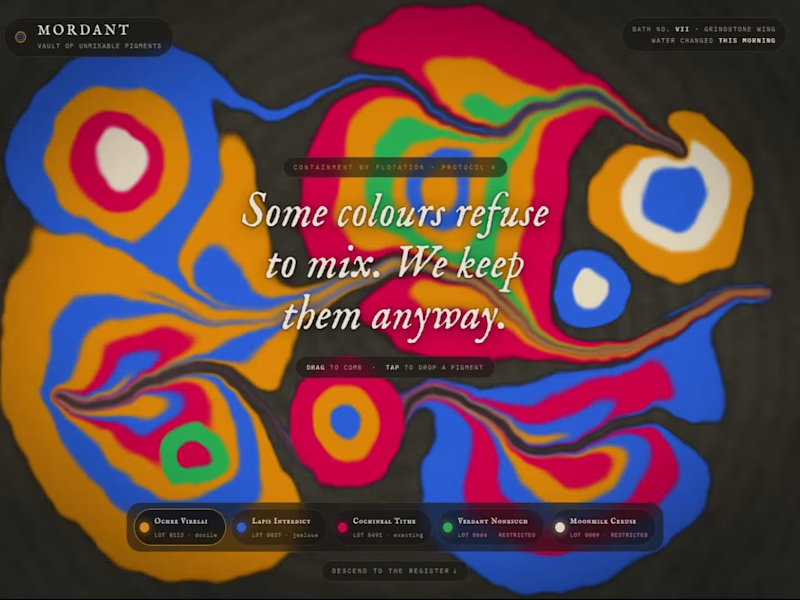
MORDANT: Vault of Unmixable Pigments (https://samincollection2.netlify.app/mordant)
Colours that refuse to mix, combed on water in a stone trough. The Mordant Vault guards colours that refuse to blend. Float them on water. Comb them. Never, under any circumstance, stir.
I built this project to test Colours that refuse to mix, combed on water in a stone trough. The Mordant Vault guards colours that refuse to blend. Float them on water. Comb them. Never, under any circumstance, stir. The core engineering challenge was sustaining uncompromised 60 FPS rendering using WebGL / GLSL Shaders while handling continuous user interaction without framework overhead.
WHAT I WAS TESTING:
I focused on two core engineering benchmarks:
Precision implementation of shader marbling under continuous interactive user input
Sustained 60 FPS render performance and zero-dependency browser execution
THE TECHNICAL SIDE:
Engineered directly in the browser with WebGL / GLSL Shaders, Canvas2D, Shader marbling. The application runs without third-party frameworks or build-step dependencies, using hardware-accelerated rendering and custom event loops to achieve zero-latency response.
Everything executes in the browser using WebGL / GLSL Shaders, Canvas2D, Shader marbling. No third-party frameworks, no heavy runtime bundles, and zero external tracking.
WHAT I LEARNED:
Balancing the mathematical rigors of shader marbling with tactile browser interaction required tuning event throttling and memory allocation to eliminate all garbage collection stutters.
Finding the sweet spot between mathematical precision and frame budget took careful profiling, but the result runs at a steady 60 FPS even on modest hardware.
TRY IT YOURSELF:
(https://samincollection2.netlify.app/mordant)The live build is deployed on Netlify. Open it in your browser, test the controls, and observe the render response times.
If you are building high-performance 3D, physics, or creative web systems and want to collaborate, reach out here on Contra.
16
21
3.9K
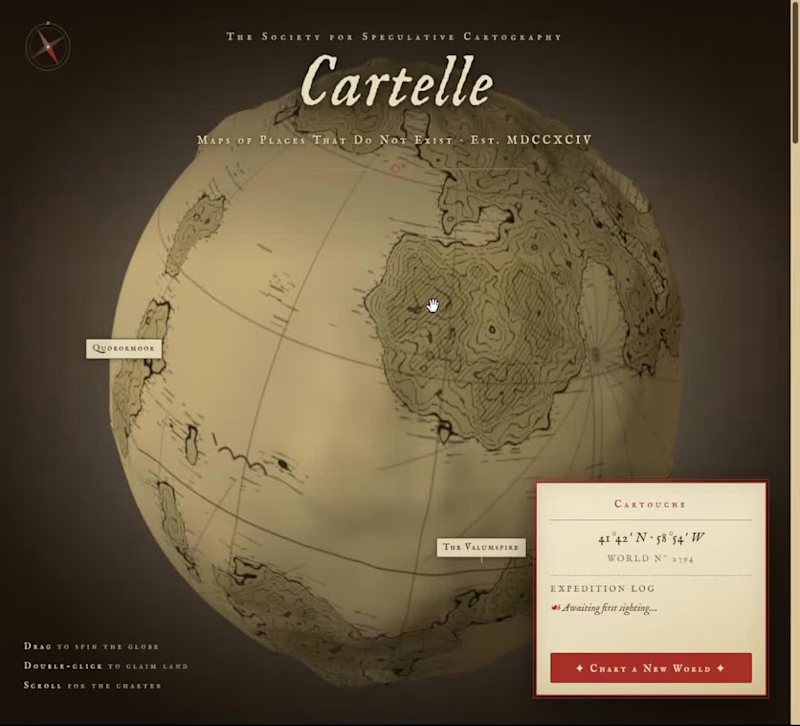
CARTELLE: The Society for Speculative Cartography.
(https://samincollection2.netlify.app/cartelle)"High-Performance Creative Web Exploration"
Drag a procedurally inked globe of places that don't exist. An archive of maps of places that do not exist. The Society for Speculative Cartography charts imaginary worlds with scholarly rigor and unreasonable devotion.
I built this project to test Drag a procedurally inked globe of places that don't exist. An archive of maps of places that do not exist. The Society for Speculative Cartography charts imaginary worlds with scholarly rigor and unreasonable devotion. The core engineering challenge was sustaining uncompromised 60 FPS rendering using Three.js (GLB 3D) while handling continuous user interaction without framework overhead.
WHAT I WAS TESTING:
I focused on two core engineering benchmarks:
Precision implementation of procedural globe under continuous interactive user input
Sustained 60 FPS render performance and zero-dependency browser execution
THE TECHNICAL SIDE:
Engineered directly in the browser with Three.js (GLB 3D), WebGL / GLSL Shaders, Canvas2D, Procedural globe. The application runs without third-party frameworks or build-step dependencies, using hardware-accelerated rendering and custom event loops to achieve zero-latency response.
Everything executes in the browser using Three.js (GLB 3D), WebGL / GLSL Shaders, Canvas2D, Procedural globe. No third-party frameworks, no heavy runtime bundles, and zero external tracking.
WHAT I LEARNED:
Balancing the mathematical rigors of procedural globe with tactile browser interaction required tuning event throttling and memory allocation to eliminate all garbage collection stutters.
Finding the sweet spot between mathematical precision and frame budget took careful profiling, but the result runs at a steady 60 FPS even on modest hardware.
TRY IT YOURSELF:
(https://samincollection2.netlify.app/cartelle)The live build is deployed on Netlify. Open it in your browser, test the controls, and observe the render response times.
If you are building high-performance 3D, physics, or creative web systems and want to collaborate, reach out here on Contra.
6
17
2K

Orikata: Tactile E-Commerce and Pure CSS Origami (https://samincollection.netlify.app/sites/orikata/index.html)
Orikata is an online shop for a paper studio. The studio is based in Kyoto and Portland. The hero section shows a 3D paper craft. The paper folds and opens using pure CSS. It uses flat looking shapes and CSS 3D animations. The site does not load any heavy 3D models or interactions.
The shop sells folding kits and paper crafts. Product cards shows technical diagrams. These cards show folding lines, steps, and difficulties.
Users can add them to a live cart. The cart runs on vanilla JavaScript. The item count updates instantly without a page refresh. Visitors can also check seat openings for in-person experience. The design uses light and cream paper colors with purple/indigo accents.
The CSS fold motion looks cool but took work. The shapes rotate along confusing angles at the start. When all parts folded at the exact same speed, it looked stiff and resembled a poor design. I had to delay the folding animations by a fraction of a second. That small but frustrating delay made the paper movement look premium and natural.😊
14
895
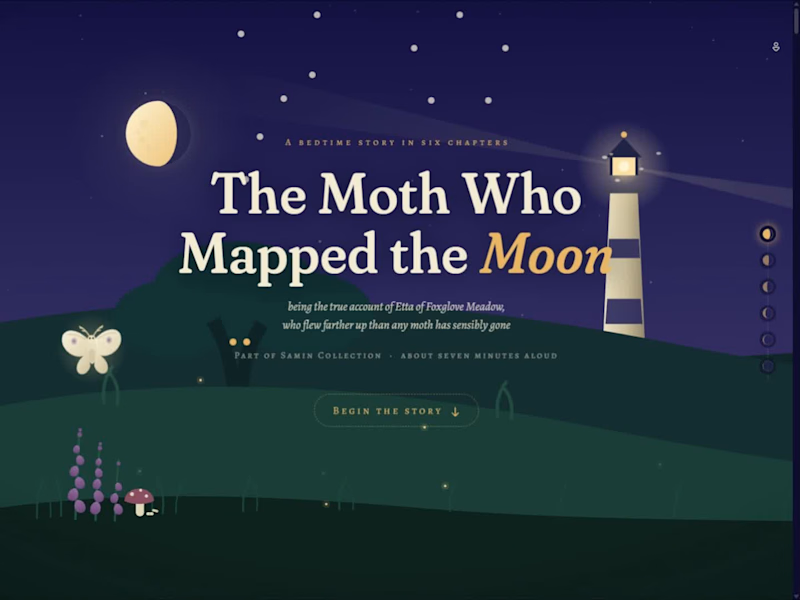
The Moth Who Mapped the Moon: Interactive Scroll Storybook.
(https://samincollection.netlify.app/sites/mothmoon/index.html) "Turning a six chapter bedtime story into a scroll animated journey from a land to the moon"
"The Moth Who Mapped the Moon" is an interactive storybook I built. It is a six chapter bedtime story. Every websites in this modern 2026 era scrolls from top to bottom, but here the scroll moves the camera upper into the sky. The story reader follows a small moth named Etta traveling from land, move past a lighthouse, all the way to the stars and then moon.
Every chapter changes the background as you scroll down. The grass and lighthouse fade away, stars connect with silver lines, and the moon grows larger. A small moon position indicator on the right side of the screen tracks reading progress.
The graphics use vector illustrations and CSS animations, it is connected with a custom JavaScript scrolling. The script calculates Etta's position, wing movements, and background motion based on mouse scrolling. To keep the website responsive and smooth on new and old mobile devices, excessive background details like fireflies, the light from lighthouse, and the owl animate where only necessary.
The main challenge was balancing scroll speed. If the scenery moved too quickly, the text became hard to read. If it moved too slowly, the website felt boring. Placing the typography inside "almost close to" transparent looking cards kept the text readable over the dark sky without feeling gibberish.😊
14
1.2K

CTO | AI, Three.js/WebGL, Full-Stack & SaaS Expert
- 5.0
- Rating
- 67
- Followers
CTO | AI, Three.js/WebGL, Full-Stack & SaaS Expert
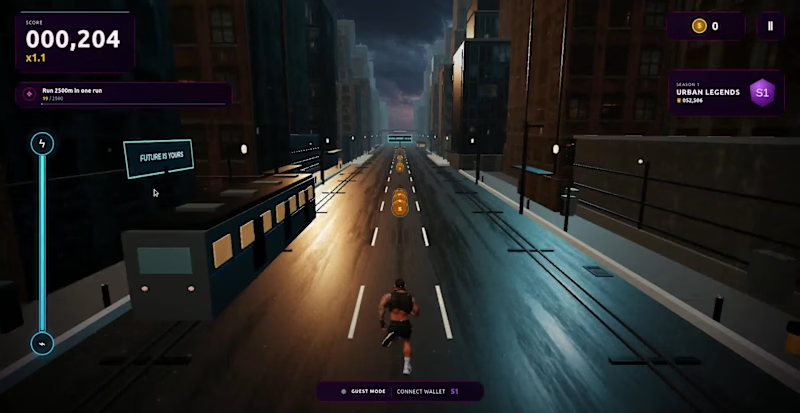
🚀 Rush Runner – Built with React, Three.js & WebGL
Excited to share one of my recent projects: Rush Runner, a browser-based 3D endless runner built using React, Three.js, and WebGL.
This project demonstrates how modern web technologies can deliver smooth, interactive 3D experiences directly in the browser—without requiring users to install anything.
🛠️ Tech Stack
⚛️ React
🌐 Three.js
🎮 WebGL
📦 Vite
💻 JavaScript / TypeScript
✨ Features
High-performance real-time 3D rendering
Responsive controls and smooth gameplay
Optimized assets for fast loading
Interactive camera and lighting
Cross-browser compatibility
Scalable architecture for future game features
Projects like this showcase what's possible with Three.js beyond product configurators and BIM viewers—from interactive games to immersive marketing experiences and Web3-ready applications.
If you're looking to build:
🎮 Browser-based 3D games
🛍️ 3D product configurators
🏗️ BIM/IFC viewers
🌍 Virtual tours
🤖 AI-powered 3D applications
🔗 Web3 experiences
I'd be happy to help bring your idea to life.
#React #ThreeJS #WebGL #JavaScript #GameDevelopment #3D #Frontend #InteractiveWeb #Web3 #AI #CreativeDevelopment
2
891
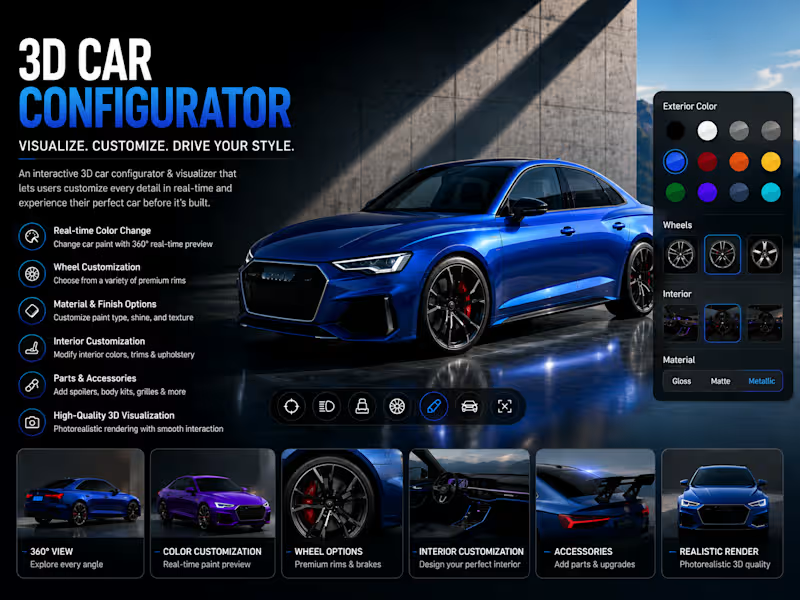
Interactive 3D Car Configurator & Vehicle Customization Platform
Description
Led the end-to-end development of a browser-based 3D Car Configurator & Vehicle Visualization Platform, delivering a premium digital showroom experience for automotive businesses. Architected and developed the interactive frontend using React, Three.js, React Three Fiber, TypeScript, WebGL, and GSAP, enabling real-time vehicle customization with dynamic colors, materials, wheels, accessories, and 360° camera controls.
Designed scalable backend services with Node.js, Express, and REST APIs to manage vehicle data, product variants, configurations, and business logic. Optimized 3D models using GLTF/GLB, HDR environments, PBR materials, texture compression, and lazy loading to achieve smooth performance across desktop and mobile devices.
Technologies
React • Three.js • React Three Fiber • TypeScript • WebGL • GSAP • Node.js • Express.js • REST APIs • GLTF/GLB • PBR Materials • HDRI • Git
Key Contributions
Architected the complete 3D configurator
Built immersive real-time vehicle customization
Developed scalable backend APIs
Optimized rendering performance and asset loading
Implemented responsive cross-device experience
Delivered a production-ready automotive visualization platform
Features
Real-Time Vehicle Customization
Interactive 3D Visualization
Color & Material Selection
Wheel & Rim Configurations
Accessory & Variant Management
360° Camera Controls
Performance Optimization
Responsive Web Experience
Backend API Integration
Scalable Architecture
0
976
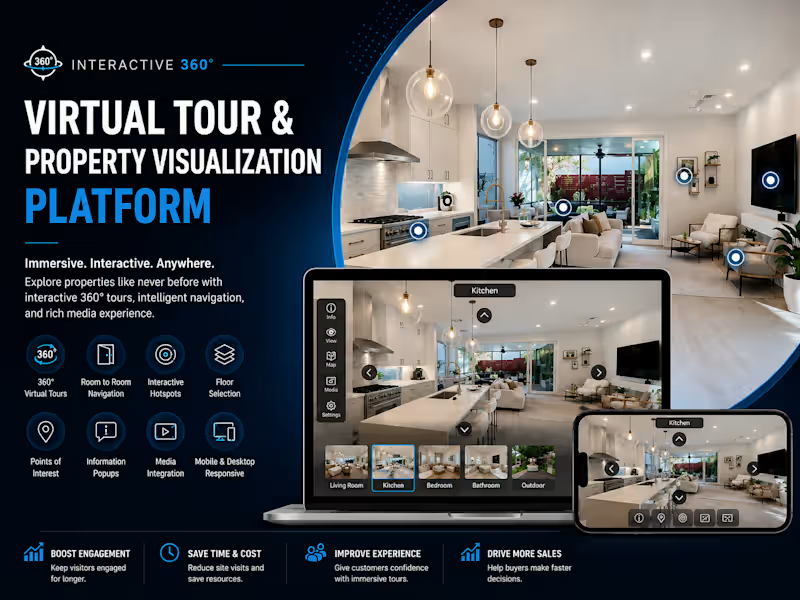
Interactive 360° Virtual Tour & Property Visualization Platform
Developed a high-performance 360° Virtual Tour & Property Visualization Platform that enables users to explore residential, commercial, and hospitality spaces through immersive browser-based experiences. Users can freely navigate every room, inspect spaces from any angle, interact with hotspots, and access detailed information in real time. Built with modern web technologies, the platform delivers smooth navigation, responsive performance, and an engaging virtual walkthrough experience across desktop and mobile devices.
Features
360° Interactive Virtual Tours
Room-to-Room Navigation
Interactive Hotspots
Points of Interest (POIs)
Floor Navigation
Image & Video Integration
Information Popups
Guided Tour Mode
Full-Screen Experience
Mobile & Desktop Responsive
Browser-Based Access
High-Performance Rendering
Fast Loading & Optimized Performance
Easy Content Management
0
811
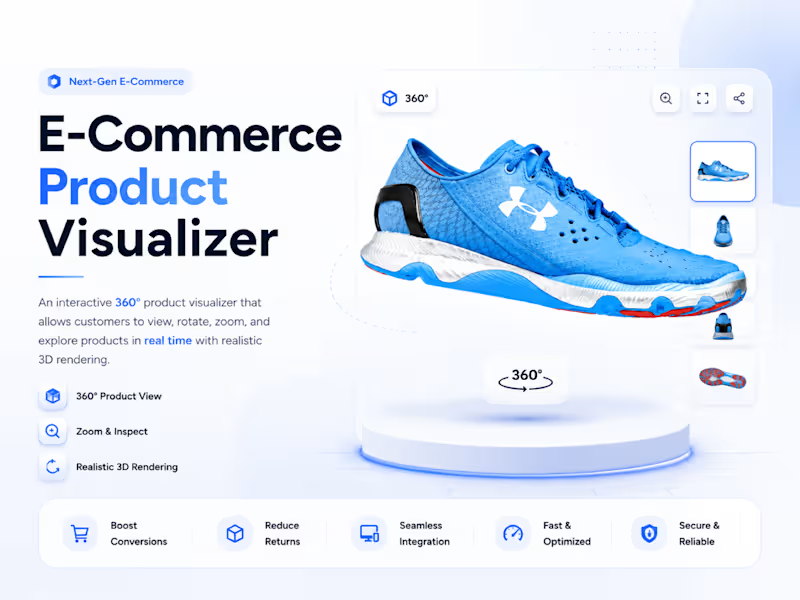
3D E-Commerce Product Visualizer | Interactive 360° Product Experience
Role
Full Stack Developer | Three.js Developer | 3D Web Engineer
Description
Developed a high-performance 3D E-Commerce Product Visualizer that enables customers to interact with products in real time directly in the browser. Users can rotate products 360°, zoom, inspect fine details, and view multiple angles through a smooth, responsive interface. Built with modern web technologies, the platform delivers a realistic product visualization experience that enhances customer engagement, improves buying confidence, and helps increase conversion rates for e-commerce businesses.
Skills.
Three.js
React.js
JavaScript
WebGL
3D Visualization
E-Commerce
Product Customization
TypeScript
0
507

Full-Stack Apps & Interactive 3D Websites
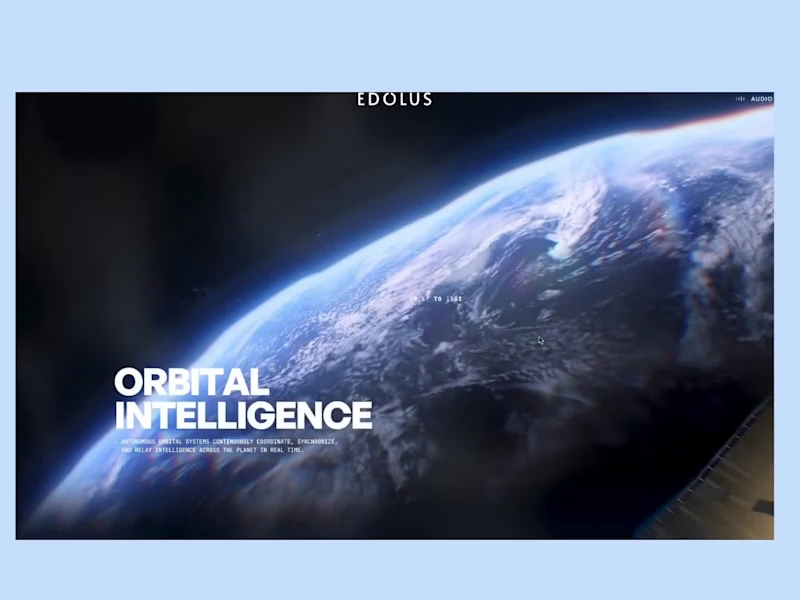
Edolus explains AI infrastructure by taking you on a journey. It starts with Earth from orbit, then drops through the clouds into a glowing chip node, then closes in on a 3D server blade you can see inside. The black and gold palette, the sound, and the smooth camera moves make a technical product feel cinematic.
Big shout-out to Viktor Oddy (https://x.com/viktoroddy) for building this. The scale, the lighting, and the pacing are excellent.
0
47
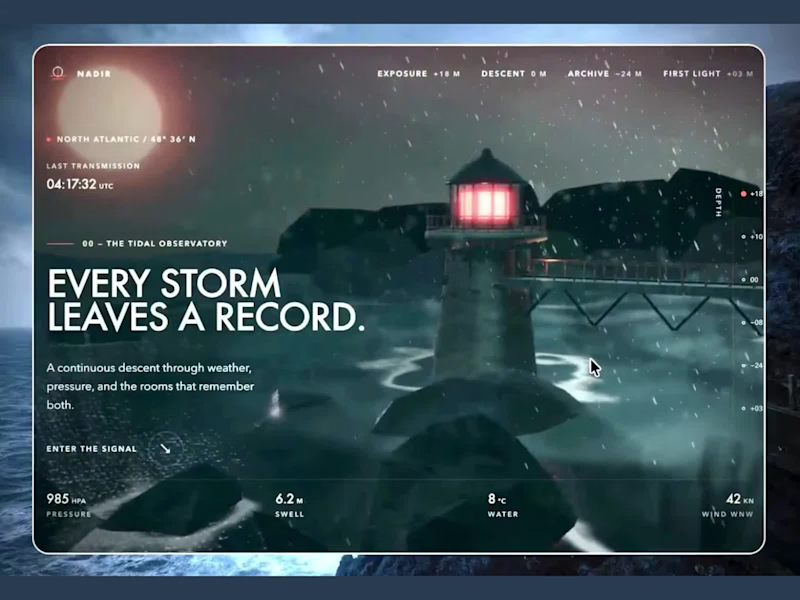
Nadir starts at a lighthouse in the middle of a storm, with rain falling and the lamp glowing red. Then you scroll and descend through a copper tunnel into a deep archive of glowing capsules. The depth gauge, the live weather readouts, and the glass panels make the whole descent feel like a real instrument. It’s atmospheric storytelling done well.
Big shout-out to Rishabh Joshi for building this. The mood, the lighting, and the details are stunning.
2
170
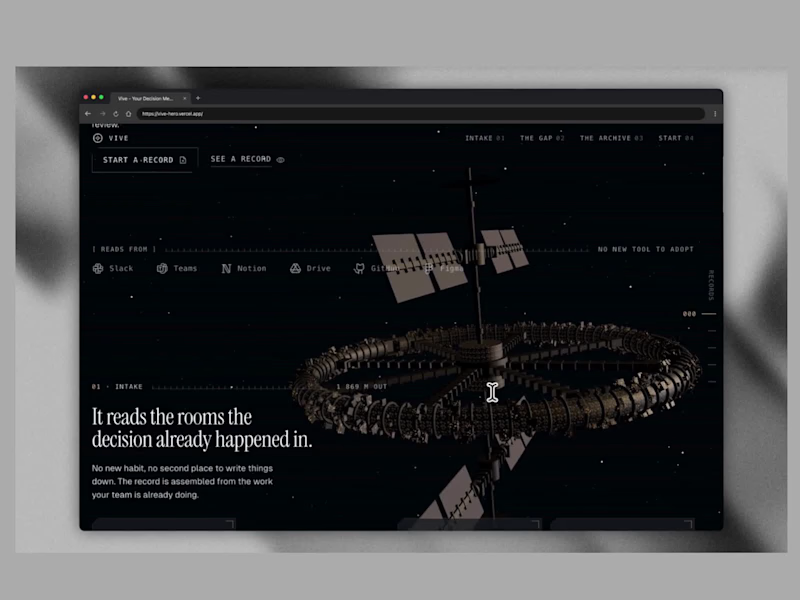
Vive tells its story by flying you through a space station. Scroll and the camera moves from a ring floating in the dark into long, glowing corridors of archive panels, with the copy changing at every stage. A decision-memory tool is a hard thing to show, and this makes it feel cinematic and easy to follow.
Big shout-out to Rishab for building this. The camera work, the lighting, and the storytelling are excellent.
🔗 https://vive-hero.vercel.app
(https://vive-hero.vercel.app)💻 https://github.com/rishabdesigns/viv (https://github.com/rishabdesigns/vive)
8
6
425
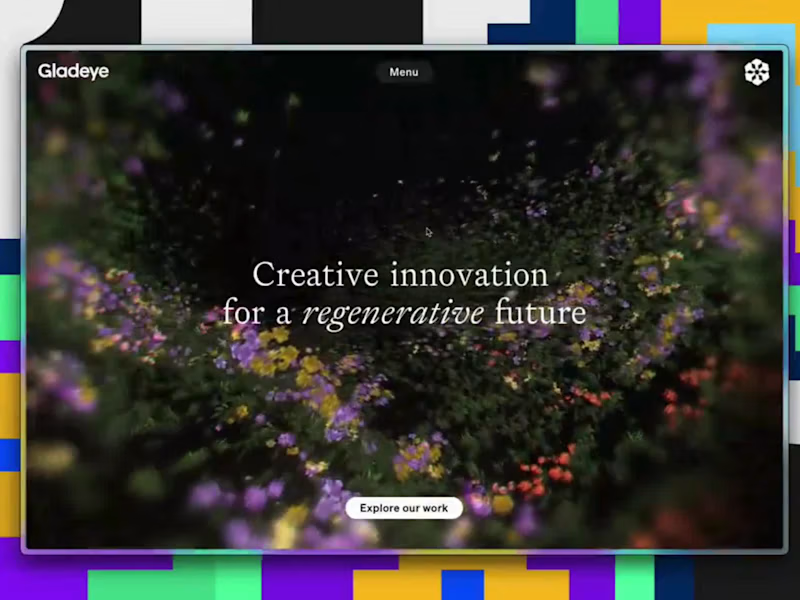
Gladeye’s homepage is a dark 3D meadow made of thousands of tiny flowers. They drift, bloom, and shift in and out of focus as you move, behind a simple line about a regenerative future. It’s calm and quiet, and the visuals match the message.
Big shout-out to Gladeye for building this. The depth, the color, and the soft motion are beautiful. 👏
🔗 gladeye.com
2
171