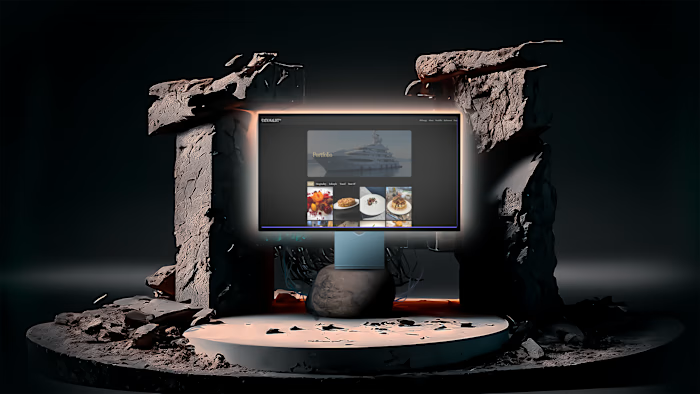
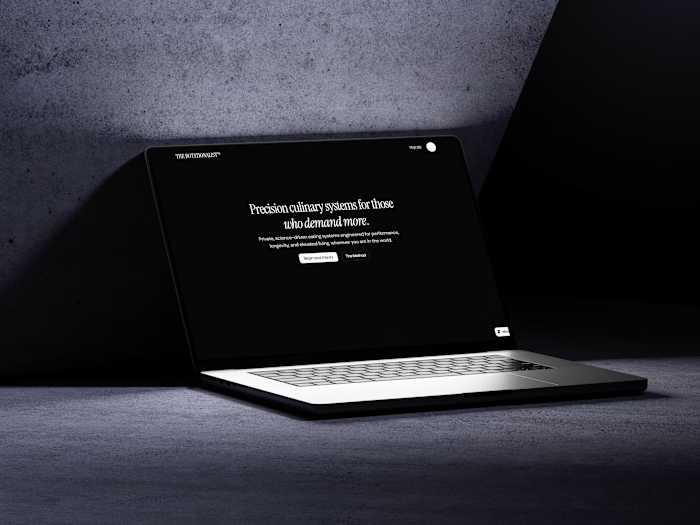
Snapra Studio — design and development studio site

Snapra Studio


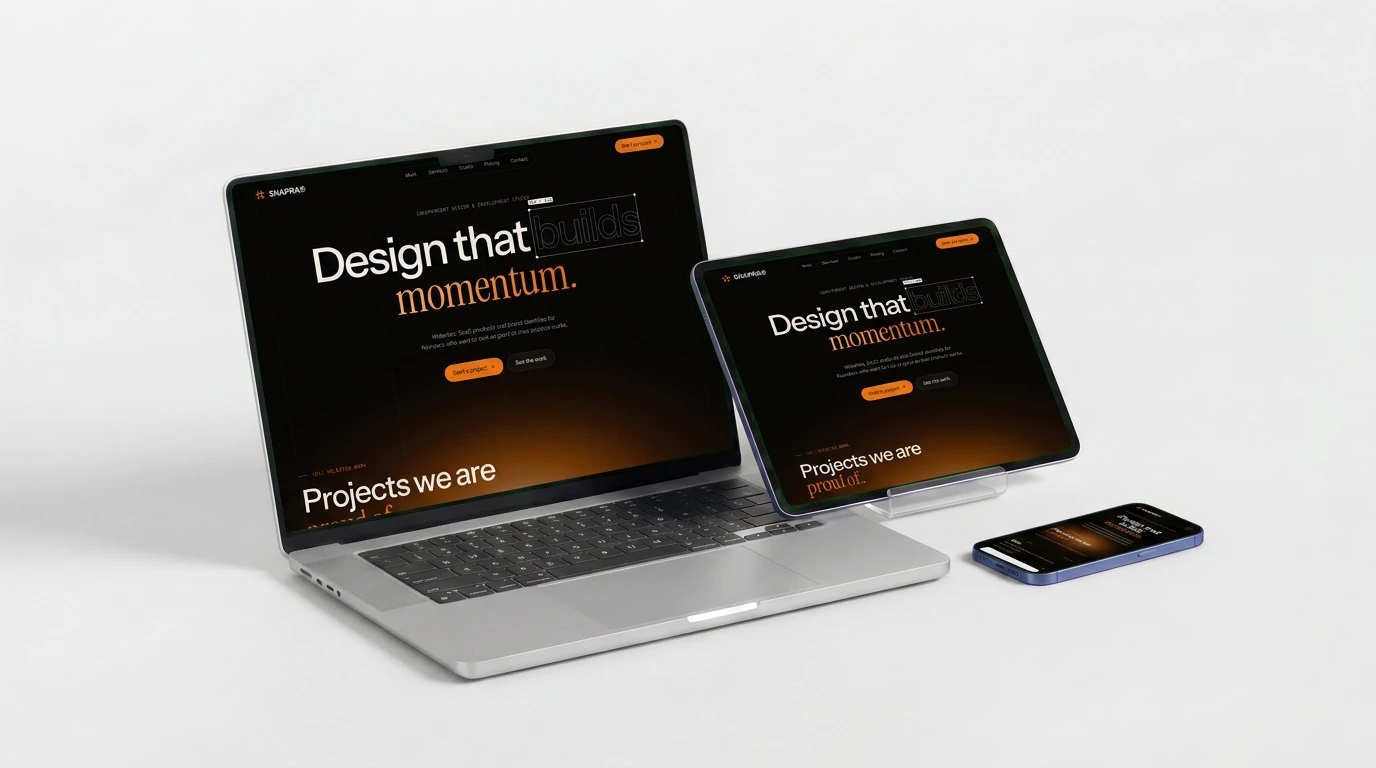
Snapra Studio: a portfolio that measures its own claims
An independent studio needs a site that does two jobs at once: show the work,
and be an example of it. If it is slow, inaccessible or invisible to search
engines, nothing written on it counts for much.
So I built mine, and then I audited it the way I would audit a client's.
Prototyped in Figma first, then Next.js, React, TypeScript, Tailwind and GSAP
on Vercel.
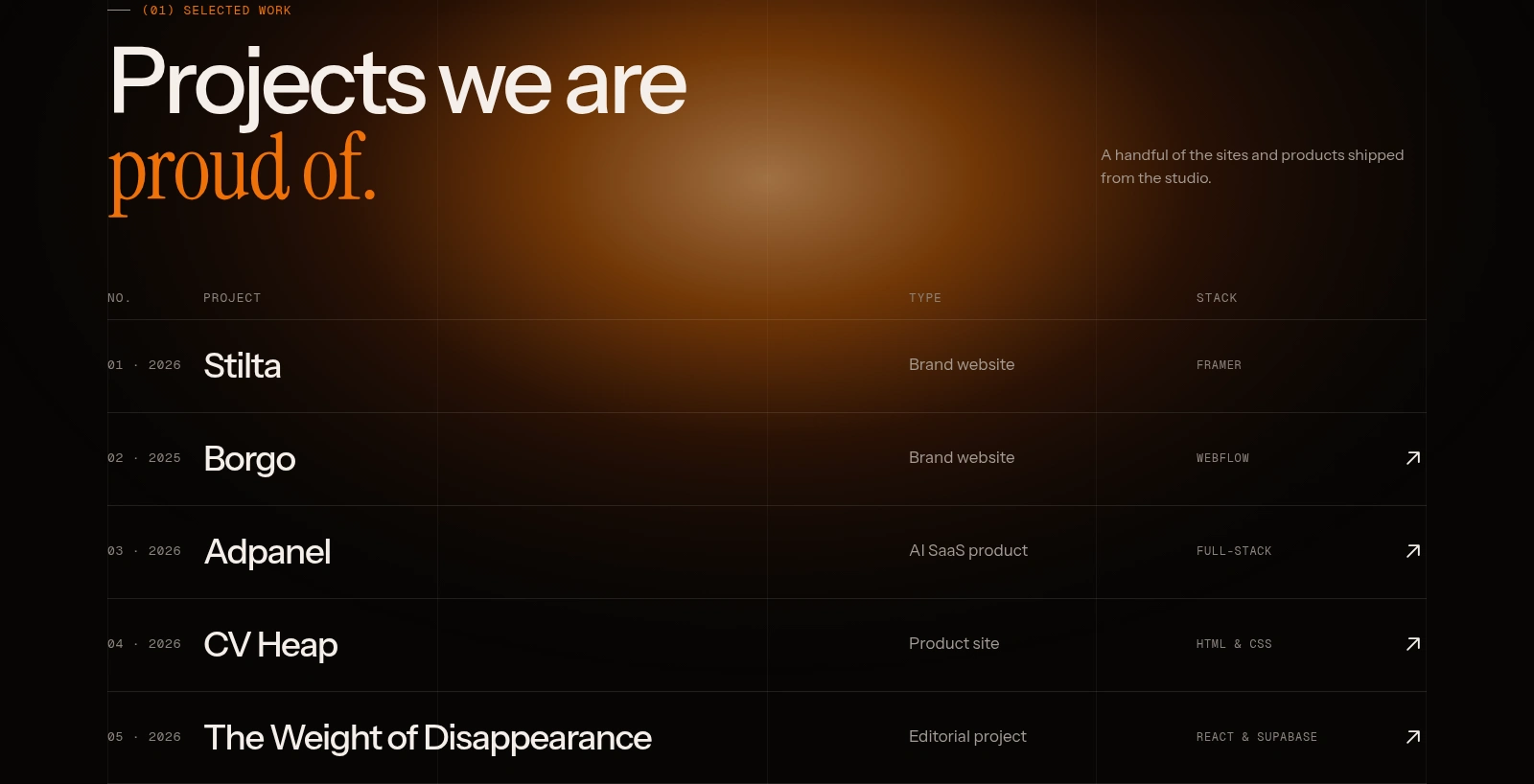
Five projects, one structure
Four of these rows open a case study rather than an external link. They are
rows in a data file, not hand-built pages, so a new project is a new entry and
the listing, the sitemap and the share previews follow on their own. The fifth
has no case study written yet, so its row stays quiet instead of pointing at a
page that does not exist.
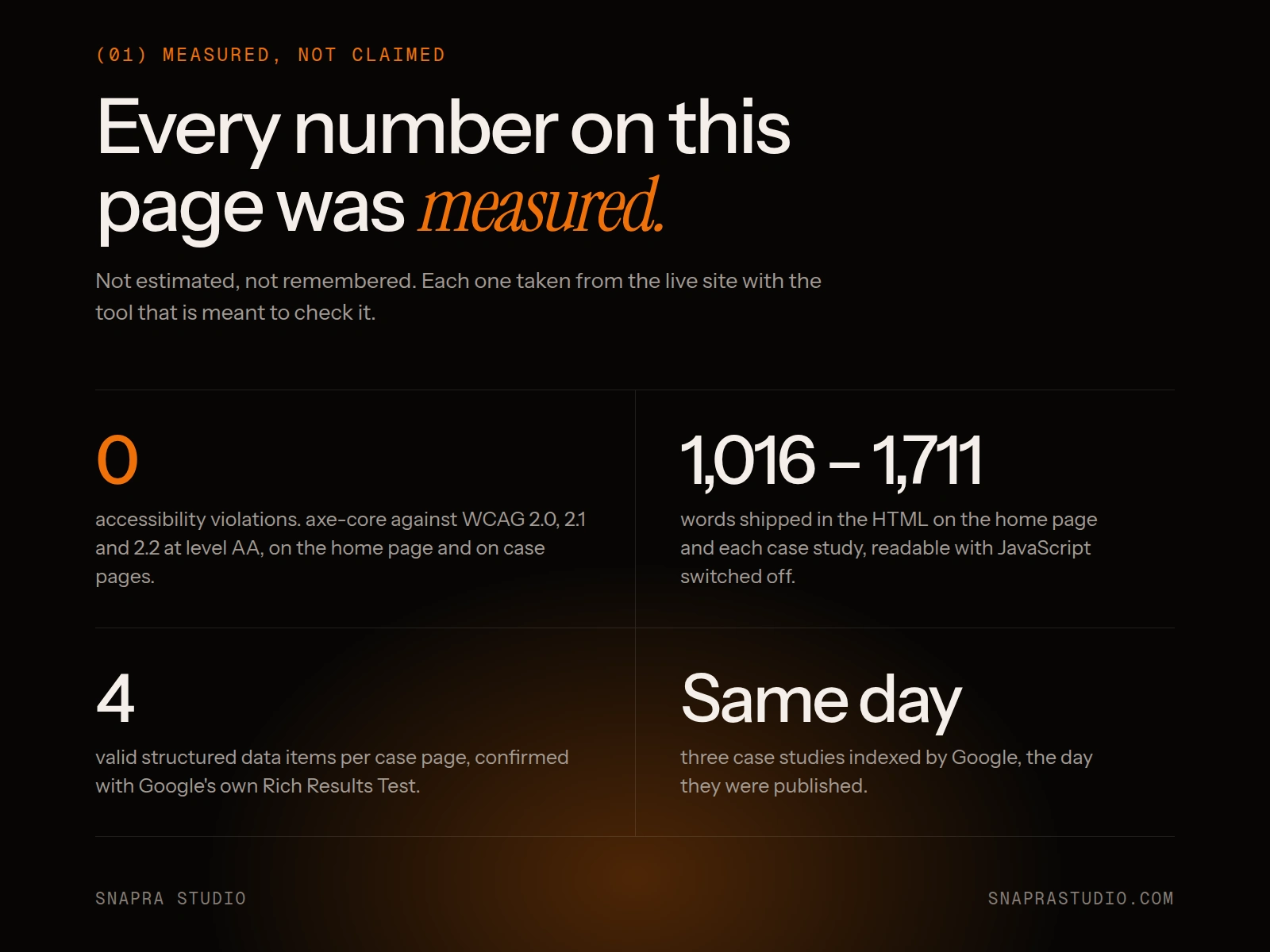
What the audit found
Measuring only counts if you report what it turns up.
The share preview was invisible. Case links carried a .webp image, which
LinkedIn does not render, so every link shared there arrived with no picture.
Now a 1200x630 JPEG per case, with width and height declared.
An unfinished case study was reachable from the home page. Search engines
ignored it, but a visitor clicking through saw an unwritten page.
An image description described a different image, which is what Google and a
screen reader were being told.
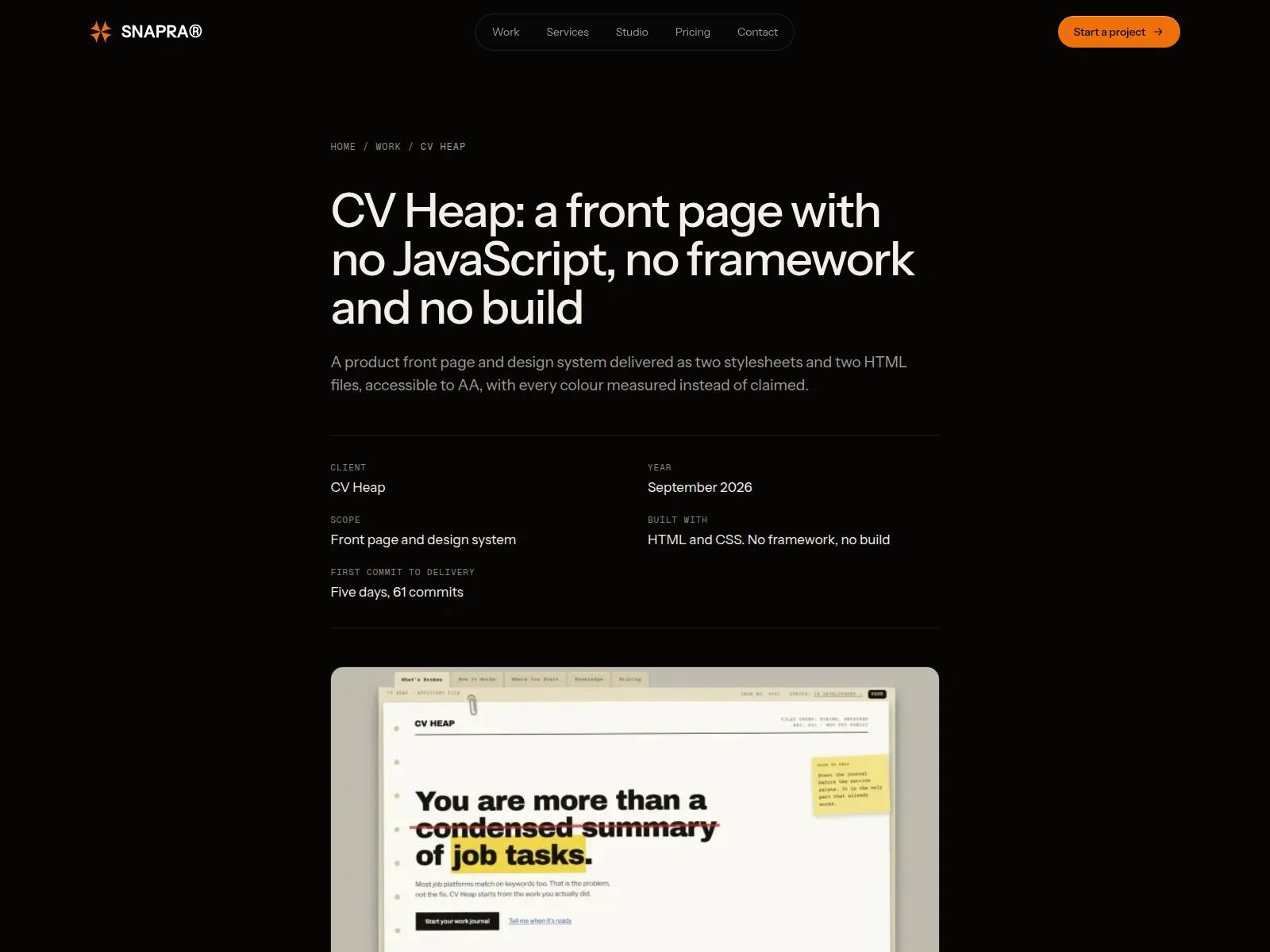
Four case studies, written from the repository
Not from memory. Commit counts, measured contrast ratios, the bugs where the
first hypothesis was wrong. Reviewing one against its own repo turned up three
statements that had drifted from the truth. All three came off the site the
same day.
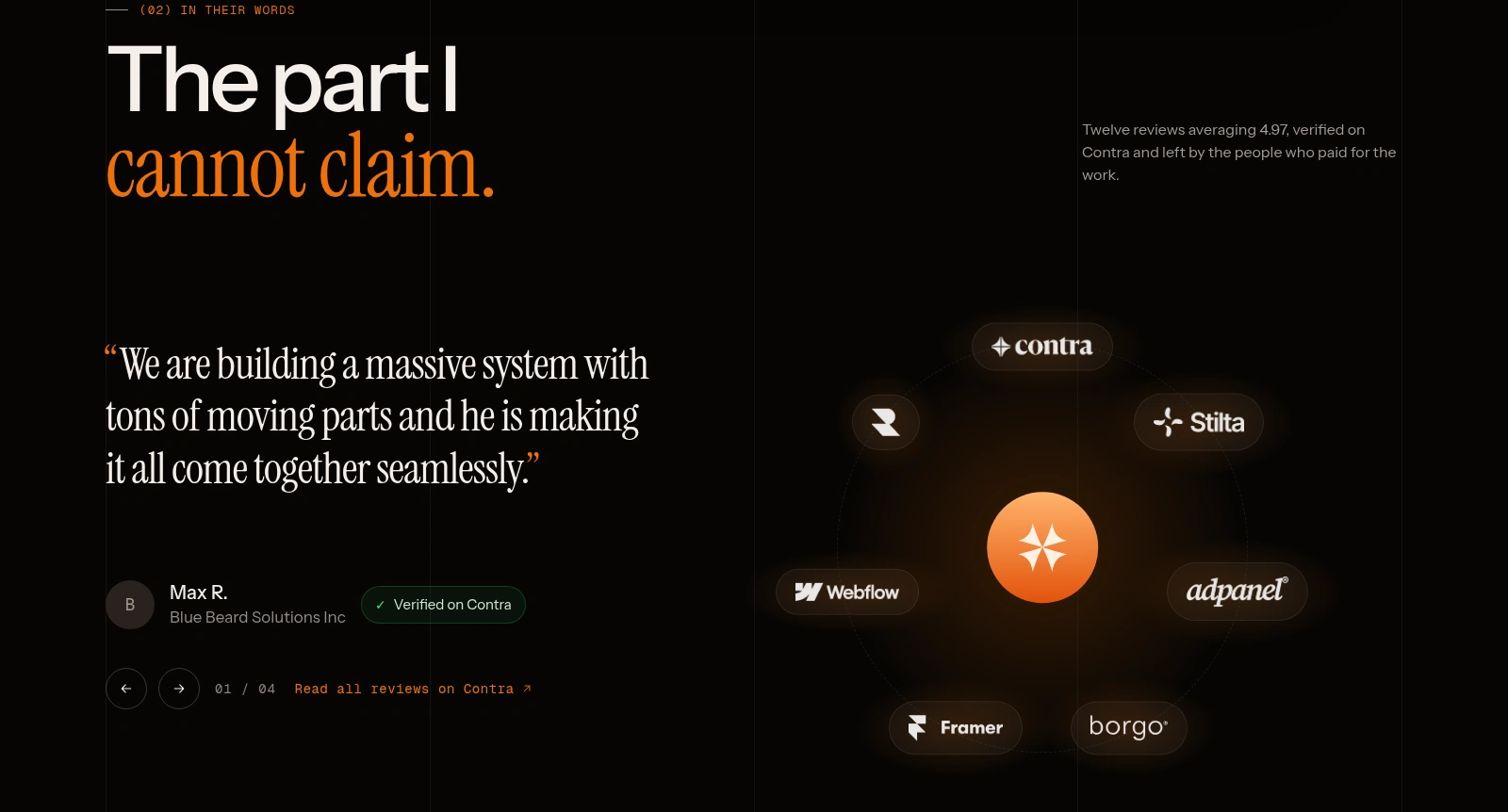
The part I cannot claim
One section is not mine: twelve client reviews averaging 4.97, verified on
Contra and written by the people who paid for the work. Everything else on the
page I can defend with a measurement. That part I can only show.

Like this project
Posted Sep 22, 2026
My own studio site, then audited against its own claims: zero accessibility violations, the full text readable without JavaScript, case pages indexed in a day.
Likes
2
Views
26