Freelancers using SEO PowerSuiteFreelancers using SEO PowerSuite
We Don’t just rank Websites — we build Digital Foundations
8
Followers
We Don’t just rank Websites — we build Digital Foundations
Cover image for The best SEO company in
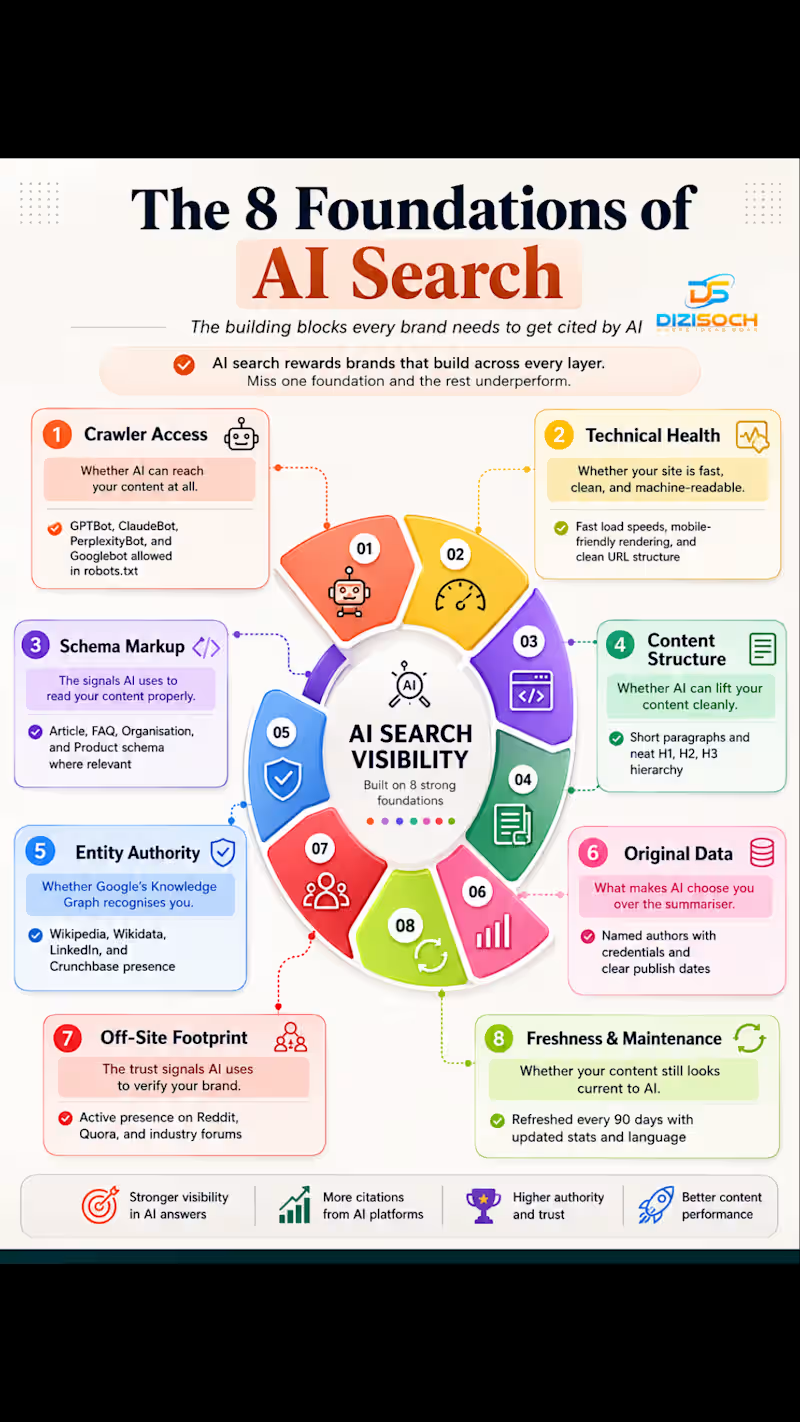
The best SEO company in NYC won’t win AI search with backlinks alone. AI visibility is built on 8 foundations and missing just one can weaken everything above it. Here’s what matters: Crawler Access If AI crawlers can’t reach your content, they can’t cite it. Technical Health Fast, clean, mobile-friendly pages make your content easier for machines to process. Schema Markup Structured data helps AI understand what your pages, products, organizations, and content actually represent. Content Structure Clear H1s, H2s, H3s, short paragraphs, and answer-first sections make information easier to extract. Entity Authority AI needs to understand that your brand is a real, recognizable entity — not just another website. Original Data Unique research, statistics, expert insights, and named authors give AI something worth citing. Off-Site Footprint Reddit, Quora, industry publications, reviews, and other third-party sources can strengthen the signals around your brand. Freshness & Maintenance Outdated content loses relevance. Your strongest pages need regular updates with current information. The problem is that most businesses optimize only one or two of these. They improve rankings. Publish more blogs. Build backlinks. Then wonder why their competitors appear in ChatGPT, Gemini, or Perplexity. The reality? AI search rewards the entire ecosystem around your brand. That means SEO is no longer just: Keywords → Rankings → Traffic. It is becoming: Technical foundation → Structured content → Entity authority → Original information → Off-site trust → AI citations → Business visibility. That’s the shift a best digital marketing company in NYC needs to understand. You don't need to “hack” AI search. You need to build a brand that AI can crawl, understand, verify, trust, and cite. Which of these 8 foundations is weakest on your website right now?
0
70
Cover image for The best SEO company in
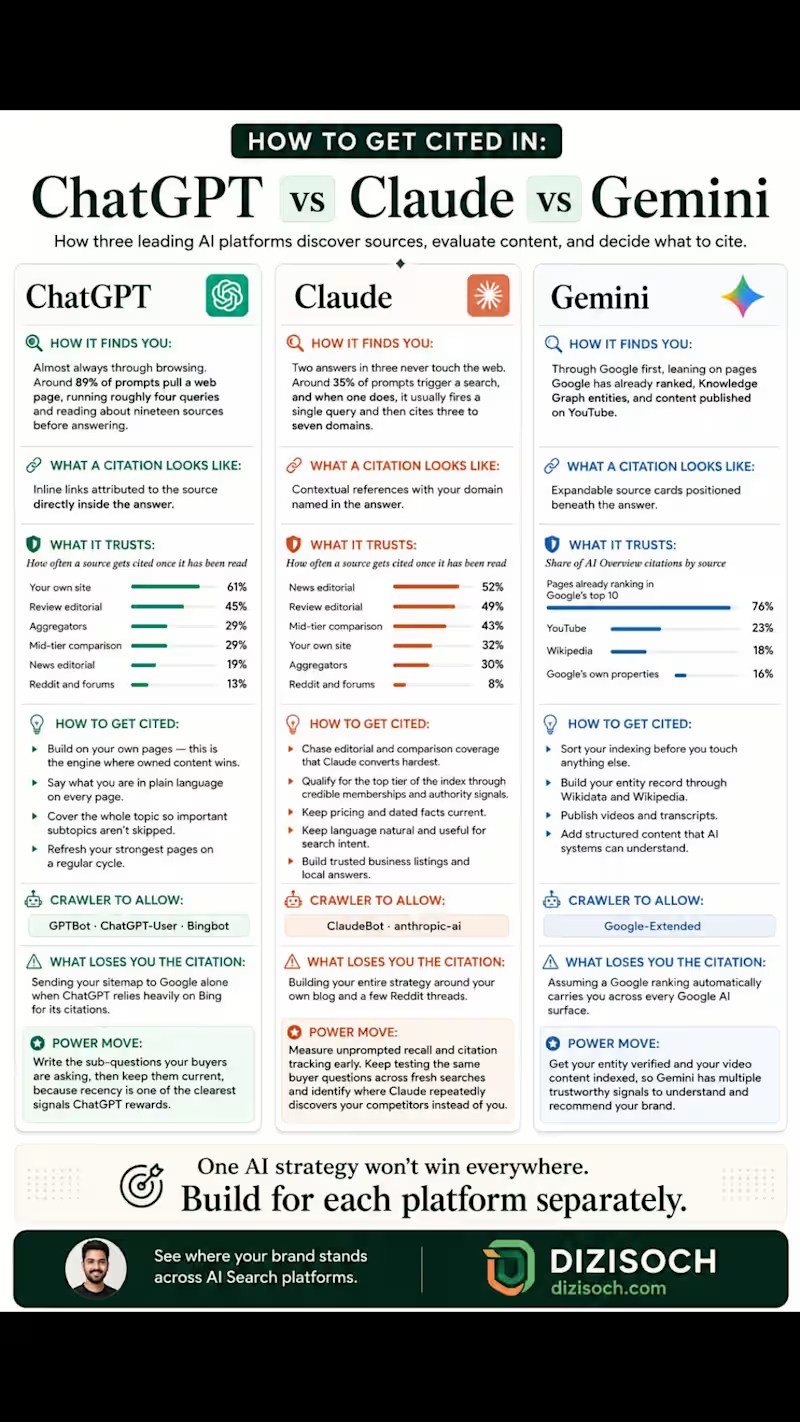
The best SEO company in NYC can’t use one AI SEO strategy and expect ChatGPT, Claude, and Gemini to respond the same way. Here’s the proof: ChatGPT, Claude, and Gemini discover and evaluate sources differently. ChatGPT can rely heavily on web browsing and inline citations. Claude tends to surface contextual references and authoritative editorial sources. Gemini leans heavily on Google’s ecosystem, Knowledge Graph entities, and content already performing in Google. So why are businesses using the same SEO playbook for all three? That’s the problem. AI search isn’t one search engine. Each platform has its own: → Source preferences → Citation format → Trust signals → Crawling behavior → Optimization opportunities For example, optimizing for Gemini means strengthening your Google presence, entity signals, structured content, and video ecosystem. Optimizing for ChatGPT requires making your content easy to discover, understand, and cite. And Claude rewards strong editorial authority, credible comparisons, fresh information, and well-supported content. The biggest mistake? Treating AI visibility like traditional SEO. You can rank well on Google and still be invisible inside ChatGPT. You can get cited by ChatGPT and barely appear in Gemini. And your competitor can dominate one platform while you're focusing entirely on another. The solution is simple: Stop building one AI strategy. Build platform-specific visibility. Create content around real buyer questions. Build strong entities and third-party authority. Keep information fresh. Make your content easy to extract and understand. Publish across the ecosystems each AI platform trusts. Then track where your brand is actually being mentioned and cited. That’s what modern SEO looks like. And that’s what a best digital marketing company in NYC should be thinking about beyond traditional Google rankings. One AI strategy won’t win everywhere. Build for each platform separately. Which AI platform currently sends you the most visibility: ChatGPT, Claude, or Gemini? #dizisoch
1
68
Cover image for I Stopped Using Claude Like
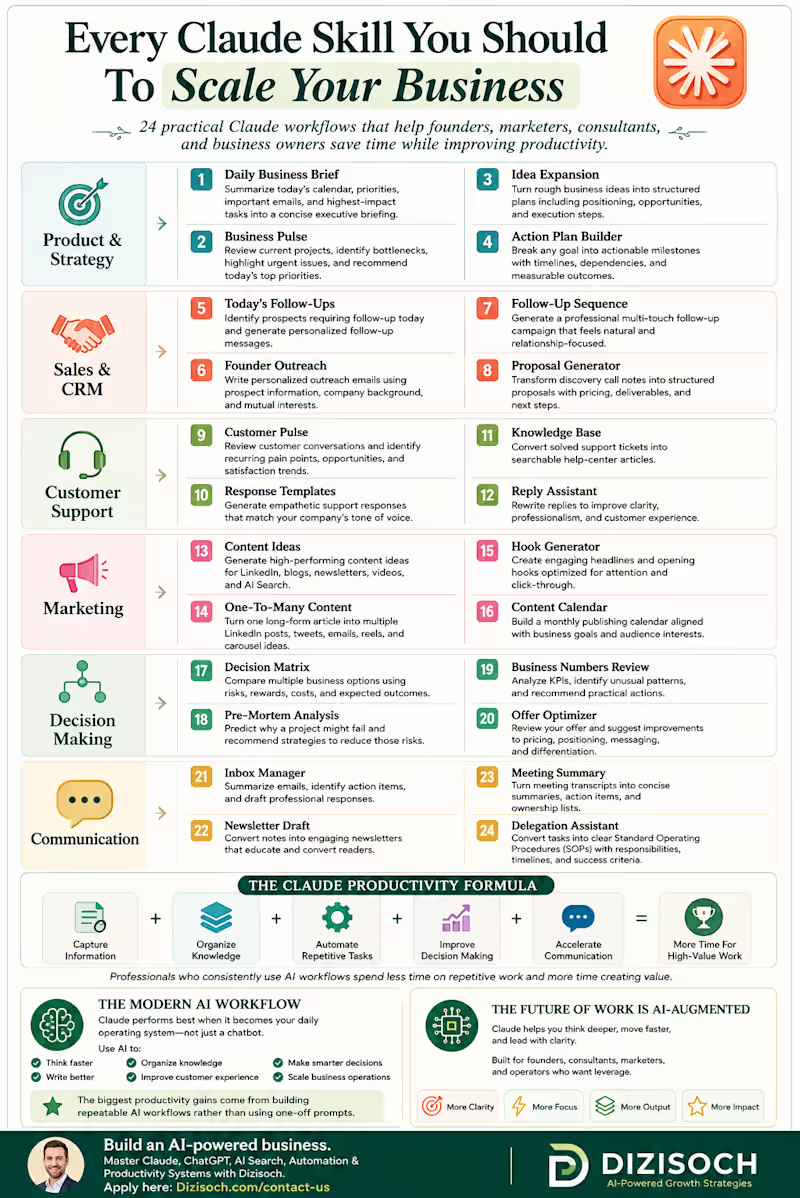
I Stopped Using Claude Like A Chatbot. Everything Changed. For months, I thought AI was just another productivity tool. I was wrong. Most people open Claude... Ask one question... Get one answer... Close the tab. Then they wonder why AI isn't changing their business. A few weeks ago, I stopped treating Claude like a chatbot. I started treating it like an employee. One that could think, organize, write, analyze, brainstorm, summarize, and even challenge my ideas. That single mindset shift completely changed how I work. Now Claude helps me: Plan my day before I start working. Write proposals in minutes. Turn meeting notes into action plans. Generate LinkedIn content. Analyze business decisions. Reply to clients faster. Build SOPs. Even spot bottlenecks I would've missed. The biggest mistake businesses make with AI isn't choosing the wrong tool. It's asking AI random questions instead of building repeatable workflows. That's why some teams save 10 hours a week... While others barely save 10 minutes. The businesses growing the fastest in 2026 aren't replacing people with AI. They're eliminating repetitive work so people can focus on decisions that actually grow the business. Whether you're running a startup, searching for the best digital marketing company in NYC, working with the best SEO company in NYC, or simply trying to scale smarter, AI workflows are quickly becoming a competitive advantage—not a nice-to-have. The infographic above contains 24 Claude workflows I believe every founder, marketer, consultant, and business owner should steal. You don't need all 24. Start with one. Turn it into a habit. Then build another. Small systems compound into massive productivity. The businesses that win in the next five years won't necessarily have the biggest teams. They'll have the smartest systems. What AI workflow has saved you the most time? I'd love to add it to my list.
0
26
Cover image for Myles Garrett Just Proved Why
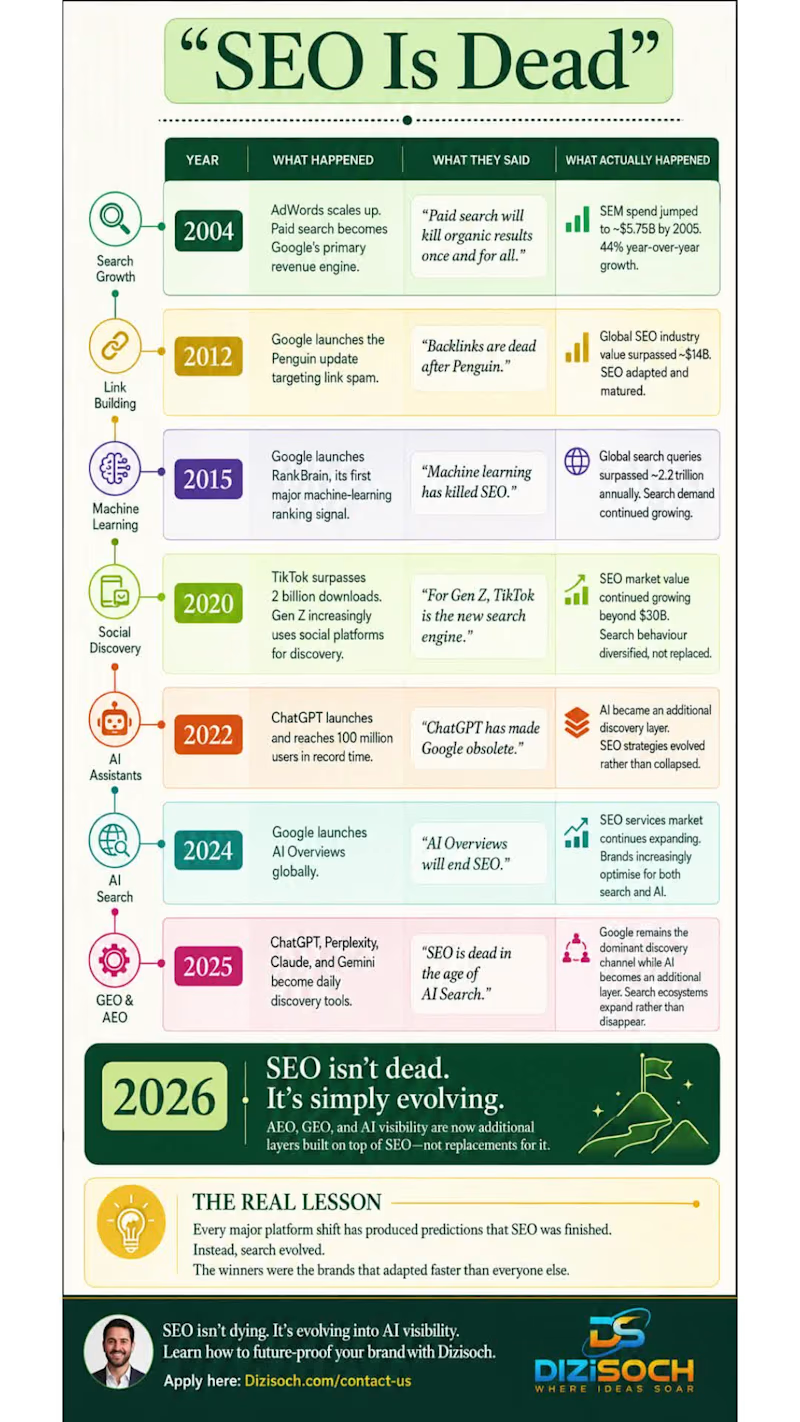
Myles Garrett Just Proved Why SEO Will Never Die. Everyone said Cleveland should trade him. Everyone had a theory. Everyone had a prediction. Yet today, Myles Garrett is still one of the biggest names people are searching for. The lesson? The platforms changed. The attention didn't. And that's exactly what's happening with SEO. For 20 years, people have predicted its death: 2004: "Paid ads will kill organic search." 2012: "Penguin killed link building." 2015: "Machine learning killed SEO." 2020: "TikTok replaced Google." 2022: "ChatGPT made Google obsolete." 2024: "AI Overviews will end SEO." 2025: "AI Search killed SEO." Yet here we are. Search traffic is still growing. Businesses are still competing for visibility. And customers are still looking for answers. The problem is that most marketers are asking the wrong question. Instead of asking: "Is SEO dead?" They should be asking: "Where is search happening now?" Because search isn't disappearing. It's expanding. Google. ChatGPT. Perplexity. Claude. Gemini. AI Overviews. Reddit. YouTube. Search is no longer one platform. It's an ecosystem. And that's where most businesses are falling behind. They're optimizing for rankings. While their competitors are optimizing for visibility everywhere. The brands winning today understand that SEO is no longer just SEO. It's: → SEO for Google → AEO for answer engines → GEO for AI citations → Brand authority for trust → Content structured for machine retrieval The solution isn't abandoning SEO. It's evolving it. The companies that dominate the next decade won't be the ones asking whether SEO is dead. They'll be the ones building visibility across every discovery channel their customers use. That's why the smartest brands are already investing in AI visibility, GEO, AEO, and entity authority alongside traditional SEO. At Dizisoch, we've been helping businesses prepare for exactly this shift. Because the future belongs to brands that are discoverable everywhere. Not just on Google. If you're looking for the best SEO company in NYC or the best digital marketing company in NYC, stop asking who's ranking today. Start asking who's preparing for where search is going tomorrow. Because that's where the real opportunity is.
0
19
Small-Business Website Builder | RVW Systems

1x
Hired
5.0
Rating
12
Followers
Small-Business Website Builder | RVW Systems
Cover image for Sometimes your entire marketing strategy
Sometimes your entire marketing strategy can fit on one sign. LIQUOR. WEED. BEER. ICE. 😂 Message received. I passed this billboard and had to take a picture because, as ridiculous as it looks, there’s actually a pretty good business lesson hiding in it. This business probably doesn’t need a 14-step nurture sequence explaining what they sell. They don’t need an AI chatbot educating customers about their value proposition. They may not need an elaborate content strategy or a beautifully engineered sales funnel. They need people driving by to know: “Yep. We have that.” And apparently they decided subtlety was optional. But here’s the important part: That strategy works for their business. It probably wouldn’t work for yours. A local convenience-driven retailer, a roofing company, a consultant, a SaaS company, an e-commerce brand, and a $20,000 B2B service should not have the same marketing system. Yet businesses constantly get sold the same formula: “Post more content.” “Run Facebook ads.” “Build a funnel.” “Add AI.” “Automate everything.” Maybe. Or maybe you just need a giant sign that says WEED. The point is that good marketing starts by understanding how your customer actually buys. Where do they discover you? What makes them stop? What information do they need before they trust you? How long does the decision take? And what friction exists between “I’m interested” and “take my money”? Build the system around those answers—not around whatever marketing tactic happens to be trending this month. Sometimes the right solution is a sophisticated combination of websites, CRM, automation, AI, content, lead nurturing, and analytics. Sometimes it’s four words on a billboard. Knowing the difference is the strategy. And whoever designed this one? They definitely understood the assignment. 😂 What’s the simplest marketing strategy you’ve ever seen that actually worked?
1
2
136
Cover image for I'm currently designing an AI-assisted
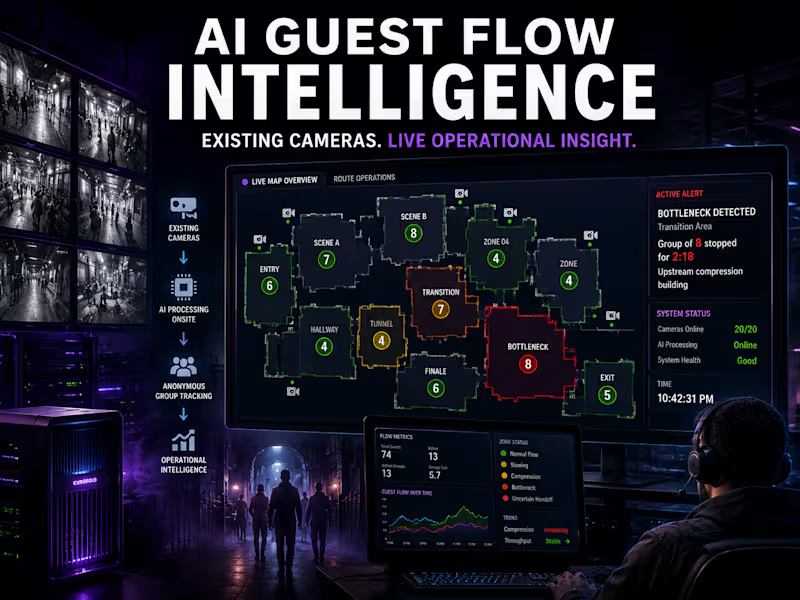
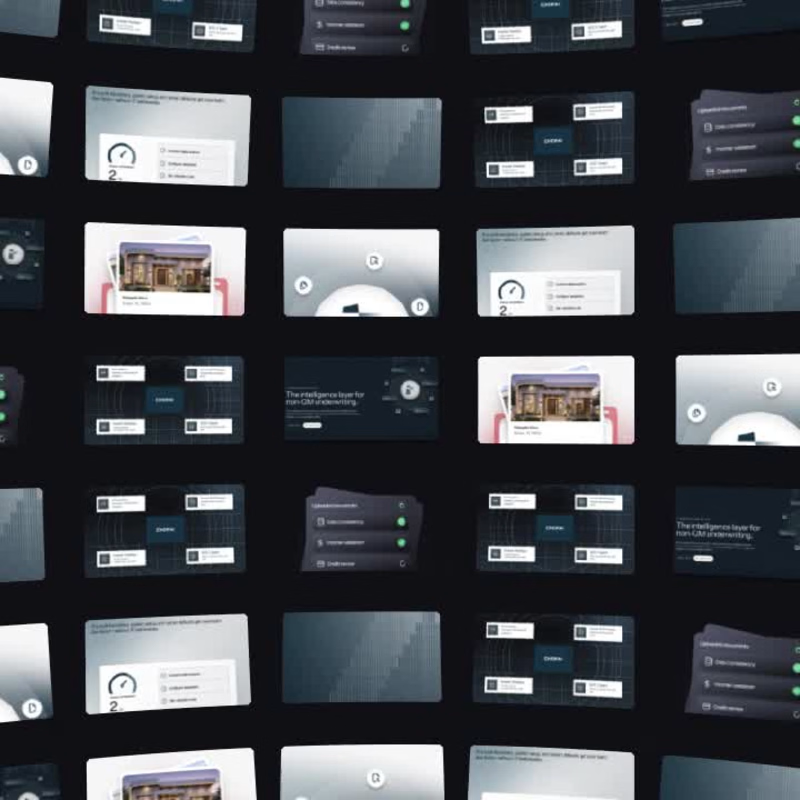
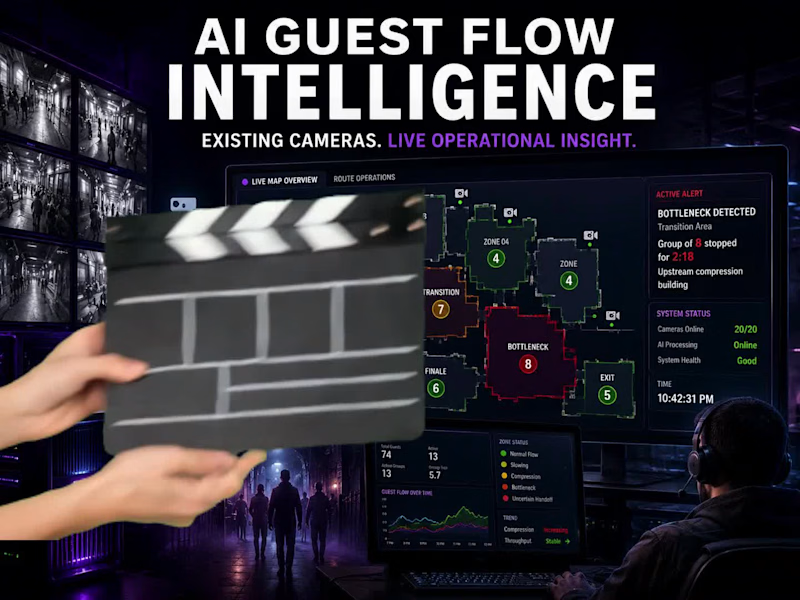
I'm currently designing an AI-assisted guest-flow intelligence system for a confidential large-scale immersive entertainment venue. The venue already has an extensive hardwired camera network. The goal is not to replace it. It's to turn selected camera feeds into a new operational intelligence layer. System Architecture The proposed system uses a dedicated onsite NVIDIA-powered AI server to: Detect guests anonymously without facial recognition Associate guests into temporary operational groups Display numbered group markers on a live floor map Measure dwell time, occupancy, pacing, and group gaps Identify developing slowdowns, compression, and bottlenecks Monitor participating camera feeds Generate end-of-shift operational reports Two Complementary Interfaces Live Map Overview A command-center display showing where anonymous guest groups are located, how many people each marker represents, and where congestion is developing. Route Operations Dashboard A simplified dashboard built for fast decisions, tablets, and mobile viewing. It shows the active problem, its severity, and the recommended response. The Hard Engineering Problem The system is designed around the venue's existing cameras and DVRs, using controlled read-only video streams and local processing. All operational video analysis and event data remain onsite. The hardest part is not creating a beautiful dashboard. It is engineering reliable tracking through darkness, fog, strobes, costumes, occlusion, and non-overlapping camera views while honestly displaying uncertainty when a handoff cannot be confirmed. Current Work Technical architecture Computer-vision validation planning Onsite server design (custom NVIDIA build) Camera and zone mapping Route-aware group handoff logic Event database design Live dashboard prototyping Acceptance testing and deployment planning The Approach This is the kind of project I enjoy most: taking infrastructure a business already owns and transforming it into a system that helps the operation see more, respond faster, and make better decisions. Existing surveillance becomes operational intelligence.
0
121
24/7 AI Automation | Receptionist + Sales + Workflows
13
Followers
24/7 AI Automation | Receptionist + Sales + Workflows
Cover image for Built a full AI consulting
Built a full AI consulting business system — from website to outreach machine. For a boutique AI consulting firm targeting mid-market companies in the US and Europe, I designed and shipped the full technical stack: Production website (React + TypeScript + Express) Not just a landing page. A conversion machine: lazy-loaded routes, per-page SEO metadata, structured data for Google, a sitemap, an OG image for social sharing, and Lighthouse-ready performance fixes (including a Framer Motion LCP bug that was silently tanking search rankings). AI Diagnostic Tool A multi-step lead qualification form that calls Claude under the hood, generates a personalized automation ROI report for each prospect, and delivers it at a unique URL — with prompt injection protection baked in (XML-delimited user inputs, system prompt hardening). Security layer CSP headers, correct trust-proxy config for a Cloudflare + Railway dual-hop topology, hardened email notification logic, and temp file cleanup that survives errors. Production-grade, not tutorial-grade. LinkedIn prospecting engine A Python + Playwright scraper that: Rotates across 10 industry niches Qualifies leads by title, location, and post recency Auto-generates personalized connect requests (≤300 chars) and follow-ups via Anthropic API Exports to Excel, deduplicates across runs Currently targeting Property Management decision-makers in Florida & Texas This is what "full-stack AI consulting infrastructure" actually looks like in practice. What was built A production-ready AI consulting business stack, covering six layers end to end. On the frontend, a React SPA with TypeScript, lazy-loaded routes, per-page SEO metadata via react-helmet-async, and full internationalization in English, Spanish, and Danish. The SEO layer included a sitemap, robots.txt, JSON-LD structured data schemas for Google, a custom OG image at 1200×630px for social sharing, and a performance fix for a Framer Motion bug that was silently blocking the page's Largest Contentful Paint — meaning Google couldn't properly index the main headline. The backend is an Express + TypeScript API deployed on Railway, hardened with Content Security Policy headers, correct trust proxy configuration for a Cloudflare + Railway dual-hop topology, and proper temp file cleanup that survives errors. The AI feature is a multi-step diagnostic form that sends the prospect's business data to Claude, generates a personalized automation ROI report, and delivers it at a unique shareable URL — with prompt injection protection built in so user-submitted text can never hijack the LLM's instructions. On the security side, all user-controlled fields are wrapped in XML delimiters in the prompt, environment variable handling was hardened to eliminate silent fallbacks, and no sensitive data leaks through error paths. Finally, the outreach system is a Python + Playwright scraper that rotates across industry niches, qualifies leads by title, location, and post recency, then uses the Anthropic API to generate personalized LinkedIn connect requests and follow-up messages for each lead — exporting everything to Excel with deduplication across runs. Key technical problems solved LCP blocked by Framer Motion: opacity:0 on H1 prevented Google from indexing the headline. Fixed by rendering plain HTML on first paint. Prompt injection risk: All user-submitted fields wrapped in XML delimiters + system prompt instruction to treat them as data, not commands. Dual-hop proxy misconfiguration: trust proxy: 1 was wrong for a Cloudflare → Railway topology. Corrected to 2 to get real client IPs in logs and rate limiting. Location-aware lead qualification: Scraper's filter system refactored to support per-niche target_locations, enabling pivot from Danish to US markets without touching core logic.
0
90
Cover image for I built my own lead
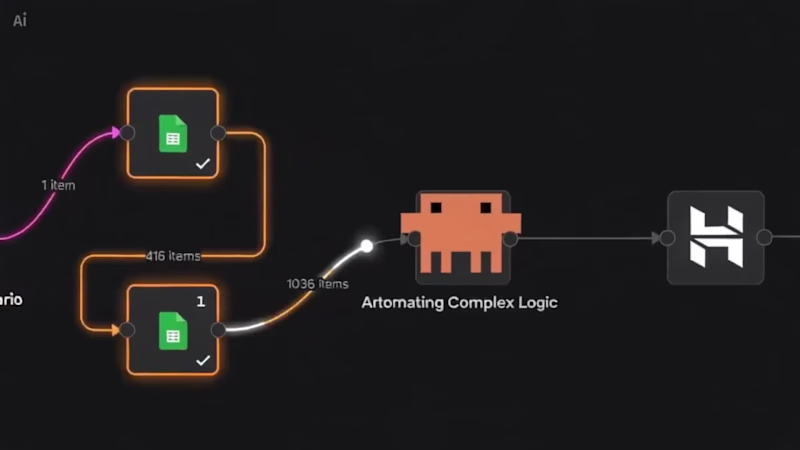
I built my own lead generation machine because I moved to Denmark with zero network. I moved to Denmark. I didn't know anyone. I had no network. And I needed to find companies I could sell automation services to. I could spend hours manually searching for companies, finding emails, cleaning data, and sending messages one by one. Or I could automate the process. So I built a complete lead generation pipeline: → 🐍 Python scraper connected to Denmark's public government CVR database → 📊 Google Sheets synchronization to normalize and deduplicate companies → ✉️ Automated cold email workflow with 10 sector-specific templates using n8n → 📱 Daily Telegram reports with full pipeline statistics → 💼 Assisted LinkedIn outreach: 10 leads per day + a ready-to-send message And these are the numbers: 📈 19,334 leads in the database 📧 71% email coverage 🏭 10 sectors 🔢 34 industry codes ✉️ 25 automated emails per day ♾️ ~534 days of outreach without repeating a lead 💰 $5/month total cost — basically just the VPS. The interesting part isn't the scraper. It's not n8n. It's not Telegram. The interesting part is that a process that used to take hours of manual work can now run almost entirely on its own. And that's exactly what I want to build for companies: Find repetitive processes → design the system → automate them → measure the results. In the video, I break down the entire pipeline, piece by piece. If you're building something similar, let me know which part you'd like me to break down next. 👇 #Automation #AI #LeadGeneration #n8n #Python #ColdEmail #SalesAutomation #B2BAutomation #Denmark #BuildInPublic
1
3
226
Framer expert, product designer, motion in Jitter, Vibe Code
1x
Hired
4.3
Rating
11
Followers
Framer expert, product designer, motion in Jitter, Vibe Code
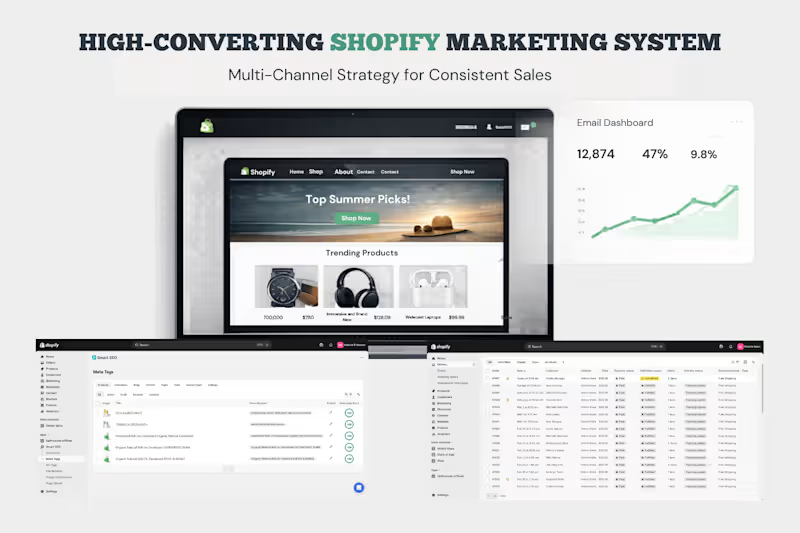
Shopify Store Design | Marketing Systems & AI Automation
8
Followers
Shopify Store Design | Marketing Systems & AI Automation