
EN / ES - We build high converting e-commerces that scale

EN / ES - We build high converting e-commerces that scale


Engaging animations that solve real user problems

Engaging animations that solve real user problems
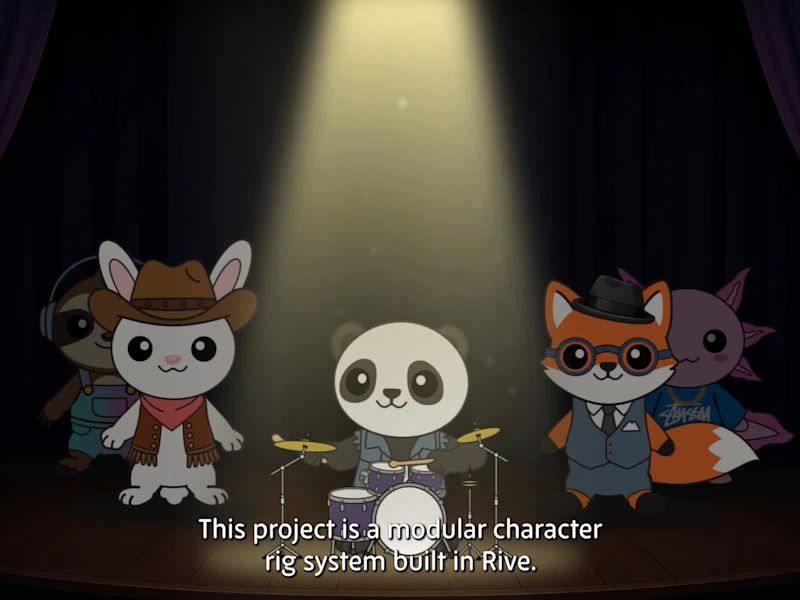

This project brings together UI design, motion, and interaction. I worked on color grading and layout to improve visual clarity, and added microinteractions in Rive to make the experience feel more engaging and responsive.
Some of the main challenges were optimizing a PNG sequence for a 3D interactive glasses element, and designing an intro that captures attention in the first few seconds without relying on heavy effects. I also explored Rive scripting to build a small particular interactive system that responds to user behavior and enhance the overall look of the interface.
Overall, the project reflects an approach where visual design, motion, and interaction are treated as a single system rather than separate layers.
1
4
515

I built an interactive hero landing section entirely in Rive. The project centers on a rigged character that responds in real time to the user’s cursor, turning the hero into an interactive surface rather than a passive animation. Alongside the character, I animated the headings and CTA to create a cohesive motion system that reinforces hierarchy and interaction. This project explores how Rive can be used for hero-level UX, where motion reacts to user input and remains lightweight, scalable, and production-ready.
27
693
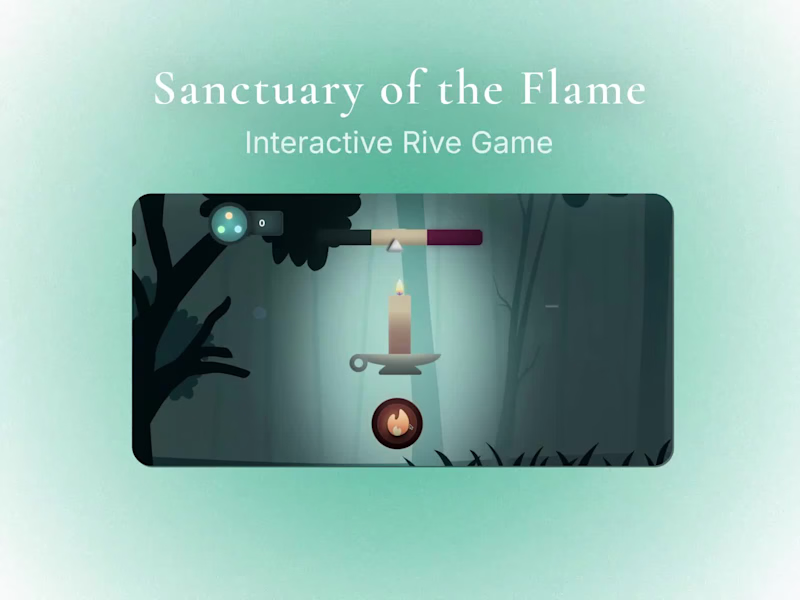
For this @Rive x @Contra HQ Challenge, I wanted to explore an idea that was technically demanding from a data-binding perspective, but still centered around a small story. My goal was for the technical side to become a vehicle—something that supports and amplifies the experience, rather than overshadowing it.
I started with something simple: a candle crossing a dark forest, trying not to be consumed by the shadow.
The entire piece—animation, interaction, and logic—was built inside Rive, and the narrative emerges from how each variable reacts in real time.
I hope you enjoy this little experiment as much as I enjoyed creating it.
6
35
994

Experienced UX/UI Designer & Framer Developer

Experienced UX/UI Designer & Framer Developer
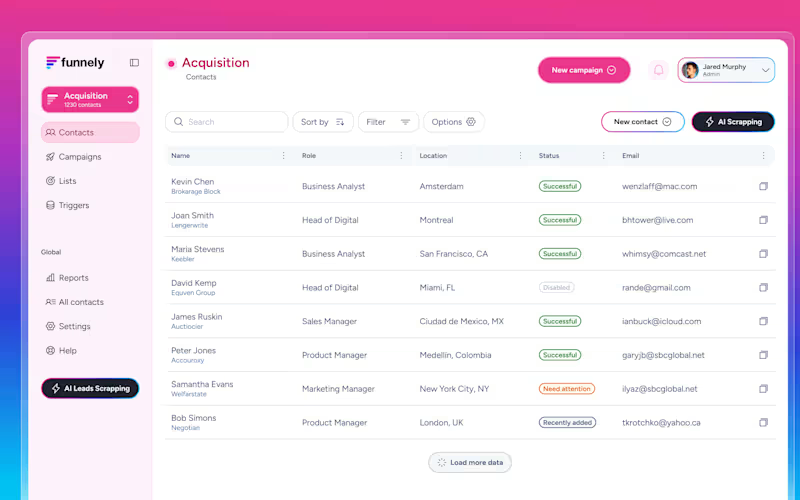
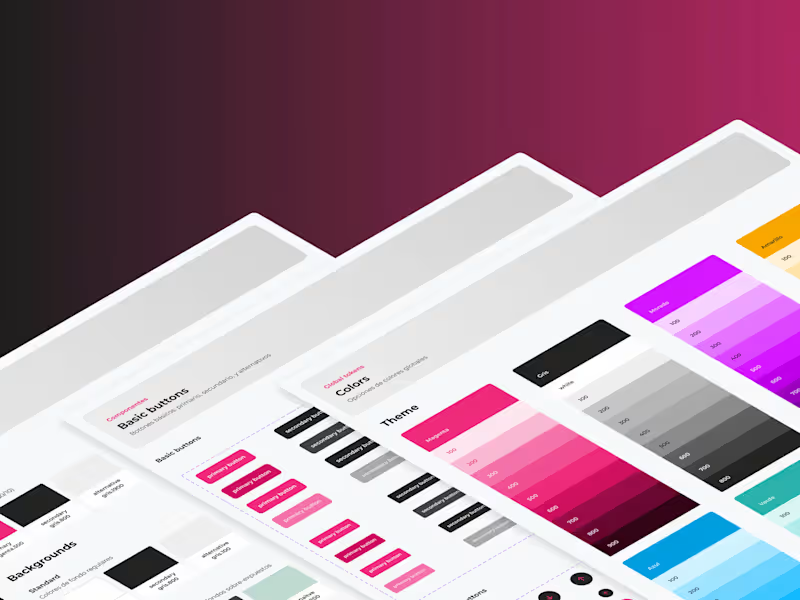

From the first spark to their brightest form.
- $1k+
- Earned
- 11x
- Hired
- 5.0
- Rating
- 43
- Followers
From the first spark to their brightest form.





Product Designer for SaaS, AI & Marketplace Products

Product Designer for SaaS, AI & Marketplace Products
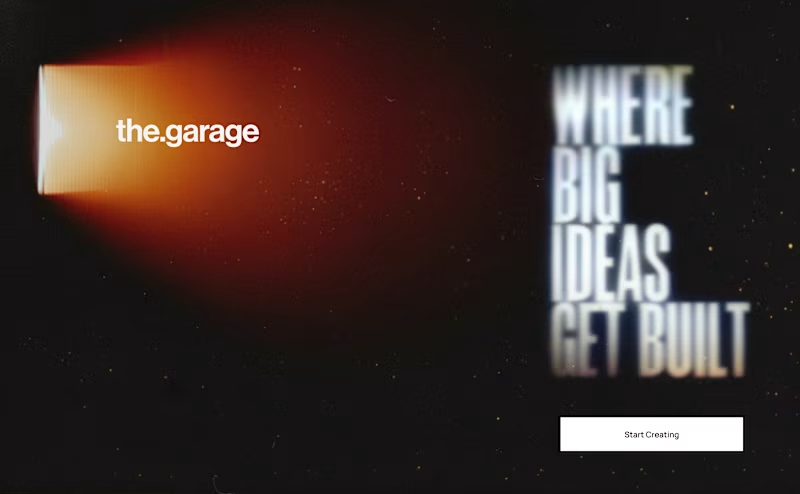
ART, BUSINESS, AND PRODUCT. My passion for designing digital products is all about taking artistic and creative concepts and aligning them with business needs to create products that are complex yet simple, assisted yet human. I wanted to share a collage of a recent product I designed because it reflects that.
Here, I'm trying to evoke the feeling of cosmic dust, like something is about to happen. It's almost like being inside a garage creating something with dust all around you; you get so deep into the process that you get lost in it, and you get to see that those dust particles are actually stars in space because you are creating your own universe.
0
80



Product Designer
Five years in Figma, and now my first design in Framer!
I’m a UX/UI designer taking my first steps with Framer, and this is what I’ve been working on. There’s still a lot to learn, but it’s exciting to see my designs become a working website.
I’m new to Contra too, so I wanted to start by sharing this first project. I’ll keep posting as I practice and improve.
What do you think? I’d love your feedback, and any Framer tips you wish you’d known when you started.
1
4
324

Intuitive UI Designer Solving User Challenges

I make complex systems understandable.

ApplyIQ – AI-Powered Job Application Tracker & Resume Screener
Overview
ApplyIQ is a full-stack web application designed to help job seekers track their applications and optimize their resumes using AI. Users can manage their interview pipeline via an intuitive dashboard, log specific job details, and simulate an automated applicant tracking system (ATS) screening process. By processing uploaded resumes against job descriptions, the app delivers a comprehensive match score, breakdowns of core strengths, and actionable alignment feedback before submission.
My Role & Execution
As the sole Product Designer and Full-Stack Engineer, I took this project from initial UX ideation and high-fidelity interface design to production-ready code.
Design & UX: Engineered a clean, data-dense layout focusing on clarity. I prioritized the visual breakdown of metrics, application funnel status, and information extraction review steps to ensure a seamless multi-step user flow.
AI Integration: Connected the backend to the Groq API to perform high-speed resume analysis, extracting critical text fields, scoring core skill matches, and generating constructive feedback dynamically.
Payments & Monetization: Implemented Stripe API to manage subscription tiers, building out secure payment rails and conversion logic for the premium tier.
Tech Stack & Reliability: Built the core application using Next.js for optimal speed and routing, styled with Tailwind CSS. To ensure high platform stability, I implemented comprehensive automated end-to-end testing utilizing Playwright and component verification with Vitest.
0
154
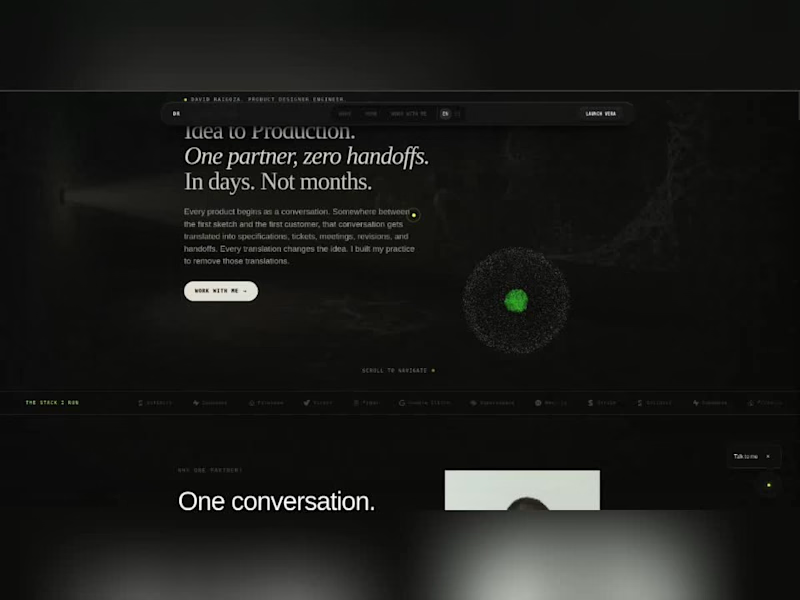
Project Title: Interactive Next.js Portfolio ft. VERA
Role: Product Designer & Builder
Project Overview Designed and developed a custom, high-performance portfolio site using Next.js, featuring Vera—an AI assistant designed to handle site navigation. Built using ChatGPT and engineered with visual assets from Adobe Firefly, Vera transforms standard portfolio browsing into an interactive experience. The site also acts as a hub that automatically routes updates directly to Bluesky.
Key Highlights
Next.js Architecture: A fast, responsive frontend designed for seamless case study exploration.
AI Navigation (Vera): Co-created with ChatGPT and styled with Adobe Firefly to guide visitors dynamically.
Bluesky Integration: Automatically cross-posts portfolio updates directly to social feeds.
Explore the Project Live: 👉 Live Portfolio: davidraigoza.design (http://davidraigoza.design) (http://davidraigoza.design/)👉 Updates & Feed: https://bsky.app/profile/frustramatic.bsky.social
0
189

QIE Bank
Engineering trust for decentralized lending.
Traditional banks manage risk by restricting access to credit. Decentralized finance removes many of those barriers, but often replaces them with technical complexity and lending models that demand excessive collateral.
QIE Bank (https://qie-bank.vercel.app/) explores a different approach: combining modern banking patterns with Web3 infrastructure to create a lending experience that feels familiar while engineering risk behind the scenes.
My Role
I led the project end to end, from product strategy to implementation.
Product Architecture
Smart Contract Development
UX Architecture
UI Design
Design System
Frontend Development
The Challenge
Designing a decentralized lending platform isn't just a technical problem. Users need to understand their financial position, borrowing power, and protocol health before they're willing to trust the product.
The challenge was to simplify complex blockchain mechanics without hiding the information users need to make confident financial decisions.
The Solution
I designed and built a lending platform centered around transparency and risk management.
Behind the interface, the platform combines:
Secure asset vaults
On-chain identity
Stablecoin infrastructure
Credit scoring
Tokenized bad debt to improve protocol risk management
Rather than exposing users to protocol complexity, the experience presents these systems through familiar banking interactions and clear financial indicators.
Landing Page Strategy
The landing page is designed to reduce friction from the very first interaction.
Instead of leading with wallets, protocols, or blockchain terminology, it focuses on familiar financial concepts, product benefits, and transparent lending mechanics. The goal is to help users understand the value before asking them to understand the technology.
Designed For
QIE Bank is designed for users who want the benefits of decentralized finance without the steep learning curve.
The experience targets:
Crypto users looking for a familiar banking experience
Investors seeking transparent yield opportunities
Borrowers interested in flexible lending options
Privacy-conscious users who value self-custody and on-chain identity
Dashboard Experience
The dashboard transforms complex protocol data into actionable financial insights.
Borrowing power, credit score, vault balances, loan health, and lending activity are surfaced through a clear information hierarchy, allowing users to evaluate risk and make informed decisions without navigating blockchain-specific complexity.
Every screen is designed to reinforce confidence, clarity, and trust while interacting with decentralized financial products.
0
251
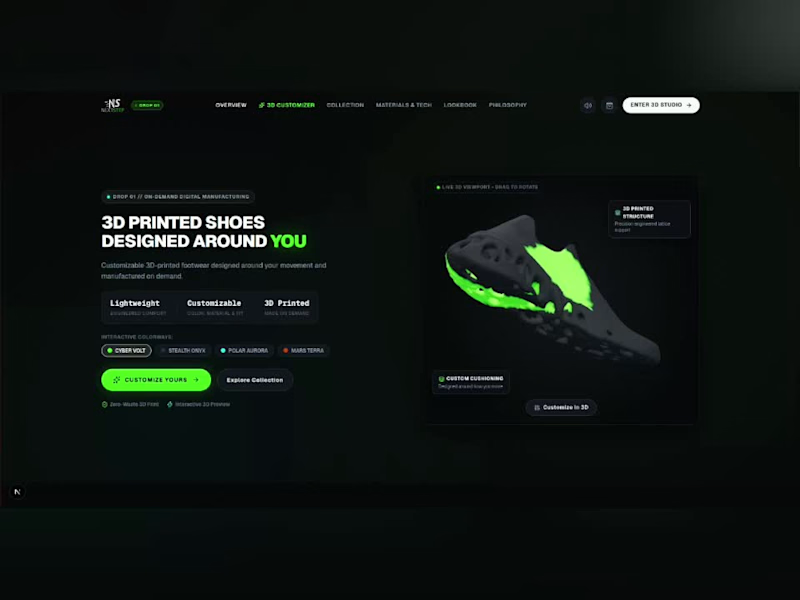
NextStep Experience From 3D Printed Shoe to Interactive 3D Product
A 3D-printed shoe concept that started with a childhood memory and became an interactive 3D website.
I wanted to be a shoemaker when I was a kid.
There was a guy in a park near my house who fixed shoe soles, and I thought that was really cool. Years later, while thinking about what to build for my portfolio, I remembered him and decided to build a shoe.
I started by building the shoe in Blender. I spent a lot of time working on the mesh and trying to build a 3D-printed product from scratch. Then I experimented with AI to rethink the geometry and make the shoe lighter.
After that, I built the brand and a static landing page in Figma. The project sat for a while until I came back to it and decided I wanted to make the shoe interactive.
I needed a 3D model that I could actually use on the web, so I experimented with several 2D-to-3D tools. Some produced incredible results but wouldn't let me download the model. Others were simpler but gave me something I could actually work with.
Once I had the model, I brought it into Three.js and used Antigravity to build the interactive website around it.
Now you can play with the shoe in the 3D editor and switch between different colors.
This started with a memory from when I was a kid ended up becoming a shoe, a prototype, and eventually an interactive website.
Explore the interactive prototype → (https://davidraigoza.design/work/next-step)
1
94