Freelance AI Agent Designers in IndiaFreelance AI Agent Designers in India
Product Designer • Mobile & Web • Motion Design • AI • SaaS
$50k+
Earned
17x
Hired
5.0
Rating
1.1K
Followers
Product Designer • Mobile & Web • Motion Design • AI • SaaS
Product studio for startups, apps, dashboards, and AI.
$25k+
Earned
8x
Hired
5.0
Rating
55
Followers
Product studio for startups, apps, dashboards, and AI.
Building AI-Powered, Web & Mobile Applications | Full-Stack
5.0
Rating
38
Followers
Building AI-Powered, Web & Mobile Applications | Full-Stack
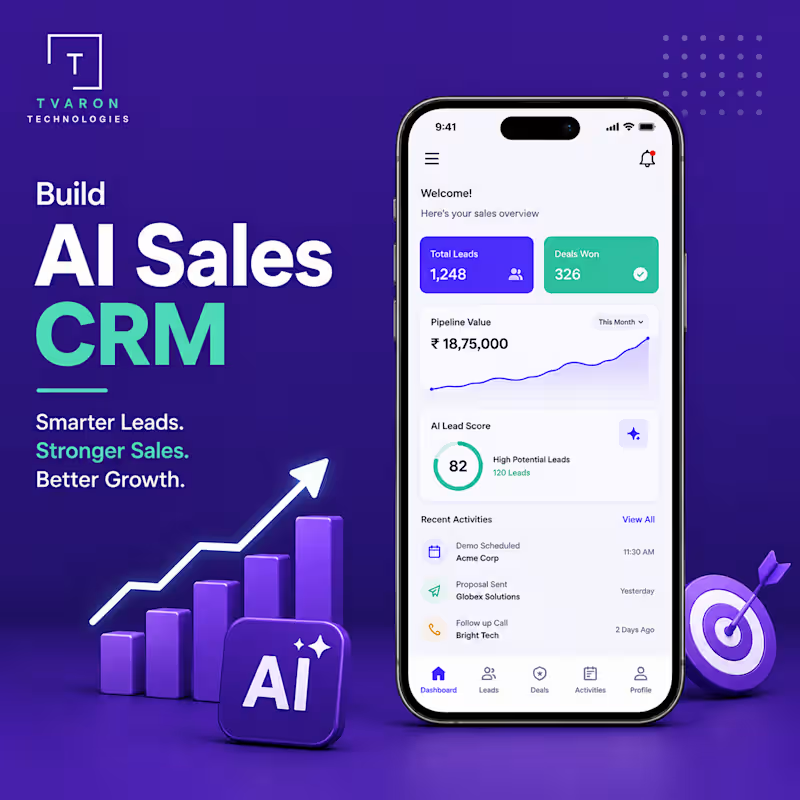
UX & Service Designer crafting human-centered systems
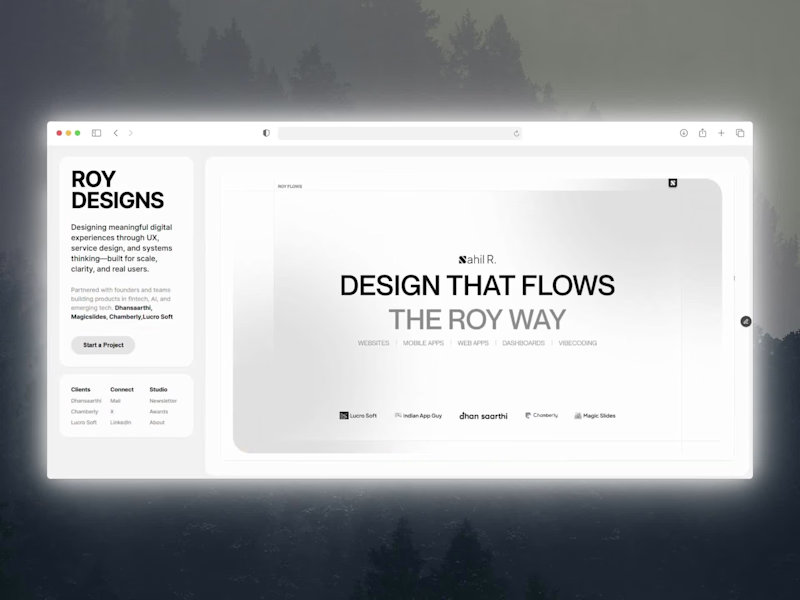
9
Followers
UX & Service Designer crafting human-centered systems
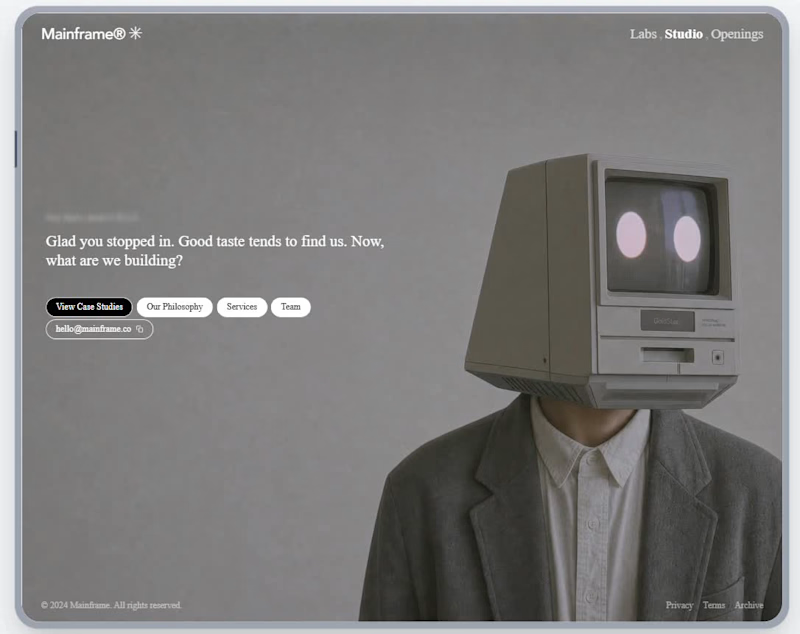
UI/UX Designer • No-code Builder • AI Architect
$1k+
Earned
64
Followers
UI/UX Designer • No-code Builder • AI Architect
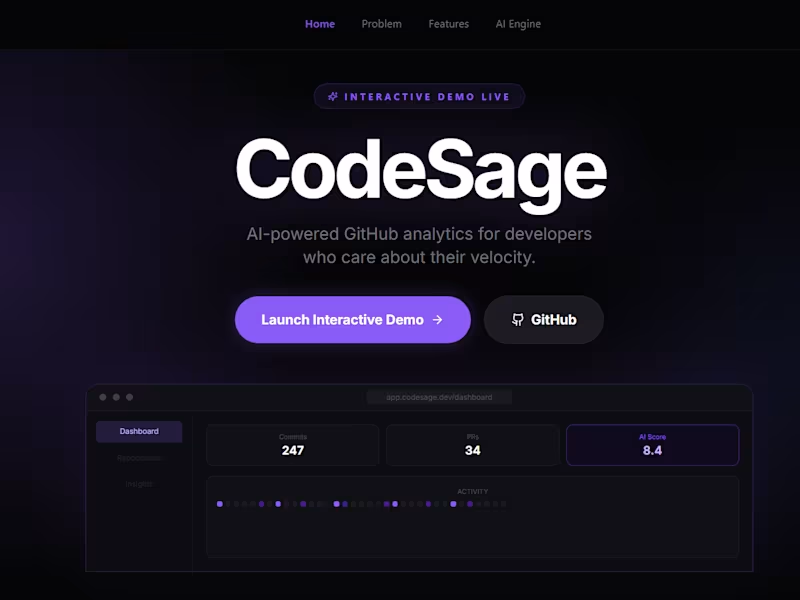
AI Systems & Security Engineer | AI Agents, RAG & Automation
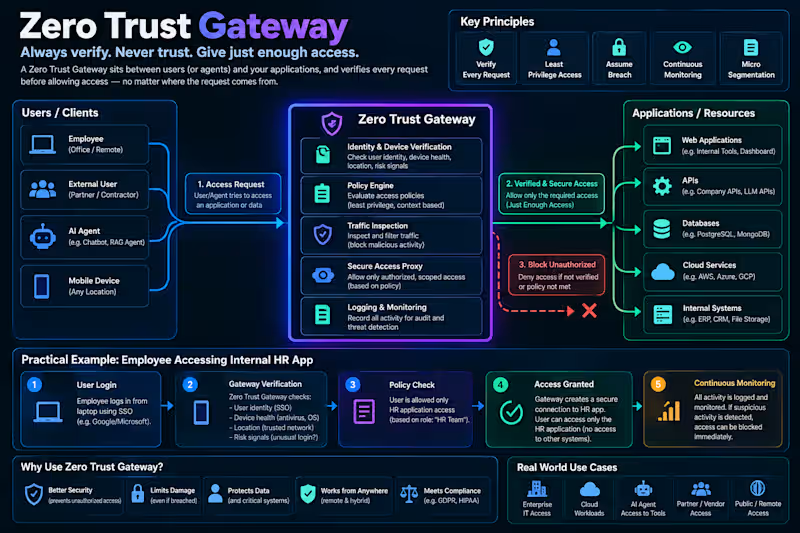
Cover image for Case Study 2: Zero Trust
Case Study 2: Zero Trust Gateway Cybersecurity Zero Trust Architecture Project: Zero Trust Gateway — Identity-Aware Access Control and Continuous Verification Problem Traditional network security often relies on trusted internal networks. However, remote access, compromised credentials and vulnerable devices can expose sensitive applications and data. Proposed Solution A Zero Trust Gateway that verifies every access request using identity, device health, contextual information and access policies before granting access to protected resources. System Architecture Access request: An employee, external user or AI agent requests access. Identity verification: Authenticate the user's identity through an identity provider. Device verification: Check device security status and compliance. Policy engine: Evaluate access permissions, location and risk signals. Access control: Grant limited access or deny the request. Continuous monitoring: Log activity and detect suspicious behavior. Technology Stack Python and FastAPI OAuth 2.0 / OpenID Connect PostgreSQL Redis Docker Policy-based access control Key Features Identity-based authentication Least-privilege access Device posture verification Context-aware access policies Centralized audit logs Session monitoring and revocation Practical Example An employee attempts to access an internal HR application from a remote laptop. The gateway verifies the employee's identity. It checks whether the device meets security requirements. The policy engine confirms the employee belongs to the HR team. If all requirements are satisfied, access is granted only to the HR application. Suspicious activity can trigger additional verification or access revocation. Expected Outcome A security gateway that reduces unauthorized access and limits the potential impact of compromised accounts or devices. Real-world applications Enterprise networks Cloud infrastructure Remote employee access API security AI agent access control Project Impact The gateway demonstrates how identity, device trust and access policies can work together to protect modern applications. Conceptual case study; security effectiveness requires implementation, penetration testing and validation.
0
22
Cover image for Case Study 1: AgentTape
AI Engineering
Agent
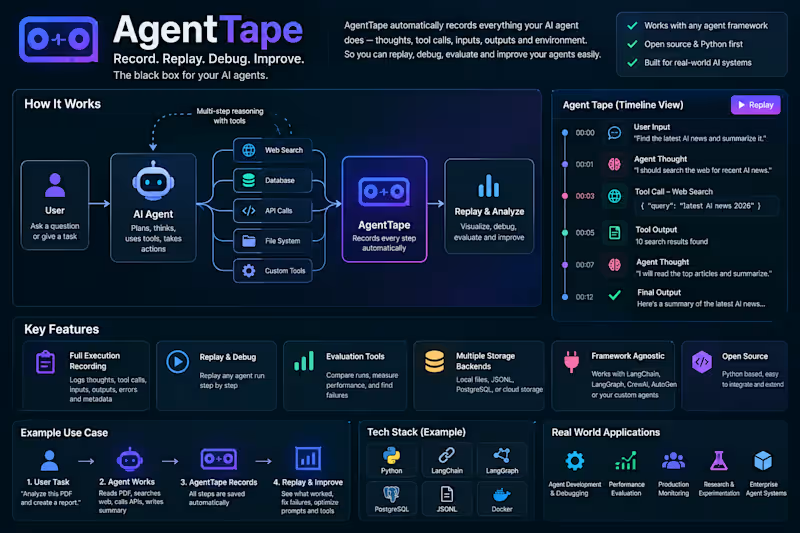
Case Study 1: AgentTape AI Engineering Agent Observability Project: AgentTape — AI Agent Execution Recording, Replay & Debugging System Problem AI agents perform multiple tasks using LLMs, APIs, databases and external tools. When an agent produces an incorrect result or fails, identifying the exact cause can be difficult. Proposed Solution AgentTape is a Python-based observability system that records AI agent executions and allows developers to replay and debug them. System Architecture Input: Receive a task from the user. Agent execution: The AI agent reasons, calls tools and processes data. Recording: AgentTape captures tool calls, inputs, outputs, errors and execution events. Replay: Developers review previous executions step by step. Evaluation: Compare different runs to identify failures and improve performance. Technology Stack Python LangChain and LangGraph PostgreSQL and JSON Docker LLM APIs Key Features Complete execution tracing Step-by-step replay Error detection and debugging Agent performance evaluation Execution history and analytics Expected Outcome A reusable observability layer that helps developers understand agent behavior, troubleshoot failures and improve the reliability of AI applications. Real-world applications AI customer support agents Autonomous research agents AI workflow automation Enterprise AI systems Project Impact AgentTape aims to make complex AI agent workflows more transparent, traceable and easier to maintain. Conceptual case study; performance improvements require implementation and testing.
0
15
Cover image for Stateful Multi-Agent Recruitment CRM —
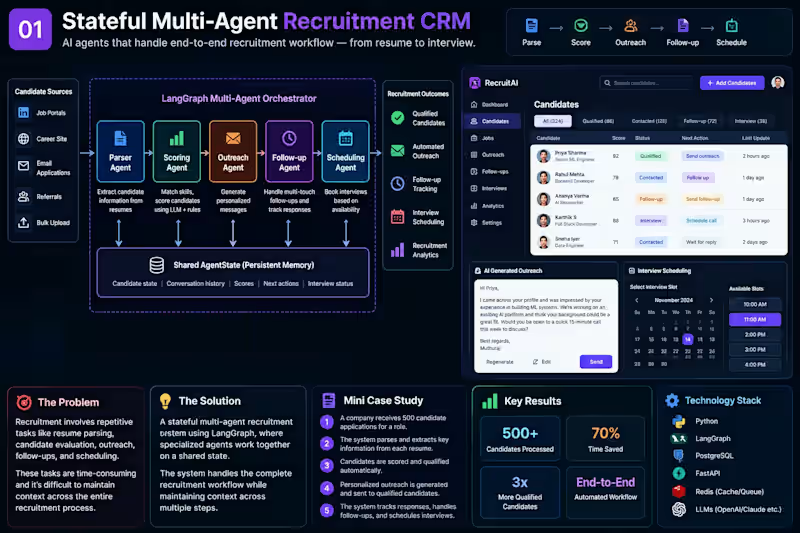
Stateful Multi-Agent Recruitment CRM — Case Study The Challenge Recruitment loses quality through context loss. Resume parsing, scoring, outreach, follow-ups, and scheduling are separate workflows. Agents don't share candidate state → conflicting messages, duplicate follow-ups, missed scheduling windows. The Solution LangGraph multi-agent orchestrator with 5 specialized agents + shared persistent memory. Agent breakdown: Parser Agent → Extract skills, experience, fit signals from resumes Scoring Agent → LLM-based ranking (not rule-based scores) Outreach Agent → Generate personalized LinkedIn/email messages Follow-up Agent → Handle multi-touch cadence, track responses Scheduling Agent → Book interviews, avoid conflicts Critical architecture: Shared AgentState All agents read/write to the same state → no context switching. The Positioning Headline: "AI agents that handle end-to-end recruitment workflow — from resume to interview." Value props: "Stateful" → Agents don't repeat work; they know what happened to each candidate "Multi-Agent" → Specialized agents → better performance than monolithic LLM "End-to-End" → Parse → Score → Outreach → Follow-up → Schedule (no manual handoffs) Metrics They Lead With Metric Result Candidates Processed 500+ Time Saved 70% Qualified Candidates 3x more Workflow Fully Automated Mini case study in the image: Input: 500 candidate applications Parse: Extract info automatically Score: Rank candidates (50% filtered out) Outreach: AI-generated, personalized messages Follow-up: Automated multi-touch Result: 3x more qualified candidates reach interview Dashboard UX Right panel shows: Candidates list with: Score (92, 78, 65), Status (Qualified, Contacted, Follow-up), Next Action, Last Update AI-Generated Outreach sample → Shows quality of personalization (candidate name, specific role match) Interview Scheduling → Visual calendar, slot selection UX insight: Dashboard surfaces actions (Send outreach, Schedule call), not just metrics. Tech Stack (Why It Matters) LangGraph → Agent orchestration + state management (core to stateful workflows) PostgreSQL → Persistent candidate state (not ephemeral) FastAPI → Scalable API layer Redis → Cache for scoring/matching LLMs (OpenAI/Claude) → Parsing, scoring, outreach generation Why this stack wins: Agents can be tested independently (Scoring Agent accuracy measured separately) State persists across failures (retry-safe) Scalable to 1000+ parallel workflows What You Should Copy 1. Architecture Don't build a monolithic "recruitment AI." Build 5 focused agents, each optimized for one task. Let LangGraph manage the handoffs. 2. State Management The shared AgentState is the moat. Without it: Outreach Agent doesn't know candidate was already contacted Scheduling Agent double-books Follow-up Agent sends duplicate messages Action: If building recruitment or SDR automation, design shared state first. Agents second. 3. Positioning Shift RudraStack: "Automate follow-ups" (feature-first) This system: "End-to-end workflow" (outcome-first) + "Stateful agents" (technical credibility) Result: Attracts technical buyers (CTOs, engineering orgs) + recruiters who care about quality. 4. Metrics Hierarchy Output quality (3x more qualified candidates) Time saved (70%) Volume (500+ processed) Most tools lead with volume. This leads with quality first. Competitive Edge for Your Stack vs. RudraStack: RudraStack: Dashboard-first, lead quantity focus This system: Agent-first, candidate quality focus vs. Traditional ATS: Stateful agents = no lost context LLM-driven scoring = learns from outcomes Multi-agent = modular and debuggable Technical Differentiation You Could Build Agent fine-tuning → Specialized models for Parser/Scoring agents (better accuracy than GPT-4 for resume parsing) Feedback loop → Track which outreach messages → interviews → placements. Retrain Outreach Agent. Multi-source orchestration → LinkedIn sources + Career portal sources + Referrals, all in shared state Real-time scoring updates → As follow-up responses come in, re-score candidates (dynamic ranking) Quick Tactical Win for Your AI-SDR Apply this to your staffing agency outreach: Replace your SDR follow-up system with a Follow-up Agent that reads shared candidate state Add a Conversation Analysis Agent that scores email replies (Intent: Interested? Unsubscribe? Dead-end?) Route high-intent replies to Scheduling Agent automatically Result: 3x faster sales cycle because context isn't lost between touch points.
0
24
Cover image for RudraStack AI Recruiting System —
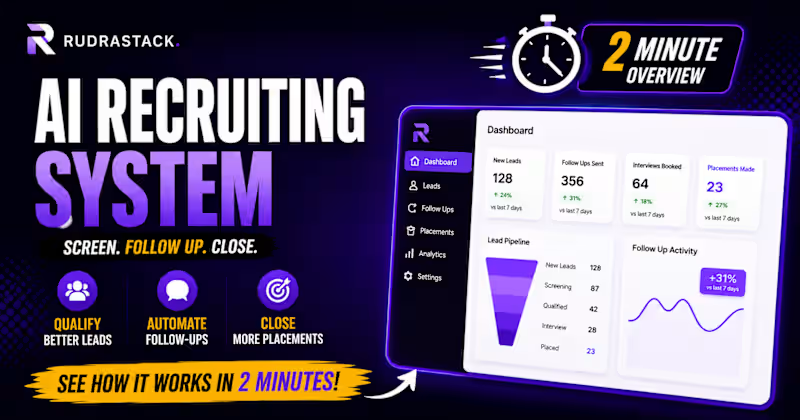
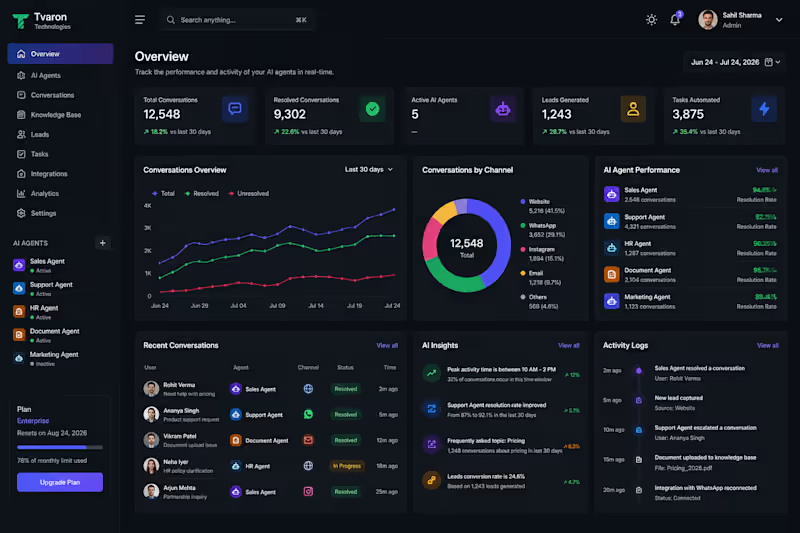
RudraStack AI Recruiting System — Case Study The Challenge Staffing agencies lose placements through manual follow-up bottlenecks. Sales teams qualify 128 leads/week but convert only 18% to interviews and 8% to placements. Each follow-up is friction. The Solution RudraStack automated the qualification → follow-up → placement workflow with a funnel-focused dashboard that surfaces three metrics: Lead quality score (Screen phase) Follow-up cadence (Automate phase) Close velocity (Close phase) The Positioning Tagline: "Screen. Follow Up. Close." Value prop stack: "Qualify Better Leads" (lead scoring, not volume) "Automate Follow-Ups" (remove manual scheduling friction) "Close More Placements" (optimize handoff to sales) Metrics They Led With Week-over-week growth (vs. absolute numbers): New Leads: +24% Follow-Ups Sent: +31% Interviews Booked: +18% Placements Made: +27% Dashboard KPIs: 128 → 87 → 42 → 28 → 23 (transparent funnel decay) Why This Works Funnel transparency — Agencies see where they leak (87→42 is biggest drop = qualification problem) ROI-first messaging — "Placements Made" as headline metric, not efficiency scores Growth narrative — Week-over-week % (not flat counts) creates urgency Speed as trust signal — "2-Minute Overview" reduces time-to-value perception What You Should Copy Lead with the result metric (placements/closes), not the process (leads screened) Show funnel stages visually so clients can diagnose their own bottleneck Use week-over-week %, not absolute numbers, for acquisition copy Dashboard-first positioning (not API/integration first) Competitive Angle for Your Stack If you're building against RudraStack: Differentiate on: LinkedIn-native workflows (vs. dashboard upload), higher qualification accuracy (vs. volume automation), or lower cost Own what they gloss over: What's the actual qualification logic? Why does 87→42 leak? Better LLM-based scoring?
0
30
Product designer building AI + UX experiences
New to Contra
Product designer building AI + UX experiences
Cover image for Email Design Template
Project Overview
Designed a
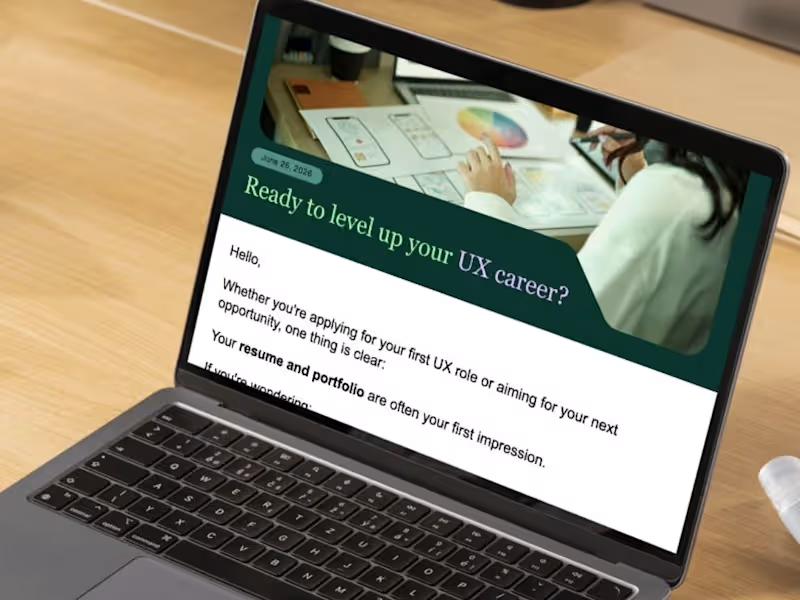
Email Design Template Project Overview Designed a personal-brand email newsletter to share milestones, services, free resources, and drive users toward a 1:1 booking. Objective Create an email that communicates personal and business milestones, builds credibility through social proof, highlights useful design resources, and promotes paid services without making the email feel overly promotional; encourages readers to book a 1:1 session My Role: Email UX + Visual Design I worked on the content hierarchy, layout, visual system, responsive structure, and CTA placement to create an email that is easy to scan and works across desktop and mobile. Design Approach 1. Strong narrative flow The email moves from: Introduction → Problems → Social proof → Resources → Services → CTA → Closing The opening immediately frames the user's problem around resumes and portfolios before introducing the solution. 2. Social proof as a credibility layer The 91+ bookings milestone and most-booked service appear early to build trust before asking users to take action. 3. Modular content blocks Different sections are visually separated into reusable modules for achievements, data, free templates, and the Topmate profile. This makes the email easier to scan and easier to adapt for future campaigns. 4. Clear visual hierarchy Large editorial-style headings, contrasting backgrounds, iconography, and short content blocks help users quickly understand each section. The visual system uses a dark green, mint, and lavender palette with Georgia/Arial typography. 5. Responsive-first structure The template includes responsive behaviour that stacks multi-column sections on smaller screens, helping preserve readability on mobile.n. Outcome: Created a reusable, responsive email template that combines storytelling, credibility, resource sharing, and conversion into one cohesive experience. The template can be adapted for future newsletters, personal-brand updates, product announcements, or service promotions. https://canva.link/email-designs
0
36