Health Harmony — Cross-Platform Care for GE Healthcare

Catherine Hicks


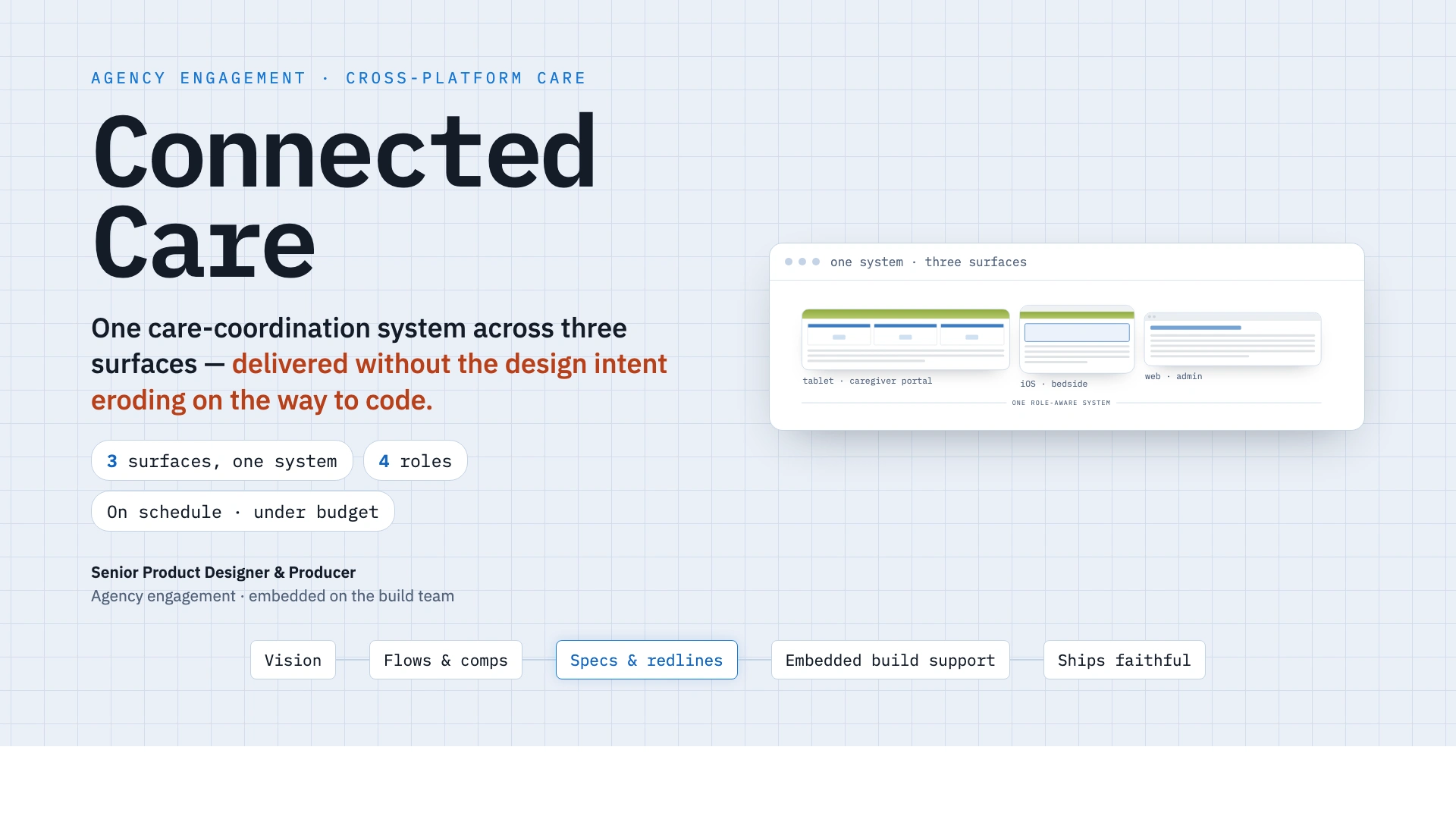
Owning the seams on a cross-platform care system
I helped deliver a cross-platform care-coordination system for GE Healthcare (Care Innovations) on an agency engagement. My role had two sides: co-lead on design, sole lead on production. The design work and the delivery work weren't two separate jobs — they were the same job seen from two ends, and this case study is about how they held together.
Care coordination looks simple and turns out to be a knot. A patient has a device by the bed. A family caregiver wants to know if Mom took her meds without having to call. A professional caregiver runs a whole caseload across a shift. A hospital system needs the data trustworthy and the roles airtight. The model is many-to-many — one caregiver to many patients, shared family access, admin override — and it had to live across three surfaces that felt like one system: a tablet-first professional portal, the native iOS patient appliance at the bedside, and responsive web plus admin tools.
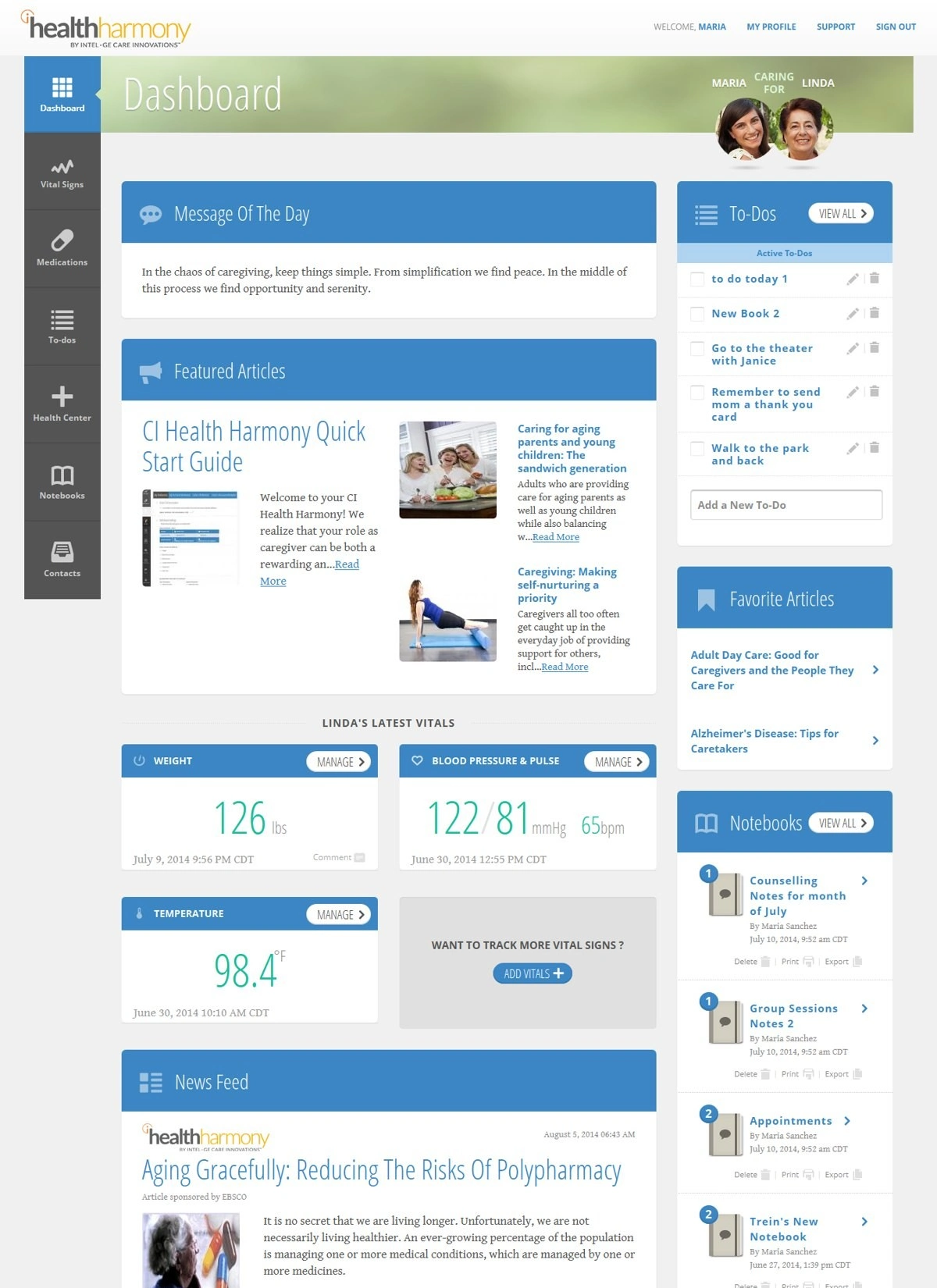
The family-caregiver dashboard — Linda's latest vitals, to-dos, and curated health content in one role-aware view.
The design work
Working with the lead designer, we co-created the interaction logic once, then designed and prototyped it across all three form factors and reconciled it into one shared design system — a button, a form, a navigation pattern meaning the same thing whether you're on the bedside appliance or the web portal.
The heart of the product was permissions, and permissions are invisible until they're wrong. We mapped flows across four roles — patient, family caregiver, professional caregiver, admin — tailoring not just what each could do but what each could see. I designed the iOS appliance flows (activation, session reminders, vitals, messaging) under a hard constraint: an older, non-technical patient had to use it at the bedside without help, and you can't hotfix a physical device the way you patch a web app. On the web side the work ran from the caregiver dashboard through vital signs, the high-consequence medications flow, the Health Center, and the admin onboarding surface — all in the same product language.
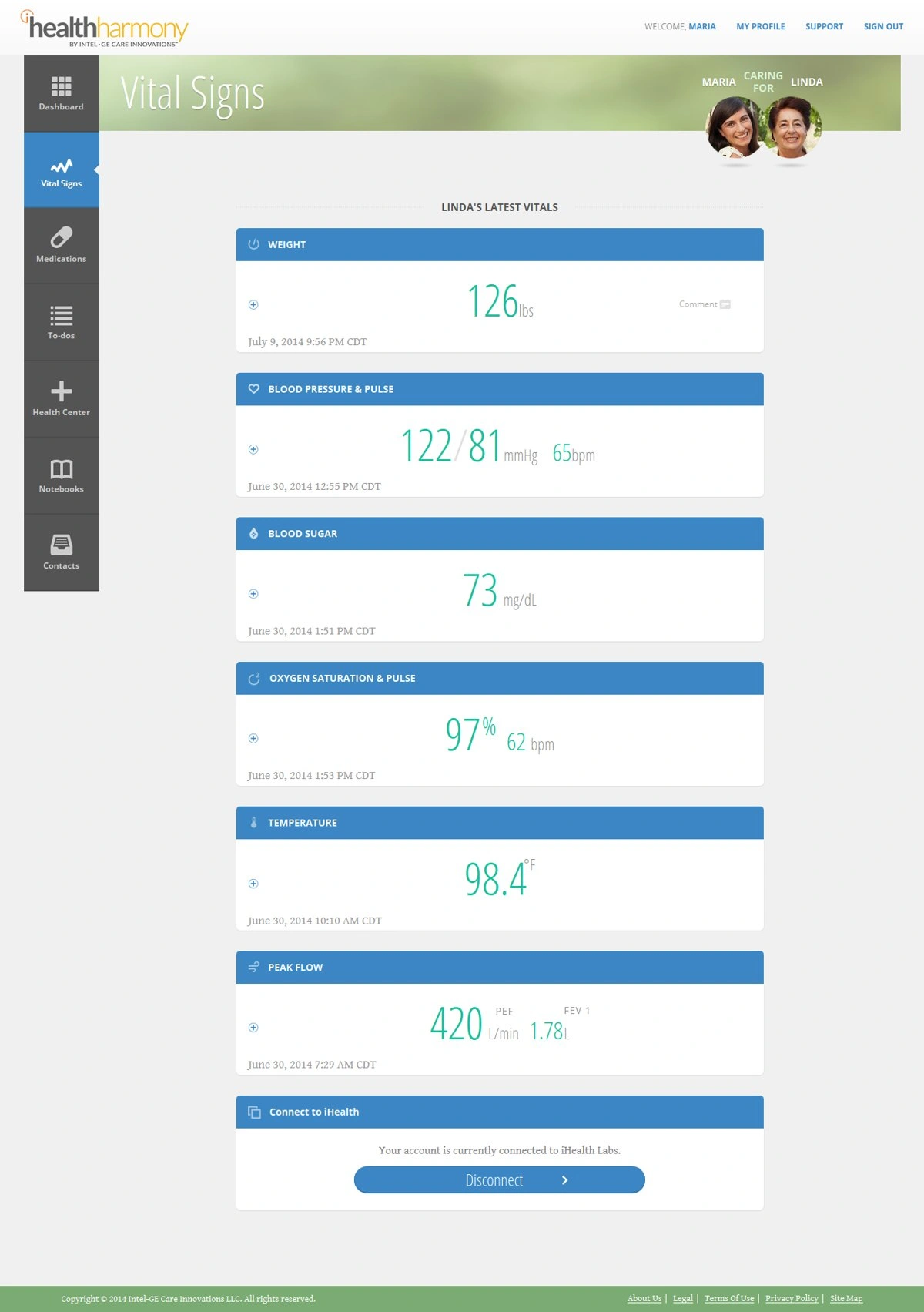
Vital signs tracking — weight, blood pressure, and temperature, designed for quick caregiver logging and review.
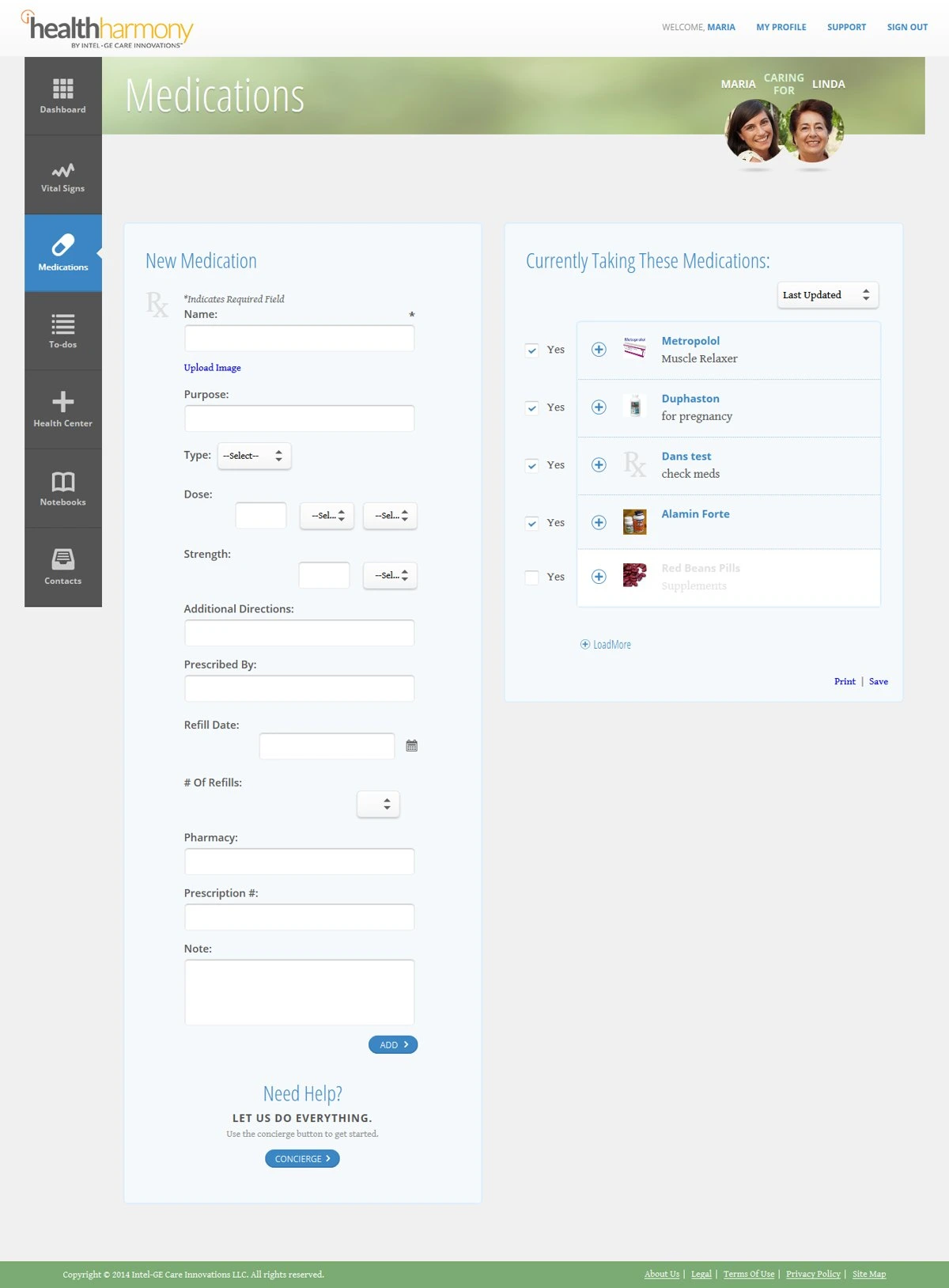
The medications flow — a high-consequence surface designed to fail safe.
The leadership work
On design I was a co-lead; on delivery I was the lead. I've come to call this leading from the middle — supporting a strong design lead while owning the machinery that turns designs into a shipped product: specs and acceptance criteria, redlines and annotations, edge-case docs, run across two parallel tracks with the PMs. Flows like Create-Patient got annotated for engineering — inline validation, required fields, the duplicate-patient case — written down before the sprint, not litigated during it.
The recurring risk was drift — three teams, three platforms, live work next to new work, the vision slowly diverging from what ships. What kept it faithful wasn't a document; it was a process, and staffing that process was my job.
Where it landed
The platform launched ahead of schedule and significantly under the original estimate. It replaced fragmented systems with one unified, role-aware experience across web, tablet, and a shipped iOS device. Because I owned the delivery pipeline, the design intent held all the way through the build.
The lesson I keep: design fidelity doesn't scale on good intentions — it scales on someone owning the connective tissue between design and development. Quality at scale often comes from the person maintaining the seams, not just the one setting the vision.
Like this project
Posted Aug 3, 2026
A role-aware care-coordination platform across web, tablet, and a bedside iOS device. I co-led design and solely led production — owning the connective tissue that kept design intent faithful from comp to code. Launched ahead of schedule and under budget.
Likes
0
Views
5
Clients
GE Healthcare