NetBase Pro — a 0→1 product that lived in the middle

Catherine Hicks


NetBase Pro was the first product I took from a first sketch all the way to launch, and the whole job came down to a single question: where does a product sit when "too simple" and "too much" are both wrong answers?
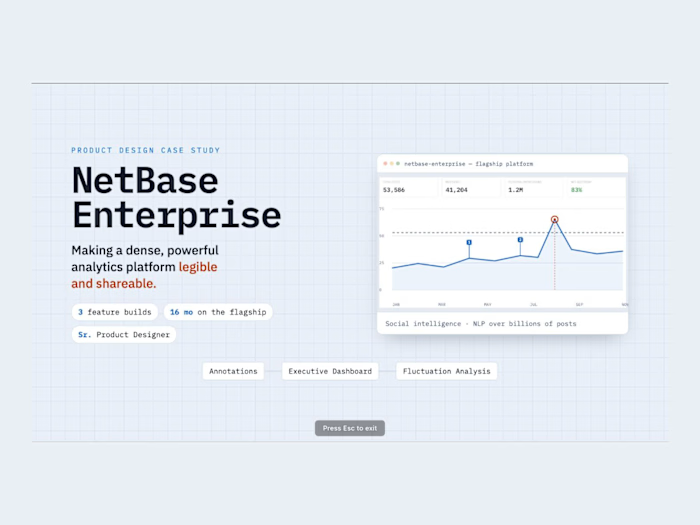
The starting point was a good product with a bad bottleneck. NetBase Enterprise could process billions of posts and slice sentiment a hundred ways — and it was so dense that only trained analysts could run it. Everyone else — the marketers, PR leads, and executives who needed the numbers — routed every question back through an analyst. The product's own power had created a chokepoint around the handful of people who understood it.
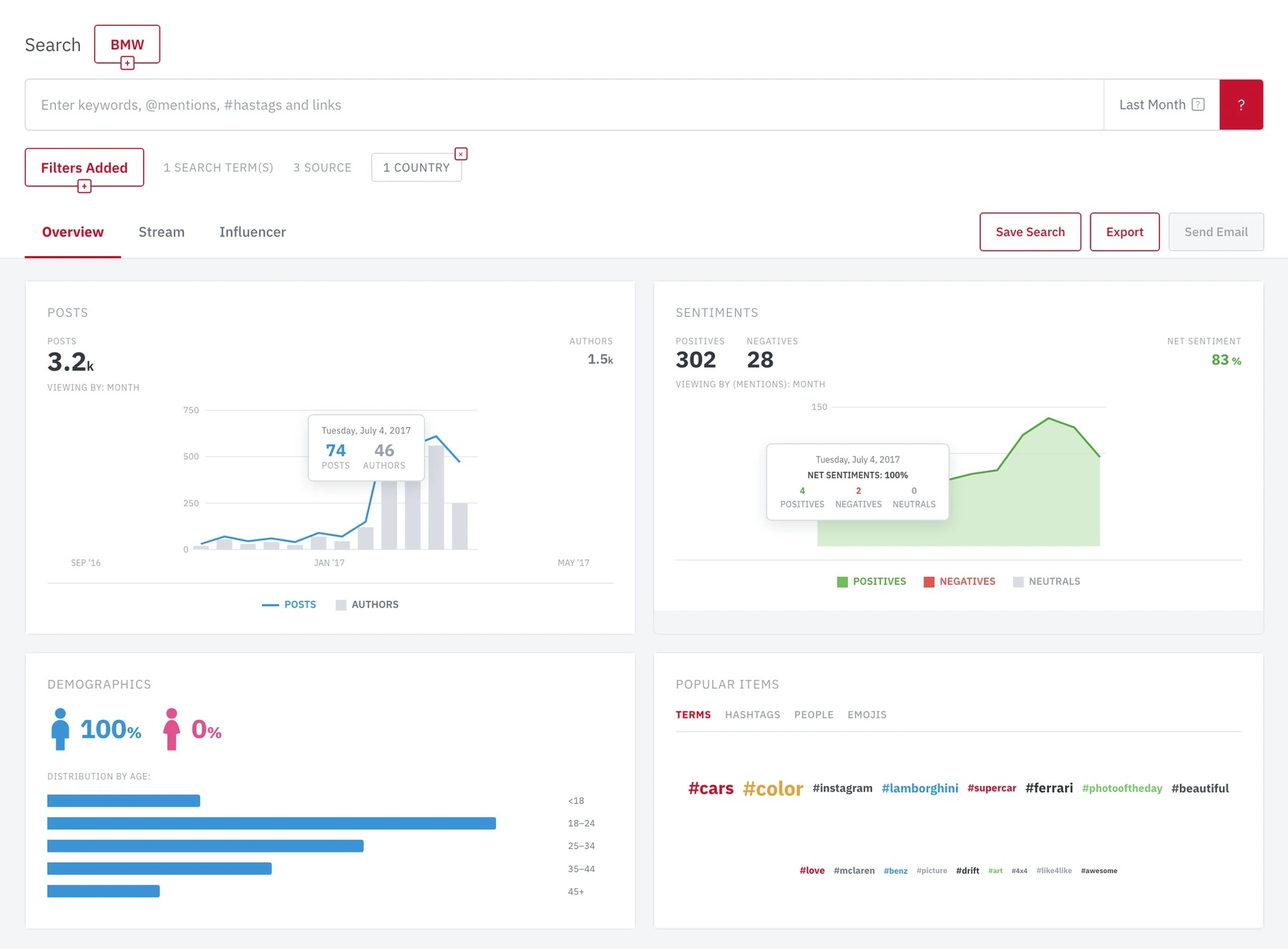
The mid-tier dashboard that shipped: modular cards — posts, sentiment, demographics, trending terms — approachable enough for a non-analyst to run, powerful enough to draw on the full Enterprise data underneath.
So customers kept asking for the same thing, account after account: we need something simpler for the people who aren't analysts. The insight was real — but "simpler" is not a spec. It's a direction with no floor and no ceiling, and chasing it literally is a trap disguised as a brief.
We built the trap on purpose
The first thing we shipped was the far extreme: Instant Search, one Google-style box that returned basic analytics with no learning curve. Users validated the idea — then told us, specifically, it was too simple. Buried in that feedback were two concrete wants: share Enterprise-grade data across a whole team (the handoff pain, named directly), and see it in modern visualizations, so they'd stop exporting data into other tools just to make it presentable. Somewhere between that one box and the full Enterprise suite was the product we actually needed.
The goal had a commercial edge
That middle became NetBase Pro — a deliberate subset of Enterprise, built for the people who aren't analysts. It had to clear a few bars at once: easy enough for a non-analyst to self-serve, powerful enough to leverage everything already in Enterprise, and built for companion mode, so departmental users answer their own questions and analysts stop being everyone's data concierge. And a fourth, commercial goal I'll be direct about: open a new tier — sell Pro into existing accounts and package Enterprise + Pro together to compete where our lineup couldn't before.
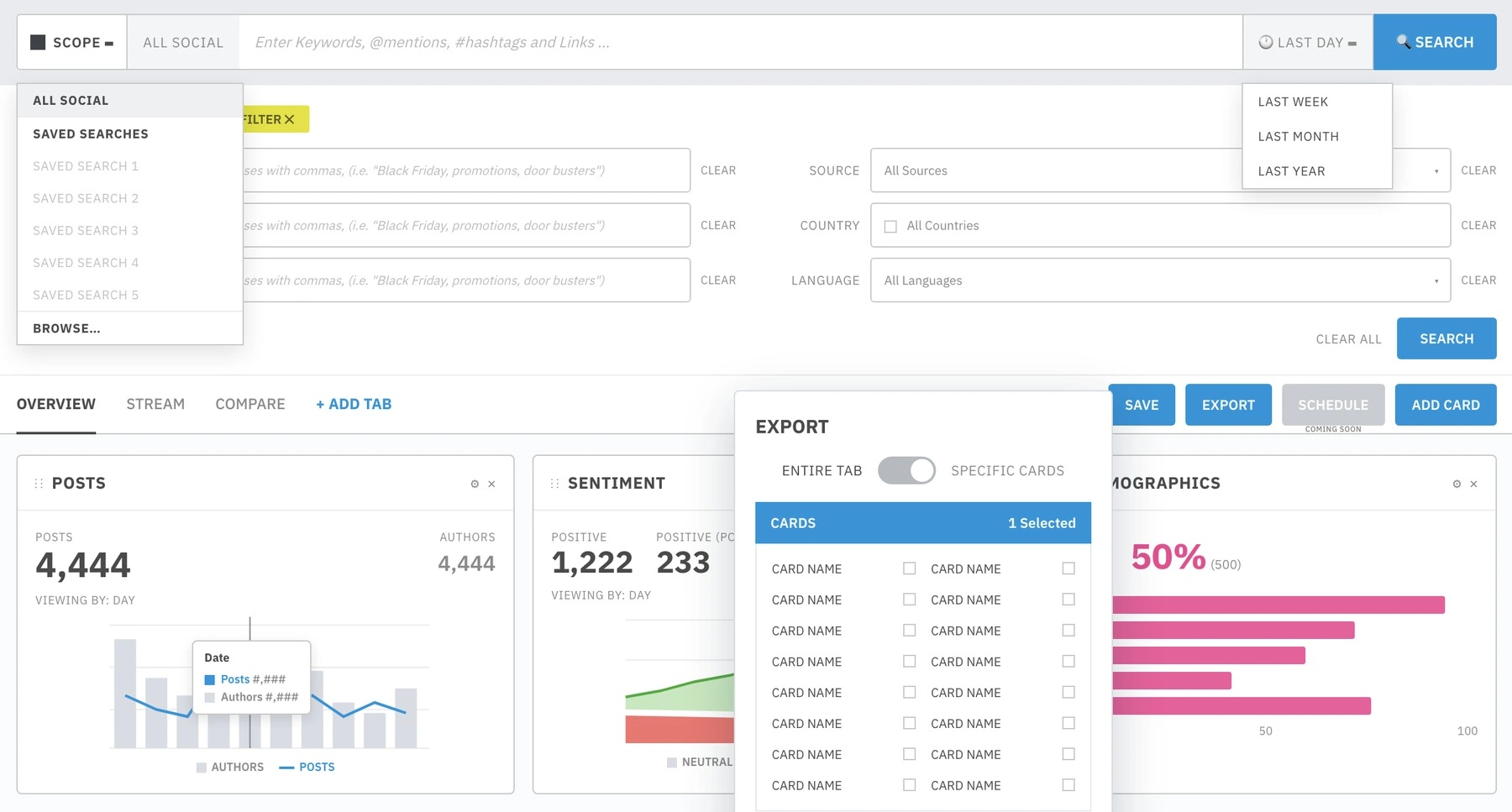
The product in use — scoped search, saved queries, and a built-in export flow, so a non-analyst could get to an answer and share it without routing the request through anyone.
Research pointed the way — once I could get to the users
Before designing the product, I ran the research: 13 participants across 5 companies, a deliberate mix of longtime users and first-timers, so I heard both the incumbent's frustration and the fresh reaction. I built five personas and a competitive teardown of what the market rewarded and Enterprise lacked. The honest sub-story: the hardest part wasn't the method — it was access. Getting to real users inside enterprise accounts is a political problem you solve with patience and stakeholder management, not a better discussion guide.
Idea to launch, on a spectrum
From there I designed Pro end-to-end as lead designer: a modular card dashboard, a curated filter and search, and — after beta — a Compare view. Every decision was really a decision about where to sit between too simple and Enterprise's too much. The craft was a surface that stayed approachable for a non-analyst while leaving room to grow for years.
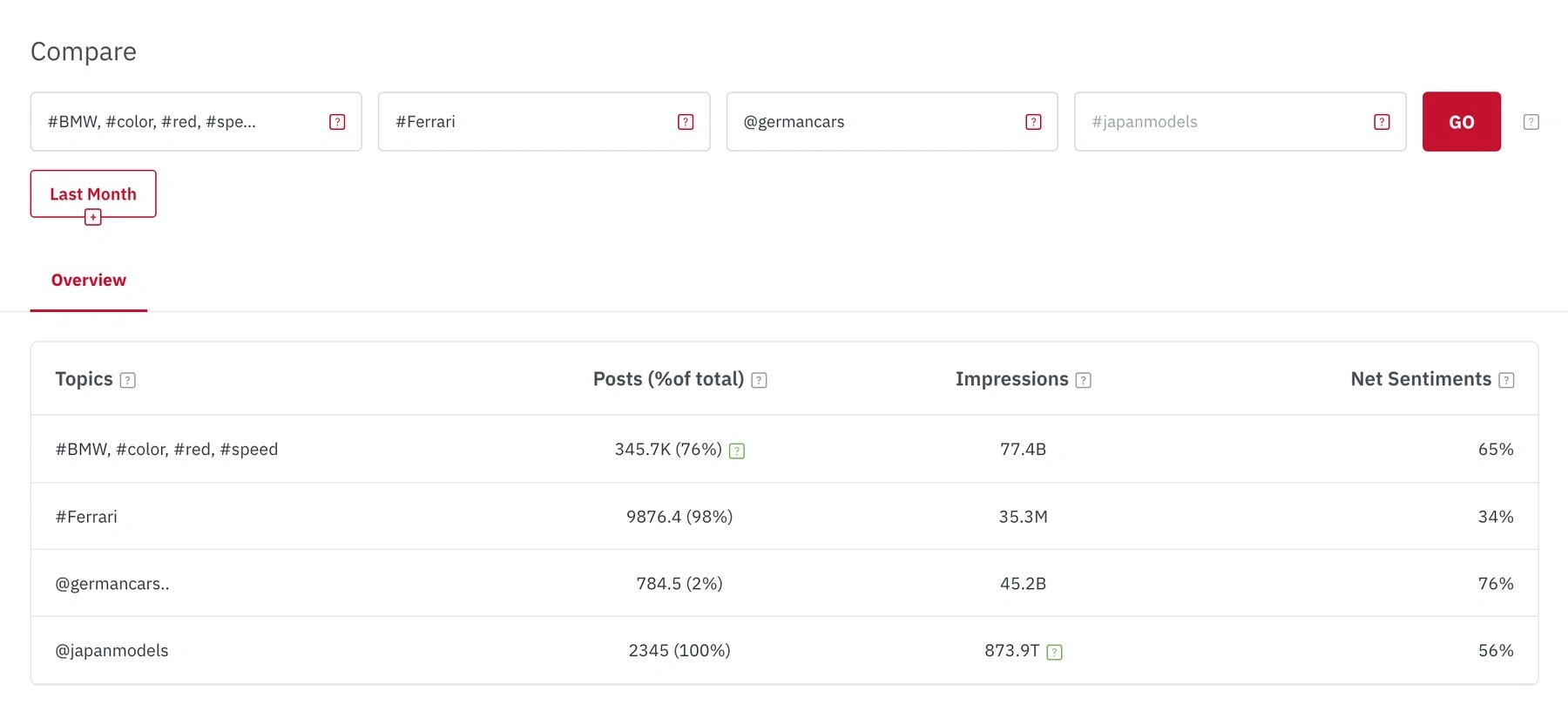
The Compare view, added after beta: put topics side by side — posts, impressions, net sentiment — one of the enhancements the beta forum asked for.
Where it landed
Both bets shipped. Instant Search — the "too simple" extreme — was validated at the company's first user conference and folded into the product line. NetBase Pro I designed through the full product and development lifecycle; it ran a large-scale beta with users from three Fortune 500 companies through a dedicated beta forum, which fed the enhancements that followed — simplified UI patterns, revised visualization colors, and the Compare feature — then went to market, where it still sells. I'll keep the outcomes honest: it shipped, beta-tested with three Fortune 500 companies, and continues to sell — I don't have post-launch adoption metrics, so I won't invent them.
The lesson has stuck with me through every product since: when a user says "make it simpler," don't sprint to the extreme. You only find the middle by shipping the extreme, listening honestly when users say you overshot, and building the next thing on what they actually said. NetBase Pro was the first product I saw through its entire lifecycle — where I learned to think in long-term product vision instead of one feature at a time.
See the full case study → https://design-case-studies.vercel.app/netbase/pro
Like this project
Posted Aug 3, 2026
NetBase Enterprise was so dense only analysts could run it. Customers asked for "simpler" — a trap disguised as a brief. I designed NetBase Pro, the mid-tier product between too-simple and too-much: idea to launch, beta with 3 Fortune 500, still selling.