Solar System Interactive Tour - Space Learning by Aishwarya KSolar System Interactive Tour - Space Learning by Aishwarya K

Solar System Interactive Tour - Space Learning

Aishwarya K

Aishwarya K

Tool: Articulate Storyline 360 
Type: Motion Path Animation / Interactive Simulation 
Audience: Middle school students, planetarium exhibits, homeschool parents teaching astronomy 
The Problem
Astronomy education has a fundamental problem - space is dynamic but textbooks are static. Students read that planets orbit the Sun but never see orbital motion, so they memorize facts without understanding the mechanics. Static diagrams cannot convey speed differences between planets or the nature of orbits. This project bridges that gap by turning passive reading into active, animated observation.
Learning Objectives
• Identify the four inner planets and their relative positions from the Sun
• Observe how different planets orbit at different speeds
• Recognize orbital mechanics through visual motion rather than text description
• Explore planetary facts through self-directed clicking on moving objects
My Design Decisions
• Why motion path animation over a static diagram? 
Motion demonstrates concepts that text can only describe. Seeing Mars orbit slower than Mercury conveys the relationship instantly - no memorization needed. Animation here isn't decoration, it's the instruction itself.
• Why differentiated animation speeds? 
Mercury at 5 seconds, Venus at 8, Earth at 12, Mars at 16 - timing based on real astronomical proportions. The visual speed difference teaches orbital mechanics more effectively than any label or caption could.
• Why keep planets clickable while moving? 
Pausing the simulation to reveal information breaks immersion. Keeping planets interactive while in motion maintains the experience of a living solar system rather than a series of static slides.
• How was a layout challenge solved independently? 
The original coordinates placed planets outside the slide boundaries. Rather than waiting for guidance, the solution - distributing two planets on each side of the Sun - produced a more balanced and visually professional result than the original plan.
Technical Highlights
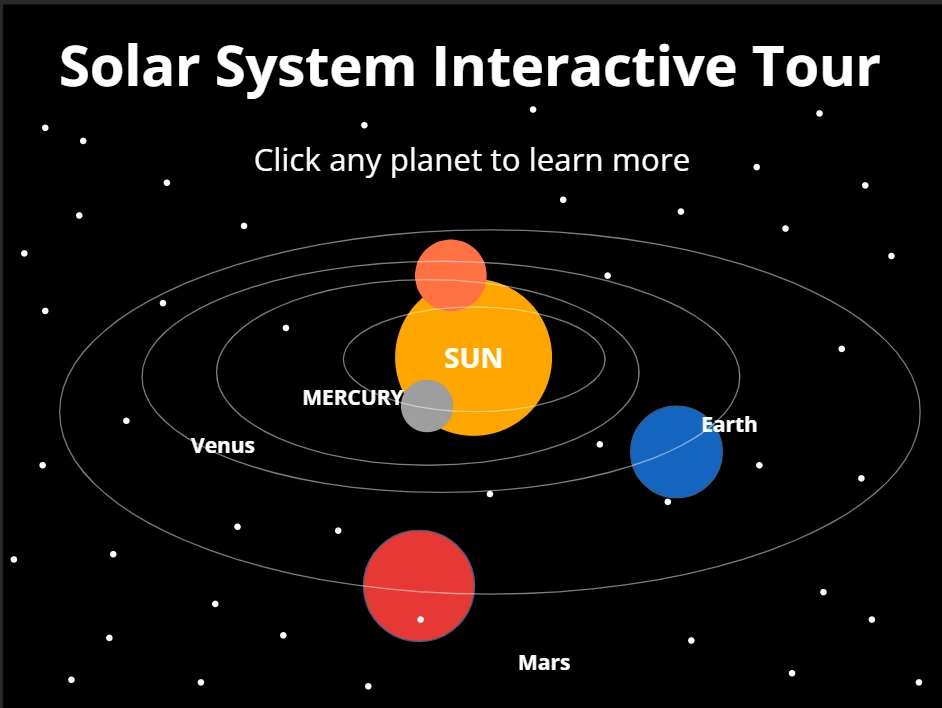
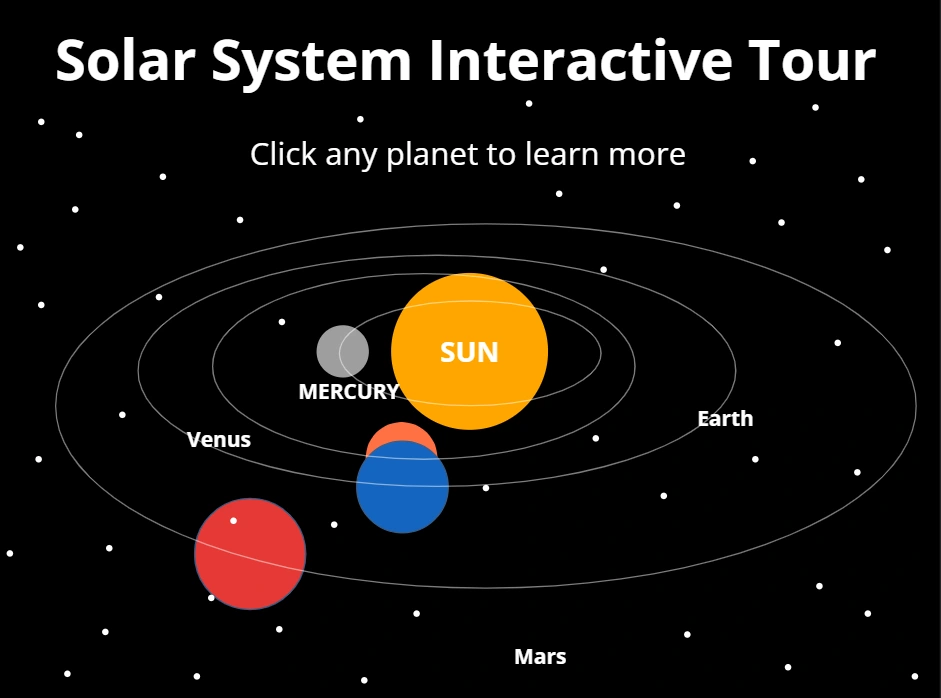
• Motion path oval animations on all four planets running simultaneously from slide load
• Differentiated durations reflecting real astronomical proportions (5s, 8s, 12s, 16s)
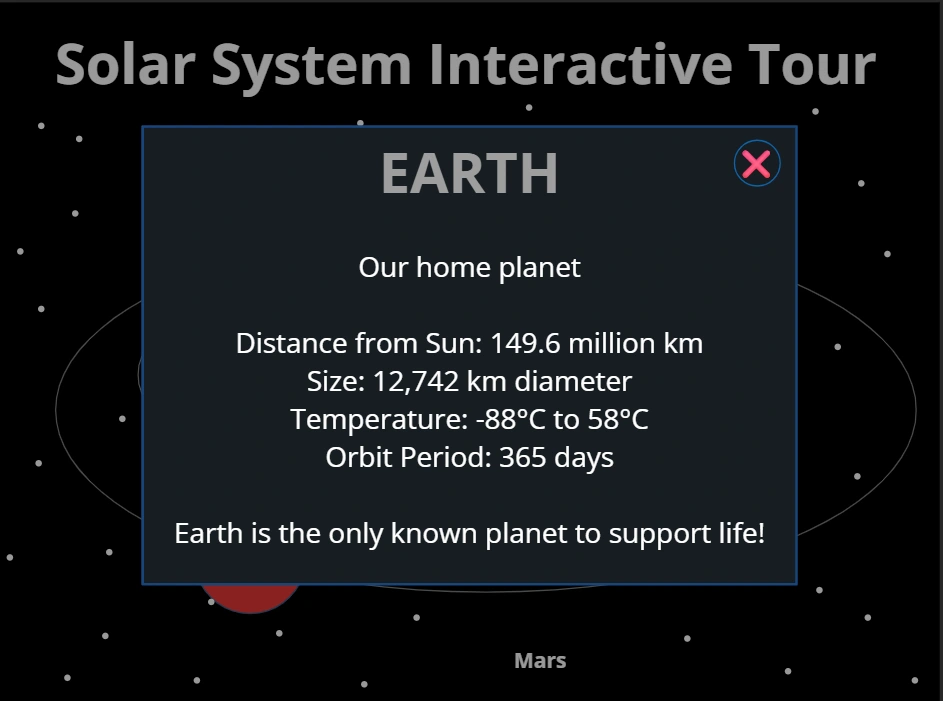
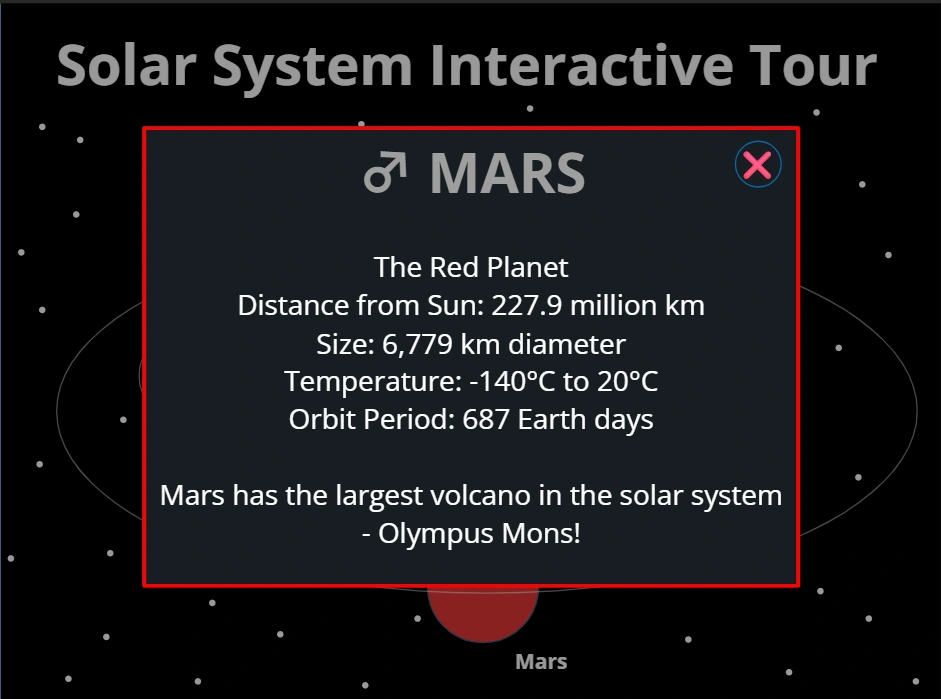
• Clickable animated objects - planets remain interactive while in continuous motion
• 4 info layers with color-coded borders matching each planet's color
• Semi-transparent orbit rings and star field background creating authentic space context
What I Learned
This project changed how I think about animation in e-learning. Motion is not a visual enhancement - it is a teaching tool. When a concept involves movement or change, showing it in motion will always outperform describing it in text. It also reinforced that independent problem-solving under constraints often produces better outcomes than following instructions rigidly - the balanced planet layout was a stronger design than the original coordinates.
Like this project

Posted Oct 18, 2026

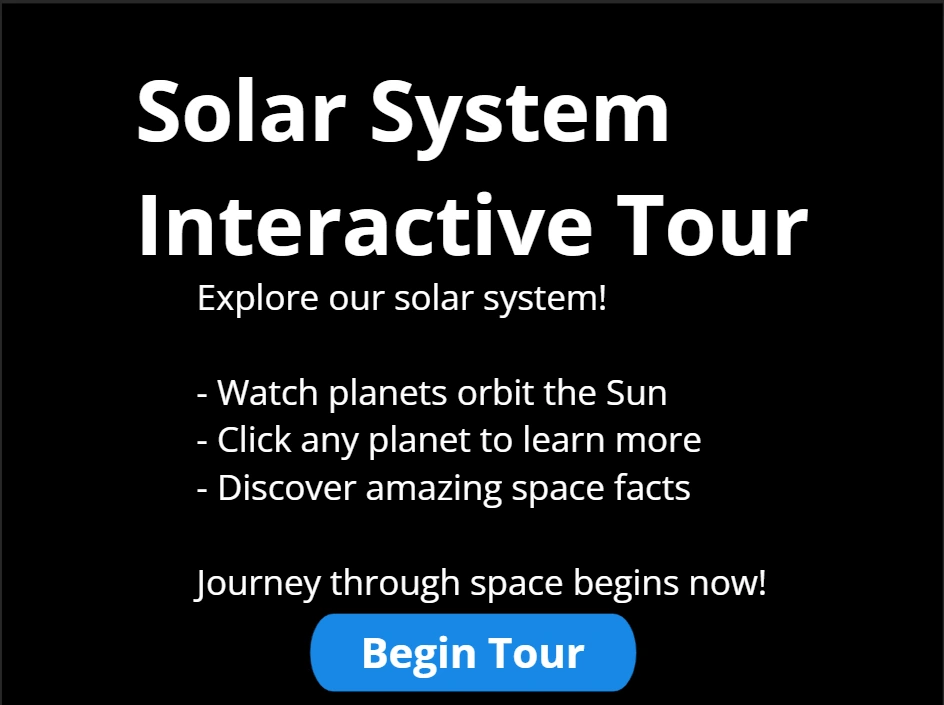
Solar System Interactive Tour is an animated e-learning module that uses motion path animations to simulate planetary orbits and create an engaging space-based learning experience. Learners observe four planets orbiting the Sun through simultaneous motion animations and can click on each planet to reveal key facts such as distance, temperature, and unique characteristics. The module combines animation sequencing with interactive elements to enhance visual learning and engagement. FEATURES: -Motion path orbital animations -4 clickable interactive planets -Click-to-reveal information layers -Star-filled space background -Immersive dark UI design PLANETS COVERED: Mercury – Closest to the Sun Venus – Hottest planet Earth – Our home planet Mars – The Red Planet SKILLS DEMONSTRATED: Motion path animation design Animation timing Simultaneous animations Interactive objects Visual learning design Click-to-reveal layers