Escape Room Challenge - Interactive Mystery Game by Aishwarya KEscape Room Challenge - Interactive Mystery Game by Aishwarya K

Escape Room Challenge - Interactive Mystery Game

Aishwarya K

Aishwarya K

Tool: Articulate Storyline 360 
Type: Game-based Learning / Interactive Logic Puzzle 
Audience: Students developing critical thinking skills, training programs teaching sequential thinking, escape room enthusiasts 
The Problem
Problem-solving skills are best developed through practice, not instruction. Traditional puzzle games provide challenges but rarely integrate learning design principles. This project creates a genuine puzzle game that teaches logical thinking and sequential problem-solving using only Storyline's native capabilities - no JavaScript - while maintaining authentic game mechanics and professional visual design.
Learning Objectives
• Apply logical reasoning to solve sequential puzzles
• Demonstrate systematic exploration strategies
• Recognize item-dependency relationships (item A unlocks access to item B)
• Follow multi-step procedures to achieve a goal
• Utilize hint systems effectively when stuck
My Design Decisions
• Why item-based conditional branching? 
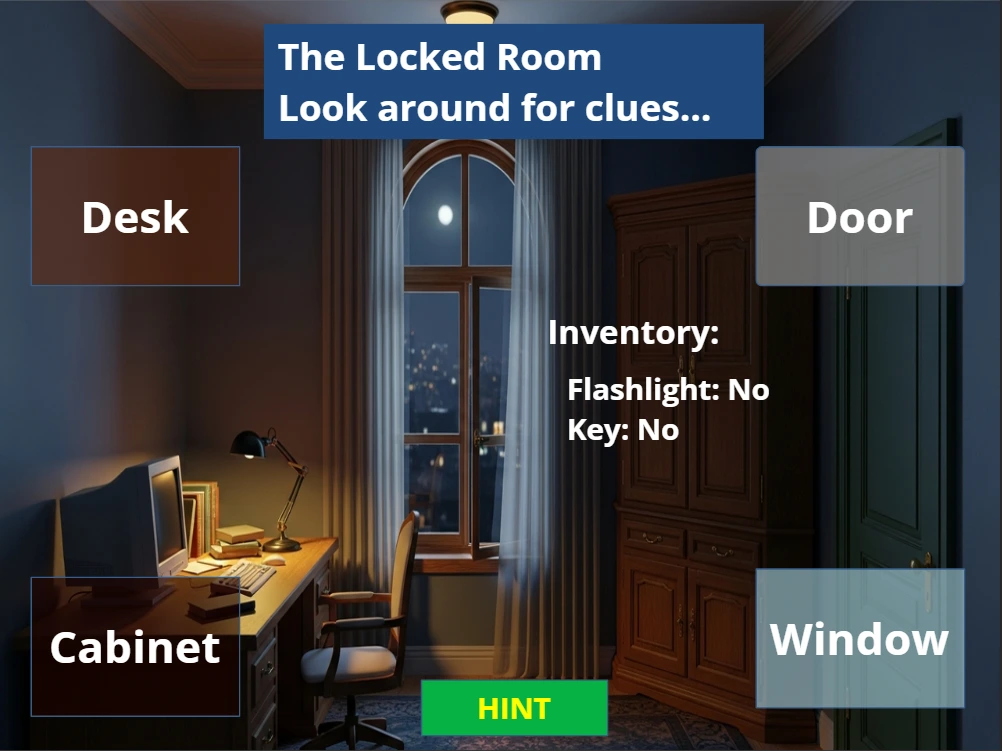
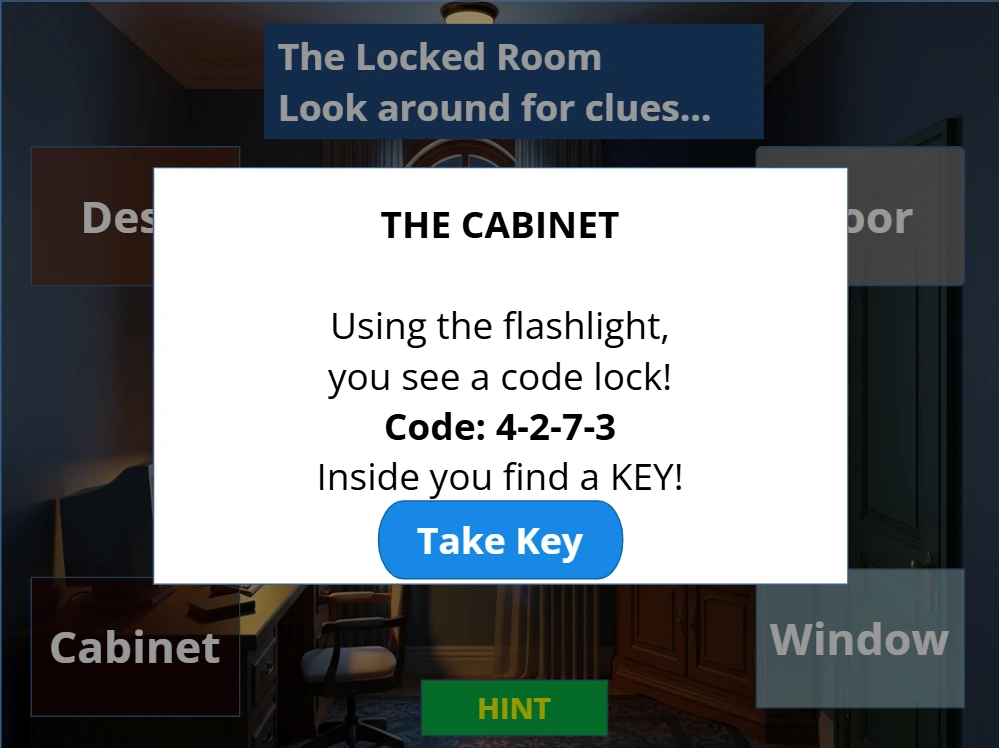
True/False variables track inventory state, creating authentic game mechanics. The same hotspot shows completely different content depending on what the player has collected - a dark cabinet becomes accessible only after finding the flashlight.
• Why logical item progression? 
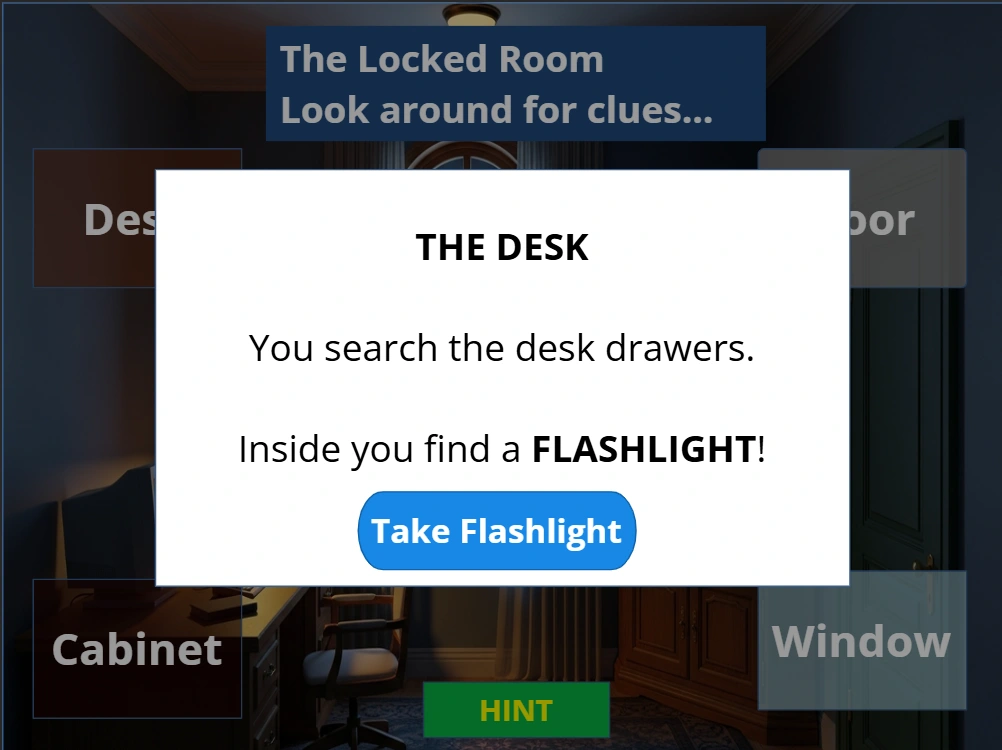
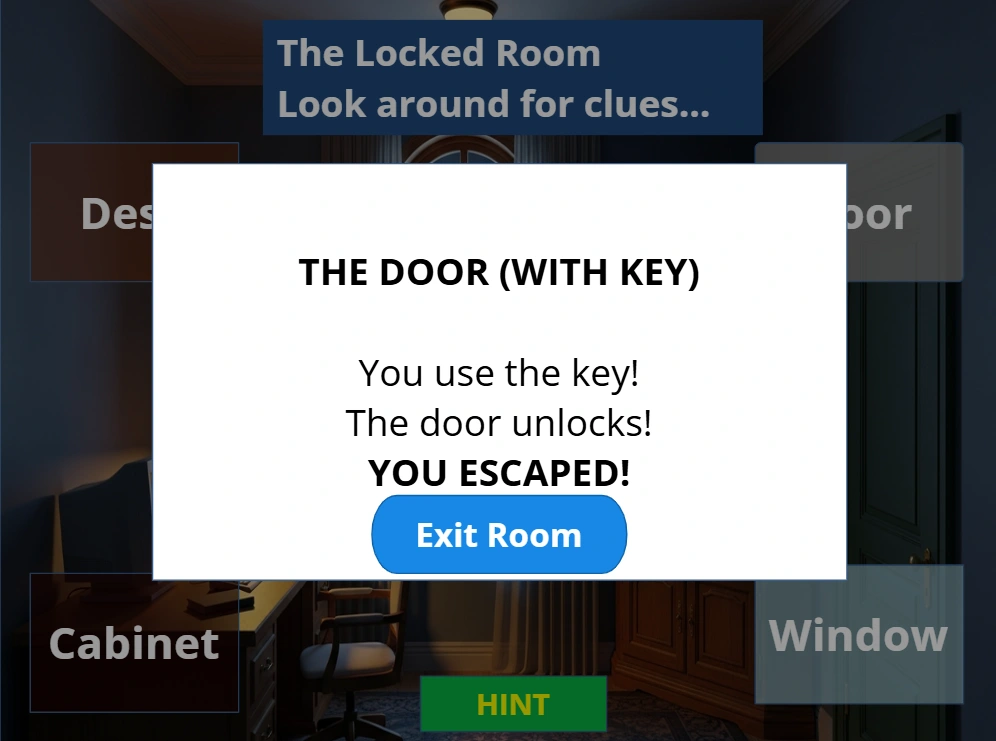
Flashlight → see code → get key → unlock door. Each item enables the next step, teaching sequential thinking naturally through gameplay rather than instruction.
• Why a hint system? 
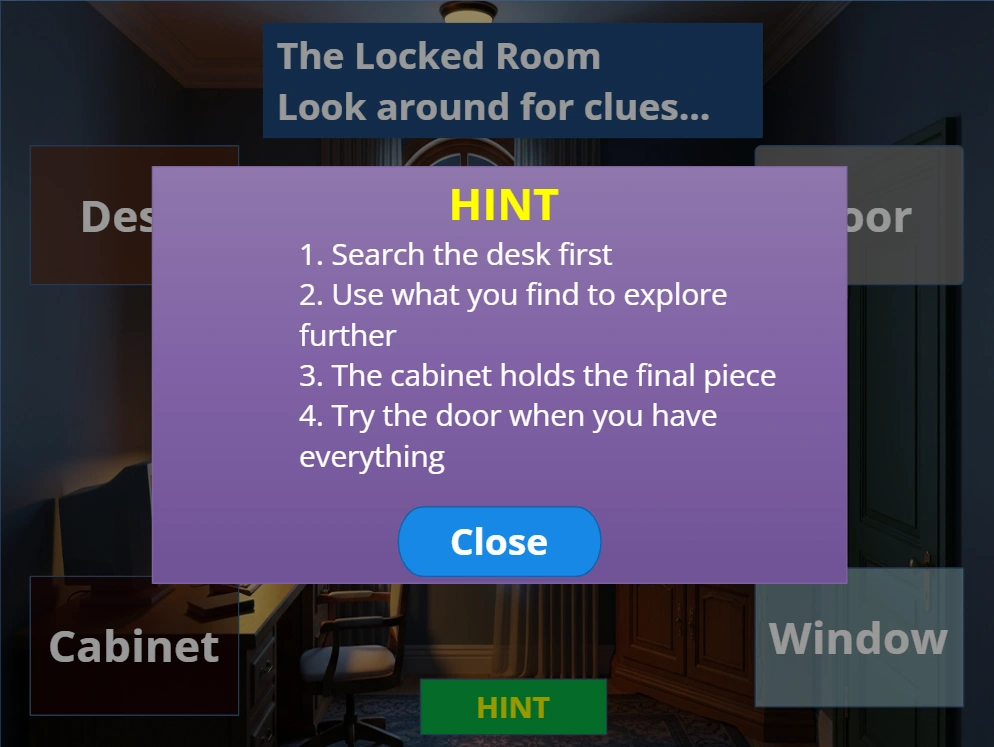
Not everyone solves puzzles at the same speed. A four-step hint system provides scaffolding without removing the challenge - learners can still feel the satisfaction of solving it themselves.
• Why include dead ends? 
The window hotspot leads nowhere. This teaches learners that not all paths contain solutions - a realistic and important problem-solving lesson.
Technical Highlights
• 3 True/False variables managing full inventory state (HasFlashlight, HasKey, DoorUnlocked)
• 8 conditional layers including dual-version cabinet (dark vs lit based on game state)
• Real-time inventory display with 3 dynamic states
• Complete variable reset system for unlimited replays
• Hint system with scaffolded four-step walkthrough
What I Learned
This project showed me that authentic game mechanics - inventory systems, item dependencies, conditional access - are fully achievable in Storyline without any external tools or JavaScript. Boolean logic is surprisingly powerful for game design. The same hotspot creating completely different experiences based on game state was a breakthrough moment in understanding how conditional branching can simulate real interactivity.
Like this project

Posted Oct 18, 2026

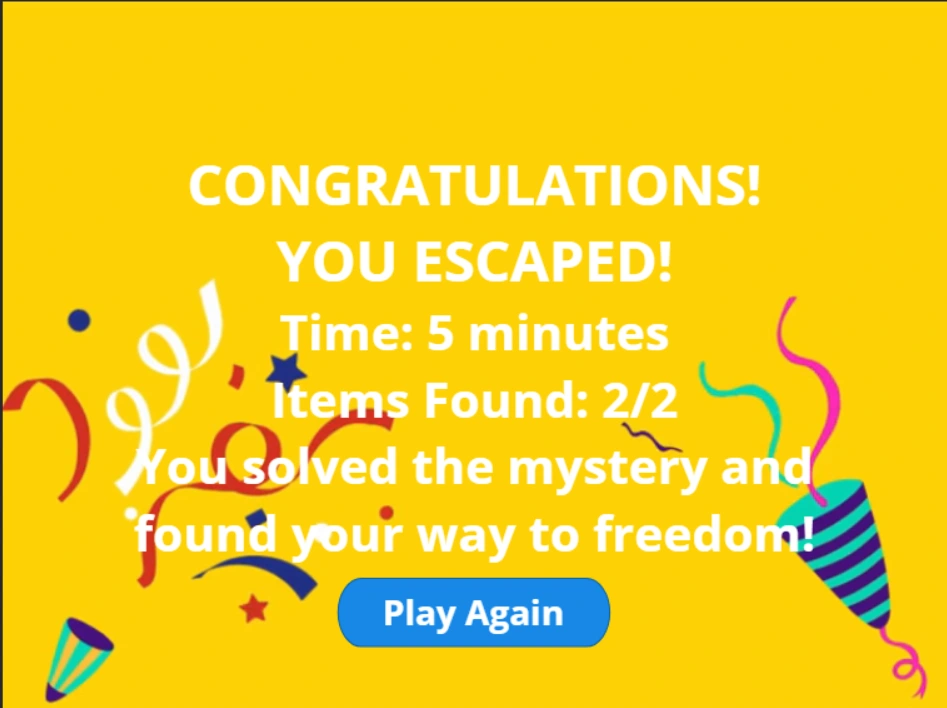
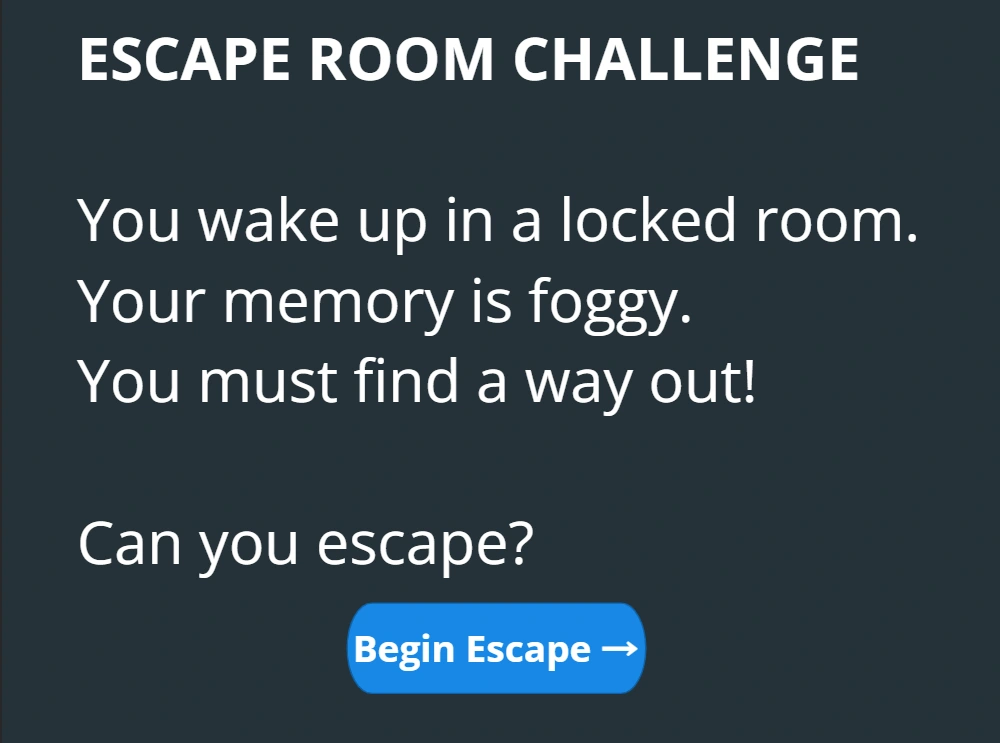
Escape Room Challenge is an interactive e-learning game where learners explore a locked room, collect items, and use them strategically to escape. Players interact with four room elements — Desk, Cabinet, Door, and Window — in a logic-based sequence. Items collected unlock new actions, creating a conditional gameplay experience driven by item-based decisions. The module applies branching logic to simulate real-time problem solving through interaction and inventory-based progression. FEATURES: 4 interactive hotspots Item collection system Conditional branching Inventory display Hint system Victory and replay screens GAMEPLAY FLOW: Search Desk → Collect Flashlight Use Flashlight → Unlock Cabinet Collect Key → Unlock Door Use Key → Escape SKILLS DEMONSTRATED: Variable tracking Conditional layers Item-based logic Inventory states Game mechanics Hotspot interaction