The Time Traveler's Dilemma - Branching Story by Aishwarya KThe Time Traveler's Dilemma - Branching Story by Aishwarya K

The Time Traveler's Dilemma - Branching Story

Aishwarya K

Aishwarya K

Tool: Articulate Storyline 360 
Type: Advanced Cascading Branching Narrative 
Audience: Interactive fiction enthusiasts, instructional designers, ethics education programs 
The Problem
Most branching scenarios in e-learning are superficial - choices exist but paths quickly reconverge, creating the illusion of agency without real consequences. This project solves that by building a story where early decisions permanently change available options in later chapters, creating authentic stakes through a true butterfly effect - all using only Storyline's native variable logic.
Learning Objectives
• Analyze complex ethical dilemmas with no clear right answer
• Predict how early decisions create cascading consequences
• Experience authentic branching where choices permanently alter available paths
• Evaluate personal values through decision-making under moral pressure
• Recognize how small decisions can have massive long-term impacts
My Design Decisions
• Why cascading branching instead of simple branching? 
Early choices affect later available options - Chapter 1 decisions change what's accessible in Chapter 3. This creates authentic consequences rather than the illusion of choice.
• Why 7 unique endings? 
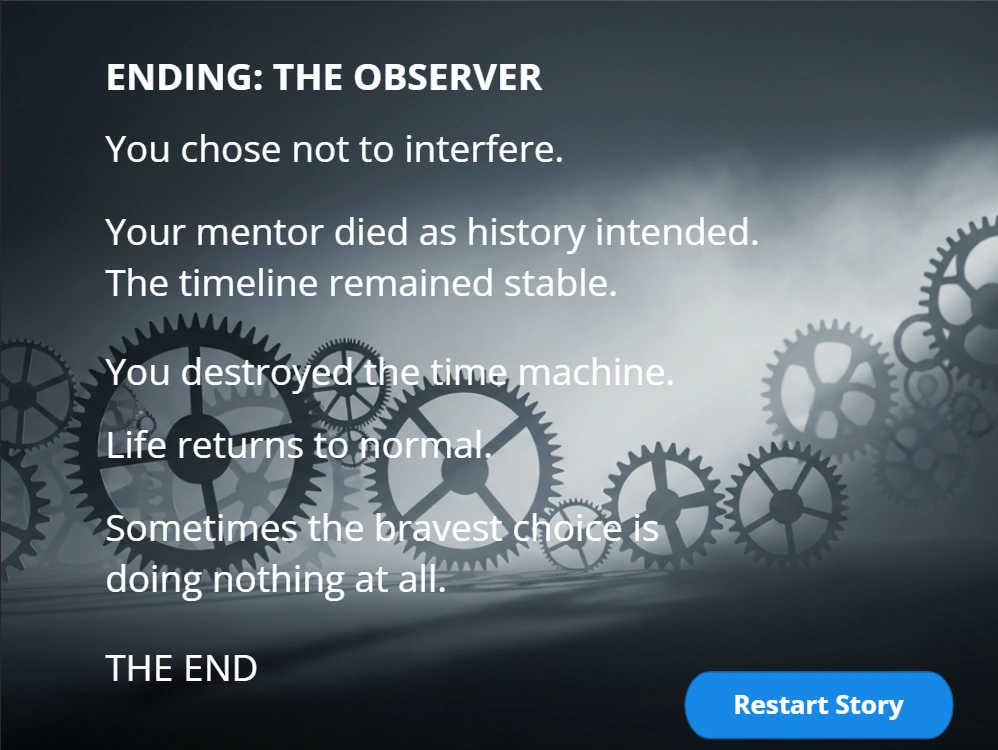
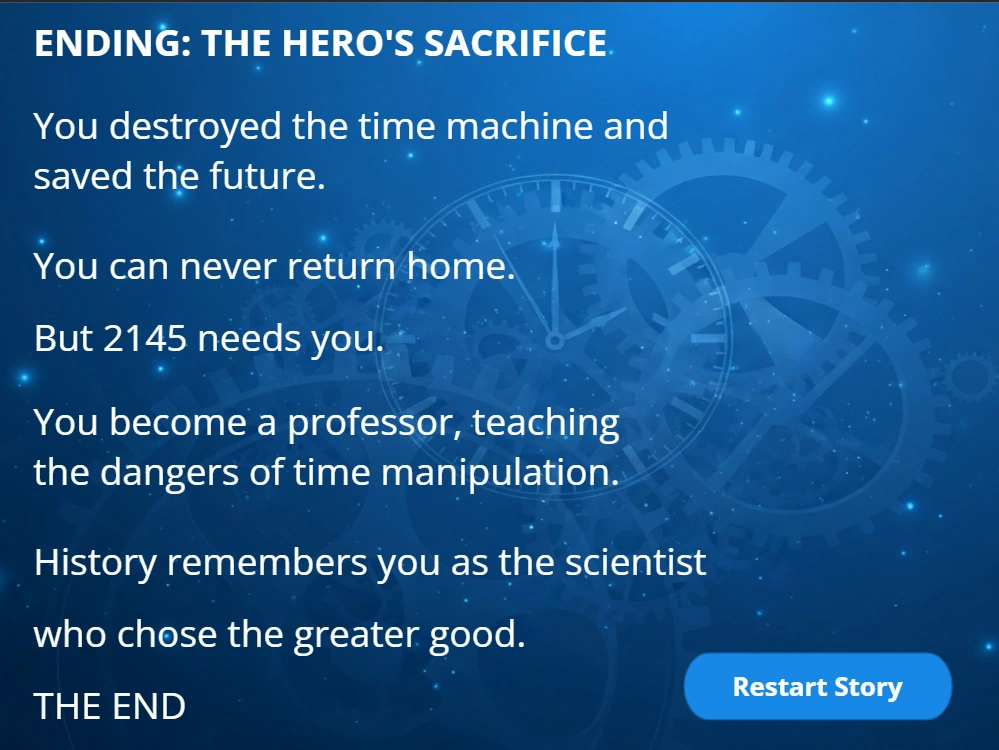
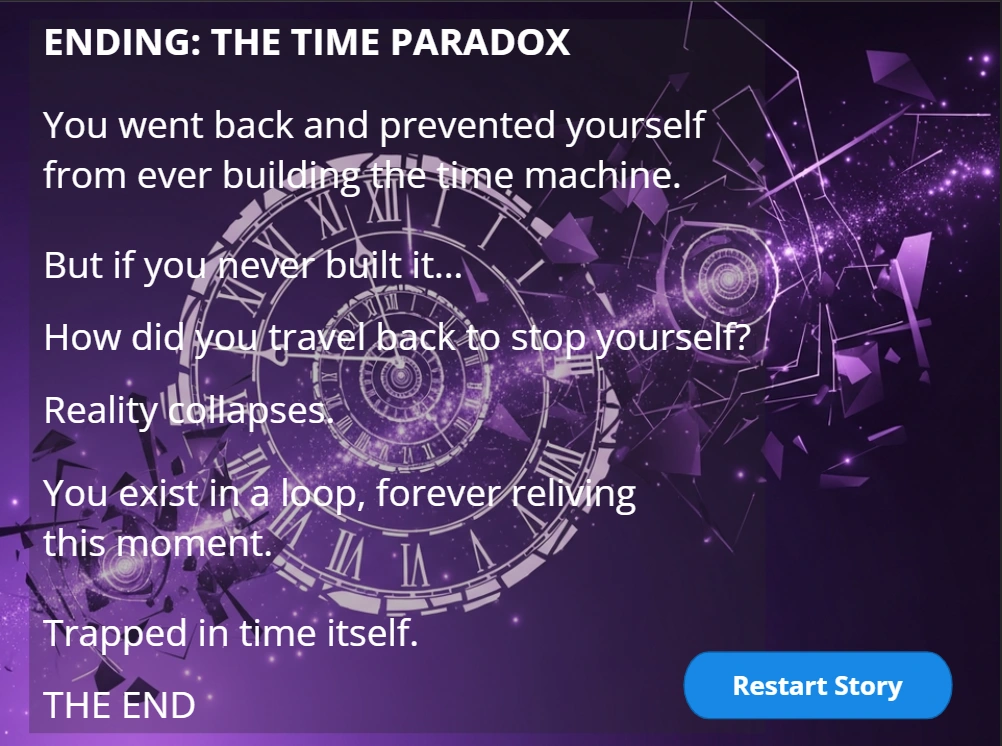
Seven completely different outcomes ensure high replay value and genuine differentiation. Each ending carries its own moral message - sacrifice, paradox, corruption, guardianship, observation - so no two playthroughs feel the same.
• Why moral ambiguity? 
There is no correct path. All 7 endings are valid, which forces deeper thinking than simple good/bad binaries. Time travel paradoxes make abstract ethical concepts emotionally resonant.
• Why 4 True/False variables? 
Smart conditional logic - IF SavedScientist = True AND WarnedGovernment = True - creates more unique outcomes than simple binary branching. The best ending requires strategic decision-making across two separate chapters.
Technical Highlights
• 4 True/False variables tracking cumulative decisions across the entire narrative
• Multi-condition triggers (2+ simultaneous conditions) for ending unlocks
• 7 unique ending layers with distinct visual treatments
• Cascading path availability - Chapter 1 unlocks/locks Chapter 3 options
• Complete variable reset system on title slide
What I Learned
Cascading branching is fundamentally different from simple branching. Early choices affecting later available options creates authentic consequence systems that feel real to the learner. This project also showed me that four variables handled through smart conditional logic can generate far more unique outcomes than straightforward binary paths - and that moral ambiguity drives deeper engagement than right-or-wrong answers ever could.
Like this project

Posted Oct 18, 2026

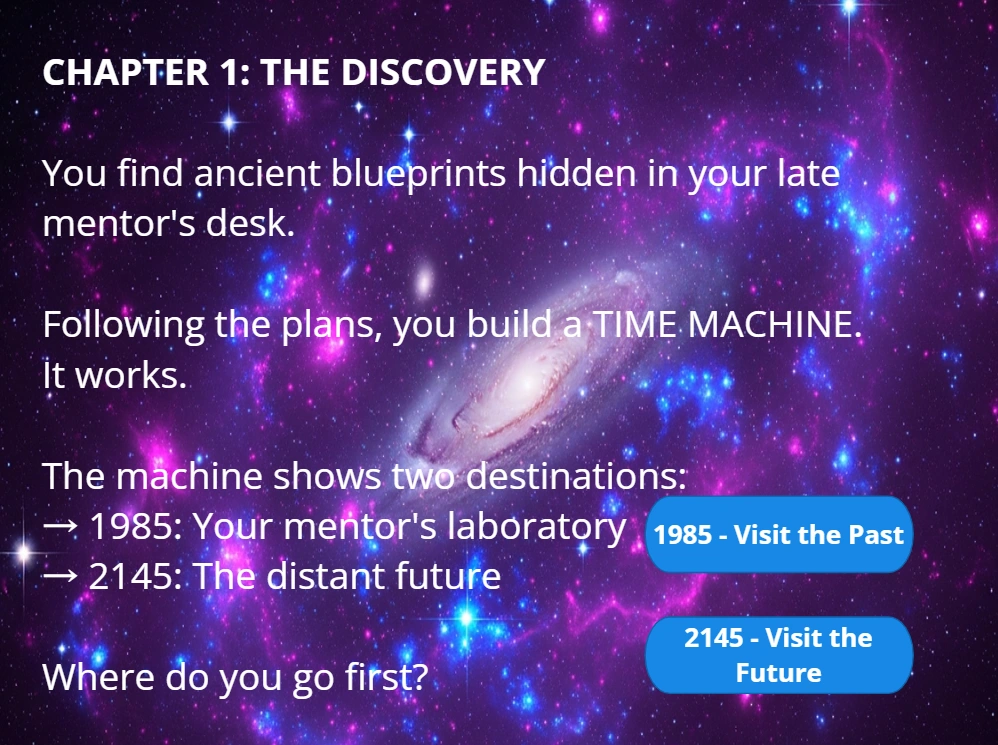
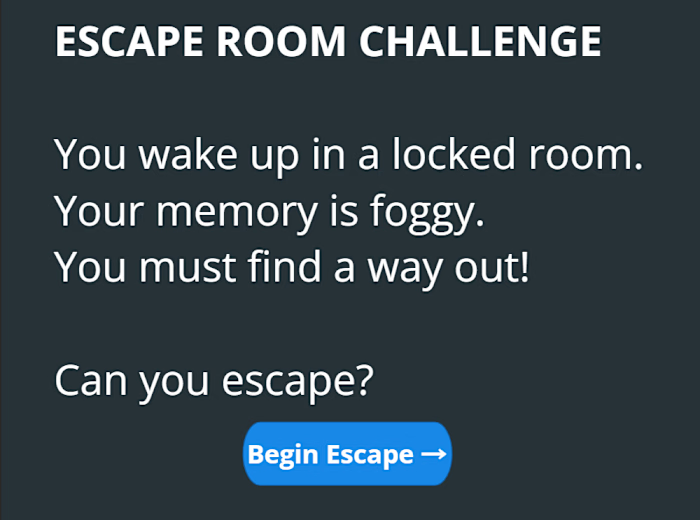
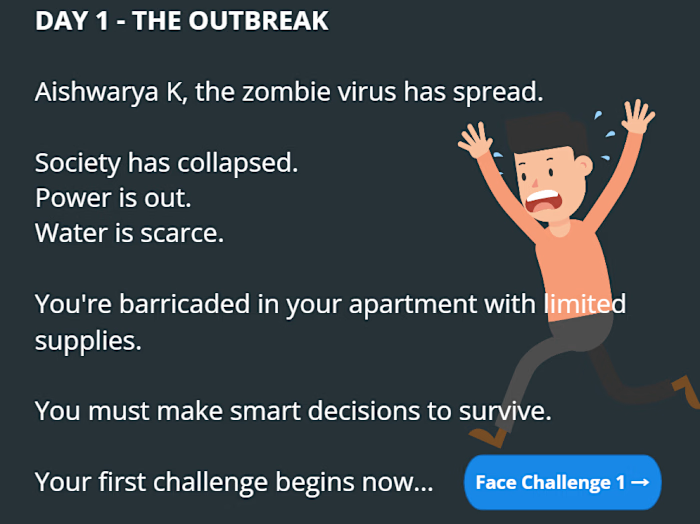
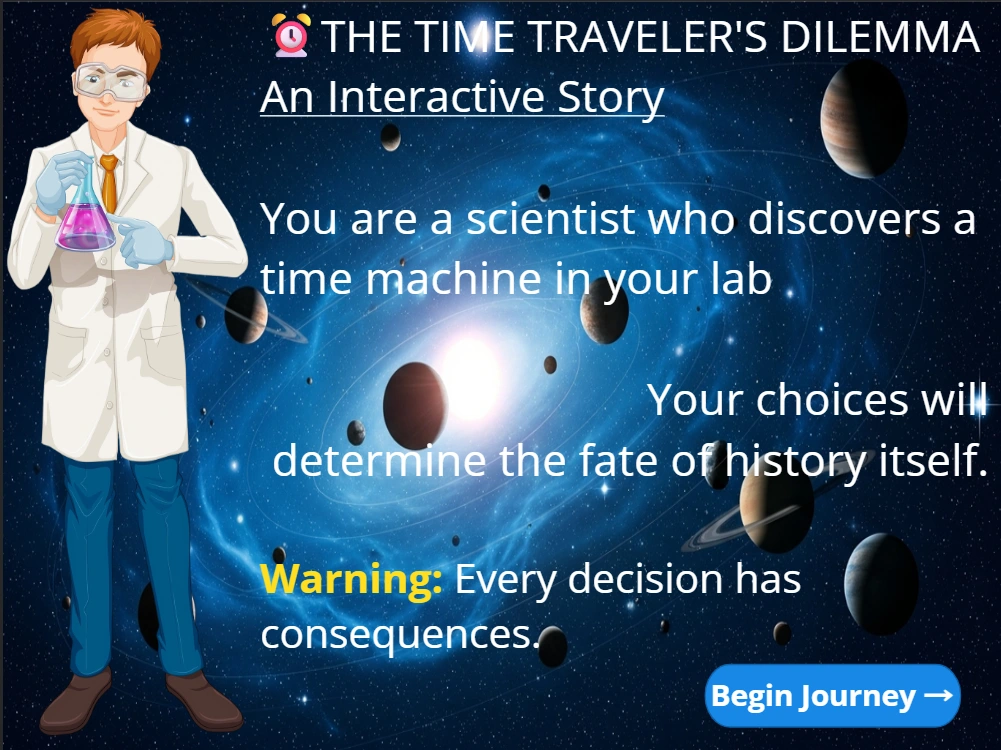
The Time Traveler's Dilemma is a choice-driven interactive story where learner decisions directly shape the narrative and determine the outcome of historical events. Learners discover a time machine and navigate four critical decision points across different timelines. Each choice creates cascading consequences that influence future options, ultimately leading to one of seven unique story endings. The module uses branching logic and multi-variable tracking to support non-linear storytelling and decision-based learning. FEATURES: 4 decision points 7 unique story endings Cascading consequences Variable-based choices Chapter-based flow Character visuals SKILLS DEMONSTRATED: Branching design Consequence logic Multi-variable tracking Non-linear navigation Narrative design Conditional triggers