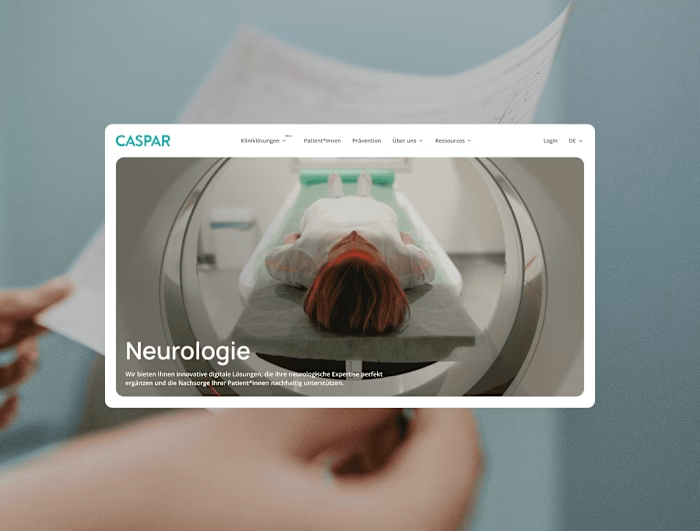
IMT Analytics: medical ventilator UI and design system

Paula Gibert

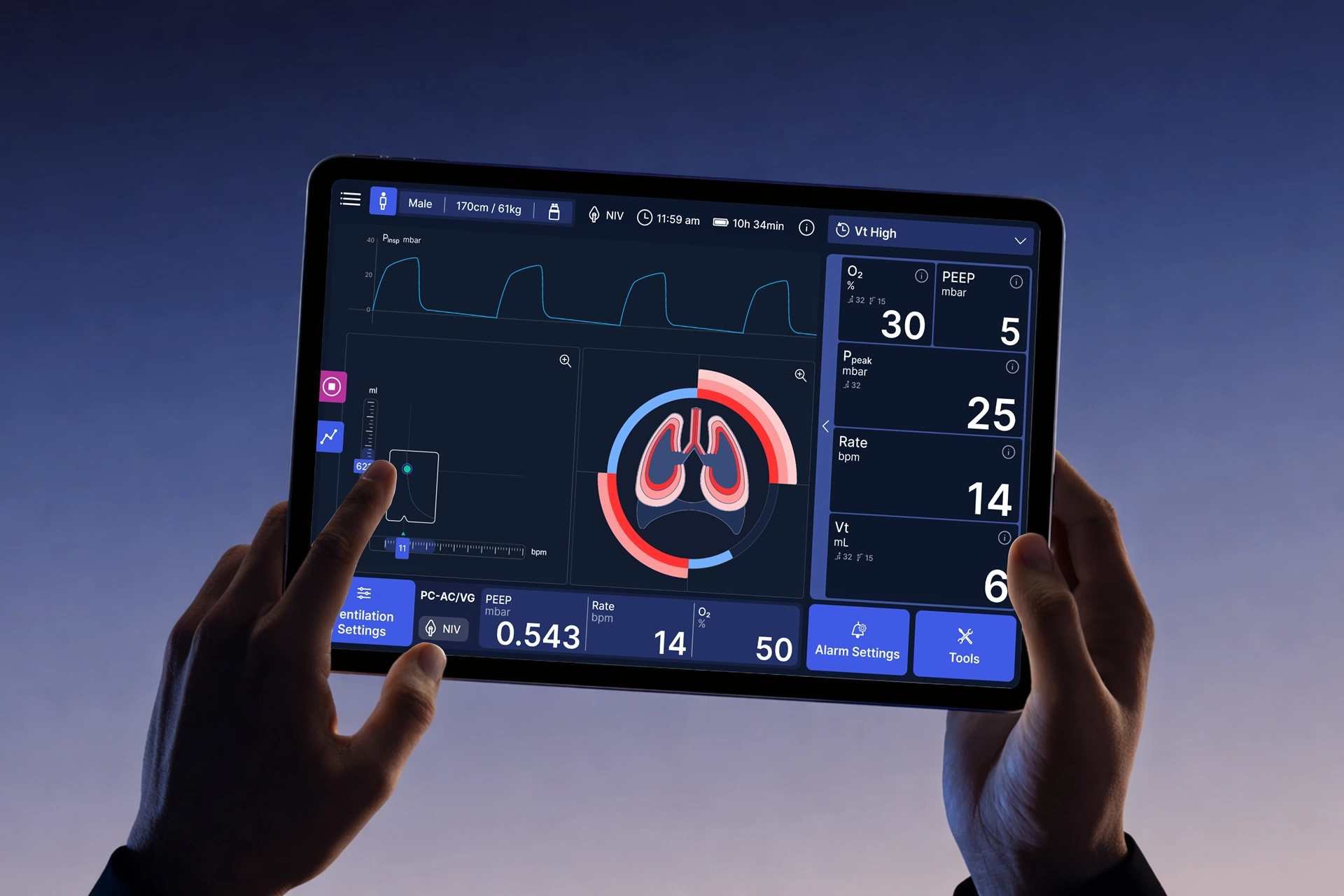
Ventilator interface panel
Context
IMT Analytics builds precision medical devices for respiratory care, and its ventilator worked reliably but carried an interface designed more than ten years earlier, where deep menus and hidden functions slowed down the people using it. The redesign covered the ventilator and the Alveo training simulator at once, and since almost every main function had to fit on a single screen that is read from about two metres away and often in a darkened room, legibility governed nearly every decision within the regulatory requirements of a medical device.
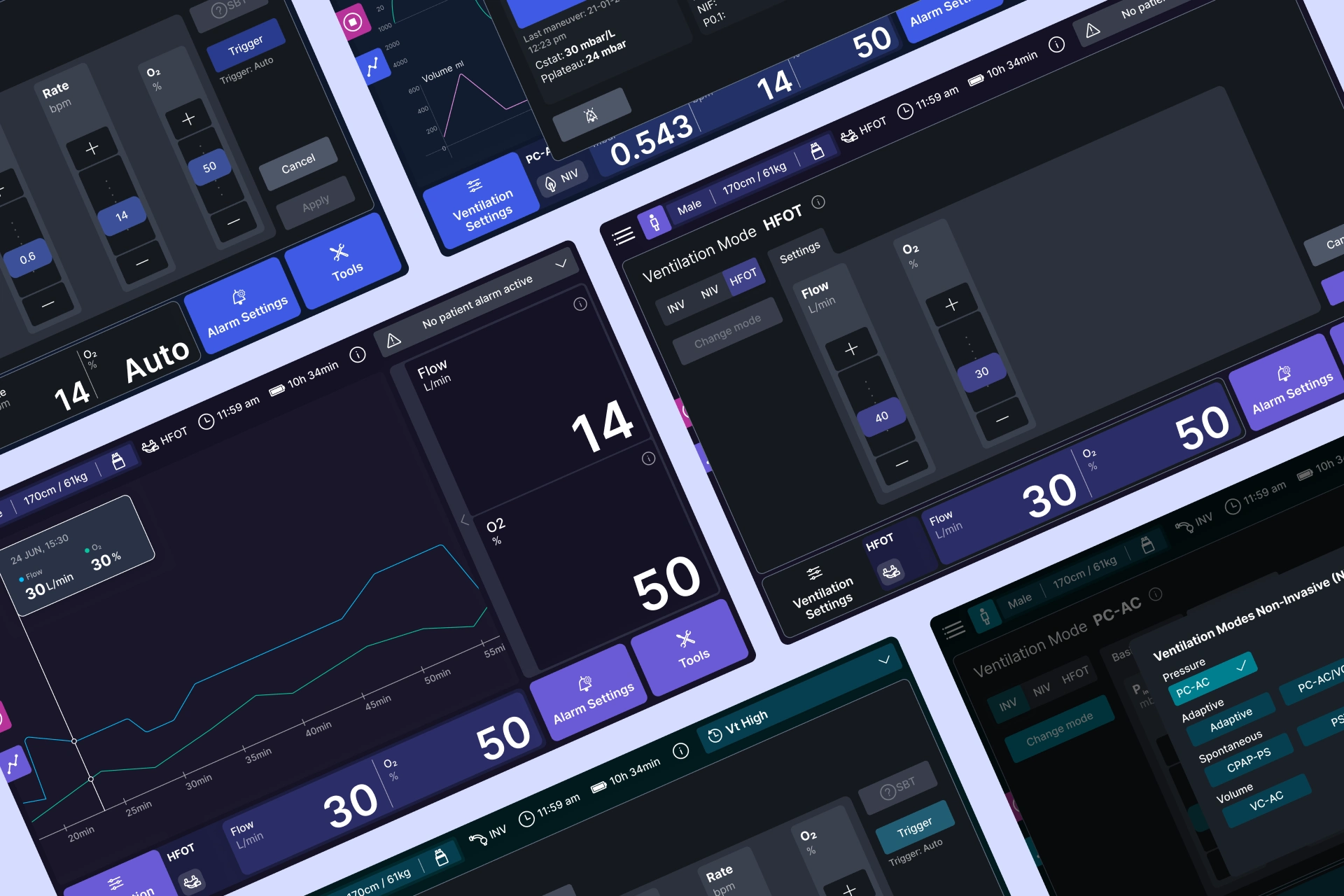
Ventilator interface in use on a tablet
What I did
I owned the interface execution across both products, from the colour system and the behaviour of the alerts to the component library the ventilator and the simulator would share, working alongside the UX Lead and the client's product manager, who tested my prototypes with clinicians, and staying with the three developers through handover and the iterations that followed. Rather than build each component from scratch I assembled them from a small set of shared atoms, which kept the system light enough for the hardware and meant that a change made for one product would not break the other.
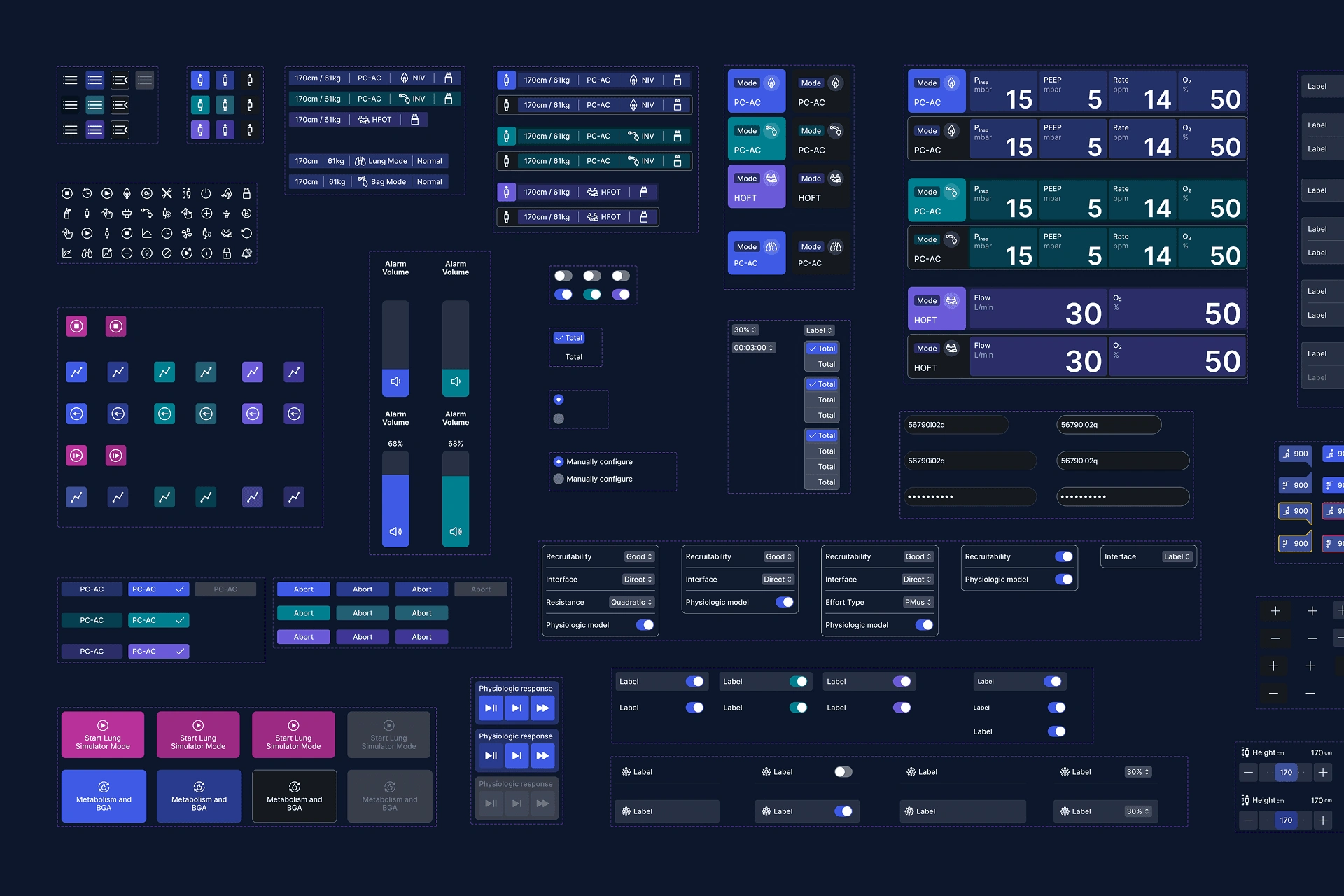
Component library for the ventilator and the simulator
Key decisions
The overlays originally used a background blur so clinicians could keep sight of the patient curves and any alert firing behind an open panel, but the effect cost too much on the device's hardware and the software turned slow and unstable, so we moved to a solid dark background and accepted a real loss of awareness in exchange for a system that stayed responsive. Typography followed the same conditions, and after comparing candidates for numeric clarity at distance and at small sizes, Inter came out ahead, with a variable format that let the system shift weight without carrying extra files.
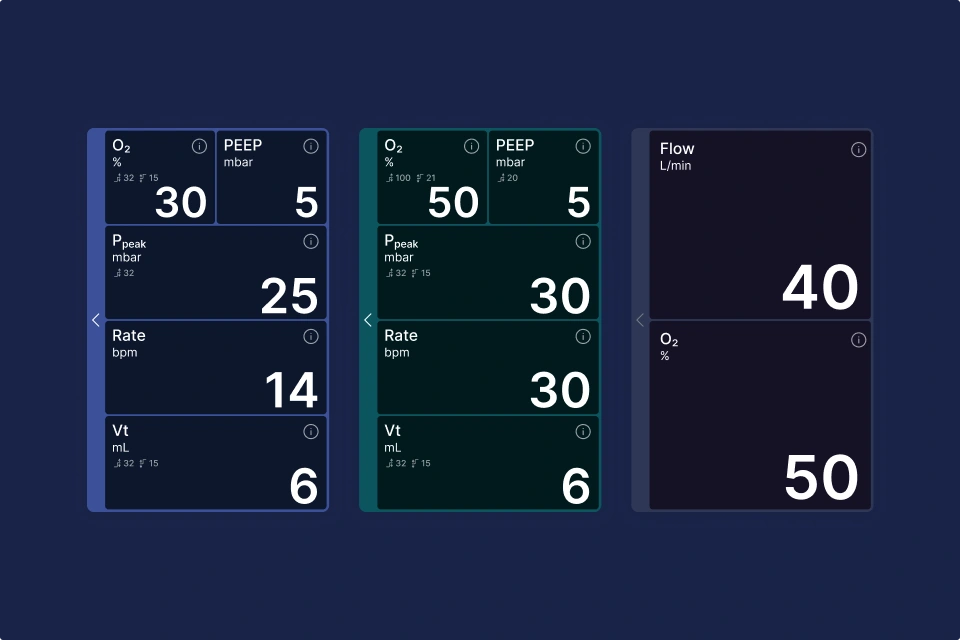
Parameters panel component in different modes
Outcome
The design phase closed in about 1.5 years, which the team considered fast for a medical device, and left a scalable design system of more than 170 components serving two distinct products from a single library. Both devices were presented at industry fairs in Europe and the United States, where the feedback from medical professionals was outstanding.
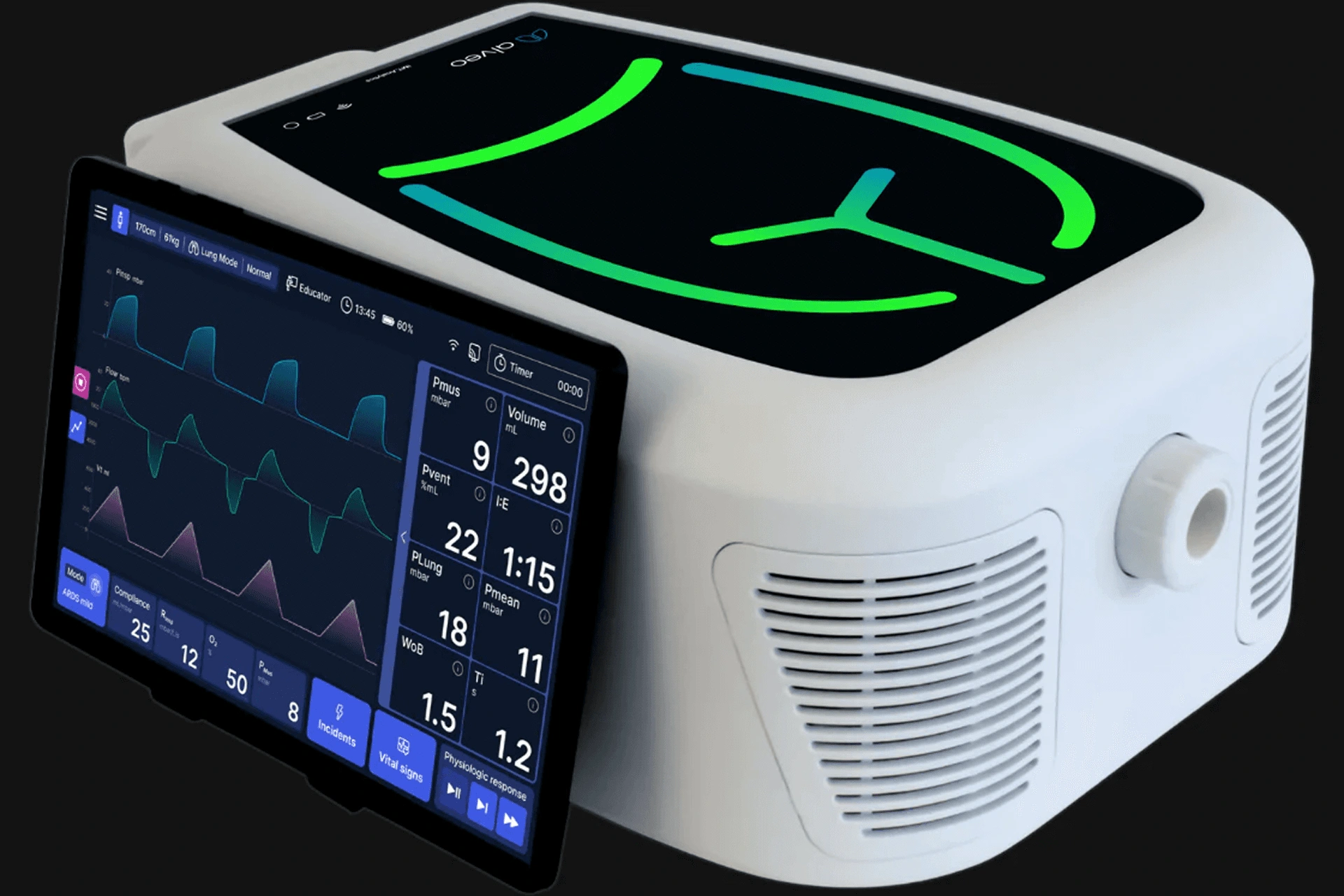
The Alveo training simulator with its interface
Like this project
Posted Sep 29, 2026
Designing a safety-critical ventilator UI on a multi-product design system built for legibility at a distance and clear alerts in intensive care.