Crystal - Instagram Carousel Creator

Lisa Demchenko


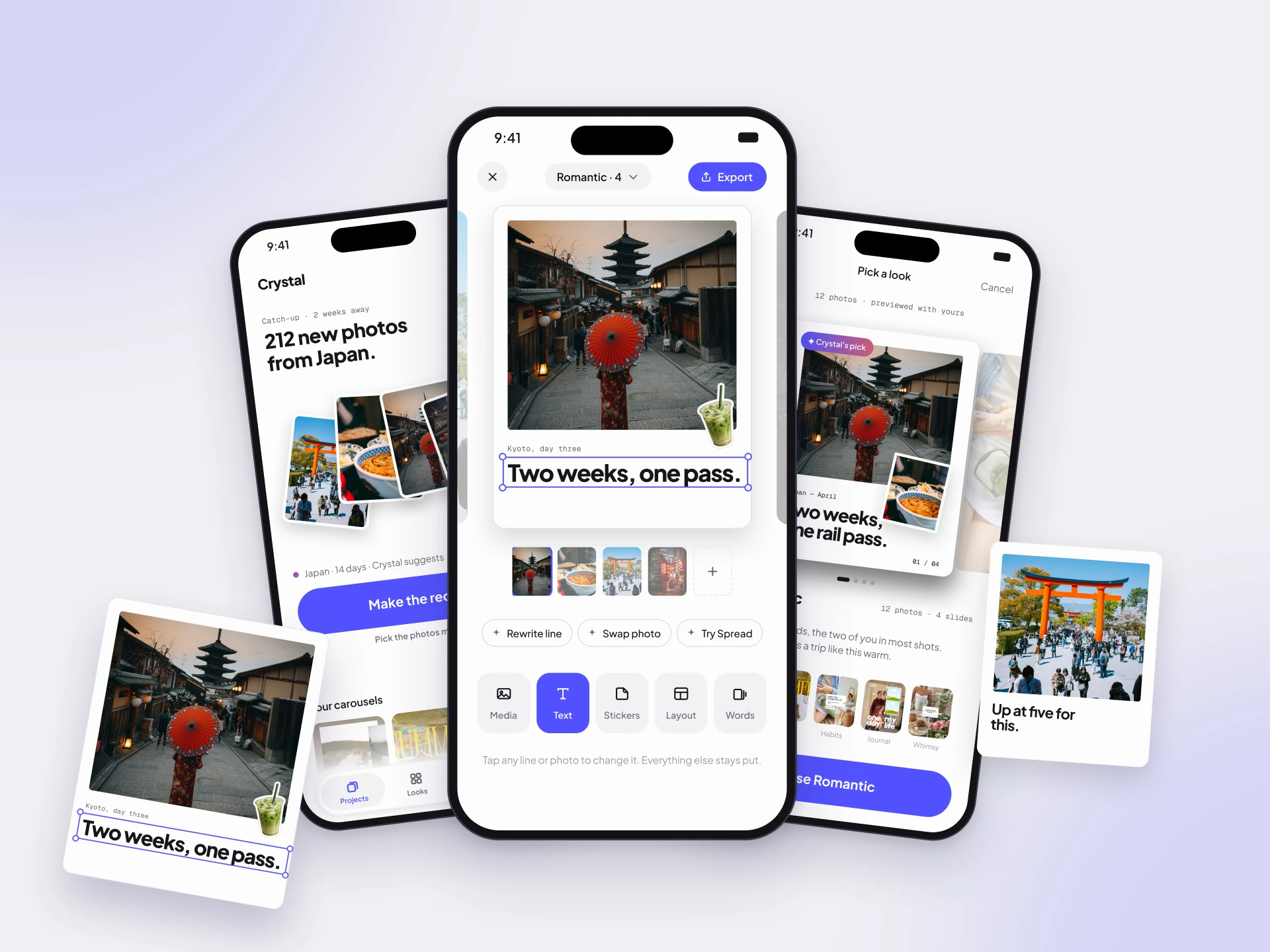
Crystal went from a Notion brief to a working Beta in about seven weeks, from early August to the end of September 2026. It turns camera-roll photos and one line of context into a finished Instagram carousel.
I led it end to end: research, flows, UX and UI, and the build itself, working with Claude Code.
The work ran in five stages, each one feeding the next and being rewritten by it:
Groundwork in Notion — problem, desk research, competitors, personas, brief, kill criteria.
Flows in FigJam — eight user flows with their branches, drop-offs and edge states.
Wireframes — greyscale screens to settle hierarchy and one-handed reach.
Hi-fi designs — 55 screens across eight flows, 21 of them edge or error states.
Prototyping with Claude Code — from a pipeline prototype to a SwiftUI app with a real backend. The name changed twice on the way: Roll, then Ketchup, then Crystal.
Groundwork in Notion
Crystal - Notion planing
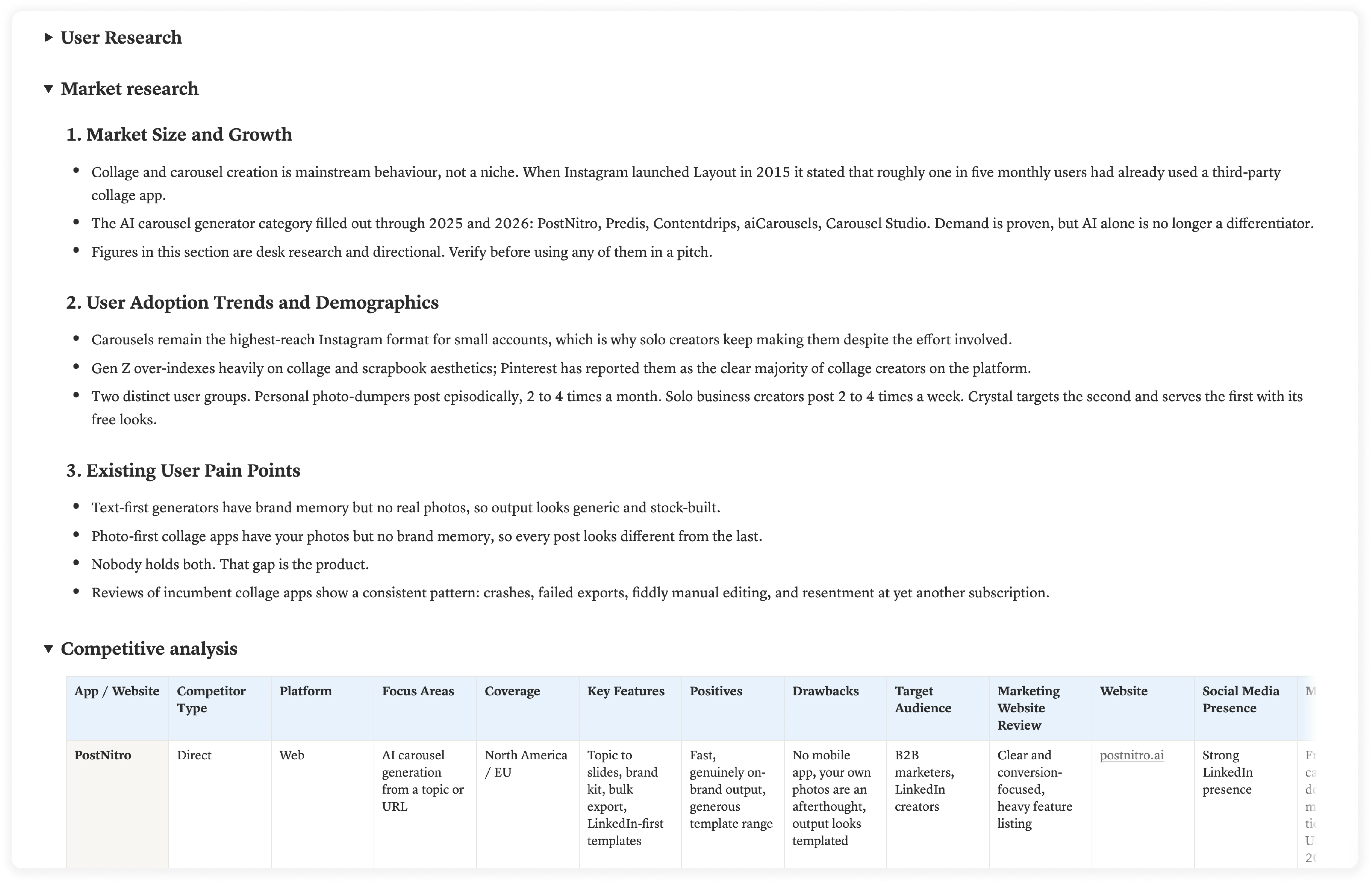
Notion held the project record from day one, and it still does. I used my standard project template: problem, research, competitors, personas, ideation, brief, style, flows, wireframes, testing, deliverables.
• Problem. Solo creators know they should post consistently, but every carousel means opening a design tool and making thirty small decisions. So they post irregularly, and nothing looks like the same brand.
• Success, stated up front. Photos to a posted, on-brand carousel in under 90 seconds — and again the next week without being prompted.
• Desk research, labelled as desk research. Competitor teardowns, App Store reviews and category reading. No primary research yet, and the page says so, so it isn't mistaken for validated insight.
• The gap. Text-first AI generators (PostNitro, Predis) own brand consistency but ignore your photos. Photo-first apps (SCRL, Inrousel) own your photos but forget your brand. Nobody holds both.
• Personas and jobs to be done. Six segments, four JTBD statements, with solo business creators posting weekly as the target and photo-dumpers as the free tier.
• Brief. Positioning, free vs paid, MVP scope, pricing and known risks.
Flows in FigJam
Before drawing a single screen, I mapped every journey in FigJam: where it starts, where it branches, and where people are likely to drop off. The same map was written up as FLOWS.md in the repo.
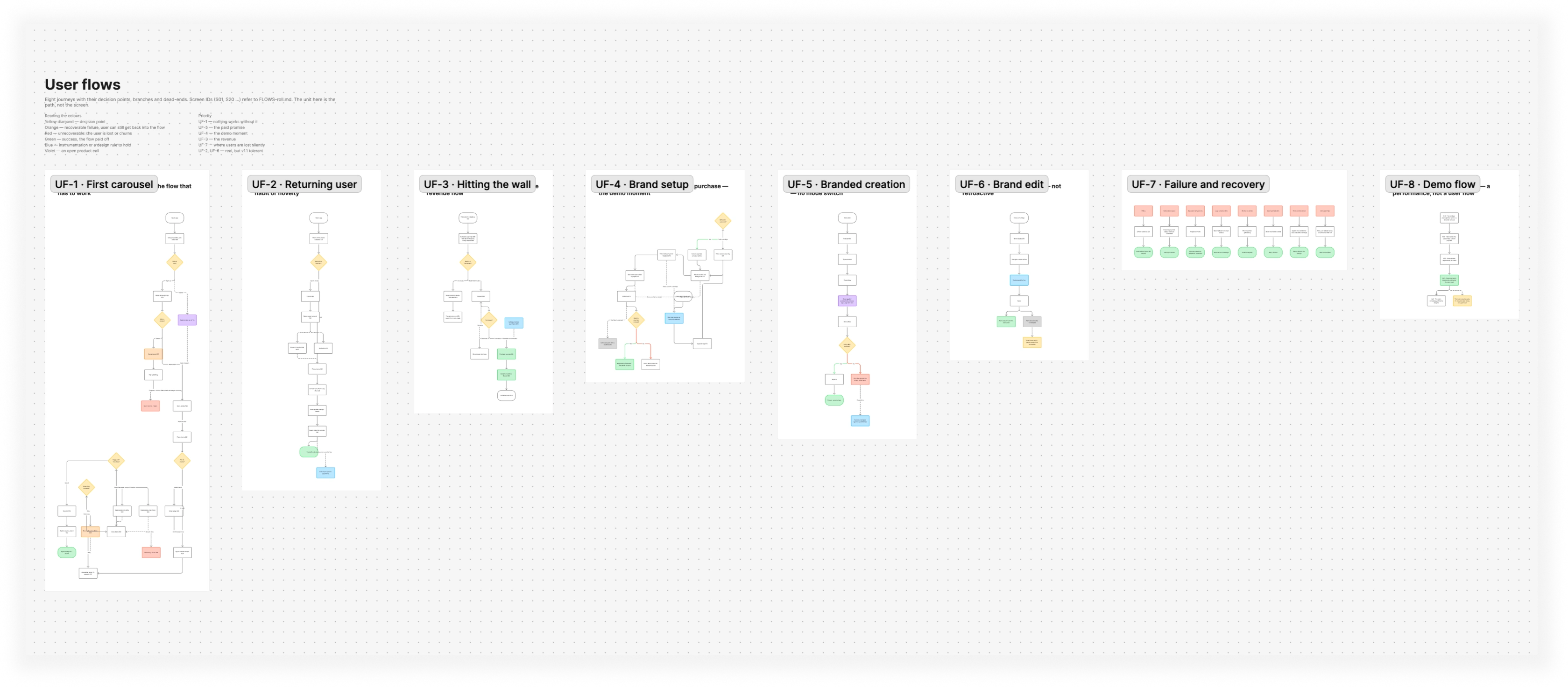
Crystal - flows
Wireframes
Greyscale wireframes fixed the structure before any colour or photo could distract from it.
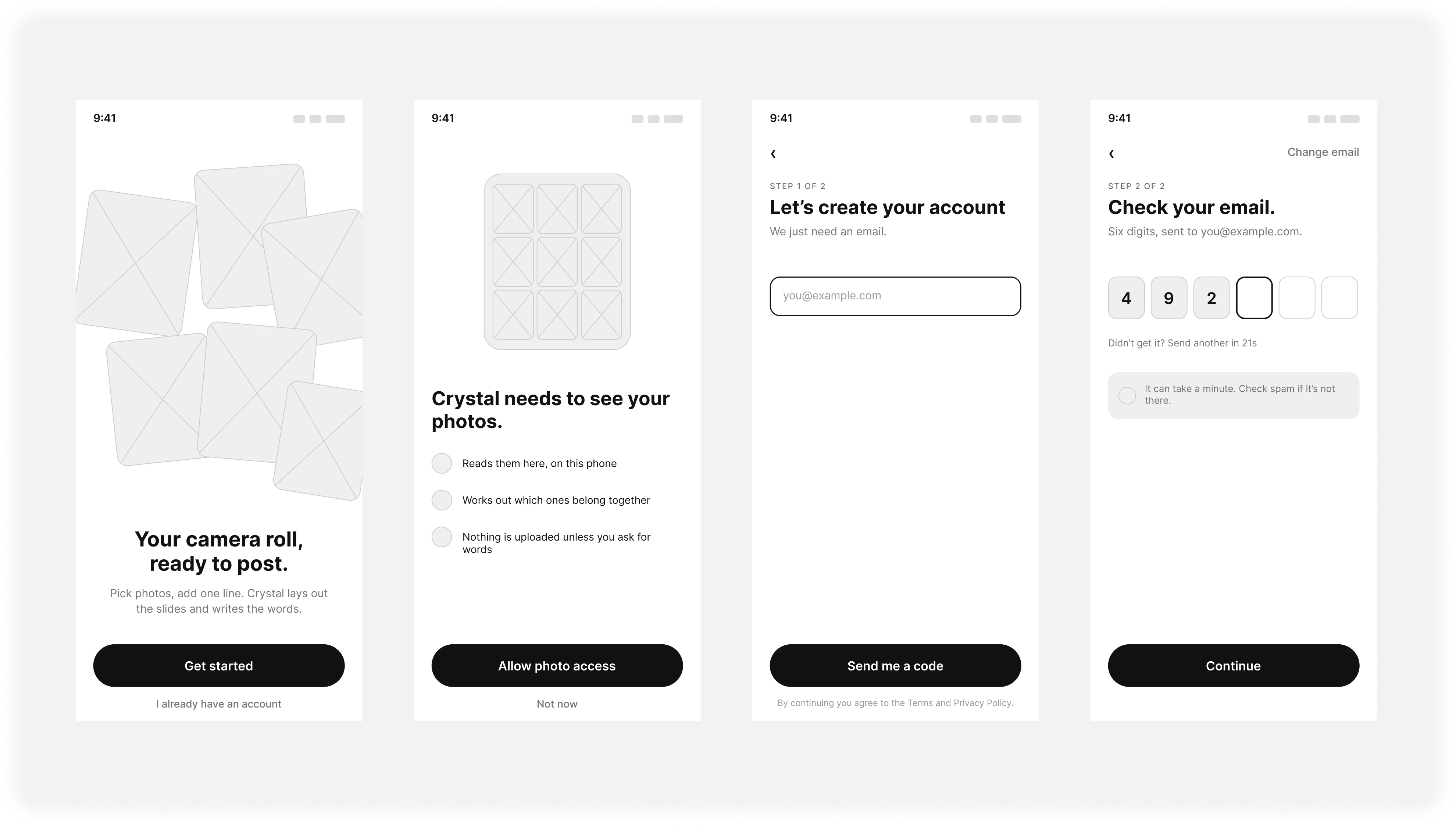
Crystal - wireframes
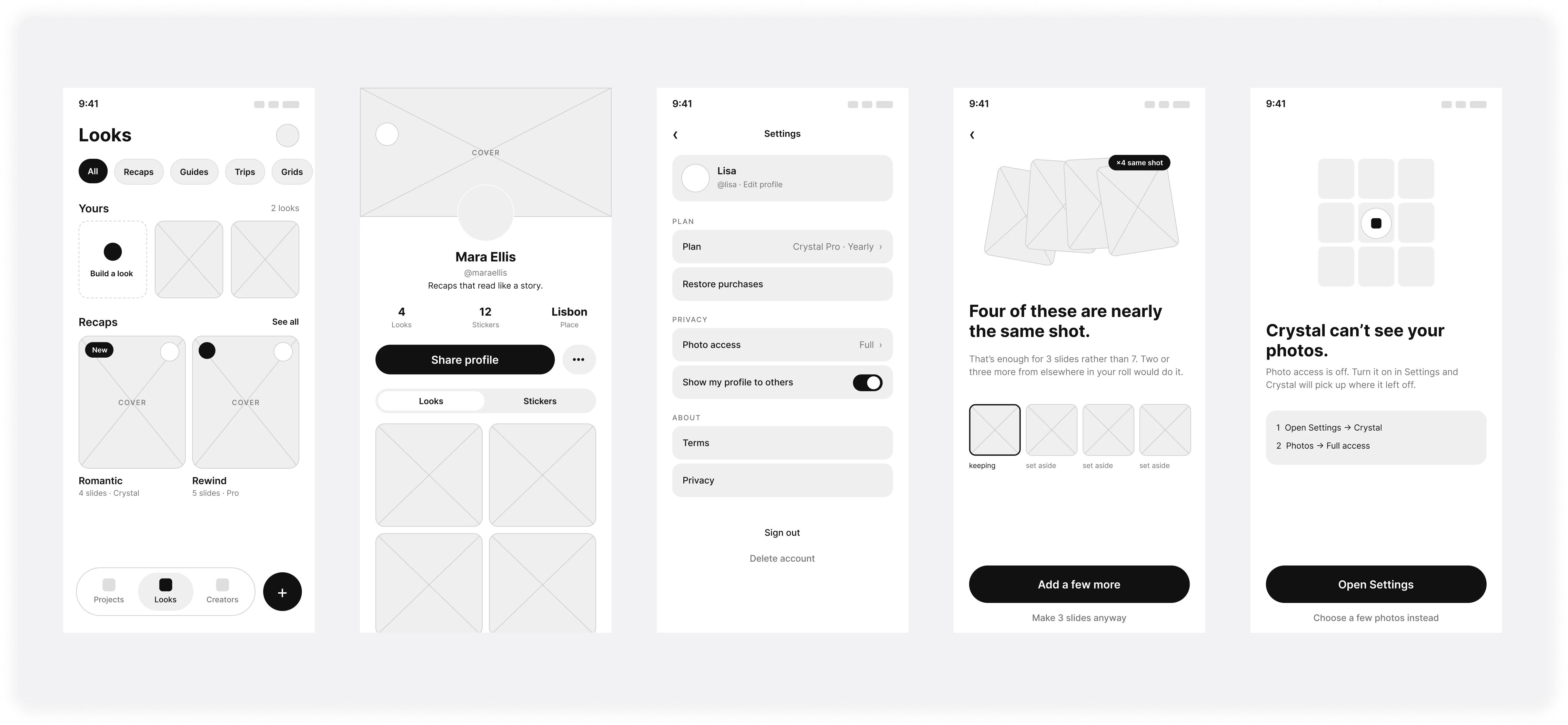
Crystal - wireframes
Hi-fi designs The final UI is 55 screens.
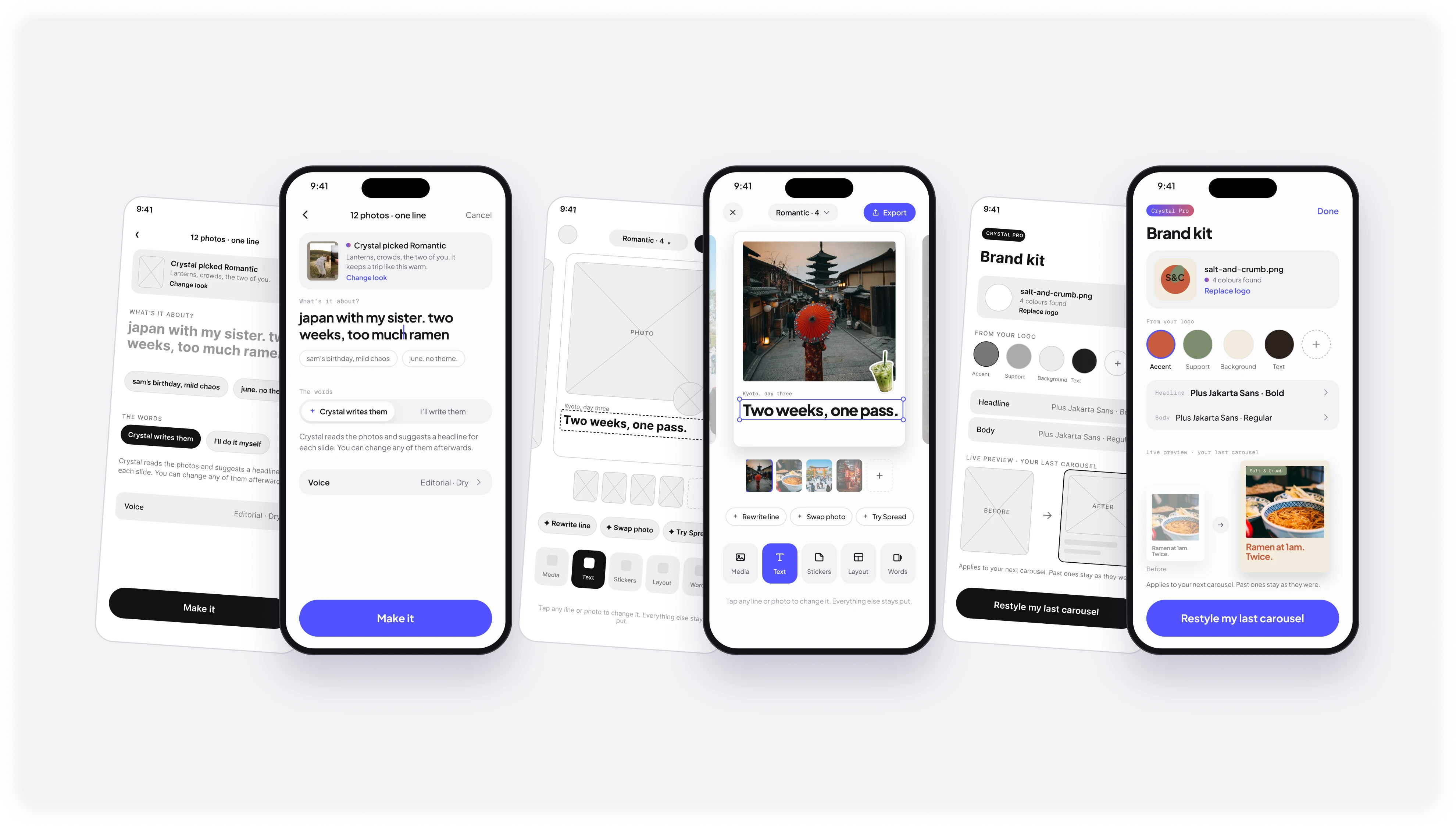
Crystal - from wireframes to designs
The visual language started as a first pass in Claude Design, whose token section became design.md in the repo. I then refined the screens in Figma against those tokens.
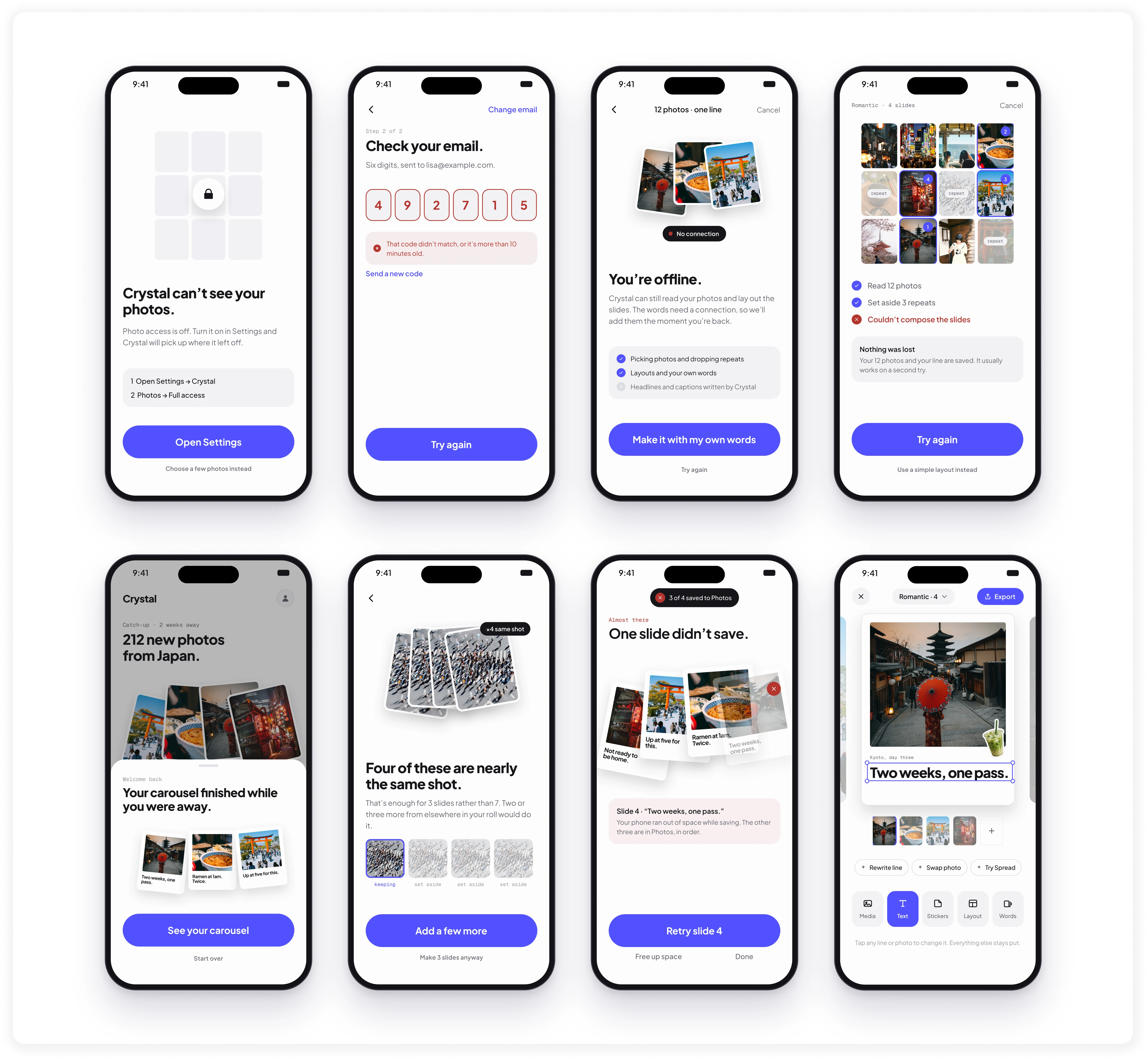
Crystal high fidelity designs
Prototyping and building with Claude Code
I prototyped in code from the second week, because the riskiest question — are the slides good enough to post? — could only be answered by real output on real photos. Claude Code did the typing; I owned the architecture, the design rules and the judgement calls.
Shipping tools.
Scripts for TestFlight builds, signing, App Store Connect and an App Store review account, plus a Next.js waitlist site at mycrystal.app. The repo carries its own design documentation — FLOWS.md, SCREENS.md and design.md — so every build decision points back to a flow, a screen ID or a token.
Crystal - app video
Like this project
Posted Oct 1, 2026
Crystal is an iPhone app that turns photos into Instagram carousels. I led the project end to end, from research and flow to working prototype
Likes
0
Views
12
Timeline
Aug 1, 2026 - Sep 30, 2026