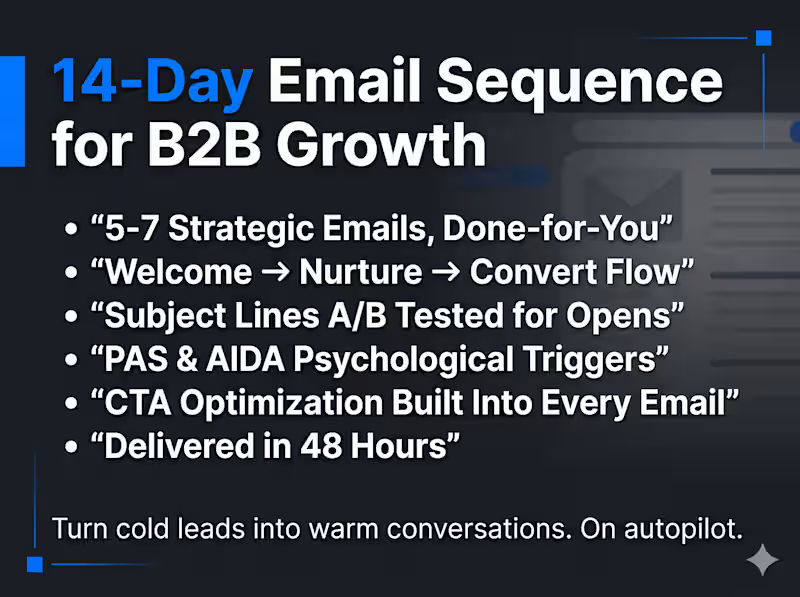
Projects using Notion in New South WalesProjects using Notion in New South Wales14-Day Email Sequence & Nurture Copy for B2B Growth
You're getting leads. But they go cold before they buy.
Someone visits your site, downloads your guide, books a discovery call, or signs up for your list. Then... silence. No follow-up. No nurture. No conversion. They forget you exist by Tuesday.
The problem isn't your offer or your audience. It's that you have no system turning interest into trust, and trust into revenue.
What I build for you
A 14-day email nurture sequence engineered to take a cold lead from "who are you?" to "let's work together." Plus a 400-word anchor nurture piece (welcome email, lead magnet follow-up, or onboarding email) that sets the tone for the entire relationship.
Every email is written with strategic intent: each one has a job, whether that's building credibility, handling objections, creating urgency, or driving a specific action. This isn't "just checking in" email. It's a conversion system.
Built for B2B professionals who sell expertise
This service is specifically designed for:
Consultants & coaches who need to warm leads between discovery call and close
Lawyers & accountants who want to nurture referrals and inbound inquiries without sounding salesy
Real estate agents who need drip sequences that keep them top-of-mind through long buying cycles
Small business owners who know they should be emailing their list but don't know what to say
SaaS founders who need onboarding sequences that reduce churn and drive activation
How it works
Intake & Strategy: I learn your business, audience, and conversion goal. What action should the reader take by Day 14? We start there and reverse-engineer the sequence.
Anchor Nurture Piece (400 words): I write your foundational email, the one that sets your voice, establishes authority, and frames the relationship. This is typically your welcome email or lead magnet follow-up. Short, sharp, and high-impact.
14-Day Email Sequence (14 emails, 150-200 words each): Each email is strategically sequenced using a trust-building arc: introduce, educate, prove, handle objections, create urgency, convert. Every email has a clear purpose and a single call to action.
Delivery: Complete sequence delivered in a formatted Google Doc with subject lines, preview text, send-day recommendations, and CTA labels clearly marked. Ready to paste into Mailchimp, ConvertKit, ActiveCampaign, or any email platform.
FAQs
I'm not a tech company. Will this work for my industry?
What email platform do I need?
What's the difference between the anchor nurture piece and the 14-day sequence?
Can you write for a specific conversion goal?
What if I don't have a lead magnet or opt-in yet?
Do I need to write anything myself?
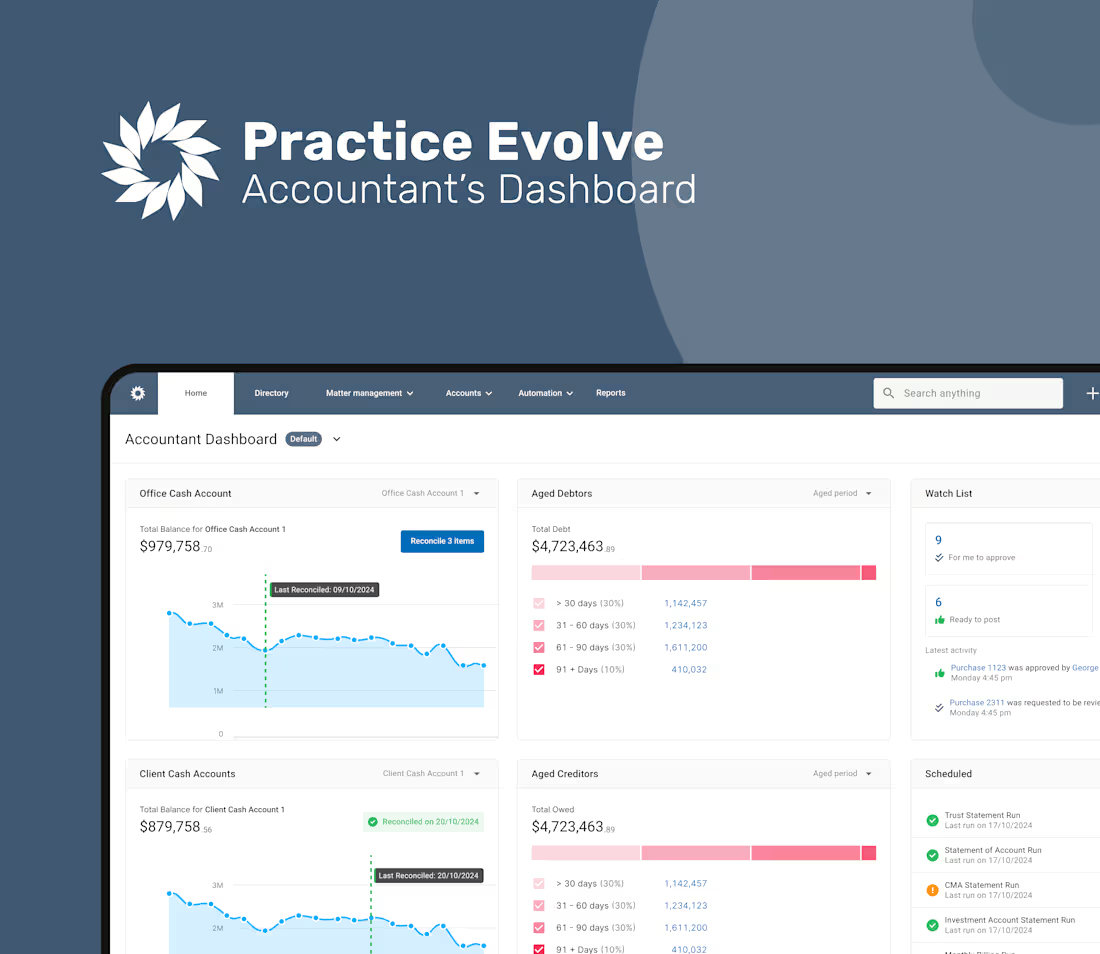
What if I want to adjust the tone or messaging? Seller‑Side Due Diligence: What a Good Accountant Must Do Before a Business Sale in Australia
Selling a business in Australia is one of the most significant financial events a small‑to‑medium business owner will ever experience. It’s not just a transaction — it’s the culmination of years (sometimes decades) of work, risk, sacrifice, and personal investment. As an accountant acting for the seller, my role is to ensure the business is presented with clarity, accuracy, and defensible financial logic. That means preparing the business for scrutiny before the buyer even begins theirs.
This process is known as seller‑side due diligence, and when done properly, it protects the seller, strengthens valuation, reduces negotiation friction, and increases the likelihood of a clean, successful sale.
With 15 years in Australian tax, business services, and forensic accounting, I’ve learned that seller‑side due diligence is not just about numbers — it’s about narrative, transparency, and anticipating the questions a sophisticated buyer (or their accountant) will ask. Below is the framework I use when preparing a business for sale.
1. Understanding the Entity Structure — The Foundation of Everything
Before touching a spreadsheet, I need to understand how the business is structured, because the entity type determines:
how goodwill is treated
whether CGT concessions apply
how assets are transferred
what liabilities follow the sale
whether the owner’s personal assets are exposed
how the sale price is allocated
In Australia, small businesses are commonly structured as:
Sole traders
Partnerships
Discretionary or unit trusts
Pty Ltd companies
Each structure has different tax consequences. For example, a sole trader selling a business they’ve operated for over 15 years may be eligible for the Small Business 15‑Year CGT Exemption, which can eliminate capital gains tax entirely if conditions are met. A company, however, may need to consider the 50% active asset reduction, retirement exemption, or rollover provisions instead.
Understanding the structure early allows me to shape the sale strategy, the valuation narrative, and the tax planning opportunities available.
2. Preparing the Financial Core — The Documents No Buyer Will Proceed Without
A buyer’s accountant will always ask for the same foundational documents. If the seller cannot provide them quickly and cleanly, confidence drops and valuation suffers.
The essential documents include:
Profit & Loss Statements (3–4 years minimum)
Balance Sheets for the same period
Tax Returns (entity and individual, where relevant)
BAS statements
General ledger extracts
Depreciation schedules
Asset registers
Loan agreements and finance schedules
Employee entitlement summaries
Superannuation compliance records
Tax returns are particularly important because they show actual tax depreciation, not just accounting depreciation. Buyers look for consistency between accounting profit and taxable income — discrepancies must be explained.
If the financials are unaudited, I perform a forensic-style review to ensure accuracy, identify anomalies, and prepare explanations before the buyer asks.
3. Normalising Earnings — The Heart of Valuation
Most small businesses have discretionary expenses, owner wages, or one‑off costs that distort true profitability. As the seller’s accountant, I prepare a normalised earnings statement that adjusts for:
owner’s salary (if above or below market)
personal expenses run through the business
one‑off legal or repair costs
non‑recurring revenue
related‑party transactions
abnormal stock adjustments
private vehicle or travel expenses
This is where forensic accounting skills matter. Buyers want to see sustainable, repeatable earnings, not inflated numbers. My job is to present a fair, defensible picture that supports the seller’s valuation without crossing into exaggeration.
4. Trend Analysis — Showing the Story Behind the Numbers
A single year’s profit means nothing without context. I analyse:
revenue growth or decline
margin stability
customer concentration
seasonality
cost trends
cashflow patterns
debtor and creditor movements
A business with stable margins and predictable cashflow commands a higher valuation. A business with volatile revenue needs explanation.
Trend analysis also helps identify risks before the buyer does. If revenue dipped in one year, I prepare the explanation upfront — new competitor, owner illness, supply chain issue, etc. Transparency builds trust.
5. Reviewing Contracts, Leases, and Operational Dependencies
Financials tell one story; contracts tell another. I review:
customer contracts (especially if one client represents >20% of revenue)
supplier agreements
equipment leases
property leases
insurance policies
licences and permits
intellectual property documentation
Buyers want to know:
what obligations they’re inheriting
whether key relationships are secure
whether the business can operate without the current owner
If the business relies heavily on the owner’s personal relationships, I highlight this early and help the seller prepare a transition plan.
6. Employee Entitlements and ATO Compliance
Employee liabilities are a major due‑diligence focus. I verify:
annual leave
long service leave
superannuation payments
payroll tax
workers compensation
award compliance
Superannuation compliance is critical. Any unpaid super is a red flag that can derail a sale.
I also check for ATO payment plans, outstanding BAS, or historical issues. Buyers will find them — better that I prepare the explanation first.
7. Valuation Scenarios — Presenting a Range, Not a Guess
A good accountant never presents a single valuation number. Instead, I prepare valuation scenarios, such as:
valuation based on normalised EBITDA
valuation based on net tangible assets
valuation based on discounted future cashflow
valuation after applying CGT concessions
valuation after adjusting for working capital
This gives the seller a realistic range and prepares them for negotiation.
8. Capital Gains Tax Planning — The 15‑Year Concession and Other Small Business Reliefs
For many small business owners, CGT is the biggest financial event of their life. Australia’s Small Business CGT Concessions can dramatically reduce or eliminate tax on the sale.
Key concessions include:
15‑Year Exemption — if the business has been owned for 15+ years and the owner is over 55 and retiring, the entire capital gain may be tax‑free.
50% Active Asset Reduction — reduces the capital gain by half.
Retirement Exemption — up to $500,000 can be contributed to super tax‑free.
Small Business Rollover — defers CGT if proceeds are reinvested in another active asset.
My role is to determine eligibility early, model the tax outcomes, and structure the sale to maximise concessions.
9. Preparing the Business Overview — The Document Buyers Actually Read
Once the financial and operational due diligence is complete, I prepare a business overview that includes:
business history
revenue breakdown
customer profile
operational structure
financial highlights
normalised earnings
valuation summary
risk factors
transition plan
This is the document the buyer reads before deciding whether to proceed to formal due diligence.
A clear, honest overview builds trust and positions the seller as organised and credible.
10. Anticipating Buyer Questions — The Forensic Mindset
Finally, I prepare the seller for the questions buyers will ask, such as:
Why are you selling?
What would happen if you stepped away tomorrow?
Are there any disputes, liabilities, or compliance issues?
How dependent is the business on key staff or customers?
What risks should we be aware of?
A seller who answers confidently and transparently is far more likely to secure a strong offer.
Closing Thoughts
Seller‑side due diligence is not about making the business look perfect — it’s about presenting it honestly, clearly, and professionally. When the financials are clean, the narrative is coherent, and the risks are acknowledged upfront, buyers feel safer, negotiations run smoother, and valuations hold firm.
As an accountant with experience in business sales, forensic analysis, and Australian tax law, my goal is simple: protect the seller, strengthen their position, and ensure the business is presented with the clarity it deserves.
__________________________________________________________________
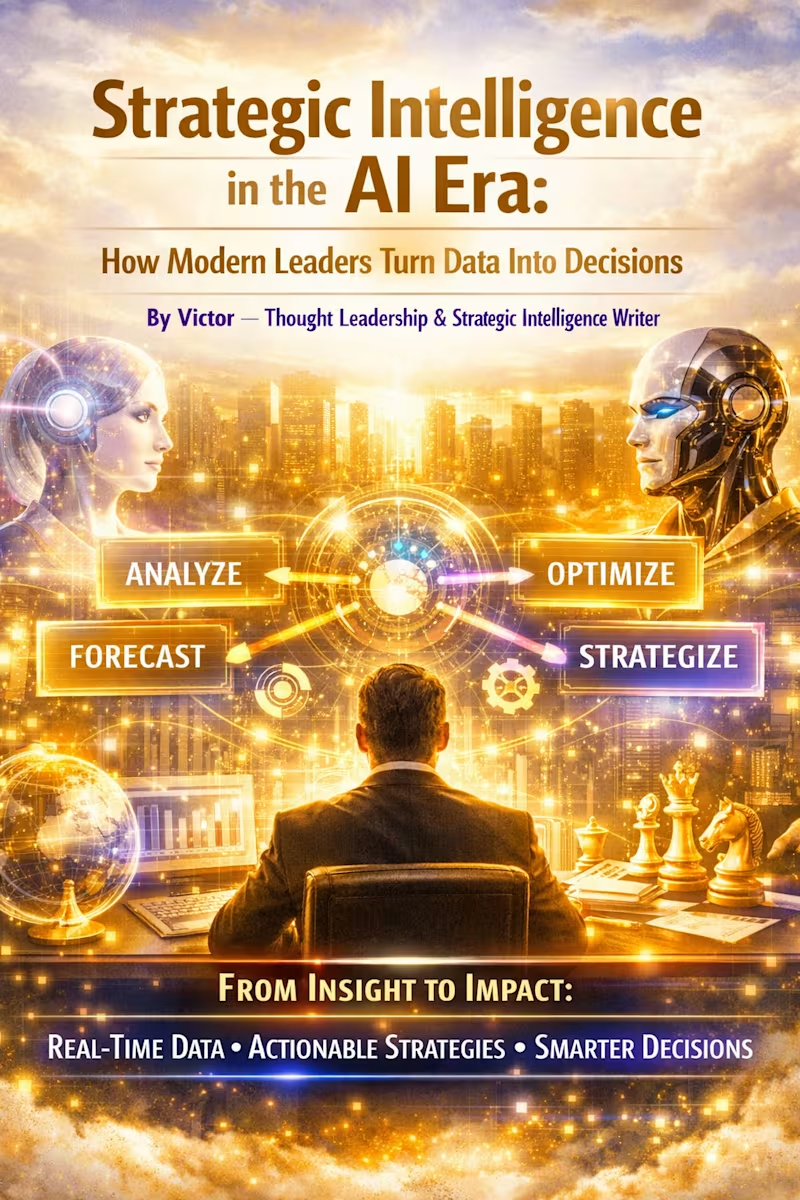
Written by Victor Tyan MIntBus, BComm Strategic Intelligence in the AI Era: How Modern Leaders Turn Data Into Decisions
By Victor — Thought Leadership & Strategic Intelligence Writer
In the last decade, artificial intelligence has moved from a futuristic concept to a practical, everyday tool embedded in the workflows of thousands of businesses. But while most organisations now understand the value of automation, predictive analytics, and machine learning, a new frontier is emerging — one that goes beyond data processing and into the realm of strategic clarity.
This frontier is AI‑driven decision intelligence, a discipline that blends data science, behavioural psychology, and business strategy to help leaders make faster, smarter, and more consistent decisions. For founders, executives, and operational teams navigating increasingly complex markets, decision intelligence is becoming a defining competitive advantage.
Why Decision‑Making Is the Last Untouched Bottleneck
Most companies have already optimised their operations. They’ve automated repetitive tasks, digitised workflows, and adopted cloud‑based tools. Yet despite all this progress, one area remains stubbornly human, slow, and inconsistent: decision‑making.
Leaders still rely on:
gut instinct
incomplete data
siloed information
biased interpretations
outdated reporting cycles
This creates bottlenecks that ripple across the entire organisation. A delayed decision can stall a product launch. A misinformed decision can derail a marketing campaign. A biased decision can distort hiring, budgeting, or resource allocation.
Decision intelligence aims to solve this by giving leaders real‑time clarity, contextual insights, and predictive foresight — without replacing human judgment.
What Decision Intelligence Actually Does
At its core, decision intelligence uses AI to:
analyse vast datasets
identify patterns humans miss
simulate outcomes
recommend optimal actions
reduce uncertainty
highlight risks
quantify trade‑offs
But the real power lies in how it integrates with human thinking. Instead of replacing decision‑makers, it augments them.
A CEO can see how different pricing strategies affect revenue.
A marketing director can test campaign variations before spending a dollar.
A supply‑chain manager can predict disruptions weeks in advance.
A founder can model growth scenarios with remarkable accuracy.
Decision intelligence becomes a strategic partner — one that never sleeps, never gets overwhelmed, and never loses track of the data.
Real‑World Use Cases Across Industries
Decision intelligence is already reshaping industries in ways that feel subtle but transformative.
Retail
AI models forecast demand, optimise inventory, and personalise customer experiences. Retailers reduce waste, increase margins, and respond faster to market shifts.
Finance
Banks use decision intelligence to assess risk, detect fraud, and guide investment strategies. It enhances compliance while improving customer trust.
Healthcare
Hospitals use predictive models to allocate staff, manage patient flow, and anticipate equipment needs. The result is better care and reduced operational strain.
Professional Services
Consulting firms use decision intelligence to deliver sharper insights, faster analysis, and more accurate strategic recommendations.
Startups
Founders use AI‑driven simulations to test business models, forecast cash flow, and refine their go‑to‑market strategies.
Across all sectors, the pattern is the same: better decisions → better outcomes.
The Human‑AI Partnership
One of the biggest misconceptions about AI is that it removes human agency. In reality, decision intelligence strengthens it.
Humans excel at:
creativity
empathy
ethical judgment
long‑term vision
AI excels at:
pattern recognition
data processing
scenario modelling
probability analysis
Together, they form a hybrid decision‑making model that is more accurate, more consistent, and more resilient than either could achieve alone.
The Cultural Shift Behind Better Decisions
One of the most overlooked aspects of decision intelligence is the cultural transformation it triggers inside an organisation. When leaders begin relying on AI‑supported insights, the entire decision‑making environment becomes more transparent, more accountable, and more data‑driven. Teams stop making choices based on hierarchy or habit, and start grounding their actions in evidence, probability, and strategic alignment.
This shift reduces internal friction. Instead of debating opinions, teams evaluate scenarios. Instead of defending assumptions, they explore models. Instead of reacting to problems, they anticipate them. Decision intelligence doesn’t just improve outcomes — it improves the quality of conversations happening inside a business.
It also empowers mid‑level managers and operational staff. When insights are accessible, visual, and easy to interpret, decision‑making becomes decentralised. People closest to the work can act faster, with more confidence, and with a clearer understanding of how their choices affect the broader organisation. This creates a more agile, resilient, and responsive business culture.
Barriers to Adoption — and How Companies Overcome Them
Despite its benefits, many organisations hesitate to adopt decision intelligence because they fear complexity, cost, or disruption. But the reality is that modern AI platforms are becoming increasingly accessible. Cloud‑based tools, no‑code interfaces, and modular analytics systems allow businesses to start small and scale gradually.
The biggest barrier is not technology — it’s mindset. Companies that succeed with decision intelligence treat it as a long‑term capability, not a quick fix. They invest in training, encourage experimentation, and integrate AI insights into their existing workflows rather than forcing a complete overhaul. Over time, the organisation becomes more comfortable with data‑driven thinking, and the benefits compound.
The Strategic Payoff
Businesses that embrace decision intelligence early often discover unexpected advantages. They identify new revenue opportunities faster. They respond to market changes with greater precision. They reduce operational waste and improve customer satisfaction. Most importantly, they build a decision‑making framework that scales — one that grows stronger as more data flows through the system.
In a competitive landscape where speed and clarity determine survival, decision intelligence becomes more than a tool. It becomes a philosophy — a way of running a business that blends human judgment with machine‑driven insight to create a smarter, more adaptive organisation.
Why Businesses Should Adopt Decision Intelligence Now
The companies that adopt decision intelligence early will gain:
faster strategic execution
reduced operational risk
improved forecasting accuracy
stronger competitive positioning
better resource allocation
higher profitability
In a world where markets shift overnight, the ability to make high‑quality decisions at speed is no longer optional — it’s existential.
The Future of Decision‑Making
As AI continues to evolve, decision intelligence will become a standard part of every organisation’s toolkit. Leaders won’t ask, “Should we use AI for decision‑making?” They’ll ask, “How did we ever operate without it?”
The future belongs to businesses that combine human intuition with machine‑driven clarity — and the transformation has already begun.
Victor Tyan,MIB,BCom