YOUR MEDICATION APP IS NOT FAILING BECAUSE OF UX.
IT’S FAILING BECAUSE IT DOESN’T MAKE PEOPLE ACT.
Most healthcare apps celebrate:
“Reminder sent”
“Notification opened”
“Session started”
None of this matters.
The only metric that matters:
Did the person actually take the medication - on time - without doubt?
In most products - the answer is no.
Not because users are careless.
Because your product is weak where it matters.This is not an attention problem.
This is an action reliability problem.
Where apps break:
action is easy to delay
gap between reminder and real action
weak confirmation
user ends with doubt
In healthcare, that means:
missed doses • duplicated intake • real consequences
CORE SHIFT:
Stop designing reminders.
Start designing completed actions.
Signal → Action → Confirmation → Certainty
We redesigned PillsAlert with this focus:
RESULTS:
4.9 rating
+82% adherence
+36% retention
App Store
📱 https://lnkd.in/egbVz6Uq
Users say:
“Now I don’t miss my medication.”
But the real signal wasn’t metrics.
It was App Store reviews:
“Now I don’t miss my medication.”
That’s the difference between UI
and a product that actually works.
If your product tracks intent
but doesn’t guarantee action -
you don’t have UX.
You have a dashboard.
👉 BOOK A DIAGNOSTIC CONSULTATION
https://contra.com/s/k6qZgFA2-mobile-app-ui-ux-design-audit-and-growth-strategy-for-mobile-app?r=ann_asol_36smcwac
#uxdesign
#mobileappdesign
#healthtech
#digitalhealth
#userretention
#productdesign
#growthdesign
#appgrowth
#asol_design
8
259
Most apps don’t lose users. They never earn them.
In mobile products, users leave in the first 30–60 seconds.
Not because of bad UI - because value comes too late.
Across 350+ apps, the same pattern repeats:
value is delayed
effort > perceived reward
unclear progression
the product asks before it gives
Retention starts before onboarding ends.
The goal is simple:
Don’t explain the product - prove its value immediately.
That’s what I focus on:
fast value exposure
frictionless first actions
clear progress
early engagement loops
If users don’t stay, your product isn’t working.
Fix retention before you scale.
9
434
⚡️ Your scooter app is not losing users because of UI
Users don’t drop because it looks bad.
They drop because it takes too long to act.
They open → think → hesitate → leave.
🧠 ECOS - growth-focused redesign
We didn’t redesign screens.
We rebuilt the decision flow.
Map-first UX → instant action
Real-time data → faster decisions
Frictionless booking → ride in seconds
Gamification → users come back
📈 Results
+62% activation
+48% ride frequency
+41% retention
+29% conversion
💡 Truth
Less thinking = more rides = more revenue
If your app looks good but doesn’t grow -
you have a product problem.
👉 Book a UX Audit / Strategy Session
🔥 Tags
mobile app design, ui ux design, mobile ui ux, app redesign, scooter app, mobility app, scooter sharing app, gamification ux, growth design, retention ux, product design, map based app, booking flow, user experience, app onboarding, subscription ux, user flow design, figma design, startup app, asol_design
Most dating apps optimize time in feed.
I optimized time to relevant context.Vibe Rooms reduce the distance
between opening the app
and doing something that actually matters.
Less noise.
More intent.That gap is where most retention leaks.
Tags: Growth Design, Retention Strategy, Mobile UX, Product Thinking, Dating Apps, User Behavior, UX Optimization, App Retention, Product Design, Mobile Growth asol_design
6
446
Why most horoscope apps fail at monetization
The UI looks premium.
Engagement is fine.
Revenue is not.
The problem is not pricing.
It is timing, psychology, and first session behavior.
Paywalls appear before users experience real value.
Features are listed instead of outcomes being felt.
The product asks for commitment before trust is formed.
The solution was not a visual redesign.
It was a strategic UX and monetization audit.
We rebuilt the first session around emotional clarity.
Moved the paywall post value.
Aligned UX decisions with activation and retention metrics.
Horoscope apps don’t fail at design.
They fail at the moment they ask for money.
Where in your product do users feel value before they are asked to pay?
19
708
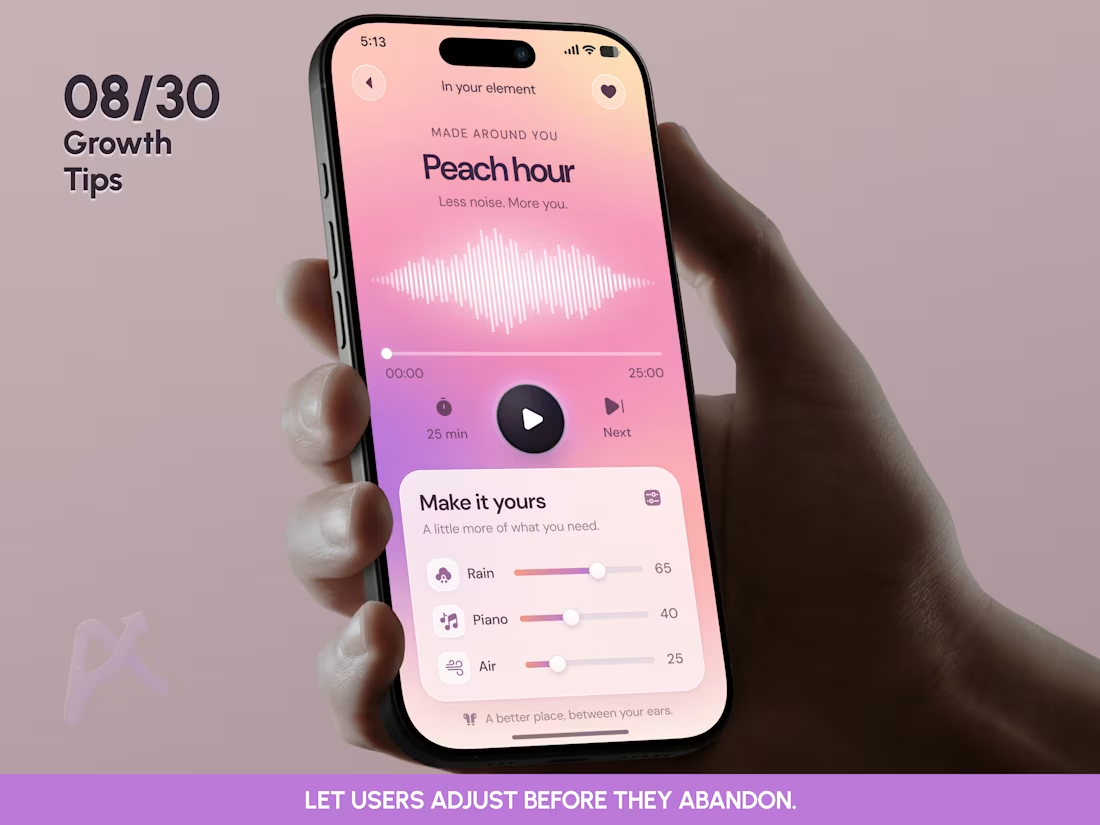
🔥 Growth Design Isn’t UI. It’s Product Strategy.
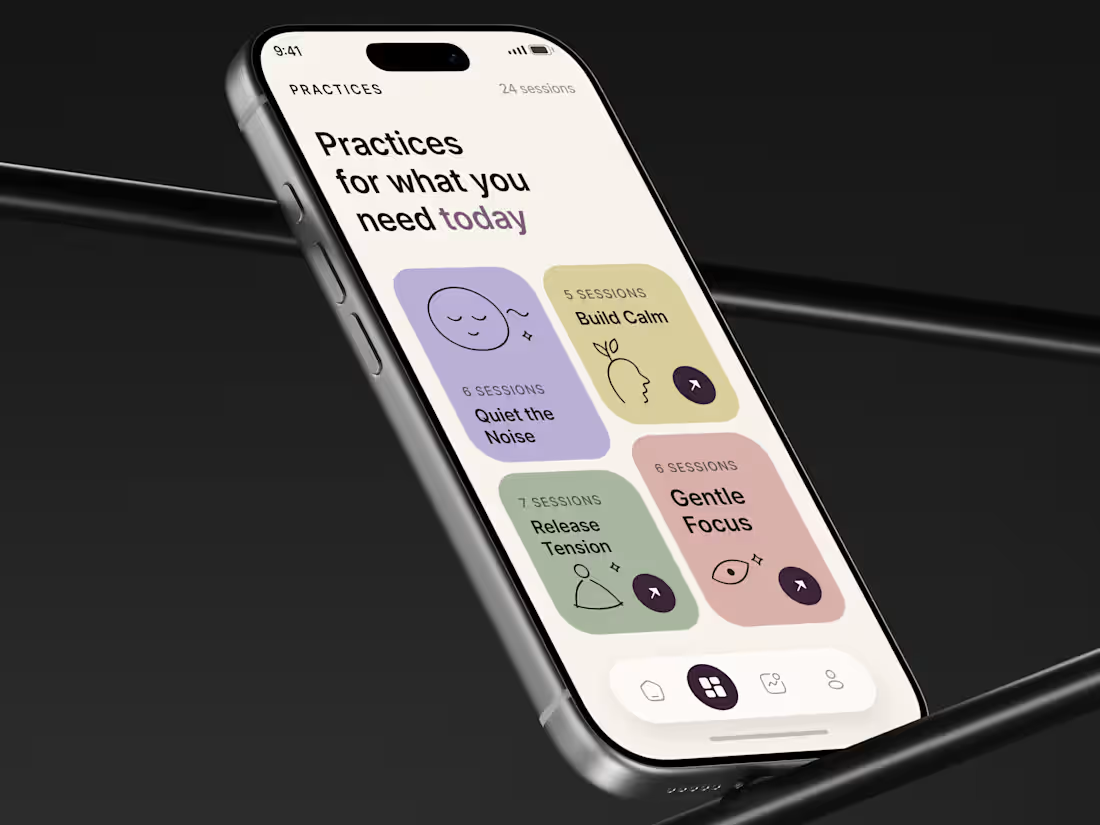
What looks like a calm wellness screen is actually a behavioral system designed to move core product metrics.
In this concept I applied 3 growth frameworks:
1. JTBD –clarity of user intent
Each category solves an immediate job: regulate emotions, regain control, shift mindset. Clear intent = faster activation.
2. Choice Architecture lower cognitive load
3. First-Session Momentum –win early, retain longer
The interface pushes users toward a micro-success within the first few seconds. Momentum is the engine of retention.
Growth Strategic Consulting is not about visuals – it’s about designing funnels, behaviors, and systems that scale.
If your mobile startup needs a strategic growth session to uncover bottlenecks and redesign your activation–retention loop, I’m open for requests.
1
24
689
People don’t journal for productivity. They journal to feel safe.
To breathe. To slow down. To hear themselves.
In this gamified diary app, I didn’t design another blank page —
I designed a soft ritual that holds you gently when your head is loud.
The mascot isn’t for cuteness it’s empathy in UI form.
It celebrates tiny wins, comforts you on difficult days,
and makes reflection feel light instead of heavy.
💛 Instant mood check
💛 Supportive streaks
💛 Self-expression themes
Growth hack: people don’t stay for features.
They stay for how the product makes them feel.
Not gamification.
Emotional architecture.
Sometimes design shouldn’t push you.
It should hold you.
I build products people don’t abandon.
#mobileappdesign #gamifieddesign #pastelui #mentalhealthdesign #diaryapp #growthdesign #behavioraldesign #asoldesign
5
33
814
99% of designers measure pixels.
1% measure retention and revenue.
If design can’t change behavior – it’s decoration.
If product doesn’t build habits – it dies.
Pretty UI doesn’t retain users.
Progress does.
Momentum does.
Transformation does.
In this Learning Hub case I used AARRR as a growth engine.
📍 Acquisition
Clarity that converts in 3 seconds
📍 Activation
First win in 60 sec
📍 Retention
Empathy based streaks and rituals
📍 Revenue
Paywall at emotional peak
📍 Referral
Progress worth sharing
Results
+18% onboarding start
+31% first lesson activation
+27% D3 retention
+22% trial → paid
+11% organic referrals
This is not UI work.
This is Growth Design.
✨ Trusted by Spotify, Meta, Coopah, Blush Design
📩 Book a consultation to identify growth opportunities