Gorod Slov: A Russian Learning Game, Built in One Day

Niko Minadze


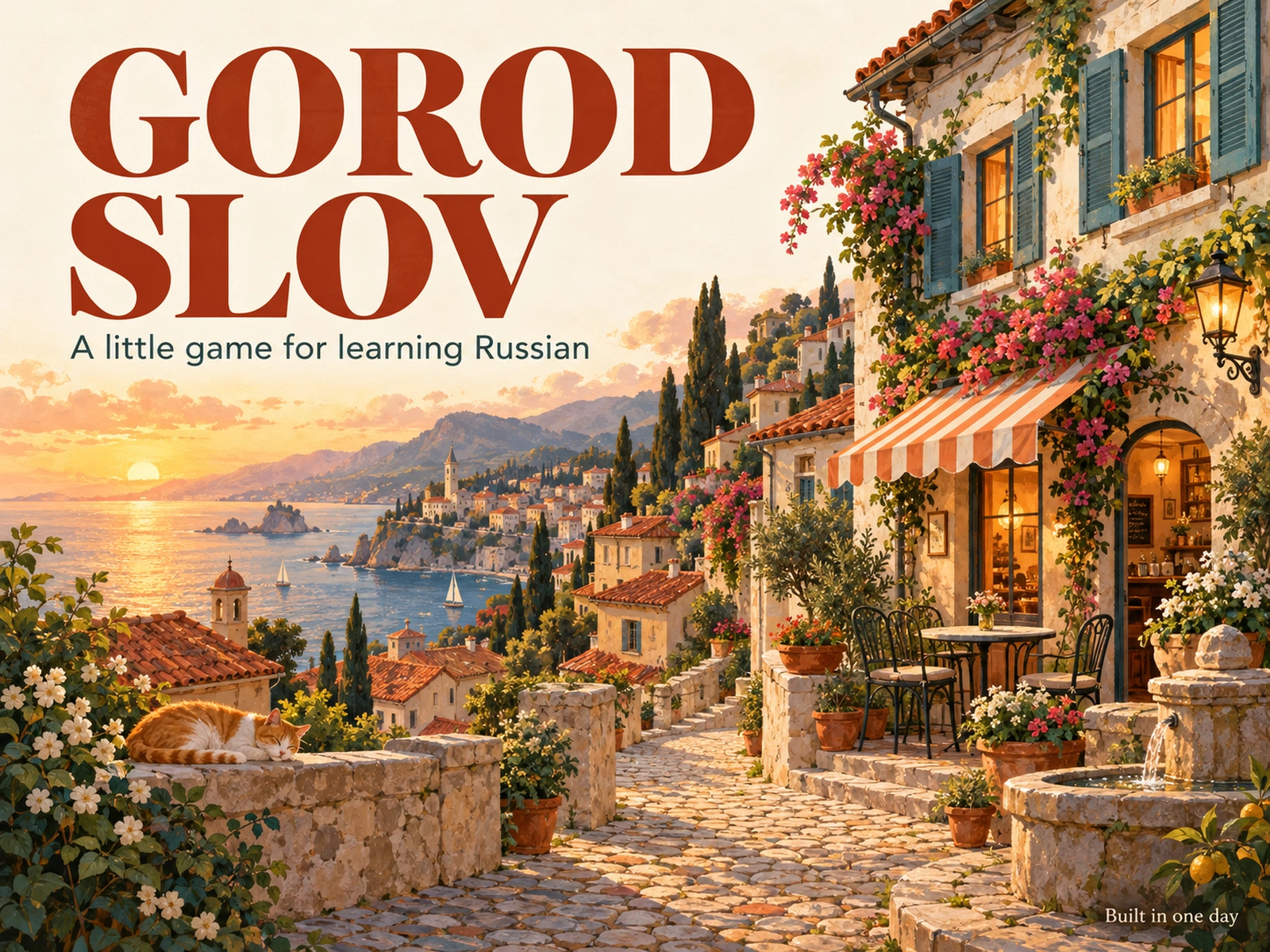
Gorod Slov: A Russian Learning Game, Built in One Day
A very personal brief
My girlfriend is learning Russian. I wanted to help her pick up some everyday words, because I probably shouldn't be responsible for a vocabulary made mostly of swear words.
So I spent a day building Gorod Slov, or “City of Words”: a small browser game made around her language, her phone, and things we can actually say to each other.
I handled the app design and development, with AI-generated art throughout. The idea was simple: give her a warm little place to return to, learn a few words, and then use them outside the game.
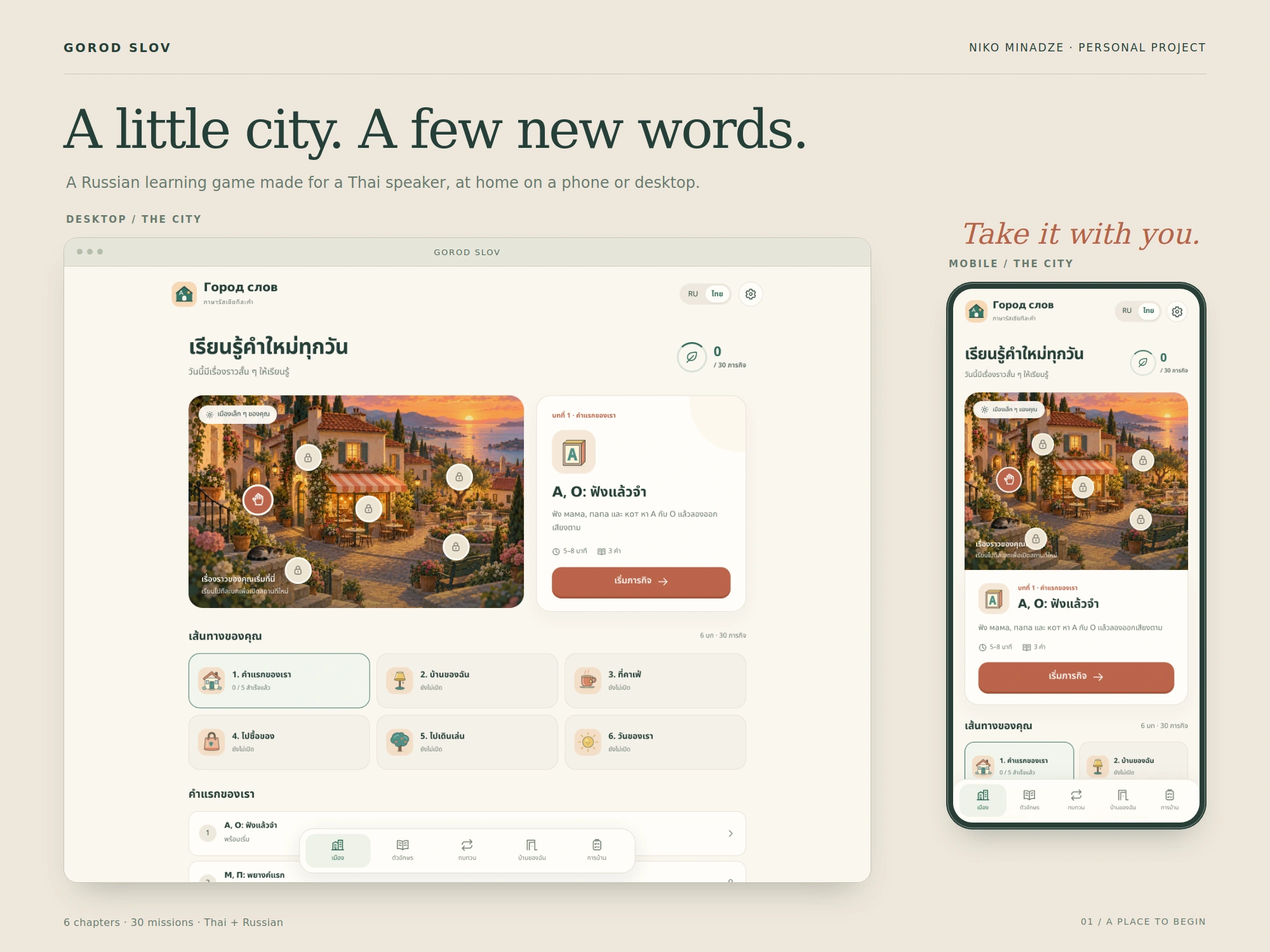
The same little town on desktop and mobile, with Thai instructions and Russian vocabulary.
Built for one learner
The interface starts in Thai, with Russian available from the header. The lessons cover greetings, home, food, shopping, getting around town, and everyday plans. There are 30 missions across six chapters, with 114 Russian words and short expressions.
Each mission introduces a small set of words, then asks the learner to read, listen, and build answers. A separate alphabet section covers all 33 Russian letters, and stress marks show where the emphasis belongs.
The phone reads the Russian words and example phrases aloud using its available Russian voice. A slower playback button helps with unfamiliar sounds, and she can listen as many times as she needs. She can also record herself and play it back to compare.
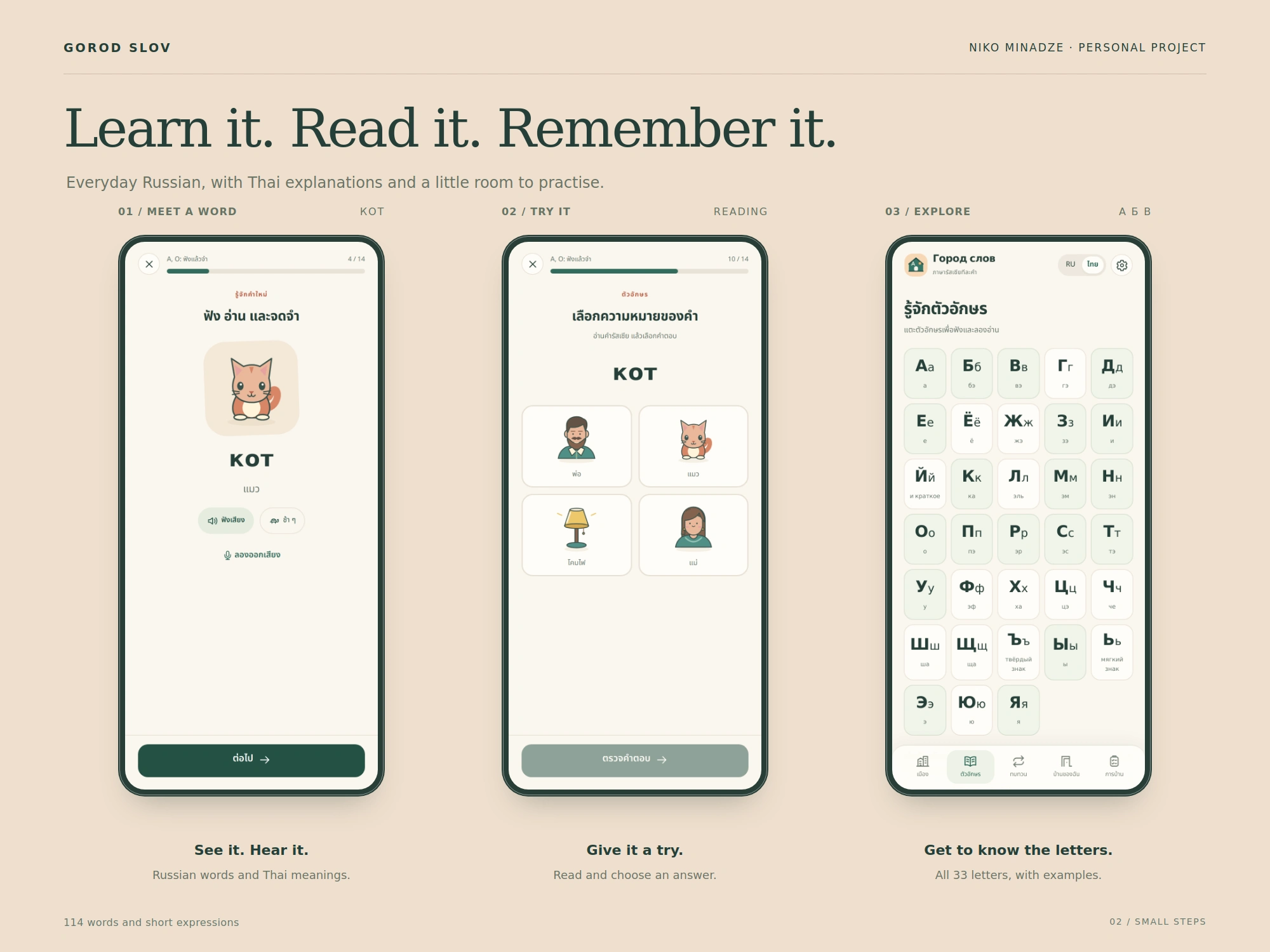
Meet a word, recognise it, and get familiar with the letters. These are screens from the mobile app.
A reason to come back
Completing a mission unlocks a small item for an illustrated room. A lamp, a cup, a plant, a picture: simple rewards that make progress visible. She can choose which items to display.
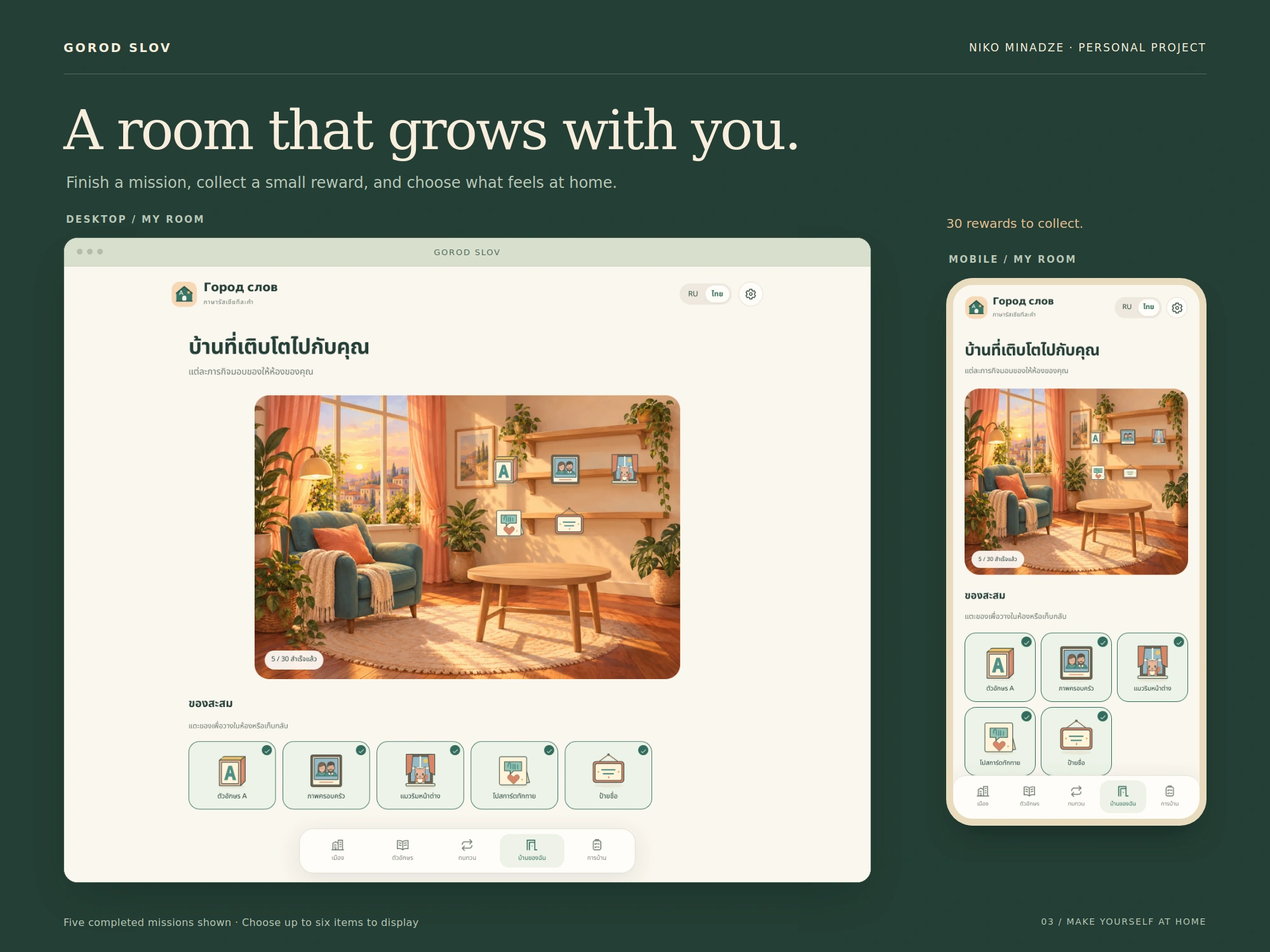
The room and reward collection after completing the first five demonstration missions.
The game brings words back for review and tracks reading, listening, and building answers separately. Using a hint doesn't count as remembering the answer independently.
Each lesson also ends with a small real-world task. That might mean asking me for tea, naming something in the room, or inviting me for a walk in Russian. Those little conversations are the reason the game exists.
Save it once, use it offline
A button in settings saves the game to her phone: lessons, alphabet, and illustrations. Once the download is complete, those parts work without an internet connection. She can also add it to her home screen and open it like an app. Russian voice availability and offline speech depend on the device.
Progress saves automatically, including her place in an unfinished lesson. She can download a backup and restore it on another phone or browser, keeping her completed missions, vocabulary progress, and collected rewards.
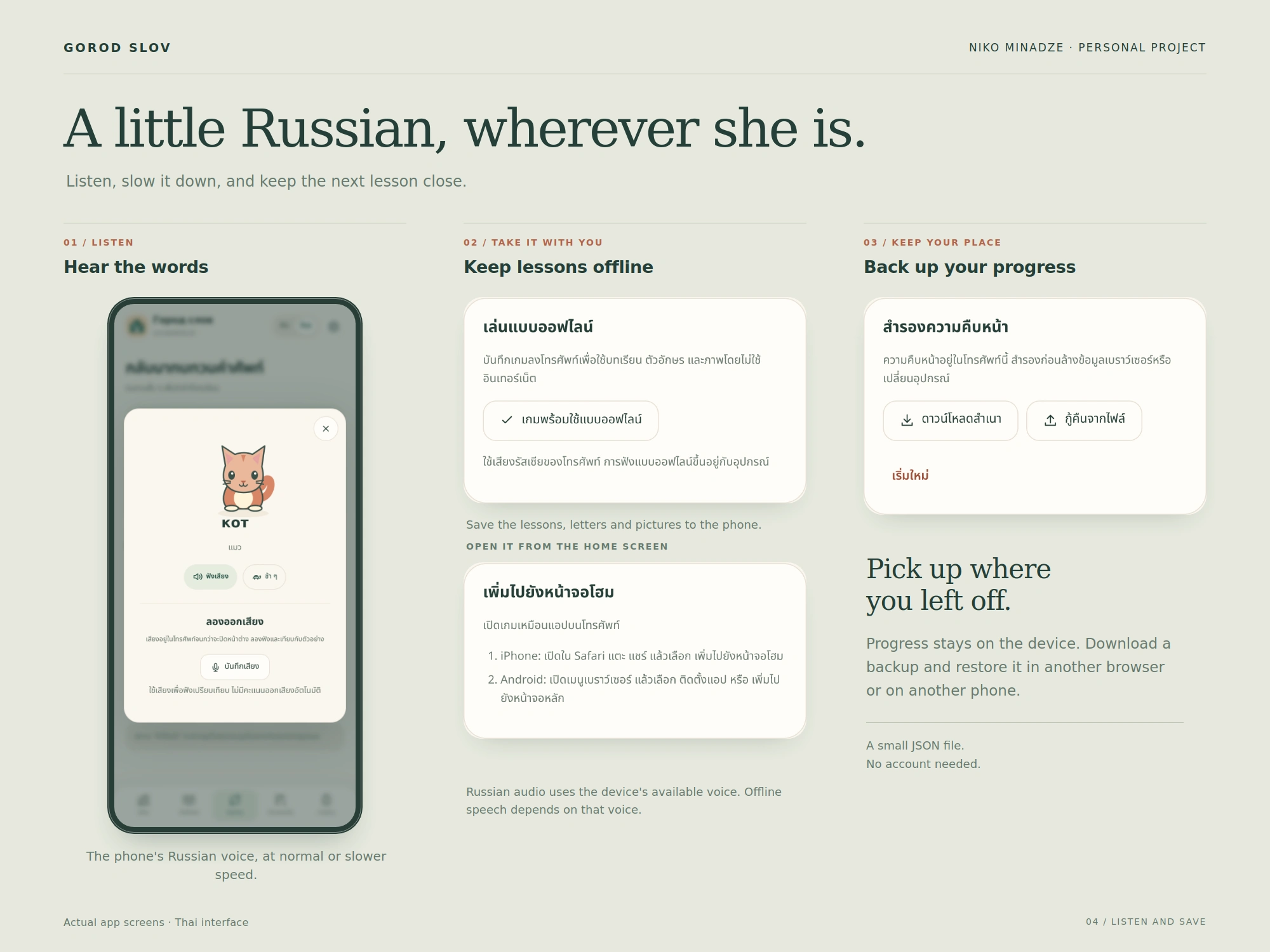
Listen at a normal or slower pace, save the lessons offline, and keep a backup of progress.
Gorod Slov runs on desktop and mobile using HTML, CSS, and JavaScript. The game needs no account, and progress stays on the device.
One day produced a working first version with lessons, review, rewards, and saved progress. The homework is my favourite part: she gets something to say in Russian, and I get to be part of the lesson.
Like this project
Posted Oct 14, 2026
A one-day Russian learning game for my girlfriend: phone audio, slower playback, offline lessons, saved progress, and AI-generated art.