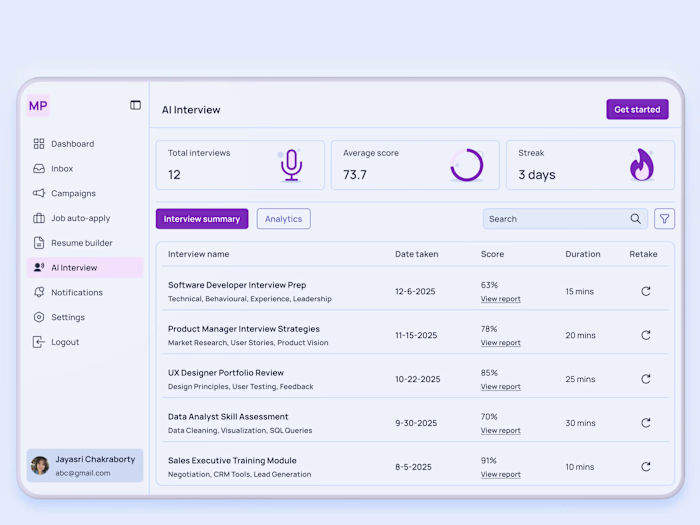
Designing an Empathetic AI Interviewer

Jayasri Chakraborty


What I learned designing an AI interviewer: The secret to making a bot people trust
The Problem
The job interview. For many of us, it’s a high-stakes, nerve-wracking ritual filled with a unique blend of anxiety and hope. We’ve all felt the pressure of a subtle judgment, the unspoken bias and the challenge of proving our worth in a limited amount of time.
The Solution
I designed an AI interview platform to address these very real problems — not as a tool for mock interviews, but for organizations to use in actual hiring. My goal was simple: to create a system that was scalable, objective and fair. The idea was never to replace human judgment, but to streamline the initial screening process.
Key Challenges
But what I learned quickly was that the biggest challenge wasn’t technical; it was a design problem. Because to build an AI that could stand in for a fair, attentive human, I first had to earn something essential from the candidate: trust. My job was to design an AI that felt real without making the person on the other side of the screen feel judged, watched or emotionally exposed.
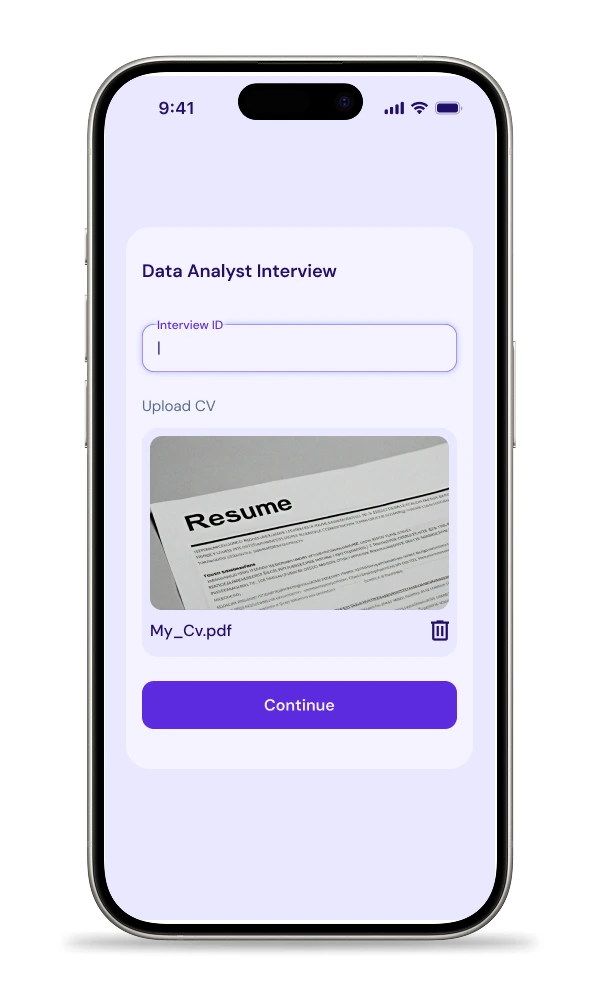
Candidates begin with a secure, professional setup, designed to mimic real hiring workflows, not casual practice bots.
The big challenge: Designing trust, not just a bot
Earlier AI interview tools often relied on fixed question sets that felt mechanical and disconnected. They didn’t adapt to what a candidate said, leaving the experience feeling like a conversation with a wall.
This wasn’t an option for a platform designed for real screening. The system had to behave like an attentive human interviewer: listening, pausing and asking relevant follow-up questions. I intentionally didn’t include features like answer transcripts or real-time feedback, because those things don’t exist in a genuine interview and they would only serve to increase anxiety. The goal wasn’t to simulate a conversation, but to simulate the stakes and psychology of one.
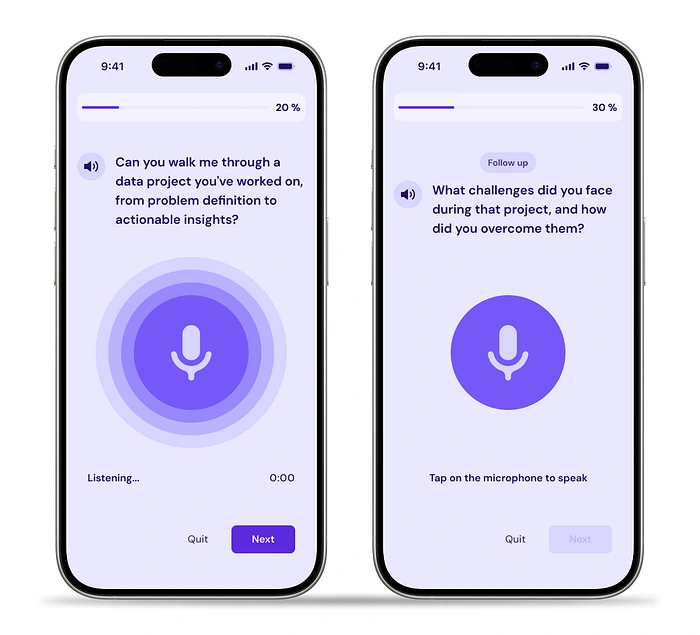
Questions adapt based on previous responses, mimicking a real interviewer’s curiosity. The staggered follow-up avoids robotic flow.
The “Aha!” moment: Designing for empathy
I wasn’t just building a chatbot; I was designing a psychological experience. Interview anxiety is real and the AI should never make it worse. From the tone of the questions to the pacing of the conversation, everything had to be designed to create a sense of calm, control and clarity.
Here are some of the design decisions I made to build a platform that felt supportive, not intimidating:
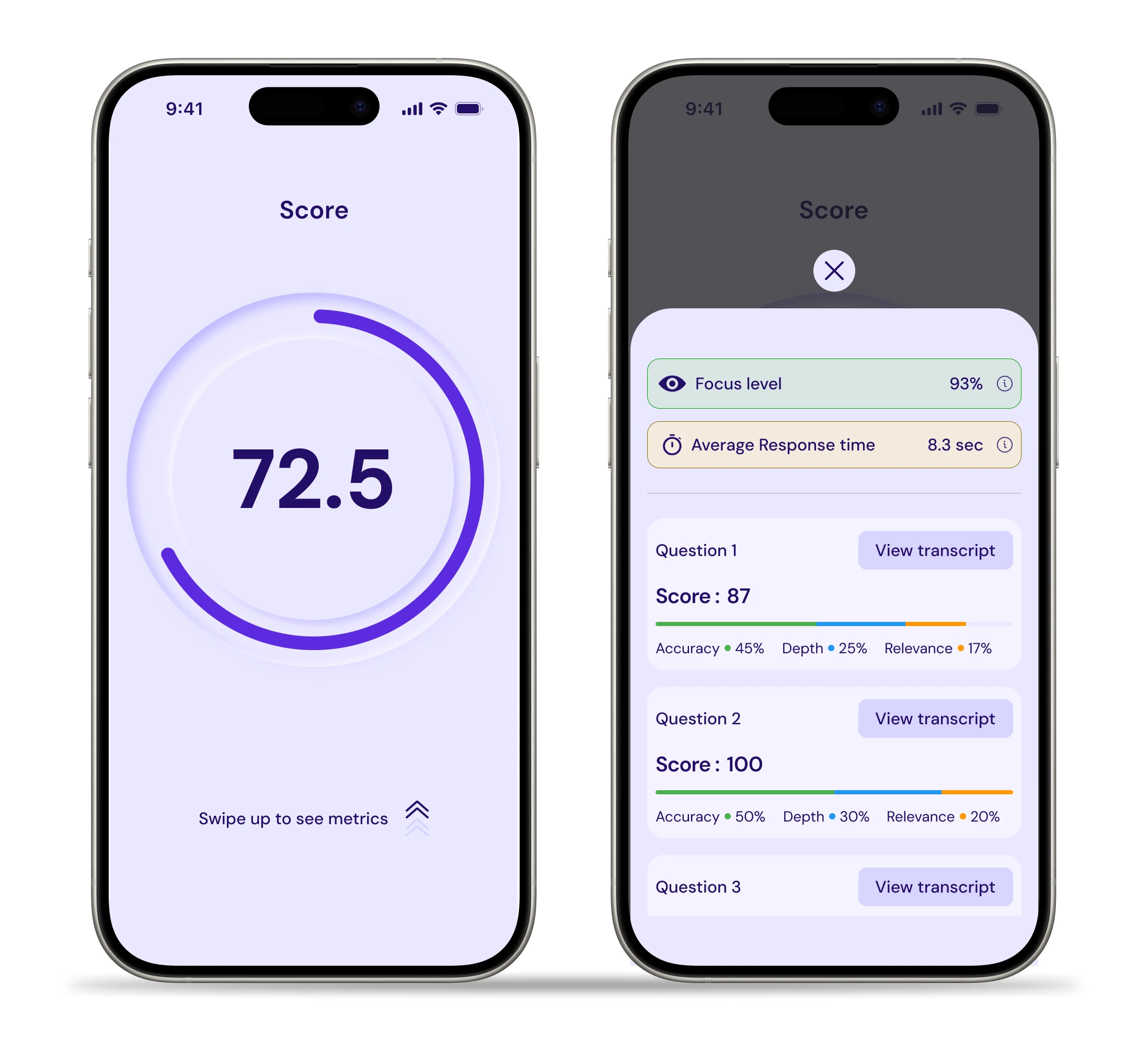
No feedback during the interview: To preserve a candidate’s confidence and focus, the system was designed to provide feedback only at the end.
A structured yet natural pace: I used a subtle progress bar that showed percentage completion, rather than the number of questions. This mimicked the natural variability of a real interview and avoided making the experience feel like a rigid test.
Subtle visual feedback: The color palette was a calming monochrome blue, with clear color and label cues (like green for “success”) that provided a sense of progress without being jarring.
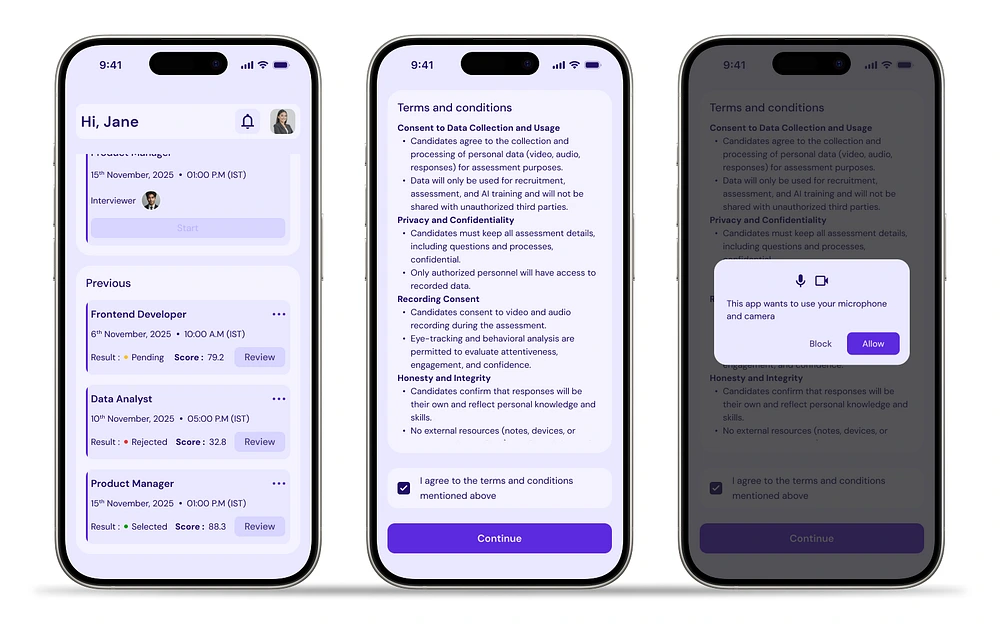
Security and trust were foundational. Candidates are transparently informed about recording, eye-tracking, and data use.
Learn more by reading the full article below 👇
Like this project
Posted Aug 31, 2025
Designed an AI interview platform to create a fair and empathetic hiring process.
Likes
0
Views
10
Timeline
Sep 1, 2024 - Sep 30, 2024