

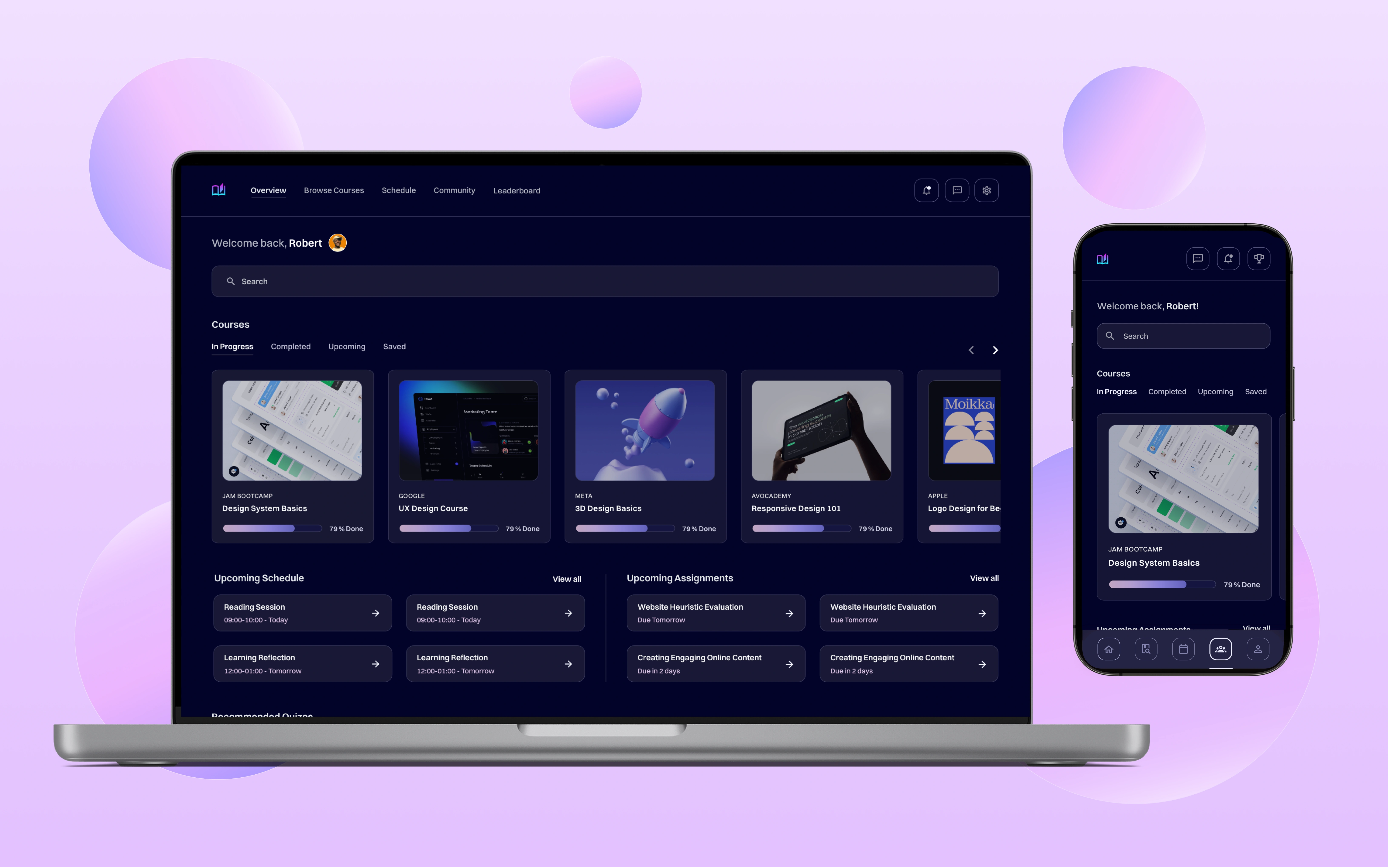
Learnify Hi-fi Responsive Screens
Table of content
Table of contentThe ProblemLearners in online learning platforms face a significant challenge in maintaining accountability and sustaining motivationThe SolutionEmpowering learners by providing a seamless platform to track their progress, effectively manage their learning time, receive valuable feedback, and foster communication and collaboration with fellow creatives.But how did I solve this problem?🔍 Research FirstSecondary Research Market Research🚫 Main User Pain-PointsPrimary Research- Empathizing with learners through 1-1 interviewsUser StoryUser Journey💭 Ideation Paper FirstSitemap & Dashboard Flows🔁 Test, Iterate & Improve - 3 major improvements in my design📲 Final Product: Hi-Fi Responsive Designs & Style Guide➡️ What I Learned
The Problem
Learners in online learning platforms face a significant challenge in maintaining accountability and sustaining motivation
As an online learner myself, I have experienced firsthand the difficulty of maintaining accountability. Without the external structure provided by traditional classrooms, it becomes challenging to manage my time effectively and establish a consistent study routine.
The Solution
Empowering learners by providing a seamless platform to track their progress, effectively manage their learning time, receive valuable feedback, and foster communication and collaboration with fellow creatives.
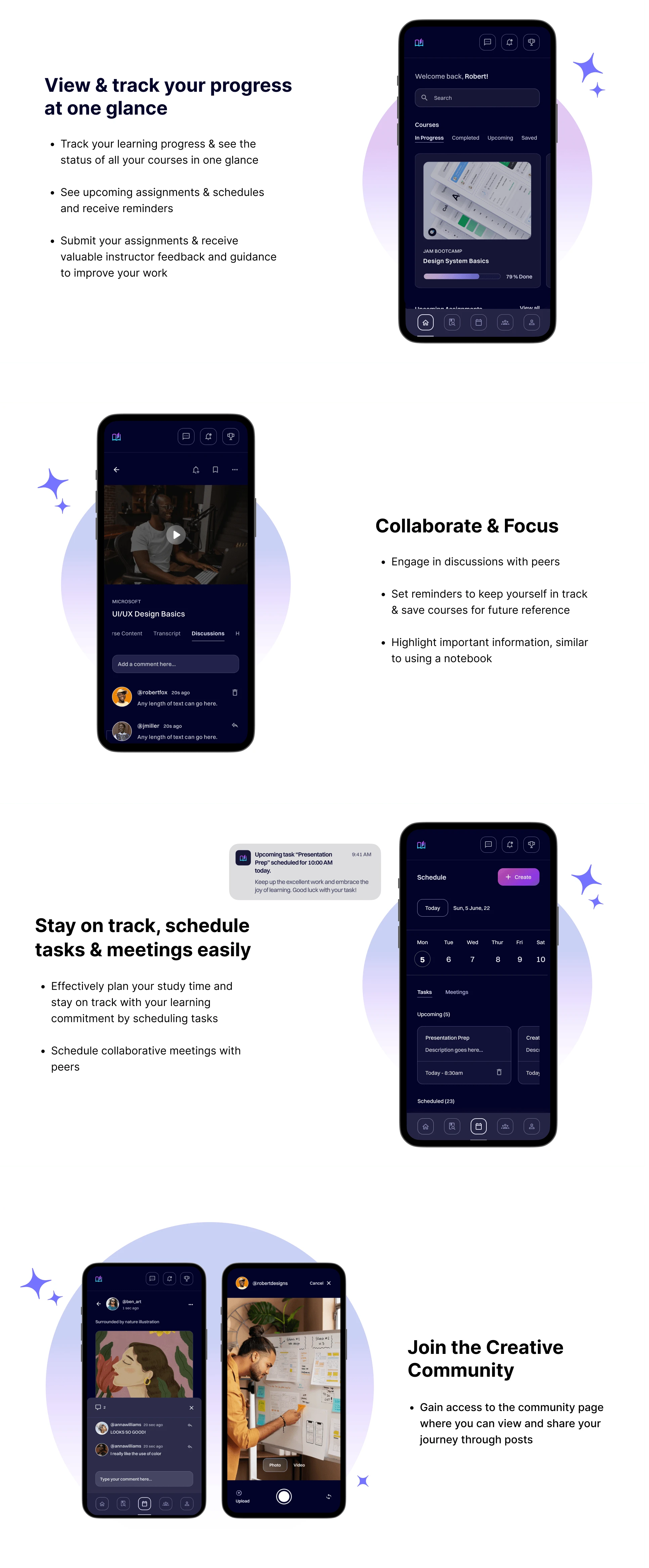
These screens demonstrate how Learnify offers a comprehensive solution to address the challenges of maintaining learner accountability and motivation in online learning platforms
But how did I solve this problem?
🔍 Research First
Secondary Research
Before conducting any user interviews, I started gathering all relevant research findings available online from academic journals, public libraries, and white papers. During this process, I came across some valuable research data from Think Impact E-Learning Statistics:
On average, students can retain 25% to 60% more information when learning online compared to 8% to 10% when in the classroom.
Completion rates for online courses can be up to 22% lower for some students due to lack of motivation
Market Research
I have gathered some online learner reviews (from TrustPoint) of what users experienced while using online learning platforms, and this is what I found:
Coursera - Reviews: 1.3
Skillshare - Reviews: 1.8
Udemy - Reviews: 2.5
Edx - Reviews: 3.6
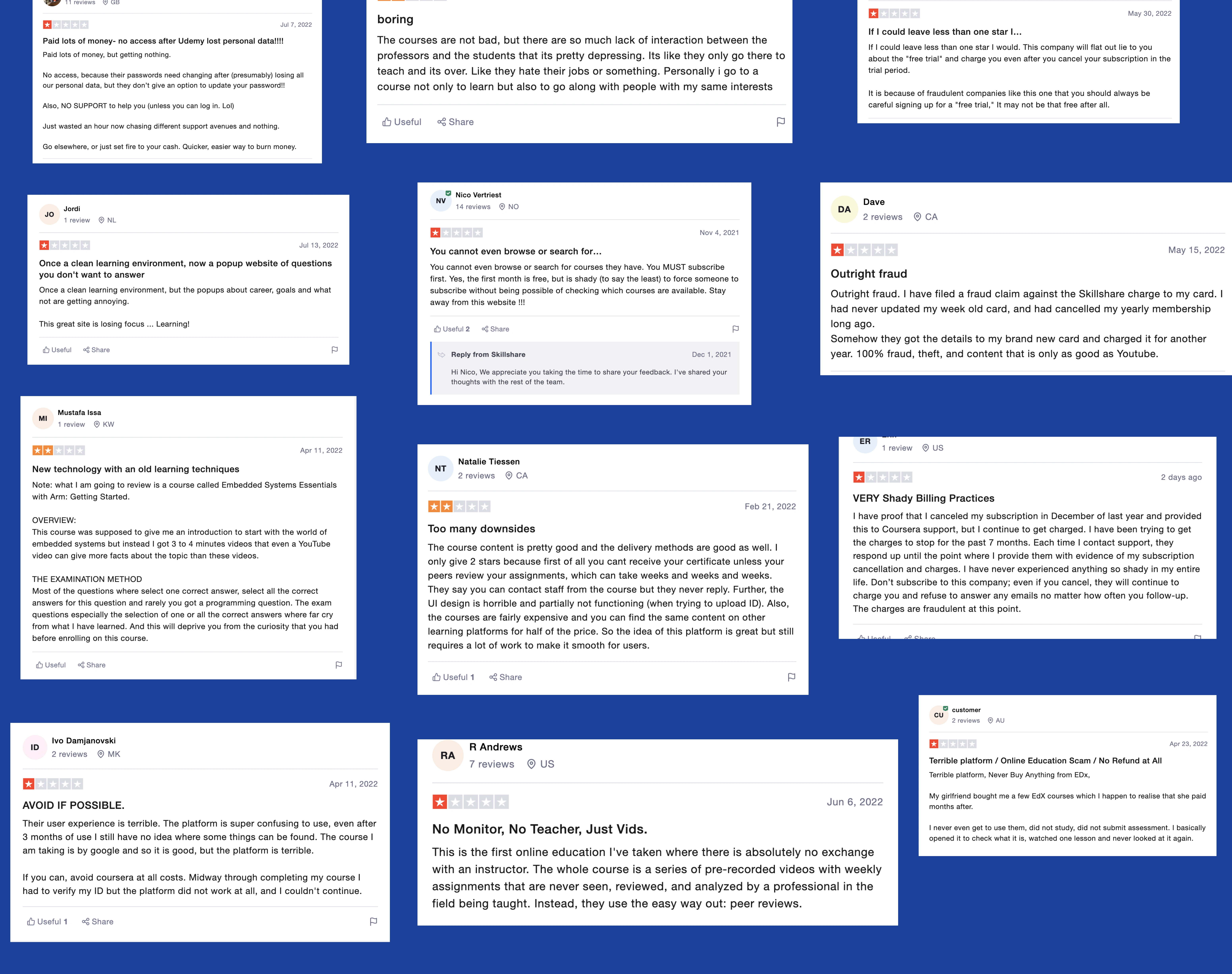
Online learner reviews gathered from Trust Point
🚫 Main User Pain-Points
Online platforms are not trustworthy / payment fraud, shady billing practices
Lack of interaction, pre-recorded videos, peer-review only
Outdated learning techniques
Bad user experience- undesired pop-up questions, hard to navigate and find answers, can’t search for available courses before subscribing
Primary Research- Empathizing with learners through 1-1 interviews
Even though I did market research, I wanted to deep-dive into this problem and personally hear learner motivations, needs, goals, and pain points. Hence, I conducted 1-1 interviews with a total of 5 individuals from different backgrounds and ages. As a result, I got 3 themes and 6 valuable insights:
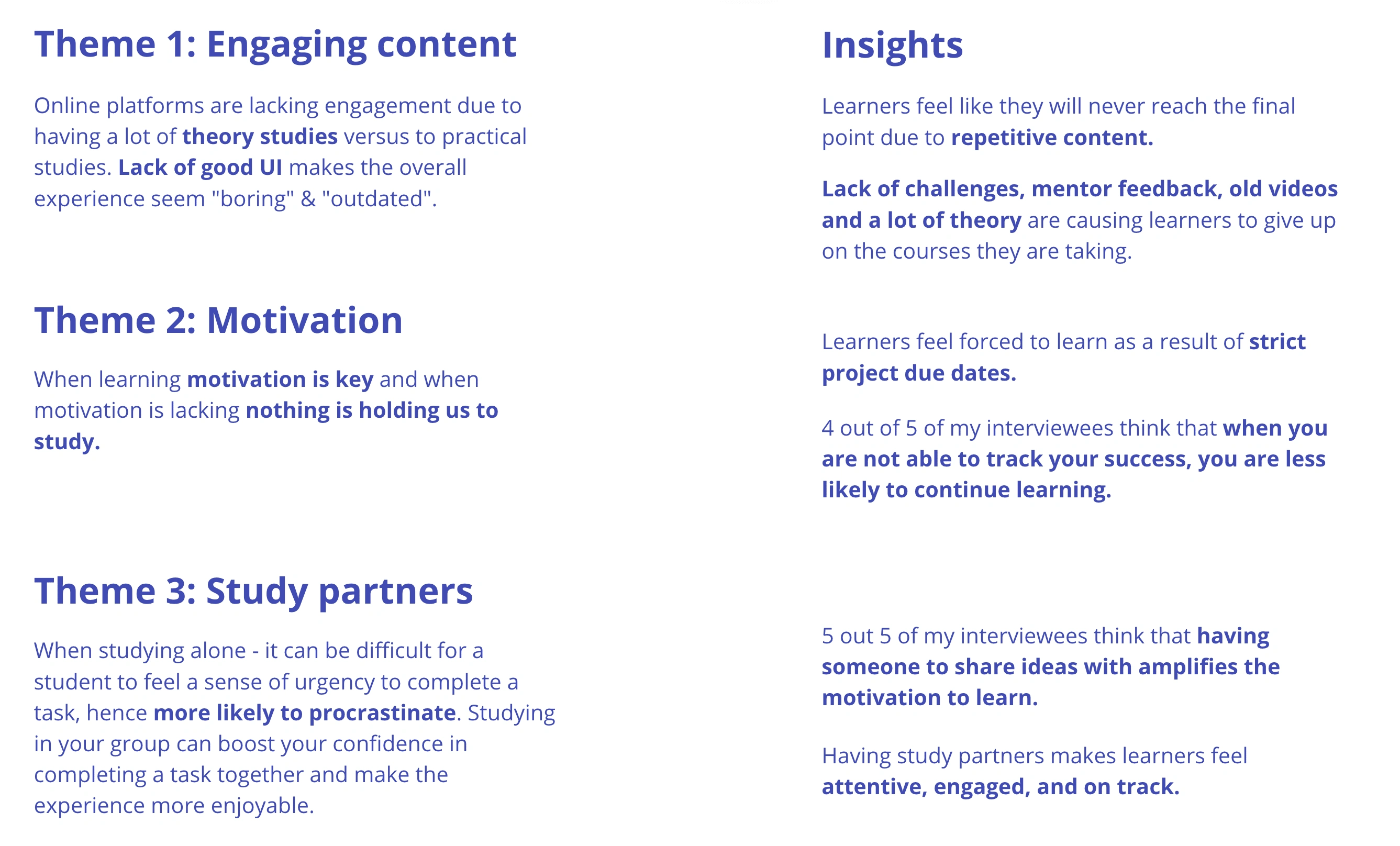
Themes and insights gathered through analyzing & synthesizing data from the affinity diagram
User Story
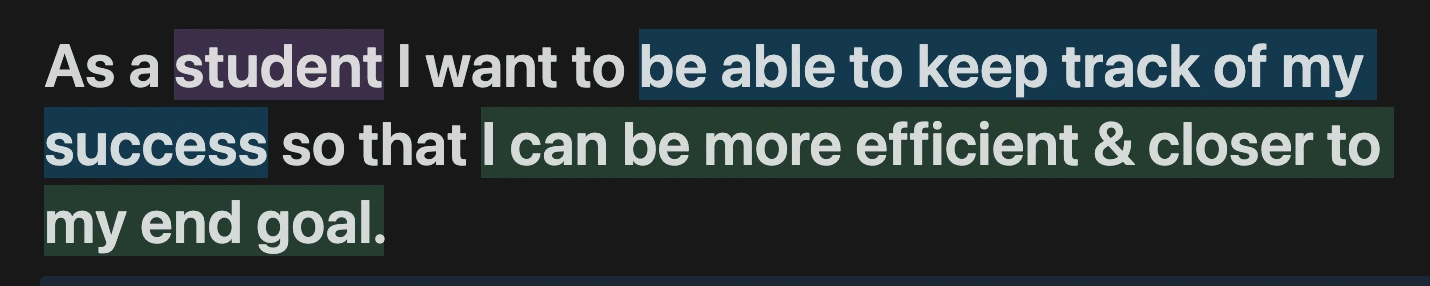
User story gathered from 1-1 interviews
User Journey
User journey mapped out from the time the learner decides to get back to his online course to the time he starts losing interest due to a decrease in motivation to giving up as a final result
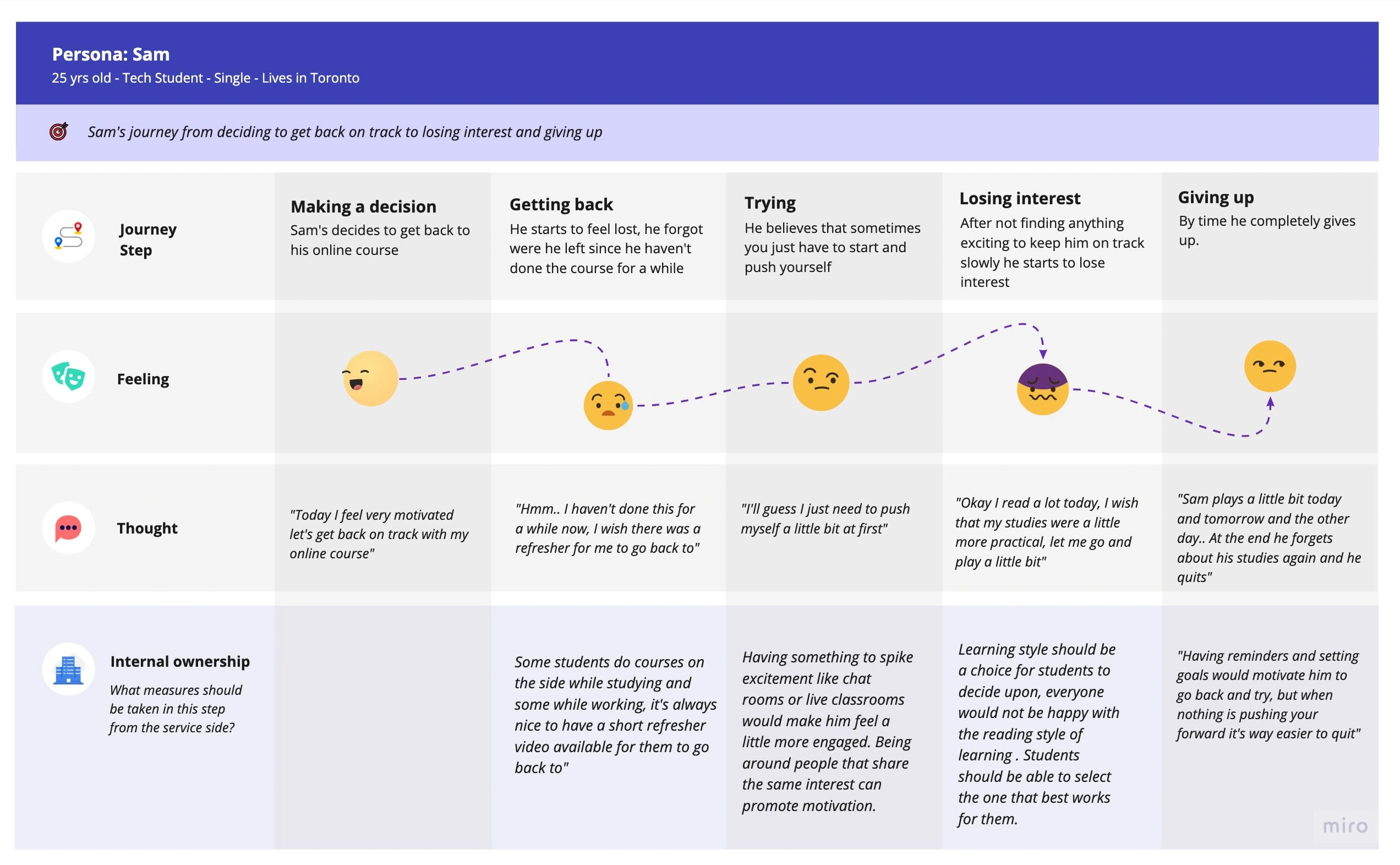
User Journey
💭 Ideation
How might we make a learning platform that is more inviting and reliable?
How might we design a learning platform that helps users stay on track with their studies?
How might we design a learning platform that encourages our users to complete their courses?
Paper First
By using paper and pen, I quickly jot down ideas, created mind maps, and made annotations. This allowed me to generate a wide range of ideas and explore different perspectives. Later I transferred these rough sketches to XD as a digital wireframe and then transformed them into a lo-fi prototype which was then tested through 2 rounds of usability studies.
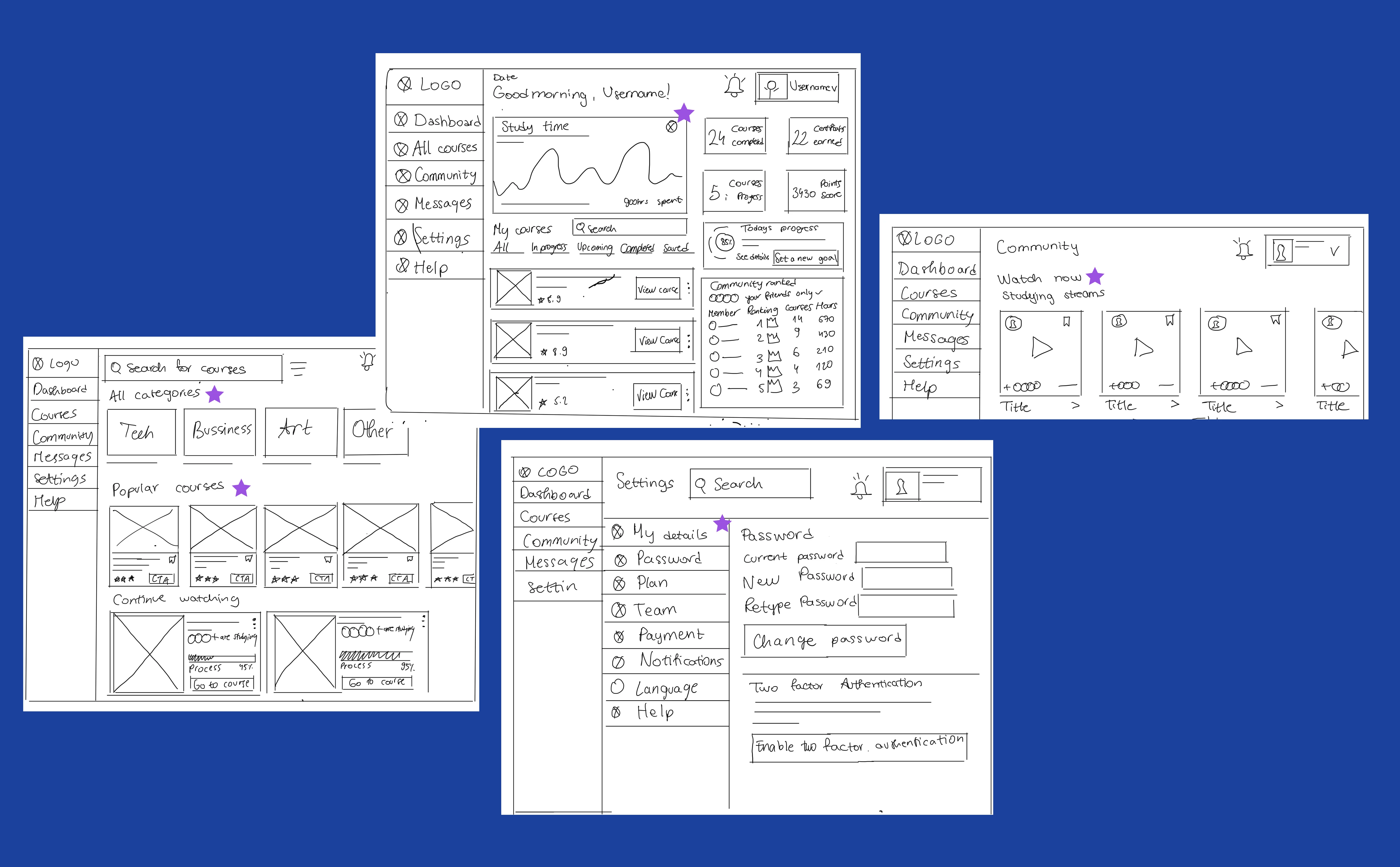
Learnify paper wireframe- Exploring solutions
Sitemap & Dashboard Flows
By mapping out the sitemap of the dashboard & analyzing user flows, I was able to gain a comprehensive understanding of how learners would navigate through the application, and access key pages & accomplish tasks, and achieve their goals within the application.
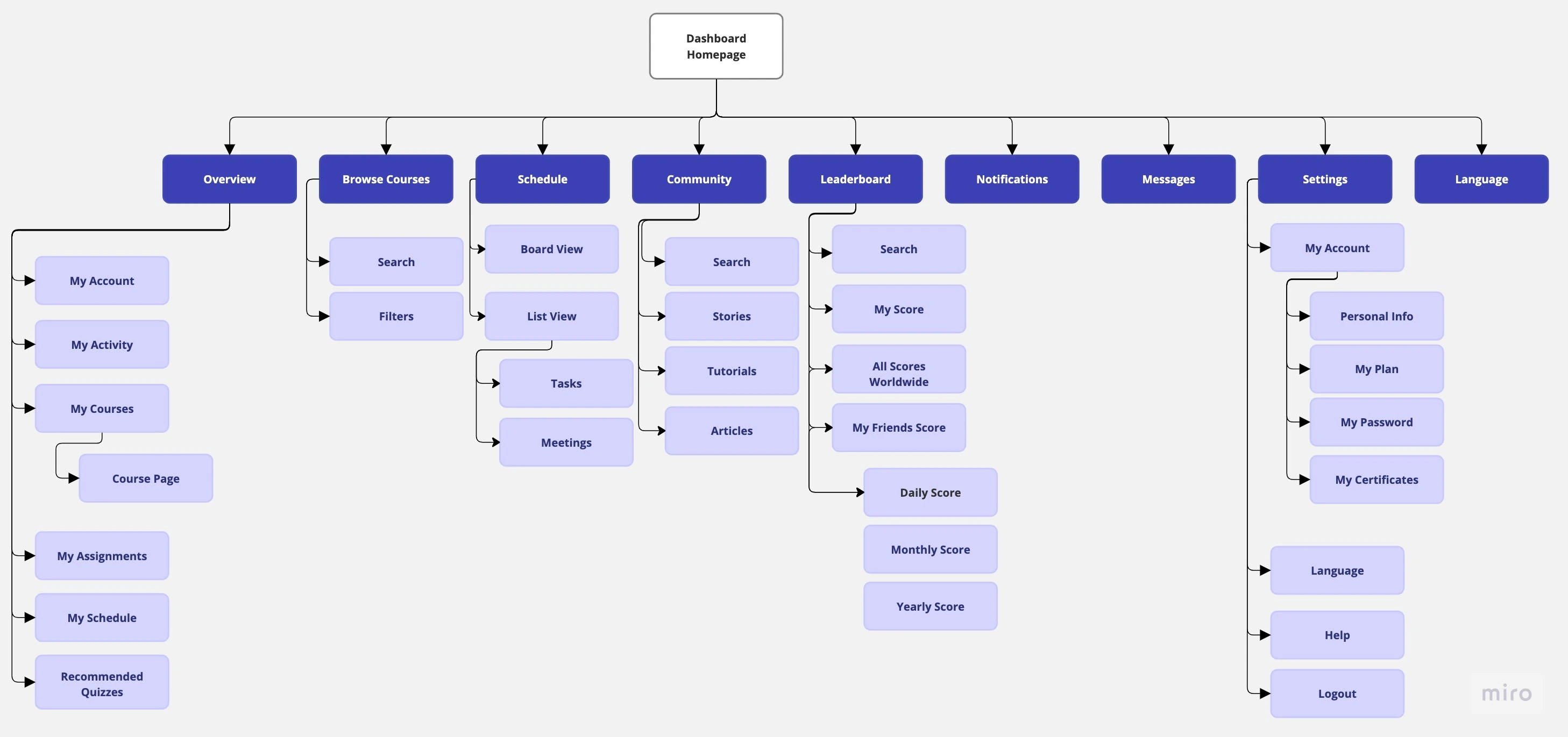
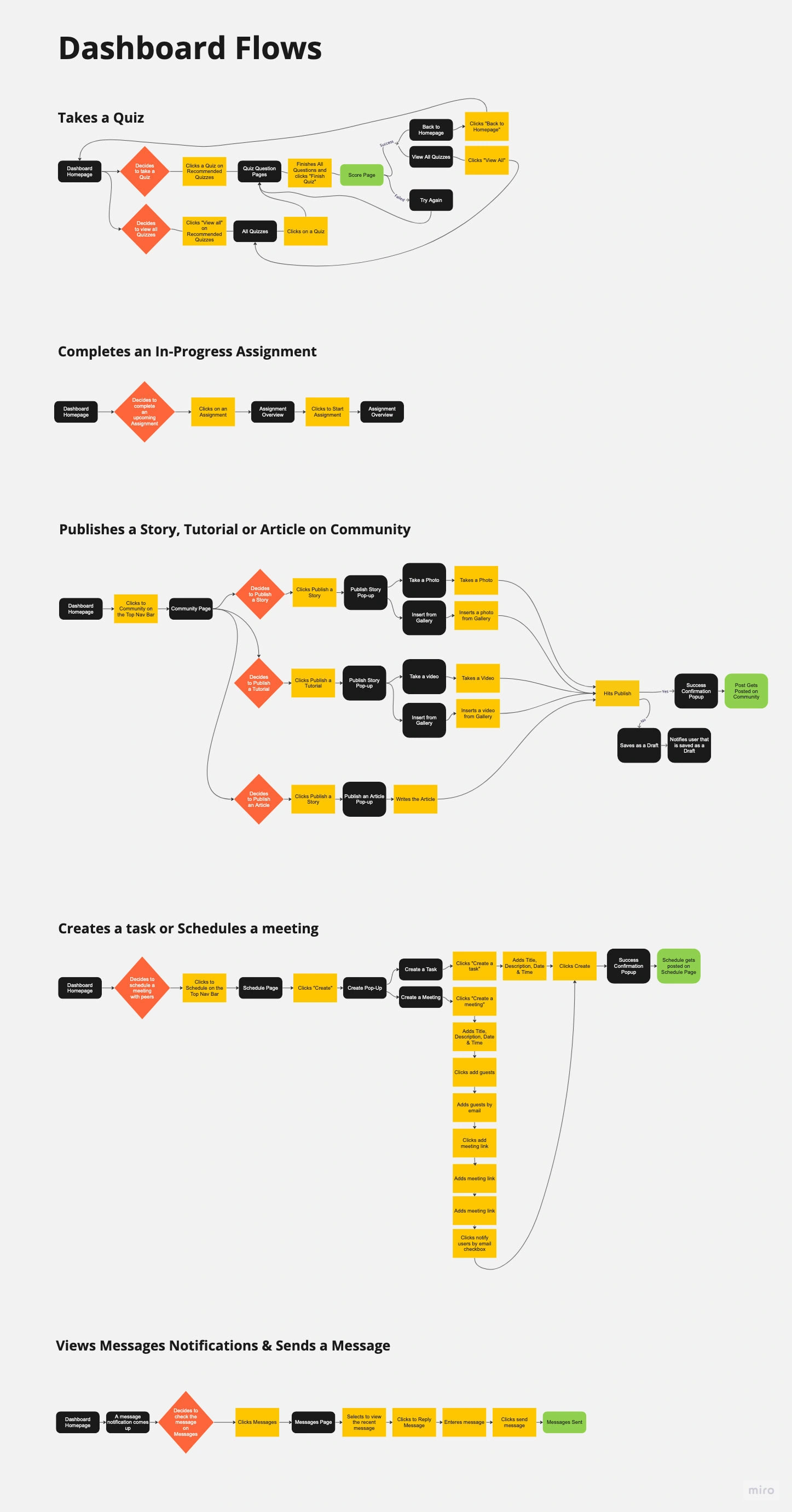
Learnify Dashboard User Flows
🔁 Test, Iterate & Improve - 3 major improvements in my design
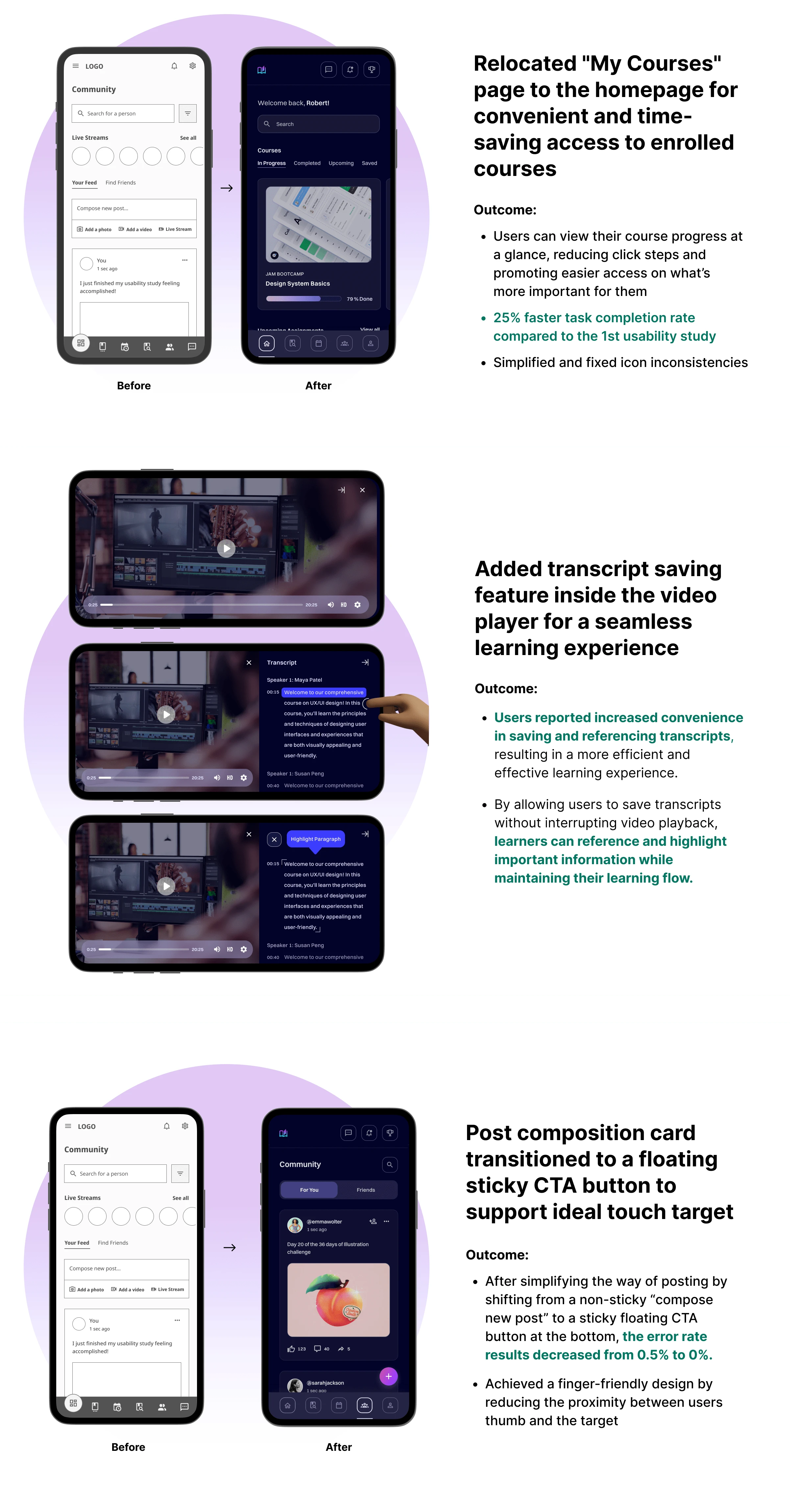
3 major improvements in my designs
📲 Final Product: Hi-Fi Responsive Designs & Style Guide
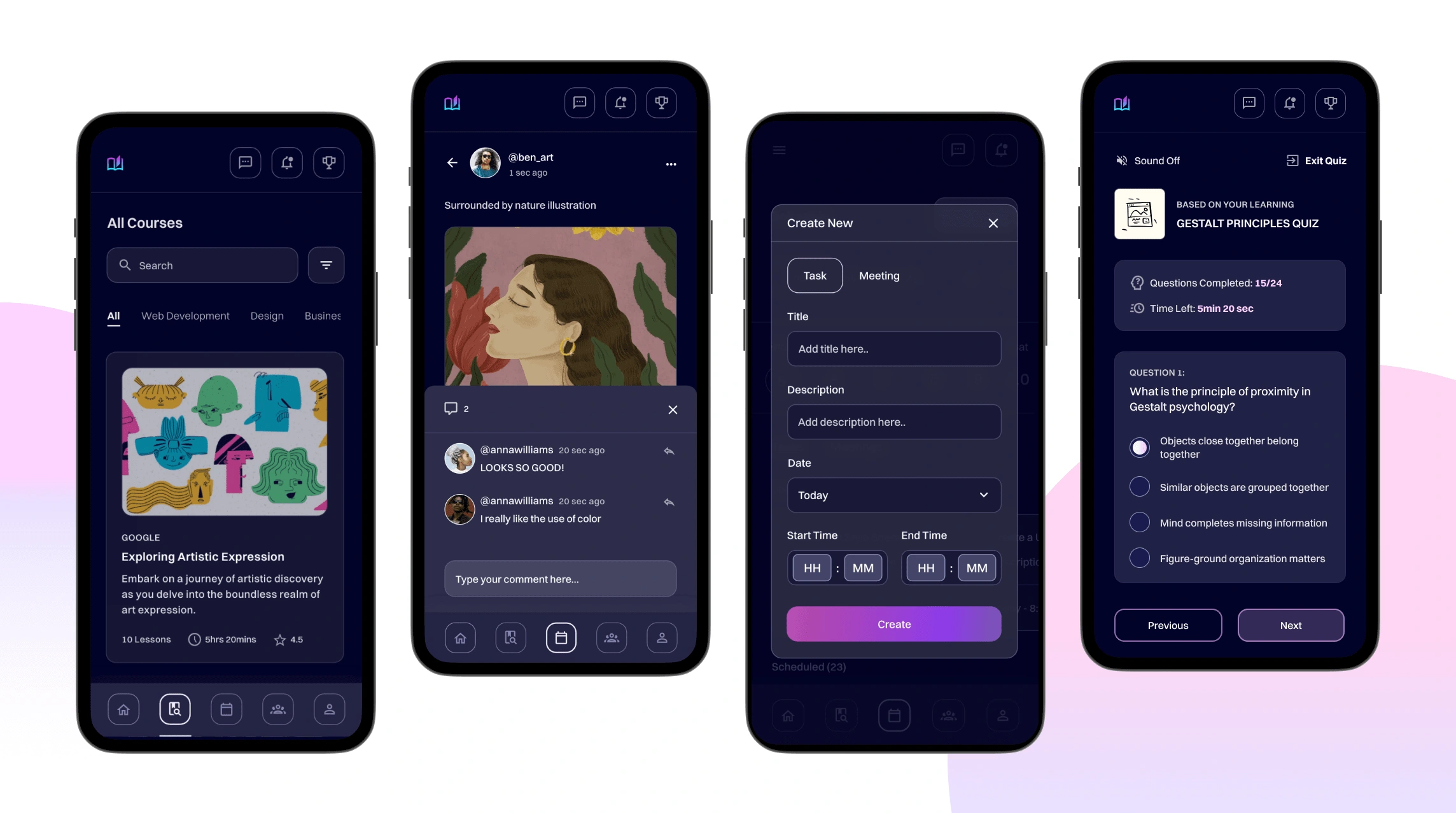
Hi-fi Screens Mobile
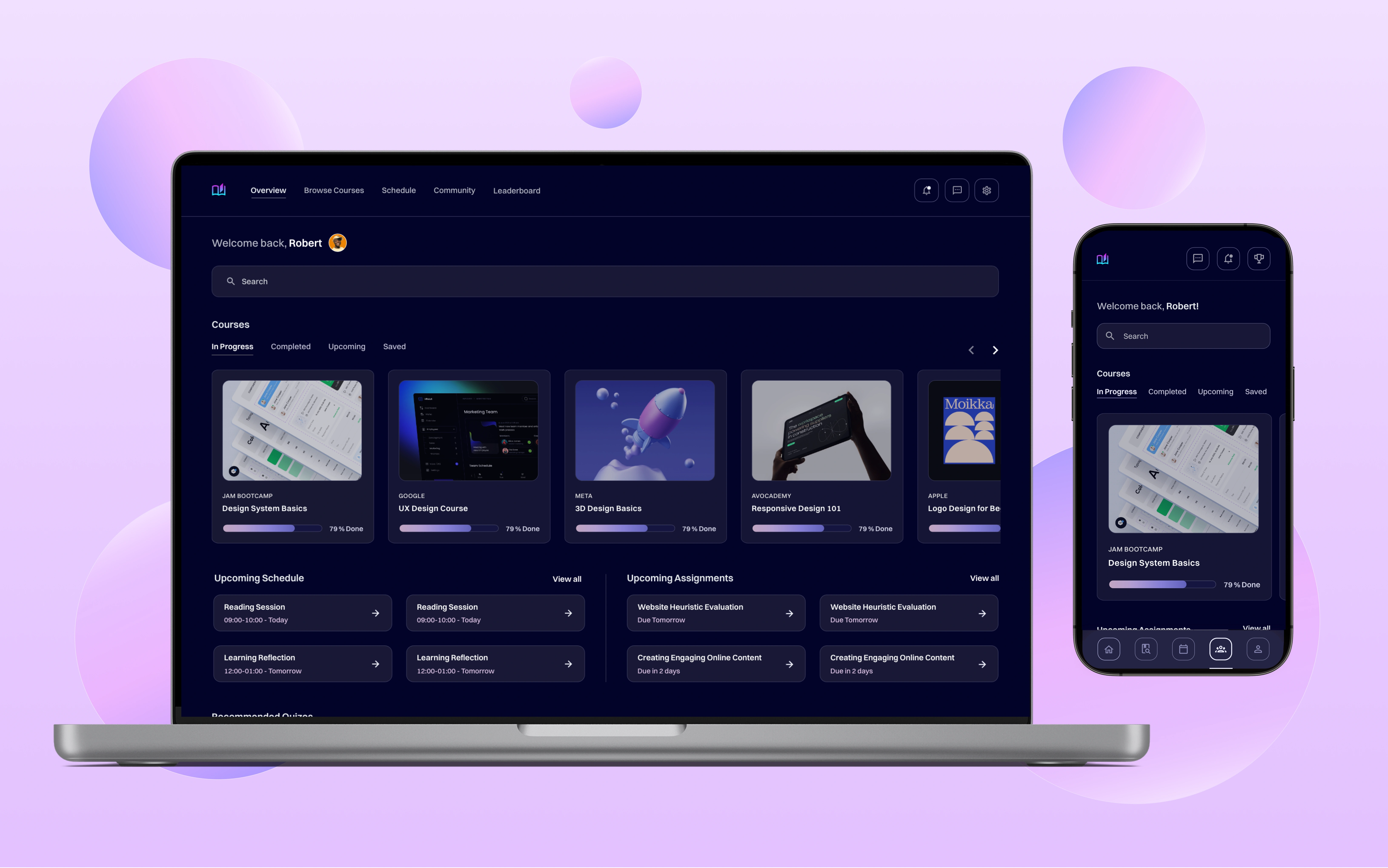
Hi-fi Responsive Design - Desktop & Mobile
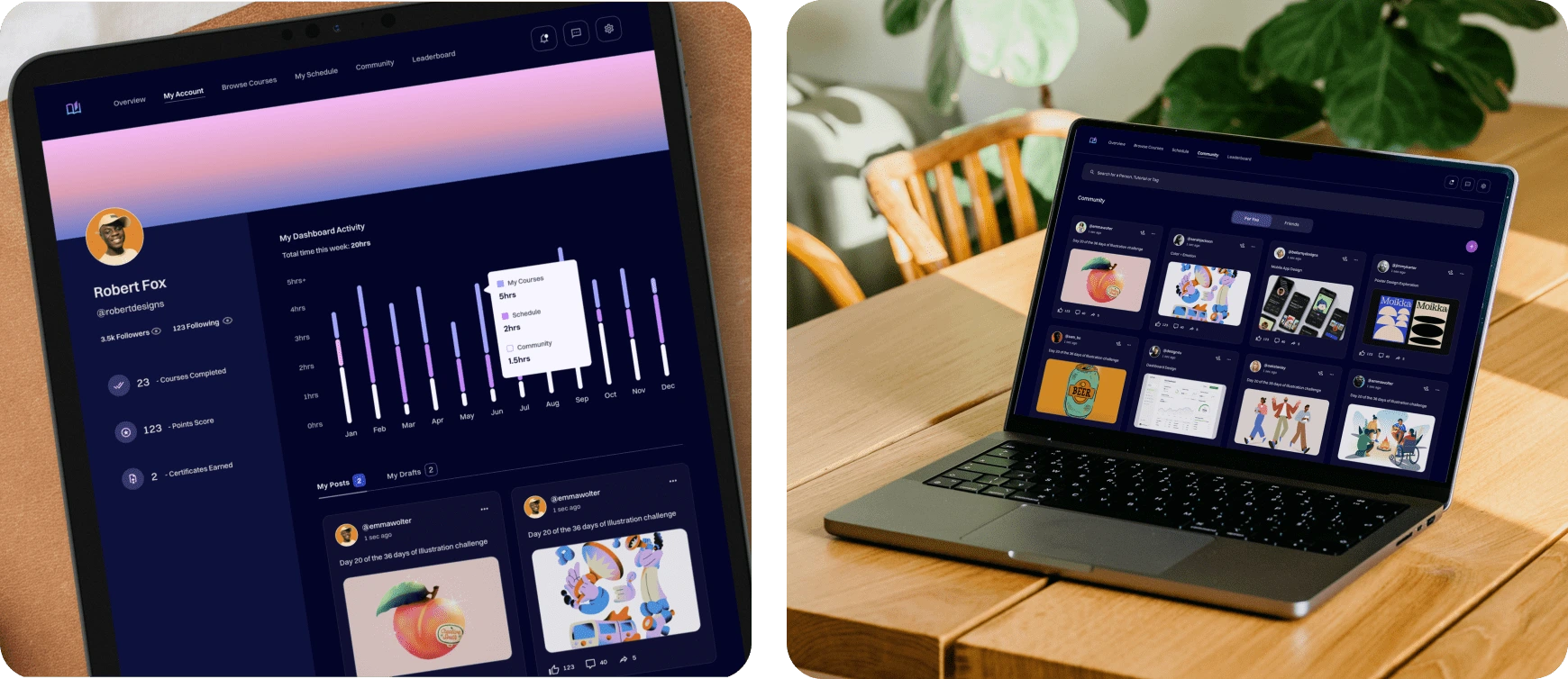
Hi-fi Responsive Design - Tablet & Desktop
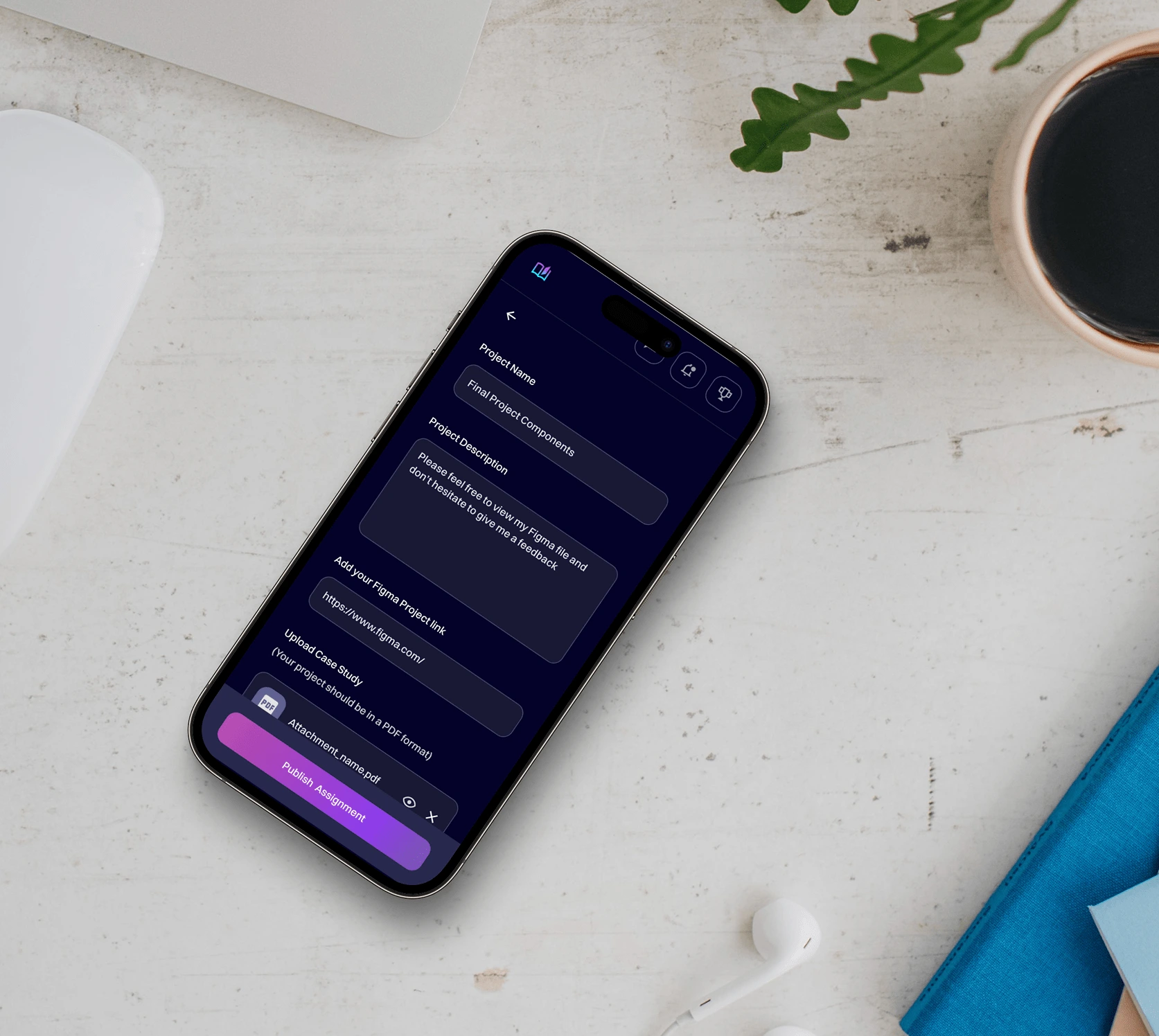
Hi-fi Design - Mobile
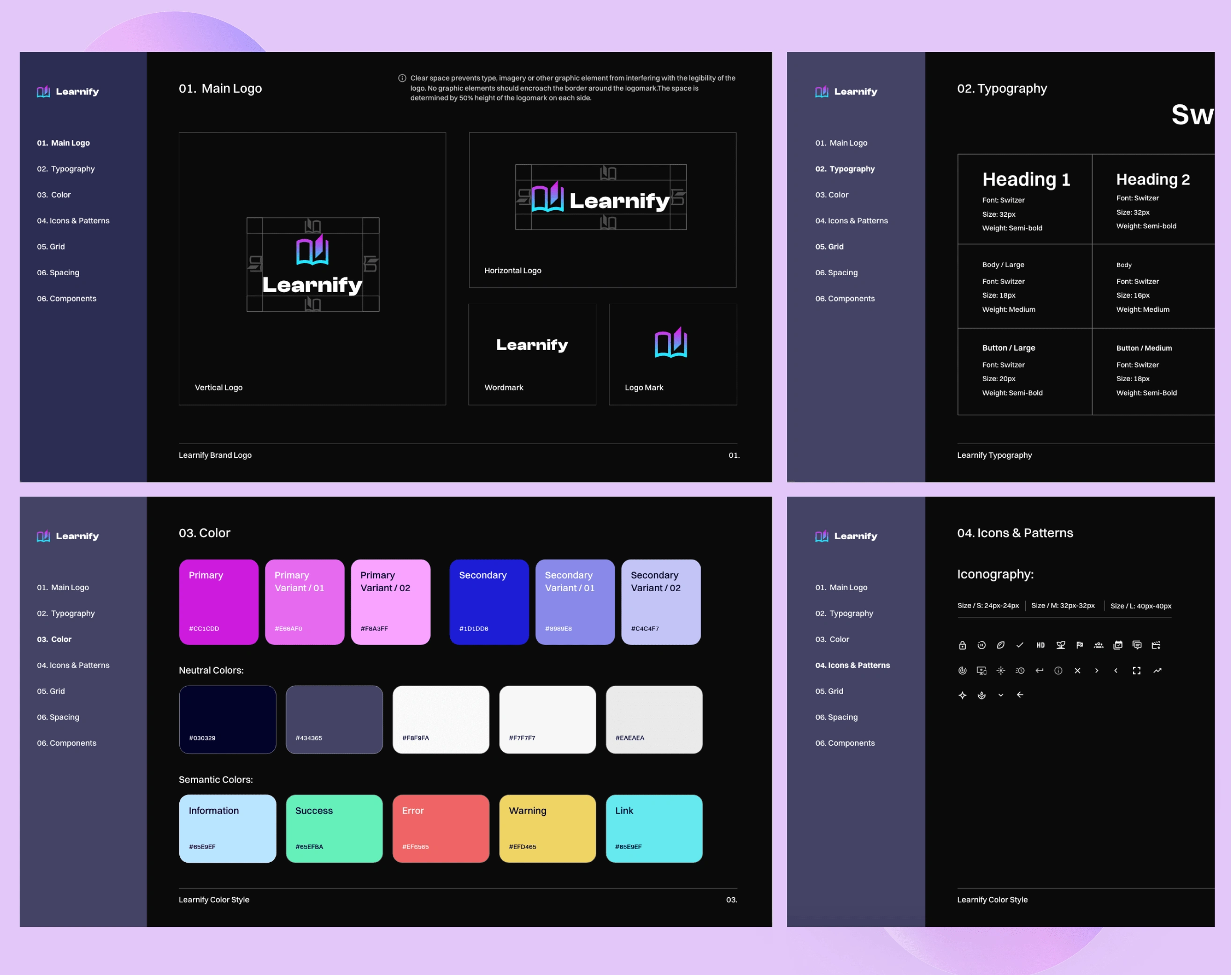
Learnify Style Guide
➡️ What I Learned
Iteration and experimentation: This project taught me the value of iteration and experimentation in the design process. By trying out different approaches, testing ideas, and learning from the results, I was able to refine and enhance my designs. The ability to iterate and experiment allowed for more creative solutions and ultimately led to better outcomes.
Thank you for reading 💛
0 likes · 58 views · Aug 4, 2023
Discover how progress tracking and collaboration can boost user engagement and enrich the digital education experience.