SoulPod — Founding Product Designer · Faster Onboarding Flow

Archna Dosija


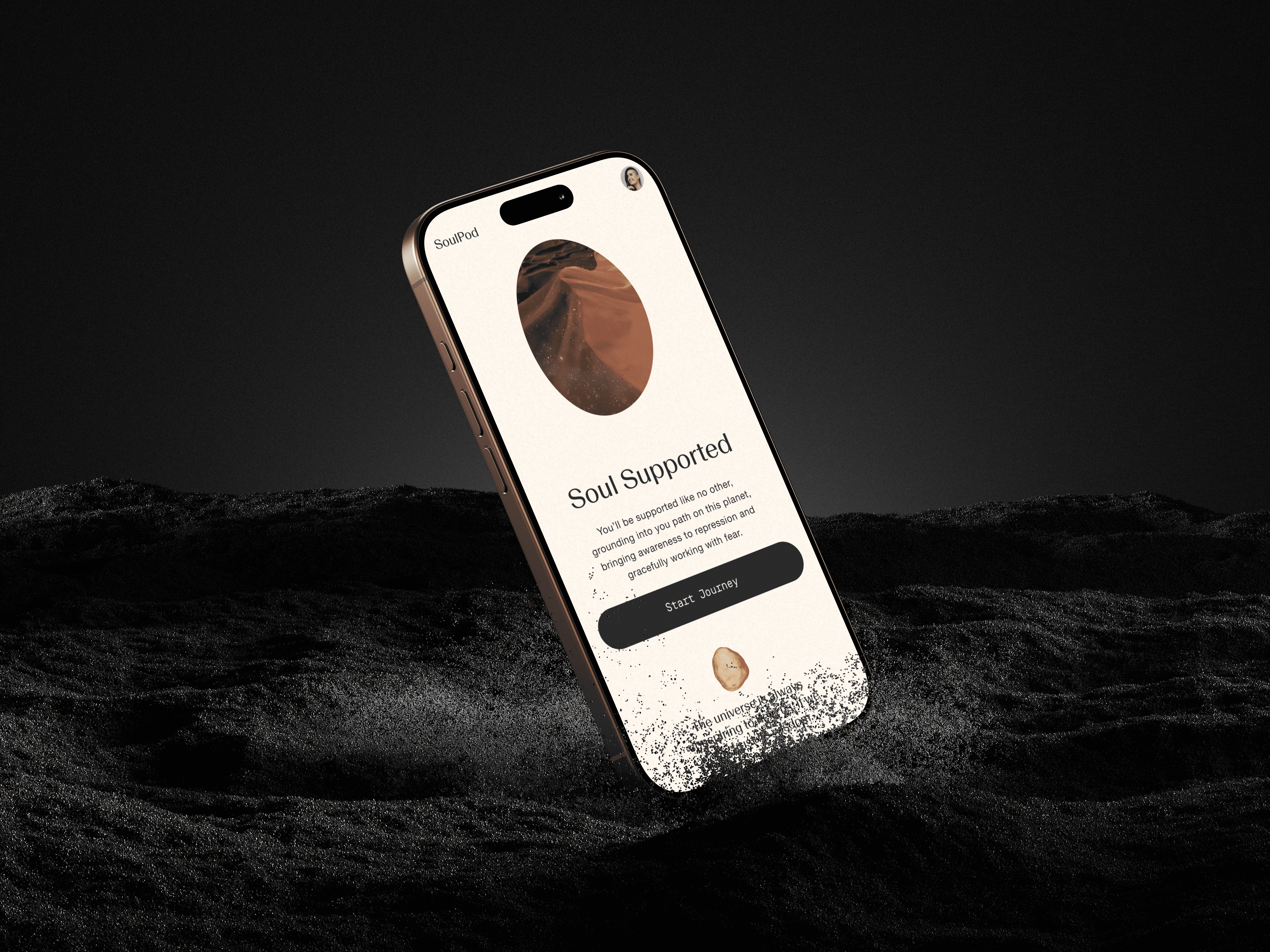
Founding Product Designer for SoulPod, a meditation app built on journeys, rituals, and community Pods. I took the product from MVP to a daily-use experience by reducing early drop-offs, fixing hidden friction points, and reimagining the community model. My work improved onboarding, strengthened ritual consistency, and paved the way for MegaPods—SoulPod’s new scalable community system.
SoulPod is a meditation and wellness app built around structured journeys. Each journey is a guided path of 21 rituals—daily meditation practices that help users build consistency and deepen reflection.
At the heart of the app are Pods: small community groups where users share reflections, support one another, and move through the journey together. Pods are designed to make meditation social - turning what is often a solitary practice into a shared experience.
The Journeys provide structure. The Rituals create habit. And the Pods bring accountability and connection. Together, they form SoulPod’s unique approach to guided meditation.
Project Snapshot
At MVP, SoulPod offered a strong foundation: 7 journeys × 21 rituals × community Pods. But structure alone wasn’t enough. Users hit friction in their first week: idle waiting, inactive Pods, and no quick wins to anchor habits. These cracks threatened the very moments that define retention.
The opportunity was clear: design from 1 → 100. My role was to spot hidden drop-off points, re-imagine the community model, and shape new engagement surfaces that turned waiting time into practice time.
To understand where users were struggling, I first mapped the full MVP journey and overlaid user feedback (emails + App Store reviews) to uncover hidden friction points.
Waiting Room → Idle Time
New users waited up to 3 days for Pods to form, with little to do - causing early drop-offs at onboarding.
Journey-Agnostic → No Engagement
Pods of 3–5 often went inactive, leaving users without accountability or community.
Small Pods → Silent Groups (From User Feedback)In parallel, I tracked insights from feedback emails and App Store reviews and this is what concistently emerged. Pods of 3–5 often went inactive. Small groups felt clunky, leaving users without the sense of community SoulPod promised.
Design Solutions
User feedback revealed a recurring problem: i.e. little to no communication in Pods. We tried adding prompts and making notifications more obvious. But nothing seemed to spark conversation in the way we had imagined, leaving users who wanted the community feel - lonely and unheard.
As you can see below, pods of 3–5 people often went silent, leaving members with little sense of community. Even with prompts and notifications, groups were too small to sustain energy.
We had to look for a solution. So, after internal discussions, we agreed that Pods needed to scale. We had a few ideas to go about how we wanted to handle the scale. To kickstart ideas and how It would look and feel, I used Lovable AI to generate early explorations based on prompts for larger or unlimited Pods. These concepts gave us a quick way to visualize how a more active community could feel.
The result was the MegaPods concept—now being prepared for release. Larger, journey-aligned communities with sections for reflections, affirmations, and queries. This structure is designed to make community the backbone of SoulPod.
Expected Impact: Designed to turn a major frustration point into a dynamic community hub, making it easier for users to find support and share reflections.
18–22% fewer early drop-offs during the first 3 days of onboarding after addressing the Waiting Room gap.
15–20% increase in daily engagement as Portals and SoulSeer gave users quick wins outside of long journeys.
1.4× stronger ritual consistency reported by users when engagement options filled idle time.
Positioned SoulPod for scale by validating new reflective and social features for future releases.
Retrospective
Friction hides in the in-betweens. Users didn’t drop off during rituals, but in the gaps between them. Transitions proved just as critical as the main experience.
Research is a living system. Feedback from reviews and emails showed me research isn’t one-and-done — it’s a continuous loop that drives growth.
Feature ownership is balance. Leading a live product meant not just adding new features, but strengthening what existed without breaking trust.
Small signals spark big shifts. What seemed like minor “quiet Pod” complaints revealed the need for a full community redesign.
Like this project
Posted Oct 26, 2025
Founding Designer for SoulPod. I uncovered the MVP’s biggest engagement gaps and redesigned key moments to reduce drop-offs and drive daily meditation habits.