Collekt.ai Website Redesign Project

Diana Fabianczuk

PROJECT OVERVIEW
Collekt.ai — Transforming a SaaS Tool into Industrial AI Infrastructure
The problem
Collekt came with a clear problem: their existing website looked like a typical SaaS product — lightweight, slightly cartoonish, and misaligned with the scale of their target clients, such as tier banks and investors.
Meanwhile, their actual product was the opposite — a high-performance, AI-driven recovery system operating at a large scale.
The gap between their true capabilities and how they were perceived was significant.
Goal
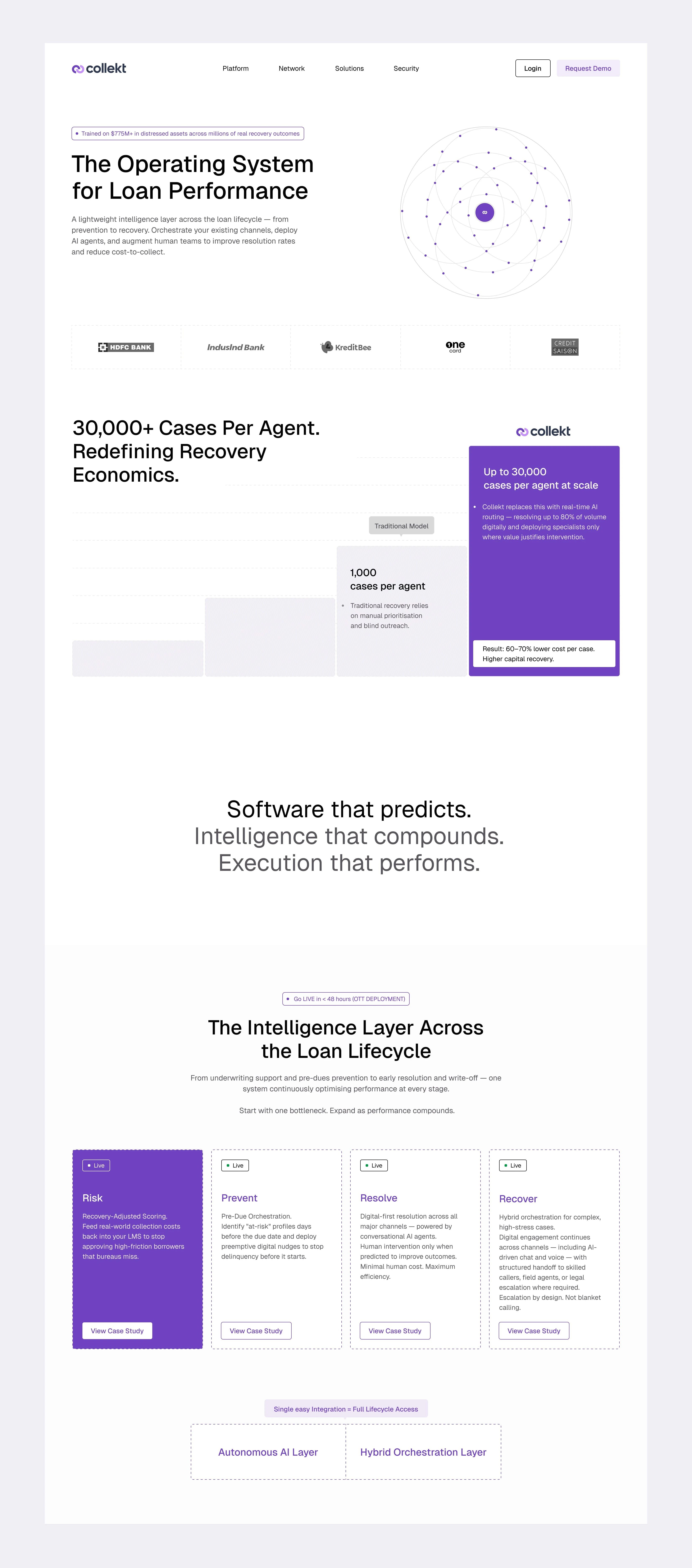
Reposition Collekt from a “tool you use” to an operating system you integrate — a high-trust, enterprise-grade infrastructure product that signals scale, precision, and inevitability.
My Approach
Before touching visuals, I benchmarked how category leaders in enterprise fintech and AI infrastructure present themselves — and identified the specific visual signals (density, motion, abstraction) that communicate trust and scale to institutional audiences.
I redesigned the website as a structured, narrative-driven landing page that:
emphasizes outcomes over features;
builds trust for banks and credibility for investors;
eliminates all “SaaS UI” associations;
presents the product as an autonomous system instead of just a tool.
Visually, I conveyed this with a clean, light, industrial interface supported by:
abstract data flows rather than UI screenshots;
real-time system behavior demonstrated through motion;
minimal, high-impact typography;
a strict, scalable design system.
Role
UX/UI Designer
Note
Worked closely with the client’s vision; final implementation is handled by their internal front-end team.
Details
Every visual element was created with precise intention. I defined not only their appearance but also how they convey system behavior and enhance the overall story. Below is an example of how I presented and justified the visual direction, including the initial screen concepts.
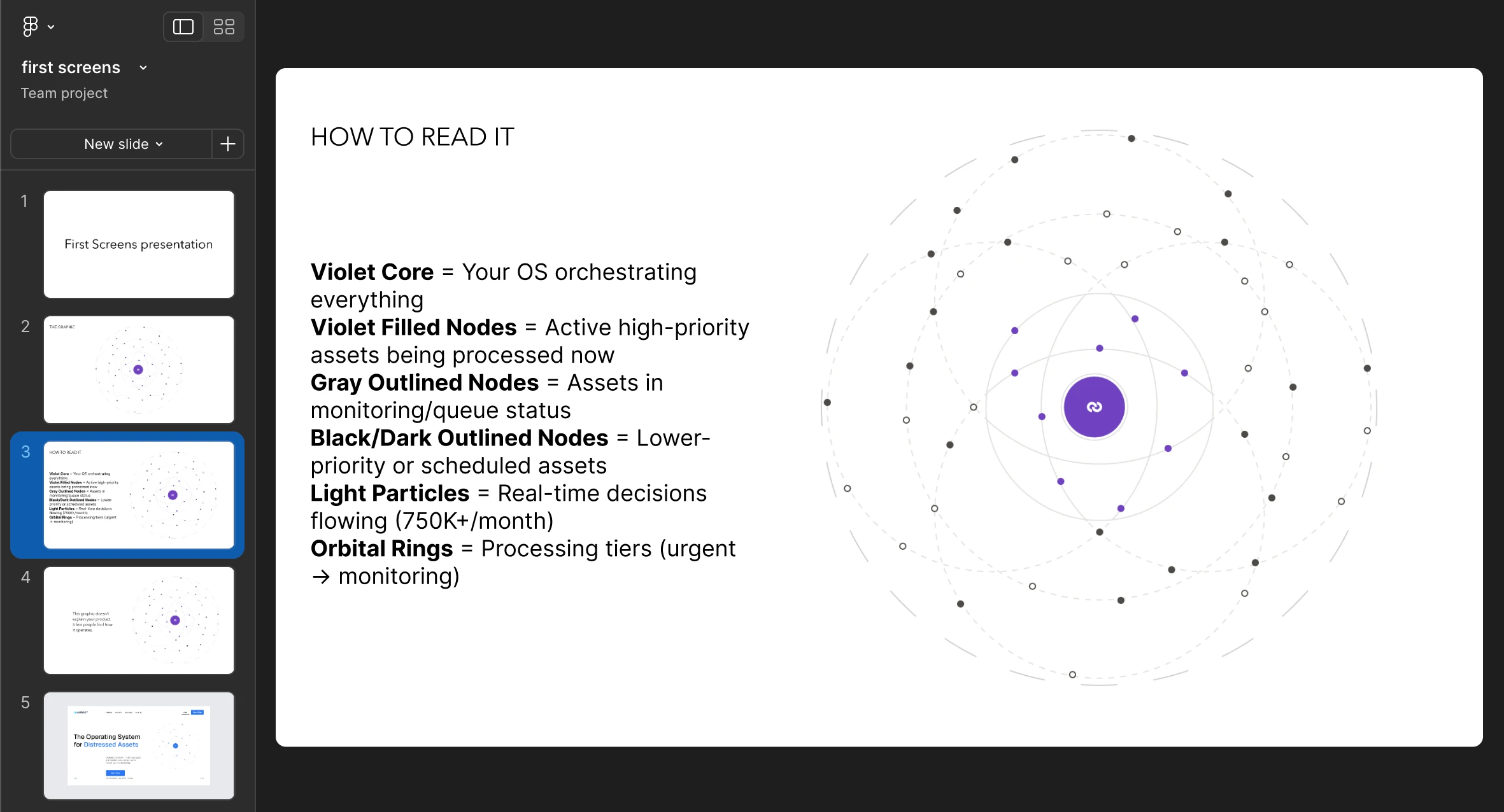
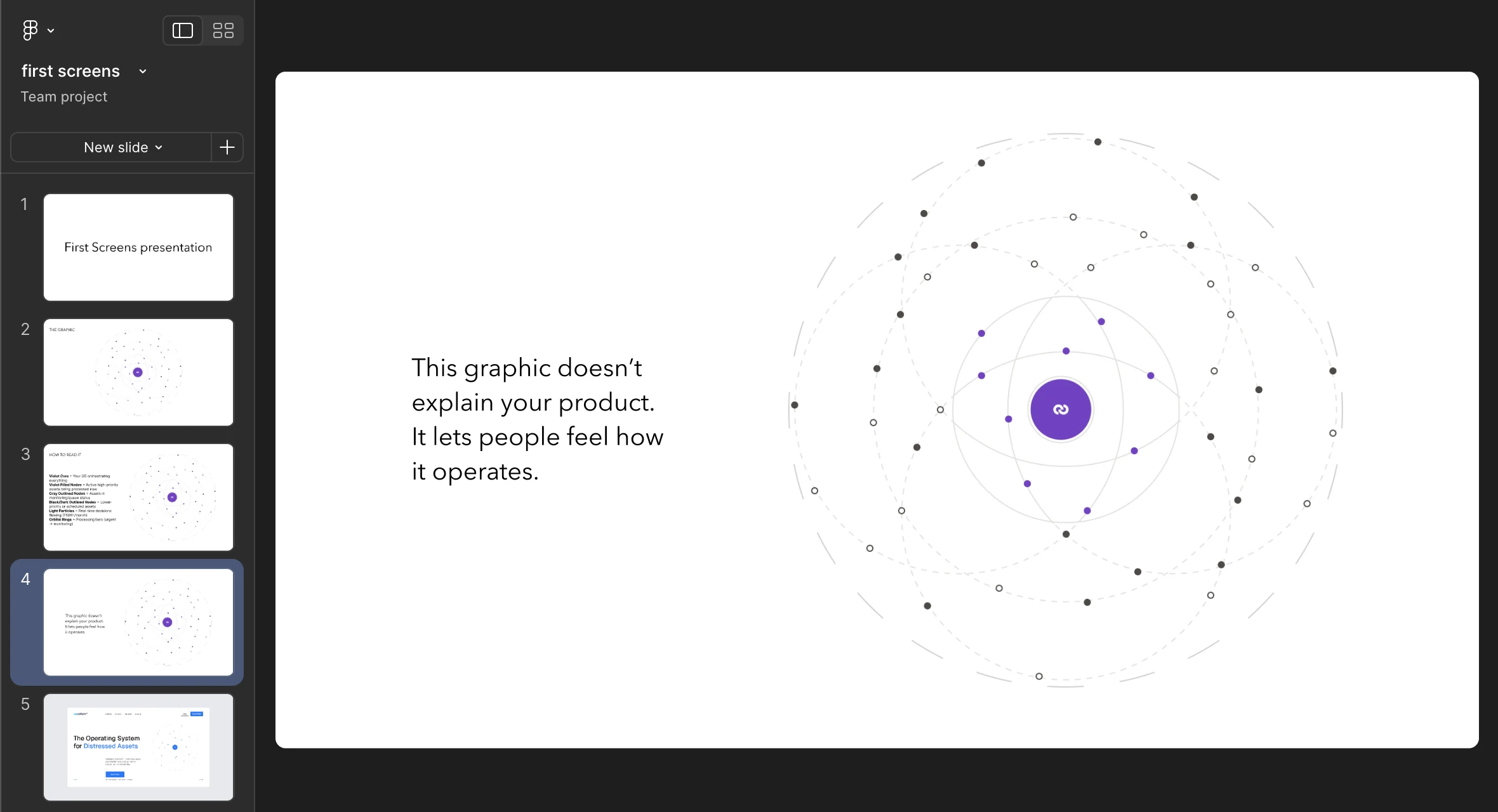
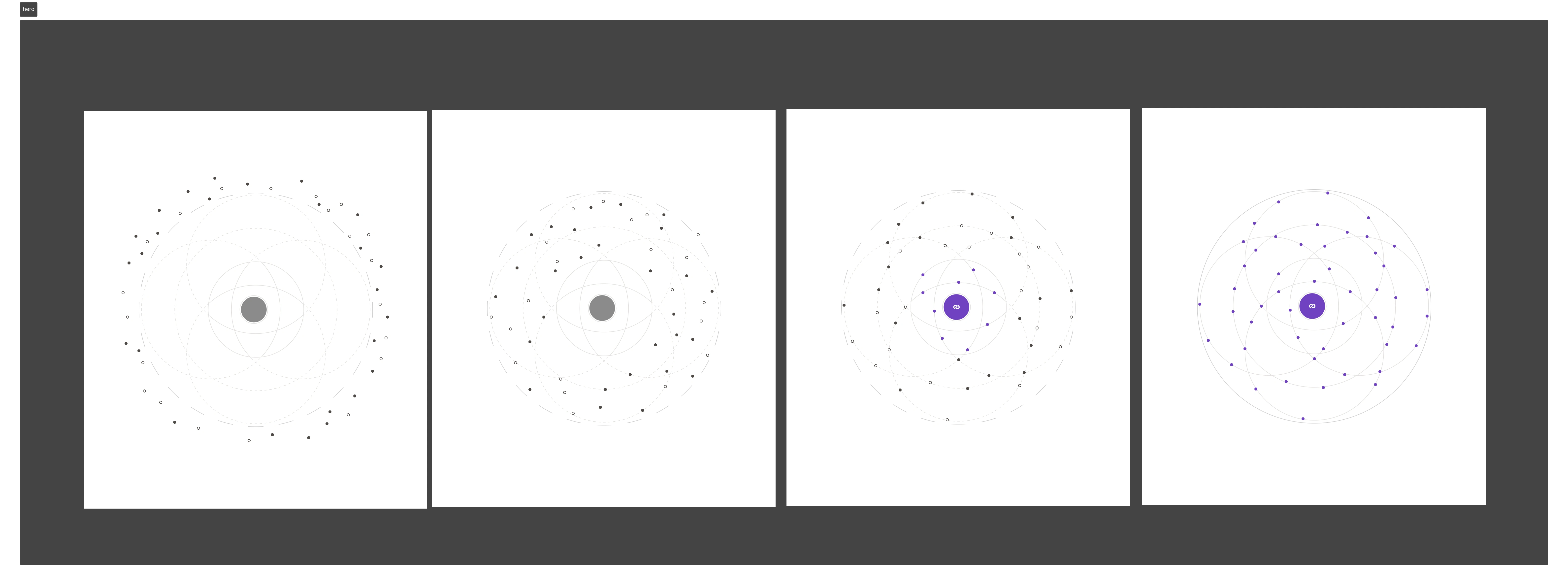
And designed and documented animation flows, providing developers with clear, step-by-step implementation guidance
The result:
CHALLENGE
This wasn’t just a typical website redesign — it was a shift in perception at the category level.
Key challenges:
Reframing the product category →
"Solved by removing all SaaS visual conventions — no dashboards, no UI mockups — and replacing them with abstract data flow visualizations that illustrate infrastructure, not software."
Designing for two high-stakes audiences →
"Solved with a dual-track page narrative: trust signals and compliance clarity in the first fold for banks; system depth and technical architecture for investors further down."
Avoiding visual shortcuts →
"Solved by building motion as the primary communication tool — behavior is shown through animation, not represented through stock imagery."
Simplifying complexity →
The system integrates AI decisioning, human execution, and a data network — but the experience had to feel effortless and natural.
Starting from scratch →
No existing elements could be reused. The entire visual language, structure, and system had to be built from the ground up.
WHAT I CONTRIBUTED
I owned the design end-to-end, focusing not just on UI, but on how the product is understood and perceived.
Designed the full website in Figma (structure, layout, and visual system)
Built a scalable design system with styles, typography, and color logic
Translated complex product logic into a clear, narrative-driven page flow
Defined and designed all animations and micro-interactions to reflect real-time system behavior
Created a design that enables the dev team to implement efficiently without ambiguity
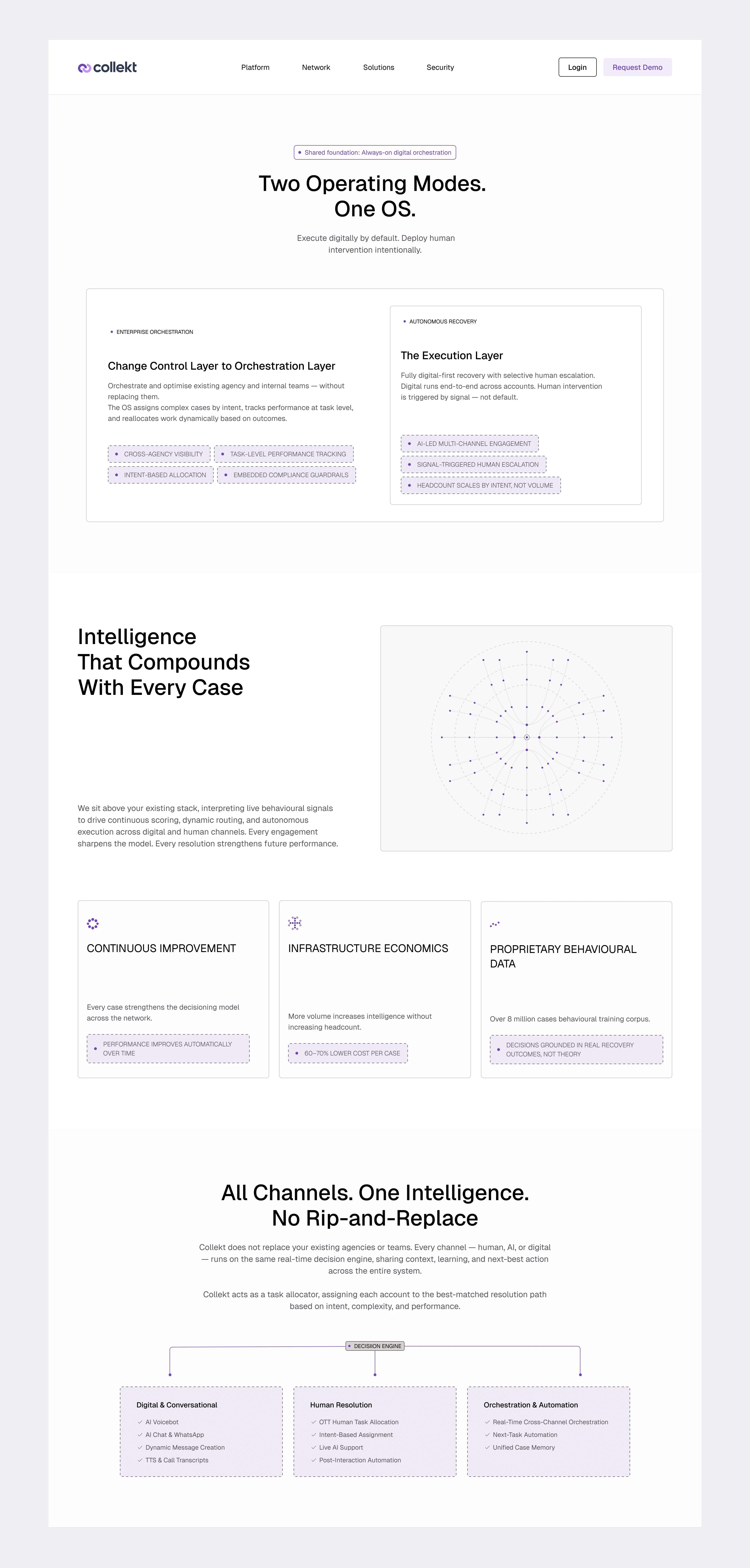
RESULT
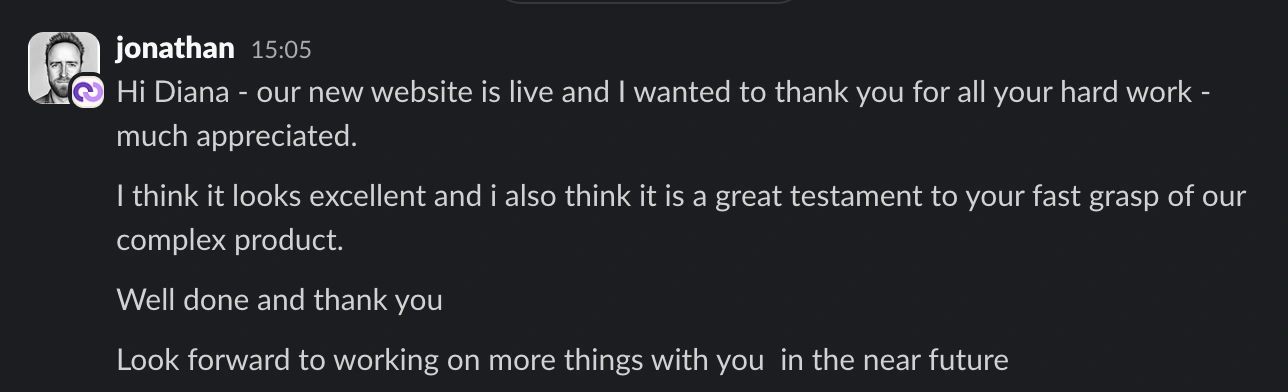
The redesign was approved. Stakeholders confirmed that the new direction finally matched the scale and seriousness of the actual product. The complete design system, animation specs, and developer documentation were handed off—structured so the front-end team could implement them without confusion. The site is currently in development; I will update this case study with conversion and engagement data after the launch.
Reflection
If I could extend this project, I would validate the narrative structure with real bank and investor contacts through prototype testing — specifically, to see whether the "operating system" framing resonates as intended or requires more concrete support for compliance-focused decision-makers.
Like this project
Posted Apr 1, 2026
Repositioned a SaaS product as enterprise AI infrastructure — through design alone.
Likes
0
Views
0