
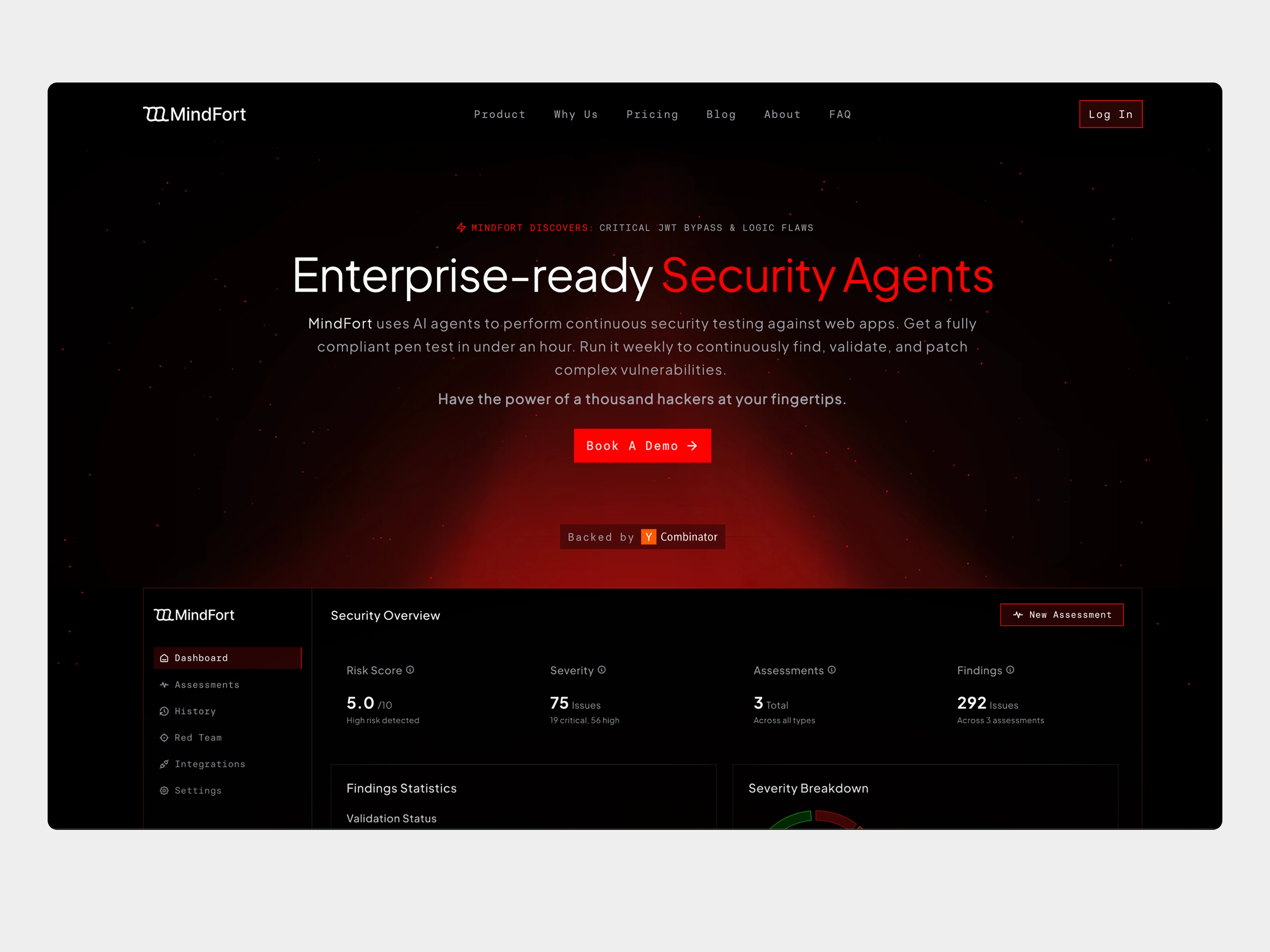
Designing the vision that got MindFort into YC
As MindFort's founding designer, I helped shape the early product vision for an autonomous platform that secures code in real time. I led UX strategy and system design for the MVP, turning a bold idea into a clear, intuitive experience. That foundation helped MindFort earn a spot in Y Combinator’s W25 batch and launch with momentum.
The Problem
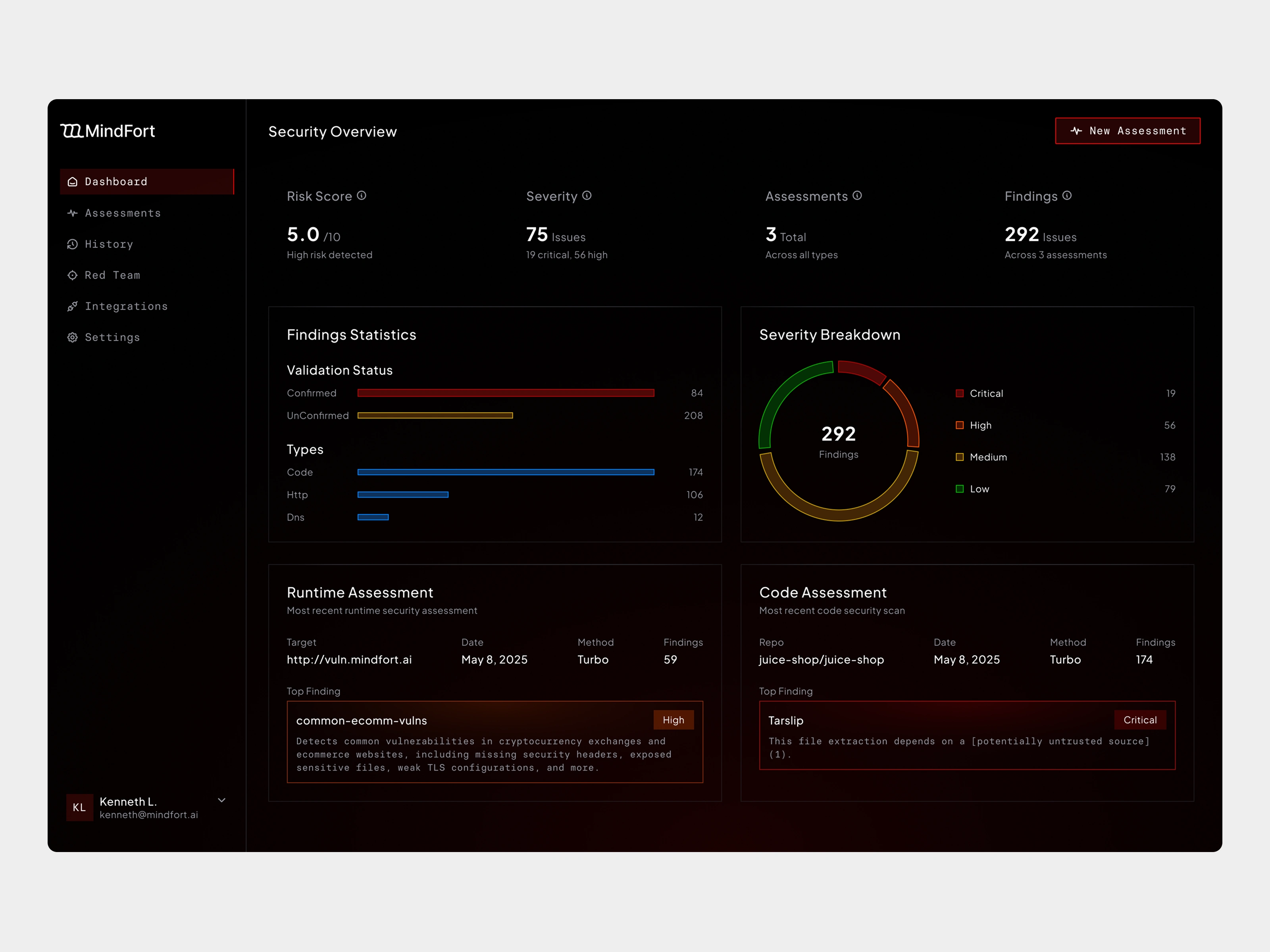
MindFort was building a platform that uses autonomous agents to secure code in real time, a bold, technical vision with no prior design foundation. The challenge was to define how that vision translated into a usable product: What would onboarding look like? How would users interact with agents? How could we present real-time security insights without overwhelming developers? The product needed structure, clarity, and a strong UX strategy to be launch-ready and fundable.
My Role
As MindFort’s Founding Designer, I helped shape the early product vision and led design for the MVP. My work included:
Defining the core UX strategy and user journeys from first-touch to active protection
Designing onboarding flows, agent configuration, and real-time code monitoring interfaces
Creating a scalable UI system to support rapid iteration and future features
Collaborating closely with the founding team on product direction, roadmap priorities, and investor-facing visuals
Delivering high-fidelity prototypes and design specs to accelerate handoff and development
Outcome
The design foundation helped MindFort launch with clarity and conviction, earning a spot in Y Combinator’s W25 batch and building early momentum in a competitive space. The product’s UX made complex AI security workflows feel simple, helping the team move fast and build trust with early users and investors.
0 likes · 10 views · Jun 28, 2025
Led product and UX design for MindFort’s autonomous security platform, helping launch the MVP and secure a spot in Y Combinator’s W25 batch.


