Creative Portfolio Presentation Template

Desygnative Studio

Creative Portfolio Presentation Template
Concept work / portfolio presentation template created to explore how a creative professional can communicate their point of view, background, capabilities, and future direction through a cohesive visual narrative.
Overview
Rather than treating a portfolio as a sequence of disconnected information slides, I approached this presentation as an editorial story. The deck moves from introduction and philosophy into background, career progression, competencies, selected experience, independent work, personal interests, future direction, and contact information.
The result is a flexible presentation system built around strong hierarchy, controlled typography, photography, and intentionally varied page compositions.
The Design Challenge
The central challenge was balancing personality with structure.
A professional portfolio needs to communicate background, skills, experience, projects, and career direction without becoming visually repetitive or reading like a résumé distributed across several slides. I focused on creating enough visual variation to keep the presentation moving while maintaining a recognisable system from beginning to end.
The deck also accommodates several information types: large statements, profile details, chronological information, capability lists, project summaries, numerical callouts, quotation layouts, personal interests, and contact details. Each needed its own hierarchy while still belonging to the same presentation.
Design Approach
I built the presentation around an editorial visual language with generous spacing, oversized typography, and image-led compositions.
Large typographic statements slow the narrative down and give important ideas emphasis. More detailed sections shift into grids, cards, tables, and structured information blocks, allowing the presentation to carry more content without losing clarity.
Photography acts as a recurring visual anchor. Its scale, crop, and relationship with typography vary across the deck, while rounded image containers, overlapping labels, cut-out title treatments, and thin-line structures add depth without overwhelming the restrained aesthetic.
Selected high-contrast black slides create deliberate interruptions in the otherwise light presentation and establish rhythm between sections.
Presentation System
The system uses a small number of recurring components rather than a single repeated slide layout. A consistent navigation treatment identifies the presentation and current section, while page-number elements create subtle progression.
Typography carries most of the hierarchy. Large display text handles major ideas and transitions, while supporting text remains simple and highly legible.
Structured content is organised through profile and quick-fact cards, career blocks, competency lists, project and role tables, numerical highlight cards, quotation layouts, interest grids, and closing contact compositions.
The numerical and testimonial layouts in this concept use demonstrative template content. They do not represent verified achievements or testimonials.
Intended Use
This concept is designed for creative professionals who need a structured way to introduce both their work and the thinking behind it. It can support portfolio presentations for designers, creative technologists, and other independent professionals presenting themselves to hiring teams, collaborators, or prospective clients.
The sequence gives space to explain a philosophy, establish professional context, show progression, organise skills and experience, introduce independent interests, and communicate what comes next. Its modular content patterns can adapt to different professional stories while retaining a consistent visual system.
Selected screens
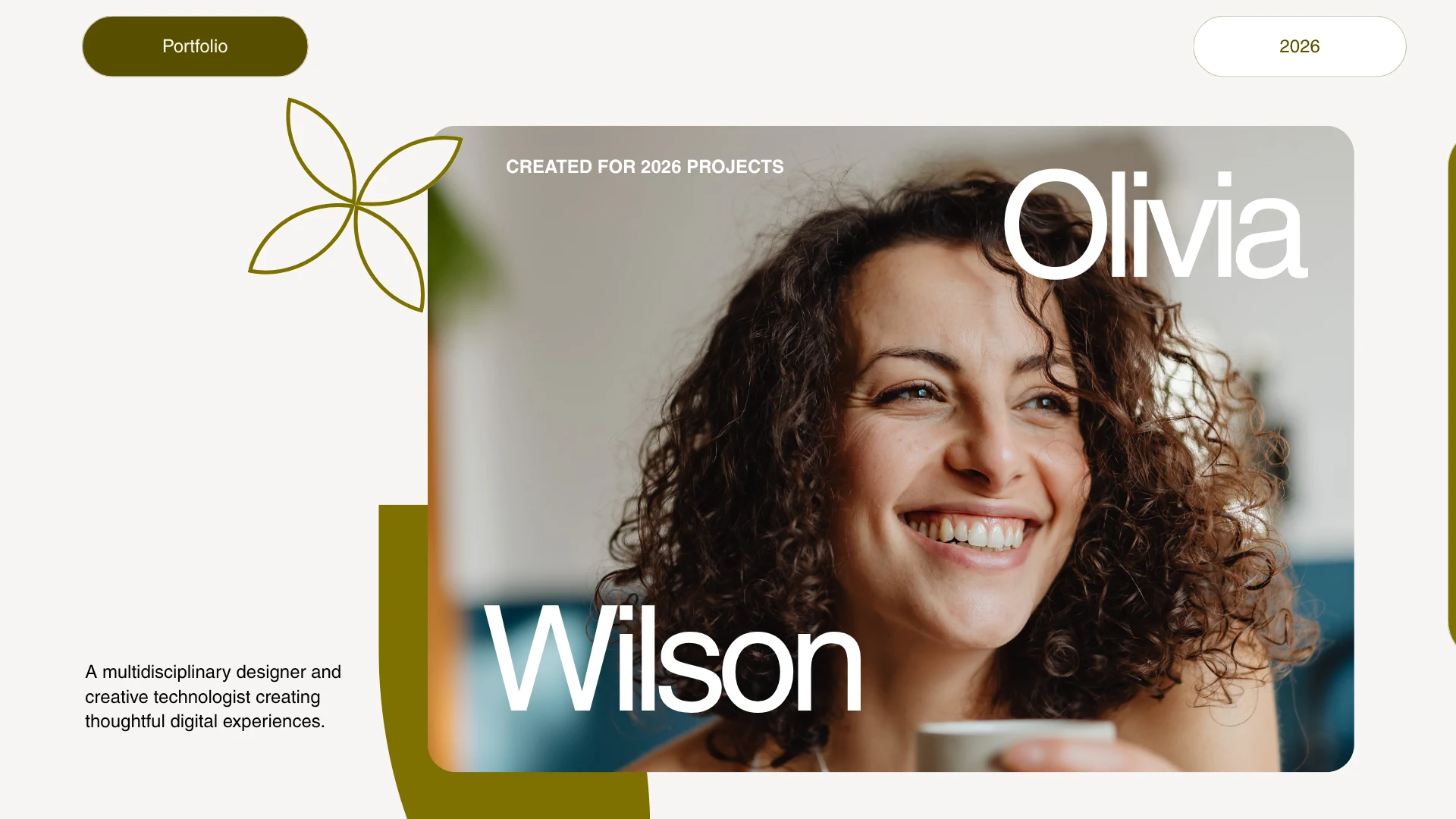
Creative portfolio presentation cover
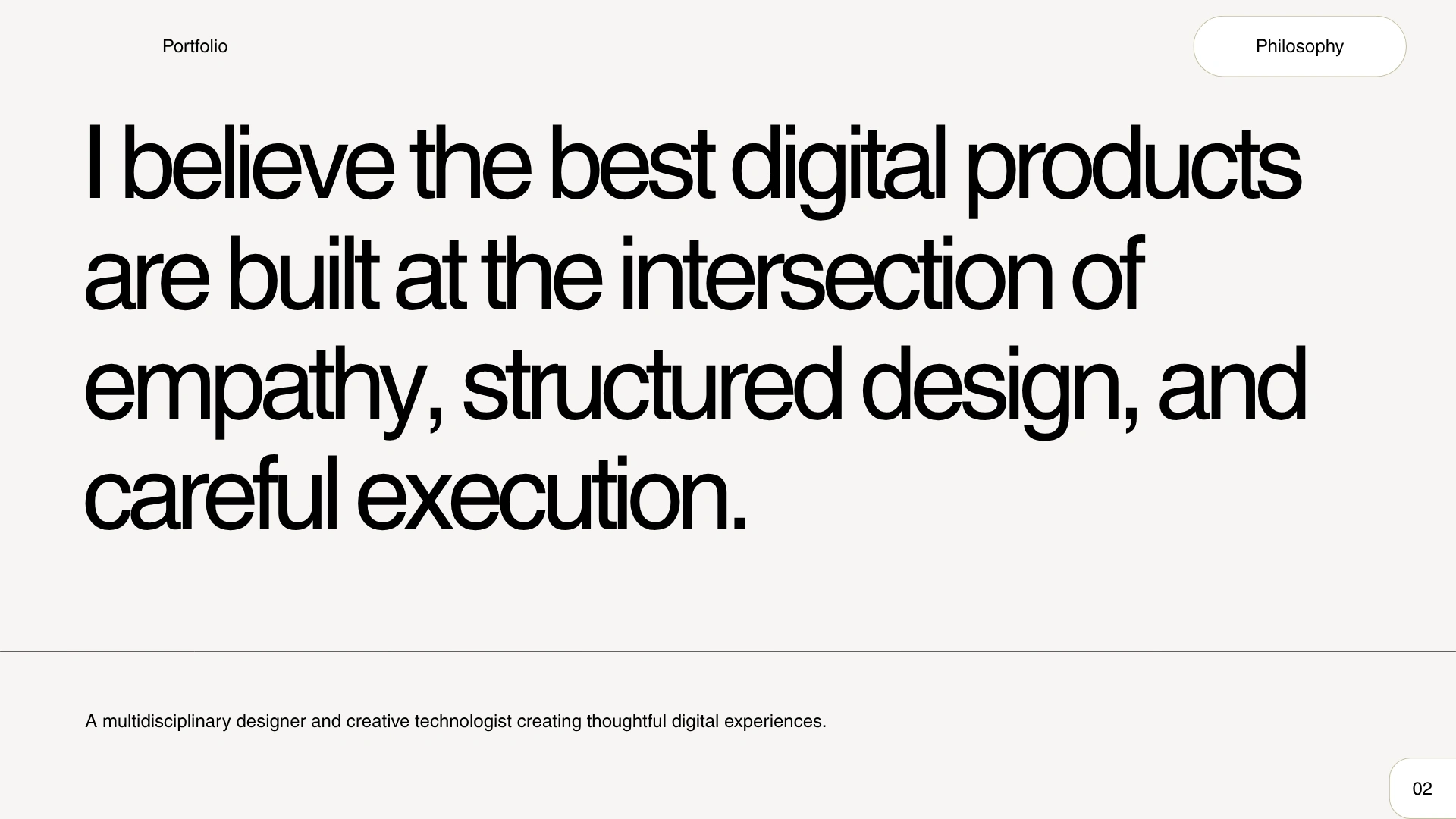
Creative portfolio presentation screen 2
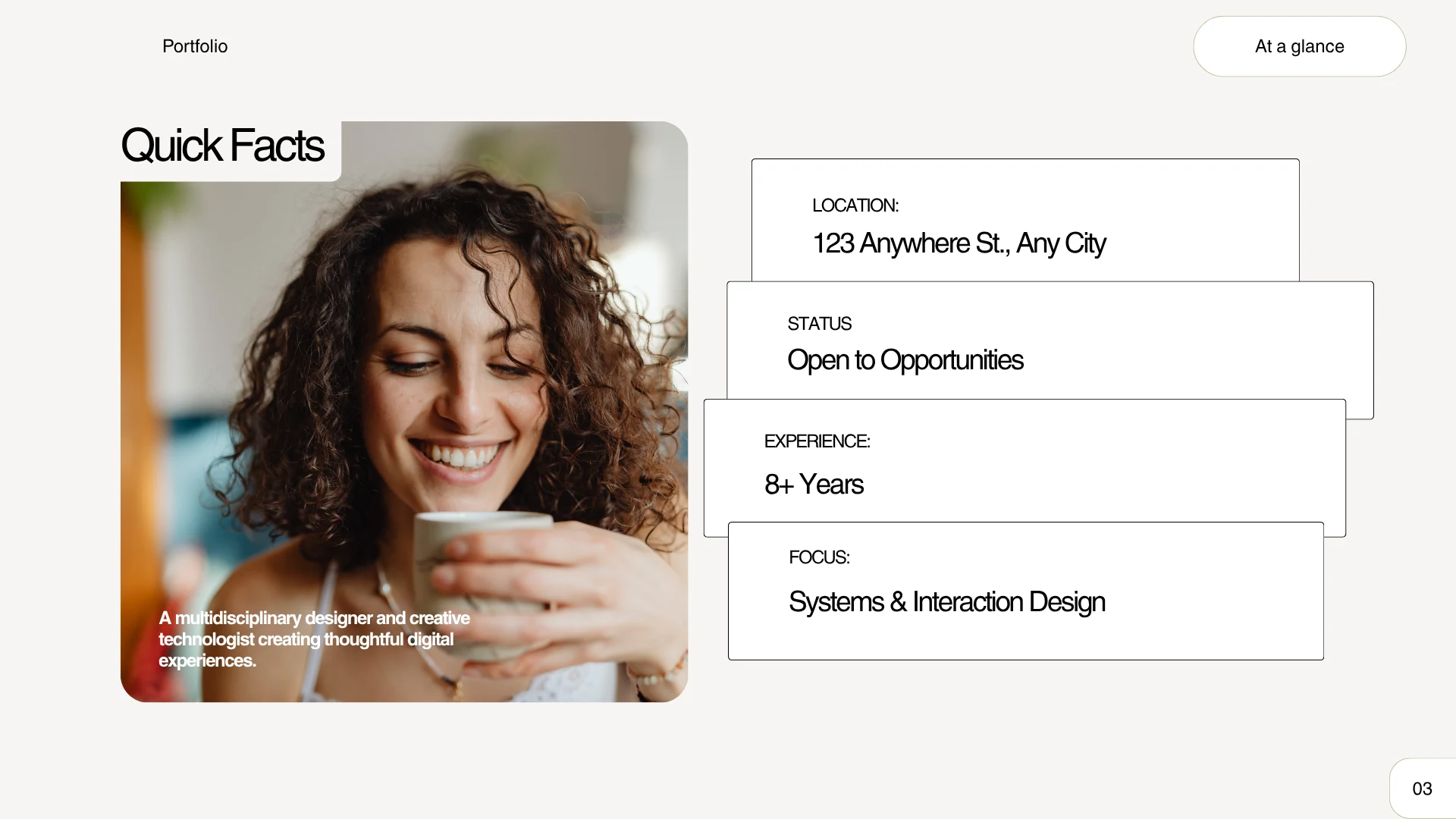
Creative portfolio presentation screen 3
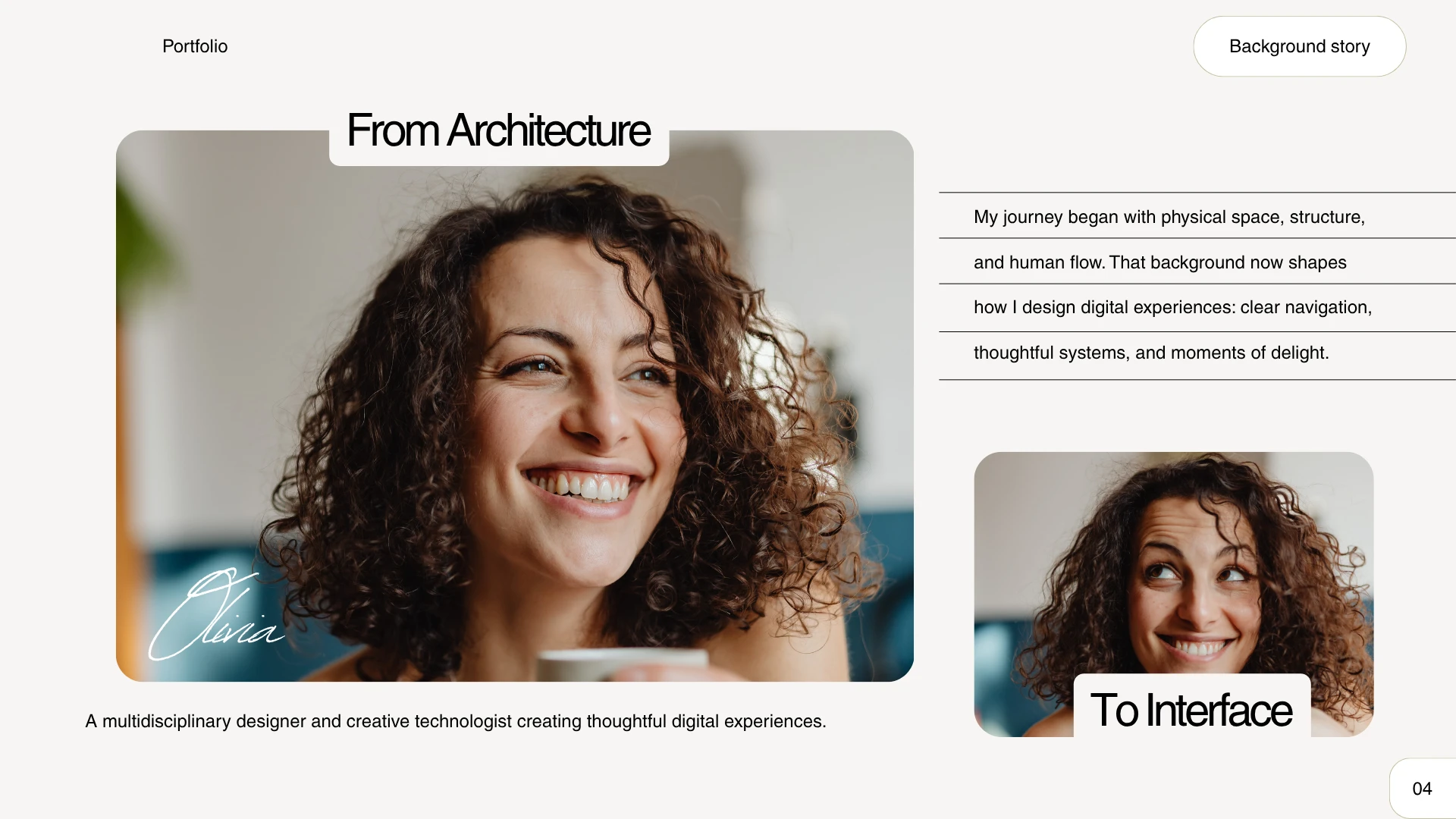
Creative portfolio presentation screen 4
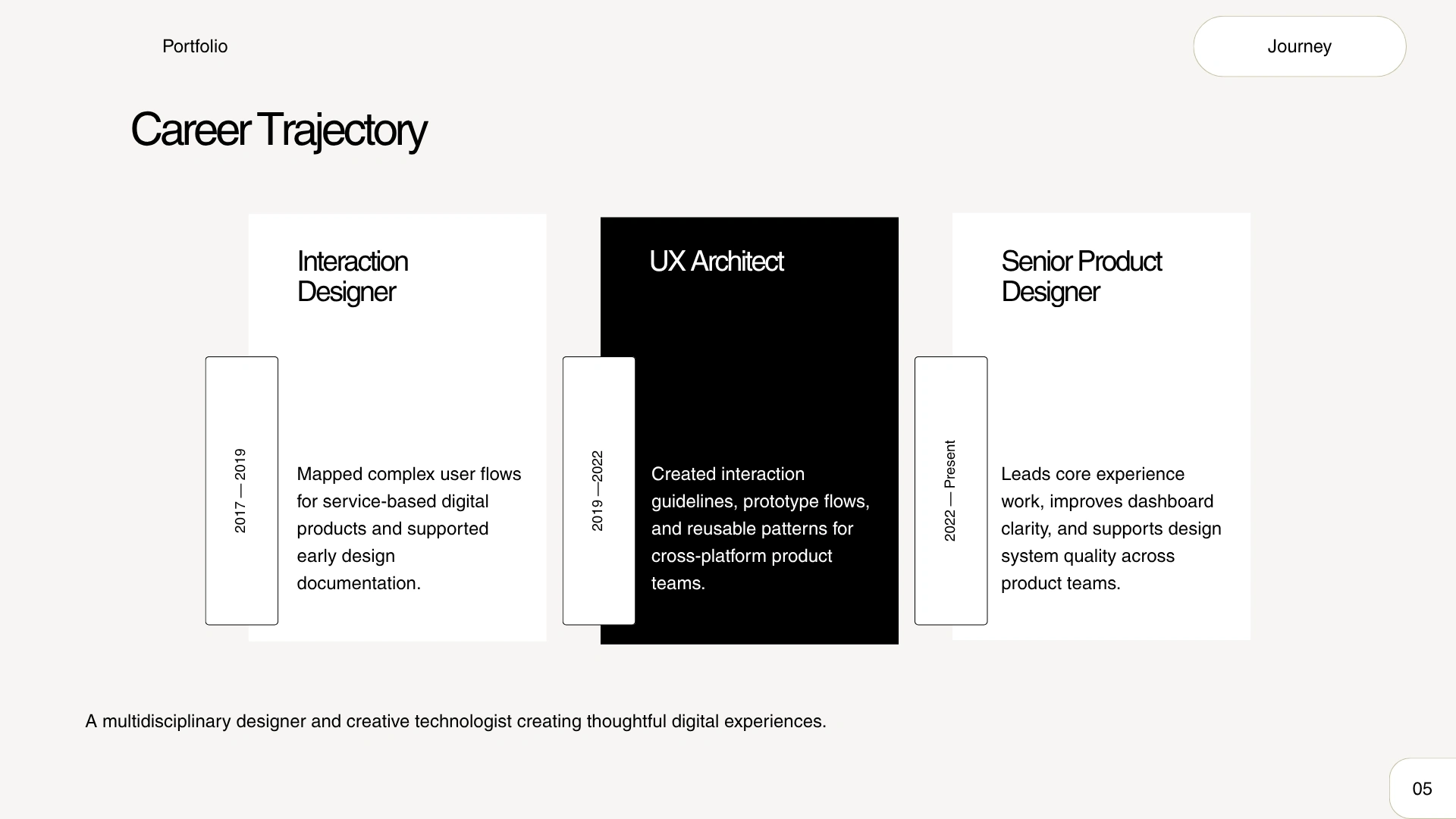
Creative portfolio presentation screen 5
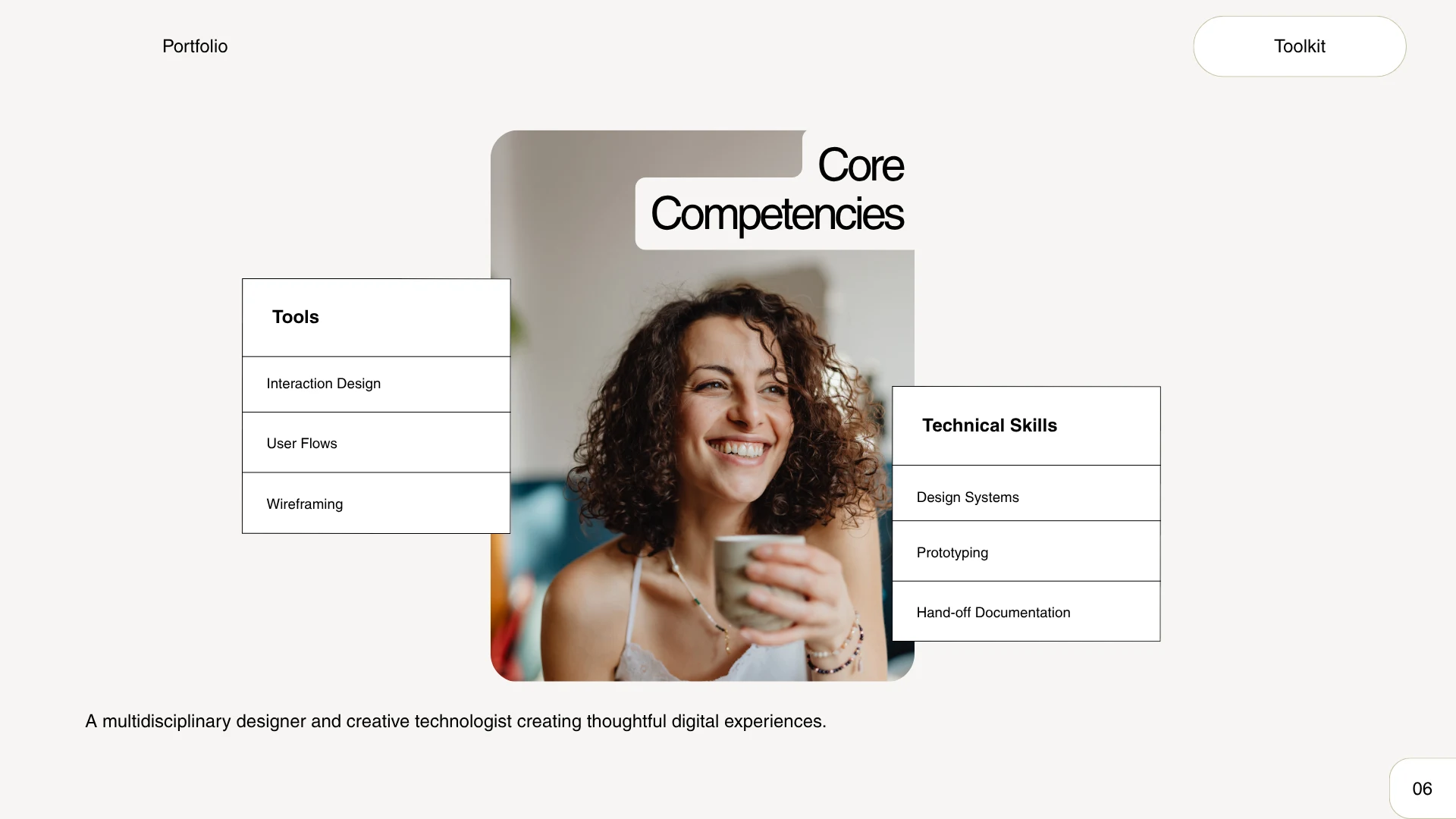
Creative portfolio presentation screen 6
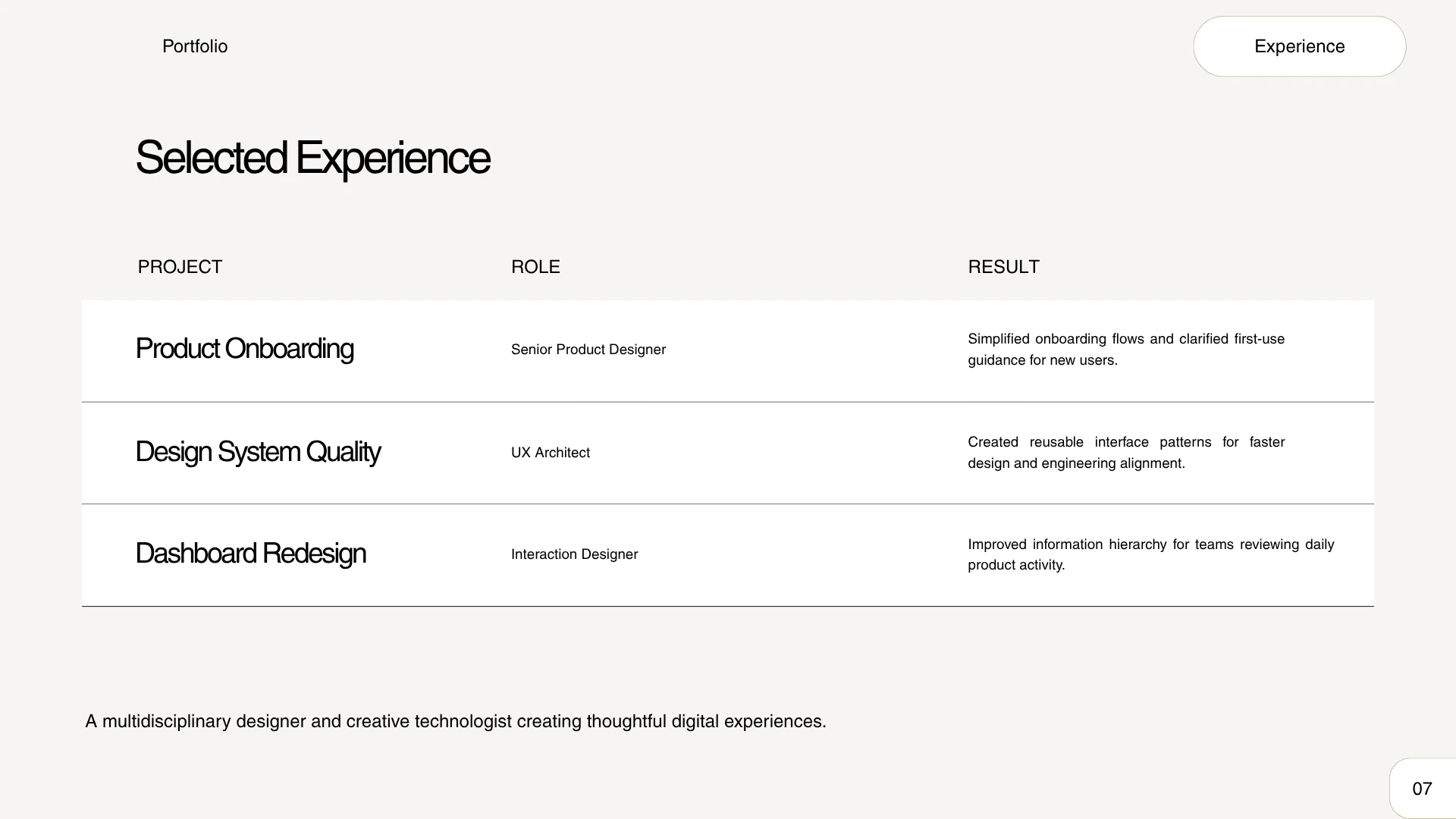
Creative portfolio presentation screen 7
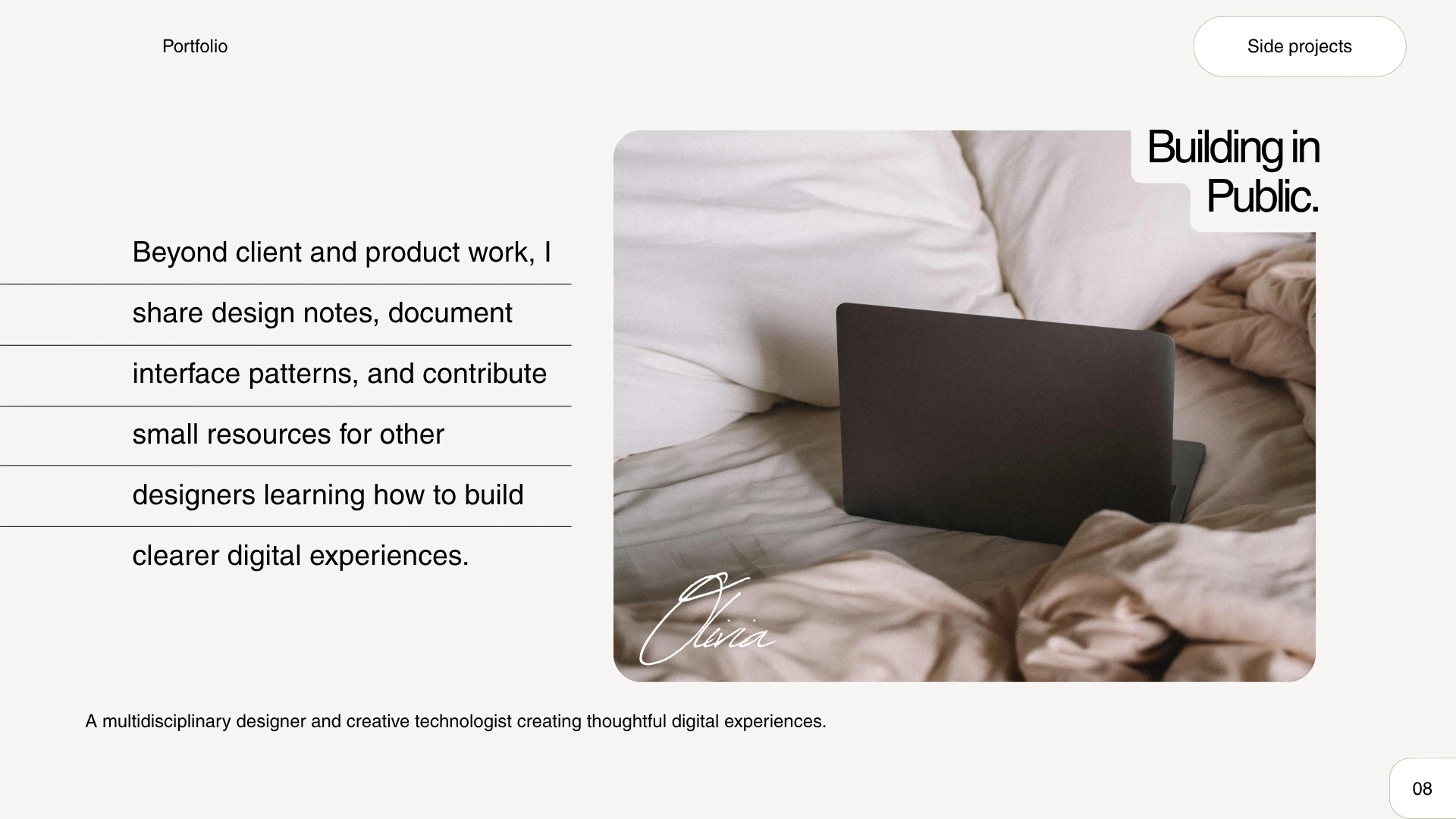
Creative portfolio presentation screen 8
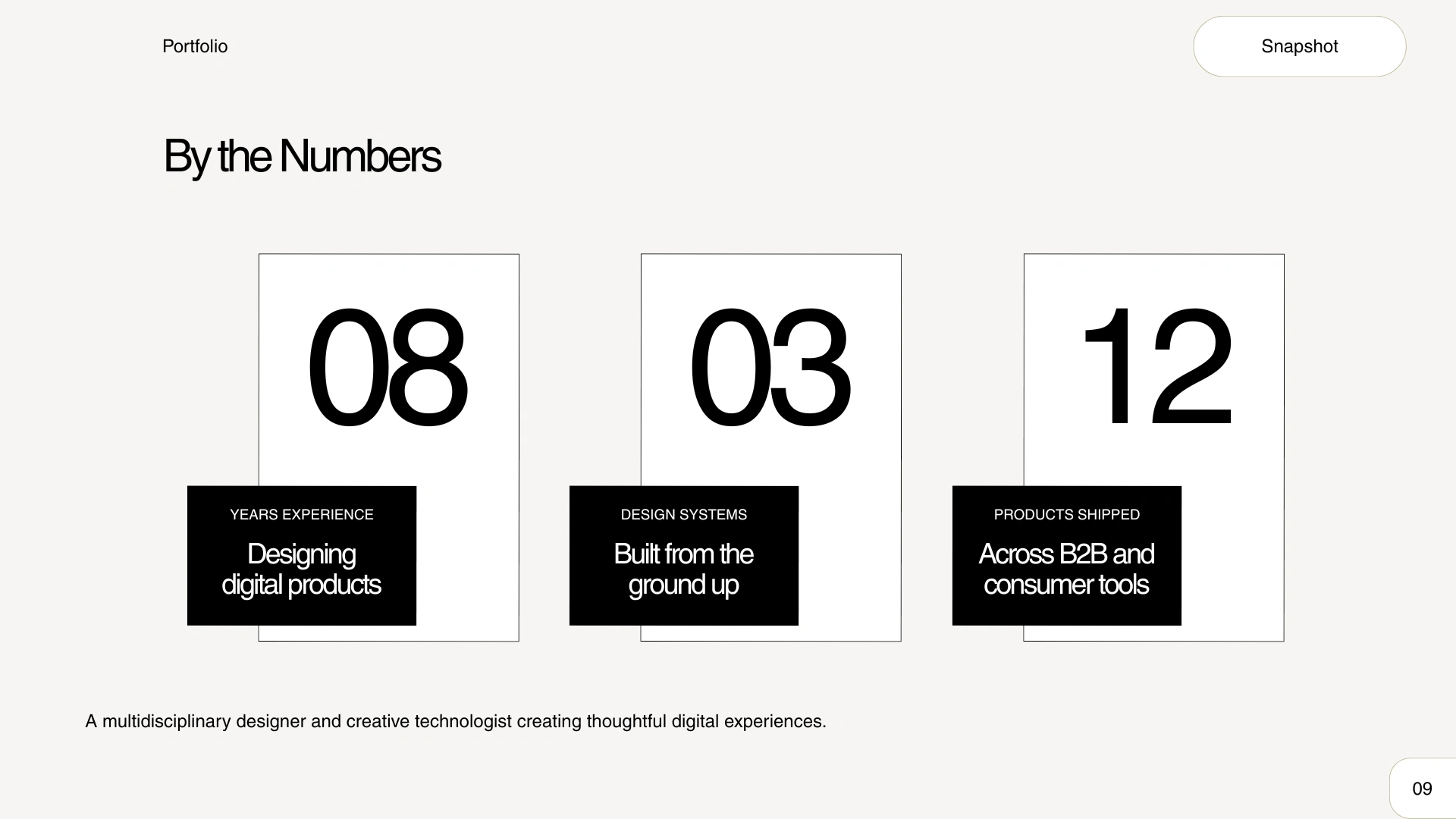
Creative portfolio presentation screen 9
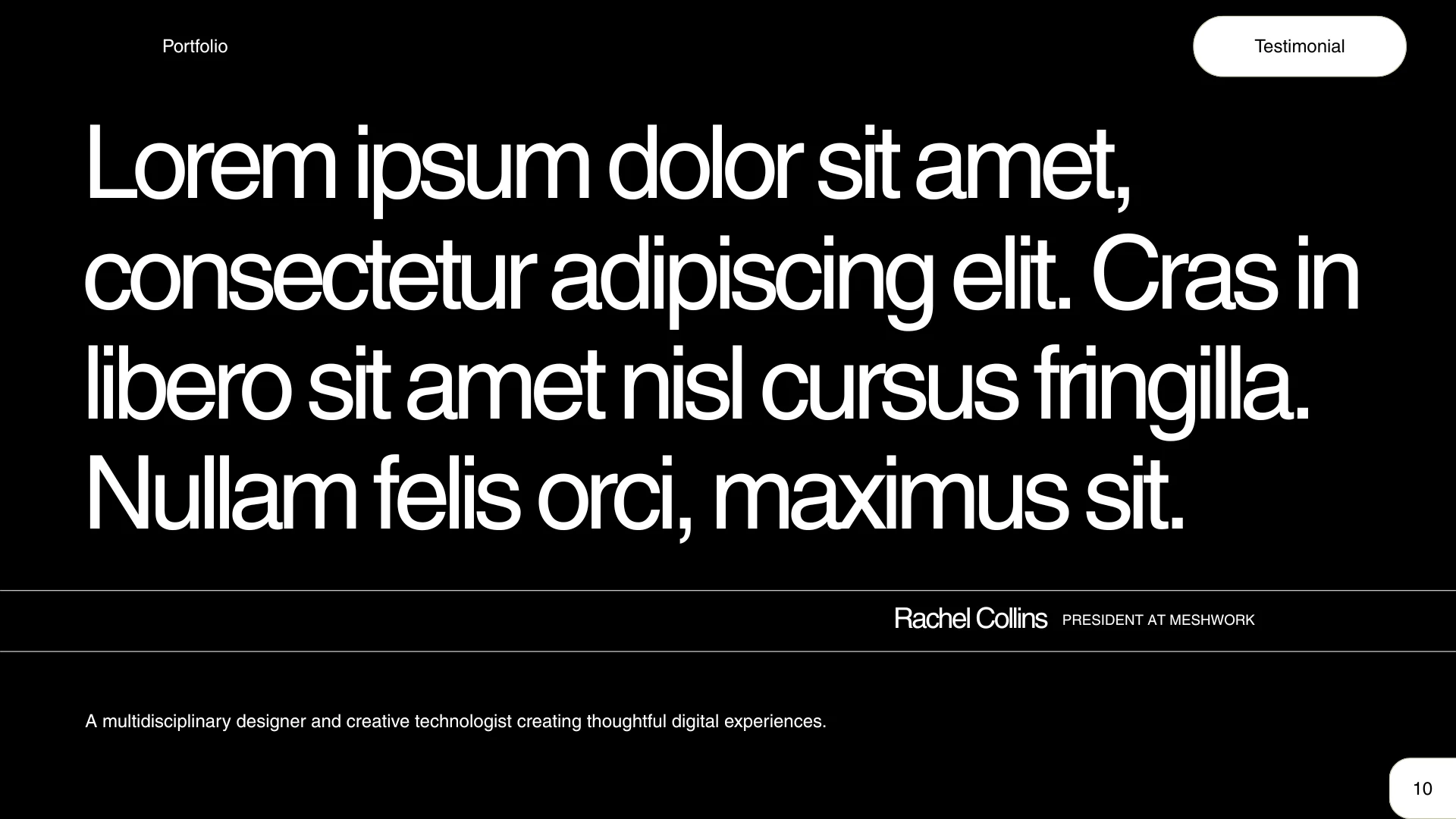
Creative portfolio presentation screen 10
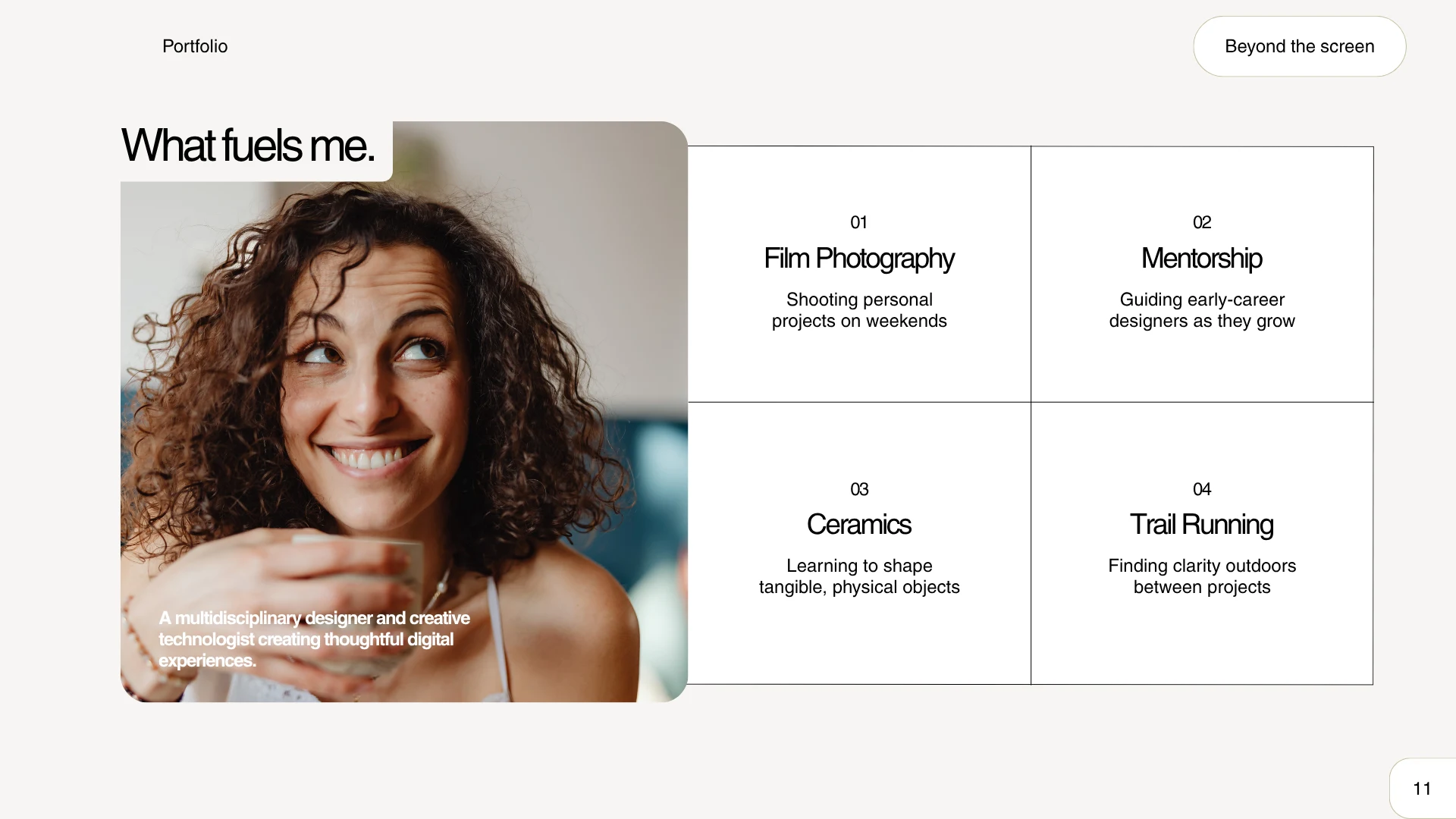
Creative portfolio presentation screen 11
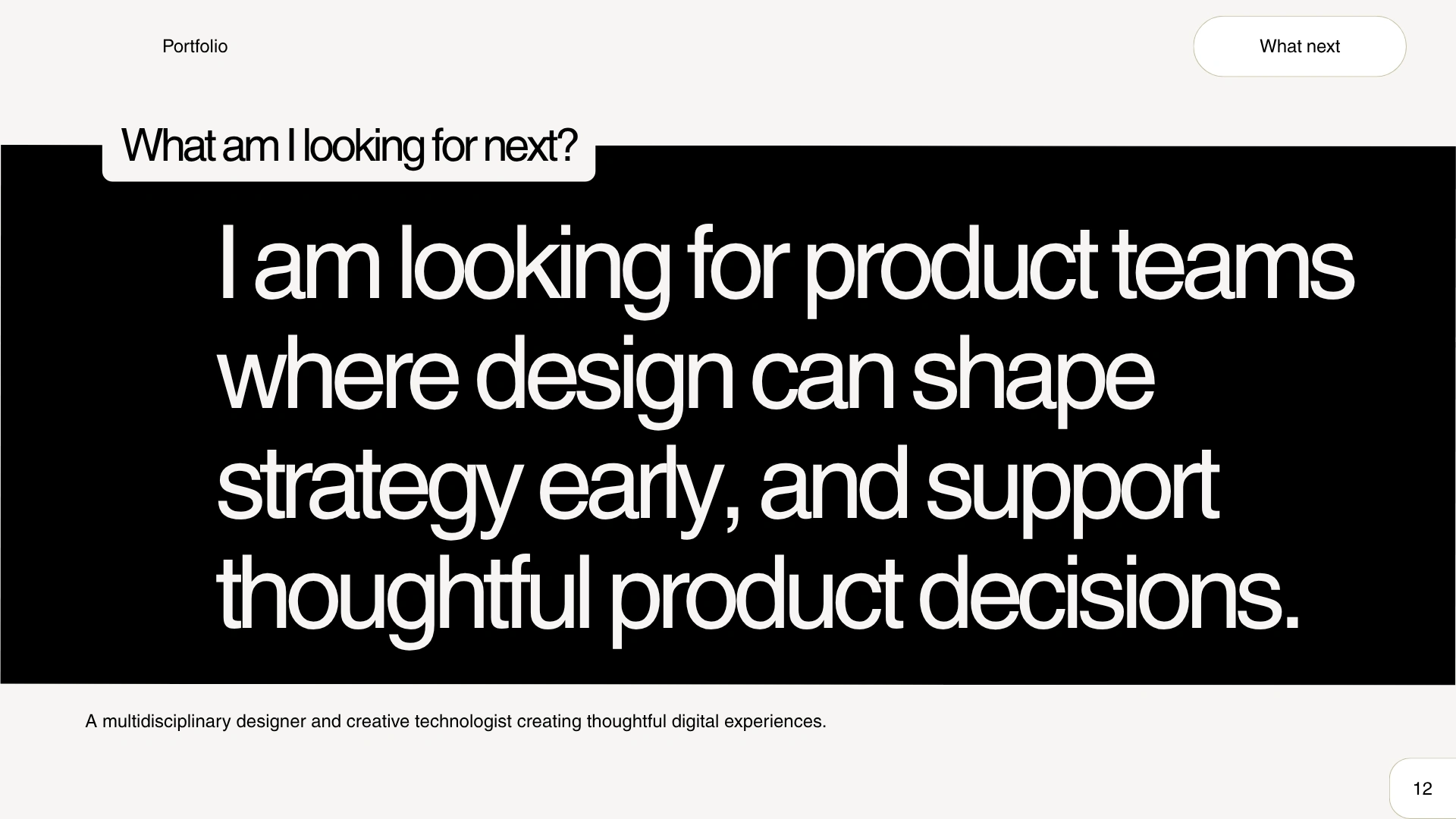
Creative portfolio presentation screen 12

Creative portfolio presentation screen 13
Like this project
Posted Aug 23, 2026
A self-initiated portfolio presentation concept for creative professionals to communicate their philosophy, experience, capabilities, and future direction through a structured editorial slide system.
Likes
0
Views
5