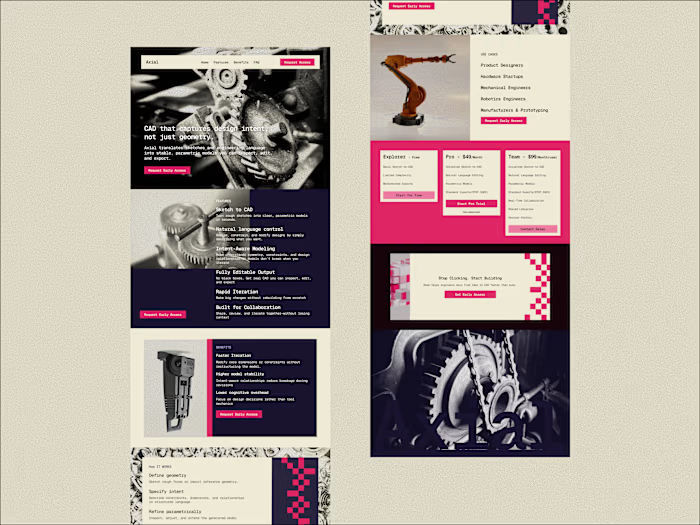
Span: An AI CAD Tool for Civil Engineers

Oluwatobi Adetunji

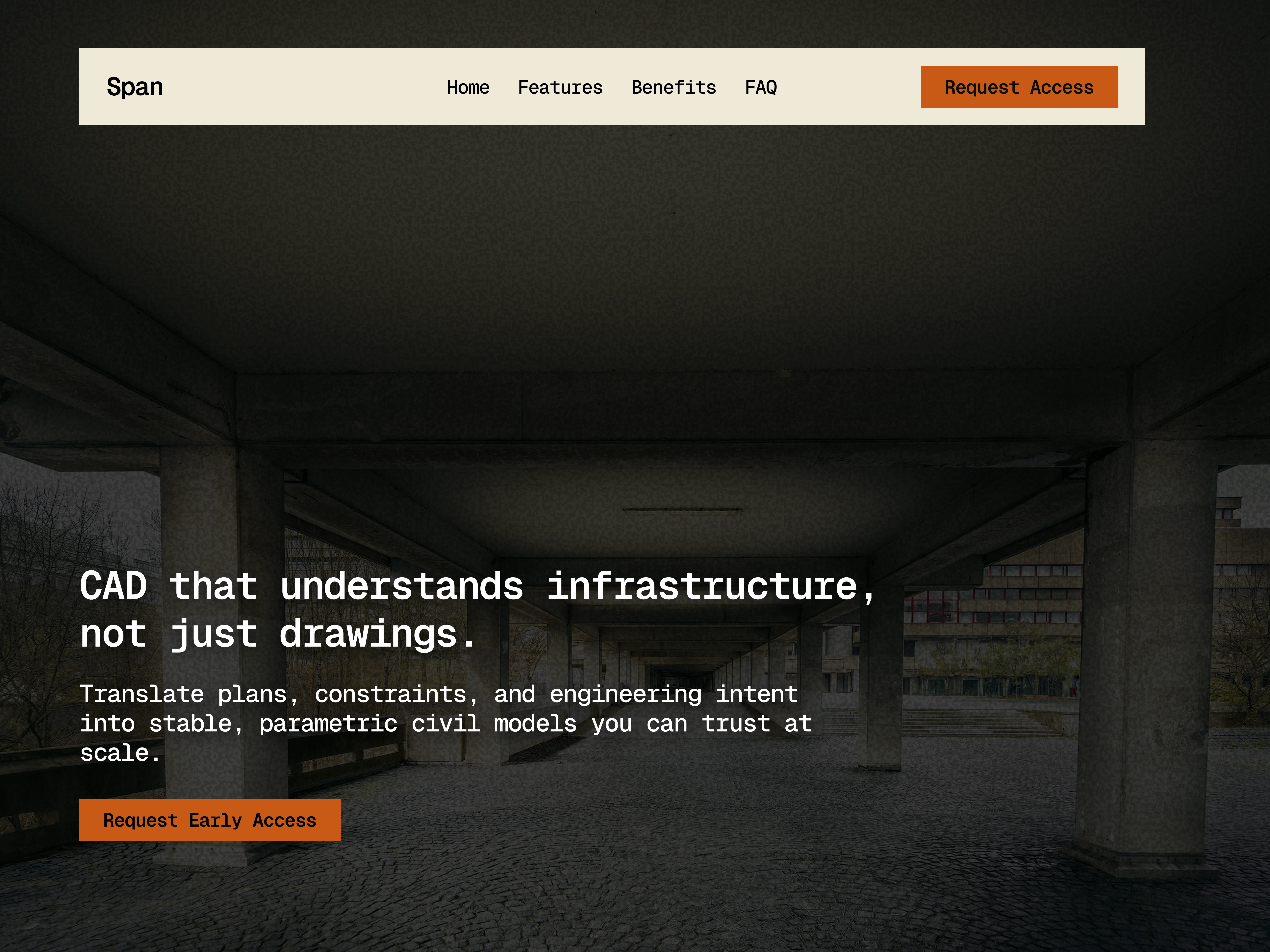
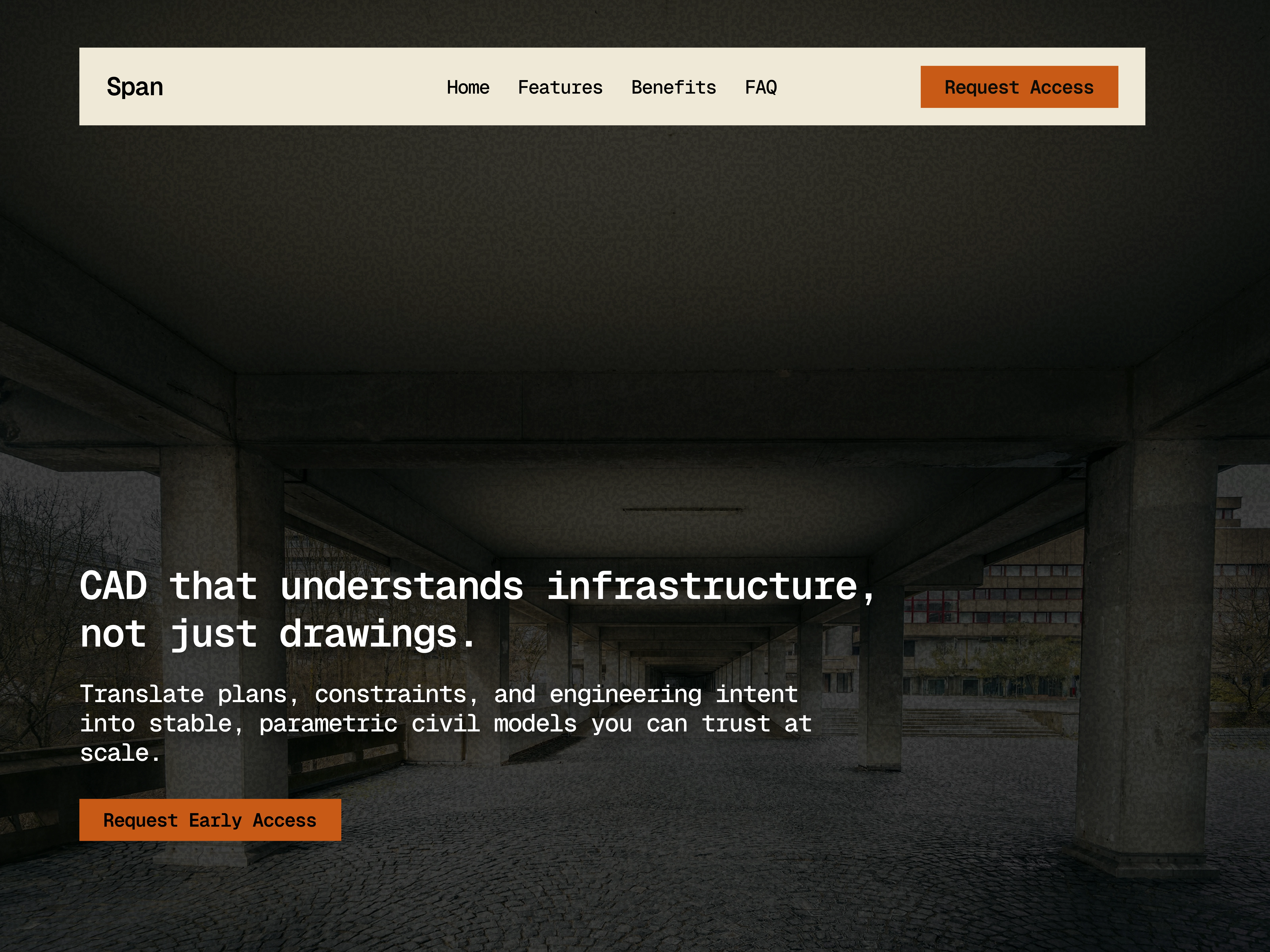
Span: AI-Assisted CAD for Civil Engineering (Concept)
Overview
Span is an AI-assisted CAD tool designed for civil engineers working on infrastructure, site planning, and large-scale coordination. This project is part of a series of speculative engineering tools designed with a unified brand system.
While most CAD tools treat civil work as drafting, Span is built around engineering intent: constraints, grades, alignments, clearances, and relationships that must remain valid as projects evolve.
This project explores how a civil-focused CAD product could feel visually, technically, and conceptually if it were designed from first principles
The problem
Civil engineering workflows are uniquely fragile.
Small changes, a grade adjustment, a setback revision, a drainage constraint often ripple through an entire model, forcing engineers to manually rebuild or re-validate large portions of their work.
Current tools:
Optimize for geometry, not intent
Break relationships during iteration
Increase cognitive load as project scope grows
Treat revision as rework instead of evolution
The result is slower iteration, brittle models, and unnecessary risk late in the design process.
The Concept
Span imagines a CAD system that:
Understands infrastructure logic, not just drawings
Preserves intent across revisions
Makes iteration safer instead of riskier
Scales from early feasibility to detailed planning
Rather than replacing traditional CAD outputs, Span focuses on how those outputs are generated and maintained.
Design Goals
1. Convey Structural Weight
Civil engineering is about permanence, load, and material reality.
The visual system needed to feel grounded, durable, and physical.
2. Signal Trust at Scale
This is software meant for projects that affect real environments.
The design avoids gloss or futurism in favor of confidence and restraint.
Visual Direction
Material-First Aesthetic
Concrete and washed paper textures dominate the layout, acting as:
Visual metaphors for infrastructure
Functional backgrounds for dense technical content
Textures are scaled large and irregular to feel structural, not decorative.
High-Contrast Sections
Dark, concrete-heavy sections ground technical explanations, while lighter “washed” sections echo:
Archival drawings
Planning documents
Early-stage site studies
This contrast mirrors the civil workflow: from abstract planning to grounded execution.
Color System
Primary accent: Saturated orange for calls-to-action and emphasis
Neutrals: Cream and charcoal to balance intensity and maintain readability
The accent color is allowed to dominate entire sections, reinforcing decisiveness, while neutrals carry long-form content.
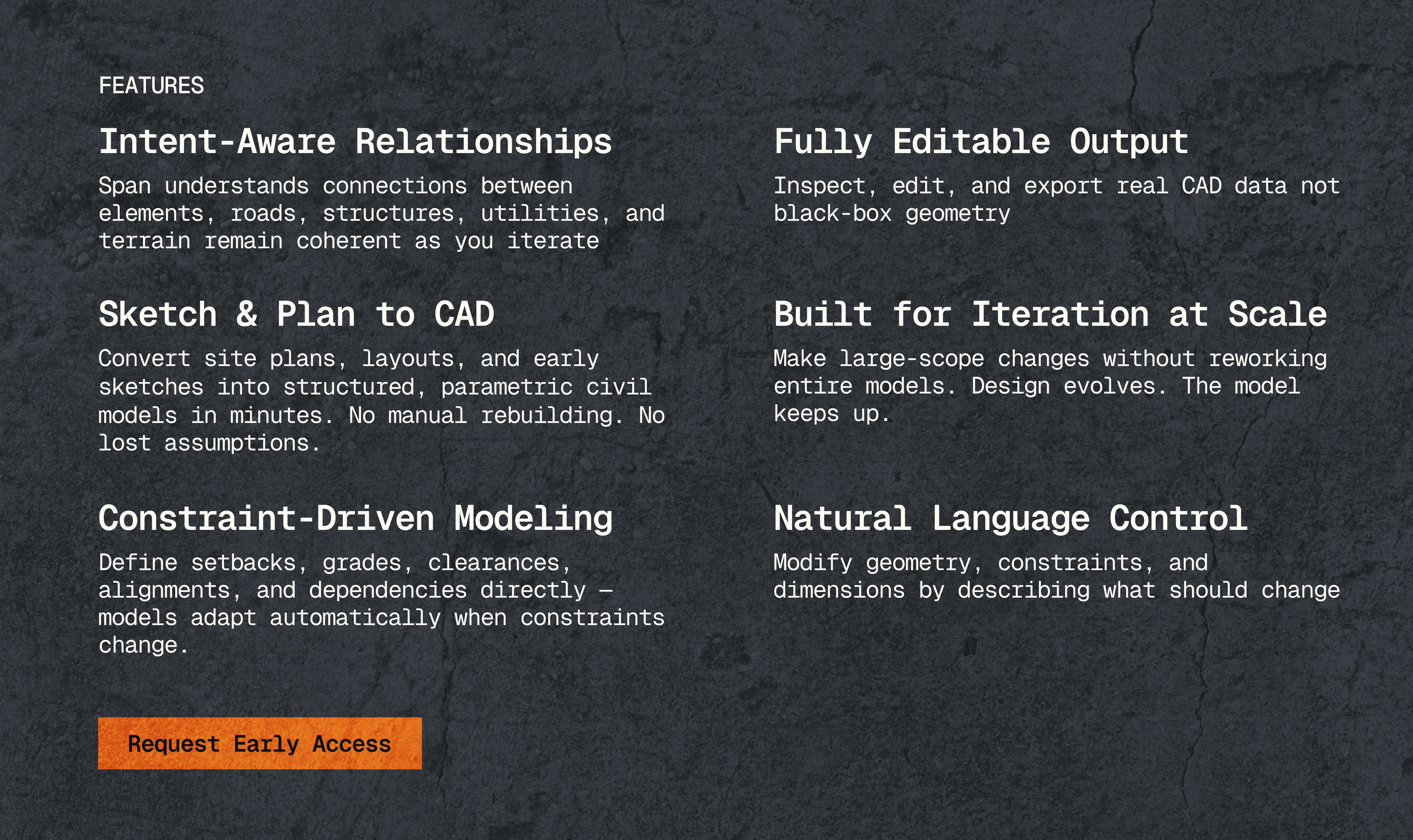
Features of Span
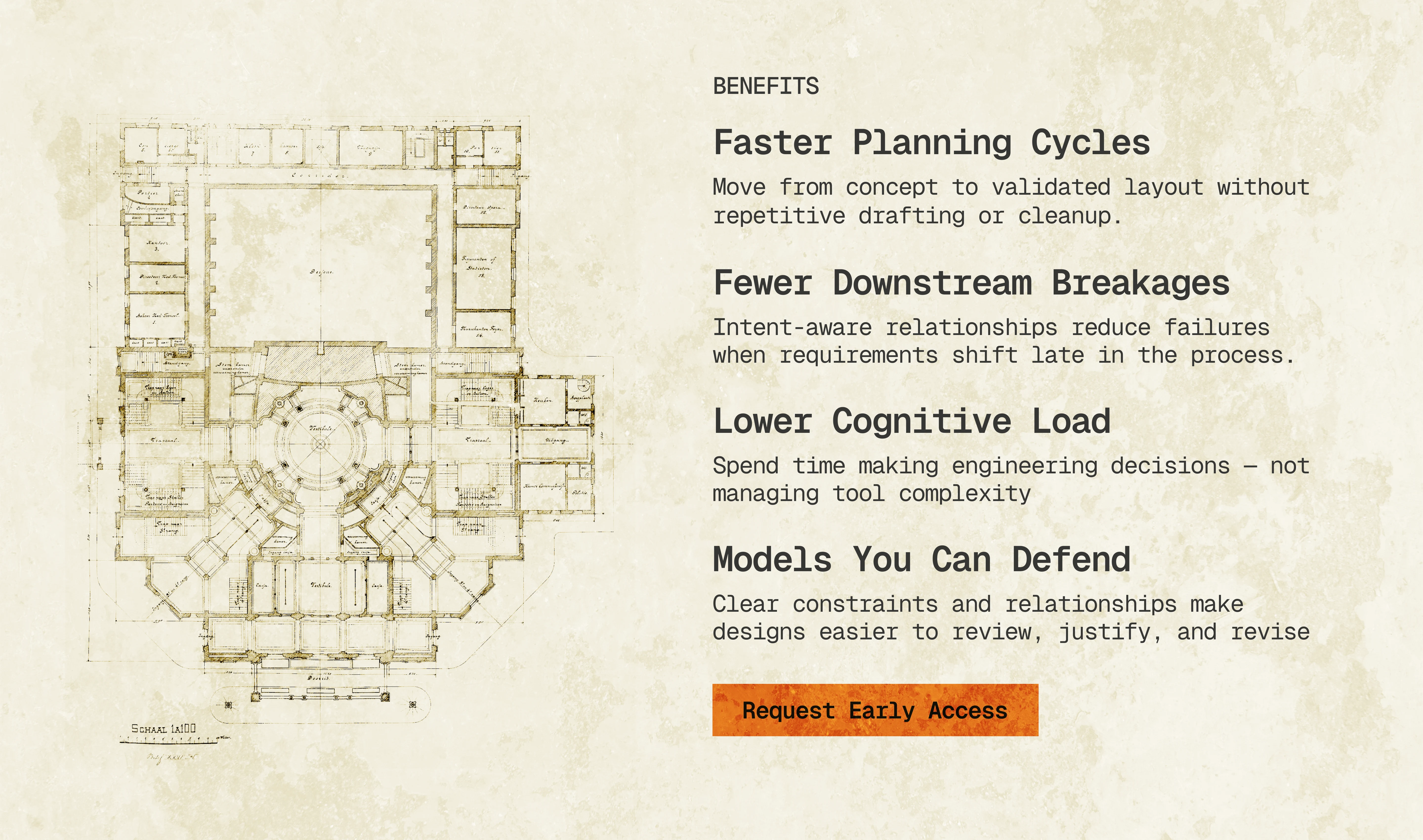
Benefits of Span
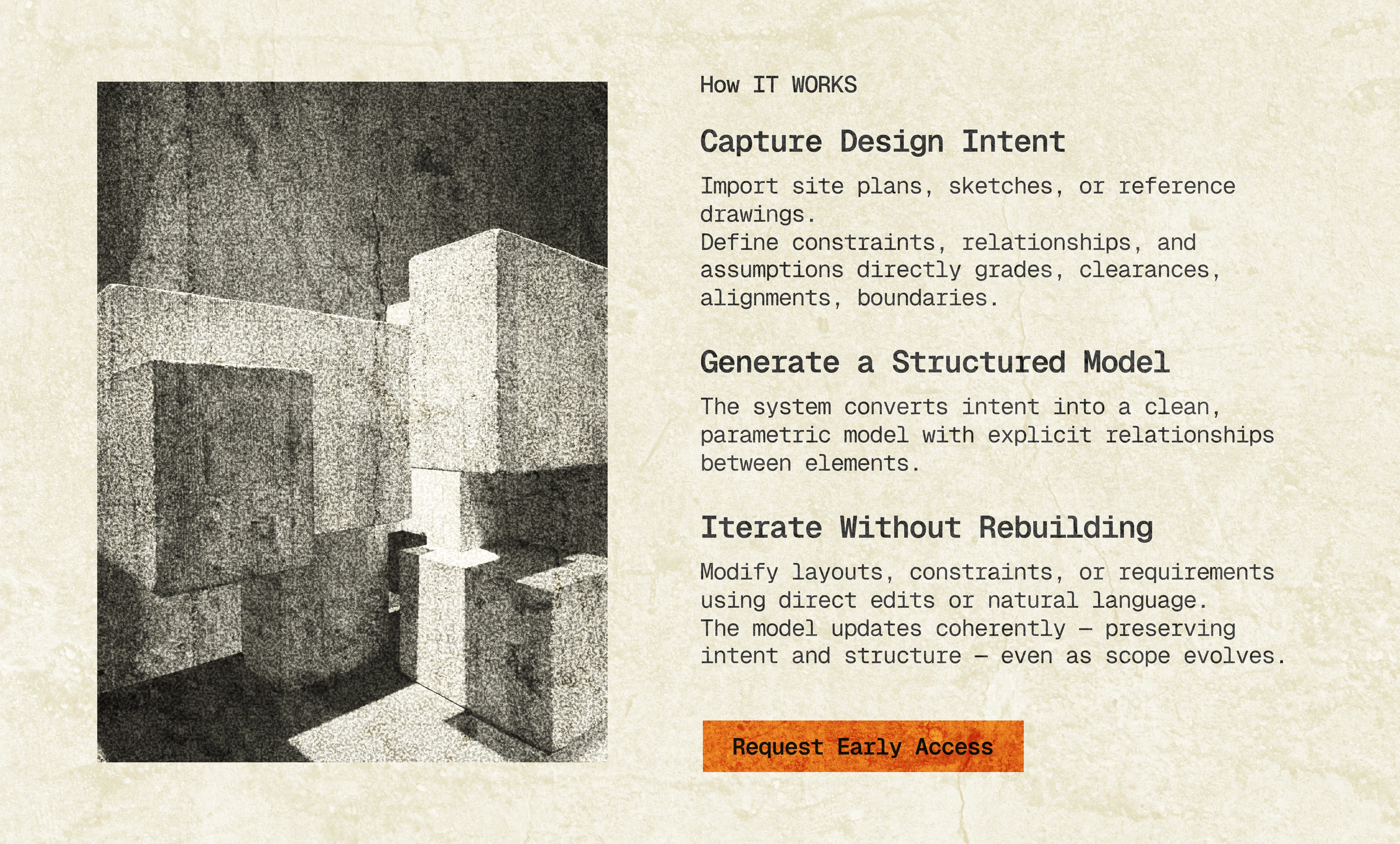
How Span works
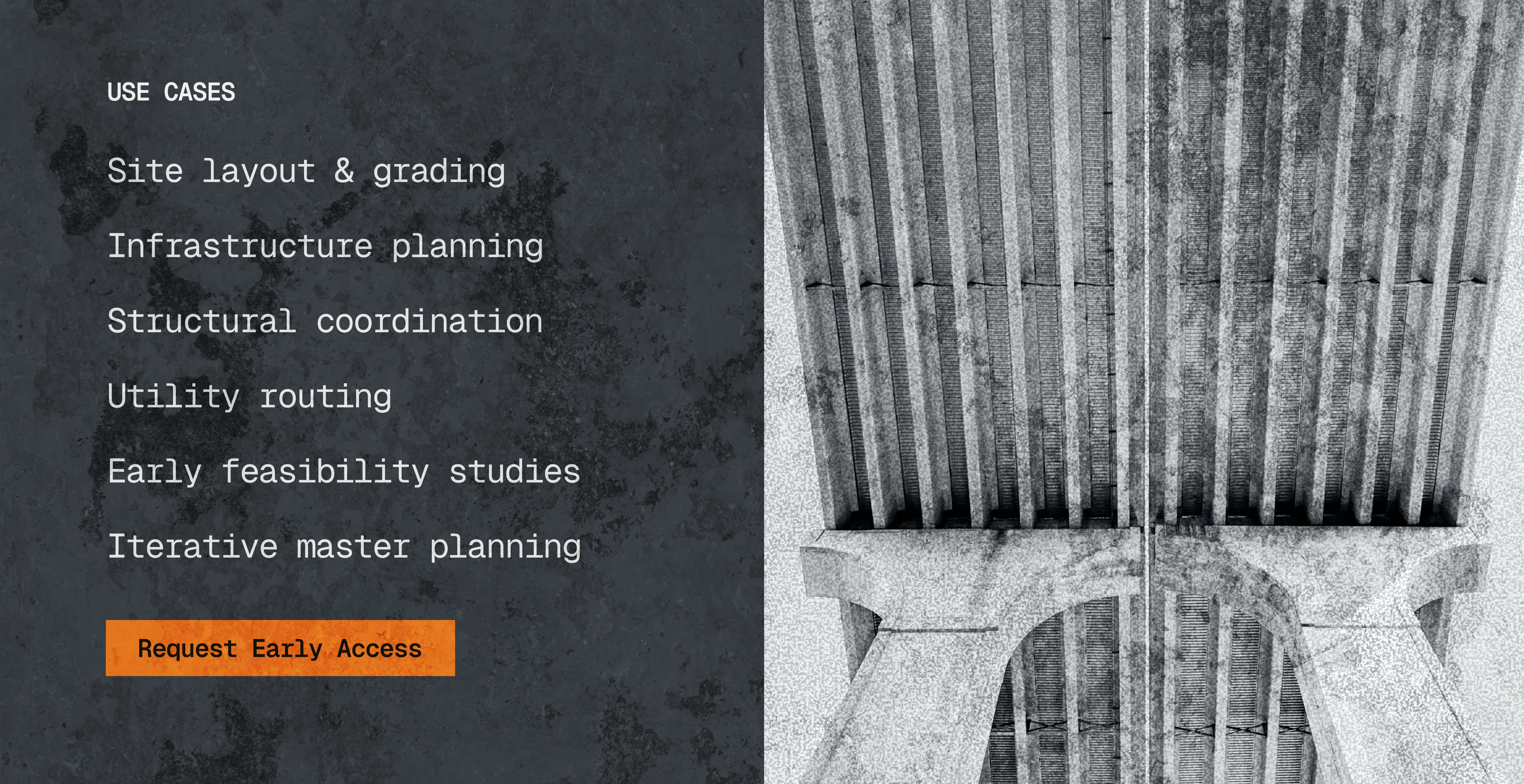
Span use cases

Span pricing
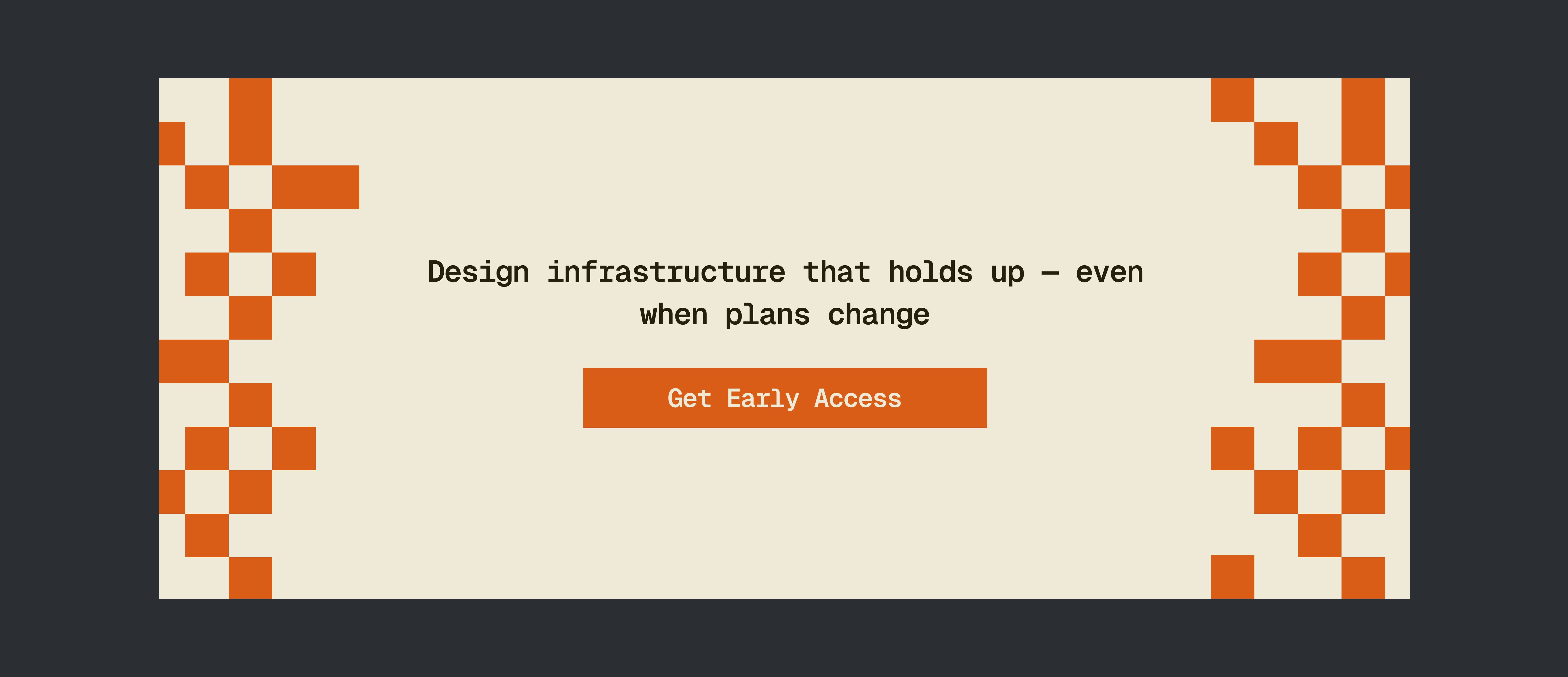
Span CTA

Span footer
Outcome
The result is a cohesive visual and conceptual direction for a civil-focused CAD product that:
Feels grounded and credible
Reflects the realities of infrastructure work
Prioritizes intent, stability, and scale
Like this project
Posted Jan 28, 2026
Span was designed with a material-first aesthetic. Leveraging concrete, washed textures and real imagery to ground the layout with the dynamism of engineering