SUPAHUMANS — The AI brand that refused to look like one

Daniel G Bright
Verified


SUPAHUMANS
A brand built to look nothing like the category it's about to win.
There's a stock image you've seen a thousand times. A woman in three-quarter profile, a faint blue dot floating near her temple, a softly blurred grid behind her. It is the official portrait of every AI company on earth. By 2026, eleven different talent platforms were using a version of it. SUPAHUMANS was about to make twelve.
They came to us mid-rebrand from a name – Assistant Lee, that read like a staffing agency in a strip mall. The product had moved on. The brand hadn't. Their CEO was opening every sales call by explaining, with patience, why his AI talent intelligence platform was not, in fact, a recruiter.
The work began with one question: what do you do when the entire category is converging on the same picture of itself?
Design Examples
You stop taking the picture.
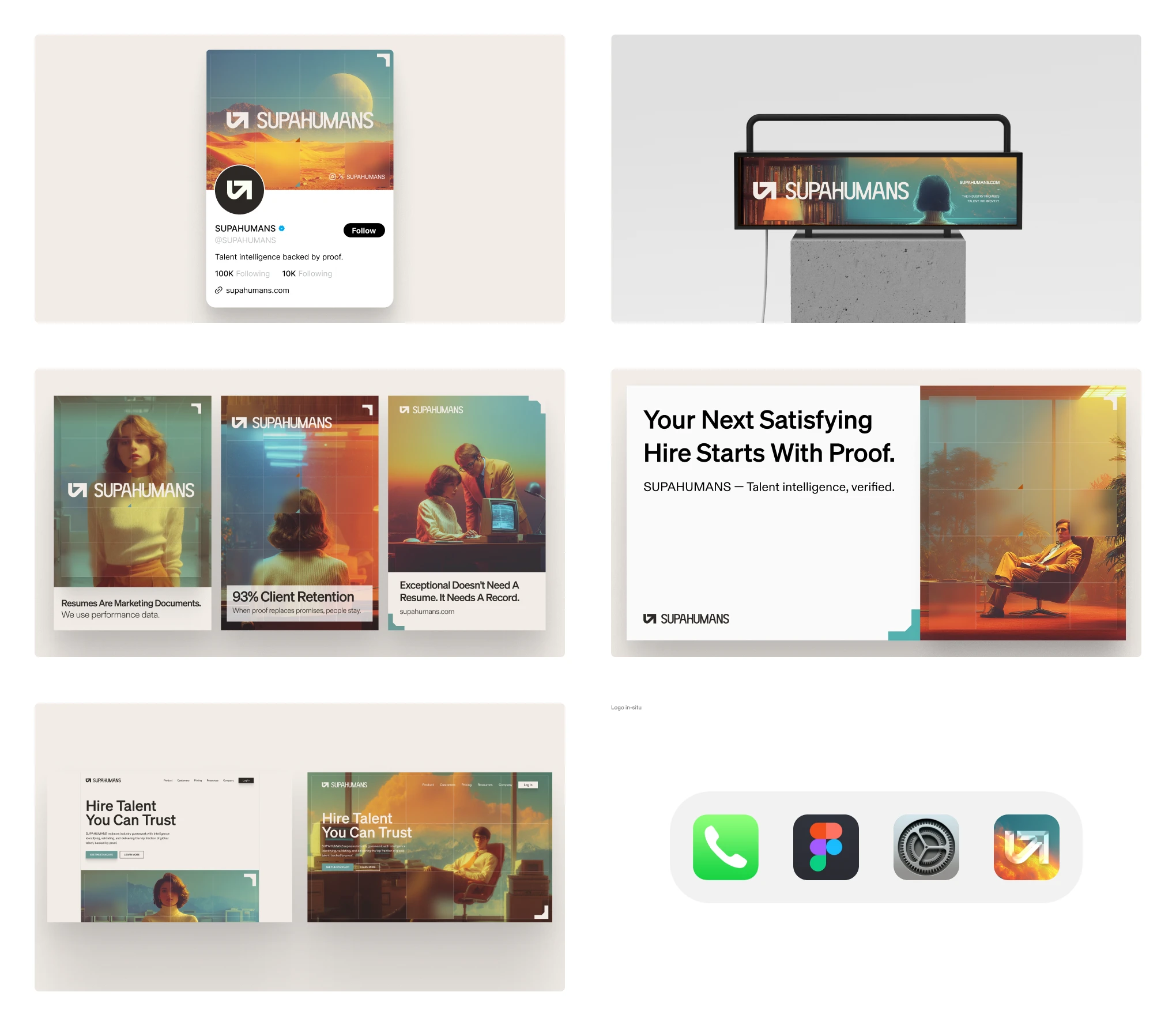
We made the AI brand look anti-AI. Not as a joke. As a calculation. The deepest competitive moat in a saturated category is not being better at the same thing — it's being unrecognizable as the same thing. So we built a world made of warm earth tones, Kodak Portra grain, 1979 newsroom desks, men in tan corduroy suits, women shot from behind at green-glow CRT monitors, and a parallel set of stylized illustrated landscapes — pale moons over amber deserts — that looked less like a tech brand and more like the cover of a book you'd want to read.
The argument the visual system makes is the argument the company actually has: the AI is not the product. The people the AI finds are the product. If you believe that, your brand cannot belong to the interface. It has to belong to the humans inside it.
The Logo
Everything else followed from that single decision.
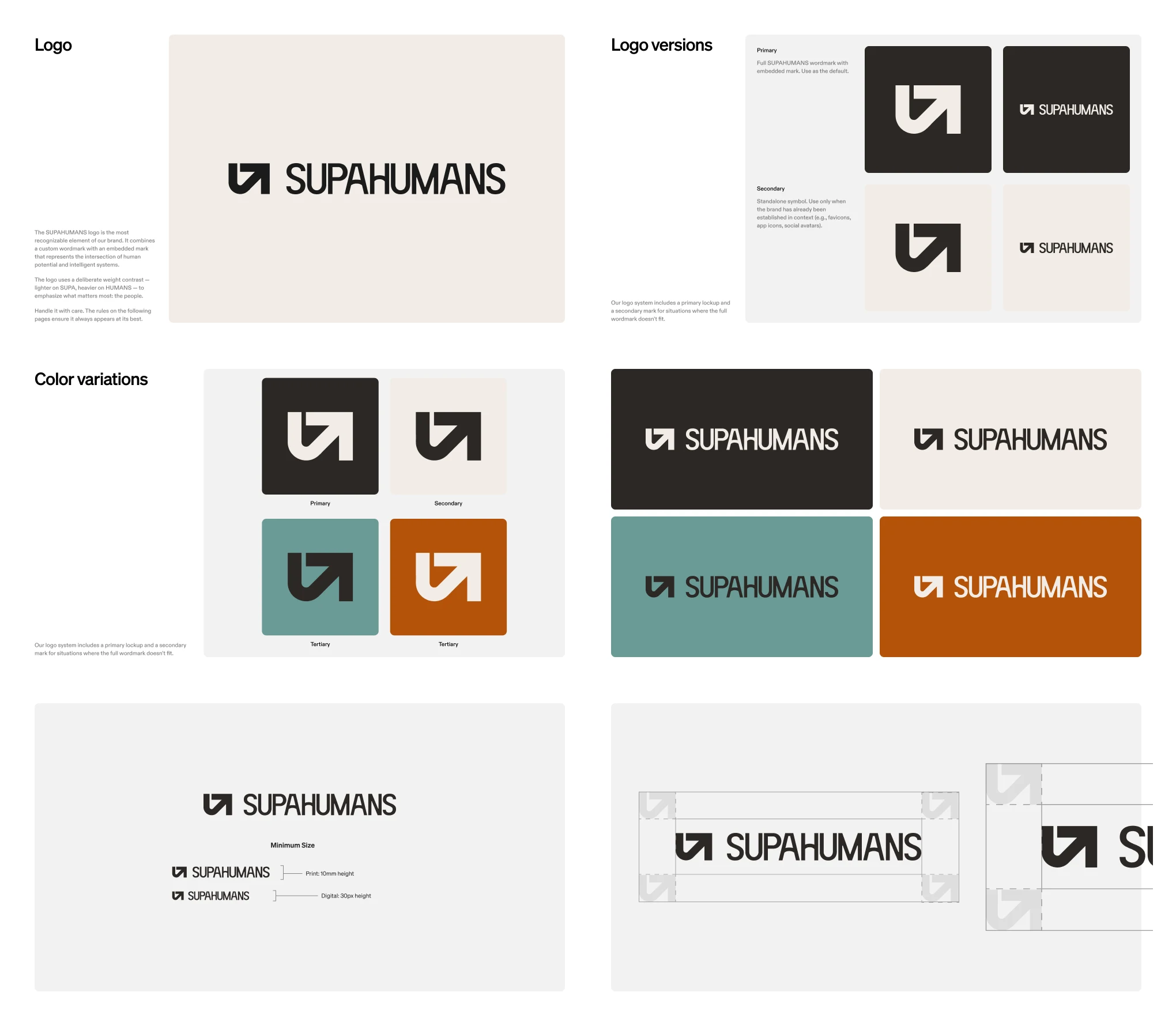
The wordmark is restrained, Söhne and ABC Diatype, weights borrowed from quarterly reports, not Series A decks. A small custom glyph sits between SUPA and HUMANS, the only nod to the technology underneath. The color palette refuses every saturated startup primary in favor of warm charcoal, dusty teal, sand, deep amber. The photography is split into two tracks, illustrated worlds and analog portraits — both graded into the same amber-to-teal split-tone, so the entire image library reads as one continuous shoot taken across two different decades. The voice is declarative and unhyped: AI-certified. Human-verified. Placed in 24 hours. No "future of work." No "unlock your potential." No verbs that don't earn their keep.
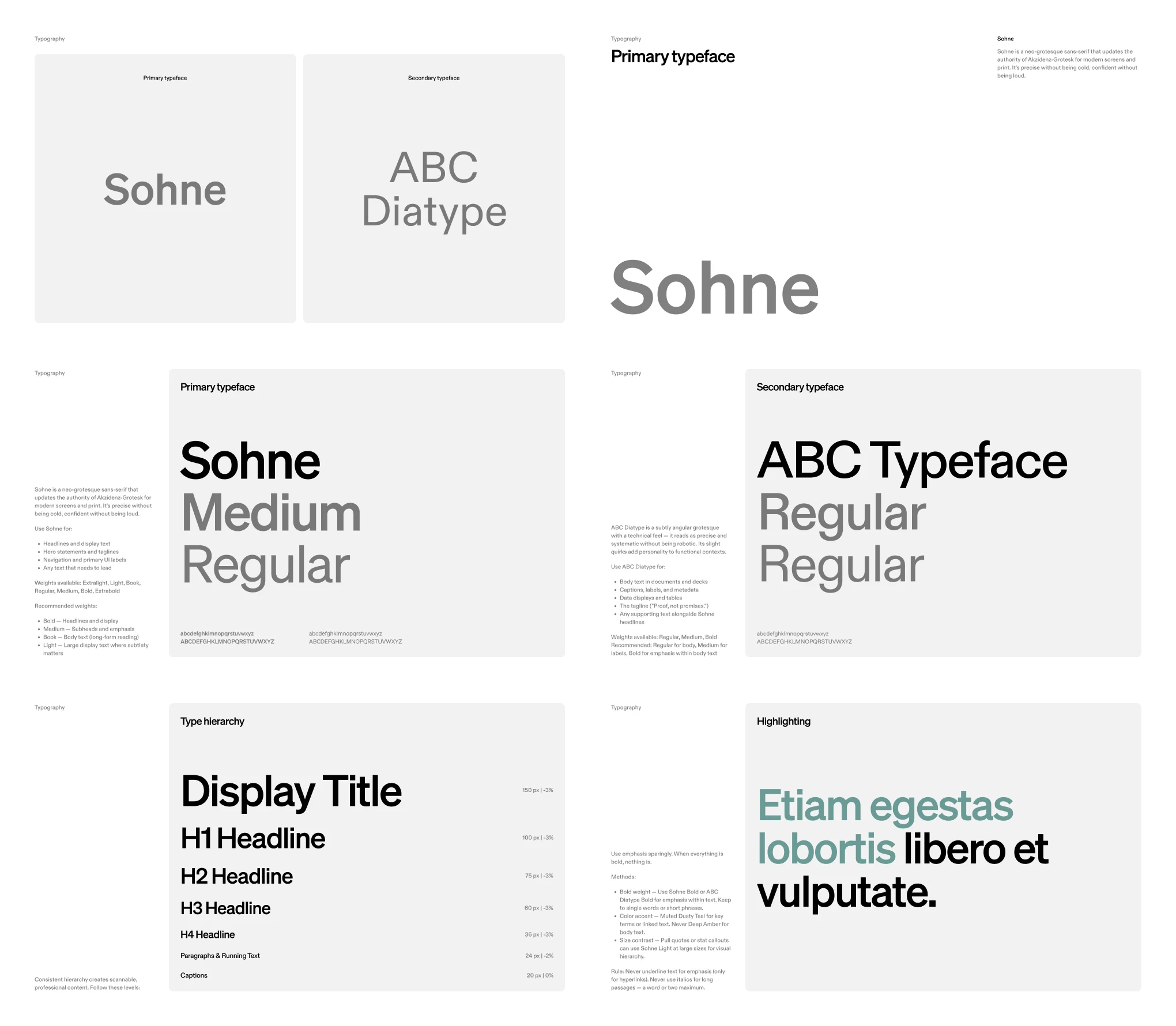
Fonts
The CEO and CMO signed off on the full system in two rounds. The founder stopped opening sales calls with the disclaimer. The brand is now in production across every customer-facing surface, and for the first time, it makes the same argument the product does — without saying a word about AI.
That's the part most people miss about brand work at an inflection point. The job isn't to dress up what you're becoming. The job is to make the old version of you impossible to return to.
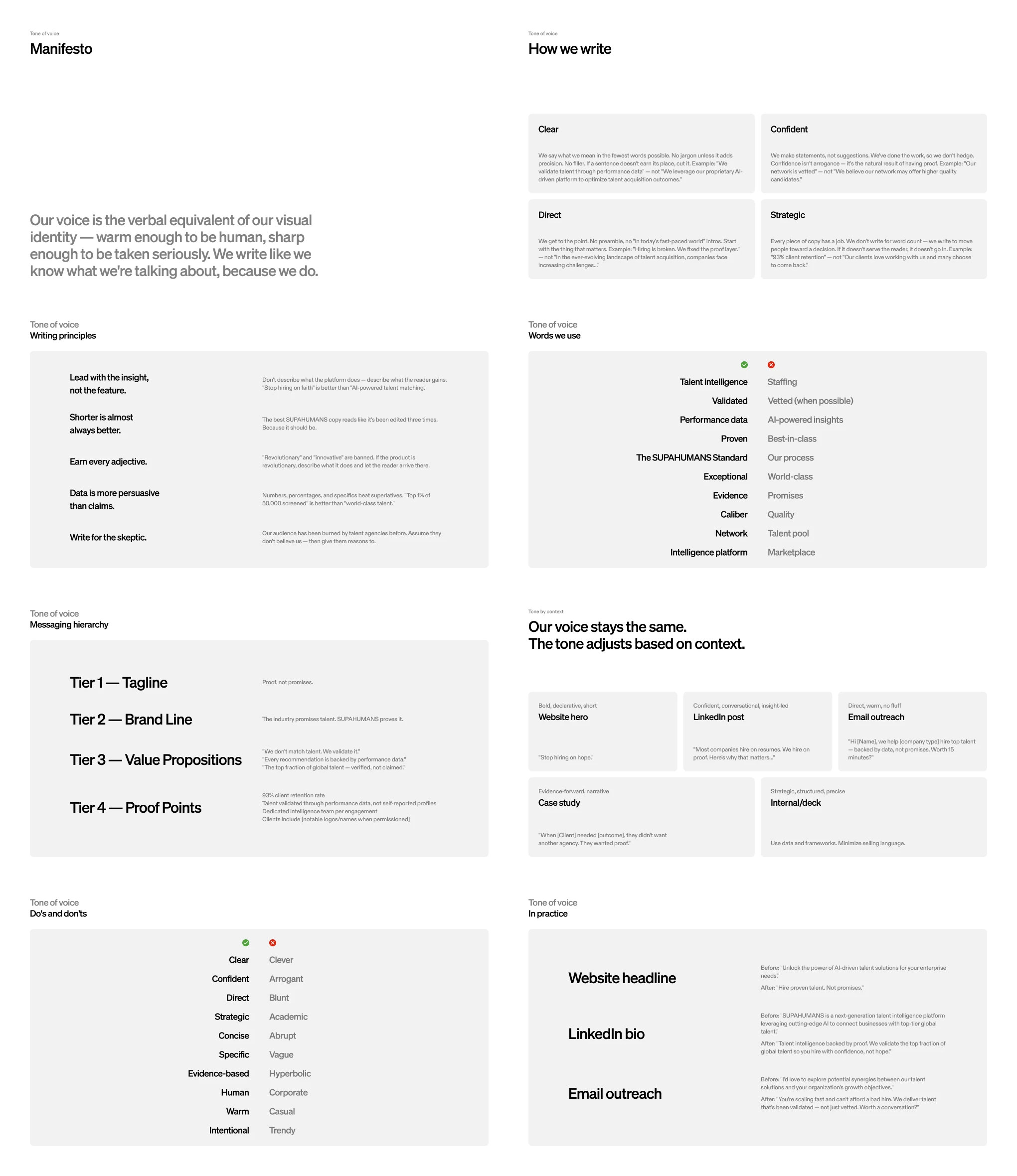
Values
SUPAHUMANS can't go back to looking like a staffing agency now. They also can't slide into the AI-platform monoculture. The brand closed both doors at the same time.
That's all a brand is supposed to do.
Like this project
What the client had to say
Understands all things brand very well! Amazing at messaging!


Laith Masarweh, Assistantly
Apr 9, 2026, Client
Posted Apr 10, 2026
Brand identity system for a Barcelona AI talent platform repositioning from staffing into category-defining software.
Likes
54
Views
2.3K
Timeline
Mar 23, 2026 - Apr 9, 2026
Clients
Assistantly