Dashboard for Swastik

Pragati

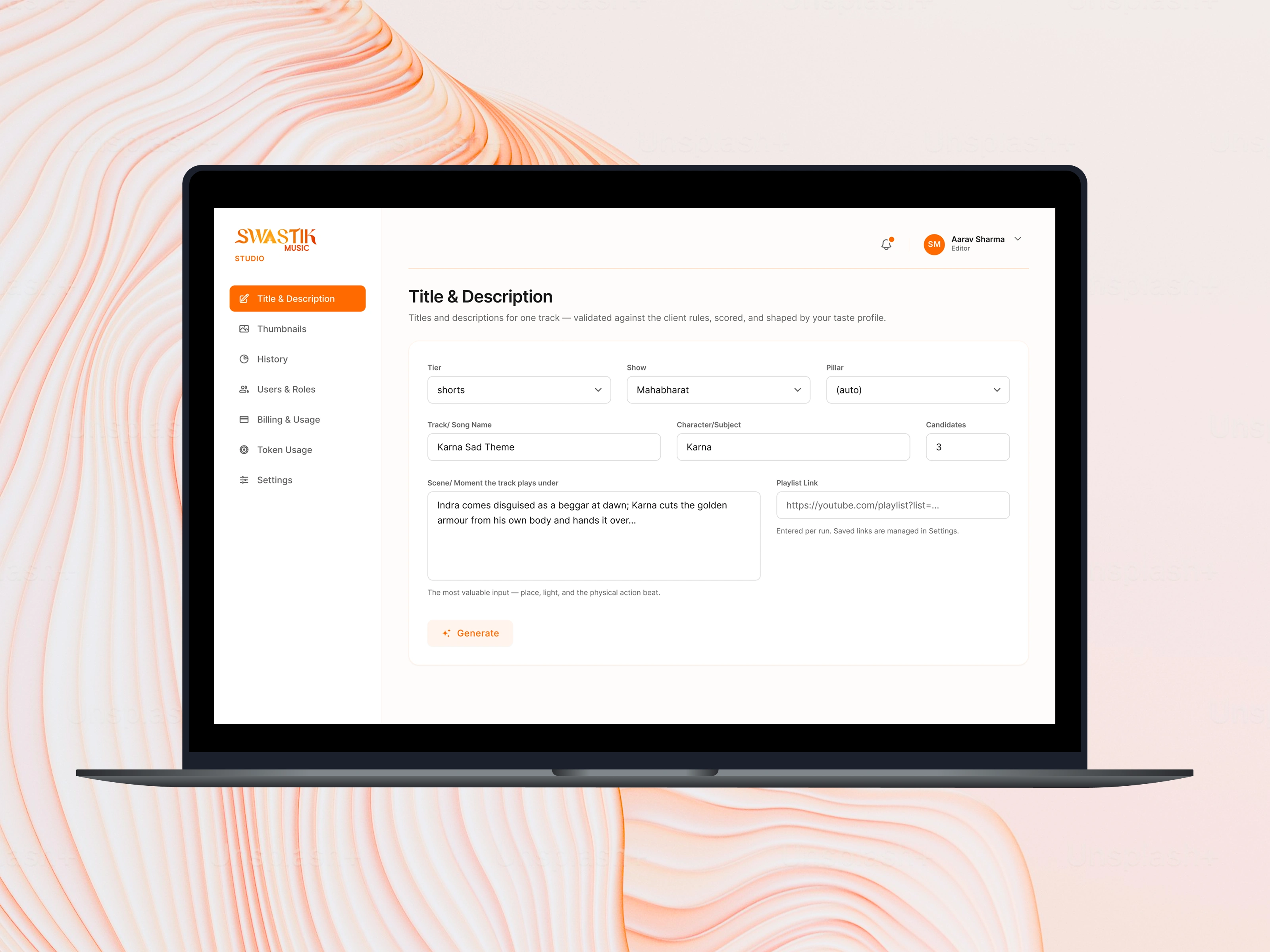
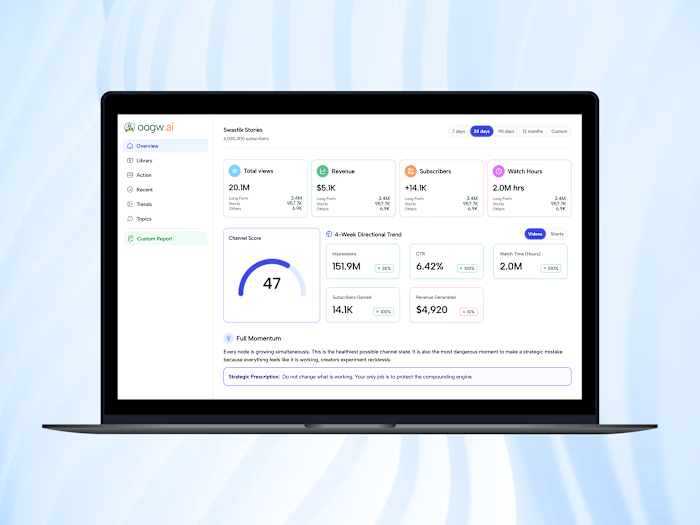
Designed a YouTube Content Intelligence Dashboard for Swastik Stories
Client: Swastik Stories
Analytics Partner: Oogwai
My role: UI Designer
Platform: Web Dashboard
Domain: YouTube Content Intelligence · AI
Overview
How might we turn YouTube data and editorial knowledge into a workflow that helps a large content team make better publishing decisions?
I designed a content-operations dashboard for Swastik Stories, a large Indian storytelling and entertainment brand, as part of its work with Oogwai, an AI-powered analytics company.
The Client
Swastik Stories is a cultural storytelling company built around mythology, history and entertainment. The company says it has produced 5,000+ episodes, 50+ TV & OTT shows and 25,000+ hours of content, while expanding its distribution across digital platforms and FAST channels.
The Partner: Oogwai
Oogwai is an AI/data analytics company building products that sit on top of business data and answer questions in natural language rather than simply presenting another static dashboard.
Oogwai's YouTube product is positioned around channel intelligence: it brings together retention, CTR, publishing cadence, topic gaps, competitor benchmarks and packaging insights, then translates those signals into recommendations teams can act on.
The Design Challenge
Traditional analytics dashboards answer:
“What happened?”
But a content team needs to answer:
“What should we do next?”
For example:
Which title is most likely to work?
What description best fits this story?
Which thumbnail should we use?
Which character or moment should become the visual focus?
The interface therefore needed to bridge analytics → editorial judgment → production.
The Solution
I built a workflow where AI could assist the team while keeping them in full control and designed the dashboard specifically for production tasks rather than filling screens with heavy analytics.
“The AI suggests. The editor decides”
This is important for a brand like Swastik Stories, where context and storytelling choices matter as much as performance metrics.
Key workflows are visible in the current product:
01 — Title & Description
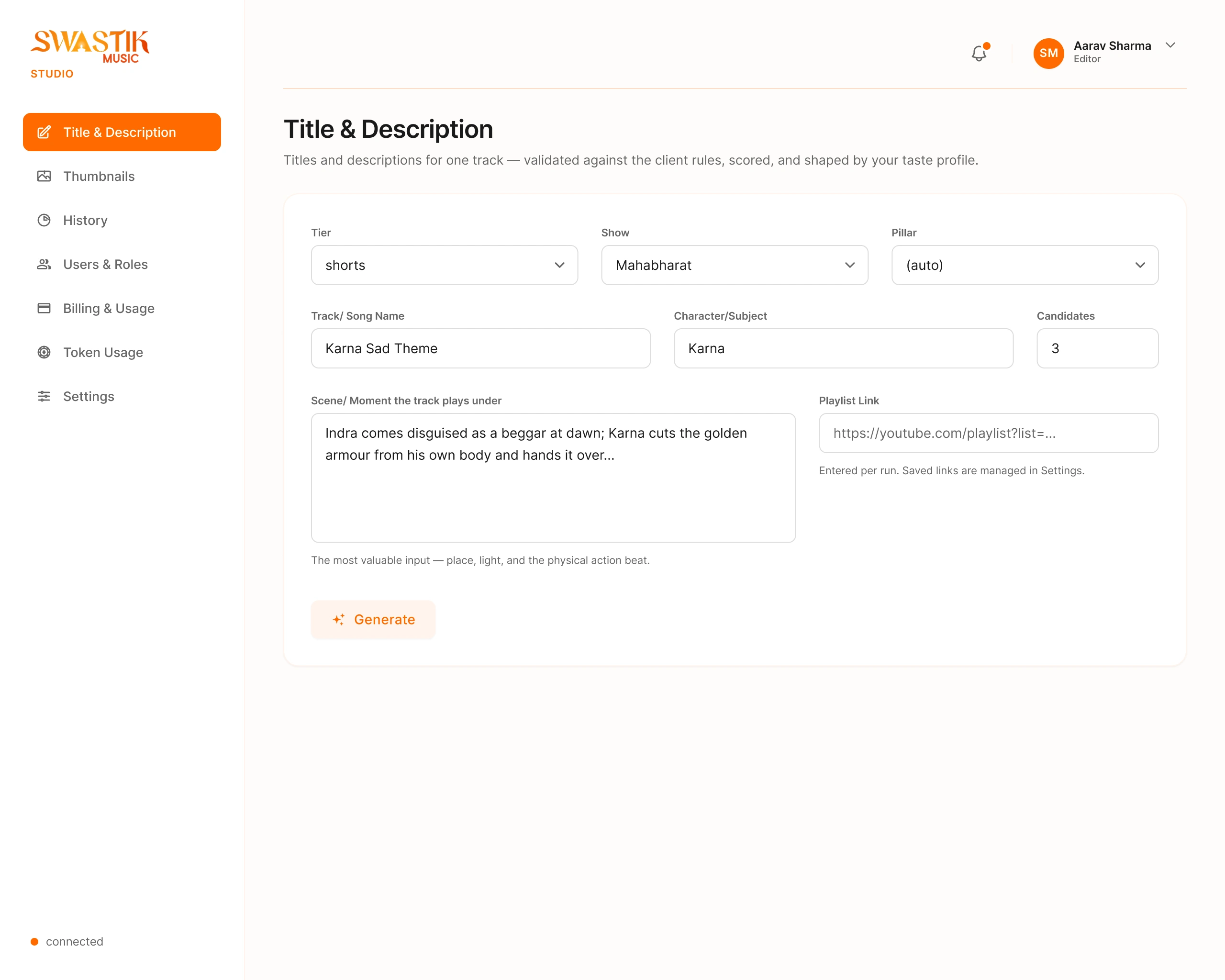
A structured generation interface that gives the AI enough editorial context to produce relevant candidates.
The interface allows the editor to request multiple candidates.
That changes the relationship between AI and editor.
Instead of:
AI → final answer
The workflow becomes:
Editorial context → AI generates options → Editor evaluates → Editor selects
The AI becomes a creative collaborator, not an autonomous publishing system.
02 — Thumbnails
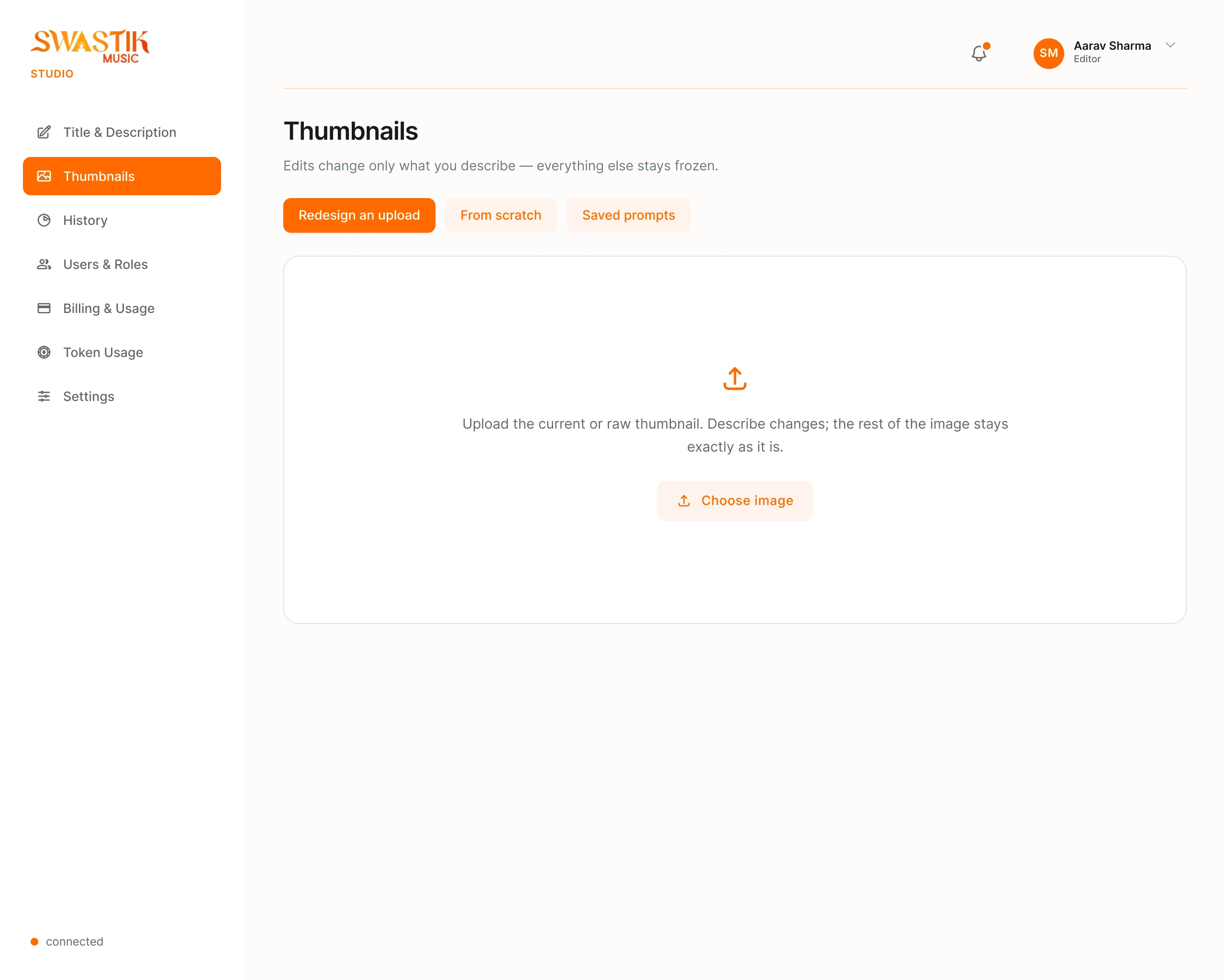
An image-editing workflow designed around controlled changes, rather than completely regenerating a design.
The thumbnail workflow follows a completely different model.
“Edits change only what you describe — everything else stays frozen.”
For a professional content team, accidental changes to the original design can be costly.
So the product establishes a clear contract:
Preserve the original → Change only the requested element.
03. History — Making AI Work Traceable
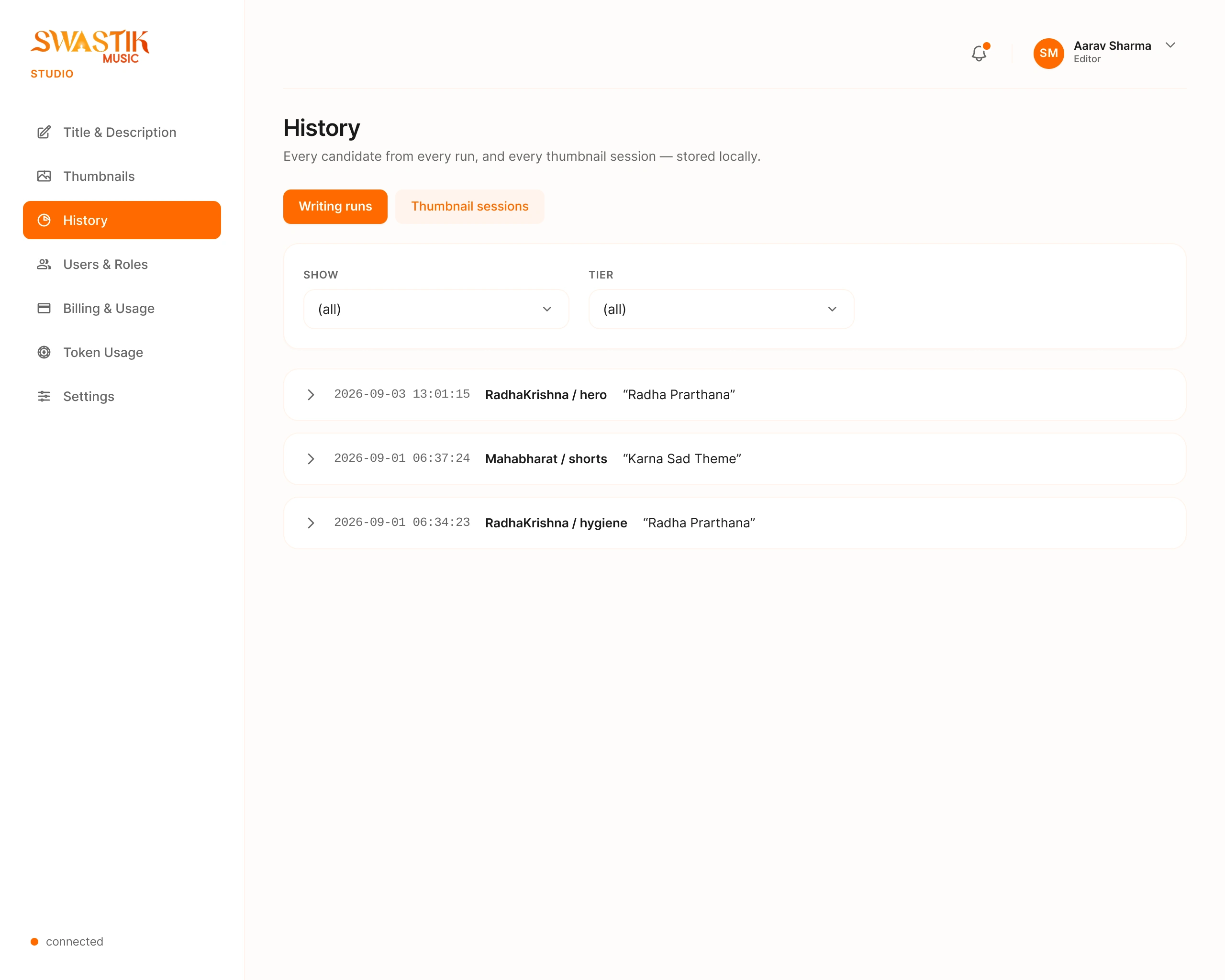
The History screen creates a record of everything generated inside the platform.
While Title & Description and Thumbnails focus on creating, History focuses on reviewing and retrieving.
The interface separates previous work into two workflows:
Writing runs
Thumbnail sessions
This makes it easy for editors to understand what has already been generated and return to previous work when needed.
04. Settings — Turning the Product Into a System
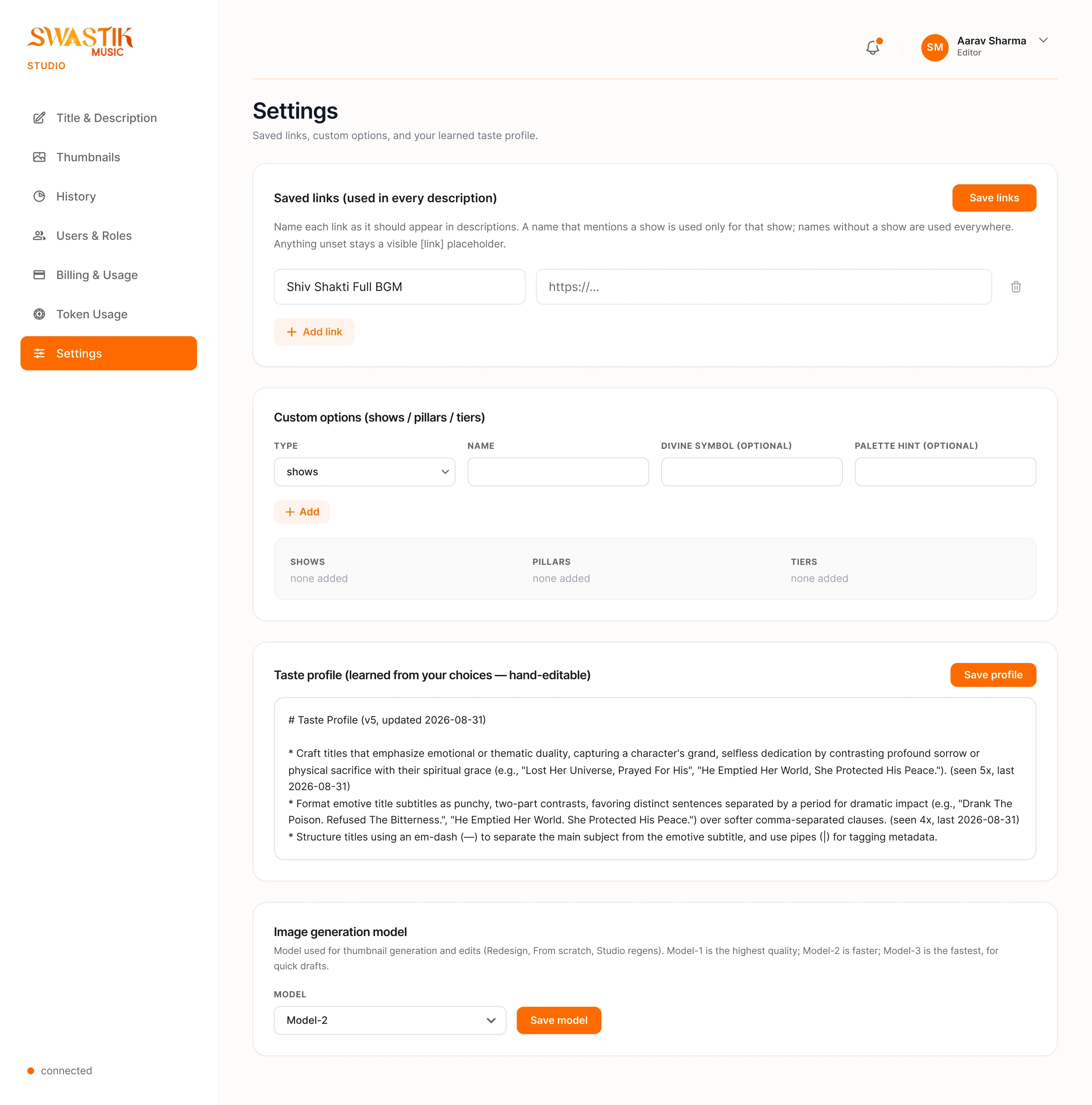
The Settings screen is where the product becomes personalized to the organization's actual content operation.
Rather than treating settings as technical preferences, I designed them around the things that influence everyday content generation:
Saved links
Shows
Pillars
Tiers
Taste profile
Image-generation model
This means the system can learn the organization's working language and creative preferences.
From Screens to a Product System
Looking at the complete experience, each screen solves a different part of the content workflow.
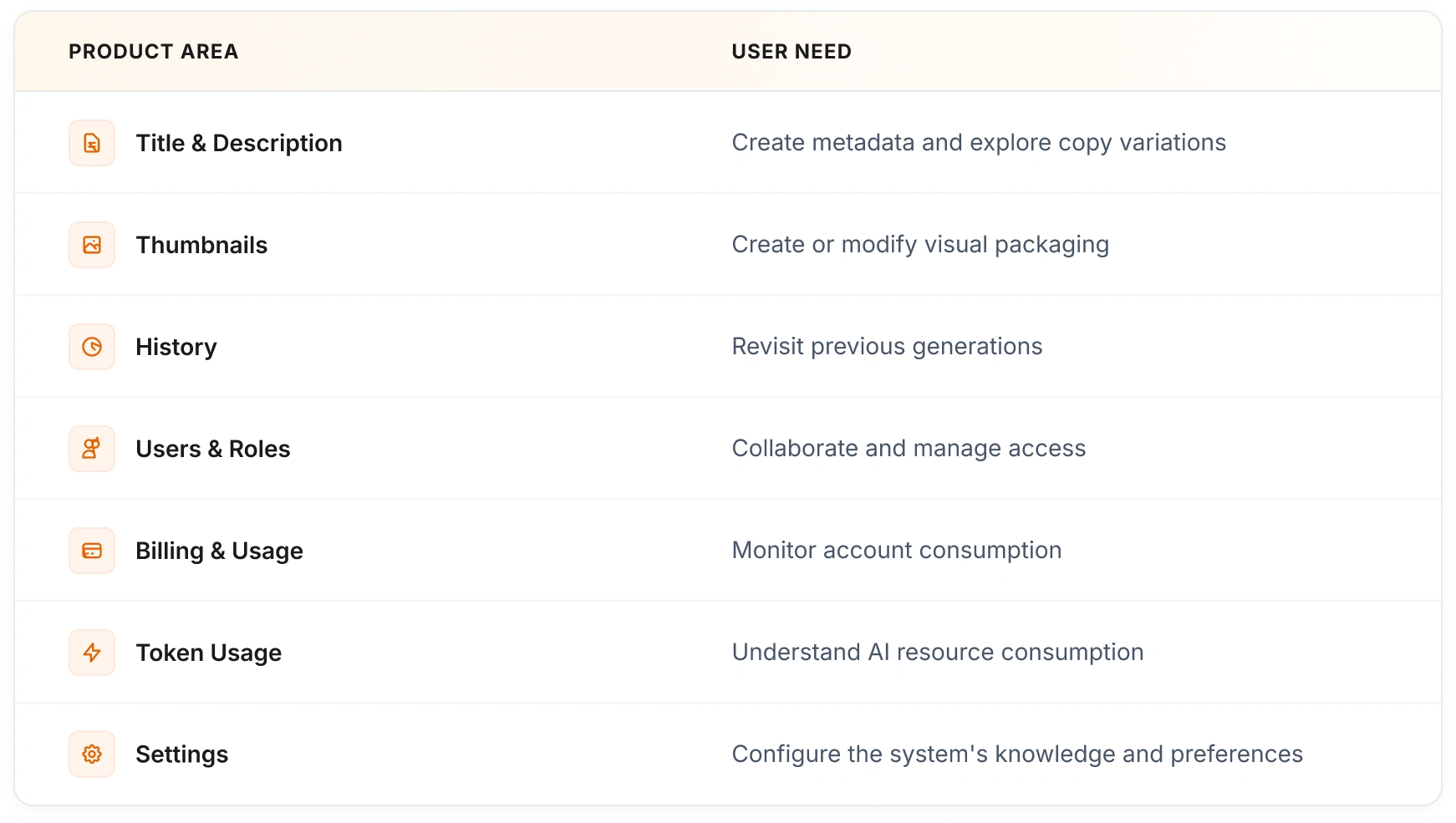
Together, these aren't isolated features.
They form a connected workflow:
Create → Review → Learn → Configure → Scale
Final Takeaway
The core design challenge wasn't simply:
How can AI generate better YouTube content?
It was:
How can AI become part of a professional content team's existing decision-making process without taking away their control?
The solution was to build a system where context, generation, review, and operations work together.
The AI suggests.
The editor decides.
The system remembers.
The team scales.
Like this project
Posted Sep 30, 2026
Designed a YouTube content dashboard for Swastik Stories using AI from Oogwai.
Likes
0
Views
15