Retune – AI-Powered Content Repurposing Platform

Akhdiyat Restu Fiqih

Overview
Content creators and marketing teams face the same problem every day: manually converting a single piece of content into different formats for different platforms. A 20-minute YouTube video can take an entire day just to be rewritten into a blog post, X/Twitter thread, Instagram caption, and newsletter, even though the core message is identical.
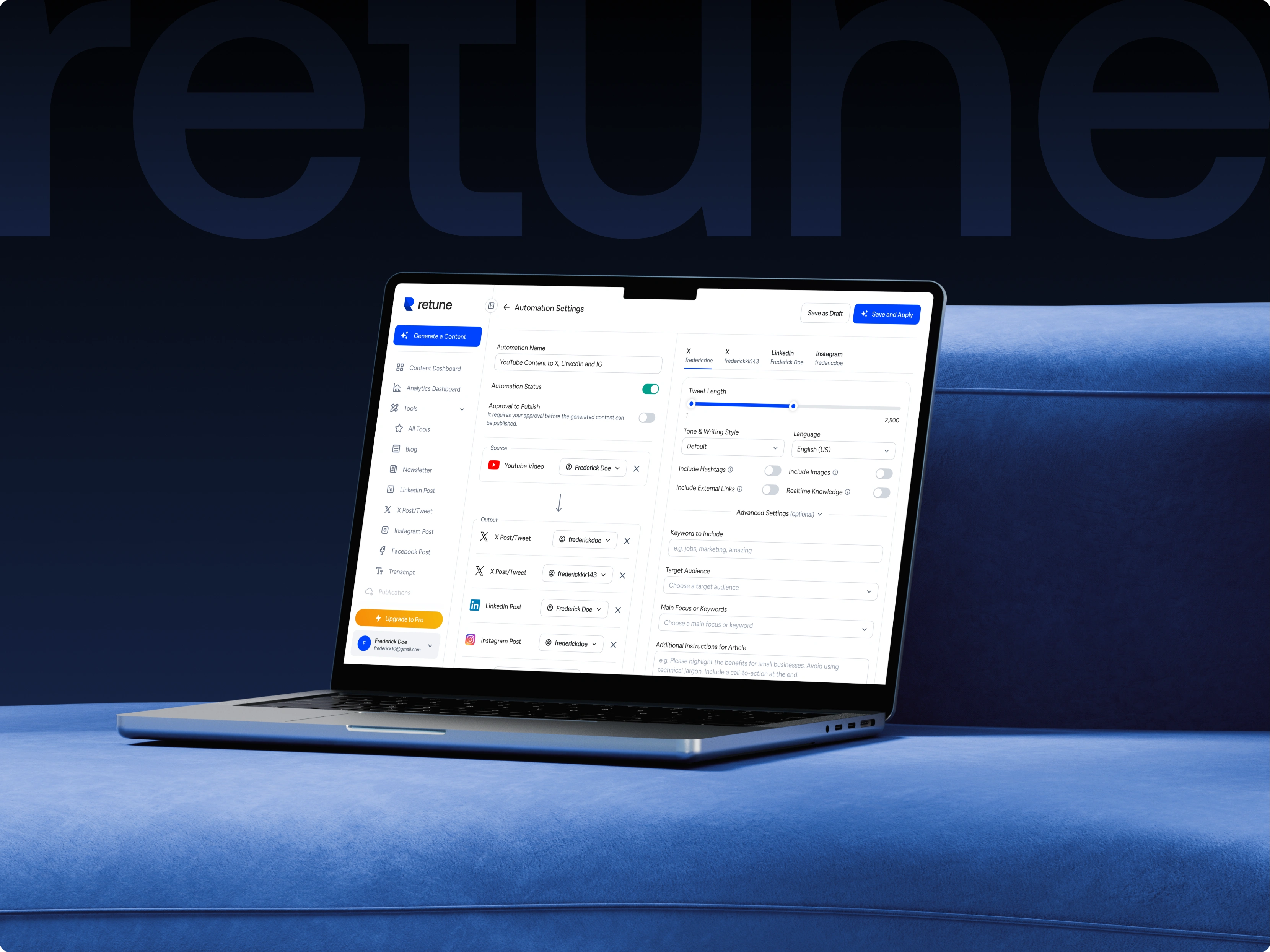
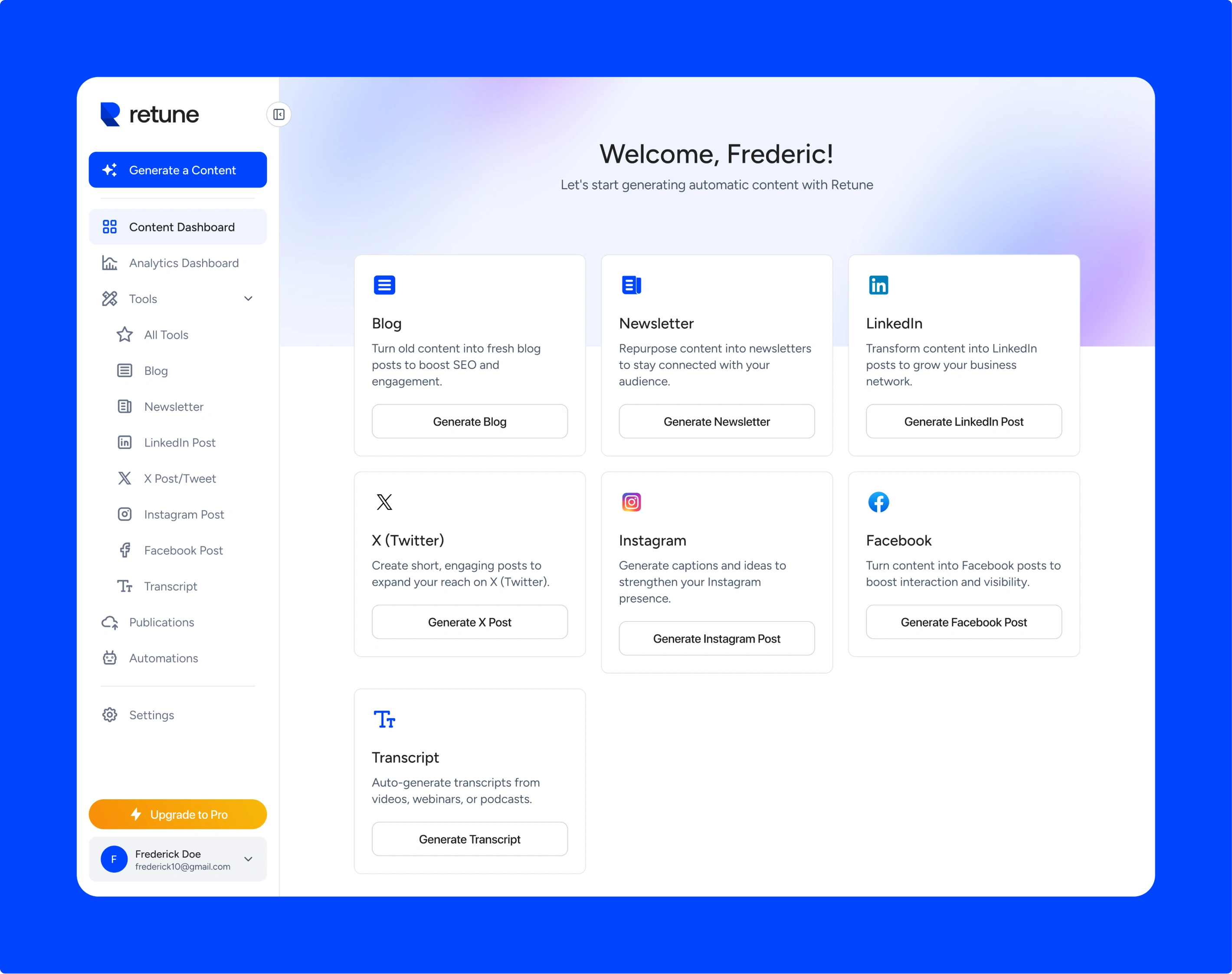
Retune was built to solve this. An AI-powered platform that takes content from sources like YouTube and transforms it into 7 different formats: blogs, newsletters, LinkedIn posts, X/Twitter posts, Instagram posts, Facebook posts, and transcripts. The client came with a clear product vision but zero existing design. The entire user experience needed to be built from scratch in less than one month.
The Goals
Simplify content repurposing from a manual, hours-long workflow into an automated process that takes minutes.
Build a centralized system where users can manage, track, and automate all their content from one place.
Design an MVP mature enough to validate with early adopters and ready for the engineering team to develop.
The Challenge
From research and competitor analysis, I identified three core problems that the product needed to address:
Time-consuming repurposing process. Users had to rewrite content for each platform separately, adapting tone, format, and character limits every time. There was no fast way to turn one source into multiple outputs.
No centralized system. Content was scattered across platforms with no single place to manage and track what had been repurposed and from which source. Users lost overview of their own content.
Repetitive workflows that should be automated. Many creators routinely convert every new video into the same set of content (e.g. always blog + LinkedIn + Instagram), but had to do it one by one each time new content was published.
The key insight from this research: users don’t want to “create new content”; they want to “transform content that already exists.” This framing shift became the foundation for the entire design direction.
Middle-Fidelity
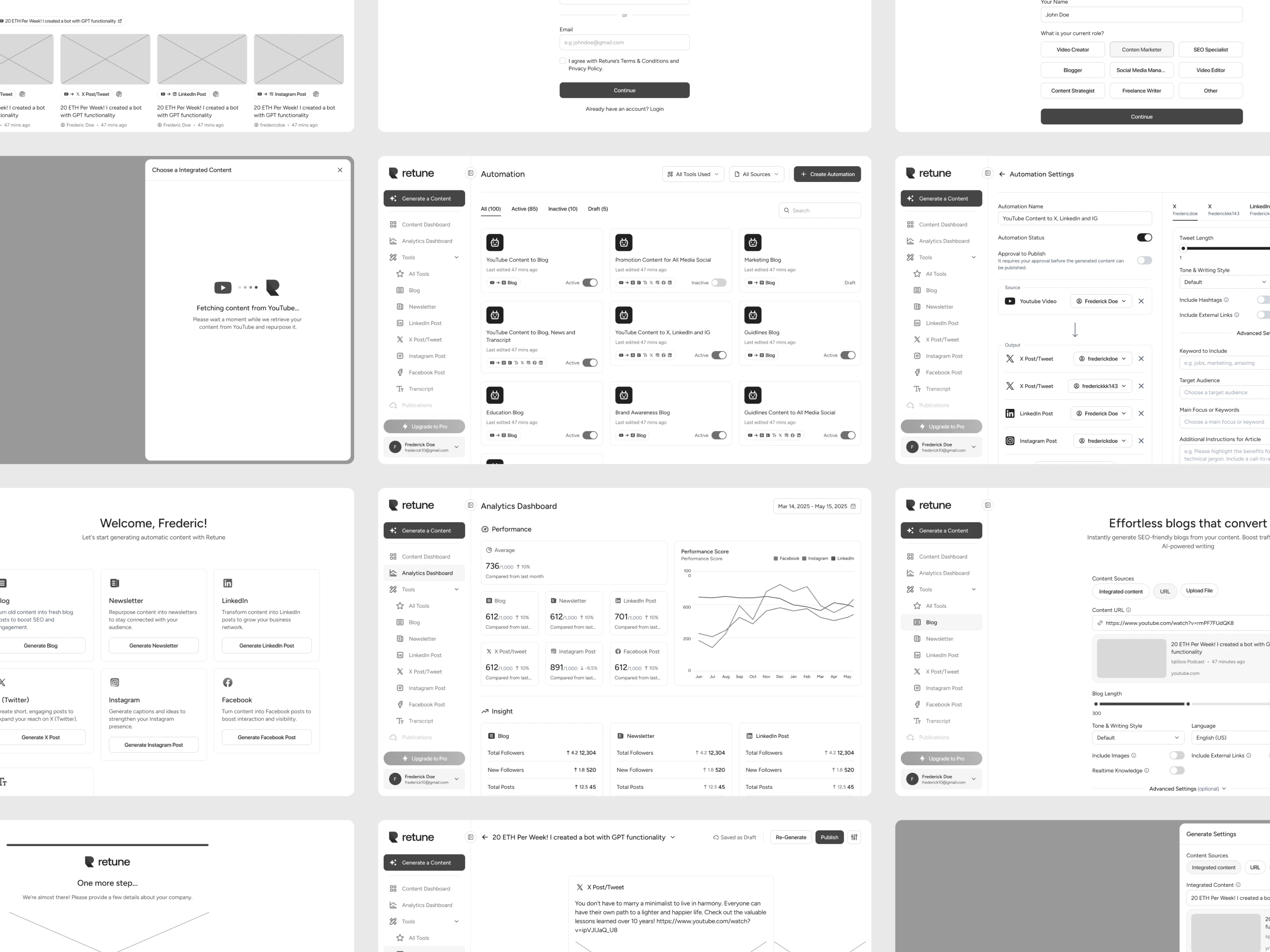
With a tight timeline, I chose to move straight into middle-fidelity so discussions with the client could be faster and more concrete. This stage was used to validate navigation structure, information hierarchy, and user flow before moving into visual detail. With the foundation agreed upon first, the transition to high-fidelity went smoothly without major rework.
The Solutions
Each solution was designed to directly address the three problems identified above:
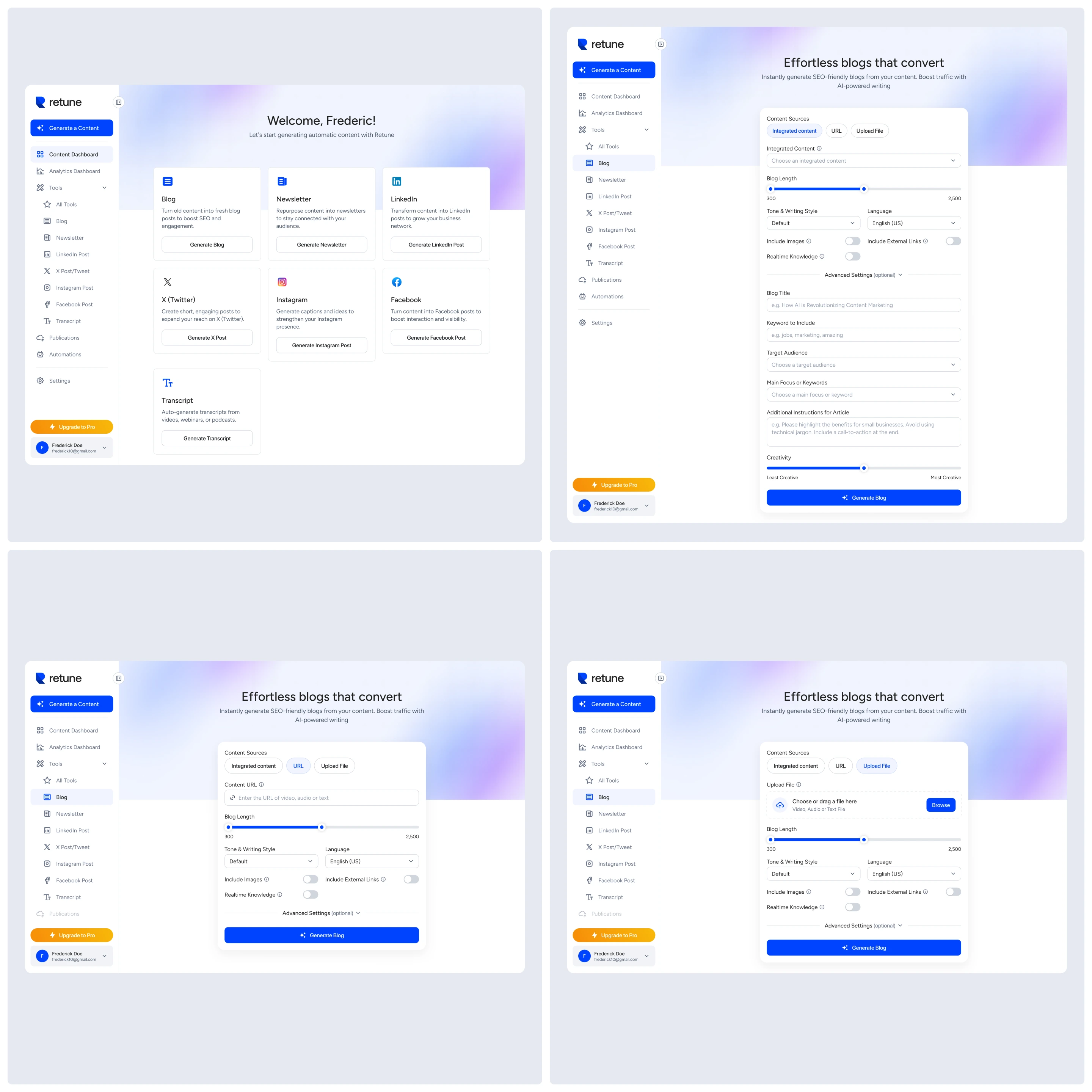
Source-First Flow. Instead of starting from a blank page, every flow begins with source content selection (upload a file, paste a URL, or choose from YouTube integration). Users feel like they’re “transforming” something that already exists, not “writing from scratch.”
Multi-Platform Generation. One source can be transformed into 7 different formats, each with a consistent layout but parameters tailored to its specific platform context.
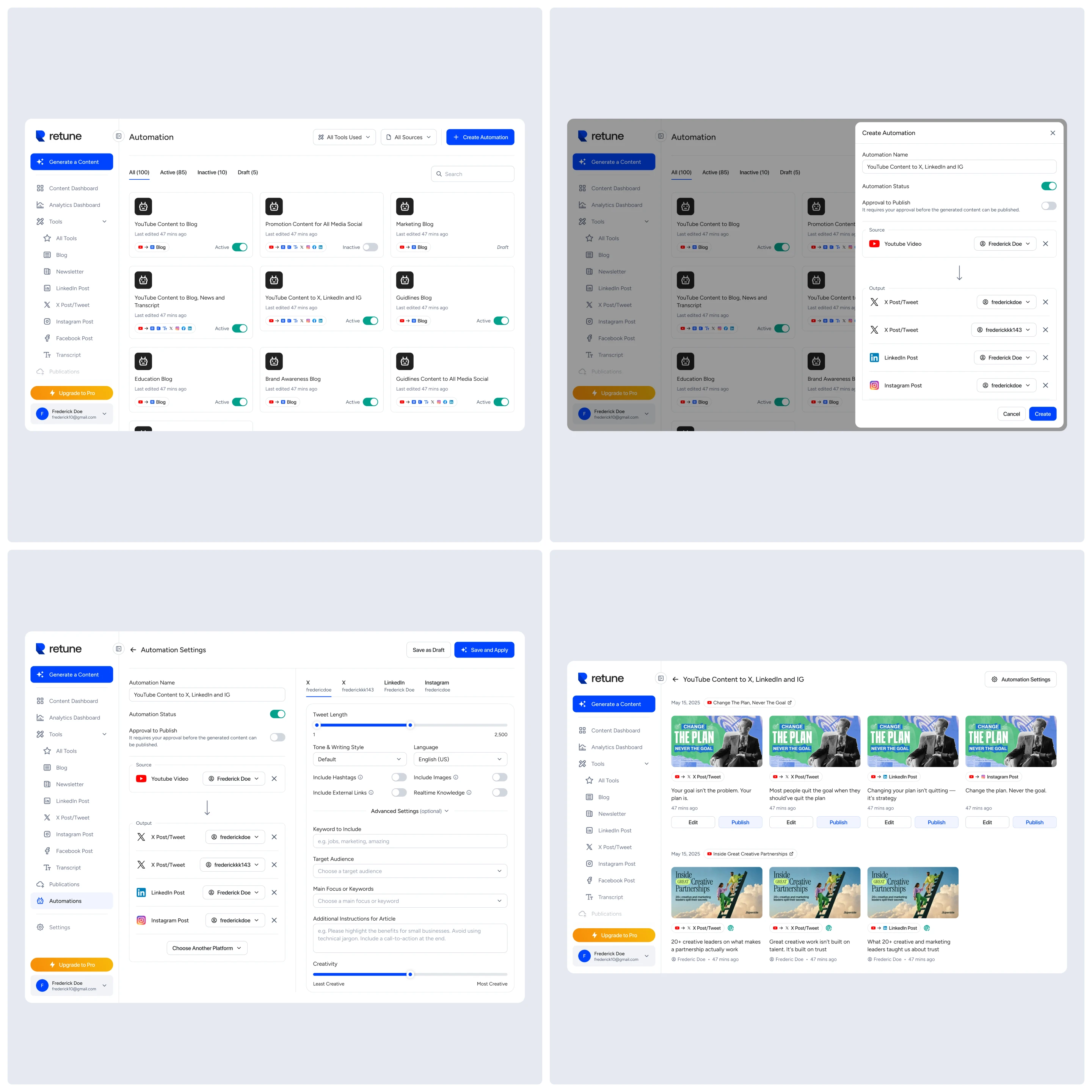
Automation-First. Automation is a first-class module, not a hidden feature. Users can create “automation recipes” that eliminate repetition entirely.
Content Generation
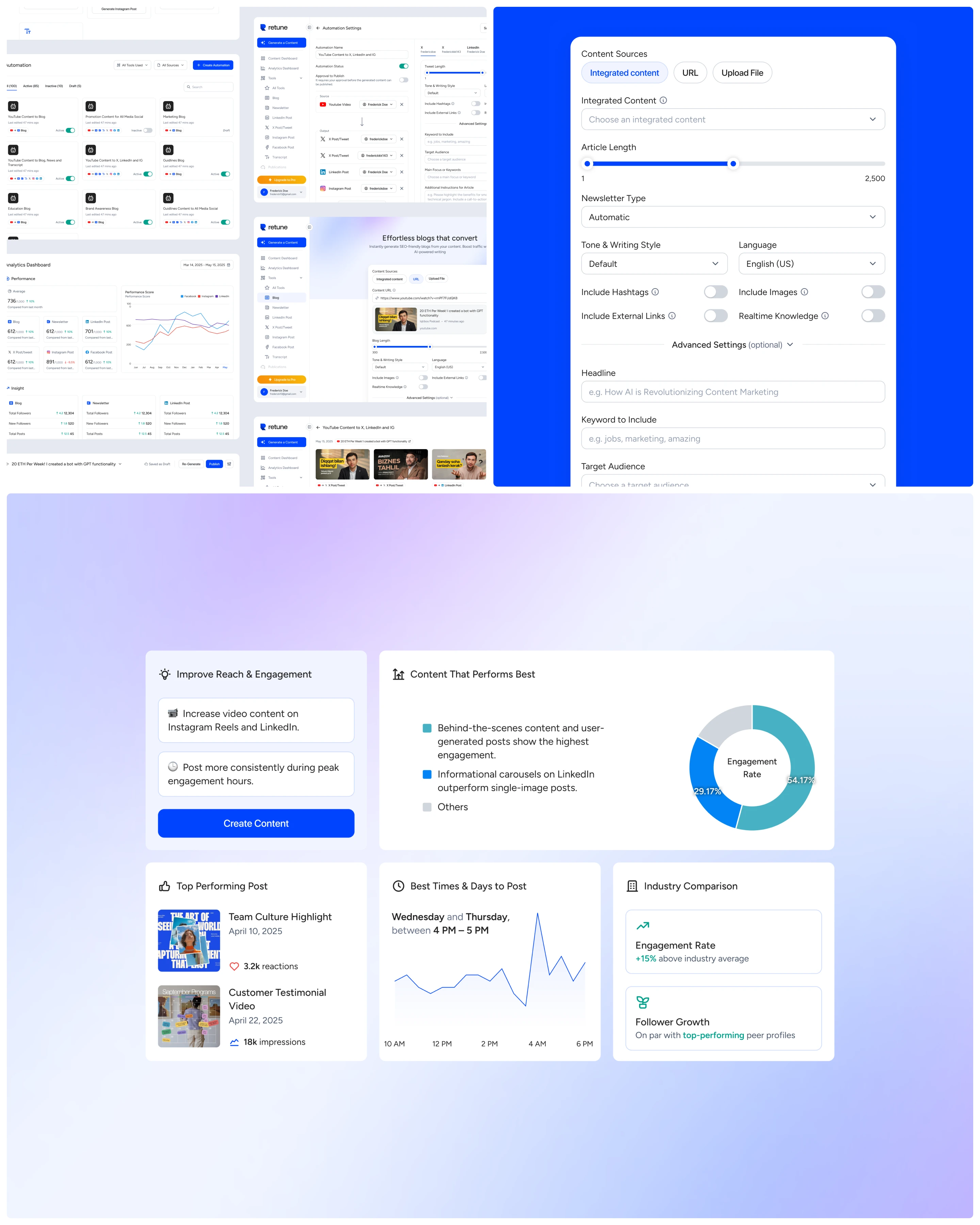
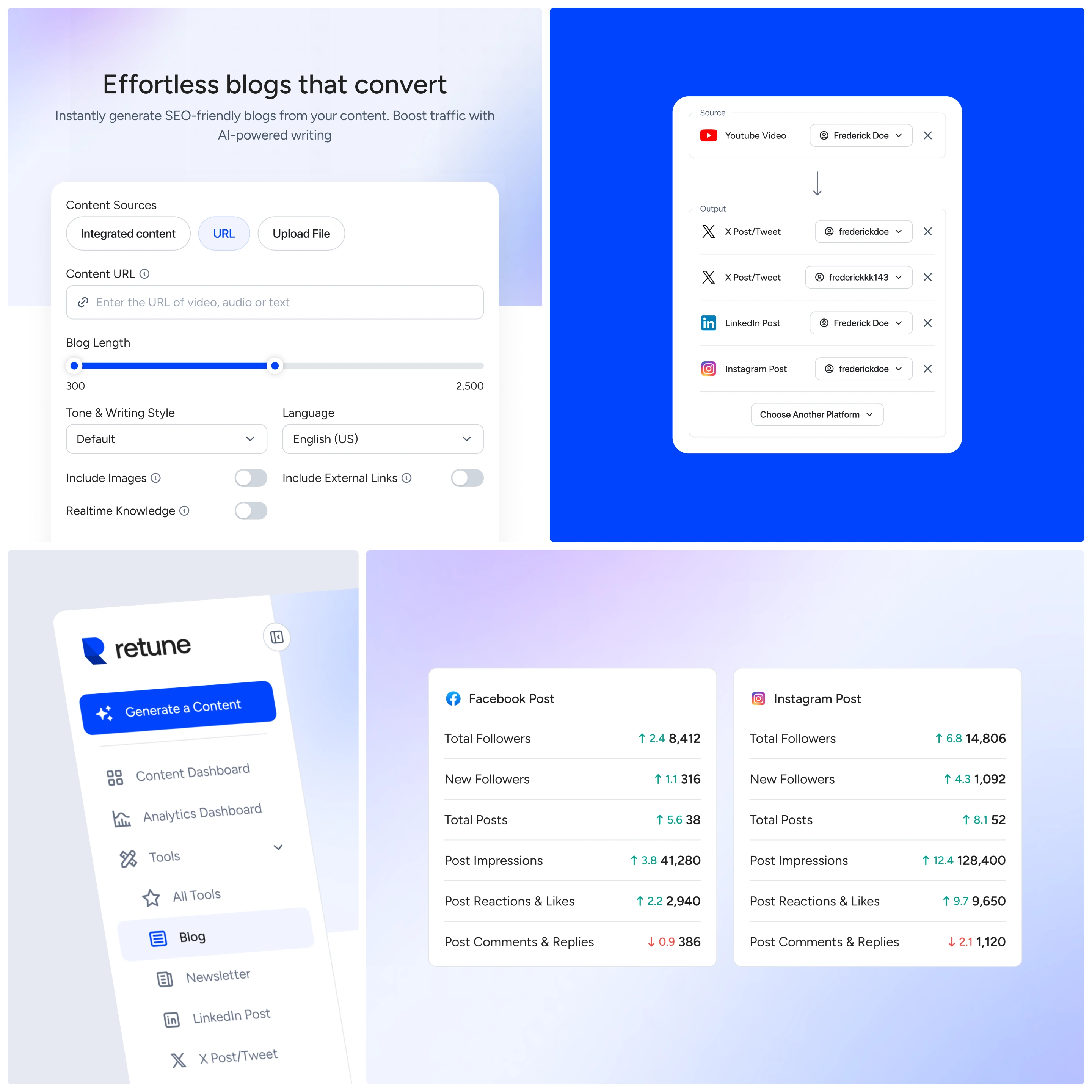
Users no longer need to rewrite content from scratch for every platform. Simply input one source, choose the target platform, and AI instantly generates content adapted to that platform’s format, tone, and context. Available for 7 platforms at once.
Automation Workflow
Every time a creator uploads a new video, they used to repeat the same process: write a blog, draft a LinkedIn post, create an Instagram caption. With automation, that process only needs to be set up once. After that, every new piece of content is automatically repurposed without any manual effort.
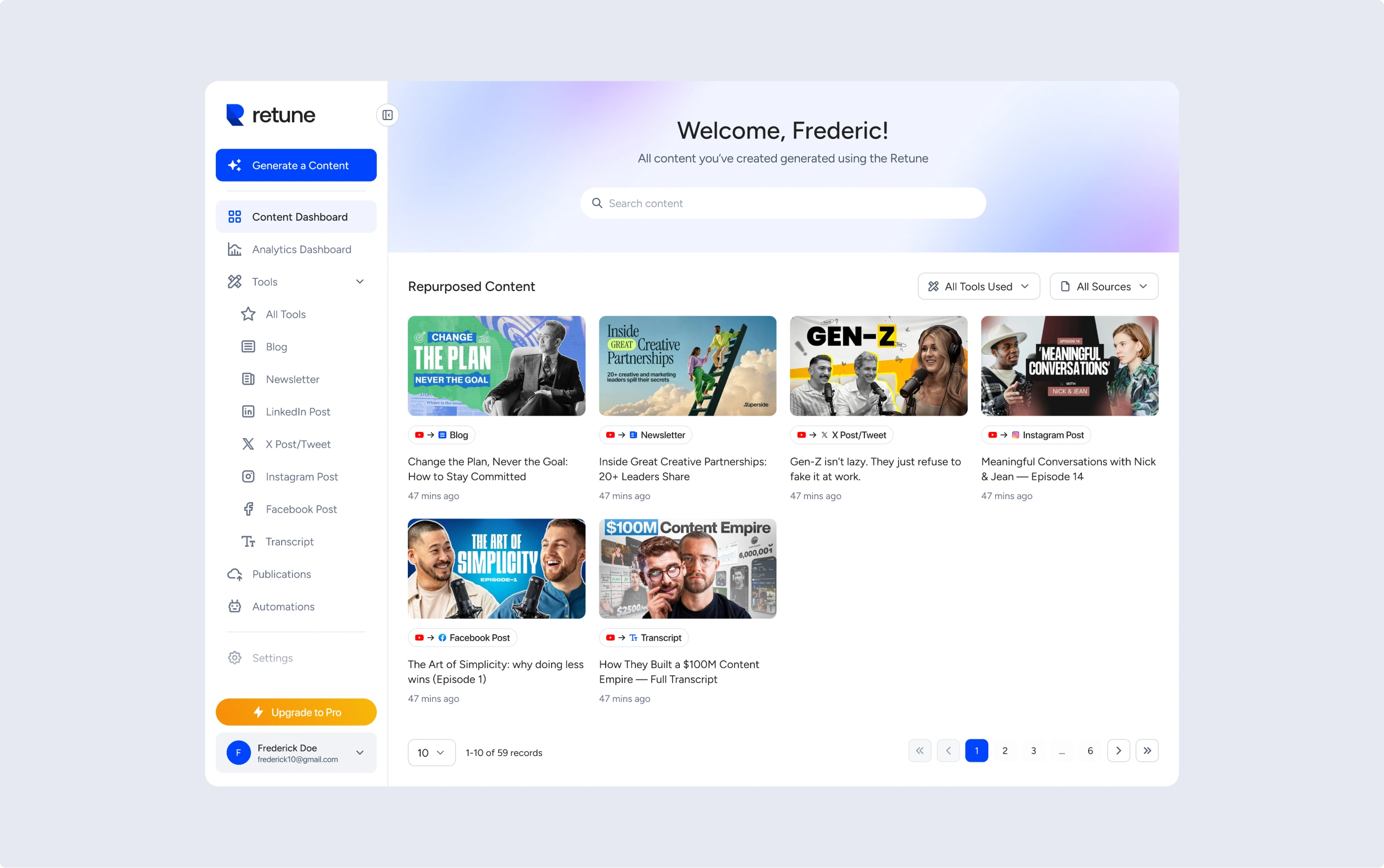
Content Dashboard
Previously, users lost track of which content had been repurposed and from which source. The dashboard gives them one place to view, search, and filter all generated content, so nothing falls through the cracks.
Analytics Dashboard
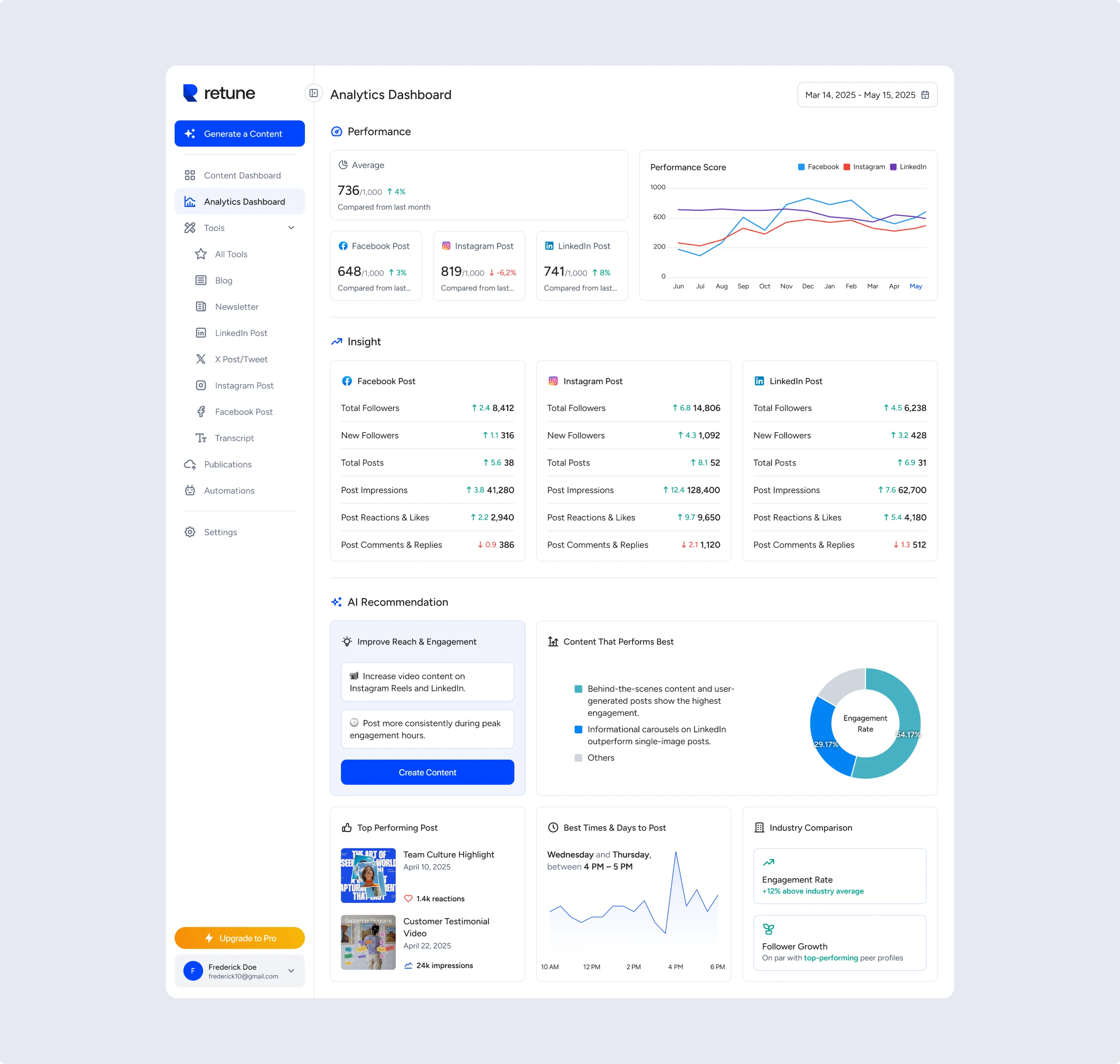
Creating content isn’t enough; users need to know whether their content is actually working. The Analytics Dashboard consolidates performance across all platforms into a single view: performance scores, follower growth, impressions, and engagement per platform. Without it, users would have to open each platform’s native dashboard one by one.
What sets it apart is that it doesn’t stop at numbers. The AI Recommendation section translates data into concrete actions: which content types perform best, when to post, and how their performance compares to industry benchmarks. These recommendations connect directly to a “Create Content” button, so insights can be acted on immediately without switching context.
Content Editor
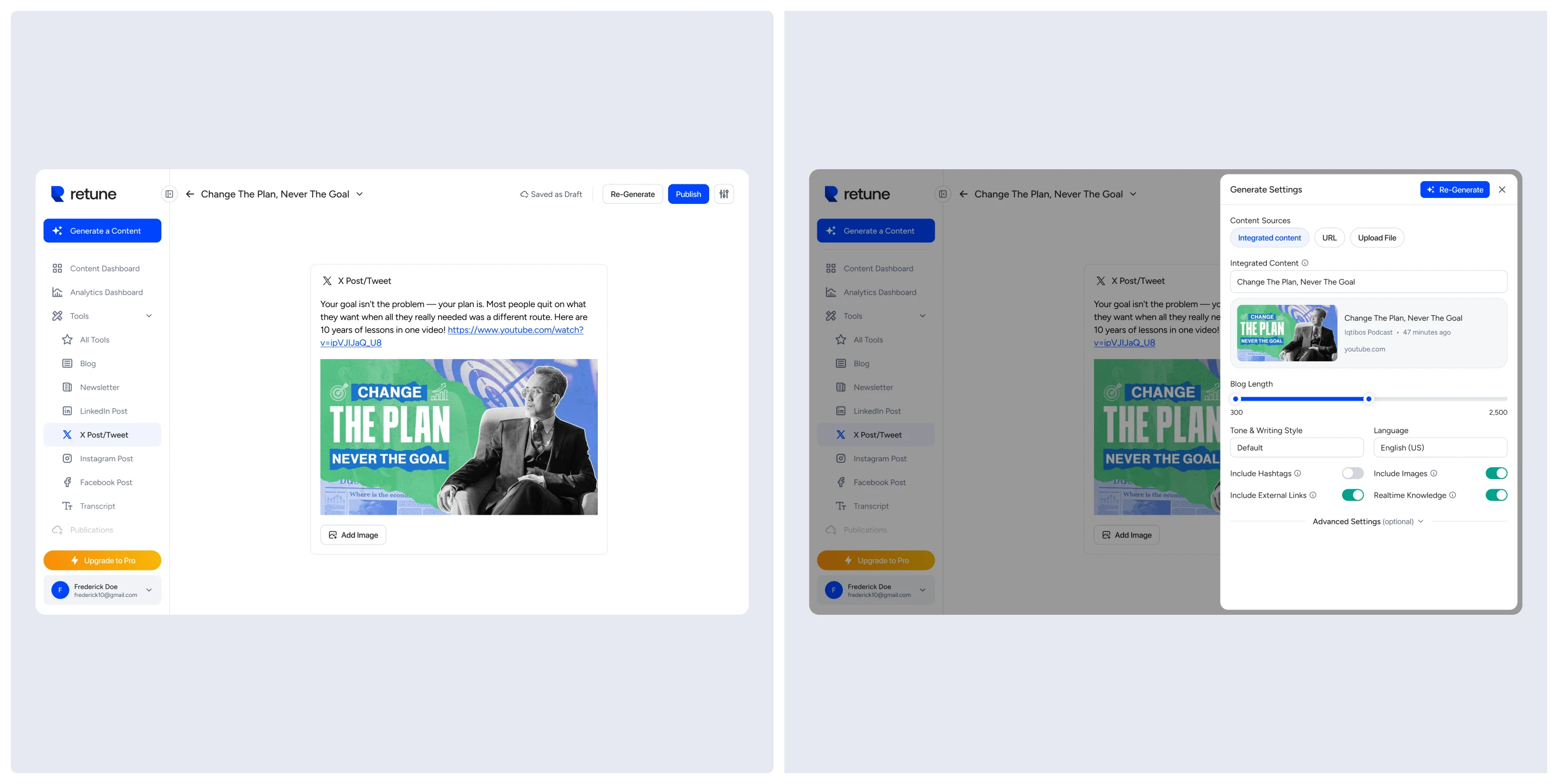
AI output is rarely perfect on the first try, and users still need control over what actually gets published. The Content Editor is where generated content can be reviewed, edited, and then published or scheduled. One place to close the loop from generation to going live.
The Result
The complete product design, covering more than 40 unique screens with various states (empty, loading, filled, error, confirmation), was delivered in under one month. The client noted the result exceeded expectations, particularly in UX depth, as various edge cases were addressed during the design phase rather than added as afterthoughts during development.
But more meaningful than the screen count is what changed for the people using it. A process that used to take a full day for a single video can now be done in minutes, and users no longer need to open seven different platforms to write, publish, and monitor their content. With automation, time that used to disappear into repetitive work goes back into what actually matters: making new content.
Like this project
Posted Oct 9, 2026
AI-powered SaaS platform that transforms a single piece of content into ready-to-publish formats for 7 different platforms automatically.
Likes
0
Views
0