Catatmak – Everyday Financial Tracking App

Akhdiyat Restu Fiqih

Overview
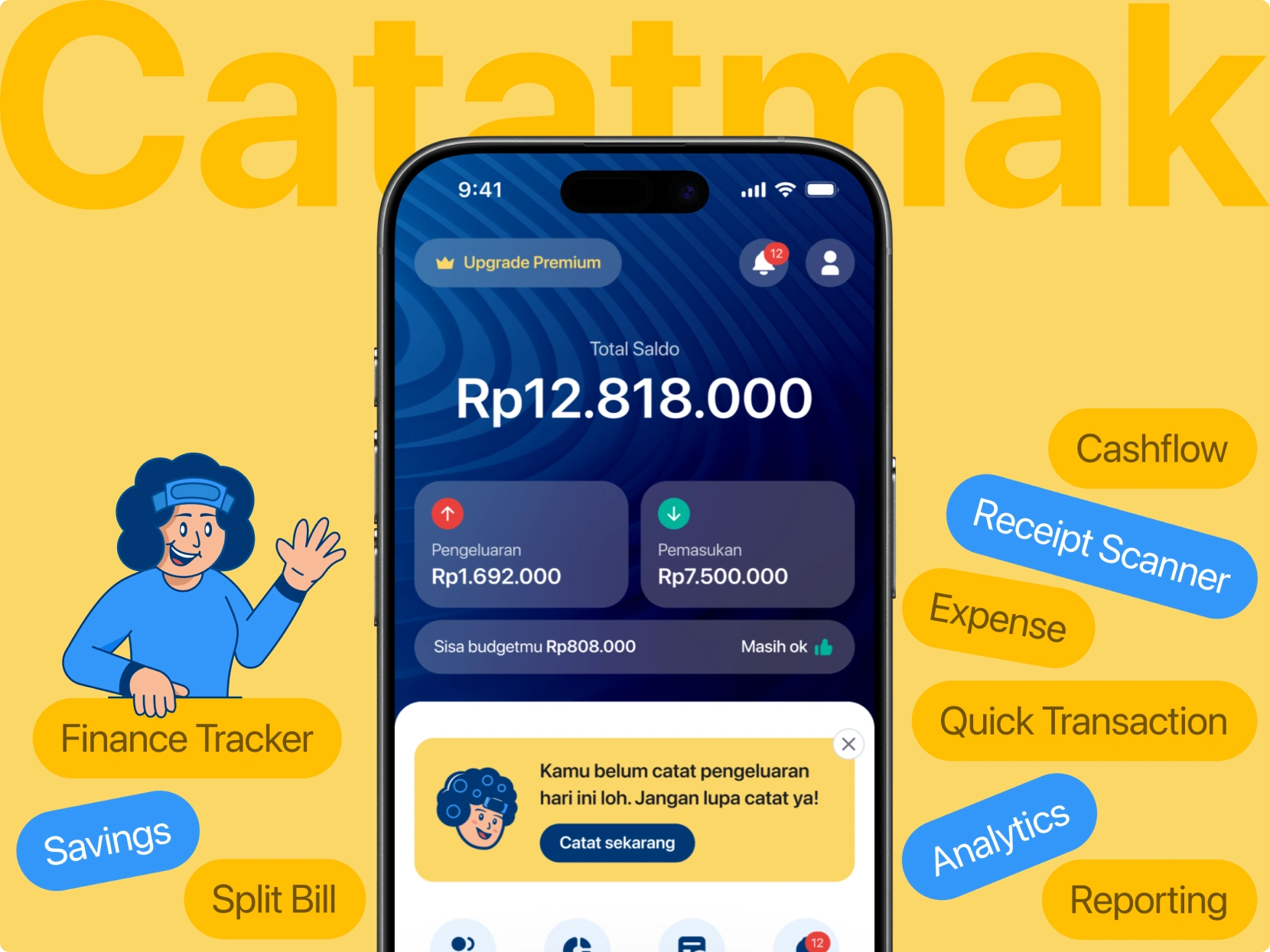
Everyone knows tracking their finances matters, yet almost no one does it consistently. The problem isn’t intention, it’s friction. Most existing apps require filling in multiple fields for a single transaction, which becomes exhausting when it needs to happen several times a day. The result is predictable: enthusiastic use in week one, abandoned by week two.
Catatmak was built on a different assumption. What needed to be designed wasn’t the app with the most features, but the app light enough to become a habit. Inside the app, logging can be done by simply photographing a receipt. Outside it, transactions can also be recorded through a WhatsApp message that syncs straight into the app. Beyond that, it also handles the social side of everyday money through its split bill feature.
The Goals
Reduce recording friction as much as possible, to the point where users don’t even need to open the app to log a transaction.
Address bill splitting, which had been handled manually through chats and separate calculations.
Help users understand their financial situation without having to interpret raw numbers.
User Persona
Research narrowed user needs down to two profiles with fundamentally different relationships to money.

The Challenge
From research and competitor analysis, three core problems needed to be addressed:
Recording feels like a chore. The more steps required to log a single transaction, the more likely users abandon it midway. Recording usually happens in between other activities, while existing apps demand detailed input from the start.
Bill splitting lives outside finance apps. Splitting a bill with friends is an extremely common financial activity, yet it’s almost always handled separately through chats, calculators, and memory. Nothing gets recorded, and it often ends with forgotten debts.
Recorded data doesn’t mean anything. Even users who manage to log consistently often stop at the numbers. They know how much they spent, but not what it means, whether it’s reasonable, or what needs to change.
The key insight from this research: the biggest barrier isn’t understanding, it’s habit. Users don’t need more sophisticated features; they need a process light enough and pleasant enough to repeat every single day.
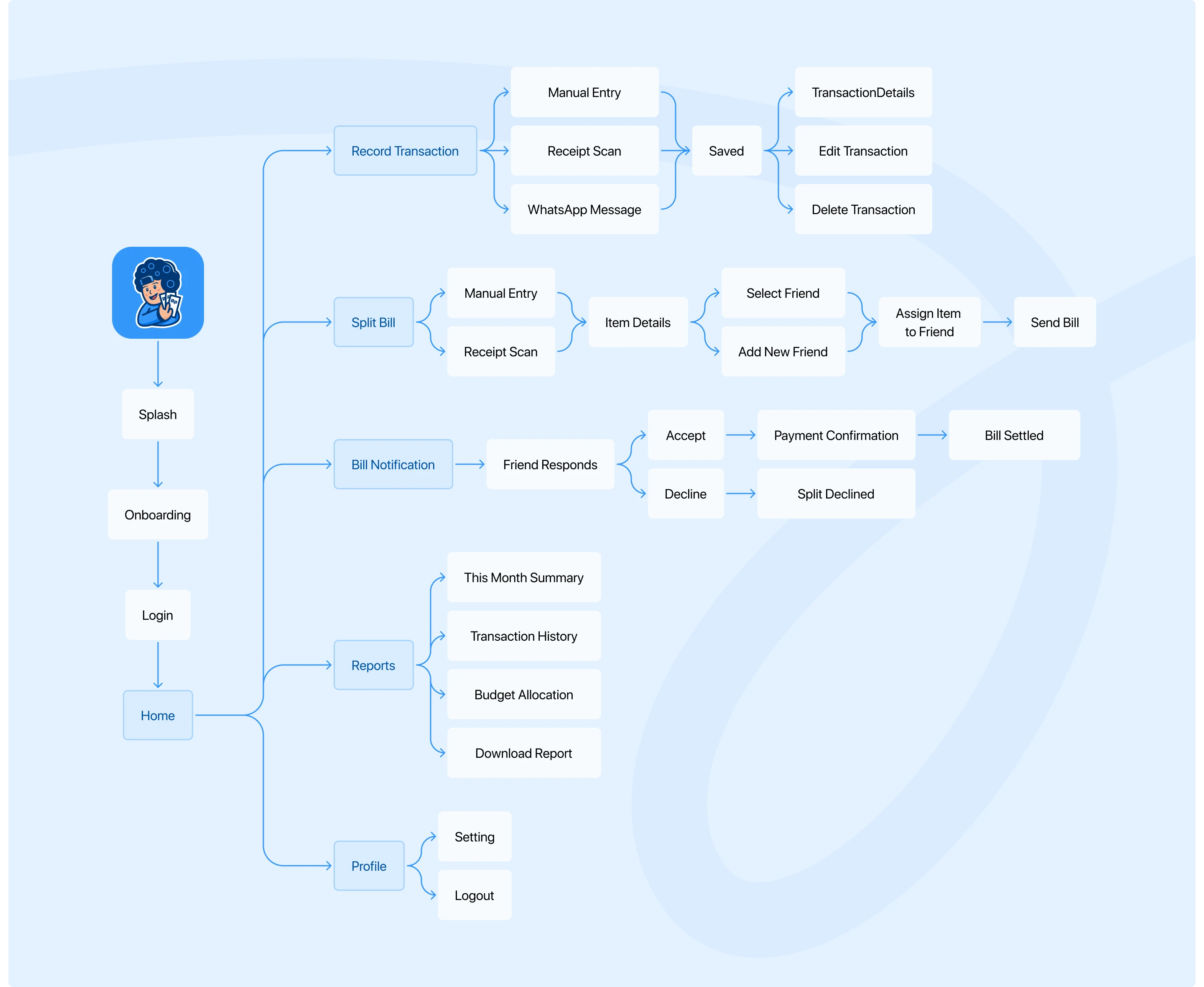
User Flow
All user flows were mapped before moving into design. This mapping determined where the process could be trimmed and where users actually needed confirmation.
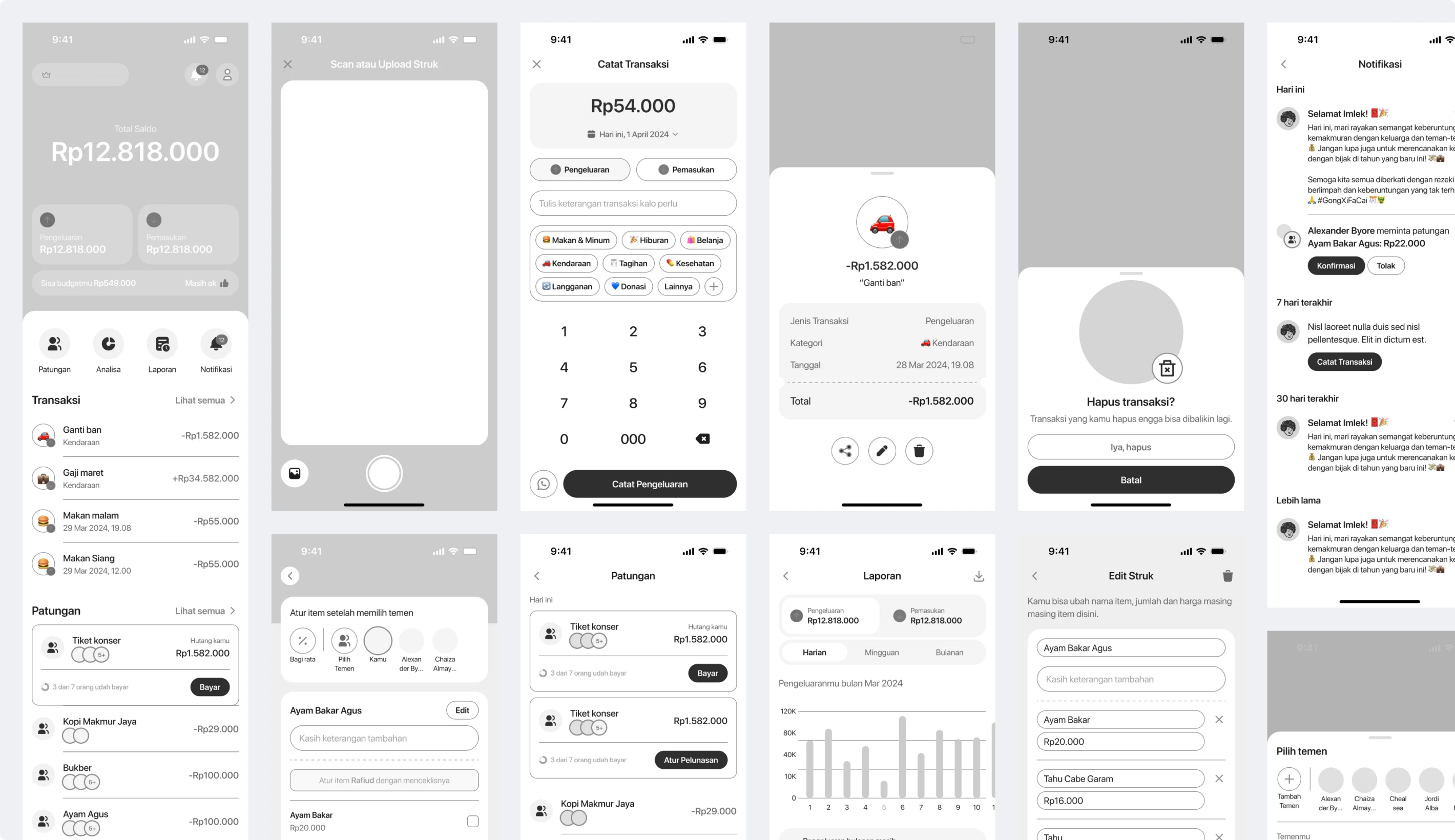
Wireframe
Once the flows were agreed on, every screen was laid out as wireframes to test information hierarchy before moving into the final interface. This stage was used to make sure the most frequently used actions sat within easiest reach, and that dense screens like split bill details stayed readable without overwhelming the user. With the structure tested first, building the final interface happened without major rework.
The Solutions
Low-Friction Recording. Recording is offered through several paths with different levels of effort: receipt scanning for shopping transactions, manual input for everything else, and WhatsApp logging for users who can’t even spare the time to open the app. Users choose based on context rather than being forced into one path.
Social Finance. Split bills were elevated into a core feature with its own navigation, rather than just a transaction category. The full cycle was designed end to end: creating a split, assigning items, confirming payments, and settling up.
Personality as Retention. Finance apps tend to feel rigid and judgmental. Catatmak was deliberately designed with a warm, playful tone, so opening the app feels light rather than like being audited.
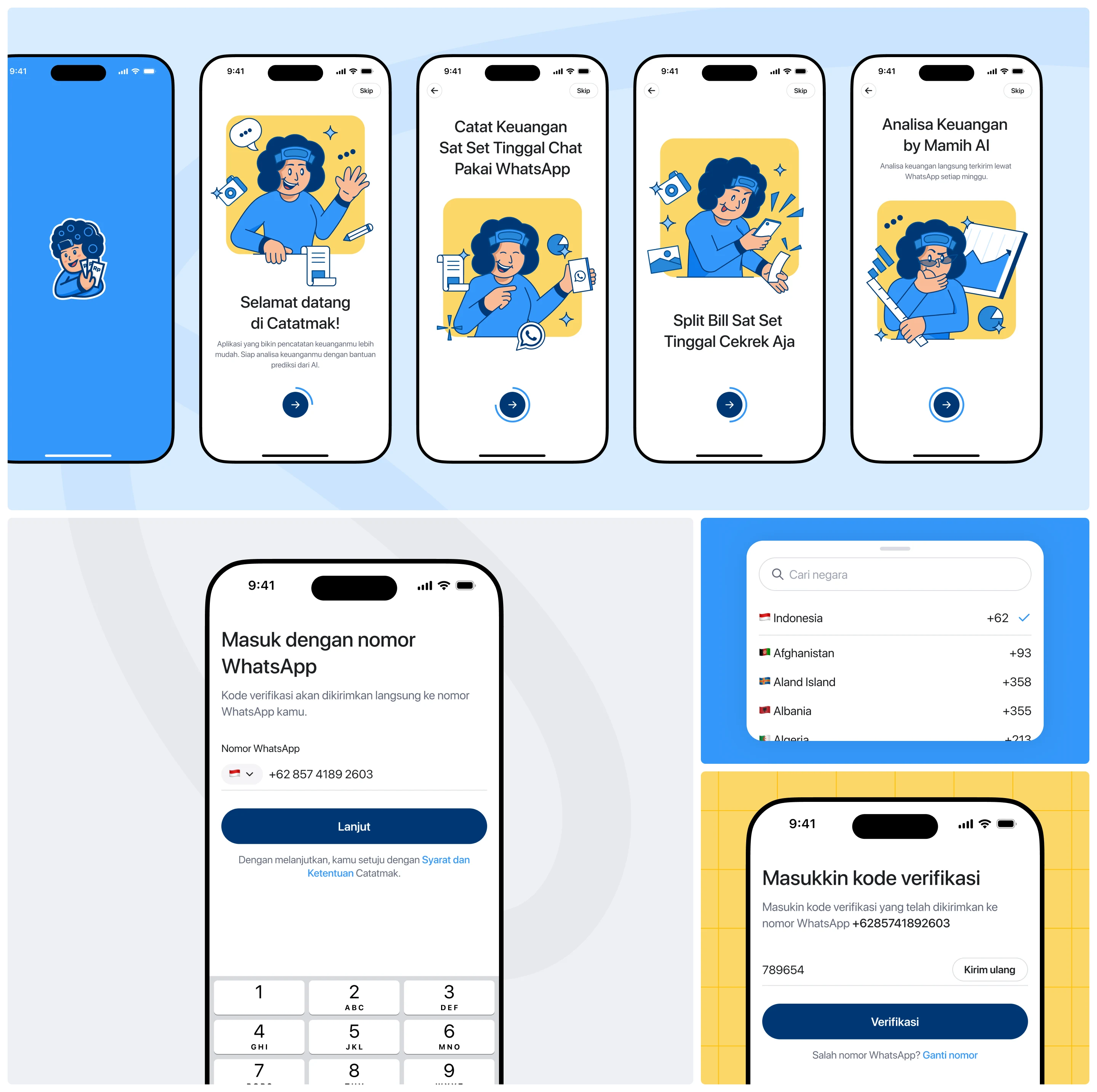
Onboarding & Sign In
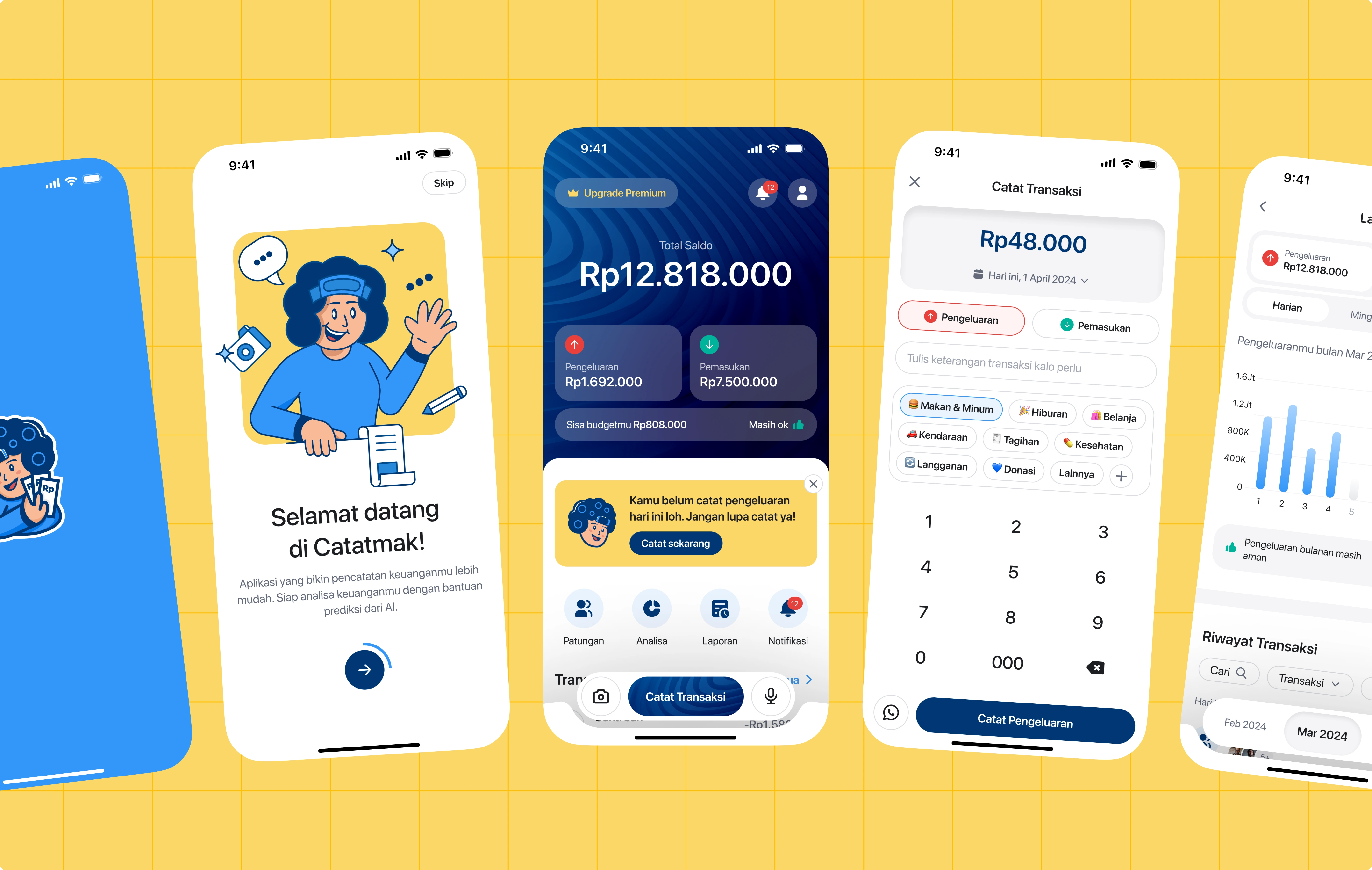
First impressions decide whether users continue or drop off. Onboarding was kept brief, explaining only the core value without holding users up. To sign in, users simply enter their WhatsApp number and a verification code, with no new password to create and inevitably forget.
Choosing the WhatsApp number here wasn’t just about easier signup. That number becomes the bridge for logging via messages, so one step at the start opens a channel used continuously afterward.
Home
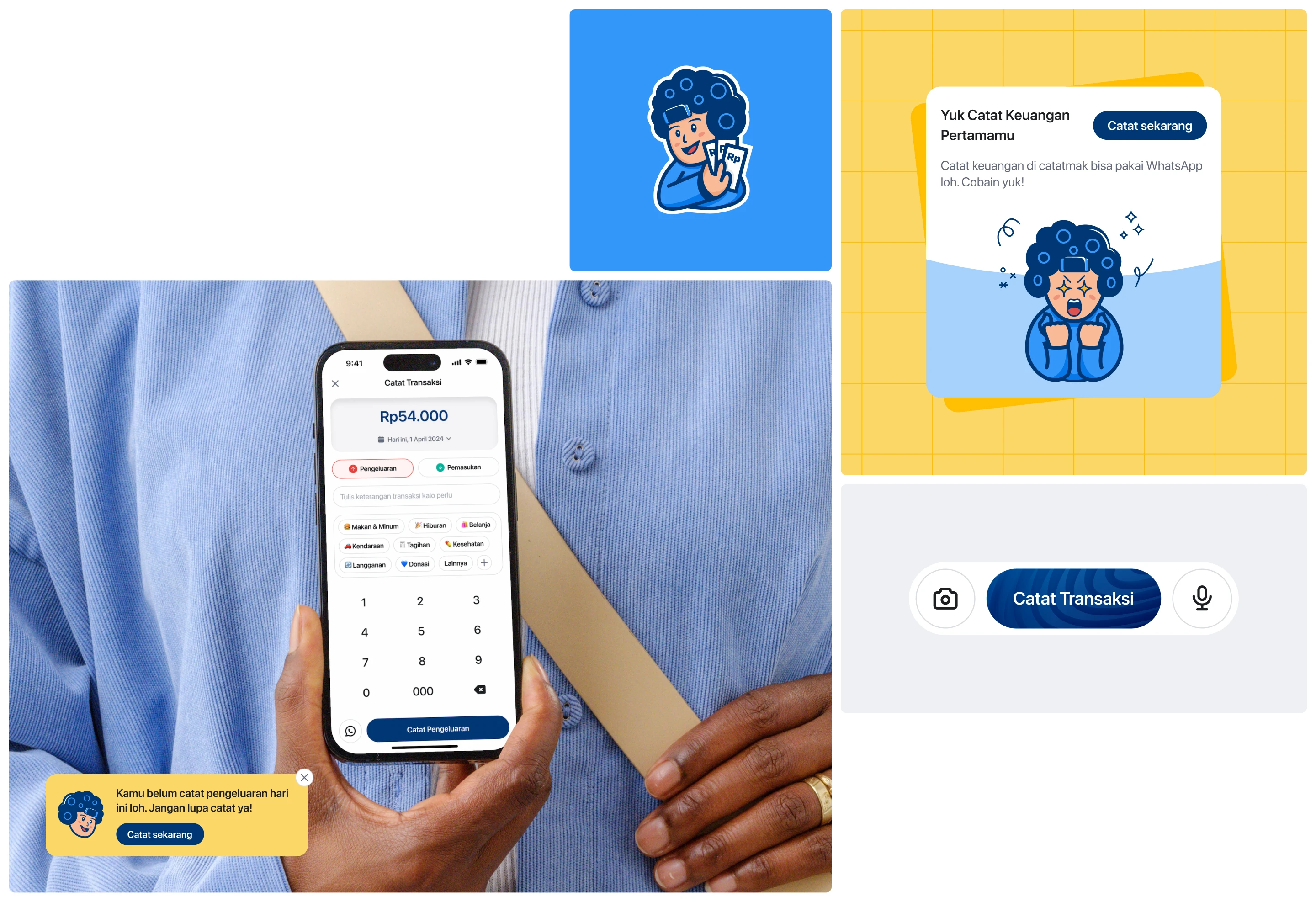
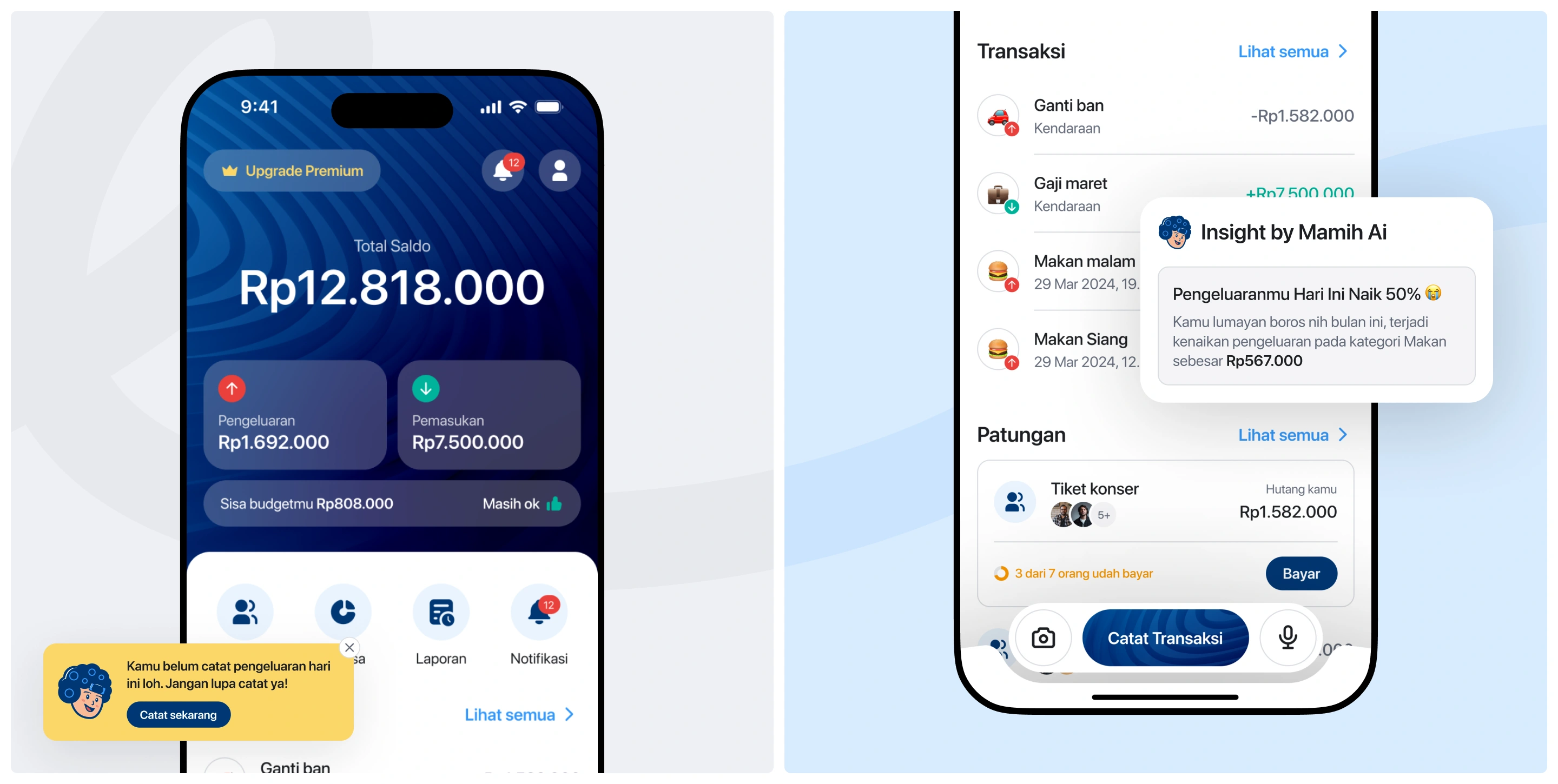
People rarely open a finance app without a reason. The home screen was designed to provide one: a summary of today’s transactions, an alert when spending spikes in a particular category, and a greeting that changes daily. Rather than displaying raw numbers, the app translates them into sentences users immediately understand.
For users with nothing logged yet, home appears with guidance pointing them toward their first transaction rather than just an empty page.
Receipt Scan
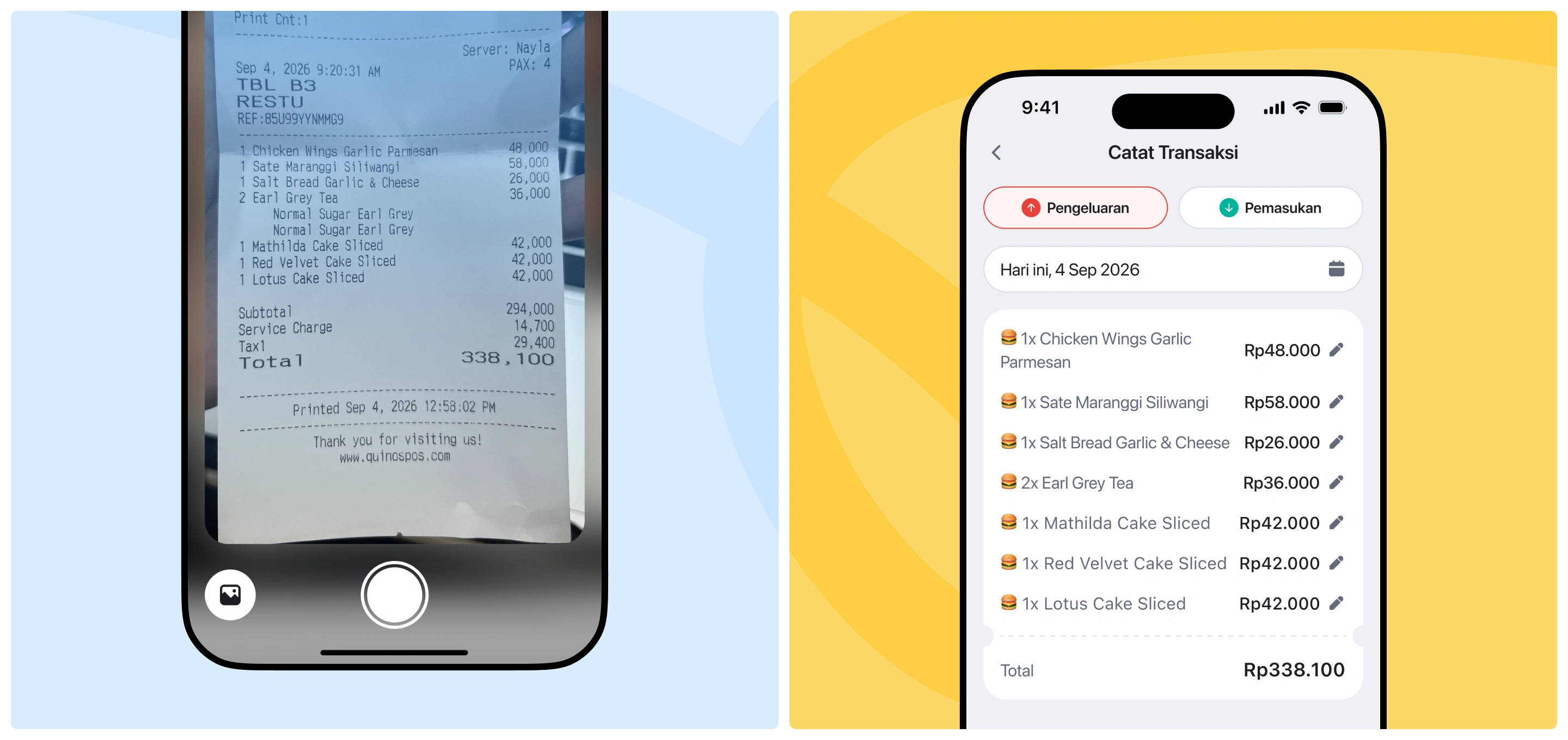
Retyping the contents of a shopping receipt is what makes most users give up. Just photograph the receipt, and the system parses it into itemized entries with their amounts. Scanned results can be edited if anything is off, so automation never comes at the cost of user control.
Manual Recording
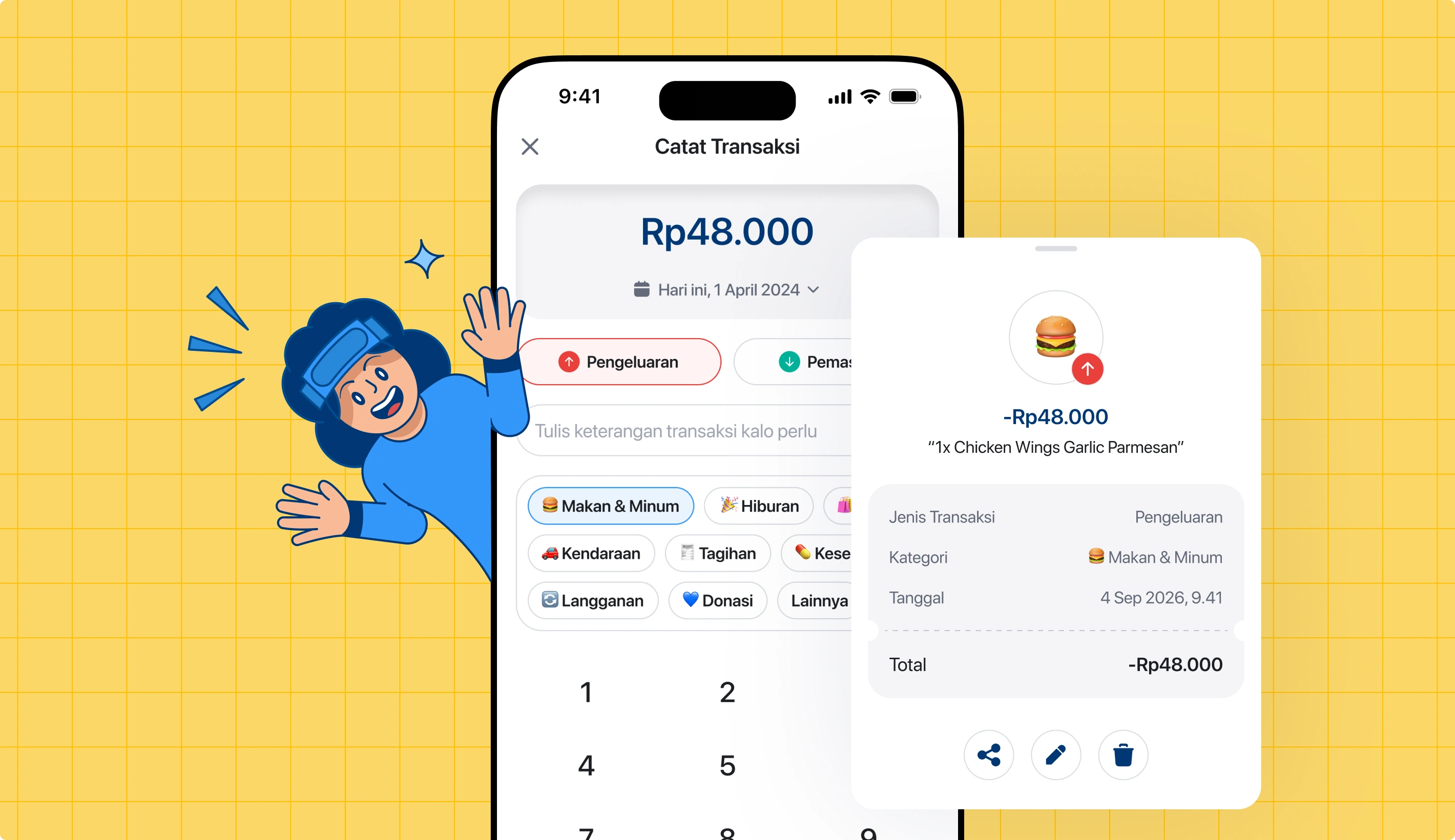
Not every transaction comes with a receipt, and not every user wants to rely on automation. Manual entry remains available with a form designed to be as brief as possible: amount, category, and a short note. Every logged transaction can also be viewed in detail, edited, or deleted if something was wrong.
Split Bill
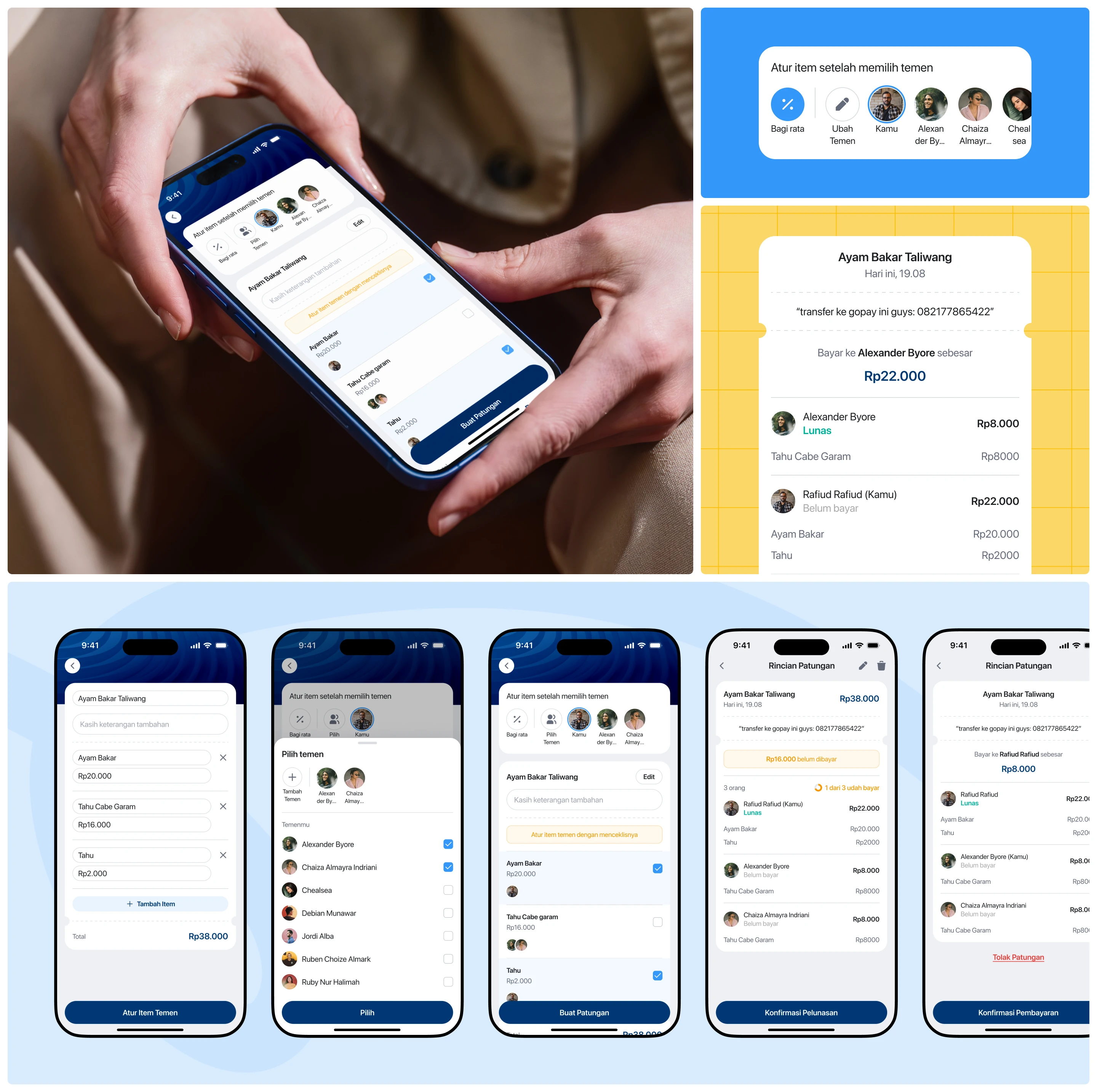
Splitting bills with friends used to be handled through chats and manual math, often ending with forgotten debts. With this feature, a receipt can be scanned directly, items assigned to each person, and payment status tracked until fully settled, complete with confirmation from both sides.
Reports & Budget Planning
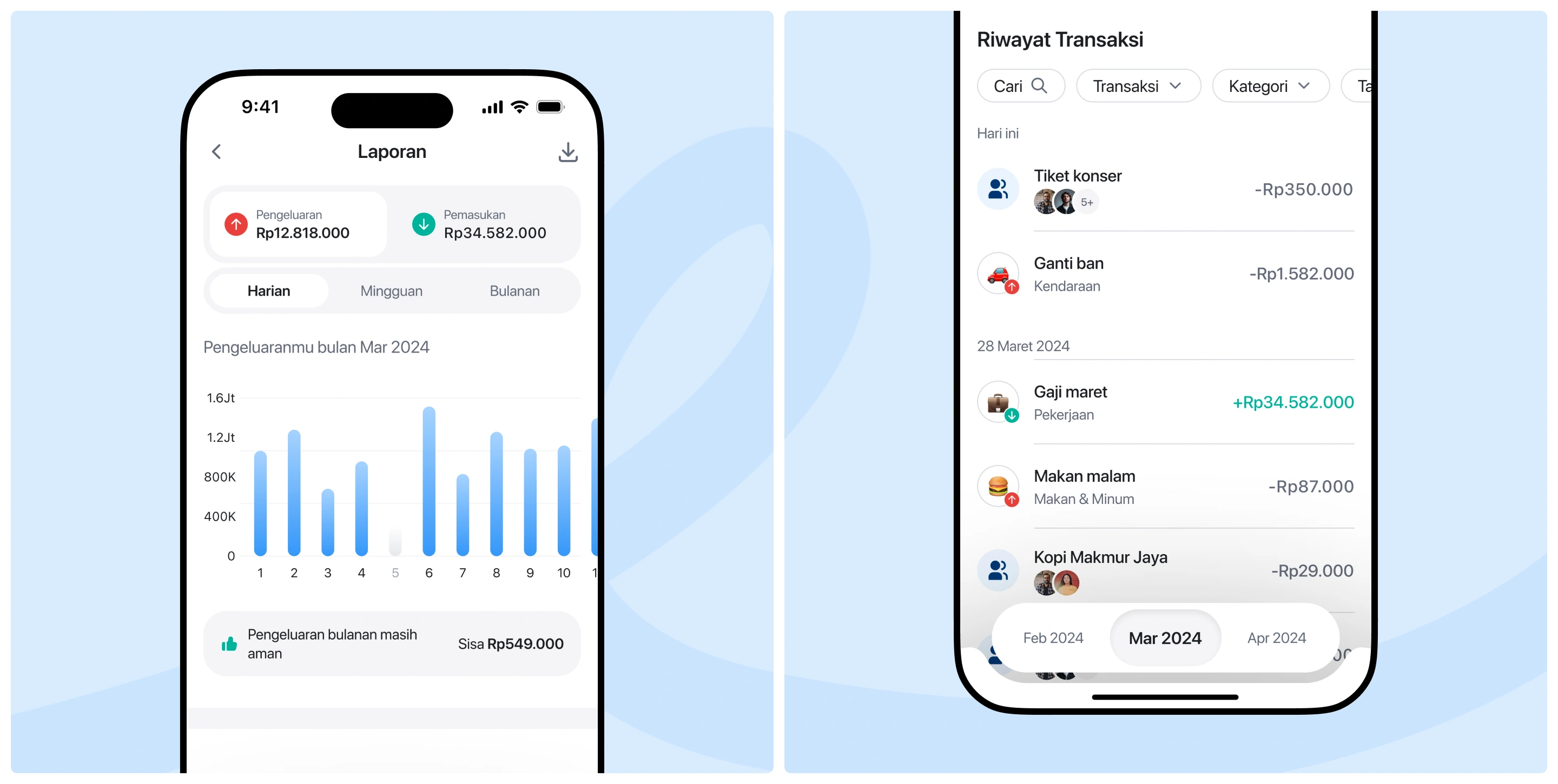
Recording alone isn’t enough if users don’t know where their money went. Reports summarize the current month’s income and expenses alongside a comparison to the previous month, complete with full transaction history and an option to download reports by period. But looking backward isn’t enough on its own. Through budget planning, users can set a monthly allocation plan upfront, then track how far actual spending drifts from that plan. This is where logging changes purpose: from a passive archive into a tool for control.
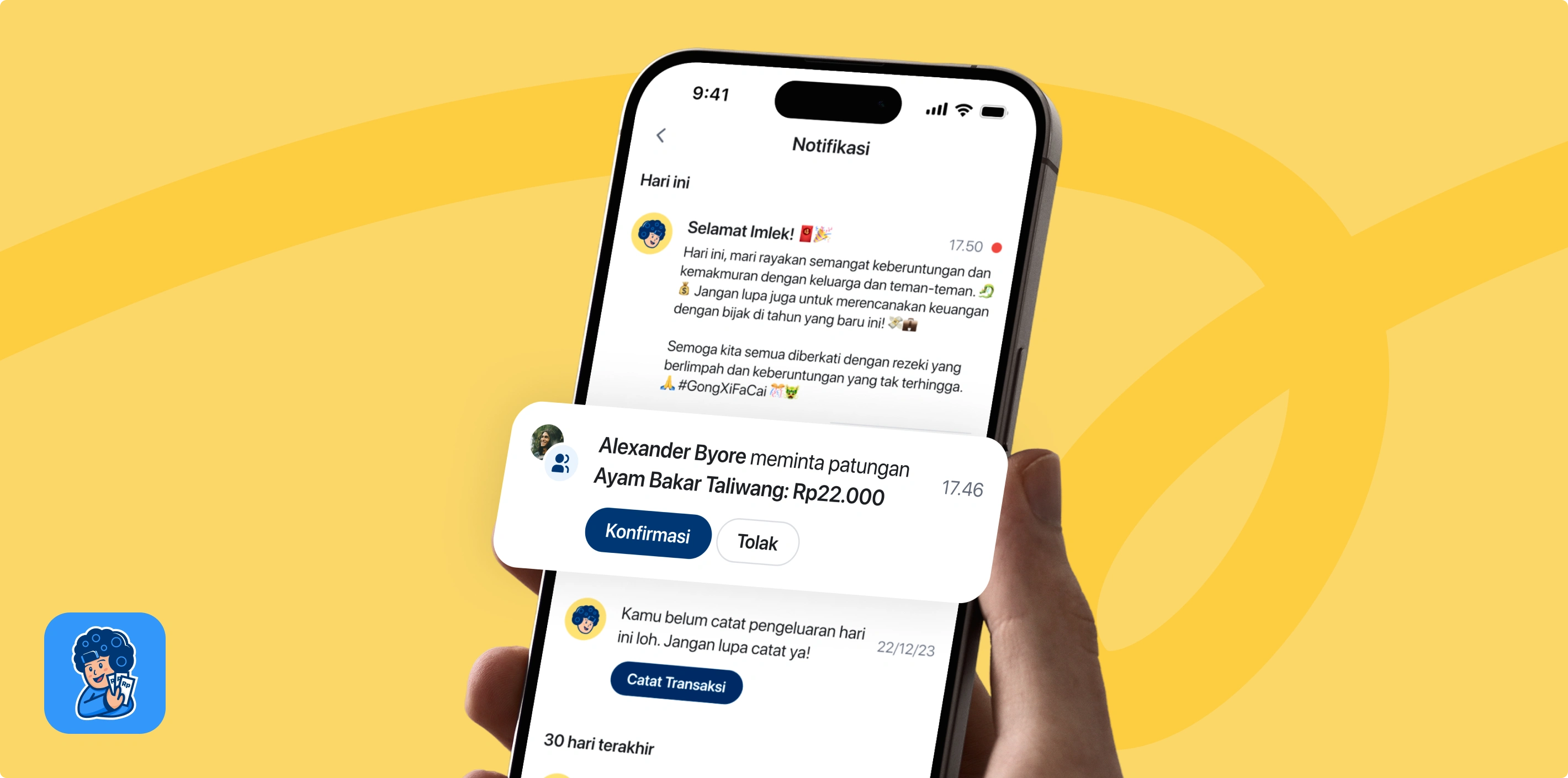
Notifications
Split bills only work when everyone knows what they need to do. Notifications keep that flow moving, from new bill alerts and payment confirmations to reminders for anything still outstanding.
Profile
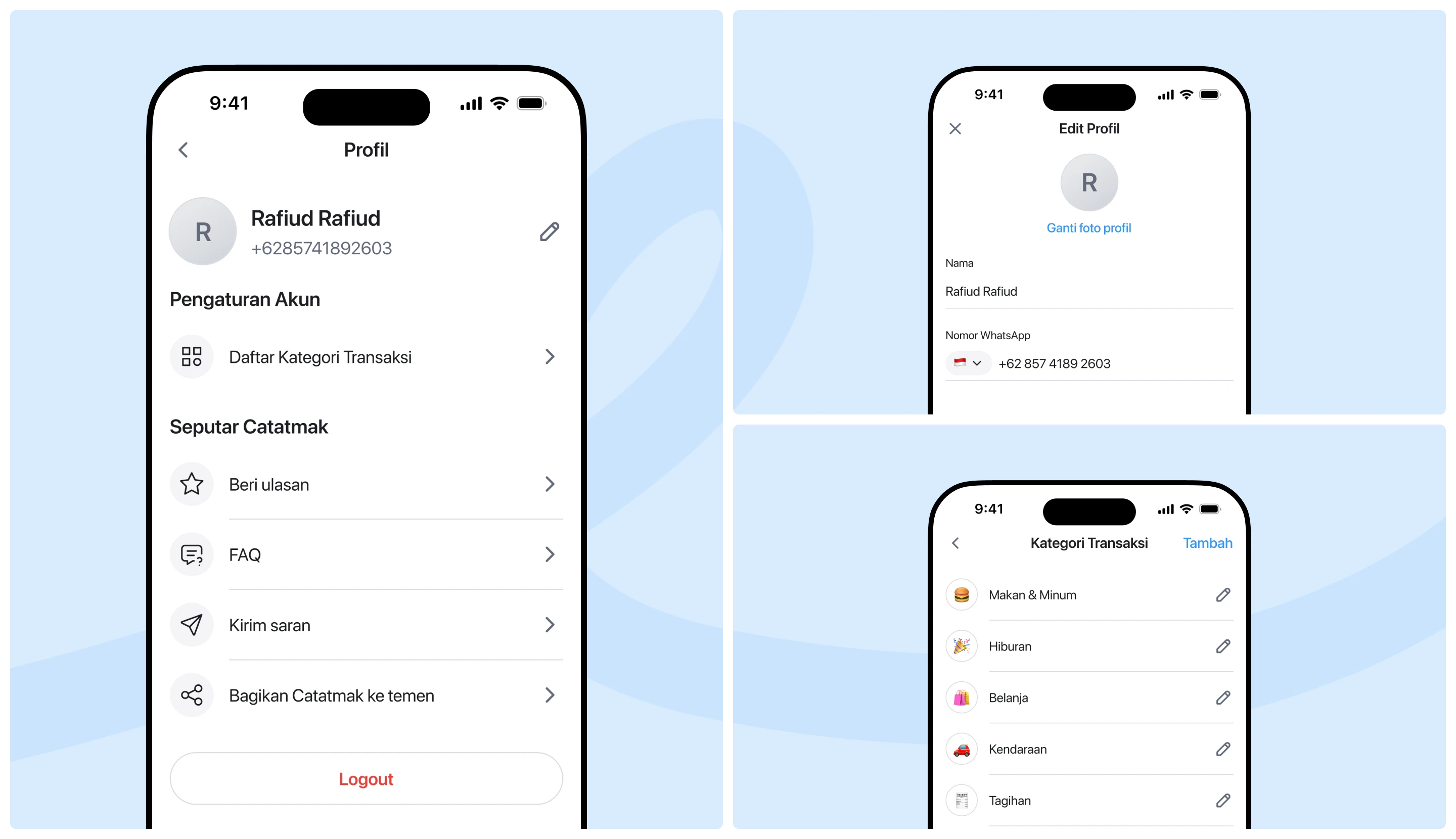
Everyone groups their spending differently, and default categories will never fit everyone. Through Transaction Categories, users can add and edit their own categories complete with emoji markers, so logging follows their habits rather than the other way around.
Beyond that, the profile page holds account settings and the channels back to the team: changing name, photo, and WhatsApp number, leaving a review, reading the FAQ, sending feedback, and sharing the app with friends. That last one isn’t incidental, since split bills work best when a user’s friends are on the same app.
Visual Direction
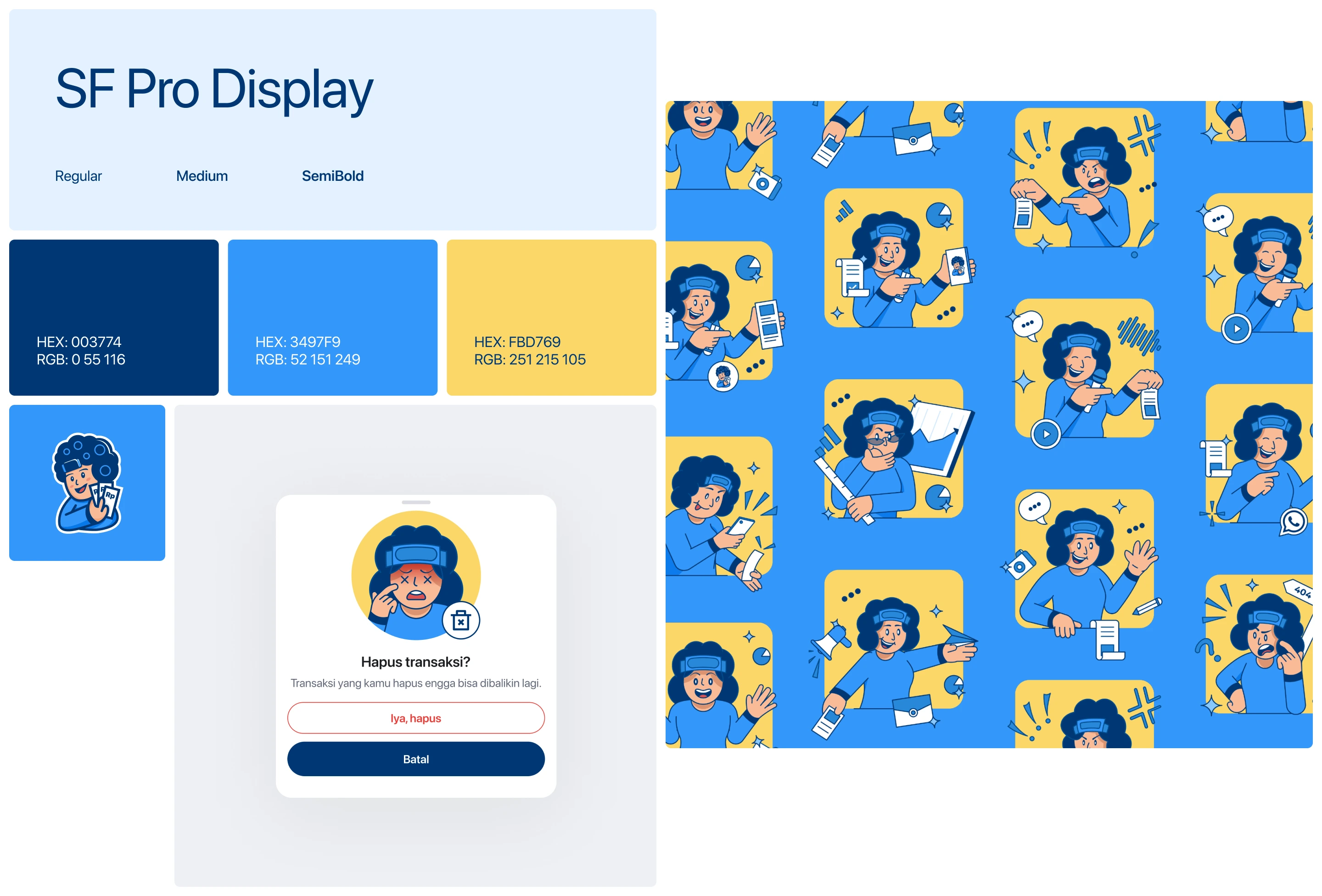
Finance apps slip easily into feeling cold, and Catatmak’s visual direction was built to counter that. SF Pro Display was chosen for its numeral clarity across sizes, which matters for an app where nearly every screen carries an amount. The palette rests on deep blue as the primary for a sense of stability and trust, balanced by pastel blue as background and pastel yellow as an accent that keeps the mood warm. Illustrations and the Mamih character were created by an illustrator on the team, while I determined their placement and the tone each moment should carry.
The Result
The complete app design was delivered in one month and is now live on the Play Store. Deliverables included user flows, full designs from onboarding through every core feature and its various states, and a component system used consistently throughout the app.
But more meaningful than the screen count is what changed for the people using it. Recording a transaction that once required lengthy input now takes a single photo of a receipt, and when there isn’t even time to open the app, a single WhatsApp message will do. Split bills that used to end as forgotten debts now leave a clear trail until settled. And spending that used to be just a column of numbers now arrives as a sentence that tells users exactly what’s happening with their money.
Like this project
Posted Oct 9, 2026
Catatmak is a personal finance app designed to be used every day, with receipt-scan recording and a split bill feature for sharing expenses with friends.
Likes
0
Views
0