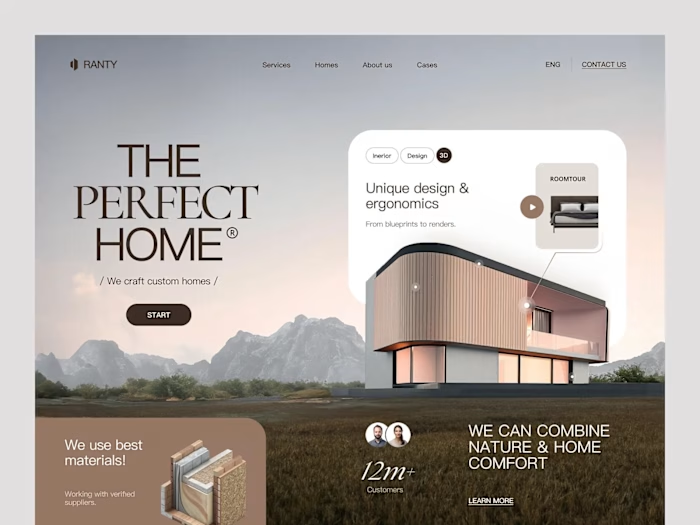
Real Estate Website Design

Maham Vohra


🏠 Project Overview
This project was a complete website design and development for a boutique real estate agency transitioning from referral-only business to active digital lead generation. They needed a site that showcased properties beautifully, captured leads efficiently, and positioned the agency as the premium choice in their market.
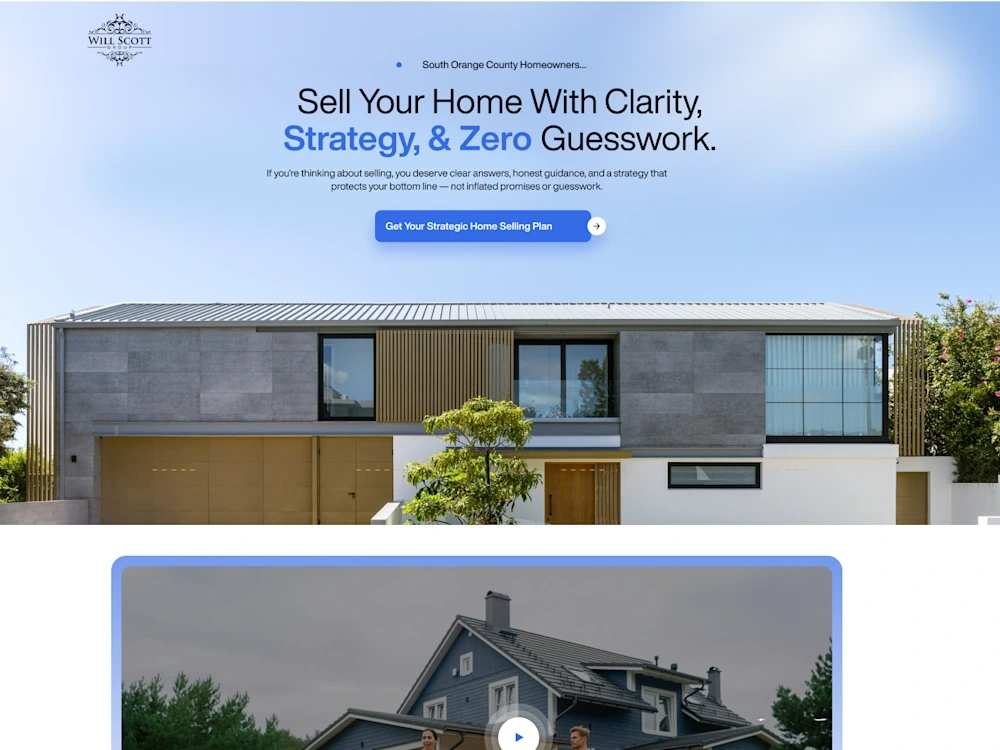
Real Estate Website Design
Framer was the platform choice for its design flexibility and performance. Real estate sites live or die on page speed (property photos are heavy) and Framer's built-in optimization handled that challenge well.
💡 The Challenge
The agency had been operating for 8 years with zero digital presence. All business came through referrals and local networking. The owner recognized that younger buyers (millennials and Gen Z) start their property search online, and the agency was invisible to them.
Specific challenges:
No existing digital brand presence or content library
Property photography varied wildly in quality across listings
The agency needed to showcase both residential and commercial properties
Lead capture needed to qualify prospects (budget, timeline, property type) without feeling like an interrogation
The site needed to compete visually with major platforms like Zillow and Realtor.com while feeling more personal and boutique
MLS integration wasn't in budget for phase 1, so property management needed to be manual but efficient
🔍 Research & Discovery
I analyzed 25 real estate websites across three categories: major platforms (Zillow, Redfin), luxury brokerages (Sotheby's, Compass), and local boutique agencies. The findings shaped the entire design strategy.
Major platforms win on data and search functionality but feel impersonal. Luxury brokerages have beautiful design but often sacrifice usability for aesthetics. Local agencies typically have outdated sites that don't inspire confidence. The opportunity was to combine the visual quality of luxury sites with the usability of major platforms, at a boutique scale.
User research with 10 recent homebuyers revealed their top priorities when visiting an agency website:
Property photos (92% said this was the first thing they looked at)
Neighborhood information (78% wanted context beyond the listing)
Agent profiles and credentials (71% checked before reaching out)
Easy contact options (64% preferred forms over phone calls)
Market data and pricing trends (58% wanted to understand the market)
🎨 Creative Process
The visual direction needed to communicate "premium but approachable." Real estate design often falls into two traps: either overly corporate (stock photos of handshakes and skylines) or overly casual (clip art and Comic Sans). The sweet spot was sophisticated without being intimidating.
Typography used a refined serif for headlines (conveying trust and establishment) paired with a clean sans-serif for body text and UI elements. The serif choice was critical: it needed to feel modern, not stuffy. I tested 8 serif options before finding one that balanced heritage with contemporary sensibility.
The color palette was anchored by a deep forest green (trust, stability, growth) with warm gold accents (premium, aspiration) and clean whites. This combination felt distinctly different from the blue-and-white schemes that dominate real estate websites.
Property cards were the most iterated component. I designed 7 variations before landing on a layout that showed the hero photo, price, key specs (beds, baths, sqft), and location in a scannable format. The card needed to work in both grid and list views, and at both desktop and mobile sizes.
📐 Property Listing Design
The property detail page was the most complex design challenge. It needed to present 15-20 photos, detailed specifications, neighborhood information, agent contact, and a mortgage calculator without feeling overwhelming.
The solution was a tabbed layout with a sticky photo gallery:
Photos tab: Full-width gallery with lightbox zoom and virtual tour embed
Details tab: Specifications, features, and property description
Neighborhood tab: Map, nearby amenities, school ratings, and walkability score
Calculator tab: Interactive mortgage calculator with adjustable parameters
The photo gallery used a masonry layout that adapted to the aspect ratios of available photos, solving the inconsistent photography quality problem by making every layout feel intentional regardless of image dimensions.
🔧 Technical Build
Platform: Framer with CMS
Performance: 94 Lighthouse score on desktop, 89 on mobile
CMS Collections: Properties, Neighborhoods, Agents, Testimonials, Blog Posts
Property fields: 28 custom fields per listing (price, specs, features, photos, location data)
Forms: Multi-step lead qualification form (3 steps, conditional logic)
Integrations: Google Maps API, mortgage calculator, Google Analytics 4, Facebook Pixel
Image optimization: Automatic compression and responsive srcset for property photos
The CMS was designed so agents could add new listings in under 10 minutes. A structured template guided them through required fields, and image uploads were drag-and-drop with automatic optimization.
📦 Key Deliverables
Fully responsive Framer website (10 unique page templates)
CMS with 5 collections and 28 custom property fields
Complete Figma design system (32 components)
Interactive mortgage calculator
Multi-step lead qualification form
Neighborhood guide template system
Agent profile pages with listing history
Blog/market update section
SEO foundation (local SEO optimization, structured data for listings)
CMS training documentation with video walkthroughs
Google Business Profile optimization recommendations
📊 Results & Impact
The site launched alongside a targeted Google Ads campaign focused on local property search terms.
First 90 days:
Organic traffic: 2,400 monthly visitors (from zero)
Lead form submissions: 127 qualified leads (14% conversion rate from property page views)
Average time on property pages: 5 minutes 42 seconds
Bounce rate: 24% (exceptional for real estate)
Mobile traffic: 68% of total visits
Google Maps visibility: Agency appeared in local 3-pack for 8 target keywords
Closed deals attributed to website: 4 transactions in the first quarter
The agency owner reported that the website fundamentally changed how prospects perceived the business. Before the site, initial meetings were spent establishing credibility. After launch, prospects arrived already trusting the agency, having spent time on the site reviewing listings, reading neighborhood guides, and checking agent credentials.
🧠 Key Takeaways
Real estate websites succeed or fail on two things: property photography presentation and lead capture friction. The photo gallery design drove engagement (5+ minutes on property pages), and the multi-step form drove conversions (14% completion rate vs. the industry average of 3-5%).
The neighborhood content was an unexpected growth driver. Blog posts about local neighborhoods started ranking in Google within weeks, bringing in organic traffic from people in the early stages of their property search. Content that helps people before they're ready to buy builds the trust that converts them when they are.
Like this project
Posted Apr 14, 2026
🏠 Real estate website designed and built on Framer. Property listings, lead generation forms, and neighborhood guides. Clean, fast, and optimized to turn browsers into buyers. 🔑📐✨
Likes
0
Views
2