Kidcity | B2B Wholesale App & City Checkout

Danish Qamar

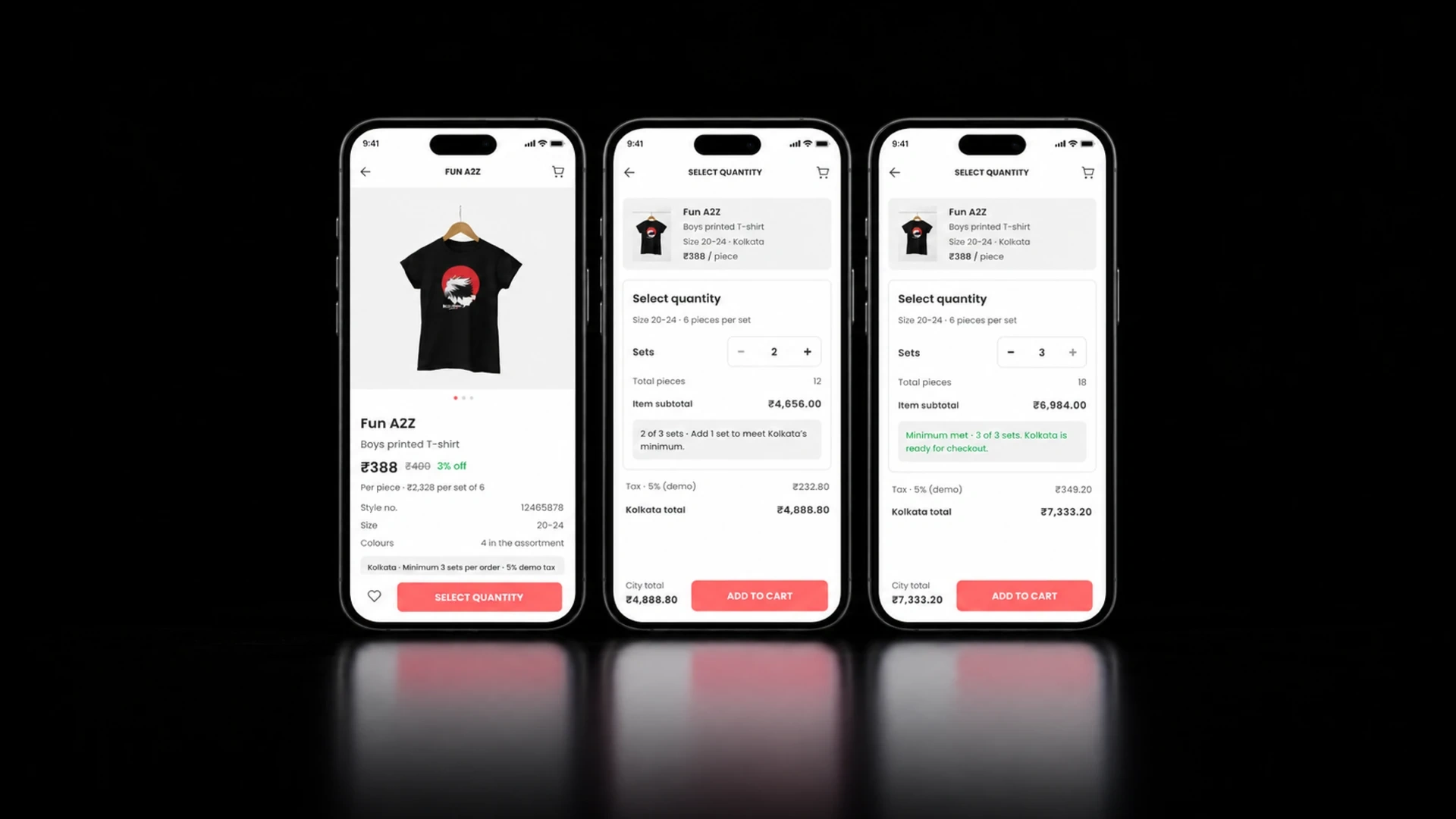
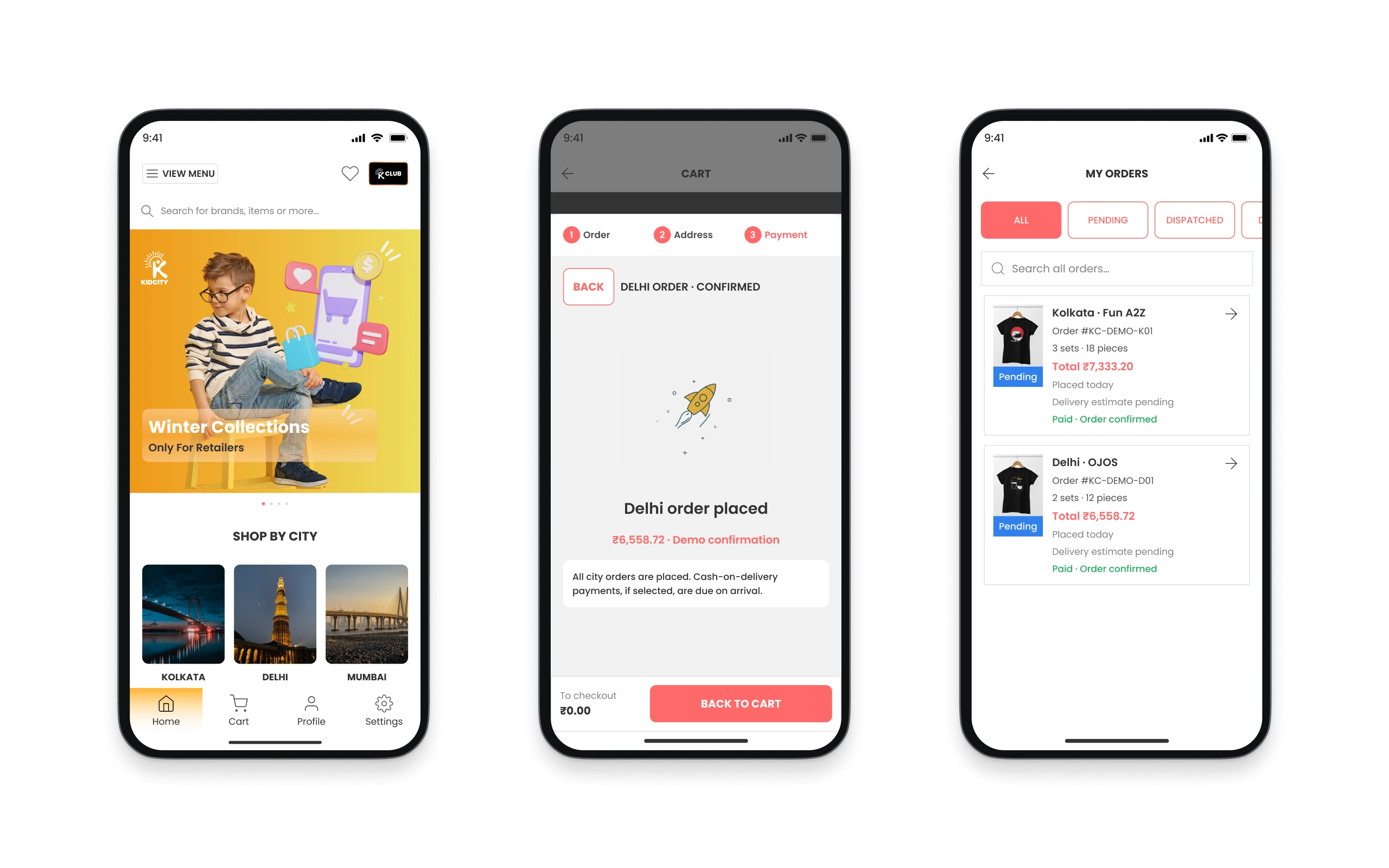
Selected screens from the current Figma prototype connect discovery, buying in sets and city checkout.
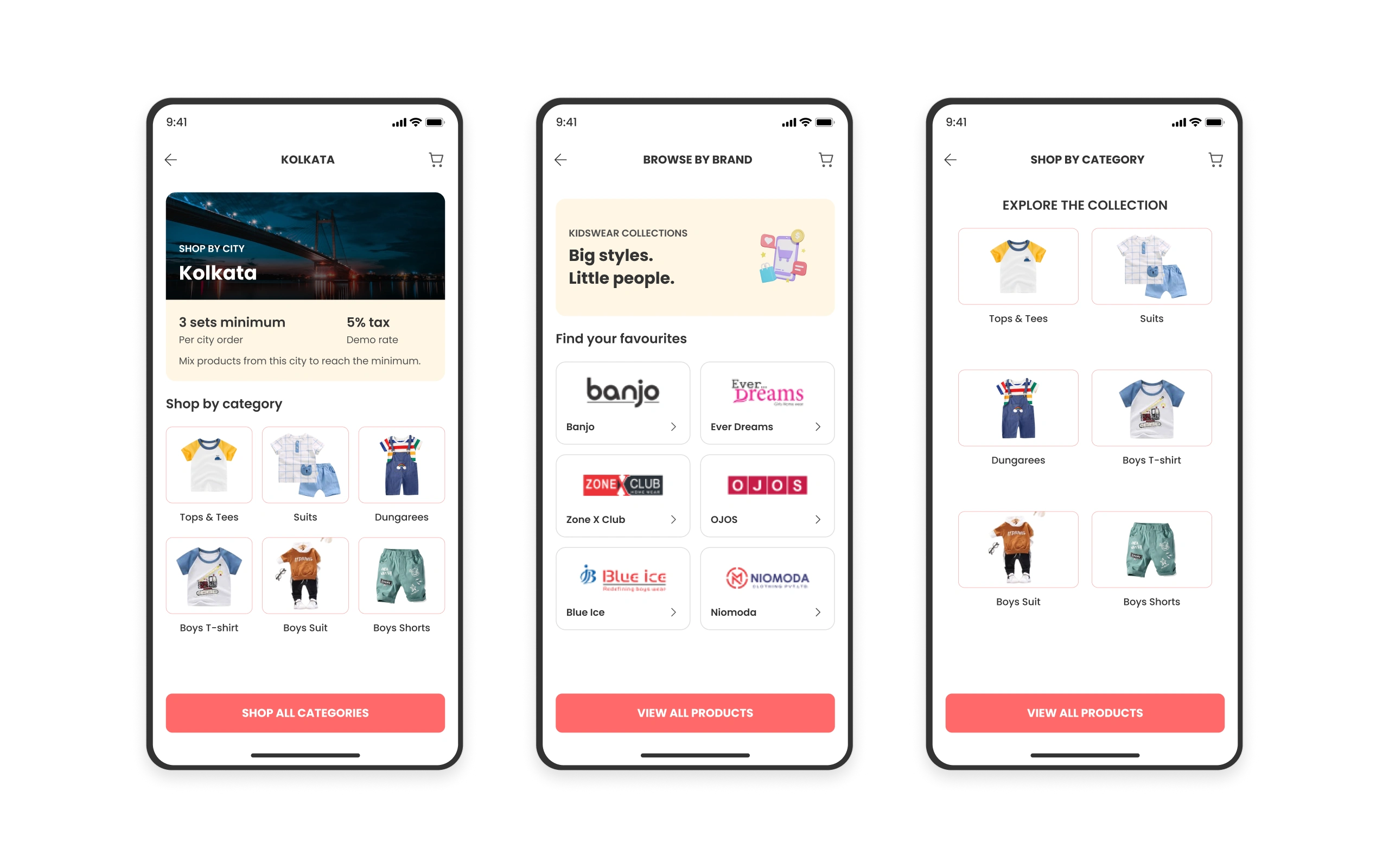
City, brand and category views from the current Figma prototype, including reconstructed discovery views.
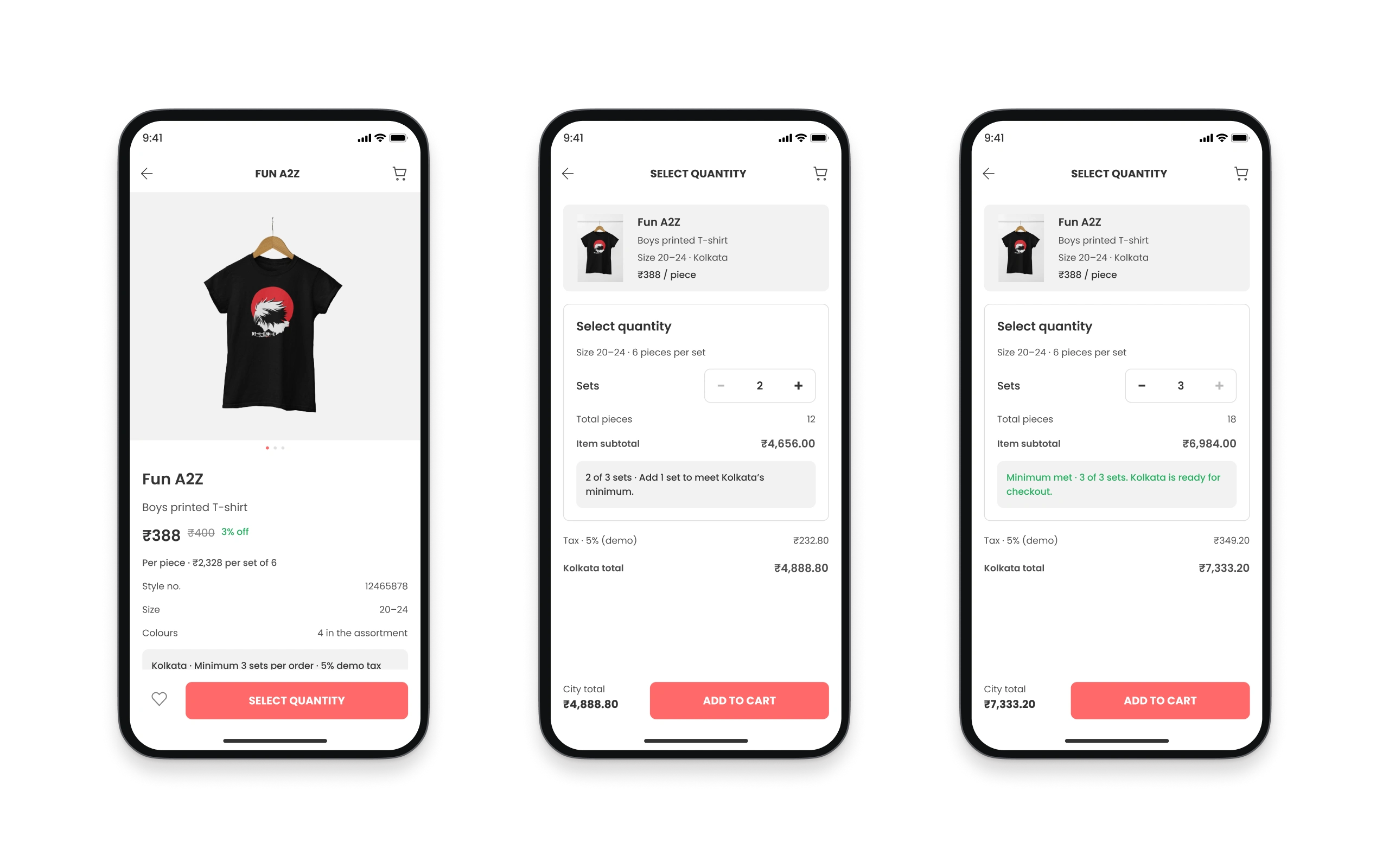
Product and quantity states from the current Figma prototype. Values are illustrative.
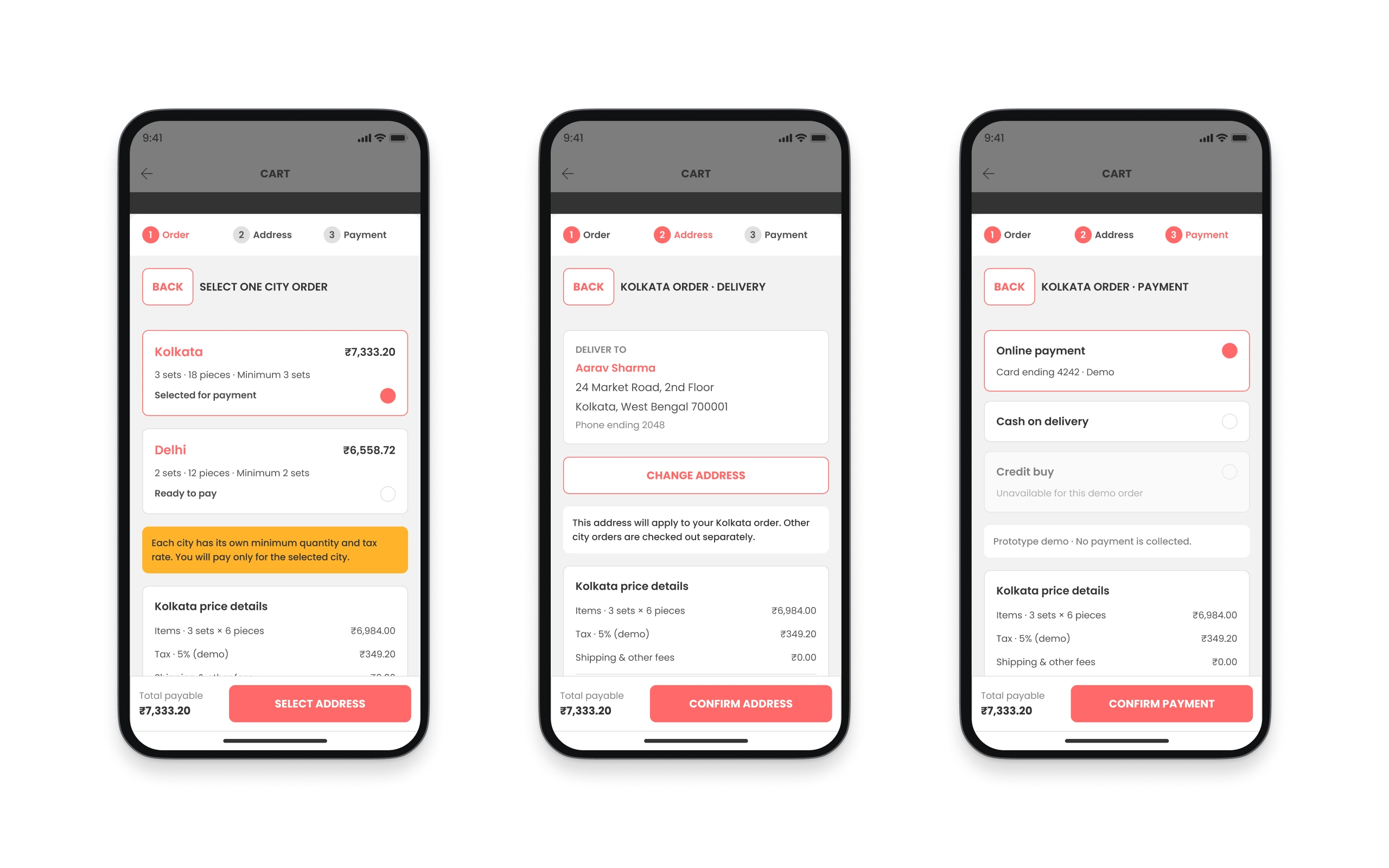
One selected city moves through order review, address and payment in the current Figma prototype.
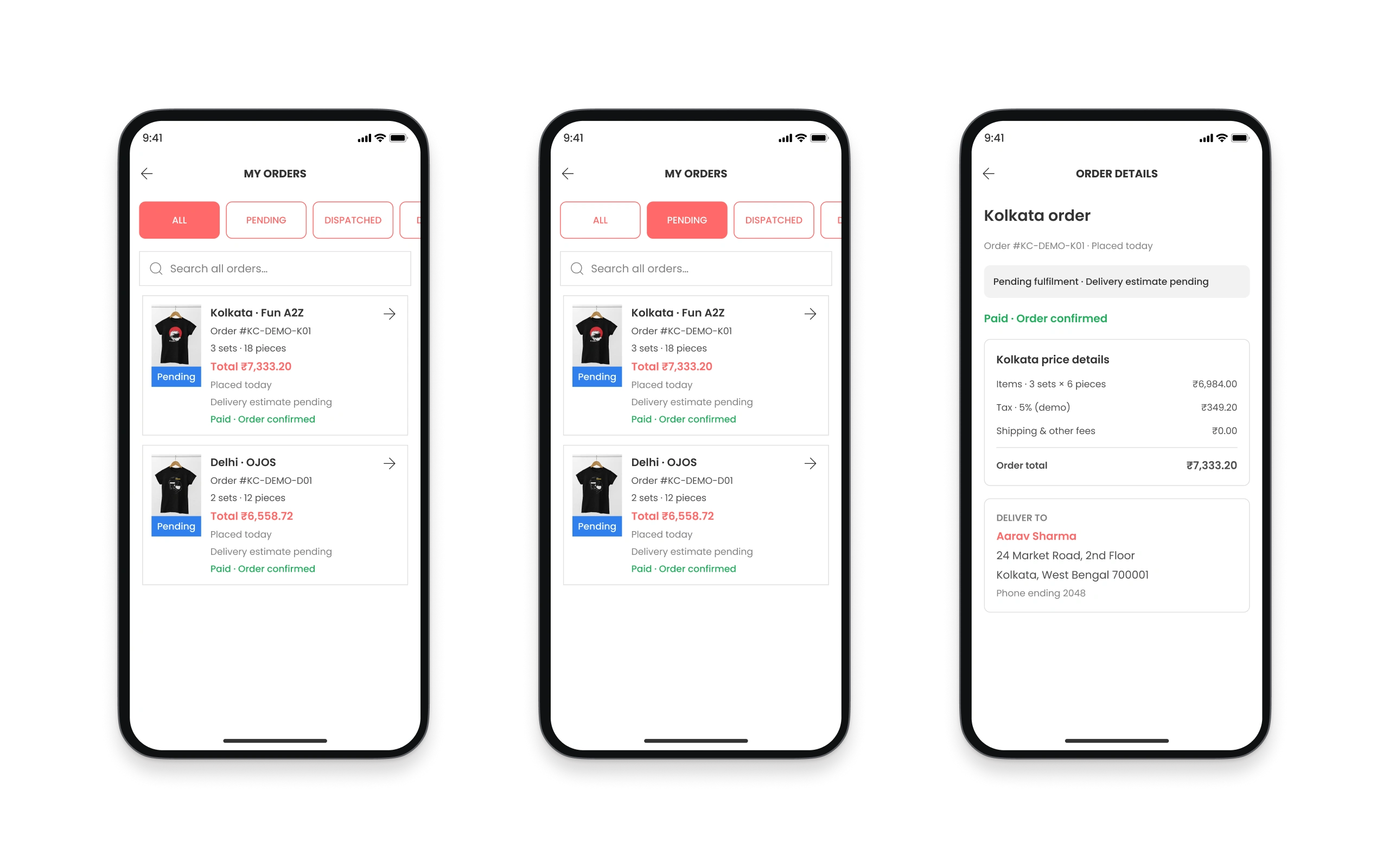
Order and payment status are separated for each city order in the current Figma prototype.
Role: Product Designer, B2B Commerce
Period: March 2021–January 2023
I redesigned KIDCITY’s retailer experience around the rules of wholesale buying: products sold in sets, different order minimums by sourcing city, and a separate checkout for each city. The redesigned app launched on iOS and Android.
One cart, different rules
KIDCITY connects kidswear retailers with manufacturers and wholesale collections. A retailer could be ready to order from one city while still below the minimum in another. The app needed to explain that distinction without blocking the order that was ready.
I worked with developers, the project manager, marketing and company leadership to understand the buying rules. Discovery was reorganised around city, brand and category, with familiar access to Home, Cart, Profile and Settings.
Make the buying unit clear
One set could contain several pieces and sizes. I brought price per piece, pieces per set, full set price and minimum quantity together on product and cart screens. A set quantity control updated the subtotal and city minimum status during selection.
Let each city move at its own pace
I grouped the cart into independent city orders. Each card showed its sets and pieces, required minimum, order value and status. An eligible city could proceed to checkout while other city products remained in the cart.
Post-launch feedback relayed by KIDCITY showed that some retailers were unsure why one city was available and another was not. I clarified eligibility states and added minimum-order messages explaining what to add before checkout.
Checkout and orders that stay connected
Order, Address and Payment kept the selected city consistent through checkout. After confirmation, the placed city was removed from the remaining payable amount. My Orders separated fulfilment status from payment status, with each city retaining its own products, amounts, tax and delivery information.
Kidcity prototype recording: select the eligible Delhi order, confirm its address and demo payment, then return to the unchanged Kolkata cart.
A reusable system for implementation
I extended the existing identity into Figma components for navigation, product and city cards, quantity controls, checkout progress, payment choices and order states. Interactive prototypes, screen designs and state logic supported stakeholder reviews and developer handoff.
Outcome with context
After launch and the eligibility updates, channel partners reported fewer questions about city checkout and clearer understanding of order minimums. The CEO and development team relayed those observations. They are qualitative reports, not a quantified impact study.
During the engagement, the platform served 5,000+ active retailers and 1,500+ daily users. These figures describe the platform’s scale, not growth attributed to the redesign. My responsibility was product design and handoff; the internal development team implemented the app.
The portfolio visuals show the current Figma prototype and selected reconstructed views. Quantities, prices and payment states are illustrative, rather than records of real transactions.
Like this project
Posted Nov 2, 2026
B2B retailer app design that makes buying in sets, city minimums and independent city checkout clear, supported by reusable Figma components.
Likes
0
Views
1
Timeline
Mar 1, 2021 - Jan 31, 2023