

Client: Pepper + Vetiver · Role: CRO, UI design, Replo and Shopify development · Tools: Figma, Replo, Shopify (Liquid, OS 2.0)
The problem
Pepper + Vetiver is a premium home decor brand. Its Ophelia Mills were well made, but they sat inside the general catalog with weak storytelling and scattered CTAs, and they contributed little to AOV.
Phase 1: Landing page in Replo
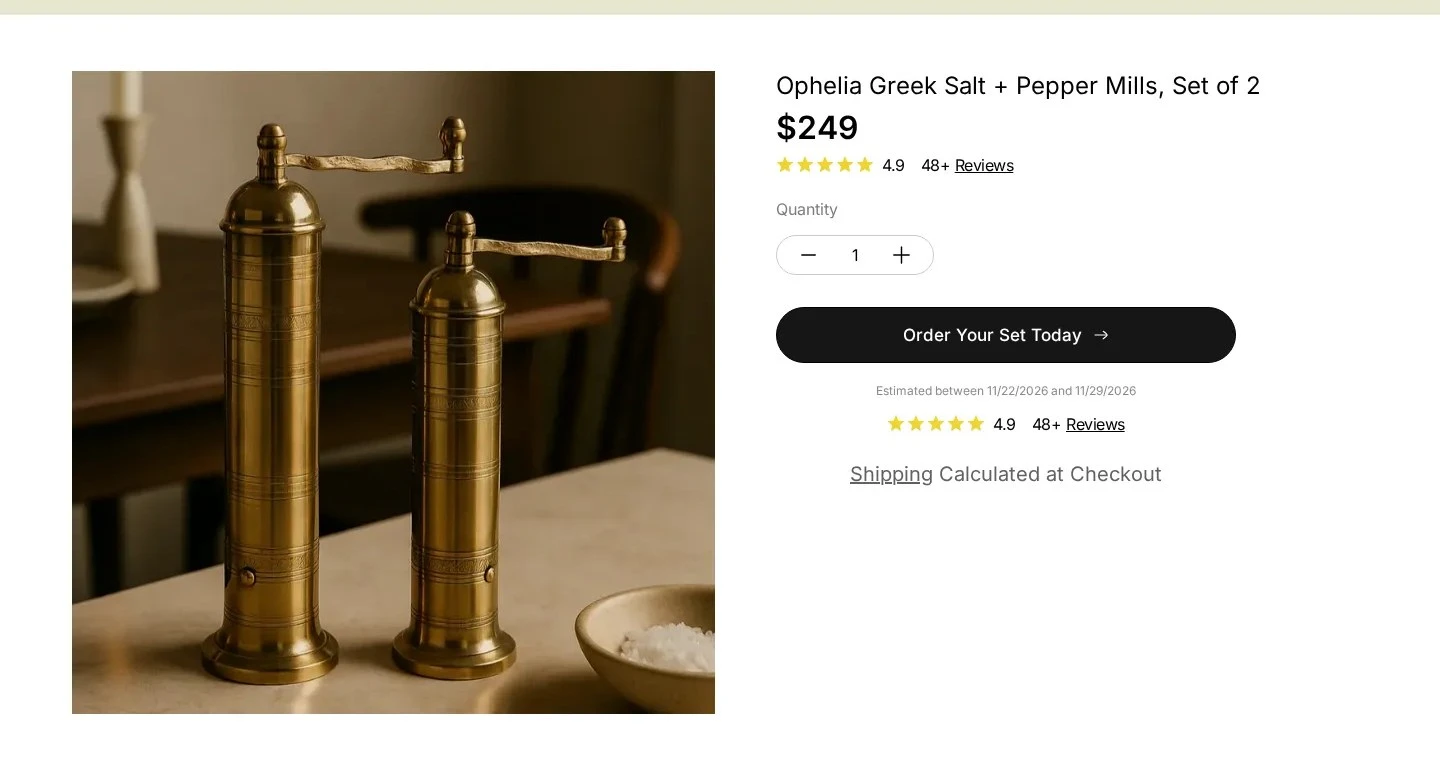
I started with a CRO audit (scroll depth, content hierarchy, CTA placement) and designed a focused landing page. I then built it in Replo so the team could edit and test sections without a developer:
Simplified navigation and one dominant CTA.
Product detail and material clarity ahead of lifestyle imagery.
Modular sections for fast iteration.
Phase 2: Rebuilt as a native Shopify theme
Replo publishes into the Shopify theme, so the next step was to code the design straight into Shopify. That makes the page faster, gives full control, and connects every step of the purchase path. I built it as a production-ready theme in a development store:
The landing page as a product template, which can be assigned to any product.
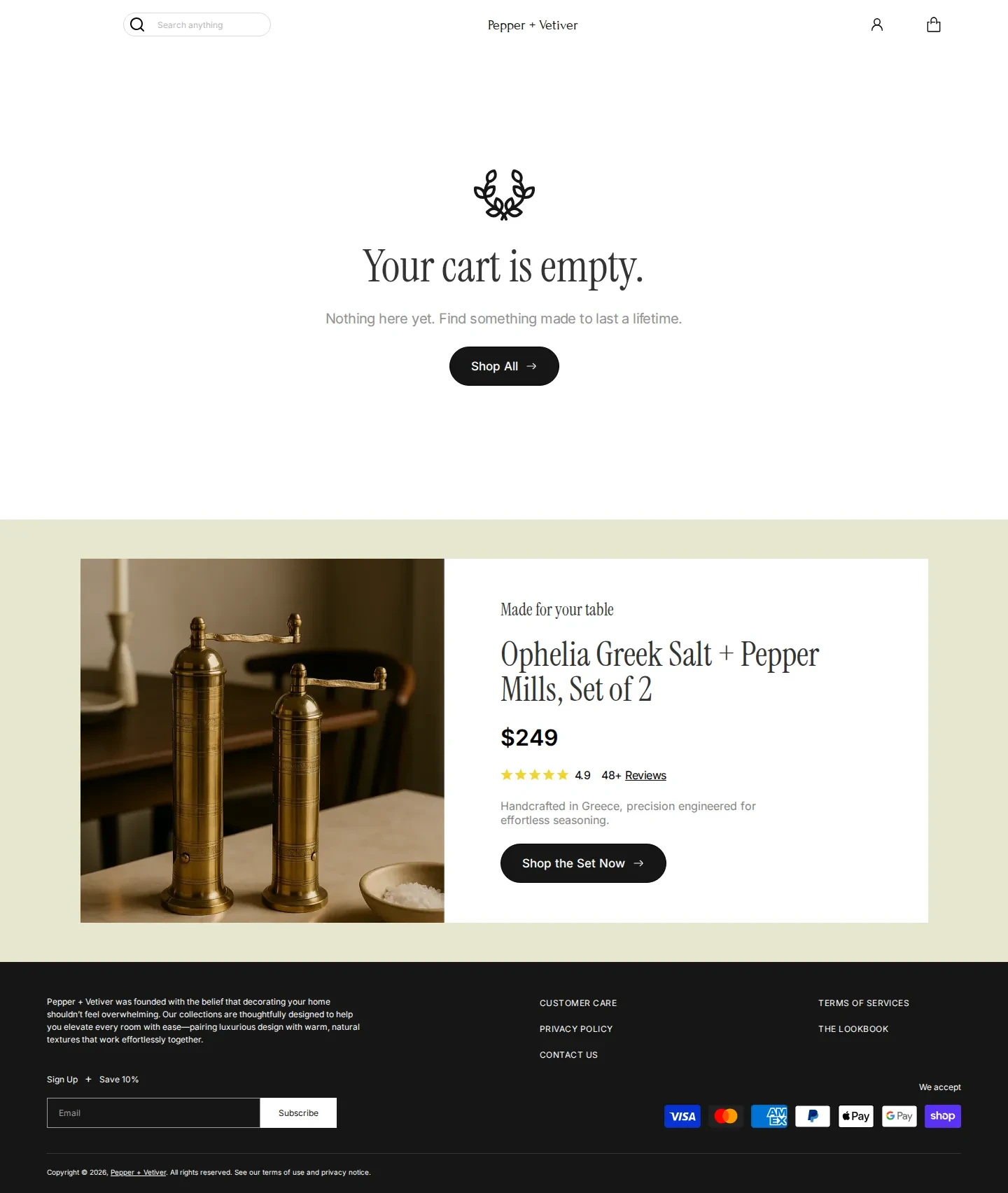
The pages around it, in the same design: product, collection, cart, search, 404, About and Contact.
Purchase path: landing page → cart → Shopify checkout, with Shop Pay Installments.
One-click add to cart. A native product form with
return_to sends shoppers straight to the cart, with no loading state:
Overview of landing Page
Feature pointers that hold at every screen size. Container query units keep the lines on the product at any width:
Trust signals from real store data. The payment icons come from the methods actually enabled in the store:
How the two connect
Replo stays the place for fast landing-page tests. The native theme carries the full store, and it's faster and fully owned. Both use the same Shopify products, cart and checkout, so a winning Replo test can be coded into the theme without changing anything for shoppers.
Next steps
Connect a reviews app.
Move product details into metafields.
Brand the checkout.
A/B test the hero in Replo before coding the winner.
1 like · 13 views · Feb 2, 2026
Designed and built a Replo landing page that turned a low performing product into a hero, improving clarity, CRO, and AOV through focused storytelling.
Timeline
Aug 6, 2025 - Sep 17, 2025


