HubSpot Lifecycle, Pipeline & Reporting Architecture

Md Arifur Rahman


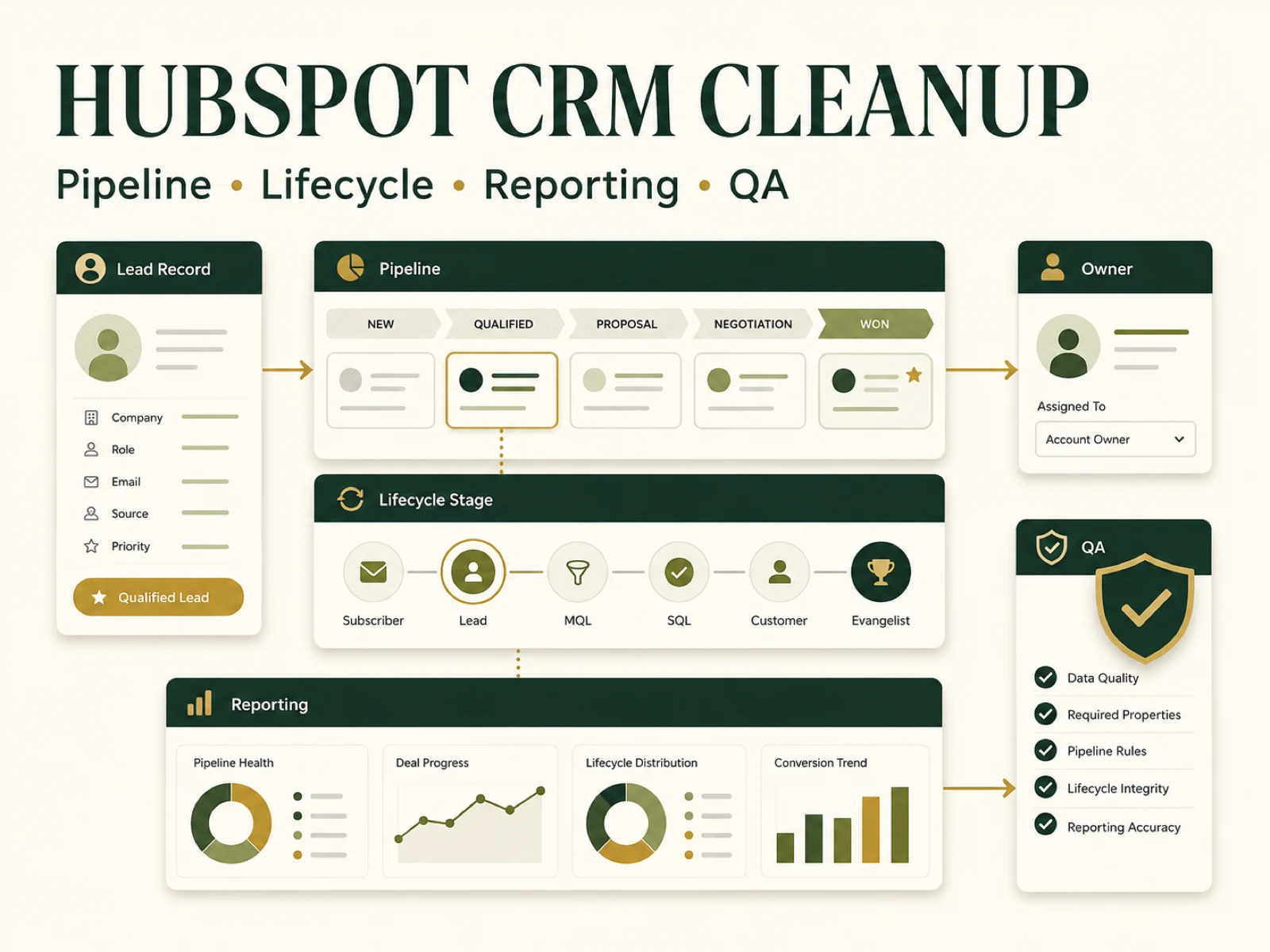
ORIGINAL-WORK DISCLOSURE
This is an original operating framework created to demonstrate how I structure and validate HubSpot CRM systems. It does not represent a named client, confidential portal, paid Contra project, or guaranteed business result.
THE OPERATING PROBLEM
HubSpot can be fully configured yet still be difficult to trust. Lifecycle stages may conflict with deal stages, properties may be duplicated or undefined, ownership can break at handoffs, and dashboards can report inconsistent numbers because the underlying state model is unclear.
THE OBJECTIVE
Create one documented operating path that connects lead capture, contact and company state, deal progression, ownership, workflow decisions, exceptions, and reporting evidence without claiming unsupported results.
THE ARCHITECTURE
Define the state model. Document lifecycle stages, lead statuses, deal stages, owners, required properties, and the business event that changes each state.
Map the primary journey. Connect source and form inputs to contact and company records, deal creation, assignment, follow-up, and reporting.
Create data governance. Establish a property dictionary, allowed values, required-field rules, duplicate-risk checks, and change ownership.
Design bounded automation. Define enrollment, suppression, re-enrollment, delay, branch, notification, and exception rules based on the buyer's HubSpot tier.
Build reporting from governed states. Use agreed definitions for pipeline coverage, stage movement, aging, ownership, and exception visibility.
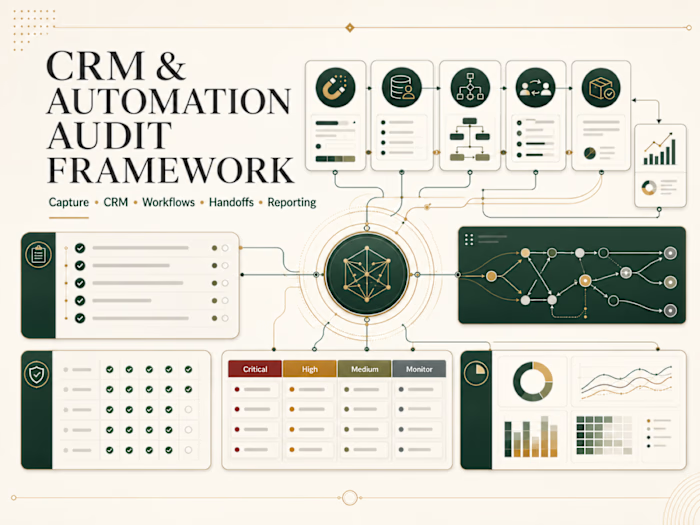
Validate the path. Run safe test records through normal, duplicate, missing-data, reassignment, and failure scenarios; reconcile record history with the dashboard result.
DELIVERABLES DEMONSTRATED
• Lifecycle and pipeline state map
• Priority property dictionary
• Ownership and handoff matrix
• Workflow decision and exception map
• Reporting traceability checklist
• Test record and issue log
• Handoff documentation
PRACTICAL OUTCOME
The framework gives a buyer a clear way to evaluate whether their HubSpot portal's records, automation, ownership, and reporting tell the same operational story. It demonstrates a controlled process without inventing client metrics, testimonials, or confidential screenshots.
Related service: HubSpot CRM Cleanup, Pipeline & Reporting Setup — focused implementation across lifecycle stages, deal pipelines, properties, ownership, workflows, reporting, QA, and handoff.
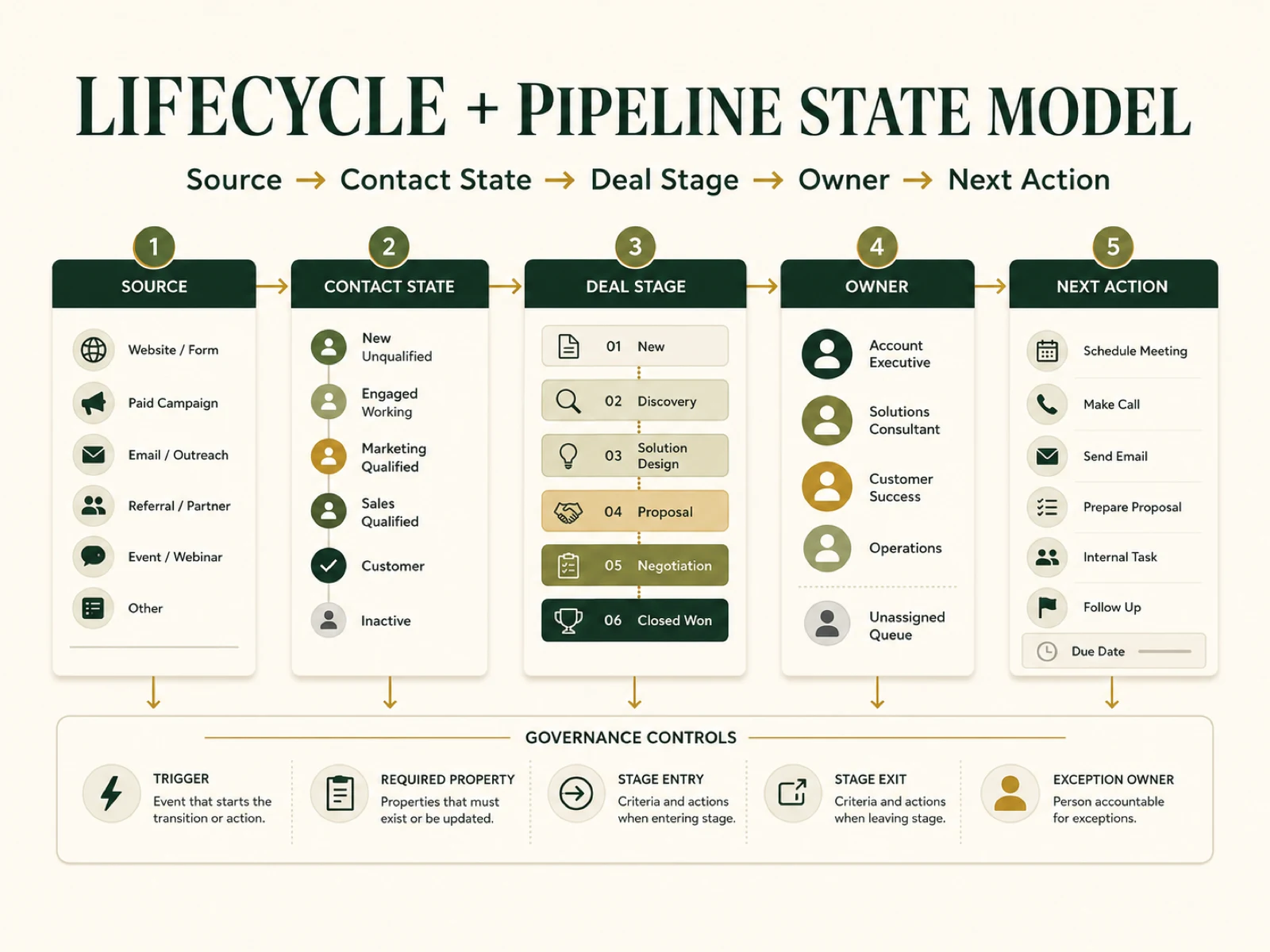
Lifecycle and pipeline state model: source, contact state, deal stage, ownership, next action, and governance controls.
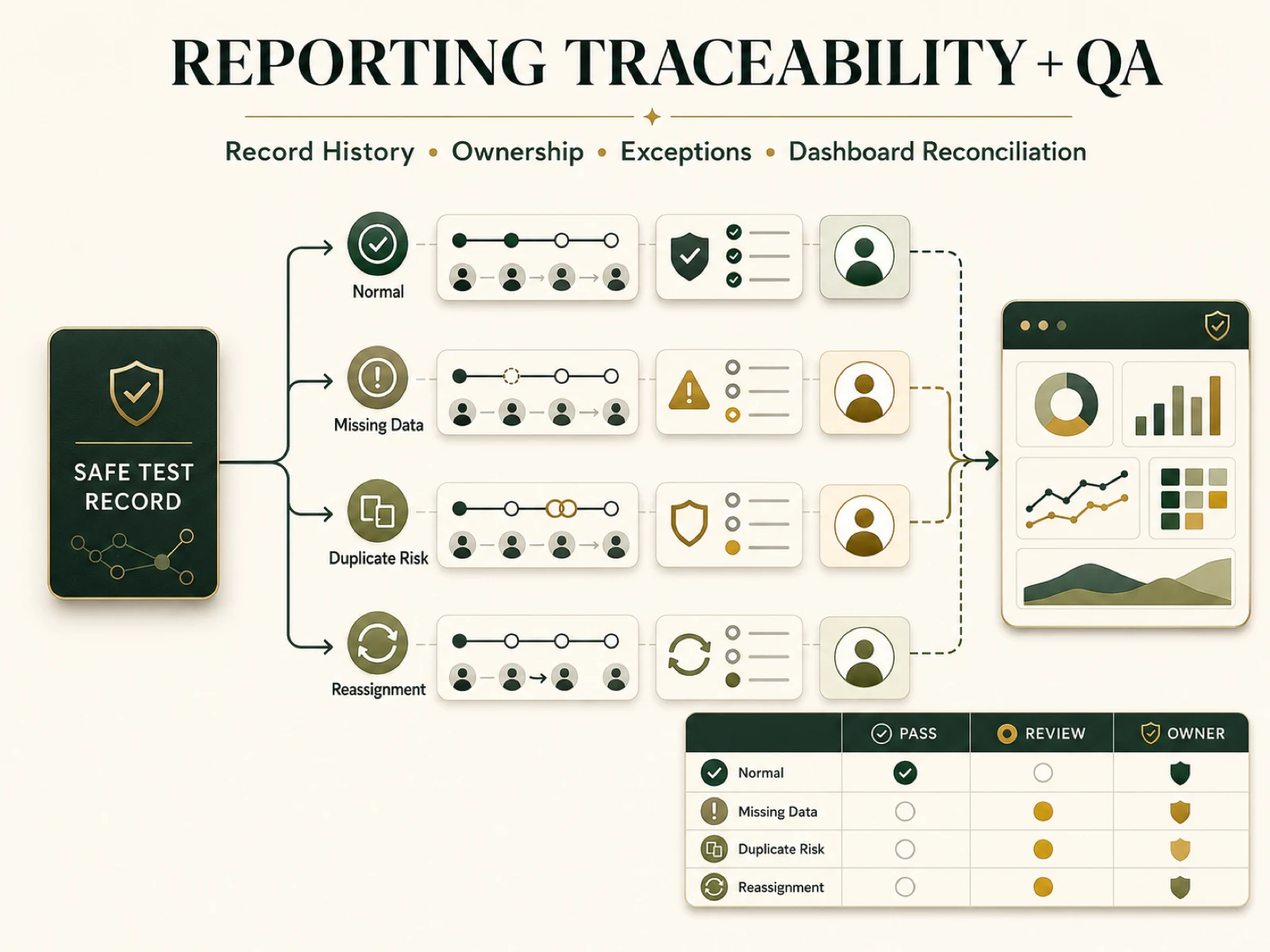
Reporting traceability and QA: safe test record, normal and exception paths, ownership review, and dashboard reconciliation.
Like this project
Posted Jul 16, 2026
Original HubSpot CRM framework aligning lifecycle stages, sales pipeline, ownership, marketing automation, data quality, reporting, and testable workflows.